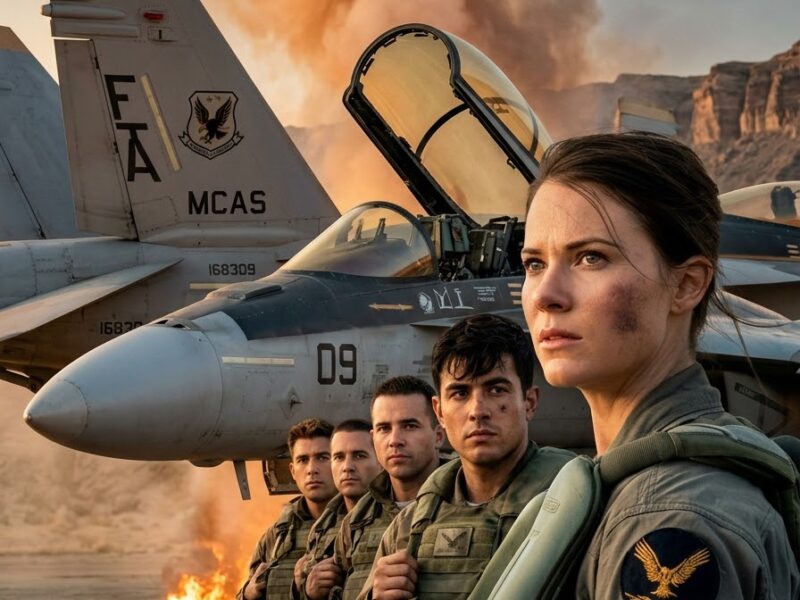
They laughed when the Navy SEALs asked for air support in Afghanistan’s Korengal Valley, but when their radios failed
The valley erupted just before sunset. Gunfire echoed between the razor-sharp slate mountains, and thick, greasy smoke rose from the stalled convoy trapped far below in the ravine.
I sat inside the temporary command tent of the Korengal outpost, listening to the frantic, overlapping radio transmissions bleeding through the static-filled speakers. The atmosphere inside the tent was a suffocating mix of sweat, cooling coffee, and raw, unadulterated panic.
“Requesting immediate air support! We are pinned down at grid whiskey-tango-four!”
“Where the hell is our backup? They’re chewing through our rear flank!”
The SEAL commander slammed his fist against the metal map table, rattling the tactical displays and ceramic mugs. His face was carved from granite and exhaustion, streaked with dust and tension. “Get me a strike aircraft! I don’t care if it’s an F-16 or a rusty crop-duster, get ordnance on that ridge right now!”
A young operations officer shook his head, staring grimly at his weather terminal. “Weather’s closing in, sir. A brutal mountain front is rolling over the peaks from the north. Local air assets are grounded at Bagram. We’re completely blind.”
I stood quietly in the corner of the tent, wearing my standard civilian aviation contractor coveralls—faded blue denim and oil-stained cotton, completely devoid of rank, patches, or military honors. I stepped toward the edge of the radio console.
“How many men are trapped down there?” I asked, my voice cutting cleanly through the noise.
The commander turned his head, his cold, blue eyes narrowing as they swept over me. “That’s classified, civilian. Step back from the comms.”
“I’m asking because I can help,” I said, holding my ground, my posture rigid.
A younger SEAL standing near the tent flap snorted, a harsh, dismissive sound. “Lady, we’re looking for an aerial strike group, not a secretary to take notes.”
His words landed harder than I expected, striking a nerve I had spent years burying beneath layers of cold armor. I’d spent fourteen years learning how to hide the part of myself that still belonged in the sky. Fourteen years pretending I was nothing more than a logistics contractor tracking spare turbine blades. Fourteen years avoiding the call sign that had once made entire squadrons of elite pilots turn their heads in awe or fear.
Then, another deafening explosion rocked the valley below.
“Second vehicle hit!”
“Medic down! Repeat, medic down!”
The commander’s jaw tightened until the skin turned white. “Where is our air support?” he growled, desperation bleeding into his tone.
I didn’t hesitate. I stepped past the operations officer, placed my hand on the primary communications microphone, and clicked the transmission toggle to a dead-secure, unlisted frequency that hadn’t existed on any active military ledger in over a decade.
“Valkyrie to Raven Control,” I said.
The tent went dead silent. The chatter stopped. Even the ambient hum of the generator seemed to fade.
The commander turned slowly, his eyes widening in sudden, irrational shock. “What did you just say?”
I didn’t answer him. I kept my eyes fixed on the green phosphor glow of the radio dial.
Static hissed through the speakers, thick and heavy like a physical barrier. Then, a sharp pop echoed through the earpiece, followed by a dark, metallic voice that sounded as if it were being transmitted from the bottom of the ocean.
“Valkyrie, confirm identity.”
I closed my eyes, feeling the ghost of my father’s hand resting on my shoulder, a memory from a cockpit high above the clouds.
“Valkyrie confirmed,” I whispered into the mic.
The younger SEAL who had mocked me a moment ago laughed nervously, looking around the room. “Is this some kind of sick joke? Who is playing on the emergency net?”
I looked straight at him, my voice completely devoid of warmth. “No joke.”
Outside the canvas walls, a low, guttural vibration began to hum through the floorboards. It wasn’t the sound of standard turboprops. It was the heavy, tearing scream of twin high-bypass engines flying at extreme low altitude, pushing the absolute limits of structural airframe tolerance.
The commander rushed toward the tent entrance, throwing the canvas flap aside and stepping out into the fading sunlight.
A sleek, matte-black experimental jet appeared between the jagged mountain peaks, moving with terrifying speed through the dying light. Its silhouette vanished behind the steep ridgeline for a fraction of a second, banking at an impossible angle that defied standard aerodynamic charts.
Then it emerged again, its nose pointed directly down into the canyon where the SEAL convoy was fighting for its life.
The radio crackled back to life.
“Valkyrie, convoy coordinates received. Target acquisition locked.”
The commander slowly turned back from the entrance, staring at me as though I were a ghost materialized from the ether. “That’s… that’s your aircraft?”
I didn’t answer. I didn’t have to.
The jet passed over the valley floor, and the enemy positions along the northern ridge simply ceased to exist. A rolling wall of earth, fire, and concussive shockwaves swallowed the cliffside, obliterating the sniper nests and heavy machine-gun nests pinning down the SEALs.
Through the chaotic static of the tactical net, the trapped men began to report in, one by one, their voices filled with stunned disbelief.
“Vehicle three is clear!”
“Medic team moving to the wounded!”
“All units, the ridge is flattened! We’re getting out!”
The command tent fell into a heavy, suffocating stillness. The only sound was the distant, fading roar of the black jet climbing back into the storm clouds above.
The commander walked slowly back toward me, stopping inches away, looking at me with eyes wide with horror and disbelief. “Who trained you?” he demanded, his voice shaking.
I lowered the headset, resting it gently on the console. “My father.”
His expression shifted instantly from shock to profound, chilling dread. “Colonel Hayes?”
I nodded once.
The commander took a step backward, nearly tripping over a folding chair. “Your father died with you.”
The words cut through my chest like a razor blade. Fourteen years earlier, our experimental aircraft—a prototype stealth interceptor known as Project Valkyrie—had disappeared during a classified midnight test flight over the Nevada desert. The official military board of inquiry declared both of us dead, citing catastrophic system failure and structural disintegration.
Only I had survived, parachuting out into the dark desert night while the wreckage burned miles away.
And the man standing before me—Commander Vance—had been the junior intelligence officer who signed the final casualty report.
Before I could speak, the radio handset on the console clicked once more.
“Valkyrie,” a cold, synthetic voice whispered through the static. “There’s something you need to know before this conversation ends.”
I lifted the headset back to my ear, my hands suddenly freezing.
The voice on the other end whispered four words that shattered my entire world.
“Your father ordered it.”
My blood turned to ice in my veins. Then, the transmission clicked dead.
The silence inside the command tent became heavier than the concrete barriers outside. Commander Vance stood frozen, his face drained of all color, staring at me as if the ghosts of a fourteen-year-old classified burial had clawed their way out of the earth to stand before him.
“What did you just say?” Vance choked out, his voice barely audible over the hum of the cooling fans. “Who was on that radio?”
“You tell me, Commander,” I said, stepping forward, my eyes locked onto his. “You’re the one who signed the paperwork in 2012. You’re the one who classified Project Valkyrie under top-secret executive privilege, sealed the flight logs, and told my grieving mother that her husband and daughter had been vaporized in an engine explosion.”
Vance swallowed hard, looking toward the tent flap as if expecting armed military police to suddenly storm the perimeter. He reached out, grabbed my arm, and dragged me toward the rear corner of the tent, away from the junior officers who were busy monitoring the retreating SEAL team’s status.
“Keep your voice down,” Vance hissed, his fingers gripping my sleeve with desperate intensity. “You have no idea what kind of hornets’ nest you’ve just kicked open by using that call sign.”
“Try me,” I snapped, wrenching my arm free from his grip. “For fourteen years, I’ve lived in the shadows. I’ve watched my father’s name dragged through the mud of quiet administrative cover-ups, labeled a rogue pilot who lost control of his aircraft. And tonight, over an open tactical frequency in the middle of a firefight, a voice tells me that he ordered the crash. That he was behind it all.”
Vance wiped his forehead with the back of his hand, breathing heavily. He looked older now, the youthful arrogance of a junior intelligence officer replaced by the hardened cynicism of a man who had spent too many years keeping secrets for a government that viewed human lives as expendable variables.
“Your father wasn’t just a test pilot, Elena,” Vance said quietly, dropping his voice to a low whisper. “Colonel Hayes was the chief architect of the Korengal corridor’s black-budget electronic warfare grid. In 2012, Project Valkyrie wasn’t an experimental fighter test—it was an extraction vehicle designed to smuggle advanced quantum encryption architecture out of foreign hands before the treaty was signed.”
“Don’t give me the sanitized briefing-room speech,” I interrupted, my voice sharp. “What happened the night our plane went down?”
“Your father discovered that the Pentagon command element was selling the project schematics to private defense syndicates,” Vance confessed, his eyes darting nervously toward the entrance. “He tried to scrub the servers mid-flight. The command ordered the interceptors to shoot you down. Your father override the remote lockouts, ejected you into the dark, and flew the prototype into the designated crash zone alone—not because he lost control, but because it was the only way to make them believe the data was destroyed with him.”
The revelation hit me like a physical blow. The air rushed out of my lungs, leaving me standing in the dusty tent, dizzy and disoriented.
“He… he saved me?” I whispered, my voice cracking. “He sacrificed himself so I wouldn’t take the fall?”
“He didn’t die that night, Elena,” Vance said, his voice dropping to a terrifying register. “The wreckage was recovered, but his body was never found in the containment pod. And over the last three years, intelligence reports from underground server nodes across Central Asia have picked up a repeating digital signature—the exact same quantum encryption key your father hardcoded into the Valkyrie flight computer.”
Before I could process the staggering weight of his words, the exterior of the tent lit up with a blinding, searing flash of white light.
An ear-splitting explosion rattled the earth, followed immediately by the staccato rattle of heavy machine-gun fire and the screaming wail of incoming mortar rounds slamming into the firebase perimeter.
“Ambush! We’re taking heavy mortar fire!” an officer yelled from the front of the tent. “All stations, defensive positions! Code red!”
Vance cursed loudly, drawing his sidearm from its holster. “They tracked the black jet’s radar signature! The enemy knew we were using an unregistered asset, and they’ve brought in a heavy artillery cell to wipe out this entire outpost!”
Outside, the base erupted into total chaos. Sirens wailed, red emergency lights spun through the dust, and the deep, concussive thuds of incoming mortar shells shook the reinforced bunkers to their foundations.
I stood frozen for a split second, looking down at my hands. The civilian coveralls suddenly felt entirely wrong. Beneath them, beneath the disguise I had worn for fourteen years, the pilot was still alive, waiting for an open runway.
“Where is the black jet now?” I demanded, turning to Vance.
“It’s circling in a holding pattern ten miles north, waiting for a secure transponder handshake,” Vance shouted over the roar of another exploding mortar round. “Why?!”
“Because,” I said, walking toward the tent exit with a cold, absolute resolve settling into my chest, “if my father is still out there, and he’s running the network that just whispered in my ear, I’m going to go find him. And I’m taking his plane back.”
The mortar barrage pulverized the outer perimeter walls of the Korengal firebase, sending jagged chunks of Hesco barriers and concrete flying into the night air. Red emergency strobes flashed against the swirling clouds of dust and smoke, casting long, distorted shadows across the panicked faces of the base personnel scrambling for cover.
I pushed my way past a group of Marines hauling ammunition crates toward a reinforced bunker, my eyes locked on the tactical communications van parked near the edge of the helipad.
“Elena, wait! You can’t just take an experimental black-budget airframe!” Commander Vance yelled, sprinting behind me through the falling debris, his pistol drawn as he ducked beneath the shockwave of a nearby explosion. “That aircraft isn’t registered to this theater! If you take off without a validated flight plan, automated anti-air batteries across the region will light you up as a hostile target!”
“Let them try,” I shouted back, pulling open the heavy steel door of the communications van.
Inside, the interior was bathed in the harsh, emerald glow of dozens of high-frequency CRT monitors and cryptographic routing consoles. The primary satellite uplink was dead, severed by a direct mortar hit on the relay dish outside, but the auxiliary fiber-optic terminal was still blinking with raw data.
I shoved the seated technician out of the chair, slid into the console seat, and slammed my hands onto the physical keyboard. My fingers flew across the keys, executing a sequence of legacy command-line inputs that hadn’t been standard since the days of the Cold War.
“What are you doing?” Vance demanded, slamming the van door shut behind him to block out the roaring chaos of the mortar attack outside.
“Opening a direct, hard-wired handshake with the aircraft,” I said without looking up, my eyes scanning the streaming lines of hexadecimal code scrolling down the monitor. “The black jet isn’t just an autonomous drone, and it’s not just a traditional fighter. It’s a mobile relay node for Project Valkyrie’s core mainframe. Whoever is communicating from the other end of that frequency is routing their signal through the plane’s flight computer.”
“And if you’re wrong? If it’s a trap set by the same people who tried to bury your father fourteen years ago?”
“Then I’ll die in the same sky he did,” I replied coldly. “At least this time, I’ll know why.”
I pressed the master execution key.
Instantly, the emerald screens went black. The humming cooling fans in the van fell silent. For three agonizing seconds, there was absolute darkness.
Then, a single window blinked open on the central monitor. It wasn’t a military interface. It was a clean, minimalist command prompt featuring a single blinking cursor and a string of unencrypted text:
WELCOME BACK, V. CONNECTION ESTABLISHED.
IP TRACE IN PROGRESS: SOURCE ORIGIN — HINDU KUSH SUB-TERRANEAN FACILITY SECTOR 7.
Vance leaned over my shoulder, his eyes widening as he read the screen. “Sector 7? That’s an abandoned Soviet-era underground nuclear bunker complex buried beneath the northern peaks of the valley. According to all intelligence maps, it was sealed and collapsed in 1989.”
“It was never collapsed,” a new voice spoke from the doorway of the van.
We both spun around. Standing in the doorway was the SEAL commander from the ambush earlier that evening. His face was caked in dried blood and dust, his combat harness torn, but his eyes were sharp and steady. He held an encrypted satellite tactical radio in his scarred hand.
“My team secured the valley floor,” the SEAL commander said, stepping inside and letting the heavy steel door slam shut behind him. “Before the enemy mortars opened fire, our long-range intercept antenna picked up a secondary transmission piggybacking on your aircraft’s transponder signal, Captain Hayes.”
I stared at him. “You know who I am?”
“Word travels fast when an unregistered stealth fighter flattens a ridge to save your men,” he replied grimly, tossing a heavy data drive onto the console. “One of my snipers found that wired into a remote communications relay on the ridge where the enemy spotters were positioned. It’s a direct cable drop leading straight down into the Sector 7 bunker.”
I grabbed the data drive, plugged it into the USB port of the van’s terminal, and executed the decryption sequence.
Files flooded the screen—blueprints, structural schematics, and live thermal telemetry feeds showing an extensive underground facility buried deep beneath the slate mountains, drawing massive amounts of power from a geothermal turbine.
And right at the center of the thermal feed, sitting in a reinforced command chair surrounded by banks of glowing server racks, was a human figure.
The image was grainy, captured by an automated reconnaissance drone, but the posture, the profile, and the sharp angle of the jaw were unmistakable.
It was my father.
Older, his hair completely white, his skin pale from years spent underground, but alive.
Before I could breathe, the speakers on the console crackled to life. The audio feed from the Sector 7 bunker opened automatically, broadcasting a raspy, familiar voice directly into the van.
“Elena…” the voice said, echoing softly through the speakers. “You took your time getting here. I’ve been waiting for you to answer my call for fourteen years.”
The voice coming through the speakers sent a violent shiver racing down my spine. It wasn’t a synthetic simulation, nor was it an automated archival recording. It was real, vibrating with the exact cadence, warmth, and quiet authority I had grown up listening to in the hangars of Edwards Air Force Base.
“Dad…” I breathed, my hands trembling as I hovered over the microphone. “You’re alive. You survived the crash.”
“I survived the cage they built for us, yes,” Colonel Richard Hayes replied, his voice steady, though strained by the hum of massive server racks in the background. “The crash was real, Elena. The fire was real. But the men who ordered our silence didn’t count on the fact that I had already backed up the entire Project Valkyrie core logic into an independent subterranean node.”
Commander Vance stepped closer to the console, his face pale with sudden, terrifying realization. “Colonel Hayes… if the Department of Defense finds out you’re operating an unmonitored black site in the middle of an active warzone, they’ll authorize a tactical saturation strike to wipe the mountain off the map.”
“Let them try, Vance,” my father’s voice cut back, sharp and unyielding. “For fourteen years, I’ve watched the Pentagon sell the core architecture of our defense grid to private contractors who care more about stock prices than national security. The black jet you saw tonight isn’t just a weapon—it’s the key to locking them out permanently.”
“The radio transmission from the ridge…” I interrupted, cutting through the history and the politics. “The voice on the tactical net said you ordered the crash. That you engineered the betrayal.”
A heavy, solemn silence hung over the audio feed for several seconds.
“I ordered the crash because it was the only way to keep you alive, Elena,” my father said softly. “When I found out that Vance’s superiors were planning to eliminate our entire family to protect the conspiracy, I had to make you look like a casualty of war so they would stop hunting you. But to pull it off… I had to let them think I was the traitor.”
The weight of fourteen years of grief, confusion, and misplaced anger evaporated in an instant, replaced by a cold, searing clarity. He hadn’t abandoned me. He had taken the fall so I could live.
“Where are you?” I demanded, my voice dropping an octave into absolute resolve. “Give me the coordinates to the Sector 7 bunker entrance.”
“The entrance is guarded, Elena, and the automated defense systems are locked onto any unregistered aircraft,” my father warned. “If you fly the black jet down into the valley without the master cryptographic handshake, the surface-to-air turret grid will tear you to pieces before you clear the ridge.”
“Then send me the handshake,” I said, reaching for the flight helmet sitting on the console rack. “Because I’m coming down.”
“Captain Hayes, you’re out of your mind,” Vance protested, grabbing my shoulder. “You cannot fly an experimental black aircraft into an active, fortified Soviet bunker complex defended by automated military hardware! That’s a suicide run!”
“It’s not a suicide run, Commander,” the SEAL commander interjected calmly, stepping forward and placing a heavy hand on Vance’s arm. “It’s a rescue mission. And if her father built that facility, she’s the only pilot on earth qualified to land in it.”
Before Vance could argue further, the emerald screen flashed a bright, solid green. A massive data packet downloaded directly into the van’s terminal, transferring the master cryptographic keys, the tunnel approach vectors, and the manual override codes for Sector 7.
TRANSMISSION COMPLETE.
APPROACH VECTOR: KORENGAL RIDGE 4 – SECTOR 7 SUB-DOCK.
I secured the data drive, pulled my helmet over my head, and clicked the chin strap into place. The tinted visor dropped down, tinting the harsh fluorescent lights of the van in a cool, combat-ready green.
“Where are you going?” Vance asked, defeat heavy in his voice.
“To finish a flight we started fourteen years ago,” I said, turning toward the door.
I didn’t wait for his reply. I pushed open the heavy steel door and sprinted out into the cooling night air of the Korengal firebase, running directly toward the darkened strip of tarmac where the matte-black experimental jet sat idling in the shadows, its twin engines humming with quiet, lethal power.
The black jet lifted off the short, rough dirt strip of the Korengal firebase with effortless, terrifying acceleration. There was no hesitation, no sluggish drag—just the raw, instantaneous thrust of twin experimental turbofans pushing six hundred miles an hour before the landing gear had even fully retracted into the fuselage.
Through the bubble canopy, the jagged slate peaks of the Hindu Kush rushed past in a blur of moonlight and shadow.
“Valkyrie-1, this is Sector Control,” my father’s voice crackled through the encrypted helmet intercom, clear and strong. “Approach vector is locked. You’re five miles out from the ridge door.”
“I see the coordinates,” I replied, my hands gripping the flight stick with absolute, surgical precision as I banked the aircraft hard to the left, hugging the contours of the mountain range to stay beneath the radar horizon of the regional military command at Bagram. “The automated defense batteries are painting my position. Tell them to stand down, Dad.”
“They’re not my batteries anymore, Elena,” my father’s voice warned grimly. “When the defense contractors detected our data ping ten minutes ago, they executed a hostile remote override of the Sector 7 security grid. The surface-to-air turrets on the ridge are locked onto your tail right now.”
A harsh, rhythmic warning tone began to blare inside my cockpit.
WARNING: RADAR LOCK. INCOMING MISSILE THREAT. ELS ACTIVE.
Instantly, two surface-to-air missiles erupted from hidden bunker silos carved into the slate cliffs ahead, their rocket motors leaving twin trails of white fire as they streaked straight toward my position.
“Incoming!” I yelled, shoving the throttles forward and pulling back hard on the stick.
The black jet responded instantly, pitching up into a violent vertical climb that pressed my spine flat against the ejection seat. The G-forces surged—sixGs, sevenGs, eightGs—blurring my vision at the edges as the cockpit filled with the high-pitched whine of structural strain.
I triggered the electronic countermeasures suite. A cloud of advanced radar-absorbent chaff and decoy flares exploded behind us, blinding the incoming missiles’ guidance systems. Both rockets detonated harmlessly in the empty sky fifty feet below our tail, turning the night into a brilliant flash of orange and gold.
“Chaff deployed! Missiles evaded!” I gasped, catching my breath as I rolled the aircraft inverted, diving straight down toward a narrow, vertical fissure in the mountain face that marked the hidden entrance to Sector 7.
“You’re coming in too fast!” my father warned over the comms. “The sub-dock blast doors are only half-open!”
“I’ve got it!”
I cut the throttles, deployed the aerodynamic airbrakes, and dropped the landing gear, allowing the matte-black airframe to slide smoothly into the dark, subterranean cavern like a knife slipping into a sheath.
Sparks showered off the wingtips as the jet glided down the reinforced concrete tunnel, finally coming to a heavy, controlled stop in the center of a massive, cavernous underground hangar lit by the harsh, flickering glow of hundreds of server racks.
The canopy hissed open, letting the cool, damp air of the subterranean bunker rush over my face.
I unclipped my helmet, removed my oxygen mask, and looked down from the cockpit ladder.
Standing on the concrete floor below, surrounded by banks of glowing monitors and tactical displays, was an older man with weathered skin, bright, sharp eyes, and silver hair—the exact face I had seen in my dreams and nightmares for fourteen years.
My father.
He didn’t say a word. He just stood there, looking up at me with a quiet, profound smile.
I climbed down the ladder, my boots hitting the concrete floor with a sharp echo. I crossed the distance between us in three long strides and threw my arms around his neck, burying my face in his shoulder as fourteen years of tears finally broke free.
“You made it, Angel,” my father whispered, holding me tight against him. “We both did.”
Across the hangar, the main tactical terminal suddenly flashed with a high-priority encrypted alert. A secure satellite feed was attempting to breach our firewall from Washington, D.C.
My father pulled back, his eyes hardening as he looked at the central monitor. He walked over to the console, wiped a tear from his cheek, and gestured for me to stand beside him.
“They know we’re here,” my father said, his voice cold and steady. “The defense contractors are deploying an extraction team to scrub this entire facility off the map. They think we’re trapped down here in the dark.”
I looked at the monitor, then turned back toward the open cockpit of the black jet idling behind us, its engines humming a quiet, powerful song of freedom.
I reached into my pocket, pulled out my old flight gloves, and slipped them back onto my hands.
“Let’s show them what happens when you leave a pilot in the sky,” I said.
The end.









