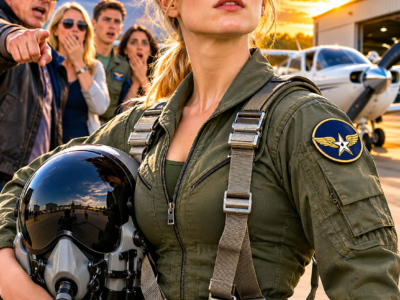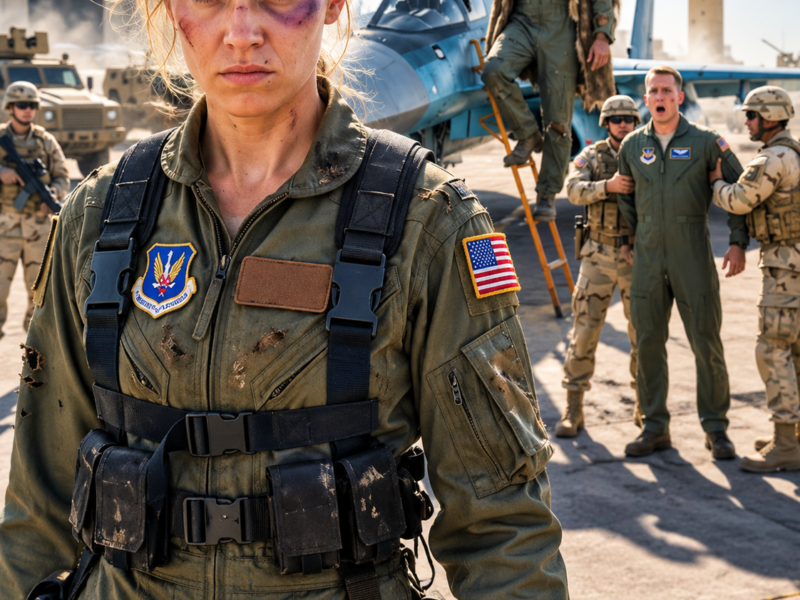
“I heard my own flight commander order three jets to abandon me over enemy territory, then watched him disappear into the clouds while missiles climbed toward my cockpit
The tunnel entrance was hidden beneath a collapsed concrete drainage channel less than a mile from Tashkar Air Base.
Nathan Sorell stopped beside it and listened.
For nearly a minute, neither of us moved.
Somewhere beyond the ridge, an aircraft engine started, followed by the distant rumble of a vehicle crossing the base perimeter.
“Morning patrol,” he whispered. “They’re searching the valley again.”
I adjusted the strap on my tactical vest. My ribs had begun to hurt so badly that every breath felt like a negotiation.
“How long until they reach this area?”
“Depends on whether the dogs pick up our trail.”
He crouched and pulled away a sheet of rusted metal. Beneath it was a narrow opening descending into darkness.
I looked down.
“That doesn’t look like a tunnel.”
“It wasn’t designed for visitors.”
He switched on a small flashlight and pointed it toward the bottom.
“Three miles to Hangar Four. The water should be below our knees.”
“Should be?”
He gave me a brief look.
“Would you prefer a more comforting answer?”
“No.”
“Good. Then let’s go.”
I climbed down first.
The tunnel was worse than he had described. Freezing water ran across the concrete floor, and rusted pipes crowded the ceiling. Every few yards, old metal brackets protruded from the walls. I had to turn sideways to pass some of them.
Sorell followed, carrying the titanium case inside a waterproof pouch.
For three hours, we crawled through the drainage system, moving slowly whenever the tunnel narrowed. My injured ribs burned with every pull of my arms. Twice, I nearly lost my footing in the rushing water.
Sorell never complained.
He moved like a man who had memorized every crack in the concrete.
Eventually, he raised a fist.
We stopped.
Above us, I heard a mechanical hum.
Then voices.
A vehicle passed overhead.
I looked up at the ceiling.
“Security?”
“Probably a patrol truck.”
“How do you know?”
“Because I’ve listened to them drive over this tunnel for years.”
He waited until the sound faded.
Then he pointed toward a vertical shaft at the end of the passage.
“Hangar Four.”
A faint yellow light leaked through a metal grate above us.
I could smell jet fuel.
We had reached the air base.
Sorell took a small cutting tool from his pack and worked on the bolts. He caught the grate before it could fall, then eased it aside.
Beyond it was a basement filled with maintenance equipment.
We climbed out.
The space was enormous.
Hydraulic lifts stood beneath rows of fluorescent lights. Tool carts lined the walls, and thick power cables ran across the polished concrete floor.
At the center of the hangar sat a gray-and-blue Sukhoi Su-34.
Its nose pointed toward the massive hangar doors. Fuel hoses were still attached, and weapons hung beneath its broad wings.
I stared at it.
“That one?”
Sorell nodded.
“Fully fueled. Armed. Scheduled for a morning patrol.”
“How convenient.”
“Don’t get excited. We still have to steal it.”
I looked around.
Two mechanics were standing near the left landing gear. A guard leaned against a pillar near the hangar entrance.
I counted the exits.
There were too many ways for this to go wrong.
Sorell leaned close.
“I’ll take the guard. You handle the mechanics.”
I nodded.
He moved first.
Even after fifteen years in the mountains, his movements were precise. He crossed the floor behind a row of equipment, approached the guard, and pulled him out of sight.
I stepped from behind a hydraulic lift.
“Hands up.”
The mechanics froze.
One of them dropped a clipboard.
The other slowly raised both hands.
“Down,” I ordered.
They obeyed.
I secured them to a metal support with plastic restraints and checked the area.
Sorell emerged from the shadows.
“Clear.”
He looked at the aircraft.
For a moment, he simply stared at it.
“Fifteen years,” he said quietly.
I followed his gaze.
“You used to fly one?”
“Not this model. But I’ve spent enough time studying their systems.”
“Then let’s get you home.”
We climbed the boarding ladder.
The cockpit was unlike anything I had flown. Two seats sat side by side, surrounded by unfamiliar instruments and Cyrillic labels.
I settled into the left seat.
Sorell dropped into the right.
He examined the controls, then looked at me.
“Tell me you know how to start this thing.”
“I know how to start an aircraft.”
“That’s not the same answer.”
“It’s the answer you’re getting.”
He almost smiled.
I studied the cockpit layout while he worked on the communications equipment. The engine controls were familiar enough, but the navigation system was another matter.
“Can you make the transponder look legitimate?” I asked.
“I’m trying.”
He opened a panel beneath the central console.
The titanium case came out of his vest.
“This is what gets us through the air-defense network,” he said. “If the information is still valid.”
“And if it isn’t?”
“Then we’ll have a very short flight.”
I looked at him.
“You’re not particularly good at reassurance.”
“I’ve had fifteen years to practice being disappointed.”
He connected the device.
A low electrical hum spread through the cockpit.
Then the screens flickered.
Sorell leaned closer.
“It’s responding.”
Before I could answer, a heavy door opened across the hangar.
Three enemy pilots walked inside.
They were laughing.
Then they saw the guard’s empty position.
One stopped.
The second looked toward the mechanics.
The third reached for his radio.
“Contact!” I shouted.
The first burst of gunfire struck the aircraft’s armored body.
Metal rang around us.
I ducked instinctively as fragments of a damaged canopy panel scattered across the cockpit.
“Are we ready?” I yelled.
Sorell slammed the access panel shut.
“Ready enough.”
I brought the aircraft’s systems online.
The engines began to turn.
Across the hangar, the pilots scattered for cover.
A security alarm erupted.
The massive doors at the far end began moving.
“Those doors are closing!” Sorell shouted.
I looked toward the runway beyond them.
They were only halfway open.
There wasn’t time to wait.
I advanced the throttles.
The engines roared to life.
Loose equipment rolled across the floor. A maintenance cart overturned, and papers flew through the hangar.
“Hold on!”
I released the brakes.
The aircraft surged forward.
Its wing struck the edge of a maintenance platform, sending metal crashing across the floor. We passed the first row of equipment as the hangar doors continued to descend.
I didn’t slow down.
The Sukhoi burst through the opening with a thunderous crash, tearing one of the door panels from its track.
We emerged onto the runway apron in the gray light before sunrise.
Sirens began wailing.
Vehicles scattered.
Soldiers ran toward the aircraft.
I turned onto the runway and accelerated.
The Sukhoi was heavy, but it responded.
At the far end of the airfield, an emergency vehicle tried to cross our path.
I pulled the nose up.
The wheels left the ground.
For a few seconds, the runway remained beneath us.
Then the airfield dropped away.
We were airborne.
I looked down at Tashkar Air Base.
Smoke drifted from the hangar entrance. Vehicles were moving in every direction. Soldiers were running toward the runway.
Sorell let out a breath.
“We’re actually flying.”
I glanced at him.
“Were you expecting otherwise?”
“I’ve been expecting otherwise for fifteen years.”
I understood that answer.
We climbed into the clouds.
For the first time since my ejection, I felt something other than pain and anger.
I felt free.
But Sorell was studying the navigation display.
“There’s a problem.”
“Of course there is.”
“The base is reporting our aircraft stolen. Their command network is trying to identify us.”
“Can they track us?”
“They can see us. But the information on that drive may make them hesitate.”
He adjusted the receiver.
“It’s giving their system an authorized military identification. We need to keep moving while the signal holds.”
I glanced at the radar display.
Several contacts were appearing behind us.
“Those fighters?”
“Possibly.”
I tightened my grip.
“Then let’s not give them time to decide.”
We headed west.
The mountains gradually disappeared beneath a layer of cloud. Beyond them, the land opened into a vast, dry landscape stretching toward the Persian Gulf.
Sorell remained quiet.
I looked over.
He was holding the titanium case with one hand.
“What’s wrong?”
“Nothing.”
“That’s not convincing.”
He stared at the case.
“I used to imagine this moment.”
“Going home?”
“Every day.”
He swallowed.
“I imagined walking into a room and seeing my wife. I imagined my daughter running toward me. I imagined someone telling me that the fifteen years had been a mistake.”
I didn’t know what to say.
“Are they still alive?” I asked.
He shook his head.
“My wife died eight years ago. My daughter would be grown now.”
He looked out through the canopy.
“I don’t know if she believes I ever existed.”
I felt a familiar ache in my chest.
“Then we’ll make sure she gets to know the truth.”
He looked at me.
“You’re very sure we’ll make it.”
“I’ve decided I’m not dying today.”
That earned a quiet laugh.
We continued toward the border.
Forty minutes later, the coastline appeared.
The water below us shimmered gold beneath the rising sun.
Sorell checked the navigation display.
“Border in three minutes.”
I switched to the emergency frequency.
“Unidentified aircraft, this is Allied Air Defense Command. You are entering restricted airspace. State your identity immediately.”
I looked at Sorell.
He nodded.
I keyed the microphone.
“Allied Command, this is Captain Leah Brennan, United States Air Force. Call sign Banshee. I am piloting a captured hostile aircraft. I have one American survivor aboard. We are requesting immediate clearance to land.”
Silence.
Then the controller returned.
“Banshee, repeat your identification.”
“Captain Leah Brennan. Hatchet Two. I was reported missing yesterday.”
A long pause followed.
“Captain Brennan, your squadron commander reported your aircraft destroyed. We have no record of an ejection.”
“Then your squadron commander was wrong.”
Sorell leaned toward the microphone.
“This is Captain Nathan Sorell. Call sign Inspector. I was reported killed in action fifteen years ago.”
The radio went completely silent.
Then the controller spoke again.
“Stand by.”
I looked outside.
Two gray aircraft emerged from the clouds.
American fighters.
They took position on either side of us.
Their wings were close enough that I could see the pilots inside.
“Allied Command, we have visual confirmation of the aircraft,” the controller said. “Maintain current heading. Do not make any sudden movements. Our fighters will escort you to Aldafra.”
“Understood.”
I looked at Sorell.
“We’re home.”
He didn’t answer.
He was staring at the coastline.
His eyes were wet.
I turned forward and concentrated on the landing.
Twenty minutes later, the runway at Aldafra appeared beneath us.
The base was already in lockdown.
Armored vehicles lined the perimeter. Security personnel stood beside the runway with weapons raised. Several senior officers waited near the command building.
And among them was Major Victor Cain.
I recognized him immediately.
He was wearing the same flight suit he had worn the night before.
He looked pale.
Confused.
And completely unprepared for what was about to happen.
I lowered the landing gear.
The Sukhoi touched down hard, bounced once, then settled onto the runway.
I brought it to a stop.
The engines wound down.
For several seconds, neither Sorell nor I moved.
Then he looked at me.
“Ready?”
I unfastened my harness.
“I’ve been ready since the valley.”
We climbed down.
The sun was bright, almost painfully so after fifteen years in the darkness.
Sorell stood on the ladder for a moment, blinking against the light.
His beard was wild. His clothes were torn. His face looked older than the years he had been missing.
But he was standing on American ground.
And he was alive.
Cain stepped forward.
“Brennan?”
I walked toward him.
He stared at my bruised face, then at the stolen aircraft.
“How are you alive?”
I stopped ten feet away.
“You tell me, Major.”
His mouth opened.
“I saw your aircraft go down.”
“You saw it explode.”
“There was no ejection.”
“There was an ejection.”
He glanced toward the aircraft.
“Where did you get that?”
I didn’t answer.
Sorell climbed down behind me.
The soldiers around us shifted.
One of the officers near the command building stepped forward.
Sorell walked directly toward him, holding the titanium case.
“Captain Nathan Sorell,” he said. “Call sign Inspector. Missing in action fifteen years ago.”
The base commander stared at him.
For several seconds, he seemed unable to speak.
Then he looked toward the silver dog tags around Sorell’s neck.
“Captain Sorell?”
“Yes, sir.”
“You’re alive.”
“I am.”
Sorell raised the case.
“And I brought something back.”
Cain took a step backward.
I saw it.
He recognized the case.
Or perhaps he recognized the expression on Sorell’s face.
The base commander gestured toward the security team.
“What is in that case?”
“Records from the enemy’s military network,” Sorell replied. “Air-defense data, command communications, and the complete recording of last night’s operation.”
Cain’s face changed.
“That’s impossible.”
Sorell turned toward him.
“Hello, Victor.”
The major went rigid.
“You know me?”
“I’ve known your voice for a long time.”
Sorell opened the case and removed a small storage device.
“This contains the transmission from Hatchet Flight. Your order to abandon Captain Brennan. The time stamp. The entire exchange.”
Cain looked toward the base commander.
“Sir, this is a hostile defector. He could be compromised.”
Sorell smiled faintly.
“That’s what they said about me fifteen years ago.”
The base commander raised a hand.
“Major Cain, stand where you are.”
Cain’s jaw tightened.
“I was following mission command.”
“Then you’ll have no difficulty explaining your actions.”
“I had to abort. The mission was compromised.”
I stepped forward.
“You ordered us to scatter while missiles were tracking my aircraft.”
“I believed you were already lost.”
“You heard me requesting cover.”
“I couldn’t risk the rest of the flight.”
I looked him directly in the eyes.
“You didn’t even try.”
He said nothing.
The base commander turned toward the military police.
“Secure Major Cain’s weapon.”
Cain’s expression hardened.
“Sir, you can’t seriously be considering the word of a man who’s been missing for fifteen years.”
The commander didn’t blink.
“I am considering evidence. Something I expect you to provide an explanation for.”
Two military police officers approached.
Cain looked at me.
For the first time, I saw fear in his eyes.
“Brennan, listen. You don’t understand what happened.”
“Then explain it.”
“I can’t do that here.”
“You had no trouble giving me orders over an open channel.”
He lowered his voice.
“You need to be careful.”
I stared at him.
“I spent the last twenty-four hours being hunted in a country that wanted me dead. You don’t frighten me anymore.”
The officers took his sidearm.
Cain didn’t resist.
They turned him around and placed him in restraints.
As they led him away, he looked over his shoulder.
“This goes higher than me.”
Sorell spoke before I could answer.
“We know.”
The base commander turned toward us.
“Both of you are coming inside. Medical personnel will examine Captain Brennan. Intelligence officers will secure the evidence.”
He paused.
“And Captain Sorell, I need you to understand that your return raises serious questions.”
Sorell nodded.
“I’ve had fifteen years to prepare answers.”
We were separated almost immediately.
I was taken to the medical center, where a doctor confirmed two fractured ribs, severe bruising, and dehydration. My flight suit was removed, my injuries treated, and I was ordered to stay in bed.
I lasted twenty minutes.
Then an intelligence officer arrived.
His name was Colonel Adrian Mercer. He introduced himself politely, but his expression told me he had already been briefed on the situation.
“Captain Brennan, we need your account of the mission.”
“You’ll get it.”
“From the beginning.”
I sat up carefully.
“Then I want the recording played in the room.”
Mercer studied me.
“Captain Sorell has provided a storage device. We’re verifying its contents.”
“Good.”
He opened a folder.
“Your squadron commander reported that your aircraft was destroyed by enemy fire. He also reported no evidence of an ejection.”
“That’s false.”
“We’re aware.”
He turned a page.
“There’s another issue. The mission authorization came from a restricted command channel. The target intelligence was classified at a very high level.”
I looked at him.
“Are you saying the operation wasn’t authorized?”
“I’m saying we haven’t established who approved the mission parameters.”
I leaned back.
“Someone sent four aircraft into a trap. Someone knew the valley was covered by an advanced missile network. Someone expected us to trigger it.”
Mercer closed the folder.
“And someone expected you not to return.”
The room went quiet.
“Have you spoken with Major Cain?” I asked.
“He has requested legal counsel.”
“Of course.”
Mercer looked at me carefully.
“Captain, if the evidence confirms what you and Sorell are claiming, this will become a very serious investigation.”
“Then investigate it.”
He nodded.
“I intend to.”
That afternoon, I was moved to a secure briefing room.
Sorell was already there.
He looked different in clean clothes, though his beard and long hair still made him appear as if he had stepped out of another century.
He stood when I entered.
“Captain.”
“Inspector.”
He smiled.
“That’s the first time anyone has called me that in a friendly way.”
I sat beside him.
On the table was the titanium case.
Three senior officers stood near a large display.
Colonel Mercer addressed us.
“We’ve completed an initial examination of the recording. It appears authentic. We have also identified communications matching the time and frequency of the transmission.”
He looked at Sorell.
“We need to understand the scope of the information you’ve brought back.”
Sorell placed both hands on the table.
“First, I want to make something clear. I did not spend fifteen years collecting information to sell it.”
“Then why collect it?”
“Because I needed to know why I was abandoned.”
He opened the case.
“When my aircraft went down, I survived the crash. I managed to reach a concealed position near the border, but my rescue frequency had been disabled. I heard my commander request that the recovery team stand down.”
Mercer looked up.
“Do you have that recording?”
Sorell nodded.
“I have the original transmission and several later communications.”
He connected the storage device.
The display lit up.
A voice filled the room.
“Recovery assets will not be dispatched. Mission status remains classified. No personnel are to acknowledge the aircraft’s presence.”
Sorell stood perfectly still.
I watched his face.
He had heard those words before. Many times, perhaps. But hearing them played in a room full of officers was different.
Mercer leaned forward.
“Can you identify the speaker?”
“Yes.”
“Who is it?”
Sorell gave the name.
“General Malcolm Rusk.”
The room fell silent.
I recognized the name.
General Rusk had once served as the deputy director of strategic operations. He was now a senior adviser attached to the defense command structure.
A man who rarely appeared in public.
A man whose approval could change the course of an operation without leaving a visible signature.
Mercer looked toward the other officers.
“Verify the recording.”
Sorell continued.
“After I recovered from the crash, I learned that my mission had been designed to test a new radar system. I found references to the program in enemy communications. The same pattern appeared again and again.”
He switched to another file.
A list of mission identifiers appeared.
Some were old.
Some were recent.
One was Glass Anvil.
I stared at the screen.
“How many?”
Sorell looked at me.
“Enough to show this wasn’t an isolated incident.”
He enlarged the file.
“Some missions were canceled. Some aircraft returned. Others disappeared.”
Colonel Mercer read the list slowly.
“Were these all test operations?”
“Not all. But the ones marked with the same intelligence authorization code share a pattern. Their flight paths intersected with newly deployed enemy radar systems.”
I felt cold.
“How many pilots?”
Sorell didn’t answer immediately.
Then he pointed to a separate document.
“Seven confirmed aircraft losses. Four missing pilots. Several operations were recorded as ordinary combat losses.”
Mercer looked at him.
“Can you prove the commanders knew?”
“I can prove that certain officers received the technical reports before the missions were authorized.”
He opened another file.
“This is the command correspondence connected to Glass Anvil.”
The display showed a message chain.
The first document described the enemy’s new air-defense network.
The second discussed the need to obtain a complete radar signature.
The third contained the mission plan.
Then came a short line from a senior command account.
OPERATIONAL EXPOSURE ACCEPTABLE. AIRCREW LOSS WITHIN PROJECTED PARAMETERS.
I read it twice.
My hands began to shake.
“Projected parameters?”
Sorell nodded.
“They knew there was a substantial chance of losing the aircraft.”
Colonel Mercer stared at the screen.
“Who wrote that?”
Sorell pointed to the authorization record.
“General Malcolm Rusk.”
Nobody spoke.
Then Mercer slowly closed the folder in front of him.
“This material will be transferred to the appropriate investigative authority. Until then, neither of you will discuss it outside this room.”
I looked at him.
“Are we under arrest?”
“No.”
“Are we free to leave?”
“Not yet.”
Sorell gave a short, tired laugh.
“Here we go again.”
Mercer looked uncomfortable.
“I understand how this sounds.”
“Do you?” Sorell asked. “I spent fifteen years being told I was dead. Captain Brennan was left in a missile trap yesterday. Now we’ve returned with evidence, and the first thing you tell us is that we’re not free to leave.”
Mercer held his gaze.
“I am trying to protect the evidence and protect both of you.”
Sorell said nothing.
I could see how difficult it was for him to believe that.
Finally, Mercer added, “You will have medical care, security, and legal representation. No one is going to disappear you.”
Sorell looked at the door.
“That’s what they told me before.”
The colonel did not argue.
He simply nodded.
The investigation moved faster than anyone expected.
Within forty-eight hours, the recordings had been authenticated. Independent analysts confirmed that the enemy radar network had activated at the exact moment Hatchet Flight entered the Ves Valley.
The electronic signatures matched the data collected by Allied monitoring aircraft.
More importantly, the flight logs showed that Cain’s aircraft had changed course almost immediately after the missile launch.
He had not attempted to locate my position.
He had not requested a rescue package.
He had not even reported an ejection.
Instead, his transmission to command had described my aircraft as destroyed before the crash site had been confirmed.
That was the first major crack in his story.
The second came from the other two surviving pilots.
They were questioned separately.
Danny Puit initially claimed he had been unable to turn back because of the missile threat.
But when investigators played Cain’s recording, his story changed.
He admitted that Cain had briefed the flight privately before takeoff.
The target intelligence had been described as sensitive. The pilots had been instructed to maintain formation even if their warning systems indicated an unexpected threat.
Danny said Cain had also told them that any aircraft lost inside the valley would be considered unrecoverable.
The other pilot confirmed the conversation.
Neither had known I was specifically intended to remain behind.
But both had known the mission was unusually dangerous.
And both had heard Cain tell me I was on my own.
Danny asked to speak with me.
I agreed.
He arrived at the medical center looking ten years older than he had the night before.
He stood near the doorway, his hands hanging awkwardly at his sides.
“Captain Brennan.”
“Lieutenant.”
He swallowed.
“I don’t know what to say.”
“Start with the truth.”
He nodded.
“I should have turned back.”
I didn’t answer.
“I heard you calling. I saw your aircraft take a hit. I knew you were still fighting.”
“Then why didn’t you come?”
He looked down.
“Cain told us to keep going. He said the whole operation depended on the rest of us getting out. I thought if I disobeyed, we’d all be shot down.”
I studied him.
“You thought you might die.”
“Yes.”
“So did I.”
His eyes filled.
“I know.”
“No, Danny. You don’t.”
He looked at me.
“I spent six hours walking through an enemy forest with broken ribs. I listened to dogs hunting for me. I thought about every person I had ever trusted. And all I could hear was your engine disappearing into the clouds.”
He began to cry.
“I am sorry.”
I believed him.
That didn’t mean I could forgive him immediately.
“Tell the investigators everything,” I said. “Don’t leave anything out because you think it might protect your career.”
“I won’t.”
“Good.”
He nodded and left.
Two days later, General Malcolm Rusk was ordered to appear before an independent military inquiry.
He arrived in a dark uniform, surrounded by legal advisers.
He looked exactly like the kind of man who had spent his entire career being obeyed.
He denied everything.
He claimed the radar data was incomplete. He described Glass Anvil as a legitimate reconnaissance mission. He argued that Cain had made an independent tactical decision to withdraw.
Then the investigators played the recording.
Rusk’s own voice filled the room.
“Operational exposure acceptable. Aircrew loss within projected parameters.”
For the first time, the general stopped looking at the papers in front of him.
He looked up.
The recording continued.
A second voice asked whether the pilots had been informed of the increased threat.
Rusk answered.
“They have been given sufficient mission information. Further disclosure would compromise the collection objective.”
I felt my stomach turn.
They had known.
They had known the valley was dangerous.
They had known the radar system was waiting.
And they had sent us anyway.
The inquiry continued for hours.
Documents were presented.
Communications were examined.
Mission records were compared.
At the end of the second day, Rusk was removed from his position pending a criminal investigation.
Cain was charged with conspiracy, falsification of mission reports, and the deliberate abandonment of a fellow officer during combat operations.
Several other senior officers were suspended.
For the first time, the men who had treated pilots like expendable equipment were being forced to answer questions in public.
But there was one more thing Sorell wanted.
He asked Colonel Mercer to help him locate his daughter.
Her name was Emily Sorell.
She was twenty-two years old when her father disappeared. She was now thirty-seven.
She had grown up believing her father had died on a classified mission.
Her mother had passed away eight years earlier.
Sorell had no idea whether Emily lived nearby or whether she wanted anything to do with him.
The investigators found her in a small town outside Colorado Springs.
She worked as a school counselor.
When Mercer told her that her father might be alive, she initially thought it was a cruel mistake.
Then they sent her a photograph.
It showed Nathan Sorell standing beside me on the flight line at Aldafra.
He looked older.
Much thinner.
But the dog tags were unmistakable.
Emily arrived at the base three days later.
I was sitting in the medical center when I heard someone speaking outside the room.
A woman’s voice.
A man’s voice answering quietly.
Then the door opened.
Sorell stood in the doorway.
Behind him was a woman with dark hair and a small silver necklace.
She looked at him as if she were afraid he might disappear if she blinked.
“Dad?”
Sorell didn’t move.
For fifteen years, he had imagined this moment.
He had probably rehearsed what he would say a thousand times.
But when his daughter stood in front of him, he couldn’t find a single word.
Emily stepped closer.
“Dad, is it really you?”
He nodded.
She reached for his hand.
He looked down at her fingers touching his.
Then his face broke.
He pulled her into his arms, and she held him so tightly that his shoulders began to shake.
“I thought you were dead,” she whispered.
“I know.”
“I waited for you.”
“I know.”
“I got married. I got divorced. Mom died.”
He closed his eyes.
“I know, sweetheart.”
She pressed her face against his chest.
“I needed you.”
He held her tighter.
“I know.”
I looked away.
Some moments don’t belong to anyone else.
Later, when Emily had gone to speak with the medical team, Sorell sat beside my bed.
He looked exhausted.
But for the first time since I had met him, he looked peaceful.
“She came,” he said.
“Of course she did.”
“I thought she might hate me.”
“She didn’t.”
He stared at his hands.
“I missed everything.”
I thought about the fifteen years he had lost.
The birthdays.
The ordinary conversations.
The years when his daughter had needed a father and had been told he was gone.
“You can’t get those years back,” I said. “But you can be there for the ones that remain.”
He nodded.
Then he looked at me.
“You saved my life, Leah.”
I shook my head.
“We saved each other.”
He smiled.
“Maybe.”
A month later, the first public statement was released.
The Air Force confirmed that Captain Leah Brennan had survived the Glass Anvil operation and that an investigation had uncovered serious irregularities in the mission authorization and subsequent reporting.
The statement did not reveal every detail.
It couldn’t.
But it did acknowledge that I had been abandoned during an operation in which the risk to the aircrew had not been properly disclosed.
It also confirmed that Captain Nathan Sorell, previously listed as killed in action, had returned after fifteen years in enemy territory.
The news spread quickly.
Journalists gathered outside the base.
Former pilots began contacting investigators.
Families of missing service members demanded answers.
Some of the families had spent years believing their loved ones had died in ordinary combat.
Now they wanted to know whether their losses had been part of the same program.
The investigation expanded.
And with it came a question I had not expected.
What would happen to the people who had followed orders without knowing the truth?
Danny Puit was placed under review.
He cooperated fully, and his testimony helped establish the sequence of events in the valley.
He was eventually cleared of conspiracy, though he received a formal reprimand for failing to report the abandonment immediately.
He never returned to operational flying.
I heard later that he had requested a transfer to training.
He wanted to teach young pilots how to recognize when an order crossed a line.
I didn’t see him again for several months.
When we finally met, he was standing outside a flight simulator classroom.
He looked nervous.
“Captain Brennan.”
“Danny.”
“I’ve been thinking about what you said.”
“Which part?”
“That I should have come back.”
He paused.
“I know I can’t change what happened.”
“No.”
“But I can make sure the next person knows they have a choice.”
I studied him.
“Then do that.”
He nodded.
It wasn’t forgiveness.
Not entirely.
But it was a beginning.
Six months after Glass Anvil, I returned to flight status.
The medical team had cleared my ribs, though the scars remained.
My first day back at the airfield, I stood beside a new Strike Eagle and ran my hand along the fuselage.
The aircraft was similar to the one I had lost.
But it wasn’t the same.
I had spent weeks dreaming about the explosion in the valley. Sometimes I woke up hearing Cain’s voice. Sometimes I could almost feel the aircraft rolling beneath me.
I wondered whether I would ever feel completely comfortable in a cockpit again.
Then I remembered the people who had come home because someone had stayed calm when the world was falling apart.
I climbed the ladder.
The cockpit smelled familiar.
The seat felt familiar.
I settled in and adjusted my harness.
A young pilot approached the aircraft.
“Captain Brennan?”
I looked down.
“Yes?”
“I’m Lieutenant Harris. I’m assigned to your flight.”
I nodded.
“Good to meet you.”
He hesitated.
“Ma’am, I’ve read the report from Glass Anvil.”
I felt a familiar tightness in my chest.
“Then you know what happened.”
“Yes, ma’am.”
He looked at the aircraft.
“Can I ask you something?”
“Go ahead.”
“What do you do when the person giving the order is the one putting everyone at risk?”
I looked at him for a moment.
Then I answered.
“You ask questions. You verify the facts. You protect the people flying beside you. And if an order requires you to abandon someone without justification, you don’t pretend it’s normal just because someone senior said it.”
He nodded slowly.
“Even if it ends your career?”
I thought of the valley.
The missiles.
The dark forest.
The cave.
The fifteen years Nathan Sorell had spent waiting for someone to hear his story.
“Especially then.”
He looked at me with a seriousness I recognized.
I climbed down from the cockpit.
“Come on. Let’s go over the mission.”
We walked toward the briefing room together.
Outside, the morning sun reflected off the runway.
For a long time, I had believed that surviving the valley was the hardest thing I would ever do.
I was wrong.
The hardest part was learning to trust again.
But I had learned something else.
A uniform does not make every person wearing it honorable. Rank does not turn a lie into an order worth following. And loyalty to a country does not mean protecting the people who betray the people serving it.
Nathan Sorell had spent fifteen years believing his country had forgotten him.
I had spent one night believing mine had decided I was expendable.
Neither of us had been right about everything.
But we had both been right about one thing.
The truth was worth bringing home.
A year after Glass Anvil, the independent inquiry released its final findings.
General Malcolm Rusk was convicted of conspiracy and misconduct related to the unauthorized use of military personnel in the radar collection program. Major Victor Cain was convicted for his role in the operation and for falsifying the report of my death.
Several other officers received disciplinary action.
The program was shut down.
The families of the missing pilots received new investigations into their cases.
And Captain Nathan Sorell’s name was officially restored to the service record.
At a small ceremony in Colorado Springs, he received his medals and a formal acknowledgment of his service.
Emily stood beside him.
I stood in the front row.
When the officer presenting the award finished speaking, Sorell looked toward the audience.
His eyes found mine.
He raised his hand in a quiet salute.
I returned it.
No cameras could capture what that moment meant.
No medal could account for the years he had lost.
But he was there.
Alive.
With his daughter beside him.
And that was more than anyone had promised him.
After the ceremony, he walked over.
“Still flying, Banshee?”
“Still flying, Inspector.”
He smiled.
“Good.”
We stood outside while the sun lowered behind the mountains.
For a while, neither of us spoke.
Then he said, “You know what I remember most about that night?”
“The tunnel?”
“No.”
“The aircraft?”
“No.”
He looked at the sky.
“The moment I heard your voice on the radio. You were injured, surrounded, and probably terrified. But you were still trying to protect your wingman.”
I looked at him.
“Danny was a rookie.”
“I know.”
“I couldn’t just leave him.”
Sorell nodded.
“That’s what I remembered about being a pilot.”
I looked toward the airfield.
“What?”
He smiled faintly.
“Before they made us into numbers on a report, we were people who looked after each other.”
I let that settle.
Then I extended my hand.
He took it.
And for the first time since the night over Ves Valley, I felt that the story had finally reached its end.
Not because the men who betrayed us had been punished.
Not because the world had apologized.
But because the truth had survived the people who tried to bury it.
The End.