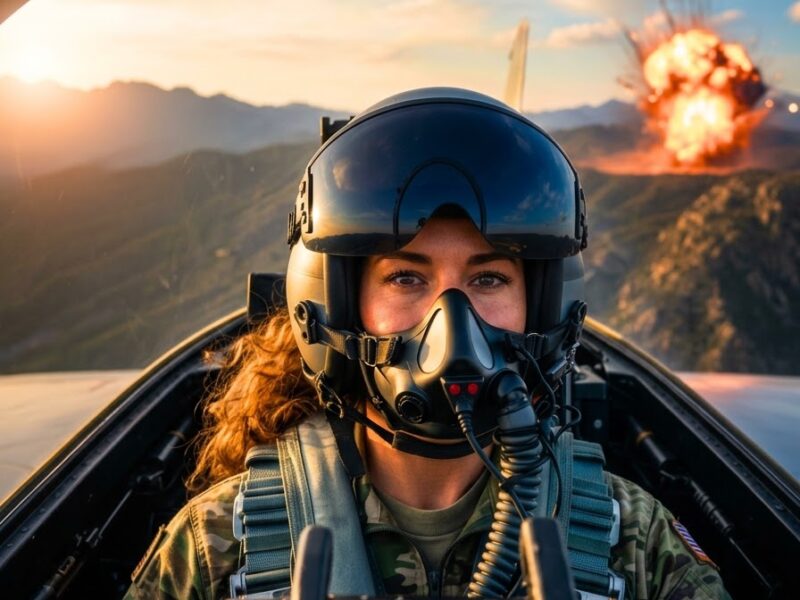
They laughed when I was stripped of my flight badge outside the briefing room at Naval Air Station Oceana, and the commander told me, “You’re finished,”
They laughed when I was stripped of my flight badge outside the briefing room at Naval Air Station Oceana. The cold morning air hit my face like a slap, but it was nothing compared to the weight of Commander Vance’s words.
“You’re finished, Miller,” Vance said, his voice carrying clearly down the polished concrete hallway. “We don’t need cowboys in this squadron. You’re a liability to the Navy, to your unit, and to the lives of every man standing here.”
I stood at rigid attention, my jaw clenched so hard my teeth hurt. My fellow SEALs and aviators stood in a line against the wall. Some looked at the floor, unable to meet my eyes. Others—men I had shared bread and blood with—stared straight ahead with cold indifference. Standing just a pace behind Vance was Lieutenant Marcus Hayes. Marcus had been my wingman for three years. He had been the best man at my wedding before my life fell apart. Now, his expression was a mask of utter calm, a quiet victory buried beneath a rehearsed veneer of solemnity. I didn’t know it then, but the classified accusation of reckless endangerment that had just stripped me of my wings had been planted by his hand.
“Hand them over,” Vance commanded, holding out a pale, calloused palm.
My hands trembled slightly as I reached for the brass flight badge pinned to my chest. The sharp metal pricks bit into my thumb as I unpinned it. Six years of blood, sleepless nights, high-altitude drops, and low-level evasive runs, all reduced to a small piece of metal. I dropped the badge into Vance’s open hand. It made a light, metallic clink that echoed louder than a gunshot in my mind.
Five minutes later, I walked down the long, fluorescent-lit corridor carrying a single cardboard box. Inside was everything I had left from my six years in uniform: a couple of spare flight patches, a worn leather-bound logbook, my discharge papers, and a framed photograph of my little sister, Maya. The photo had been taken two summers ago on a beach in North Carolina, just months before stage four leukemia took her from us. Her wide, laughing eyes seemed to look out from the wooden frame, asking me what had gone wrong.
I kept my head up until I crossed the perimeter gate. I didn’t let a single tear fall while the sentries checked my ID one last time and opened the barrier. I drove three miles down the coastal highway, pulled my battered pickup truck into a deserted turnout overlooking the gray, churning Atlantic, and killed the engine.
Then I broke.
I wrapped my arms around the steering wheel and wept until my chest ached and my throat felt like raw glass. The humiliation wasn’t just about losing my career; it was the realization that everything I had built my identity upon had been erased in a single thirty-minute hearing. I was damaged goods. A disgraced naval aviator discharged under a cloud of engineered suspicion.
For three days, the world ceased to exist. I locked myself in my small apartment off base, drawing the blinds and ignoring the sunlight. Empty takeout boxes accumulated on the counter. My phone buzzed incessantly at first—calls from reporters, former acquaintances, and a few frantic messages from my ex-wife—before eventually settling into a deafening silence. I didn’t answer a single one. I sat in the dark, staring at Maya’s photograph, wondering how a man could go from flying at Mach 2 to being completely invisible in seventy-two hours.
On the fourth morning, a sharp vibration against the wooden nightstand woke me. I reached out blindly and pulled the phone to my face. The screen blinded me for a second. It was a text message from an unregistered, burner line.
Come to Hangar 9 at Fentress Airfield. Alone. 0600.
Fentress was an auxiliary landing field miles away from the main base, largely used for night touch-and-go practice and storage of decommissioned craft. My finger hovered over the delete button. It felt like a cruel joke, perhaps some final mockery organized by the guys back at the base. But the silence in my apartment was suffocating, and the tiny spark of curiosity was the only thing I had felt in days.
I pulled on a dark hoodie, threw on a pair of worn jeans, and drove out through the morning fog.
Hangar 9 sat at the edge of the airfield, its corrugated steel walls rusted at the base and streaks of bird droppings covering the high windows. The side door was unlocked. It groaned softly as I pushed it open and stepped inside. The air was thick with the smell of hydraulic fluid, aviation fuel, and old dust.
Standing beside a battered, matte-black T-45 Goshawk training aircraft was an old man wearing a grease-stained flight suit. Master Chief Master Sergeant Frank “Grizz” Miller—no relation, though he had treated me like a son during my advanced flight training years ago. He was retired now, his face a roadmap of deep wrinkles and scars from three decades in naval aviation.
“You look like hell, Kid,” Grizz said without greeting. His voice sounded like gravel being turned in a cement mixer.
“What am I doing here, Grizz?” I asked, my voice raspy from disuse. “If Vance finds out I’m on military-adjacent property, he’ll have the MPs lock me up for trespassing.”
“Vance doesn’t own this dirt, and he damn sure doesn’t own me,” Grizz grunted. He reached into the back of a battered metal workbench and pulled out a thick, yellowed manila folder. He held it out toward me. “Take a look.”
“I’m done with folders, Grizz. My file is sealed. I’m out.”
“Just open the damn folder, Logan.”
I hesitated, then took the file. My hands went cold as soon as I flipped open the cover. Inside were glossy 8×10 satellite telemetry prints, unredacted radar flight logs from our last deployment over the Baltic, and official incident reports. At the bottom of every page was a signature authorizing alterations to the flight paths—my flight paths. The signatures didn’t belong to the air traffic safety board. They belonged to Commander Vance.
“What is this?” I whispered, my eyes scanning the coordinates. “This log says I broke formation over Russian-adjacent airspace on the fourteenth. I wasn’t even in the air that day. I was grounded with a fever.”
“Someone altered the telemetry logs, Logan,” Grizz said, leaning back against the wing of the T-45. “They built a paper trail over twelve months. Every time a pilot made a minor error, they shifted the altitude data onto your callsign. They made you look like a wild man, a rogue element who was going to get a whole flight division killed.”
“Why?” The word tore out of me. “Why would Vance do this to me?”
“Because you were too good at noticing things you weren’t supposed to see,” Grizz replied coldly. He reached into his pocket and threw a final, single piece of paper on top of the folder. “And because someone needed a fall guy so they could clear a slot in the unit for Marcus.”
I stared at the last page. It wasn’t a standard naval document. It bore no unit insignia, only a top-secret classification stamp from an obscure joint-ops contractor operating out of the Department of Defense. It was a operational request for a highly specialized pilot. A pilot with no family, no active naval ties, no official paper trail, and a proven willingness to push aircraft past their engineered limits.
A pilot who officially didn’t exist anymore.
Grizz stepped closer, his dark eyes locking onto mine. “They don’t need someone who follows the rules, Logan. The bureaucracy wants sheep, but the dark ops groups out in the sand need wolves. They need someone who survives.”
The air in the hangar felt suddenly thin. The sting of betrayal by Vance and Marcus burned hot in my chest, replacing the cold numbness that had paralyzed me for days.
“If I sign onto this,” I said, my voice dropping to a low growl, “what happens to my record?”
“Nothing,” Grizz said bluntly. “You remain a disgraced, discharged washed-up aviator to the rest of the world. But you get back in the sky. And one day, when you have enough altitude, you can drop down on the bastards who put you in the mud.”
I didn’t answer with words. I just looked at the cockpit of the jet behind him. Two weeks later, I was standing on an unmarked tarmac deep in the Syrian desert.
The heat hit you the moment the transport plane’s ramp dropped. It wasn’t just warm air; it was a physical wall of 115-degree heat laced with the smell of burning diesel and fine sand that caught in the back of your throat.
The base wasn’t listed on any map. Known simply as Forward Operating Location Delta, it was a cluster of blast walls, low-profile hangars, and satellite dishes hidden in a rocky basin near the Iraqi border. There were no flags flying here. No uniform regulations. The men and women walking the dirt paths wore unmarked flight suits, civilian tactical gear, and heavy dust scarves.
I was assigned to an old modification of the F-15E Strike Eagle—a plane stripped of all standard markings, painted in a light-absorbing matte grey, and retrofitted with experimental avionics that weren’t supposed to exist for another decade.
My new unit was called the “Ghost Squadron.” We weren’t flying defensive patrols or escorting high-value targets. We were the fire brigade for missions that the Pentagon would deny ever occurred.
“Listen up, ‘Ghost-4’,” my new commander, a hardened former Blackwater contractor who went by the callsign Vanguard, told me on my first day. “I don’t care why you got kicked out of the Navy. I don’t care about your court-martial. Out here, the ground doesn’t give a damn about your flight badge. If you fly soft, you die. If you freeze up, you die. Questions?”
“When do I fly?” I asked.
Vanguard let out a dry, humorless bark of a laugh. “Tonight.”
My first mission came at 0200. The target was an illegal weapons convoy moving through a canyon system controlled by a heavily armed insurgent faction equipped with modern Russian-made surface-to-air missiles. Standard rules of engagement called for high-altitude bombing, but the canyon walls masked the targets from satellite guidance. Someone had to take an aircraft down into the gap, fly beneath the radar ceiling, and drop laser-guided munitions by hand.
It was a suicide run. It was precisely the kind of maneuver that Vance had called “reckless and unhinged” during my court-martial.
I strapped into the cockpit of the grey Strike Eagle. The canopy slid down, sealing me into a world of illuminated displays and the steady, rhythmic hum of oxygen flowing into my mask. As the jet taxied to the end of the unlit runway, the heat of the desert faded into the cool, calculated focus of the cockpit.
“Ghost-4, you are cleared for departure,” the tower radioed in a low, flat tone. “Good hunting.”
I shoved the twin throttles forward into full afterburner. Twin pillars of orange flame erupted from the rear of the aircraft, pinning me back into my ejection seat as the jet accelerated down the dark strip of asphalt and clawed its way into the night sky.
Within ten minutes, the desert stretched beneath my aircraft like an endless black ocean. The thermal imaging displays glowed in shades of pale green and white. Ahead, the mountainous terrain rose up like giant, jagged teeth.
“Ghost-4, you are entering the hot zone,” Vanguard’s voice crackled through my helmet. “SAM systems are active in the area. Keep it low.”
“Copy, Vanguard. Going dark.”
I snapped the throttles back, dropped the jet’s nose, and plunged down toward the floor of the canyon. The altimeter spun backward at terrifying speed: 5,000 feet… 2,000 feet… 500 feet… 200 feet.
At 180 feet above the desert floor, traveling at over five hundred miles per hour, the margins for error vanished completely. A single twitch of my wrist on the control stick would paint my aircraft across the canyon wall in a fireball. The rock faces roared past my wingtips in the night-vision display, terrifying and beautiful.
Suddenly, a bright white streak erupted from the valley floor ahead.
“Threat lock! SAM launch, two o’clock!” the automated warning system screamed in my ears. A blaring tone echoed through my headset.
A radar-guided missile was climbing fast, its fiery tail cutting through the darkness, locking directly onto my heat signature.
Standard procedure dictated pulling up, ejecting countermeasures, and climbing out of the envelope. But climbing meant exposing myself to three other missile batteries stationed on the ridgeline.
Every maneuver they called reckless becomes the reason you survive, Grizz’s voice echoed in my head.
Instead of pulling up, I inverted the aircraft. I flipped the heavy fighter upside down, pulled back hard on the stick, and dove deeper into the mouth of the canyon. The airframe groaned under the sudden 8-G load. My vision began to narrow at the edges, dark grey spots creeping in as the blood was forced out of my brain down into my legs.
I yanked the stick to the left, snapping the plane into a knife-edge pass between two massive rock towers. The missile couldn’t match the extreme angle of attack; it slammed directly into the cliffside above me, exploding in a massive shockwave of flame and shattered rock that lit up the cockpit like daylight.
“Ghost-4! Telemetry shows you just dove below terrain elevation! Do you copy?!” Vanguard shouted over the radio, genuine panic in his voice.
“Target acquired,” I replied smoothly, my voice remarkably steady despite the sweat pouring down my neck.
I brought the jet right-side up, lined the crosshairs of the targeting pod over the lead vehicle in the convoy below, and squeezed the trigger on the stick.
“Paveway away.”
A second later, a two-thousand-pound precision bomb slammed into the center of the convoy. A violent column of fire erupted from the canyon floor, tearing through the ammunition trucks and chain-reacting across the entire line of insurgent vehicles.
“Target destroyed,” I said, pulling the stick back and rocketing straight up through the smoke into the safety of the upper sky. “Heading home.”
Silence hung over the tactical radio channel for five long seconds. Then Vanguard’s voice came back, stripped of its previous arrogance.
“Solid work, Ghost-4. Come on back. The coffee’s cold, but the beer is waiting.”
When I landed and stepped down from the ladder, the ground crew didn’t speak. They stood in the shadows of the hangar, watching me with a mix of awe and quiet respect. There were no medals handed out that night. No announcements over the base PA. But as I walked past the mechanics, one of them quietly handed me a fresh flight patch with a black skull emblazoned over a pair of silver wings.
I took it and slapped it onto my suit. The desert had taken my old life, but in the heat and fire, it was forging something far more dangerous.
Six months passed in a blur of kerosene, late-night scrambles, and cold, calculating violence.
The nameless base in Syria had become my entire universe. I no longer thought about my old life in Virginia Beach. I didn’t think about the beach house, the local bars, or the quiet evenings watching the sun set over the Chesapeake. The anger that had nearly consumed me during those first few days after my court-martial had shifted. It was no longer a wild, blinding rage; it had condensed into something cold, heavy, and extremely precise.
Every mission became fuel. Every insult Marcus had whispered behind my back, every sanctimonious lecture Commander Vance had delivered about my “lack of discipline”—I turned all of it into raw, razor-sharp focus inside the cockpit.
And the results spoke for themselves.
Where other pilots hesitated, I executed. Where standard doctrine called for retreat, I found the single narrow vector that led through the threat envelope. I led strikes against illegal weapons smuggling networks, destroyed high-value terrorist installations, and flew low-altitude recon runs through air space so heavily defended that standard naval squadrons refused to touch them without a full carrier strike group backing them up.
My callsign inside the classified operational networks ceased to be “Ghost-4.” They just called me The Ghost.
Contractors and specialized military brass began to talk. Reports of an unidentified grey Strike Eagle operating with terrifying precision in the Middle Eastern theater began circulating through high-level tactical meetings in Washington. Senior commanders—men who wore three and four stars on their shoulders—began issuing directives that specifically requested my aircraft for critical operations.
The very establishment that had thrown me into the gutter was now relying on my shadow to keep their operations alive.
It was on a Tuesday evening, following a brutal sixteen-hour operational rotation over the Syrian border, that everything shifted again. I had just brought my jet down onto the cracked asphalt of Base Delta. The engines were spooling down, singing their high-pitched metallic whine as the ground crew rushed out to wheel the chocks under the heavy tires.
I popped the canopy latch and pulled my helmet off, inhaling the hot desert air. The sun was dipping below the western horizon, painting the sky in deep shades of crimson and purple.
As I climbed down the yellow maintenance ladder, I noticed an unfamiliar staff car parked near the edge of the hangar bay. It was a dark, air-conditioned civilian SUV with government plates. Standing next to it, leaning heavily against the rear bumper, was a man in a crisp white Navy officer’s uniform.
The contrast between his pristine white dress uniform and the oil-stained, dust-covered environment of our black-site airfield was glaring.
I dropped my flight bag onto the concrete and walked toward him. As I drew closer, the shadows shifted, revealing the man’s face under the bright halogen lights of the hangar.
My blood ran cold.
It was Commander Vance.
He looked shockingly different from the man who had stripped my wings six months ago. The arrogant, upright posture was gone. His shoulders were slouched, his uniform slightly rumpled at the collar. Deep, dark circles hung beneath his eyes, and his hair—which had been neatly trimmed iron-grey—was now thin and patchy. He looked old, broken, and deeply afraid.
He watched me approach, his eyes widening slightly as he recognized my face beneath the layer of sweat and operational grime.
“Logan,” he said softly. His voice lacked the booming authority that had once commanded an entire airfield.
I stopped ten feet away from him. I didn’t salute. I didn’t stand at attention. I folded my arms across my chest, my face an unreadable mask of stone.
“You’re not supposed to be here, Commander,” I said, my voice dropping an octave into a low threat. “This base doesn’t exist. And former officers who were dishonorably discharged aren’t supposed to be talking to high-ranking Navy personnel.”
Vance swallowed hard, his neck muscles straining against his collar. He looked around nervously, as if expecting snipers to open fire from the dark corners of the steel roof above us.
“I had to track you down,” Vance whispered, taking a hesitant step forward. “It took me three months of pulling favors with Defense Intelligence just to find out what happened to you after Fentress. They told me you were dead, Logan. Then I saw the mission telemetry from the Bekaa Valley strike last week. Only one man flies an F-15 like a switchblade.”
“State your business, Vance,” I said coldly. “Before I have the base security team drag you to the perimeter wire and throw you into the desert.”
Vance reached out a hand as if to touch my arm, but caught himself when he saw the fire in my eyes. He pulled his hand back, his fingers trembling.
“I owe you an apology,” he said. The words seemed to physically hurt him as they crossed his lips. “What happened at NAS Oceana… the court-martial… stripping your wings in front of the squadron. It was a mistake. A horrific mistake.”
I let out a harsh, dry laugh that echoed off the metal hangar walls. “A mistake? You destroyed my life. You branded me a rogue and a coward. You let my wingman stand there and watch me burn while you signed off on forged telemetry logs! You didn’t make a mistake, Vance. You committed a crime.”
“You don’t understand!” Vance suddenly shouted, his voice cracking with desperation. He stepped closer, his eyes pleading. “I removed my helmet, Logan! You have to listen to me! I didn’t have a choice!”
“You’re a Commander in the United States Navy,” I spat back. “You always had a choice.”
“No,” Vance whispered, his head dropping as he stared down at the oil-stained pavement between us. “Not when they hold everything you love over a fire. You owe me the truth? Fine. The truth is… the orders to destroy your career didn’t originate from my office.”
My stomach tightened into a hard knot. The anger that had been driving me for six months suddenly flickered, replaced by a dark, creeping dread.
“What are you talking about?” I demanded, grabbing Vance by the lapel of his immaculate white dress jacket and yanking him forward until his face was inches from mine. “Who gave the order?!”
Vance didn’t fight back. He reached into his inner jacket pocket with a shaking hand and pulled out a heavy, sealed manila envelope.
“I was given a choice,” Vance stammered, his eyes wide with genuine terror. “Either I sign the falsified reports and push you out of the Navy, or my family… my daughter… would suffer an ‘unfortunate accident.’ I tried to find out who was pulling the strings. I spent six months digging through encrypted communications on the fleet network after you left.”
He shoved the envelope into my hands.
“I found the source of the order yesterday,” Vance whispered, his voice barely audible over the distant roar of a generator. “Then I took the first flight out of Norfolk. The person who set you up… the person who ruined you…”
“Who is it, Vance?” I snarled, gripping the envelope so tightly the paper crumpled in my fist.
Vance looked toward the open desert, where the night was settling in like a heavy shroud.
“The orders didn’t come from an enemy, Logan. They came from inside your own house.”
My thumb slipped under the heavy wax seal of the envelope and tore it open.
Inside was a single glossy black-and-white print. The photograph had been taken with a long-range surveillance lens through the window of a private terminal at an airfield in Zurich, Switzerland.
The image showed two figures standing near the stair car of an unmarked Gulfstream jet. On the left was an intelligence handler wearing an expensive tailored suit. On the right, shaking his hand with a calm, businesslike smile, was Lieutenant Marcus Hayes.
My wingman. My friend. The man I had pulled out of a burning cockpit during a training crash in Pensacola five years ago.
“Marcus?” I whispered, the name feeling like ash on my tongue. “It was Marcus?”
“It wasn’t just about taking your flight slot in the squadron,” Vance said, his voice quiet and heavy. “Hayes wasn’t just an ambitious officer trying to climb the ranks. He was working for a private defense syndicate—an umbrella group selling classified radar signatures and high-altitude flight telemetry to foreign buyers.”
I stared at the photograph, the reality of the past year crashing down on me with terrifying clarity. Marcus hadn’t just stood behind Vance during my court-martial out of professional detachment. He had been the architect. He had used his access as my wingman to log into my tactical computer, upload the altered flight paths, and plant the evidence that destroyed my life.
“Why would he do it?” I asked, my voice barely a whisper. “His father was a general. His family had money. He had everything.”
“Greed doesn’t care about background, Logan,” Vance said bitterly. “Hayes was deep in debt to foreign interests after a series of failed investments in European defense startups. They offered him an out: give them the operational flight profiles of our dark-site tactical fighters, or face financial ruin and prison. He chose to sell you out to save himself. You were the only pilot in the unit whose skill was high enough to cover for his inconsistencies. If you were gone, he became the lead tactical advisor for the sector.”
I turned the photograph over. On the back, written in sharp red ink, were three handwritten words that made my blood run entirely cold.
SHE’S NEXT.
My breath caught in my chest. The world seemed to stop spinning. The hum of the jet engines, the smell of aviation fuel, the desert heat—everything vanished, replaced by an icy, blinding terror.
“My sister is dead, Vance,” I said, my voice shaking uncontrollably as I looked up at him. “Maya died of leukemia two years ago. Who is this referring to?!”
Vance’s face went pale. He looked at me with genuine confusion and horror. “Maya? Logan… what are you talking about? Your sister isn’t dead.”
The floor felt like it was tilting beneath my feet. I grabbed Vance’s shoulder, my fingers digging into his flesh through his uniform.
“Don’t lie to me!” I screamed, losing control for the first time in six months. “I went to her funeral! I stood by her grave in Norfolk! I watched them lower her into the ground!”
“You watched a closed casket!” Vance yelled back, shaking his head frantically. “Logan, think! Who arranged the medical transport from the private clinic in Germany? Who managed the funeral arrangements while you were deployed in the Pacific?”
The memory hit me like a physical blow. Marcus.
When Maya’s condition had deteriorated rapidly while I was aboard an aircraft carrier in the Western Pacific, it was Marcus who had handled the communications. It was Marcus who had coordinated with the civilian hospital. It was Marcus who had arranged the private transport, claiming his family’s foundation was paying for her advanced, experimental treatment in Europe. When I finally received emergency leave and arrived home, the casket was already sealed. Marcus had stood beside me at the gravesite, his arm around my shoulder, telling me she had passed peacefully in her sleep and that the terminal infection had made an open viewing impossible.
I had been so crushed by grief that I had never questioned it. I had accepted the death certificate signed by a doctor I had never met.
“She’s alive?” I stammered, my knees suddenly buckling. “Where is she?”
“She was never sick, Logan,” Vance said, his voice filled with dread. “It was a leverage play. Hayes set up a fake medical profile three years ago. He moved her to a private facility in northern Italy under a false name. He used her as an insurance policy. As long as you thought she was dead, you were emotionally unstable and easy to manipulate. But if you ever figured out the truth about the telemetry logs… he had a knife held to her throat.”
“Where is she now?” I demanded, my hands locking around Vance’s throat. “WHERE IS SHE?!”
“I don’t know the exact location!” Vance choked out, clawing at my hands. “All I know is… Hayes left Norfolk forty-eight hours ago. He caught a private flight to a remote facility near Lake Como. He knows I started digging. He knows the cover story is falling apart. If he realizes you’re alive and coming for him…”
He didn’t need to finish the sentence.
I released Vance, letting him slump against the side of his SUV, gasping for air.
I turned and looked back toward the dark hangar. The grey F-15 Strike Eagle sat on the concrete, its black nose cone pointed out toward the desert runway like a predator waiting for the signal to strike.
There were no official military channels left for me to use. I was an erased man, flying an unregistered aircraft from a base that didn’t exist. If I took that jet into European airspace without NATO clearance, every air defense network from Spain to Germany would track me down and blow me out of the sky. I would be labeled an international rogue, a terrorist pilot.
I didn’t care.
I walked back into the hangar, grabbed my flight helmet from the workbench, and hooked the oxygen mask to the helmet strap.
“Vanguard!” I roared into the quiet darkness of the base structure.
The contractor commander stepped out of the tactical operations office, a mug of black coffee in his hand, his eyes narrowing as he saw the expression on my face.
“What’s going on, Ghost?” Vanguard asked.
“I need fuel,” I said, my voice completely devoid of emotion. “And I need every long-range drop tank you have in the armory mounted on my hardpoints right now.”
Vanguard stared at me for three long seconds. He looked past me at Commander Vance, who was leaning against his car, breathing heavily, and then back at the fire burning in my eyes.
“That’s unauthorized deployment, son,” Vanguard said quietly. “If you take off without a flight plan, I can’t protect you. The company can’t protect you. You’ll be entirely on your own.”
“I’ve been on my own for six months,” I replied, stepping up onto the ladder of the Strike Eagle. “Are you going to fuel the plane, or am I going to take it by force?”
Vanguard looked down at his coffee mug, took a slow sip, and then tossed the paper cup into a trash can. He turned to the ground crew sleeping in the break room bay.
“Get the fuel truck!” Vanguard barked at the top of his lungs. “Mount two external tanks on Ghost-4! Move your asses!”
Ten minutes later, the heavy twin engines of the Strike Eagle screamed into life, shaking the metal walls of Hangar 9. I strapped myself into the seat, lowered the dark visor of my helmet, and advanced the throttles.
The skies over southern Europe were thick with low-hanging storm clouds as I crossed the Mediterranean at 40,000 feet.
I was flying completely dark. The Strike Eagle’s transponder was off, radar emission was set to passive, and I was running on a narrow, dangerous corridor between commercial flight paths. My fuel gauges were slowly creeping toward the red zone despite the external tanks I had jettisoned thirty minutes prior over the sea.
In my mind, there was no fear. There was no hesitation. The world had shrunk down to a single, burning objective: Lake Como, Italy.
My tactical display lit up with yellow warnings as I crossed into Italian airspace. Italian Air Force radar installations on the coast had picked up my high-speed signature.
“Unidentified aircraft, unidentified aircraft,” an Italian air traffic controller’s voice cracked through the emergency frequency in crisp, accented English. “You are entering restricted airspace without a flight plan. Squawk 7700 immediately and identify yourself, or you will be intercepted.”
I ignored the call and pushed the stick forward, sending the heavy fighter plunging down through the thick cloud layer into the mountainous terrain below.
The green-and-grey peaks of the Italian Alps erupted around me through the fog. I flew low, tracing the contours of the valleys, using the towering granite mountains to block the ground-based radar signals. The aircraft shook violently as heavy turbulence hit the wings, rain plastering the canopy in thick, horizontal streaks.
At 0315 hours, the dark expanse of Lake Como appeared through the mist ahead.
Sitting on a secluded peninsula on the northern shore of the lake was a massive, walled estate. The property was surrounded by dense forest, with a private dock extending into the dark water and a small helipad near the rear gardens.
Using my forward-looking infrared pod, I zoomed in on the courtyard. Two armored SUVs were parked near the entrance. Armed guards wearing tactical gear were patrolling the perimeter wall. And standing near the rear balcony of the main villa, holding a satellite phone to his ear, was Marcus Hayes.
Beside him, guarded by two men with automatic rifles, was a young woman tied to a heavy iron chair. Even through the grainy green thermal image on my display, I recognized the shape of her face, the way she held her head.
It was Maya.
My heart hammered against my ribs like a sledgehammer. She was alive. She was breathing. And Marcus was standing over her, a gun holstered at his hip.
“Ghost-4, this is Italian Air Command,” a sharp voice broke through the radio. “Two Eurofighter Typhoons are scrambling to your location. You have sixty seconds to turn away or face lethal force.”
I didn’t have sixty seconds. I had now.
I snapped the Strike Eagle into a steep dive, aiming the nose directly at the estate’s outer perimeter. I didn’t fire weapons—a two-thousand-pound bomb would kill everyone on the peninsula, including my sister.
I used the plane itself as a weapon.
I brought the jet down to twenty feet above the surface of the lake, accelerating to Mach 1.1. The aircraft broke the sound barrier directly over the water. A deafening, violent sonic boom echoed off the surrounding mountains like a mega-ton explosion. The shockwave ripped across the estate, shattering every glass window in the main villa, throwing the armed guards off their feet, and sending solar panels and light fixtures flying across the courtyard.
The sudden blast of sound and air pressure threw the estate into absolute chaos. Guards dropped their weapons, clutching their bleeding ears as the thunderous roar of my engines tore through the night sky.
I pulled the jet into a sharp, vertical climb, reached 2,000 feet, and pulled the emergency ejection handle between my legs.
BANG.
The explosive charges beneath my seat detonated, blowing the canopy off the fighter and launching me into the cold night air. The unmanned Strike Eagle continued its arc, flying miles out over the uninhabited ridge of the mountain before crashing into an empty forest slope in a towering fireball.
I drifted down through the smoke and rain under my black tactical parachute, steering the canopy directly toward the estate’s ruined courtyard.
I hit the wet grass hard, rolling through the impact, unclipping my parachute harness before I even came to a complete stop. I drew my sidearm—a silenced 9mm pistol I had taken from the armory at Base Delta—and moved through the shattered glass of the villa’s terrace.
The guards were still disoriented from the sonic boom, stumbling through the smoke. I dropped two of them with precise shots before they could raise their weapons.
I stepped through the shattered French doors into the main living room.
Marcus was on his knees near the center of the room, blood streaming from his nose from the atmospheric blast, his pistol lying on the rug three feet away from his hand. He was scrambling toward it, his breathing ragged and frantic.
I stepped on his hand before his fingers could touch the frame. The bones in his fingers cracked beneath the heavy tread of my flight boots.
Marcus screamed in pain, rolling onto his back, looking up through tear-filled eyes.
When he saw me standing over him—wearing my black flight suit, covered in rain and soot, holding the pistol pointed directly at his chest—his face turned completely white. It was as if he were looking at a ghost returned from the grave.
“Logan…” Marcus gasped, his voice trembling violently. “You’re… you were supposed to be…”
“Dead?” I asked softly.
“Logan, please!” he begged, raising his uninjured hand in terror. “It wasn’t my idea! They made me do it! The syndicate… they had files on all of us! I had to protect myself!”
“You sold my life,” I said, my voice steady, ice-cold, and absolute. “You stole my wings. You made me believe my sister was in the ground while you kept her in a cage.”
“I didn’t hurt her!” Marcus sobbed, tears cutting through the grime on his face. “She’s alive! Look at her! She’s right there! You can have her back, Logan! Just let me go… take the money in the vault and let me walk!”
I glanced toward the side room. Maya was sitting in the chair, her eyes wide with shock, tears streaming down her cheeks as she stared at me.
“Logan?” she whispered, her voice fragile, barely audible above the sound of the rain pouring through the broken roof. “Is that really you?”
“It’s me, Maya,” I said softly, never taking my eyes off Marcus. “It’s over.”
Marcus saw my distraction and made a desperate, wild dive for the gun on the floor.
BANG.
A single shot echoed through the shattered room. Marcus froze mid-reach, his eyes widening in shock, before he collapsed onto his face, motionless.
Silence settled over the villa. The only sound left was the drumming of the rain against the marble floor and the distant wail of sirens echoing from the town across the lake.
I lowered the pistol, walked over to my sister, and pulled out a tactical knife to cut the heavy zip-ties binding her wrists. The moment her hands were free, she threw her arms around my neck, burying her face in my shoulder, sobbing uncontrollably.
“They told me you were killed in action,” she cried, her body trembling against mine. “I thought I was all alone.”
“You’re never alone,” I whispered, holding her tightly with my right arm while wrapping my coat around her shoulders. “I’m right here. I’ve got you.”
In the distance, the searchlights of approaching police helicopters swept across the dark waters of Lake Como. Within minutes, international authorities, military police, and state officials would flood the property. There would be investigations, inquiries, and endless questions about the rogue American pilot who had flown an unregistered fighter jet across half the world.
Let them come.
They had taken my rank. They had taken my flight badge. They had dragged my name through the mud and tried to bury me in the dark. But as I stood in the ruined room, holding my sister in my arms while the dawn broke over the mountains, I realized something Vance and Marcus had never understood.
You can strip a man of his wings. You can strip him of his uniform. But you can never kill the ghost once he learns how to hunt in the dark.
The end.









