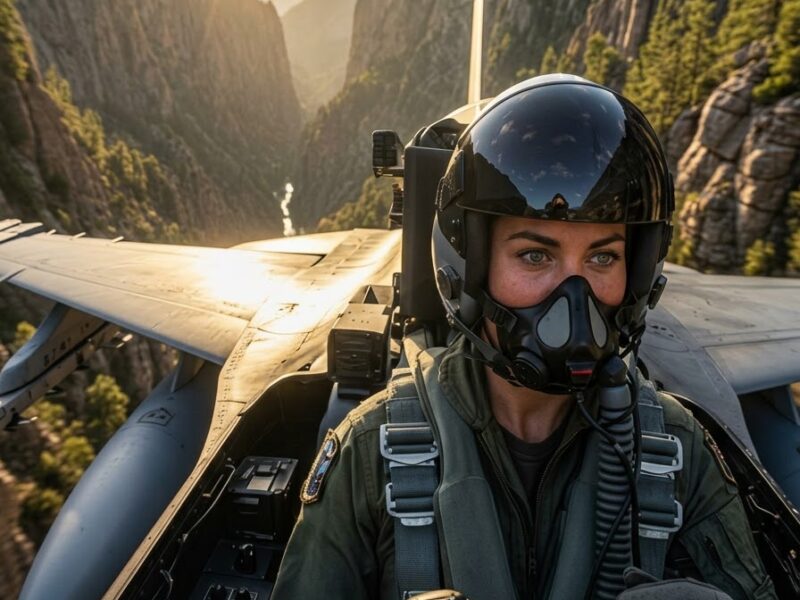
The seven SEALs had already whispered, “It’s over,” beneath the burning trees of a forgotten valley when my A-10 Thunderbolt II screamed through the smoke
The operational control room at Fort Campbell was usually drowned in the hum of air filtration units and the faint, rhythmic clicking of mechanical monitors. At 2:17 a.m., that silence was shattered by a burst of high-frequency static that vibrated straight through the concrete floor.
I was sitting in the corner of the low-lit room, nursing a cold cup of black coffee, my flight jacket draped loosely over my shoulders. I was no longer on the active combat rotation. For five years, I had been relegated to ground instruction, tactical evaluation, and late-night radio monitoring—a ghost floating through the periphery of an airbase that used to be my home.
Then the speaker on the wall crackled, bringing a voice that sounded stripped of all hope.
“Command… we’re surrounded.”
The voice was ragged, choked with smoke and heavy exertion. In the background, the unmistakable sound of heavy automatic gunfire echoed off canyon walls, followed by the dull, subterranean thud of mortar impacts.
A second voice, barely audible above the roar of burning timber, whispered three final words into the mic: “It’s over.”
My hand froze halfway to my mouth. The coffee went cold against my tongue.
Seven Navy SEALs from an elite tactical unit had been inserted four hours earlier into the narrow, forgotten folds of the Shigar Valley for a high-priority, classified recovery operation. The terrain down there was a jagged trap—sheer granite cliffs, dense pine forests, and a single, narrow exit route that could be choked off by three men with a heavy machine gun. Something had gone catastrophically wrong. Their primary extraction helicopter, a modified MH-60 Black Hawk, had been hit by a shoulder-fired missile on approach and destroyed on the LZ. Their ammunition was nearly spent. And enemy forces were pouring out of the surrounding ridges, sweeping through the burning trees.
I turned sharply toward the duty officer, Captain Reynolds, who sat at the central command console. His eyes were fixed on his monitor, but his hands were entirely still. He wasn’t typing. He wasn’t making calls.
“Where’s their close air support?” I demanded, stepping over to his desk. “They’re trapped at the bottom of the gorge. Where is the overhead cover?”
Reynolds didn’t look up at me. His posture was stiff, his jaw clenched tight. “The mission has been officially terminated, Captain.”
I stared at him, unable to process the words. “Terminated? There are seven operators down there in a live fire ring! I’m listening to their distress beacon right now!”
“Command has called a total stand-down,” Reynolds said, his voice dropping into a flat, rehearsed tone. “The risk of airframe loss in that terrain is deemed unacceptably high. The recovery package is scrubbed. As of two minutes ago, those men do not exist.”
“Not anymore,” he added softly.
Those four words slammed into my chest like a kinetic impact. They didn’t just hurt; they pulled me backward through time, tearing open a scar I had spent five years trying to sew shut.
Five years ago, over the jagged peaks of the Hindu Kush, I had been flying a combat search-and-rescue escort in my A-10 Thunderbolt II. My call sign was Blackbird. We were hit by a surface-to-air missile. My hydraulic system failed, my wing went up in flames, and as I spiraled down toward hostile ground, I called for my wingman—the high-altitude fighter pilot assigned to cover my vector—to suppress the ground fire so I could reach the safe line.
He didn’t answer. He turned his afterburners on and abandoned his position, leaving me to crash into the dark forest below.
I survived. I crawled through enemy lines for four days with a broken back and a dislocated hip. But when I was finally retrieved, the official military tribunal cleared the wingman and classified my crash as pilot error, claiming I had strayed off course and failed the mission profile. I was grounded. Stripped of my combat status. Forced to watch other pilots take to the sky while I remained chained to a desk.
I looked down at the tactical map glowing on Reynolds’ console. The green tracking dots of the seven SEALs were flickering out one by one as their signal relays took fire.
“Prepare my aircraft,” I said.
Reynolds turned his head sharply, his eyes widening in anger. “Captain Mitchell, you are a grounded flight instructor. You are not cleared for flight status, let alone an unauthorized strike into hostile airspace.”
I looked out through the reinforced glass window of the ops room. Sitting on the rain-swept tarmac under the dull amber floodlights was my old jet—a pristine, heavily armored A-10 Thunderbolt II, fully rearmed for a morning target-range demo that would now never happen. The twin TF34 engines sat silent, its massive 30mm GAU-8 Avenger cannon pointing straight ahead like an iron pillar.
“Then clear me afterward,” I said softly.
I turned on my heel, grabbed my flight helmet from the locker, and pushed through the heavy steel doors before Reynolds could raise his voice to call security.
Twenty minutes later, the roar of twin jet turbines shook the foundations of the airbase.
I didn’t ask for tower clearance. I didn’t verify the flight path with tactical control. I slammed both throttles straight to the stops, feeling the familiar, violent surge of raw thrust push me deep into the sheepskin lining of the pilot’s seat. The A-10 lurched down the runway, its heavy tires throwing up sheets of standing water, before lifting its heavy titanium nose into the pitch-black night sky.
The engine vibrations hummed straight through my boots, through my spine, and into my jaw. The instrument panel lit up in a cool, green tactical glow. ALTITUDE: 12,000 FEET. SPEED: 320 KNOTS. HEADING: 045.
For five years, I had been dead. But as the freezing wind howled past the bubble canopy and the dark mountains rose up to meet me, I felt my heart beat for the first time since that night in the forest.
I guided the jet by the faint, pulsing pulse of the dying distress signal. Forty miles out, the dark horizon gave way to a dull, violent orange glow. The valley was on fire.
I pushed the stick forward, diving the heavy attack jet down through the dense overcast cloud layer. The mountain walls closed in on both sides, looming over my wingtips like ancient granite giants. Down below, between the burning trunks of ancient pine trees, seven dark figures were dragging a heavily bleeding teammate across an open dry riverbed, while dozens of enemy muzzle flashes ignited the surrounding ridges in a continuous, deadly rhythm.
A rocket-propelled grenade exploded thirty feet from the team, showering them with dirt and hot steel.
“Mayday! Mayday! We’re taking heavy fire!” a voice screamed through the open channel. “We are out of ammunition! Requesting final artillery drop on our grid!”
They were calling fire on their own position. They were ready to die.
I dropped beneath the cloud ceiling, pulled the stick hard to the left, and lined up the aircraft’s nose with the ridge line above the riverbed.
“Not while I’m in the air,” I muttered.
I squeezed the trigger on the stick.
The 30mm Avenger cannon beneath my feet didn’t fire with a simple mechanical noise. It unleashed its signature, terrifying roar—a deep, subterranean sound that shook the entire mountain valley. Sixty heavy depleted-uranium rounds per second slammed into the enemy ridge line, tearing through rock, earth, and armor, obliterating the firing positions in a blinding wall of explosions.
The enemy line shattered instantly, the survivors scattering into the dark woods.
“Aircraft! Aircraft overhead, identify yourself!” the SEAL commander shouted into his radio, his voice crackling with sheer shock. “Who is that?!”
I took a deep breath, adjusted my mask, and spoke the call sign I hadn’t uttered aloud in half a decade.
“This is Blackbird. Sit tight, gentlemen. I’m taking the heat.”
The radio went dead quiet for three agonizing seconds.
Then, through the static, I heard the SEAL commander whisper a single sentence that turned the blood in my veins to ice water.
“That can’t be her…”
The valley was a crucible of swirling gray smoke, thermal air currents, and flying shrapnel. My radar-warning receiver chimed in short, aggressive bursts as light anti-aircraft weaponry peppered the belly armor of my jet. The titanium tub beneath my seat absorbed the hits with heavy metallic thuds, but the aircraft barely flinched. The Warthog was built to absorb punishment that would shred any other plane in the sky.
“Blackbird to Ground Element,” I called out, banking hard around a high granite needle to set up my second attack run. “Identify your primary extraction point. I have three minutes of fuel before I reach emergency bingo status.”
The radio crackled back. The SEAL commander’s voice was unsteady, laced with something far beyond the adrenaline of the firefight.
“Blackbird… state your pilot name,” he demanded, his voice desperate. “State your name!”
“Focus on your men, Commander!” I barked back, bringing the nose around and diving straight toward a second enemy mortar crew setting up on the southern slope. “Move your team toward the narrow gap at the eastern lip of the riverbed! I will lay down a smoke screen and clear the ridge!”
I didn’t wait for his answer. I pressed the trigger again, sending a short two-second burst of 30mm high-explosive incendiary rounds into the mortar pit. The secondary explosion lit up the entire valley floor in a brilliant flash of red and white, throwing dirt two hundred feet into the air.
Below me, six of the SEALs moved with practiced, precise discipline. They hoisted their wounded teammate between them, laying down suppression fire with their remaining sidearms as they scrambled through the burning brush toward the eastern clearing.
“Go! Go! Clear the gap!” the commander’s voice echoed through my helmet.
I circled low above the trees, skimming the canopy at less than one hundred and fifty feet, acting as an iron shield between the retreating men and the remaining enemy shooters hidden in the rocks. Every time a muzzle flash erupted from the tree line, I answered with a short, brutal burst from the cannon, walking the fire right up the hill to keep the enemy heads down.
One by one, six of the operators scrambled up the gravel embankment and reached the relative safety of the extraction clearing, where the low thrum of a heavy rescue chopper—a rogue unit that had disobeyed the stand-down order after hearing my cannon fire—could finally be heard echoing over the ridge.
But as the rescue helicopter touched down in a storm of dust and dry leaves, I noticed something wrong on my forward infrared display.
One figure had not reached the clearing.
The SEAL commander was still down in the dry riverbed, fifty yards behind the rest of his team. He was kneeling beside an old, burnt-out transport vehicle, firing his sidearm into the advancing tree line, refusing to retreat. Standing thirty yards away, moving through the thick smoke, were four enemy combatants closing in on his position with raised rifles.
“Commander, fall back!” I screamed into the radio. “The chopper is on the ground! Move now!”
“Negative, Blackbird!” he shouted back, his voice ragged and choking on smoke. “My secondary lead is down behind this frame! I am not leaving him!”
“There’s nobody else down there!” I yelled, zooming in my thermal targeting pod. “Your thermal scanner is reading a dead engine block! Your man is already on the helicopter! You’re firing at a shadow!”
The commander froze, looking back toward the extraction chopper through the blinding dust. He saw six men waving at him from the open side doors. He was alone.
The four enemy combatants stepped out of the brush, raising their weapons to take aim at his exposed back.
My fuel warning light began to flash red on the primary instrument panel. FUEL LEVEL: CRITICAL. ENGINE 1 FEED LOW.
I had one pass left. If I turned the aircraft to realign for a proper strafing run, the delay would give the shooters enough time to cut him down. If I dropped down now, I would have to fly straight through the narrow, unlit gap between two towering rock faces with zero margin for error.
I didn’t hesitate. I shoved the control stick forward, diving the thirty-thousand-pound jet straight into the narrow granite crevice.
The wings cleared the rock walls by less than fifteen feet on either side. The wind sheer violently shook the control column, screaming against the aluminum skin. I dropped the nose down until the reticle rested directly over the dirt twenty yards in front of the commander.
I squeezed the trigger and held it down.
The cannon roared, tearing the earth apart in a continuous wall of fire and flying granite. The shockwave blew the four attackers backward into the brush and threw the commander onto his face in the dirt, shielding him from the flying debris.
“Move!” I roared over the speaker system mounted to the aircraft’s belly.
The commander scrambled to his feet, threw himself over the embankment, and sprinted the final fifty yards toward the idling helicopter. He hauled himself through the open side door just as the pilot pulled collective, lifting the heavy aircraft up through the swirling smoke and clear of the valley walls.
As the helicopter banked away toward the southern border, the commander leaned out of the open door, staring up into the dark sky at my circling A-10.
“Blackbird…” he gasped into his radio headset, his breath ragged. “Who are you?”
I held the stick with both hands, my heart hammering against my ribs, staring down at the burning valley that had almost claimed seven more lives.
“Someone who remembers,” I whispered.
I flipped the radio switch to mute, pulled back hard on the stick, and pointed the nose of my exhausted, fuel-starved aircraft back toward Fort Campbell.
The landing at Fort Campbell was purely driven by muscle memory and luck.
My left engine choked and died two miles out from the runway threshold, its fuel lines completely dry. I brought the heavy jet down on a single engine, gliding through the low fog, and slammed the landing gear onto the tarmac with a bone-jarring thud. The tires shrieked against the wet pavement as I applied heavy manual braking, coming to a stop just feet from the blast wall at the end of the airfield.
As the single remaining turbine whined down into silence, the airfield erupted into a chaotic scene of red and blue flashing lights.
Four armed Military Police humvees slammed to a stop around my aircraft, their headlights blinding me through the canopy glass. Behind them stood Captain Reynolds, flanked by three senior officers from the Department of Military Intelligence, their faces dark and rigid.
I unbuckled my harness, popped the canopy, and climbed slowly down the metal ladder.
“Captain Sarah Mitchell,” Reynolds said, stepping forward as two MPs unholstered their sidearms. “You engaged in an unsanctioned combat launch, disobeyed a direct command, and violated international airspace protocol. Surrender your sidearm immediately.”
I unbuckled my tactical belt, handed my holstered pistol to the nearest MP, and looked Reynolds dead in the eye. “The team came back, Reynolds.”
“That is irrelevant to the chain of command,” Reynolds snapped, though his eyes twitched slightly. “You are under official arrest pending court-martial.”
Before the MPs could put handcuffs on my wrists, the loud, rhythmic chop of a heavy helicopter engine echoed from above.
The rescue Black Hawk cleared the tree line and touched down heavily on the pad forty yards away. The side doors slid open, and medical personnel rushed forward to haul out the wounded operator on a gurney.
Behind them, six battered, blood-stained SEALs stepped down onto the wet tarmac. They didn’t go to the medical tents. They walked as a single, silent unit straight toward the ring of MP vehicles surrounding my jet.
Leading them was their commander.
He was a tall, lean man with broad shoulders, his face smeared with black charcoal, oil, and dried blood. He had pulled his helmet off, letting the cold rain wash over his short, graying hair.
As he stepped into the light of the floodlamps, his eyes locked onto my face.
I froze.
The air left my lungs all at once. The rain felt cold against my skin, but the heat inside my chest was blinding.
I knew that face. I had seen it every night in my nightmares for five long years.
It was Major David Vance. Five years ago, he hadn’t been a SEAL team commander attached to special operations. Five years ago, he had been a Lieutenant Colonel in the Air Force—the fast-jet tactical pilot who had flown high-altitude cover above my A-10 over the Hindu Kush. He was the man who had turned his afterburners on and left me to burn in the forest.
Vance stopped ten feet away from me. His hands were shaking, caked in dirt and dried blood. He looked at my face, then looked up at the scorched, bullet-pitted titanium nose of the A-10 sitting behind me.
“I thought you were dead…” Vance whispered, his voice cracking under the weight of five years of silence. “The flight logs… the official inquiry… they said your airframe disintegrated on impact.”
I took two steps toward him, pushing right past the armed MPs who tried to hold me back.
“You made sure everyone believed it,” I said, my voice low, dropping like an iron bar between us. “You flew back to base, signed off on the flight report, and let them classify my crash as pilot error to cover up the fact that you broke formation and ran.”
Vance’s eyes dropped to the wet concrete. He didn’t deny it. He couldn’t.
“Sarah…” he stammered, stepping closer, his hands raised in a defensive, desperate gesture. “You don’t know what happened up there at thirty thousand feet that night. I didn’t have a choice. The orders didn’t come from flight control. They came from—”
“Quiet, Vance!” a sharp, authoritative voice cut through the rain.
A senior Intelligence Officer, wearing a crisp dark raincoat with no unit patch, stepped out from behind the command vehicle. He held a thick, yellowed military file sealed with red tamper-evident tape.
“Major Vance, you and your team will report to medical staging immediately for debrief,” the officer commanded, his tone leaving no room for argument. “Captain Mitchell will be placed in solitary holding until a formal tribunal is convened.”
The officer turned to look at me, his face devoid of any human warmth. He slowly peeled back the red tape on the yellow file, opening it just enough for me to see the top page.
It was the original, unredacted crash report from my shoot-down five years ago.
Glued to the bottom corner of the page was a handwritten note, executed in thick black ink, bearing the official seal of the Joint Chiefs of Staff:
SUBJECT: CALLSIGN BLACKBIRD.
INSTRUCTION: RECOVERY PACKAGE CANCELLED. SUBJECT WAS NEVER SUPPOSED TO SURVIVE.
I stared at the words, the world tilting beneath my feet.
The Intelligence Officer stepped closer, leaning in until his breath was warm against my ear.
“You think you were saved five years ago by luck, Captain?” he whispered so quietly that not even Reynolds could hear. “You were never meant to walk out of that forest. And three minutes ago, someone high above this base accessed your old flight records from the primary defense vault.”
Suddenly, a loud, metallic click echoed across the quiet tarmac.
Every head turned toward my parked A-10.
The aircraft was completely powered down. The battery switches were off. The ground power unit was disconnected.
Yet, inside the glass bubble of the cockpit, the tactical heads-up display suddenly lit up in a bright, vivid green glow, flashing a single line of text across the glass:
WELCOME BACK, BLACKBIRD. THE SECOND PHASE HAS BEGUN.
The glass of the cockpit flickered twice before going completely dark again, leaving the heavy attack jet standing like a silent iron sentinel in the cold rain.
“Clear the ramp!” the Intelligence Officer screamed, his composure shattering instantly. “Security! Lock down that airframe! Nobody touches that jet!”
The MPs moved frantically, pushing the lingering mechanics and ground crew back behind the yellow security line. Vance stepped toward me again, grabbing my arm with a grip like iron.
“Sarah, listen to me,” Vance urged, his eyes wide with genuine panic. “You can’t stay on this base. The tribunal isn’t a trial—it’s a processing station. If they put you in that holding cell tonight, you will never leave it.”
“Why should I trust a word you say?” I hissed, yanking my arm out of his grip. “You left me to die five years ago!”
“Because I didn’t leave you by choice!” Vance yelled, his voice cutting through the noise of the rain and sirens. “My radio was overridden! My control stick was locked out by an automated flight override from the AWACS command plane! I couldn’t turn the plane around! They flew me out of the sector on autopilot while I watched your wing burn!”
I froze, staring at him. “Automated flight override? That tech didn’t exist five years ago.”
“It did,” Vance breathed, leaning close so the surrounding guards wouldn’t hear. “It was an experimental black-budget system called Project Aegis. They were testing remote airframe control on live combat missions. Your A-10 wasn’t shot down by an enemy SAM, Sarah. Your flight systems were disabled from inside our own tactical network because you stumbled into an unrecorded drone corridor!”
The Intelligence Officer marched back over, flanked by two heavy security guards. “Major Vance, step away from the prisoner now!”
Vance looked at me, his jaw set in a desperate, hard line. “Hangar 9. Twenty minutes. The old maintenance pit beneath the floorboards. If you want to know who gave the order to kill us both tonight, be there.”
Before the guards could grab him, Vance turned and walked briskly away into the darkness, following his team toward the medical bay.
The MPs grabbed my arms, forced my wrists behind my back, and clicked heavy steel handcuffs into place. They marched me across the rain-swept tarmac toward the base brig—a windowless concrete building sitting at the far western edge of Fort Campbell.
They locked me in Solitary Cell 3. The iron door slammed shut with a heavy, hollow thud, leaving me in near-total darkness, save for a thin sliver of light coming through the small barred window set high in the wall.
I sat on the cold metal cot, my heart hammering against my ribs.
Vance’s words echoed through my mind like a deafening gong. Automated flight override. Project Aegis. Unrecorded drone corridor.
If Vance was telling the truth, then my entire life—my crash, my disgrace, my five years of isolation—wasn’t the result of a single cowardly pilot. It was part of a massive, cold-blooded military cover-up designed to protect a secret program that was willing to murder its own personnel to maintain absolute secrecy.
And tonight, those same people had tried to kill Vance’s SEAL team in the valley to bury the latest breach.
I looked at my wrists. The handcuffs were tight, but the guard who had processed me in the hallway—an old flight mechanic I had trained three years ago—had intentionally left the locking pin unengaged on the left cuff.
I twisted my left hand violently, ignoring the sharp pain as the steel scraped away skin, until my thumb popped out of joint. Slipping the hand free from the steel loop, I popped my thumb back into its socket with a sharp gasp of pain.
I took the small, sharpened piece of steel wire I had slipped from the A-10’s ejection seat safety pin during my climb-down and inserted it into the keyhole of the right cuff. Two clicks later, the steel bracelet fell silent onto the cot mattress.
I pulled myself up to the high barred window, grabbed the rusted iron frame, and looked out.
The guard in the hallway was currently distracted by an argument taking place at the front desk between Captain Reynolds and the Intelligence Officer.
I didn’t use the door. I used the small, rusted maintenance access hatch located behind the metal toilet bowl—a legacy feature of the old Cold War bunker design. I unscrewed the rusted bolts using the sharp edge of the handcuff steel, pulled the plate free, and slipped into the narrow, dark utility tunnel beyond.
Ten minutes of crawling through damp, spiderweb-draped concrete shafts brought me out into the dark shadows behind Hangar 9.
Hangar 9 was an abandoned, cavernous structure used to store decommissioned airframes and spare titanium paneling. The air inside was thick with the smell of old jet fuel, rust, and damp earth.
I stepped through the broken side door, keeping my back pressed against the cold metal wall, my eyes scanning the dark cavernous interior.
“Vance?” I whispered into the darkness.
Silence answered me.
Then, from the center of the hangar floor, where a massive concrete maintenance pit dropped six feet down into the ground, I heard the faint, rhythmic sound of a terminal key clicking.
I drew a heavy steel wrench from an open tool cart beside me, held it tight in my right hand, and crept toward the edge of the pit.
Looking down into the dim light of the pit, I saw Vance sitting on an wooden crate, a ruggedized military laptop resting across his knees. The screen was glowing with blue streams of encrypted code.
Beside him on the concrete floor lay the body of the Intelligence Officer who had arrested me an hour ago.
He wasn’t moving. A single, dark entry wound was visible in the center of his chest.
I dropped into the pit, raising the wrench instantly. “Vance! What did you do?!”
Vance didn’t look up from his laptop. His hands were flying across the keyboard with frantic speed. “I didn’t kill him, Sarah. He was dead when I got here. Someone took him out three minutes ago to make sure he didn’t talk to the federal inspectors.”
I looked down at the dead officer, then back at the glowing laptop screen. “What is that?”
“It’s the primary server route for Project Aegis,” Vance said, his voice trembling. “He was carrying the master access key in his raincoat. I pulled it off his body before the base patrol found him.”
He turned the laptop screen toward me.
Glowing on the monitor was a full tactical schematic of the airspace over Fort Campbell, along with a live network stream that shocked me to my core.
Every automated defense grid, every drone relay, and every flight control system on the entire base was currently routed through an offshore server owned by a private defense conglomerate called Aegis Global Operations.
The company had been quietly acquiring military infrastructure contracts for a decade. They weren’t just providing equipment; they were building an autonomous, unmonitored command layer over the entire armed forces—a system that could take control of any aircraft, override any pilot, and execute extrajudicial strikes or scrub unwanted missions with the press of a single button.
“Five years ago, your A-10 flew into the path of an unauthorized Aegis test flight,” Vance explained, looking up at me with eyes filled with guilt and grief. “When your sensors picked up their drone’s signature, they used the Aegis override to kill your flight controls and force your jet down. Then they locked my controls to ensure I couldn’t defend you.”
“And tonight?” I asked, my blood running cold.
“Tonight, my SEAL team discovered an Aegis relay station hidden in that valley,” Vance said. “We weren’t supposed to find it. So they ordered the air base to stand down and let us burn. When you launched that A-10 and saved us, you broke their code. You exposed the fact that a human pilot could still bypass their automated grid.”
Suddenly, the heavy steel hangar doors overhead groaned, sliding open six inches with a screech of rusty iron.
A harsh white spotlight cut through the dark hangar, illuminating the maintenance pit.
A loudspeaker mounted to the wall clicked on, sending a cold, synthesized voice echoing through the vast space.
ATTENTION CAPTAIN MITCHELL AND MAJOR VANCE. YOU ARE IN POSSESSION OF CLASSIFIED CORPORATE PROPERTY. SURRENDER THE TERMINAL IMMEDIATELY OR DEFENSIVE AUTOMATION WILL BE APPLIED.
High above, sitting on the steel catwalks running along the roof of the hangar, three automated defense turrets—sleek, black, remote-controlled gun pods—swiveled simultaneously, pointing their twin barrels down into the pit where we stood.
“They’re going to scrub us both,” Vance said, closing the laptop and tucking it into his tactical vest. “Right here in the dirt.”
“Not in my hangar,” I said.
I grabbed a heavy smoke grenade from Vance’s vest, pulled the pin, and slammed it down onto the concrete floor of the pit.
A thick, blinding wall of white chemical smoke instantly erupted, filling the pit and spilling over onto the hangar floor. The automated turrets on the catwalk opened fire instantly, sending a hail of 5.56mm rounds tearing through the concrete where we had been standing a second before.
“Run!” I screamed.
We scrambled out of the smoke-filled pit, keeping low to the ground, sprinting through the dark toward the rear exit of Hangar 9.
We burst out into the storm. The rain was coming down harder now, washing the blood from our faces, but the base was alive with activity. Sirens were wailing, searchlights were sweeping the flight line, and two automated drone aircraft—sleek, jet-powered wing frames with no cockpits—were sitting on the primary runway, their engines whining as they prepared for autonomous takeoff.
“They’re scrubbing the base records!” Vance yelled, pointing at the drones. “Those units are carrying thermite payloads! If they launch, they’ll bomb the intelligence archives and blame it on an external missile strike!”
“Where is my A-10?” I shouted over the storm.
“They towed it to the hot pad near Hangar 1 for fuel drainage!” Vance pointed toward the eastern apron.
Sitting under the floodlights, surrounded by automated refueling trucks that had been hooked up by Aegis technicians, was my Warthog. The mechanics had fled when the sirens started, leaving the fuel lines attached and the auxiliary power unit still humming.
“Can you fly her with a corrupted network?” Vance asked, running beside me through the mud.
“The A-10 doesn’t rely on their digital network, Vance,” I said, a dark smile breaking across my face as I reached the boarding ladder. “This plane was built in 1975. It runs on heavy steel cables, hydraulic fluid, and raw human muscle. Their software can’t touch my flight controls!”
I scrambled up the ladder, threw myself into the cockpit, and hit the engine starter switches.
The twin TF34 turbines roared to life with a deafening, beautiful scream, blowing the automated refueling hoses straight off the wing mounts in a cloud of vaporized fuel.
Vance jumped into the rear crew bay of a nearby heavy transport humvee, cranking its mounted 50-caliber machine gun to clear the apron of incoming Aegis ground security units.
I didn’t wait for the engines to stabilize. I slammed both throttles forward, taxied the heavy iron beast straight out onto the runway, and pointed the nose directly at the two sleek, autonomous drones preparing for launch.
“This is Blackbird,” I shouted into my oxygen mask, pulling the stick back hard as the A-10 lifted off the ground at two hundred knots. “Sky is cleared for human control!”
I squeezed the trigger.
The 30mm Avenger cannon unleashed its final, glorious roar. A stream of heavy depleted-uranium rounds ripped straight through the first automated drone, blowing its engine block into a blinding fireball before it could clear the tarmac. The second drone tried to bank away, but I rolled the Warthog hard onto its side, pulled ninety degrees of angle, and walked the cannon fire straight across its carbon-fiber wing, tearing the autonomous craft into shreds of flying scrap metal.
The explosions lit up the night sky over Fort Campbell, exposing the ground beneath to the clear light of dawn breaking over the mountains.
Below me, federal troops were pouring out of the main barracks, disarming the Aegis security personnel and securing the base command center with the data Vance had uploaded from the laptop.
I circled high above the airfield, holding the stick with steady, confident hands, watching the sun break through the storm clouds for the first time in five years.
My fuel gauge was stable. My aircraft was flying true. The ghosts of the past were finally gone, burned away in the fire of the truth.
I adjusted my mask, clicked the open channel switch, and spoke into the sky.
“Fort Campbell Command, this is Blackbird. Mission complete. Coming home.”
The end.









