The SEAL was bleeding beneath a burning bridge in Afghanistan when he begged for “any jet” over the radio
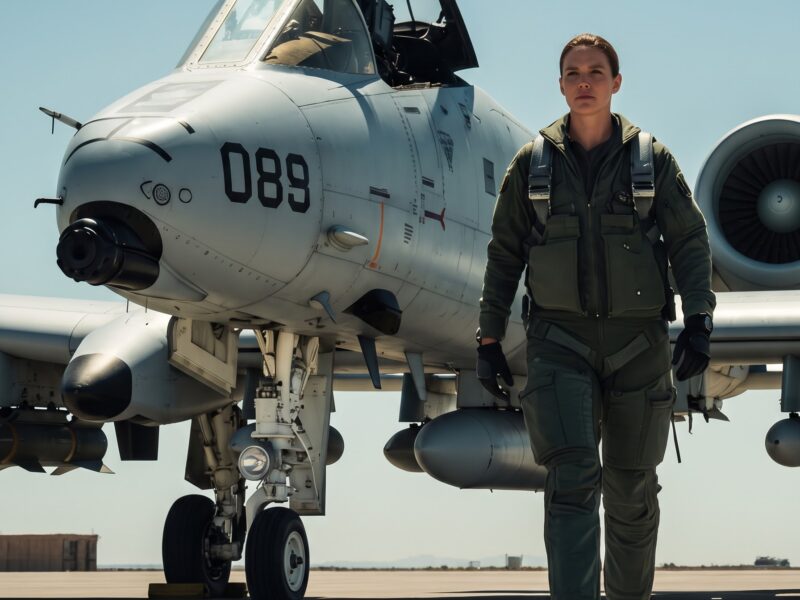
The flight line at Kandahar Airfield was a sweltering expanse of asphalt baking under the brutal Afghan sun, smelling of jet fuel, burning rubber, and raw dust. I sat strapped into the armored bathtub of my A-10 Warthog, my hands gripped tight around the flight stick. The twin General Electric turbofan engines behind my shoulders whined in a restless idle, their low-frequency rumble vibrating through my chest plate.
For forty-two minutes, I had been forced to watch the horizon. Forty-two agonizing minutes of listening to scrambled emergency traffic over the joint tactical network while higher command kept my status locked on hold.
“Stand by, Warthog One-Four,” my squadron commander’s voice had rasped into my headset nearly an hour ago, cold and unyielding. “You are not primary support for Sector Four. Stand down and hold your spot.”
I knew why I was being held back. It wasn’t because of weather, and it certainly wasn’t because my aircraft wasn’t combat-ready. The 30mm GAU-8 Avenger cannon mounted in the nose of my jet was fully loaded with eleven hundred rounds of high-explosive armor-piercing ammunition, and my wing hardpoints were heavy with precision AGM-65 Maverick missiles. I was held back because of my last name.
Hayes.
To the high-ranking brass sitting inside the air-conditioned command tents at Bagram and Tampa, the name Emily Hayes was an uncomfortable reminder of an ugly, classified mess from twelve years ago—a ghost they thought they had buried in the barren dirt of the Hindu Kush.
Then, the radio traffic took a terrifying turn. The primary air support—a pair of high-altitude strike fighters—had suddenly been redirected away from Sector Four on a vague “priority priority directive.”
“Any jet! I don’t care what you send!”
The voice that cracked through my headset wasn’t the disciplined, calm tone of a trained Joint Terminal Attack Controller. It was the raw, desperate scream of a human being watching his brothers get torn to pieces.
“We are taking heavy automatic weapons fire from both ridges! The bridge is collapsing! We have critical casualties! Send any jet!”
My fingers tightened around the dual throttles. Below my canopy, six Navy SEALs were trapped beneath a burning, ruined stone bridge in a narrow canyon, cut off and pinned down by an overwhelming enemy force.
I didn’t wait for another denial from the command tent. I slammed both throttles forward to full military power.
“Tell them help is coming,” I spoke into the mask, my voice steady despite the adrenaline surging through my veins.
The control tower operator’s voice spiked in panic. “Warthog One-Four, hold your position! You are not authorized for that flight corridor! Abort takeoff immediately!”
I didn’t answer. I released the wheel brakes.
The heavy, titanium-armored jet surged forward down the runway, gathering speed as the asphalt blurred beneath my tires. With a heavy pull back on the stick, the Warthog tore itself into the sky, banking sharply toward the jagged, black outline of the mountains to the north.
Below me, the desert terrain dissolved into deep shadows as dusk settled over the rugged valley. Burning supply vehicles littered the access roads, casting a sickening orange glow against the rock faces. My tactical display flickered, displaying the blue icons representing six friendly forces pinned beneath the bridge structure.
As I crossed the threshold of the mountain pass, one of the blue icons flickered once and vanished from the screen.
“Two down! We’ve got two down!” a SEAL screamed over the open channel, the sound of heavy machine-gun fire rattling violently in the background. “They’re moving mortars up the eastern ridge! We can’t hold the overhang!”
I shoved the flight stick forward, pitching the nose down into the dark, smoke-choked canyon. The air slammed against the airframe, causing the heavy aircraft to shudder as ground fire began to arc up from the ridges—bright red strings of anti-aircraft tracer rounds reaching out to swat me from the air.
“Ground team, Warthog One-Four on station,” I radioed, dropping my altitude into the dangerous envelope below two hundred feet. “Mark your position with strobe or smoke.”
A weak, breathy voice answered through the static. “Negative… no time. We have no marker. Fire is too heavy!”
I swept my eyes over the pitch-black abyss of the canyon floor. The smoke from burning debris was thick, obscuring the riverbed. Then, through the haze, I caught a flicker of crimson. A single red emergency flare was burning out in the open, sputtering in the dust twenty yards from the structural pillars of the bridge.
“I have visual on the flare,” I said, flipping the safety switches on the weapons control panel. “Get your heads down.”
I pushed the nose down further, aiming the crosshairs on my Heads-Up Display directly at the muzzle flashes lining the eastern cliff edge. The heavy jet accelerated into a steep dive, the ground rushing up at terrifying speed.
I squeezed the trigger.
The 30mm cannon didn’t sound like a gun; it sounded like the sky tearing in half. A deafening, guttural BRRRRRRRRRRRRRRRRRRT echoed through the cockpit, shaking the entire airframe as thousands of depleted uranium rounds slammed into the cliffside at three times the speed of sound. The top of the eastern ridge literally dissolved into a massive wall of pulverized stone, dirt, and fire.
The enemy machine guns stopped firing instantly.
For three agonized seconds, the radio produced nothing but the harsh hiss of open static. Then, a ragged voice whispered through my helmet.
“She’s here… God almighty, she’s here.”
I pulled back hard on the stick, banking the A-10 through a brutal six-G turn within the narrow walls of the canyon, keeping the twin engines screaming low to shield the ground team from any remaining shooters.
“Move now,” I ordered firmly. “Get to the secondary extraction point while the ridge is clear.”
Through the targeting pod display, I watched the surviving SEALs scramble out from beneath the concrete arches, dragging their wounded toward a clear landing zone two hundred yards downriver.
But one operator didn’t move toward safety. He was kneeling in the red dust beside a crumpled figure in tactical gear, refusing to abandon the position.
“Leave him! Move!” another voice yelled over the squad channel. “The chopper is two minutes out!”
The kneeling operator shook his head violently, his radio picking up his heavy, ragged gasps. “He’s my brother! I’m not leaving him!”
The word hit me like a physical blow, tightening a knot in my chest that had been buried for over a decade.
Twelve years earlier, my older brother, Captain Marcus Hayes, had led a specialized reconnaissance team into this exact mountain range. The official casualty report signed by the Pentagon stated his aircraft had been destroyed by an insurgent surface-to-air missile during a routine sweep. But the flight logs were sealed, the wreckage was never recovered, and every official inquiry my family launched was met with a wall of cold, bureaucratic silence.
I banked away from the canyon walls, circling overhead as a heavy CH-47 Chinook medical helicopter dropped low over the riverbed, its massive rotor blades kicking up a blinding storm of dust.
Suddenly, a new voice cut across the military channel—authoritative, older, and tight with immense stress.
“Pilot in the A-10,” the voice demanded. “Identify yourself immediately. Who authorized your strike?”
I took a deep breath, keeping my eyes fixed on the rescue helicopter below. “Captain Emily Hayes, 354th Fighter Squadron.”
The silence that followed was heavy and suffocating. The background noise of the battle seemed to fade away.
“Emily… Hayes?” the commander asked, his tone dropping into a disbelieving hush.
“Correct.”
“Jesus,” the commander breathed, his voice dropping so low I could barely hear it over the engine hum. “Your brother… Marcus… he was the team leader on our original unit.”
My hands froze against the flight stick. The aircraft wobbled slightly before I corrected the roll. “What did you say?”
Before the commander could answer, an aggressive, digitally scrambled voice overridden the frequency, blasting through my headset with deafening authority.
“All units on this frequency! Terminate communications immediately! This line is compromised! Ground teams, complete extraction and maintain radio silence!”
I heard the SEAL commander let out a bitter, exhausted curse. “Don’t listen to them, Captain!” he snapped.
“Who are they?” I demanded, my heart hammering against my ribs. “Who is cutting the signal?”
The commander’s final words came through weak, distorted by incoming jamming signals. “The people… who left your brother behind… twelve years ago…”
Suddenly, the multi-function screens in my cockpit flickered violently. The standard navigation display vanished, replaced by a cascading line of raw, encrypted telemetry code. Across the center of the glass screen, a bright red icon began to flash wildly, accompanied by a low, rhythmic pinging tone in my headset.
It was an emergency locator beacon signal.
A military distress code broadcasting an old, retired call sign.
Vanguard-06.
My brother’s call sign.
Broadcasting from a hidden valley four miles deeper into the mountains. And it was still transmitting.
The signal was faint, burred under layers of static and high-altitude jamming, but the cryptographic handshake was undeniable. Military emergency beacons are hardcoded at the factory with unique satellite signatures. That specific frequency belonged to one man: Captain Marcus Hayes.
“Warthog One-Four, this is Kandahar Tower,” a harsh voice barked into my helmet, breaking through the signal loop. “You are in direct violation of air control orders. Turn to heading one-eight-zero immediately and return to base. You are cleared for immediate landing.”
I looked at my fuel gauge. The low-altitude gun run had burned through a significant portion of my fuel reserve, but I still had enough JP-8 in the tanks for another twenty minutes of flight time before I reached my bingo point.
“Kandahar, negative,” I replied coldly. “I have a active search-and-rescue beacon on my tactical display.”
“One-Four, ignore that signal! It is a ghost transmission from an old relay station! Return to base or you will face immediate court-martial upon landing!”
They were lying. The terror in the tower operator’s voice was too real, too unscripted.
I flipped my radio toggle from the base frequency to the internal tactical network, bypassing the main relay. “SEAL team leader, this is Warthog. Do you copy?”
A faint voice answered over the static. The Chinook had lifted off from the riverbed and was currently climbing out of the canyon with the survivors. “This is Commander Vance. I copy, Captain.”
“Vance, tell me what happened twelve years ago,” I said, pushing the stick to bank the jet north toward the origin of the signal. “Why did your team leave Marcus behind?”
Vance let out a long, ragged breath over the open mic. “We didn’t leave him voluntarily, Emily. We were hit by a heavy ambush in the Shah-i-Kot Valley. Marcus was covering our retreat when a secondary force locked down the sector. We called for an immediate extraction, but Command issued a stand-down order. They claimed the air defense threat was too high to risk another transport.”
“Who issued the order?” I demanded, watching the signal strength on my screen grow stronger as I closed the distance.
“The regional task force commander,” Vance replied, his voice laced with venom. “General Thomas Sterling. He claimed the operation was a total loss. He classified the entire flight log, marked Marcus as Killed in Action without recovering the body, and forced everyone on our team to sign non-disclosure agreements under threat of Leavenworth.”
General Sterling. The current three-star commander sitting in the regional Joint Operations Center at Bagram. The man who had personally signed my transfer papers to Afghanistan two months ago.
“Captain Hayes!” Vance suddenly yelled, his voice rising in panic. “Check your radar! You’ve got fast-movers coming up on your tail!”
I glanced down at my threat display. Two high-speed radar signatures had just popped up on my six o’clock position, flying at supersonic speed from the direction of Bagram Airfield. They were F-16 Fighting Falcons—interceptors sent to enforce the stand-down order.
“Warthog One-Four, this is Apex Flight,” a cold, professional voice echoed in my ears. “We have orders to escort you back to Kandahar Airfield. Turn to heading one-eight-zero and lower your altitude. If you do not comply, we are authorized to use force.”
“Apex Flight, I have a confirmed military distress beacon,” I argued, straining against my harness as I pushed the A-10 through a jagged ravine to break their radar lock. “I am investigating a potential survivor!”
“One-Four, you are non-compliant. Turn back now.”
They were three miles out and closing fast. The A-10 is built like a tank, designed to absorb heavy ground fire and destroy armor, but it is slow and unmaneuverable compared to a sleek air-superiority jet like an F-16. In a dogfight, I didn’t stand a chance.
I had only one advantage: I knew how to fly low.
I slammed the throttle forward and dropped the Warthog down into the deep, winding trenches of the mountain range, flying so close to the rocky canyon walls that my wingtips were skimming past stone outcrops at three hundred knots. The shadows of the valley swallowed my radar cross-section, forcing the F-16s to break off their direct dive to avoid crashing into the peaks.
“Hayes, you can’t outrun them forever!” Vance warned over the squad channel.
“I don’t need to outrun them forever,” I muttered, staring at the flashing red icon on my HUD. “I just need two minutes.”
The canyon opened up into a hidden, high-altitude basin surrounded by sheer walls of gray granite. In the center of the depression sat the charred, rusted remains of a military compound—an old, abandoned CIA black site that had been struck by air strikes a decade ago.
And right in the center of the ruined courtyard, sitting atop a crumbling concrete bunker, was a battery-operated emergency transponder, flashing its small green light against the darkness.
It wasn’t a survivor. It was an automated radio beacon, wired directly into a hardened military flight data recorder that was sat beside it on the concrete.
Marcus hadn’t survived the crash twelve years ago. But before he died, he had taken his aircraft’s flight data recorder, carried it into this hidden bunker, and rigged it to broadcast his final emergency signal if a specific military frequency was ever reactivated in the sector.
And my presence tonight—my unauthorized entry into Sector Four—had triggered the automatic broadcast.
“Apex Flight to One-Four,” the interceptor pilot’s voice boomed over the emergency frequency. “We have visual on your aircraft. You have ten seconds to vector back to base, or we will acquire weapon lock.”
I looked down at the courtyard below. If I returned to base now, Sterling’s security teams would arrive at this location within the hour, destroy the black box, and bury my brother’s final legacy forever.
I gripped the stick, pulled back, and banked the heavy jet into a sharp vertical loop over the courtyard.
“Kandahar, Apex, ground teams,” I spoke into the microphone, my voice clear and cold as ice. “I am executing an immediate emergency landing on the basin floor.”
I lowered the landing gear, dropped the heavy flaps, and aimed my twenty-ton armored warplane directly toward the narrow, dirt courtyard below.
Landings are not supposed to happen on a mountain basin floor covered in stone debris and shell craters.
The heavy titanium landing gear of the A-10 slammed into the uneven dirt with a violence that rattled my teeth in my skull. The aircraft bounced violently, skidding across the rough terrain as I stomped on the wheel brakes, fighting with all my strength to keep the heavy jet from flipping over into the stone walls. Dust and gravel rained over the canopy like a hail storm.
With a deafening screech of burning rubber and metal, the Warthog came to a halt mere feet from the crumbling wall of the main bunker.
I didn’t waste a second. I unbuckled my harness, popped the canopy latch, and grabbed my service sidearm from my chest holster. The heat radiating off the twin engines was immense, but the silence of the isolated mountain valley was even more suffocating.
High above, the two F-16s circled overhead, their jet engines roaring like distant thunder behind the cloud cover. They couldn’t target me down here without firing directly into an allied aircraft on the ground—a line even Sterling’s loyalists wouldn’t cross without explicit written authorization.
I scrambled down the side of the ladder, my boots hitting the rocky soil. My heart was pounding in my throat as I ran across the courtyard toward the glowing green beacon resting on the concrete bunker.
The flight data recorder was scorched and heavy, its orange paint peeled away by years of exposure to the elements, but the reinforced titanium casing was intact. Wires trailed from its data port, connecting to a small, solar-powered auxiliary battery pack that Marcus had rigged before his death.
I reached out with a trembling hand, brushing away the thick layer of mountain dust covering the serial plate mounted on the side of the box.
Model: AN/AQH-9 Flight Data Recorder.
Serial Number: 04-MARCUS-HAYES.
A lump formed in my throat, choking off my breath. It was real.
“Emily…”
I whipped around, drawing my pistol, my eyes scanning the shadows of the ruined courtyard.
Standing in the entrance of the collapsed bunker was a man wearing the ragged, faded remnants of an American flight suit. His hair was long and graying, his face covered in deep scars and dark mountain dust, and his left leg was supported by a crude, hand-made metal brace.
He was leaning heavily against the stone doorway, holding a battered military handheld radio in his right hand.
My hand froze on the grip of my pistol. The gun felt impossibly heavy.
“Marcus?” I whispered, my voice breaking.
The man let out a raspy, painful cough, taking a slow, agonizing step forward into the moonlight. “You… you actually came, Em.”
I dropped the gun. It hit the dirt with a dull thud as I rushed across the courtyard, catching him as his weak knee gave out beneath his weight. I pulled him close, gripping his torn flight suit, feeling the heat of his skin, the ragged rise and fall of his chest. He was real. He wasn’t a ghost.
“They said you were dead,” I sobbed, tears cutting clean tracks through the dust on my cheeks. “They told us your plane was destroyed in the valley!”
Marcus let out a dry, bitter laugh, resting his head against my helmet shoulder. “Sterling… tried his best. When my team discovered that his task force was diverting weapon shipments to local insurgent commanders to manufacture an artificial war… he ordered an air strike on our position to eliminate the witnesses.”
“Your own command?” I gasped, pulling back to look into his weathered, hollow eyes.
“He thought I was in the aircraft when he ordered the strike,” Marcus rasped, reaching out with a trembling hand to pat the orange black box resting on the bunker wall. “I ejected before impact. I managed to salvage the main recorder containing the real-time voice logs and radar feeds showing the command authorization from Bagram. I knew I couldn’t carry it out of these mountains on a broken leg… so I stayed.”
“Twelve years?” I asked in horror. “You’ve been living in these ruins for twelve years?”
“Waiting for someone to reactivate the search frequency,” Marcus said, looking up at the sky where the lights of the circling F-16s were visible through the dark clouds. “I knew eventually… another Hayes would fly into this sector.”
Suddenly, the heavy thrum of rotor blades echoed from the southern ridge. A dark, blacked-out transport helicopter emerged from the mountain pass, sweeping a harsh white searchlight across the courtyard floor.
“Ground team arriving,” Marcus muttered, his face turning hard as iron. “That’s Sterling’s private security detail. They saw you land.”
I looked at the black box, then looked at the A-10 parked fifty feet away, its engines still humming at idle speed.
“They aren’t getting this recorder,” I said, grabbing Marcus under his arm and helping him toward the ladder of my warplane. “And they aren’t keeping you in these mountains for another second.”
Getting a disabled survivor into the cramped, single-seat cockpit of an A-10 Warthog is technically impossible according to every flight manual ever printed by the Air Force. The cockpit is barely wide enough for a single pilot wearing full survival gear.
“You’re going to have to wedge yourself behind the seat structure,” I shouted over the roar of the engines, helping Marcus climb up the narrow boarding ladder. “Hold onto the canopy frame and keep your head down!”
“I’ve flown worse,” Marcus grunted through gritted teeth, pulling his broken leg into the tight compartment behind my ejection seat. “Just make sure you get this bird airborne before those transport choppers set up a perimeter!”
I grabbed the heavy flight data recorder, shoved it into the lower survival kit storage bay beneath my knees, and slammed the canopy bubble down, locking it tight.
Outside, the transport helicopter had touched down at the far end of the courtyard. Six heavily armed operators in unmarked tactical gear spilled out into the dirt, raising their assault rifles and advancing toward my jet.
Crack! Crack! Crack!
Rifle rounds slammed against the armored titanium bathtub surrounding the cockpit, bouncing off the heavy metal plating with loud metallic thuds.
“Warthog One-Four, this is Apex Lead,” a voice barked over the emergency channel. “Kill your engines and step out of the aircraft immediately! You are harboring a fugitive and possessing classified government property!”
I ignored them. I rammed the dual throttles forward to full military power.
The twin engines behind us roared into a deafening scream, blowing a massive wall of dust, rocks, and heat back into the faces of the advancing tactical team, knocking two of them off their feet. The heavy jet surged forward across the uneven courtyard, bouncing wildly as I headed directly toward the low stone wall at the edge of the cliff.
“Emily, we don’t have enough runway!” Marcus yelled from behind my shoulder, gripping my harness with his bare hands.
“Hold on!” I screamed.
The A-10 hit the stone wall at seventy knots, smashing through the ancient mud bricks like a battering ram. The aircraft tumbled over the edge of the cliff, plunging straight down into the pitch-black abyss of the ravine below.
For two agonizing seconds, we were falling in complete darkness, the stall warning horn blaring loudly in my ears as airspeed dropped to zero.
I pulled back on the stick with all my strength, pitching the elevator trim to maximum lift. The dual engines screamed as they caught the thick air at the bottom of the canyon, and the heavy warplane leveled off mere feet above the jagged rocks of the riverbed, roaring back into the sky like a phoenix.
“We’re airborne!” I yelled, pulling the jet into a steep climb toward the cloud layer.
“We’re not clear yet!” Marcus warned, pointing through the glass canopy.
The two F-16 interceptors had broken their high-altitude orbit and were diving straight toward us from the north, their targeting radars locking onto my airframe with a continuous, high-pitched tone.
“Apex Flight to One-Four. You have cleared the designated flight envelope. We are firing.”
A bright orange flash lit up the dark clouds as one of the F-16s launched an AIM-9 Sidewinder heat-seeking missile directly toward my tail.
“Chaff and flares! Drop ’em now!” Marcus shouted.
I slammed my thumb against the countermeasures button. The rear of the A-10 ejected a massive cloud of burning magnesium flares and radar-reflecting foil into the night sky. The heat-seeking missile slammed directly into the flare cloud, exploding in a brilliant ball of orange fire fifty yards behind my engines.
The shockwave rattled the canopy, but the Warthog held its course.
“Vance!” I screamed into the tactical radio, switching to the SEAL squad frequency. “I have the survivor and the flight recorder! I am under fire by friendly assets! I need immediate command intervention!”
“Hold on, Captain!” Vance’s voice answered, loud and clear. “We just patched your broadcast directly to the Joint Chiefs of Staff in Washington! The whole damn Pentagon is watching your telemetry stream right now!”
“Tell them to turn off these interceptors!” I shouted, banking hard to avoid a secondary gun pass from the second F-16.
Over the global command network, a new voice cut through the static—a voice that carried the absolute, unquestioned authority of four stars.
“This is Admiral Reynolds, Chairman of the Joint Chiefs! All Apex aircraft in Sector Four, disengage immediately! I repeat, STAND DOWN! General Sterling has been relieved of command and is currently under military arrest at Bagram! Any aircraft firing on Warthog One-Four will be charged with treason!”
The second F-16, which was mere seconds away from locking its cannon onto my cockpit, suddenly pulled up hard into a steep vertical climb, its tail lights vanishing into the upper atmosphere.
The sky went quiet.
The relentless pinging of the enemy targeting radar ceased. The radio fell silent, save for the steady hum of my twin engines pushing us through the night air toward the southern horizon.
I looked up in the rearview mirror mounted above my instrument panel. Marcus was looking back at me, a soft, weary smile breaking through his dirt-caked face.
“Nice flying, little sister,” he whispered softly.
The sun was just beginning to peek over the eastern peaks of the Hindu Kush, casting a long, golden light across the runways of Kandahar Airfield, when my battered A-10 Warthog touched down on the main asphalt strip.
The aircraft was a mess. The fuselage was peppered with bullet holes from ground fire, the nose cone was scorched black by cannon smoke, and the landing gear groaned under the strain of the brutal landing we had survived an hour earlier.
As I taxied the jet toward the main military ramp, I didn’t see the usual quiet flight line.
Dozens of emergency vehicles, military police cruisers, and medical transports were lined up along the tarmac, their red and blue lights flashing against the early morning light. Standing at the center of the ramp was Commander Vance, his arm bound tight in a sling, surrounded by the surviving members of his SEAL team.
Beside them stood three high-ranking officers from the Inspector General’s office, waiting alongside a full medical crew with a stretcher.
I brought the dual engines to a complete shutdown. The high-pitched whine of the turbofans slowly faded away into the morning air, replaced by the quiet, peaceful rustle of the desert wind.
I unlatched the canopy bubble and pushed it up.
The crisp, cool morning air filled the cockpit, washing away the stale smell of sweat, cordite, and hydraulic fluid.
“Need a hand, Captain?” Vance called out from the ground, offering a crisp, respectful salute as he approached the side of the aircraft.
“I think my passenger needs it more, Commander,” I replied, pointing back toward the space behind my seat.
The medical team rushed up the staging ladder, carefully helping Marcus lower himself out of the cockpit frame. When his boots touched the asphalt of an American air base for the first time in twelve years, a quiet hush fell over the entire tarmac.
The military police officers, the ground crew mechanics, and the hardened SEAL veterans all stood at rigid attention, saluting the ghost who had finally returned from the dark mountains.
Marcus looked around at the flags, the aircraft, and the clear morning sky, tears welling in his weathered eyes. He turned to look at me as I climbed down the ladder, holding the heavy orange flight data recorder under my arm.
“It’s over, Em,” Marcus said softly, his voice trembling with emotion. “The truth is out.”
I handed the recorder directly to the lead officer from the Inspector General’s office. “The raw logs from Operation Vanguard are all in here, sir. Twelve years of cover-ups, corruption, and treason.”
The officer accepted the heavy titanium box with solemn respect. “General Sterling is already in custody at Bagram, Captain Hayes. This drive will ensure he—and everyone who helped him—spends the rest of their lives in a federal prison.”
He turned to look at Marcus, offering a deep, respectful bow of his head. “Welcome home, Captain.”
As the medical team carefully loaded Marcus onto the transport stretcher to take him to the base hospital, he reached out and grabbed my hand, squeezing it tight.
“You disobeyed every order in the book to fly into that canyon, Emily,” he said, a proud smile spreading across his face. “They’re probably going to give you a medal or court-martial you.”
I smiled back, wiping a spot of engine oil from my forehead. “Let them try. I’ve got the best wingman in the Air Force.”
I stood on the tarmac watching the ambulance drive slowly toward the medical facility, the golden morning light reflecting off the wings of the A-10 Warthog resting quietly behind me. The ghost that had haunted my family for twelve long years was finally gone, replaced by the cold, unyielding truth.
The valley had tried to hide what happened in the dark. But as the sun rose over Kandahar, the truth was finally clear for the whole world to see.
The end.









