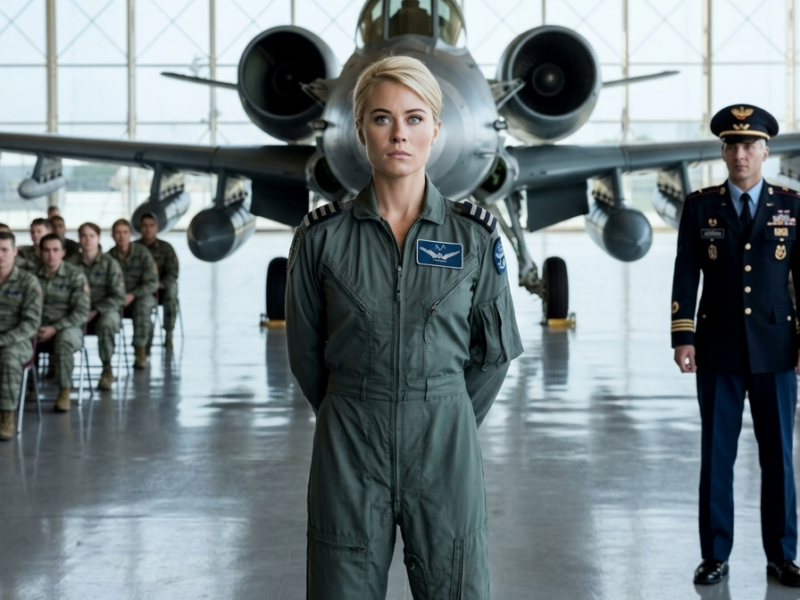
The SEAL leader slammed his bleeding fist against the cabin wall and yelled, “Anyone here know how to fly?”
The heavy, metallic smell of hydraulic fluid and scorched copper filled the cabin of the UH-60 Black Hawk. It mixed with the sharp, copper stink of fresh human blood. Outside the shattered acrylic side windows, the jagged, snow-capped peaks of the Hindu Kush were spinning in a slow, sickening vortex against a dark slate sky.
The helicopter was falling.
It wasn’t a sudden, graceful glide. It was a violent, heavy drop—a thirty-thousand-pound piece of militarized steel being dragged out of the sky by gravity after a surface-to-air missile had shredded its tail rotor assembly and punched a cluster of shrapnel straight through the flight deck.
Inside the rear cabin, six heavily armed Navy SEALs were pinned against the bulkhead by the fluctuating G-forces. Their tactical gear clattered wildly against the metal deck plates. In the cockpit, the co-pilot lay slumped completely motionless over his controls, his helmet cracked, a dark pool of crimson spreading fast across the center console dials. The primary pilot was pinned in his seat, his head lolloping uselessly against his shoulder, unconscious and bleeding heavily from a jagged wound along his temple.
The team leader, Captain Ryan Cole, slammed his bleeding fist against the reinforced cabin wall to keep himself upright. His face was a mask of soot, sweat, and sheer, unfiltered adrenaline. He looked past the screaming warning lights of the instrument panel, then turned back to the men huddled in the belly of the transport.
“Anyone here know how to fly?!” Cole yelled, his deep voice cutting through the deafening, high-pitched scream of the dying engine turbines.
The SEALs—hardened operators who had survived dozens of covert incursions into hostile territory—stared back at him. None of them moved. They were warriors built for breaching doors and clearing rooms, trained to unleash lethal force on the ground. Facing a dying aircraft with a dead pilot, they were as helpless as children.
I was sitting in the furthest corner of the cargo bay, curled behind a stack of oversized medical kits and tactical supply crates. I wasn’t supposed to be on this flight. I was an civilian liaison, brought along merely to handle local language translation if the team reached the designated safehouse. I wore no tactical vest, carried no rifle, and had spent the entire ninety-minute transit keeping my head down, trying to blend into the shadows of the bulkheads.
When I slowly stood up from the cold cargo floor, my knees trembling beneath my canvas pants, a couple of the SEALs actually let out a tense, nervous laugh.
“Sit down, translator!” one of them barked, grabbing at my sleeve. “You’re gonna get thrown through the open door!”
I ignored his hand. I pulled myself forward, gripping the overhead webbing, stepping over empty shell casings and scattered gear until I stood directly behind Captain Cole at the entrance to the flight deck.
Cole stared at me, his eyes wide with disbelief. “You?”
I nodded, keeping my gaze locked onto the red-lit warning panels in front of us. “I can fly.”
Cole almost laughed—a dry, desperate sound that caught in his dust-choked throat. “You’ve got to be kidding me. You’re a civilian contractor!”
“I was an Army Chief Warrant Officer Four,” I said, my voice dropping into a flat, steady rhythm I hadn’t used in almost a decade. “I logged two thousand hours in a UH-60. If you don’t let me sit in that chair right now, Captain, we are going to impact that ridge in less than forty-five seconds.”
Cole didn’t waste another second. He grabbed the shoulder straps of the unconscious lead pilot, unbuckled the harness with a harsh snap, and dragged the man’s limp body out of the pilot’s seat into the main cabin.
I crawled into the cockpit. The smell of hot oil, electrical fire, and blood hit me like a physical blow. My hands were trembling violently as I slid into the left-hand seat, grabbing the harness straps and clicking them into the central chest buckle.
Nine years.
I hadn’t touched a collective lever or cyclic stick on a military aircraft in nine long, painful years. I had spent nearly my entire twenties as a dustoff pilot, flying combat rescue missions through the worst weather and heaviest fire Afghanistan could throw at us. I had lived in cockpits like this. I had loved them. Until the night a catastrophic fire struck my aircraft over the border—a crash that took away the only person I loved, tore my life into unrecoverable pieces, and forced me to walk away from aviation forever.
I swore I would never put my hands on a flight stick again.
Altimeter: 2,400 feet. Rate of descent: 1,800 feet per minute.
“We’re losing the tail rotor authority!” I yelled back over the deafening whine of the alarms, my brain instantly stripping away nine years of trauma and resetting into pure, cold muscle memory. “Engines one and two are over-speeding! I’m reducing throttle to match torque!”
My left hand gripped the collective. My right hand wrapped around the cyclic stick. The plastic grip was cold, wet with hydraulic fluid, but my fingers adjusted automatically to the shape of the switches.
The controls felt familiar. Too familiar. It was like stepping back into a nightmare I had memorized down to the last detail.
I pushed the collective forward, leveling the nose just as the sharp, grey teeth of a granite ridge swept past our floorboards, missing the belly of the Black Hawk by less than thirty feet. The airframe shuddered violently—a deep, metallic groan that resonated through the teeth of every man on board.
“Come on,” I whispered to the machine, my knuckles turning bone-white against the stick. “Come on, stay with me.”
The turbine engines wailed, then stabilized. The wild, spinning motion slowed as I balanced the foot pedals, counteracting the lost tail thrust by utilizing the forward airspeed to keep the nose pointed straight. The aircraft slowly began to climb, clearing the ridge line by a hundred feet and soaring back out over the deep, shadowed valley floor.
Inside the cabin, complete silence fell. The SEALs stared forward into the flight deck, their eyes fixed on the back of my head in sheer shock.
Then, the main radio console—which had been dead, broadcasting nothing but static since the missile hit—suddenly crackled into life.
BZTT-CRACKLE.
“Black Hawk, identify yourself immediately,” a harsh, military-spec voice ordered over the emergency tactical frequency. “You are off course. Respond or be targeted.”
I reached for the hand microphone mounted on the center pedestal, my thumb hovering over the push-to-talk button. Before I could press it, a completely different signal cut across the channel, overriding the primary tower frequency with a heavy, artificial hum.
“Do not answer that station,” the new voice said. It was smooth, calm, and oddly familiar, transmitting from a high-grade scrambler. “Do not land at the primary extraction point. I repeat: do not land at Extraction Point Alpha.”
Captain Cole leaned over my right shoulder, his face inches from mine, his eyes scanning the frequency display. “Who the hell is that?” he demanded into the cockpit. “That’s an encrypted command frequency!”
The voice on the radio spoke again, slow and deliberate. “Captain Cole. If you land at Alpha, your team will be executed by the contractor unit waiting in the grid. Do not trust your command.”
My stomach tightened into a knot of solid ice. Someone on our own classified tactical frequency was warning us of a double-cross.
A series of precise GPS coordinates suddenly popped up on the center Multi-Function Display screen, flashing green against the dark glass. They hadn’t been sent from base command. They had been injected directly into our flight computer through an external override key.
I stared at the coordinates. My heart dropped.
“I know those coordinates,” I said quietly, my voice barely audible over the hum of the cooling fans.
Cole glared at the screen, then at me. “Where is that?”
“An abandoned Soviet airfield twenty miles west of here,” I said, bringing the helicopter into a wide, shallow bank to align the nose with the new coordinates. “It’s been dead since 1989.”
“We stick to the mission plan!” Cole barked, reaching toward the flight deck controls. “We head to Extraction Alpha!”
“Alpha is compromised, Captain!” I snapped back, slanting my eyes toward him with a glare that made the hardened operator pause. “Whoever is talking on this channel just bypassed a military-grade firewall to send us those numbers. They know our callsign, they know your name, and they know we’re hit. We go to the airfield.”
Cole hesitated for three agonizing seconds, staring at the flashing green text on the screen, then looked back at his wounded men in the cabin. “Do it.”
I pushed the throttles forward, driving the crippled Black Hawk down into the dark shadows of the canyon walls, flying fast and low toward the abandoned runway.
Ten minutes later, the aircraft’s skids slammed heavily into the cracked, weed-choked concrete of the ancient Soviet airbase. I pulled the engine levers back to shut-down, the main rotor blades slowing above us with a long, swishing sigh until they finally coasted to a complete stop.
The SEALs instantly deployed, jumping out of the side doors with their weapons raised, forming a perimeter in the tall, yellow grass surrounding the tarmac.
I remained seated in the pilot’s chair, my hands still frozen onto the controls, my breath coming in ragged, shallow gasps. The adrenaline that had sustained me for twenty miles was evaporating, leaving behind a cold, hollow exhaustion.
Footsteps heavy on the metal ladder forced me to turn my head.
Captain Cole stepped back into the cockpit. He wasn’t carrying his rifle. Instead, he was holding a small, rust-spotted metal case that he had pulled from the storage compartment beneath the co-pilot’s seat—a compartment that was supposed to be empty.
He didn’t say a word. He placed the heavy box on the center console between us, popped the two silver latches, and flipped the lid open.
Inside lay a single, faded color photograph.
I leaned forward, my brow furrowing as I looked down into the box. The photograph showed a younger version of me—wearing an Army flight suit, holding a helmet under my arm, standing in front of an older model UH-60 on a sun-bleached tarmac. Standing right beside me, his arm wrapped tightly around my shoulder, was David—the man I had loved, the pilot who had died nine years ago in the crash that ruined my life.
And standing directly behind the two of us in the photograph, wearing an unmarked black tactical uniform, was Captain Ryan Cole.
I stared at the image, my blood running stone-cold. I looked up at Cole, my voice trembling. “I’ve never met you before today. I was assigned to your team six hours ago in Bagram.”
Cole looked away from my eyes, staring out through the cracked windshield at the empty horizon. “That’s what you were told.”
My heart began pounding against my ribs like a sledgehammer. “What is this, Cole? Who put this photo in this helicopter?”
He reached deep into the metal box, past the first image, and pulled out a second photograph.
This one was different. It was dark, grainy, taken with a long-range thermal lens. It showed the smoking, scorched wreckage of my helicopter from nine years ago, crumpled at the base of a ravine. But sitting near the tail boom was a clear image of a woman being pulled from the flames by two men in unidentified tactical gear.
Across the bottom of the photo, written in thick, permanent red ink, was a single sentence:
SHE SURVIVED. USE HER WHEN THE TIME COMES.
I looked at Cole, my sight swimming, my voice choked with terror. “Who wrote that? Who pulled me out of that crash?!”
Cole didn’t answer.
Instead, he slowly raised his hand and pointed straight out through the front glass of the cockpit, toward the jagged peaks of the eastern mountains.
A distant sound was drifting across the quiet desert—the deep, rhythmic, heavy thumping of dual rotor blades slicing through the thin air.
A heavy military helicopter was emerging from the low cloud layer, descending fast toward our location. As it turned into the sunlight, I saw the dark, unmarked black paint of its fuselage. And painted directly beneath the pilot’s side canopy was a distinct, terrifying crest: a silver owl clutching an inverted brass compass.
It was the exact same emblem I had seen on the unmarked aircraft that had forced my helicopter out of the sky nine years ago.
The sound of the approaching twin rotors felt like an earthquake rattling through the hollow floor of our crippled Black Hawk.
I couldn’t move. My fingers were locked around the edges of the center console, my eyes fixed on that silver owl crest as the dark, unmarked transport descended from the clouds like a giant bird of prey.
For nine years, I had lived with a comfortable, carefully constructed lie. The military board of inquiry had told me that our crash in 2017 was caused by a sudden catastrophic tail rotor failure induced by severe mountain turbulence. They told me David died instantly upon impact. They told me I was found twelve hours later by a standard combat search-and-rescue team, clinging to life in the snow.
They lied about everything.
“Cole,” I rasped, my voice sounding distant and thin, as if coming from under water. “Who is in that helicopter?”
Captain Cole didn’t look at me. His face had gone completely pale, the dark tactical greasepaint on his cheekbones doing nothing to hide the sudden tension racking his body. He reached down, grabbed his heavy rifle from the deck, and racked the bolt, sliding a live round into the chamber with a sharp, metallic CLACK.
“Get out of the seat,” Cole said quietly. “Now.”
“Not until you tell me what’s written on that photo!” I shouted, grabbing his tactical vest with both hands, ignoring the disparity in our sizes. “You were there nine years ago! You watched my plane go down! Who pulled me out of that wreck?!”
Cole turned his head, his grey eyes locking onto mine with an intensity that made my throat lock up. “I didn’t pull you out, Lieutenant. I was ordered to secure the site. By the time my team reached the ridge, someone else had already pulled your body out of the burning cockpit.”
“Who?!”
“The division you’re looking at right now,” Cole said, pointing a calloused finger at the black helicopter now hovering fifty feet above the cracked runway. “Project VANGUARD. A black-budget contractor unit operating under direct authority from the Defense Intelligence Directorate. They don’t report to Bagram. They don’t report to Central Command. They report to one man in Washington.”
Outside, the six SEALs had dropped into low firing positions around our Black Hawk, their rifles leveled at the heavy transport landing two hundred yards away. The massive downwash from its twin rotors whipped the tall, dry grass into a frenzy, driving thick clouds of brown dust across the concrete.
The black helicopter’s side doors slid open with a heavy mechanical screech.
A squad of six men stepped down onto the tarmac. They wore high-tech, dark grey composite armor with zero national flags or military branch insignias—only the silver owl emblem stamped across their chest plates. They carried short-barreled automatic weapons equipped with heavy suppressors and advanced thermal optics.
Standing in the center of the squad was a tall man in a long, dark tactical trench coat. He wore no helmet, revealing short, silver-cropped hair and a sharp, scarred jawline.
He didn’t draw a weapon. He simply pulled a pair of dark aviator sunglasses from his pocket, slipped them on, and began walking calmly toward our position, flanked by his heavy security detail.
Cole took a deep breath, reached into his vest, and pulled out a encrypted tactical radio, flipping the selector switch to an open speaker channel.
“Vanguard Leader, stand down!” Cole’s voice boomed over the external loudspeaker mounted under our fuselage. “You are entering an active military zone! Identify your authority!”
The silver-haired man kept walking, stopping forty yards out, right at the edge of our SEAL team’s primary crossfire ring. He reached into his coat, pulled out a handheld transceiver, and pressed the button.
“Captain Cole,” the man’s voice came through our cockpit radio, smooth, cultured, and chillingly relaxed. “You can put the rifles away. We both know your team isn’t going to open fire on a Directorate vehicle. Your mission was completed the moment you brought Lieutenant Vance to this airfield.”
My heart stopped.
Lieutenant Vance.
That was my maiden name. The name I had discarded nine years ago after leaving the service, replacing it with my mother’s surname to escape the ghost of my past. Nobody in Bagram knew that name. Nobody on this team had seen my old military record.
I turned slowly to look at Cole. “How does he know that name?”
Cole looked down at the deck, his jaw working silently. He couldn’t meet my eyes.
“Cole…” I breathed, the horrific truth dawning on me in a wave of freezing nausea. “You didn’t crash because of a stray SAM site. You brought me on this flight on purpose.”
“It wasn’t supposed to go down like this!” Cole snapped, his voice cracking with a mixture of guilt and rage. “The mission in the valley was real! The team was ambushed! But Vance… the Directorate required an experienced pilot who could handle a low-altitude extraction through a jammed radio sector. They told me you were living in Kabul as a contractor. They told me you were the only one who could navigate this specific grid!”
“You used me as bait!” I screamed, slamming my fists against his chest. “You put your own men in a helicopter knowing we were going to get shot down!”
“I didn’t know Vanguard was going to take down our tail rotor!” Cole roared back, grabbing my arms to hold me still. “I thought they were going to intercept us at Alpha! I was trying to save my team!”
Outside, the silver-haired man raised his voice over the radio. “Lieutenant Vance! Step out of the aircraft. It is time to fulfill your contract.”
“What contract?!” I yelled into the cabin microphone, my voice echoing through the external speaker. “I don’t work for you! I don’t know who you are!”
The silver-haired man smiled—a thin, lifeless line across his face. He reached into his pocket and held up a small, black metallic cylinder, no larger than a marker.
“Nine years ago, Lieutenant, your husband didn’t die in that crash,” the man said over the speaker, his words cutting through the wind like a razor blade. “David Vance survived the impact. Just as you did.”
The world seemed to drop out from beneath my feet. The air in my lungs froze solid.
“You’re lying,” I whispered into the mic, though my hand was shaking so badly I could barely hold it to my lips. “I saw the medical report. I saw the casualty record!”
“You saw what the Directorate wanted you to see,” the man replied smoothly. “David was a primary flight engineer for Project VANGUARD. When he attempted to defect with our unit’s primary encryption matrix, his aircraft was brought down over the ridge. You were an unwanted casualty. But David… David was far too valuable to let die.”
He clicked a button on the side of the metallic cylinder. A tiny, high-definition holographic projection flickered to life in the palm of his hand, projecting a small, floating blue image into the dusty air between us.
The image showed a dark, subterranean room filled with medical monitoring equipment. Lying in a specialized life-support bed, surrounded by thick wires and breathing tubes, was a man.
He was older, scarred, his hair streaked with grey, but I would have recognized that profile anywhere in the universe.
It was David.
He was alive.
“He has been in a medically induced coma at our facility in Nevşehir for nine years,” the man said, turning off the projection and slipping the cylinder back into his coat. “His brain activity is stable, but his neural link is locked behind a two-factor biometrical key that he programmed himself before his defection.”
The silver-haired man took three steps closer, his boots crunching on the dry gravel.
“The first key is his voice,” the man said softly. “The second key… is yours. The neural sequence of his primary pilot. You.”
I stood frozen in the cockpit door, staring at the small cylinder in his hand, my mind fracturing into a thousand terrifying pieces.
Everything I had suffered—the nine years of nightmares, the endless whiskey bottles, the soul-crushing guilt of surviving while the man I loved burned in a mountain ravine—had all been a manufactured illusion. A long, slow play designed to keep me isolated until they needed my mind to unlock David’s secrets.
“If you want him to wake up, Lieutenant,” the man said, extending his open hand toward me. “You will step out of that Black Hawk and come with us. If you refuse, I press a single button on this transponder, and his life support is terminated in ten seconds.”
Cole reached out, grabbing my wrist firmly. “Don’t do it, Vance,” he muttered, his voice tight. “If you get on that transport, they’re going to use your biological key and then execute both of you. Vanguard doesn’t leave witnesses.”
“And if I don’t get on that plane, David dies right now!” I yelled, tears finally spilling over my eyelashes, running down through the grime on my face.
“We have another option,” Cole whispered, leaning close to my ear, his hand sliding down to point toward the center console of our Black Hawk.
I looked down.
While we had been talking, Cole’s left hand had quietly flipped open the protective red cover of the aircraft’s emergency secondary battery system—a system that was wired directly into the remaining unexploded chaff and flare pods mounted along the belly.
“The radio scrambler from their helicopter is linked to the local cell tower on the ridge,” Cole whispered rapidly. “If I jump this battery, it will trigger an electromagnetic feedback loop through our external antennas. It will blind their optics and fry their comms for roughly twenty seconds.”
“And then what?” I asked, my heart hammering against my ribs.
Cole looked at the six SEALs standing in the tall grass, then back at me, a dark, dangerous resolve settling into his eyes.
“Then my team shows them why you don’t back a cornered squad into a dead end,” Cole said. “Are you ready to fly one more time, Lieutenant?”
I didn’t answer with words. I squeezed Cole’s arm, stepped back into the left seat of the cockpit, and slammed the primary power breaker back into position.
“Vance!” the silver-haired man shouted from the tarmac, his voice suddenly sharp, losing its smooth composure. “You have five seconds to make your decision!”
“I’ve made it,” I muttered through the open window.
Cole slammed his hand down on the secondary battery bridge.
A blinding blue arc of electrical light flashed from the center console with a deafening CRACK.
The external antenna array along the belly of the Black Hawk overloaded instantly, releasing a massive high-frequency electromagnetic pulse that surged across the narrow runway.
The silver-haired man’s holographic projector exploded in his hand with a spray of yellow sparks. The tactical optics mounted on the Vanguard contractors’ rifles flashed bright red before going completely dark, their night-vision goggles short-circuiting with high-pitched squeals that forced the mercenaries to rip them from their helmets.
“NOW!” Cole roared over the tactical radio.
The six SEALs didn’t hesitate. They stepped out from behind the cover of the Black Hawk, their rifles barking in synchronized, deadly bursts.
The three lead Vanguard contractors dropped instantly into the tall grass as heavy 5.56mm rounds tore through their unshielded chest plates. The silver-haired man dived behind the heavy landing gear of his own transport, screaming orders into a radio that was broadcasting nothing but static.
“Get us airborne!” Cole screamed, vaulting into the co-pilot seat beside me and pulling the harness over his shoulders. “They’re going to recover in ten seconds!”
My hands flew across the overhead switch panel. I didn’t bother with standard pre-flight checklists or temperature warm-ups. I jammed both main engine throttles directly into FLY, slapped the fuel boost pumps on, and yanked the collective lever upward with everything I had.
The crippled Black Hawk let out an agonizing metallic scream as its twin turbines swallowed raw jet fuel. The main rotor blades blurred into a grey disc overhead, beating the air with frantic, violent power.
The airframe lurched sideways, scraping its left skid along the concrete in a shower of sparks, before tearing itself off the ground and launching fifty feet into the air.
“Small arms fire coming from the right!” a SEAL yelled from the rear cabin as automatic rounds slammed into our belly plating like hail on a tin roof.
THUK-THUK-THUK-THUK!
A heavy round punched through the floorboards between my feet, shattering the radio control box and showering my shins with sharp aluminum shrapnel. I didn’t feel the pain. My mind was completely submerged in the flight profile, pushing the nose down into a steep thirty-degree dive to gain forward speed.
“They’re getting into their transport!” Cole reported, leaning out his side window, watching the remaining Vanguard contractors drag their wounded onto the black twin-rotor helicopter. “They’re spooling up! They’re coming after us!”
“Let them try,” I growled, bringing the Black Hawk into a tight, hard turn that pressed us deep into our seats. “This valley is my backyard.”
For nine years, I had analyzed every square mile of this mountain range in my head, repeating the flight paths over and over in my dreams. I knew every canyon, every blind turn, every dead-end ravine where the wind could rip a helicopter out of the sky.
I slammed the stick to the left, dropping the helicopter into a deep, narrow slot canyon known as the Devil’s Throat—a jagged trench of black rock barely eighty feet wide, carved through the heart of the mountain by thousands of years of glacial runoff.
“You’re crazy!” Cole yelled, looking at the rock walls flying past our wingtips at one hundred and twenty knots. “There’s no room to turn in here!”
“That’s why they can’t shoot us with a guided missile,” I snapped, keeping my eyes fixed on the narrow sliver of grey sky visible between the cliffs above. “If they lock onto us, the mountain wall takes the impact.”
Behind us, the heavy black Vanguard transport plunged into the canyon in pursuit. Its superior engine power allowed it to gain on us fast, its dark silhouette filling the frame of my rear-view mirrors.
“They’re clearing their side guns!” a SEAL called out from the back. “Heavy 7.62mm minigun mounting on their left door!”
A bright red line of tracer fire erupted from the pursuing black helicopter, tearing through the air behind us. The rounds chewed into the black granite walls of the canyon, showering our tail boom with a hail of shattered rock and dust.
“I can’t hold this line forever!” I yelled to Cole. “Our tail rotor casing is cracked! If I pull more than three Gs, the tail section is going to sheer off!”
“What’s the exit point of this canyon?” Cole demanded, checking his tactical map display.
“A nine-hundred-foot drop over the Siah Reg Plateau,” I said, my mind racing through the flight variables. “It opens into a wide, shallow valley. Once we hit that open air, they have complete firing superiority. They’ll blow us out of the sky in five seconds.”
“Unless we take their flight control first,” Cole said softly.
He unbuckled his shoulder harness, turned around in his seat, and reached into the rear cabin, grabbing a heavy, shoulder-mounted anti-tank missile launcher—a legacy Soviet RPG-7 that the SEALs had recovered from the safehouse earlier that morning.
“Cole!” I shouted, staring at him in horror. “You can’t fire an unguided rocket out of an open helicopter door in a eighty-foot slot canyon! The backblast will ignite our cargo bay!”
“Then keep us level when we hit the lip of the drop-off!” Cole ordered, balancing the heavy launcher on his shoulder, his body leaning halfway out of the co-pilot’s side window into the roaring hundred-knot wind. “Give me three seconds of stable flight!”
Ahead of us, the dark walls of the slot canyon suddenly ended, opening up into a vast, blinding expanse of grey sky and open desert nine hundred feet below.
“Here comes the drop!” I roared.
I slammed the collective down, letting the Black Hawk plummet like a stone over the edge of the cliff, dropping into a stomach-churning freefall to avoid the open air space.
The pursuing Vanguard helicopter burst out of the slot canyon right behind us, overshooting our position, its belly exposed directly above our rotor disc.
“NOW!” Cole screamed.
He pulled the trigger of the RPG.
A massive roar of orange fire and white smoke erupted from the side of our cockpit as the rocket launched into the clear sky. The backblast swept through the open cabin, scorching the bulkhead paint and blowing a stack of medical maps out into the slipstream.
The unguided warhead traveled two hundred yards in less than half a second.
It didn’t hit the Vanguard helicopter’s body. It struck the base of its forward main rotor mast.
BOOM!
A blinding orange ball of fire lit up the canyon floor. The heavy titanium rotor blades tore away from the mast with a sound like a freight train crashing into a steel wall, flying off into the sky like giant, spinning scythes.
The tailless black transport instantly lost all lift. It inverted, turning upside down in mid-air, and plunged nine hundred feet straight down into the jagged boulders at the base of the plateau.
The impact was instantaneous—a massive, fiery explosion that sent a mushroom cloud of black smoke and burning jet fuel billowing high into the afternoon sky.
Inside our cockpit, complete silence descended once again, save for the low, steady beat of our own engine turbines.
I held the Black Hawk in a gentle, steady bank, circling three hundred feet above the burning wreck on the valley floor.
I stared down at the flames, my chest heaving, my hands frozen onto the controls, waiting for some feeling of victory or relief to wash over me.
None came.
Because sitting in the wreckage of that helicopter was the silver-haired man—the only person who knew the precise location of the medical facility in Nevşehir where David was being held.
Cole pulled himself back inside the cockpit, dropping the empty rocket launcher onto the floor, his face covered in black rocket soot. He looked down at the burning crash site, then slowly turned his head to look at me.
“Vance…” Cole began, his voice surprisingly gentle. “I’m sorry.”
I didn’t answer him. I looked down at the center console, where the small, rust-spotted metal box still lay open.
Inside, resting beneath the two faded photographs, was a small, encrypted memory card that had slipped out from the lining of the box during our erratic flight—a card stamped with a dark blue Directorate seal and a set of coordinates located far to the west, across the Turkish border.
I reached down, picked up the card with trembling fingers, and plugged it directly into the auxiliary slot of my knee-board flight computer.
A single line of text illuminated on the small LCD screen:
[FACILITY ARCHIVE DETECTED: SITE 09 – NEVŞEHİR SUB-LEVEL]
[SUBJECT: VANCE, D. – STATUS: ACTIVE NEURAL HOLD]
[SECURITY DETACHMENT DISPATCHED FROM: INCIRLIK SECTOR]
I looked up at the vast, open horizon stretching out toward the west—toward Turkey, toward the mountains, toward the truth that had been stolen from me nine years ago.
“Cole,” I said, my voice turning into something cold, sharp, and unbreakable as steel.
Cole looked at me. “Yeah?”
“Get your men ready,” I said, jamming the throttles back up to full power as the Black Hawk swept westward into the setting sun. “We’re going to Turkey.”
The high-altitude wind over the Anatolian plateau blew in cold and bitter, carrying the scent of pine and ozone from the snow-covered peaks of the Taurus Mountains.
Our crippled UH-60 Black Hawk was running on borrowed time and vapor. The right engine was leaking oil in a thin, black ribbon across the tail boom, and the main rotor gearbox was vibrating so hard the instrument panel dials were a blur.
We had crossed the Turkish border an hour after midnight, flying at fifty feet above the dark, unlit valleys to stay beneath the sweeping radar beams of the regional air defense stations.
Inside the cabin, the SEALs worked in complete, disciplined silence. They had spent the long transit cleaning their weapons, patching their body armor with field tape, and distributing the remaining ammunition. They were no longer acting on official orders from Bagram or Washington. They were operating completely off the grid—a rogue element driven by a leader who owed a debt that could only be paid in blood.
Captain Cole stepped forward into the cockpit, leaning against the armor-plated seat back. He handed me a metal canteen of stale water.
“We have less than twenty minutes of fuel left, Vance,” Cole said, his voice quiet, stripped of his usual command authority. “If those coordinates on that card are accurate, Site 09 is located directly beneath an abandoned subterranean limestone quarry three miles ahead.”
I took a small sip of water, my eyes never leaving the night-vision display mounted on my helmet. “It’s accurate. The Directorate built three underground medical research sites in this sector back in the late nineties. They used the old quarry tunnels because the limestone absorbs thermal signatures.”
“What’s the play when we arrive?” Cole asked. “We don’t have the heavy firepower to breach a fortified underground bunker. And we don’t have a air-extraction plan once this Black Hawk dies.”
I pointed toward the navigation map flickering on my knee-board.
“We don’t need to breach the entire complex,” I said. “Site 09 has a surface ventilation shaft built into the upper ridge to clear generator exhaust. It’s wide enough for a three-man drop team. I’m going down that shaft.”
Cole frowned. “You? You’re our only pilot.”
“This helicopter isn’t flying back out of this valley, Cole,” I said, looking him dead in the eye. “When we reach the quarry, I am setting this aircraft down on the upper intake pad. You and your team clear the surface security team. I go inside and find David.”
“And if it’s a trap?” Cole pressed, leaning closer. “What if that memory card was designed to lead you straight into a containment cell?”
“Then I kill whoever is holding the key,” I replied simply.
Three minutes later, the dark, jagged outline of the abandoned limestone quarry loomed out of the midnight mist.
It was a desolate, terrifying place—a massive, gaping black pit carved into the side of a mountain, surrounded by rusting industrial cranes and collapsed wooden barracks. No lights shone from the surface. No guard towers were visible. It looked completely abandoned, a ghost of dead industry.
But on my thermal display, three distinct heat blooms were radiating from the base of a reinforced concrete dome built deep into the rock face—heavy industrial generators running at full capacity.
“Thermal signatures confirmed,” I reported, bringing the helicopter into a low, quiet descent over the quarry edge. “They’re running high-voltage power down into the lower levels.”
“I see surface sentries,” a SEAL called out from the side door. “Four men in night-gear near the intake structure. They haven’t spotted us yet.”
“Drop us on the roof,” Cole ordered, setting his night-vision goggles over his eyes. “Silent insertion. No loud ordnance until Vance is inside the shaft.”
I brought the Black Hawk down to a razor-thin hover six feet above the flat concrete roof of the intake facility. The downwash swept through the rusted steel girders, kicking up clouds of white limestone dust.
The six SEALs dropped silently out of the side doors, hitting the roof in low, fluid rolls, their suppressed weapons instantly raising toward the perimeter access points. Within four seconds, three soft, muffled POPS echoed through the night. The heat signatures of the surface sentries collapsed into the darkness without a single alarm being raised.
I set the Black Hawk’s skids down onto the concrete pad, pulled the fuel cut-off levers back to OFF, and watched the twin engine turbines spool down into complete, silent death.
My job as a pilot was over.
I unbuckled my harness, grabbed a lightweight suppressed P226 pistol from the co-pilot’s door pocket, and dropped out of the cockpit onto the cold concrete roof.
Cole met me at the mouth of the primary ventilation shaft—a six-foot-wide circular opening covered by a heavy steel security grate. Two SEALs were already working on the hinges with a portable hydraulic cutter, the steel groaning softly under the immense pressure until the welds snapped with a dull CLACK.
“The shaft drops forty feet straight down into the primary climate control bay,” Cole whispered, throwing a tactical rope down into the black abyss. “My team will hold this surface roof for fifteen minutes. That’s all the time your Black Hawk’s emergency batteries will last before the locator beacon goes dark.”
He looked at me, his face hard, but his eyes filled with an unspoken plea for forgiveness.
“Fifteen minutes, Vance,” Cole said. “If you aren’t back up this rope by then, we assume the site is locked down, and we breach the main elevator.”
“Don’t breach,” I said, checking the slide on my pistol. “If you breach from the outside, they’ll initiate a emergency protocol and wipe the data banks. Stay on the roof and make sure nobody leaves.”
Without waiting for his response, I grabbed the heavy tactical rope, threw my legs over the edge of the dark shaft, and rappelled down into the subterranean dark.
The air inside the shaft was warm, thick, smelling of heavy industrial ozone and sterile antiseptic—the unmistakable smell of a high-containment medical facility.
I hit the steel mesh floor at the bottom of the shaft in a crouch, my pistol raised, my heart hammering against my ribs in a frantic, erratic rhythm.
I was standing in a wide, brightly lit concrete corridor lined with heavy blue conduit cables and thick steel doors. The walls were painted a sterile white, immaculate and completely silent, illuminated by recessed strip lighting overhead.
A small directional plaque was mounted on the wall directly in front of me:
[NEURAL RETENTION – WING C] ->
[DATA CORE – WING B] <-
I took a deep breath, raising my pistol, and moved silently down the corridor toward Wing C.
The facility felt eerily empty—not like an active military base, but like a vault designed to keep something hidden from the rest of the world. Every step I took in my combat boots echoed softly against the polished floor tiles.
I reached the reinforced glass doors of Wing C.
Inside, sitting in the center of a circular, glass-walled observation room, was a single medical bed.
Surrounded by humming monitors, automated IV pumps, and complex neural mapping displays, lay the body of a man.
I stepped through the sliding doors, my breath catching violently in my throat, my eyes welling with hot tears that blurred my vision.
I walked slowly to the side of the bed.
He looked so quiet. His face was thin, his jawline covered in light grey stubble, deep white scars running across his forehead and temple—remnants of the crash nine years ago. But his hands—those long, calloused hands that had held mine in the cold morning light before every flight—were the same.
“David…” I choked out, dropping my pistol onto the floor tiles, collapsing to my knees beside the bed.
I reached out with a trembling, ice-cold hand and touched his face. His skin was warm. The low, rhythmic beep of the heart monitor attached to his chest was steady, peaceful, completely disconnected from the violent storm that had raged above his head for nine years.
Suddenly, a quiet, metallic click echoed from the wall behind me.
“I wouldn’t touch the life-support interface if I were you, Lieutenant,” a cold, calm voice said from the darkness of the observation balcony.
I froze, my hand still resting on David’s cheek.
I turned my head slowly.
Standing behind the reinforced glass of the upper observation room was a woman in a immaculate dark blue military uniform. She was in her early fifties, her hair pulled back into a tight, flawless bun, her eyes cold, calculating, and devoid of a single drop of human empathy.
Pinned to her collar was a gold general’s star. And pinned to her left pocket was the silver emblem of the Defense Intelligence Directorate.
“General Evelyn Reed,” I whispered, recognized her face instantly from the classified briefings I had memorized during my service.
“You were always an exceptional pilot, Sarah,” General Reed said softly, looking down at me through the glass as if I were an insect under a microscope. “Your flight through the Devil’s Throat this afternoon was truly remarkable. It’s a pity your talents were wasted in civilian isolation for so long.”
“You kept him in a box for nine years,” I rasped, my voice shaking with a rage so intense my entire body began to shudder. “You let me believe he died in that mountain!”
“He possessed something that belonged to the Directorate,” Reed replied coolly, stepping down to the edge of the glass railing. “A master encryption key capable of overriding every automated defense grid in Central Command. He hid that key inside his own neural pathway before his crash. And he locked it behind a voice-and-biometric sequence that requires your presence to unlock.”
She reached out and pressed a control button on the balcony console.
The monitors around David’s bed suddenly flashed bright amber. A synthetic voice echoed from the ceiling speakers:
[BIOMETRIC RECOGNITION ACTIVE]
[SUBJECT: VANCE, S. DETECTED]
[INITIATING NEURAL UNLOCK SEQUENCE…]
“You see, Sarah,” General Reed said, a cold, terrible smile touching her lips. “You didn’t break into this facility to save him. We led you here so your physical presence would trigger the automated unlock cycle.”
On the bed beside me, David’s chest suddenly heaved with a deep, violent breath. The heart monitor began to beep faster, rising from a peaceful forty beats per minute to eighty… ninety… one hundred.
His eyelids twitched.
“David…” I cried, grabbing his hand tightly. “David, can you hear me?!”
His fingers twitched in mine. His eyes slowly fluttered open—clouded, confused, struggling to focus on the soft white lights of the ceiling.
“Sarah…?” a faint, raspy whisper drifted from his pale lips, barely audible over the hum of the machines.
“I’m here!” I sobbed, pulling his hand to my cheek. “I’m right here!”
General Reed leaned over the balcony railing, holding a black digital tablet in her hand, watching the data stream across her screen with greedy intensity.
“Extraction complete,” Reed whispered into her headset. “The master key is downloading now. Prepare to purge the facility.”
David’s eyes suddenly snapped wide open, clarity returning to his gaze in a sudden, terrifying flash of recognition. He grabbed my wrist with surprising strength, pulling me down toward his face.
“Sarah…” David gasped, his voice tight with sheer panic. “The unlock code… it isn’t an encryption key!”
I stared at him, my heart dropping into an abyss. “What… what do you mean?”
“I didn’t hide a key in my head!” David rasped, his chest rising wildly as the monitors around us shifted from amber to flashing red. “I hid a purge command! I set it to trigger if they ever brought you here!”
Above us, the facility’s master emergency alarm began to scream—a deep, rhythmic, blood-red beacon flashing across the concrete walls.
[CRITICAL SYSTEM OVERRIDE]
[FACILITY SELF-DESTRUCT INITIATED]
[COUNTDOWN: 180 SECONDS]
The red emergency strobes transformed the sterile white corridors of Wing C into a flashing, crimson nightmare.
[WARNING: FACILITY PURGE IMMINENT]
[ALL PERSONNEL EVACUATE TO SURFACE IMMEDIATELY]
[COUNTDOWN: 170 SECONDS]
Up on the observation balcony, General Reed’s pristine composure completely shattered. She stared down at her tablet as the downloading progress bar vanished, replaced by lines of corrupted red code that were systematically wiping every server in the underground network.
“No!” Reed screamed, slamming her tablet against the glass railing. “Shut it down! Override the self-destruct!”
“It can’t be overridden, General!” an automated technician shouted from the control console behind her, frantically hitting keys as smoke began to pour from the server racks. “It’s an absolute hardware wipe! The main generator cooling lines have been severed!”
Down in the medical bay, I didn’t care about the servers. I didn’t care about the Directorate.
I grabbed the heavy metal release levers at the base of David’s life-support frame, pulling them up with a harsh, metallic SNAP. The thick monitoring cables, fluid tubes, and neural sensors detached from his chest and arms with a shower of medical saline.
“Can you stand?!” I yelled over the deafening scream of the alarms, pulling his arm over my shoulder.
David gasped, his legs hitting the cold floor tiles like dead weight. Nine years of muscle atrophy made him weak, but the sheer shock of adrenaline surging through his bloodstream kept his eyes bright and focused.
“I can walk,” David rasped, his teeth gritted in agony as he forced his feet to bear his weight. “Sarah… how did you get here?”
“I flew a broken Black Hawk through a mountain pass,” I said, offering him a fierce, tear-streaked smile as I grabbed my P226 pistol from the floor. “I’ll explain it on the way up.”
“Lieutenant!” a deep voice boomed from the upper hallway.
I turned my head, raising my pistol toward the entrance.
Captain Cole burst through the double glass doors, his tactical vest covered in white limestone dust, his rifle held low at his chest. Behind him stood two SEALs, holding the access doors open against the descending steel fire blast shutters.
“The whole mountain is shaking!” Cole shouted over the siren. “The surface security team just fled! We have less than two minutes before the lower levels collapse!”
Cole took one look at David, his eyes widening in shock as he realized the man sitting on the bed was indeed the pilot from the nine-year-old photograph. He didn’t waste a second. He stepped forward, grabbed David’s left arm, and helped me hoist him off the floor.
“Let’s move! Now!” Cole ordered.
We dragged David out of the medical bay, sprinting down the flashing red corridor toward the ventilation shaft. Behind us, the deep, structural steel supports of the underground bunker were already beginning to buckle under the heat of the overloaded thermal generators. Heavy chunks of concrete rained down from the ceiling, shattering against the floor tiles like mortar shells.
We reached the base of the ventilation shaft.
“Up the rope!” Cole barked to his two men. “First team go!”
The SEALs grabbed the heavy tactical line, ascending the forty-foot shaft with incredible speed, reaching the surface roof in seconds to secure the drop site.
“David, you’re next,” I said, securing a tactical harness loop around his chest, clipping it to the electric winch cable that the SEALs had lowered down from the roof. “Hold on tight. They’re going to pull you up.”
David grabbed the steel cable, looking into my eyes with an intensity that transcended nine years of darkness. “You’re coming right behind me?”
“Right behind you,” I promised, kissing his forehead. “Go!”
I slapped the cable, and the surface winch engaged, pulling David rapidly up through the shaft into the cool night air above.
[COUNTDOWN: 60 SECONDS]
A violent explosion rocked the far end of the corridor. A wall of bright orange fire burst through the blast doors of Wing B, tearing through the electrical conduits and plunging the lower hallway into pitch blackness, lit only by the flickering flames.
“Vance! Get on the line!” Cole screamed, grabbing the secondary rope.
I reached for the line, but a sharp, sudden movement in the shadows near the observation gallery made me freeze.
General Evelyn Reed emerged from the smoking doorway of the stairwell. Her uniform was torn, her silver hair loose and wild, holding a heavy silver revolver in her hand. Her face was contorted into a terrifying mask of desperate, unhinged fury.
“You took everything…” Reed hissed, raising the revolver directly at my chest. “Decades of intelligence… destroyed…”
Before she could pull the trigger, Captain Cole stepped directly into her line of fire.
BANG!
A sharp gunshot echoed through the concrete chamber.
Cole gasped, his body jerking violently as the heavy caliber round struck him squarely in the upper right chest plate. But he didn’t fall. He took two step forward, raised his rifle with a dead, icy focus, and fired a single burst.
Reed collapsed to the floor, her revolver skittering away into the burning debris, her body motionless.
“Cole!” I screamed, catching him as his knees gave out beneath him.
“I’m fine… armor caught the primary impact,” Cole rasped, coughing up a small spray of dust, his hand clutching his chest plate where the crushed bullet was embedded in the ceramic composite. “I owed you a debt, Lieutenant… now get up that damn rope!”
Cole grabbed my harness, hooked us both to the heavy winch line, and slapped the emergency signal switch on his belt.
The winch roared. We were yanked upward through the ventilation shaft at lightning speed, leaving the roaring inferno of Site 09 behind us.
We burst out into the freezing night air of the Anatolian plateau just as the entire concrete roof of the intake structure collapsed inward with a deafening BOOM.
The ground beneath the quarry buckled and sank thirty feet into the earth, a massive plume of white dust, grey smoke, and orange fire leaping hundreds of feet into the midnight sky as the underground facility caved in on itself, burying Project VANGUARD and all its dark secrets forever under thousands of tons of mountain limestone.
I fell onto the cold concrete pad, gasping for air, the freezing wind whipping my hair across my face.
Sitting on a wooden crate ten feet away, wrapped in a heavy olive-drab tactical blanket, was David. He looked up as I dragged myself across the concrete toward him.
I collapsed into his arms, burying my face into his chest, holding him so tightly I felt every beat of his heart against my cheek. He wrapped his arms around me, his hands resting against the back of my head, his warm breath resting against my neck.
“It’s over, Sarah,” David whispered, his voice steady, soft, and real. “It’s finally over.”
The four surviving SEALs stood in a wide circle around us, their weapons lowered, watching the fire die down inside the quarry pit.
Captain Cole walked slowly over to where we sat. He pulled the rust-spotted metal box from his vest, looked at the charred remnants of the old photographs inside, and tossed the box down into the smoking crater below.
“We have a primary search-and-rescue transport incoming from the U.S. European Command in Incirlik,” Cole said quietly, looking at the distant navigation lights flashing in the western sky. “They’re forty minutes out.”
He looked down at me, then at David, offering a brief, respectful nod.
“What are you going to put in your official flight report, Captain?” I asked, wiping the tears from my cheeks.
Cole looked out over the dark, quiet mountains of Turkey, then turned his back on the burning pit.
“I’m going to report that a civilian liaison took command of a dying aircraft, saved six American operators, and brought down an illegal shadow syndicate,” Cole said, a genuine, warm smile finally breaking across his weathered face. “And then I’m going to report that Chief Warrant Officer Sarah Vance has officially completed her final rescue mission.”
I looked up at the stars glittering bright and clear in the high mountain sky. The nightmares that had haunted my sleep for nine years were gone, burned away by the fire of the truth.
I held David’s hand tightly in mine, listening to the distant, rhythmic hum of the incoming rescue helicopter—a sound that no longer carried terror, but the promise of a long, quiet flight home.
The end.









