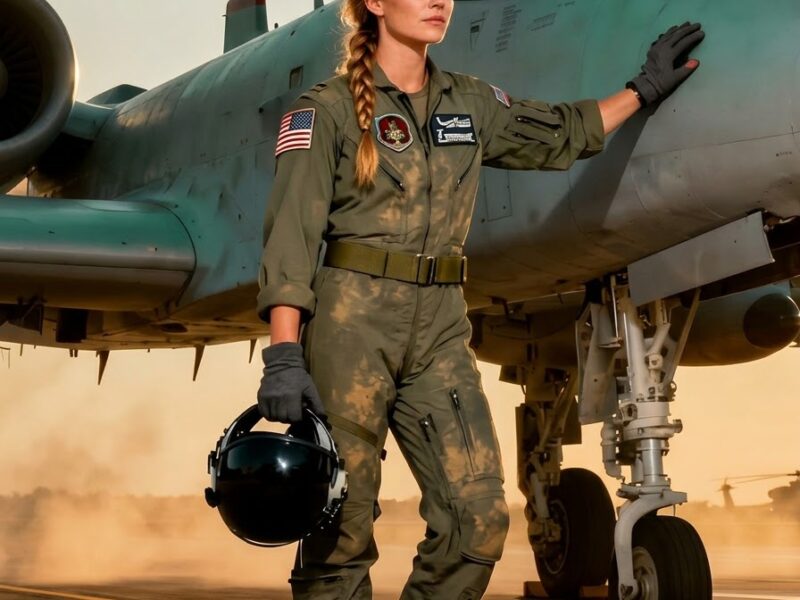
The radio exploded with screams as I circled above a canyon in Afghanistan, watching 124 Navy SEALs trapped behind enemy lines
The radio exploded with screams as I circled above a canyon in Afghanistan, watching 124 Navy SEALs trapped behind enemy lines while my commander coldly ordered, “Do not engage,” unaware that I was about to break every rule in the book to save them. I had been flying the A-10 Warthog for eight years, and I knew exactly what those orders meant. They were a death sentence wrapped in bureaucratic caution. We were too far from the main force, the canyon was completely surrounded by heavily armed insurgent units, and the clock was already running out for every man pinned down on that dusty valley floor.
“Pilot, break off immediately and return to base,” the sterile, distant voice of Colonel Vance echoed through my helmet. “That is a restricted target area. You are not cleared to discharge ordnance.”
I stared at the GPS coordinates glowing bright amber on my tactical screen. Below the dense cloud deck, flashes of red and green tracer fire crisscrossed the rocky terrain, illuminating the desperate perimeter the SEAL team had thrown up against the base of a sheer rock cliff.
Then I heard a voice break through the heavy static. “Any friendly aircraft in the area, this is Alpha-Six! We are taking heavy mortar fire! They’re closing in on our north flank! Please… don’t leave us.”
I recognized the voice instantly. Captain Ryan Miller. Three years ago, during a night live-fire exercise in the Nevada desert that went terribly wrong, Ryan had dragged my bruised and bleeding body from the burning wreckage of a downed training jet. He had pulled me clear seconds before the fuel tanks detonated, sustained second-degree burns on his arms, and then never mentioned it afterward, brushing off my gratitude with a dry joke about ruined flight suits. Now, his voice carried the calm, deadly undertone of a soldier who knew he was running out of options.
I looked at my primary fuel gauge. The digital readout showed three thousand pounds—just enough to get me back to Bagram Airfield if I turned around right now. Then I checked my remaining ammunition: eleven hundred rounds of 30mm armor-piercing depleted uranium shells for the GAU-8 Avenger cannon, along with two Maverick missiles mounted under the heavy wings. I knew I couldn’t single-handedly annihilate an entire enemy battalion. I knew I couldn’t save all 124 men if the canyon turned into a kill zone. But I also knew I could never live with myself if I turned my back and flew home.
“Command, I’m going in,” I said into the mask, my grip tightening around the control stick until my knuckles turned white.
“Negative, Captain Miller! That is a direct refusal of a lawful order!” Colonel Vance barked, his voice sharp with fury. “You pull back right now or you will face an immediate court-martial!”
I reached over with my left hand and clicked the primary radio toggle switch to the OFF position. Silence filled my helmet, broken only by the rhythmic hum of the twin General Electric engines mounted high on the fuselage behind me.
“Sorry, Colonel,” I muttered to the empty air. “Bad connection.”
I pushed the dual throttles forward to full power and shoved the stick forward. The heavy, ugly armor-plated A-10 dropped out of the sky like a wounded beast, plunging through the gray cloud cover straight into the narrow jaws of the mountain pass.
The moment my wings cleared the cloud layer, the world turned into a chaotic nightmare of fire and steel. Anti-aircraft heavy machine guns stationed along the canyon ridges immediately tracked my descent. Bright orange tracer rounds ripped across my canopy glass, missing my helmet by inches. Sudden missile launch warnings chimed in my headset as shoulder-fired anti-air missiles climbed toward me from the dark rocks.
I slammed the stick to the left, rolling the heavy jet beneath the rising smoke trails, skimming the jagged cliff faces so closely that my wingtips nearly shaved the rock wall. I brought the targeting reticle directly over a reinforced enemy mortar position raining explosives down on Ryan’s men.
I pulled the trigger.
The 30mm Gatling gun beneath my nose spun to life with its iconic, terrifying roar—a deep, mechanical BRRRRRRRTTT that vibrated through the steel titanium tub protecting my seat. A hail of heavy shells tore into the ridge, pulverizing the rock, the mortar, and the insurgent squad in a single continuous wave of destruction.
The entire canyon shook with the impact. Thick black smoke swallowed the ridge.
Before the dust could clear, Captain Miller’s voice crackled through the local ground-to-air tactical channel. “Who the hell is that?”
I smiled despite the adrenaline pounding against my ribs like a sledgehammer. “Your ride, Ryan. Hang on to your gear.”
I pulled the nose up into a steep climb, pulling five Gs as I cleared the southern crest of the canyon. I made three more rapid passes through the gauntlet of anti-aircraft fire. Each dive brought me terrifyingly close to the sharp mountain walls; each pass drained precious gallons of fuel from my main tanks.
On the third pass, a red master caution light flashed bright against my dashboard. A loud warning tone chimed in my ears.
FUEL LOW.
I had enough fuel left for one final run before my engines would flame out from starvation.
“Ryan, listen to me,” I barked into the radio. “I’m running on fumes. I’ve got one pass left in me to lay down a smoke screen and suppress their heavy guns on the eastern ridge. The second I open fire, you move your men toward the southern extraction zone. Do you copy?”
“Copy that, flight leader!” Ryan responded. “Team, move out! Go, go, go!”
Below me, one hundred twenty-four Navy SEALs broke from their stone covers and began sprinting down the rocky dry riverbed toward the southern mouth of the canyon. I turned the Warthog around, diving straight into the heavy crossfire, intentionally drawing every enemy weapon toward my aircraft to cover their retreat.
BANG!
A heavy 23mm anti-aircraft round smashed into my starboard wing, tearing away a large section of the aluminum skin. Another round struck the rear fuselage, sending a shudder through the flight controls. The cockpit filled with bitter, choking chemical smoke. I could barely breathe, my eyes tearing up behind my visor, but I kept my hand locked on the stick, keeping the nose level and the cannon firing until the absolute last shell cleared the barrel.
“Come on,” I whispered to the battered airplane, pushing the stick to compensate for the failing hydraulics. “Just a little longer. Keep it together.”
Down below, the lead SEAL team crossed the threshold of the southern extraction zone. Ryan’s voice surged over the comms, full of raw adrenaline: “We’re clear! We’re clear! Get out of there!”
I yanked the stick back, pulling the damaged A-10 up toward the open sky. The left engine coughed violently, sputtering as air bubbles entered the fuel lines. The controls went heavy and unresponsive, fighting my every input. For one terrifying moment, as the airspeed dropped into the stall warning zone, I thought the jet was going to lose lift and fall straight back into the sharp granite peaks below.
Then, with a shudder, the wings caught the upper air currents. The nose leveled out above the clouds.
I flew back toward Bagram Airfield on barely enough power to maintain level flight, gliding most of the way as the right engine finally died five miles from the runway. I brought the battered Warthog down onto the concrete airstrip, the tires screaming as the plane skidded to a halt near the end of the tarmac, trailing black smoke and dripping hydraulic fluid.
When the engines finally went dead, the entire flight line fell into a heavy, unnatural silence. Ground crews stared in absolute shock at the massive bullet holes peppered across my wings and fuselage.
I unbuckled my harness, slid back the scorched canopy, and climbed down the steel ladder. Waiting for me at the bottom was Colonel Vance, his face rigid, his eyes burning with cold rage. Beside him stood a team of armed Air Force Security Forces.
“You disobeyed a direct, lawful order from a superior officer during a combat operation, Captain,” Vance said, his voice terrifyingly calm.
I removed my helmet, wiping dirt and sweat from my forehead, standing straight despite the exhaustion trembling through my legs. “Yes, sir. I did.”
Vance stepped closer, his shadow falling over me. “And you saved 124 lives that would have been wiped out in twenty minutes.”
I didn’t answer. I didn’t get the chance to.
Because behind the Colonel, a convoy of dusty tactical vehicles had just pulled onto the flight line. The doors flew open, and Captain Ryan Miller stepped out, covered in dirt, soot, and dried blood. He walked slowly toward us, his face pale, ignoring the officers around him. He stopped inches away from me.
“Ryan,” I began, reaching out a hand. “I’m glad you—”
“There’s something you need to know,” Ryan interrupted, his voice hollow. He didn’t smile. He didn’t shake my hand. Instead, he pulled a folded, blood-stained piece of official paper from his tactical vest and handed it to me. “We found this in the command bunker on the ridge before you leveled it.”
I unfolded the paper with trembling hands. It was an official military intelligence directive—the original mission order that had placed Ryan’s 124 SEALs into that isolated canyon without heavy artillery support or immediate air backup.
At the bottom of the document was the signature authorizing the operation.
It was my name. My official officer ID number. My signature.
Except I had never seen that document in my life, and I had never signed it.
I stared at the black ink of my own signature on the damp paper, my mind spinning into a nauseating void. The curves of the letters, the precise slant of the capital letters, the specific military routing code appended to the bottom—it was an exact replica of my official signature, down to the small flourish I always placed at the end of my surname.
“This is impossible,” I whispered, my voice barely audible over the distant hum of taxiing cargo planes. “Ryan, I didn’t write this. I didn’t authorize this mission. I’m a flight captain, not a staff officer at Division HQ. I don’t even have the authority level to sign off on an operation of this magnitude.”
Ryan stood unmoving, his dark eyes searching my face for any hint of deceit. The dirt and sweat dried on his forehead looked like war paint. “That document was pulled directly from an encrypted terminal in the primary command bunker on the ridge. The insurgents weren’t just ambushing us by chance, Sarah. They had our exact entry route, our radio frequencies, and our extraction timetable. That piece of paper was handed to their field commander twelve hours before my men even stepped foot on the transport helicopters.”
Colonel Vance stepped between us, his hand extending toward the document. “Give me that paper, Captain.”
I pulled the document back instinctively, tucking it against my flight suit. “With all due respect, Colonel, this paper contains my forged signature authorizing a covert operation that resulted in a catastrophic ambush. I want to know how my clearance codes were used to send 124 men into a butcher shop.”
Vance’s eyes narrowed into dangerous slits. “That document is classified material recovered from an active combat zone. You are currently under military detention for defying operational command orders, Captain Miller. You will hand over that document, hand over your sidearm, and report directly to the Master-at-Arms for questioning.”
The two armed Security Forces personnel stepped forward, their hands resting on the holstered sidearms at their hips. The atmosphere on the flight line instantly turned razor-sharp.
Ryan stepped up shoulder-to-shoulder with me, his massive frame blocking the lead guard’s path. “Colonel, with all due respect, my team just walked out of a valley of death because this pilot broke protocol to do the right thing. If you’re placing her in cuffs, you’re going to have to cuff all 124 members of Team Six who are currently standing on the ramp behind me.”
Vance looked past Ryan. A dozen battered, dust-covered SEALs were stepping out of the transport vehicles, their eyes cold and fixed on the Colonel. They didn’t say a word, but the collective silence of hardened combat veterans carried more weight than any verbal threat.
Vance took a slow breath, adjusting the stance of his service cap. “Fine. Captain Miller, you will be escorted to the Officers’ Quarters under soft confinement until Division Intelligence completes its initial review of the flight logs. You will not touch a computer terminal. You will not make outside comms. Am I clear?”
“Clear, sir,” I said, my teeth clenched.
Twenty minutes later, I was sitting on a narrow iron cot inside a small, windowless room in the base’s concrete officer quarters. A single guard stood posted outside the door. The adrenaline that had sustained me through the dogfights and ground attacks was rapidly wearing off, leaving behind a bone-deep exhaustion and a cold, creeping dread.
Someone with high-level clearance had deliberately framed me. They had used my officer credentials to route Ryan’s team into an inescapable death trap, ensuring that if the mission blew up, the paper trail would lead directly back to a disgraced pilot who could easily be branded a traitor or an incompetent rouge operator.
A soft knock sounded at the door’s metal frame. The heavy deadbolt slid back, and the door opened. Ryan slipped inside, carrying two aluminum mess kit trays smelling of stale coffee and army rations. He kicked the door shut with his boot and sat down on the wooden desk across from my cot.
“The guard?” I asked softly.
“He’s taking a ten-minute smoke break behind the mess hall,” Ryan said, pushing one of the coffee cups toward me. “Turns out my men are very persuasive when asking for a little privacy.”
I took a sip of the bitter, hot coffee, letting the warmth bleed into my stiff fingers. “Thanks, Ryan. For believing me back there.”
Ryan leaned back, staring at the concrete wall. “I didn’t believe you at first. When I saw that paper on the ridge, I felt like someone had driven a bayonet through my chest. But then I watched you drop your A-10 through four hundred feet of anti-aircraft fire, burning your own fuel reserve to zero just to give my guys a twenty-second window to run. A traitor doesn’t fly like that, Sarah. A traitor sits back in Bagram and lets the canyon swallow us whole.”
“I need to see the digital signature key on that paper,” I said, pulling the folded document from my sleeve where I had hidden it before Vance could seize my flight gear. “Look at the routing code in the bottom corner. LOG-884-SIGMA.”
Ryan leaned closer, his eyes scanning the fine print. “What does that mean?”
“It’s a routing node used exclusively by the Joint Tactical Operations Center at Bagram,” I explained, pointing at the sequence of alphanumeric characters. “Every time an operational order is generated, the system creates a digital fingerprint that records the physical terminal used to sign it. This wasn’t signed from an office in Washington or a navy ship in the Gulf. This document was generated right here, inside the main intelligence bunker of this base.”
Ryan’s jaw tightened. “Who had access to that terminal twelve hours ago?”
“Only three people have administrator privileges for the SIGMA routing nodes,” I said, my voice dropping to a whisper. “Colonel Vance, the Chief Intelligence Officer Major Sterling, and…”
I froze. A sudden realization slammed into my chest like an iron bar.
“And who, Sarah?” Ryan demanded.
“And my wingman,” I breathed, my pulse spiking. “Lieutenant Eric Cole. He was assigned to the Logistics and Scheduling desk last week while his aircraft was undergoing engine overhauls. He had my primary authentication key. He took it from my locker three days ago under the pretense of updating our squadron’s emergency encryption codes.”
Before Ryan could respond, the base’s loud air-raid sirens began to wail across the complex. The harsh, rhythmic screech echoed through the concrete walls of the quarters.
“Attention all personnel!” a frantic voice barked over the base loudspeaker. “Red Alert! Base perimeter breach in Sector Three! All security personnel report to Armory Alpha immediately!”
Ryan was on his feet in a fraction of a second, his hand dropping to his sidearm. “That’s not an incoming rocket attack alert. That’s an internal security alarm.”
The heavy metal door of my room was suddenly kicked open. Lieutenant Eric Cole stood in the doorway, wearing tactical gear, holding a silenced MP5 submachine gun. Behind him, two men in unmarked fatigue suits lay unconscious on the hallway floor—my security guards.
“Eric?” I gasped, stepping back against the wall. “What are you doing?”
Cole didn’t look at me with anger or hatred. His expression was completely blank, cold, and detached, like a machine executing a programmed command.
“You should have died in that canyon, Sarah,” Cole said softly, raising the barrel of the weapon directly toward my chest. “It was supposed to be clean. A fallen pilot, a fallen SEAL team, a tragic combat failure in the mountains. Now you’ve made this terribly complicated for everyone.”
Before Cole could pull the trigger, Ryan lunged across the small room with lightning speed. He slammed his left forearm against Cole’s weapon, driving the barrel upward just as a burst of suppressed shots tore into the concrete ceiling, raining white dust and plaster down on us.
Ryan drove his shoulder into Cole’s chest, crashing him backward out of the doorway and into the narrow hallway outside. The two men hit the concrete floor hard, rolling into the dim yellow light of the emergency fixtures.
“Sarah! Get the drive from his vest!” Ryan roared, wrestling with Cole for control of the submachine gun.
I scrambled off the cot and darted into the hallway. Cole was fighting with desperate, violent strength, driving his knee into Ryan’s ribs, but Ryan’s military training and sheer physical size overwhelmed him. Ryan pinned Cole’s right arm against the floor with a heavy combat boot and struck Cole across the jaw with a short, powerful right hook. Cole’s head snapped back, his eyes rolling up as he went limp on the deck plates.
I knelt beside Cole’s unconscious body, frantically unzipping the front tactical pockets of his vest. My fingers brushed against a hard, rectangular metallic object—a military-grade encrypted flash drive with a red security seal labeled JTOC-RESTRICTED.
“Got it!” I yelled, pulling the drive out and holding it up.
“Check his comms unit,” Ryan panted, wiping blood from a cut above his eyebrow.
I unclipped the small tactical headset attached to Cole’s shoulder. The earbud was crackling with a high-frequency encrypted transmission. I pressed it against my ear.
“…Team B, confirm target neutralization,” a cold, smooth voice came through the static. “The transport aircraft is prepped on Runway Two. Once Captain Miller and the data are secured, terminate all local nodes and execute immediate departure.”
My blood ran cold. I knew that voice. It wasn’t Colonel Vance. It wasn’t Major Sterling.
It was General Marcus Thorne—the Deputy Director of Central Command, who had arrived at Bagram two days ago to oversee regional logistical operations.
“It’s Thorne,” I whispered, looking up at Ryan with wide eyes. “General Thorne is running this. Cole is taking orders directly from him.”
“Thorne?” Ryan spat the name out like poison. “He’s the one who authorized our tactical deployment parameters three days ago. He told my team we were going after a high-value insurgent leader. He set us up as bait.”
“Why?” I asked, my mind racing through the possibilities. “Why would a three-star general want an entire SEAL team and an A-10 pilot dead?”
“Look at the drive, Sarah,” Ryan said, pointing to the red seal on the metallic casing. “That’s not just operational logs. That red seal denotes PROJECT CHIMERA—it’s the black-budget defense hardware tracking system for all advanced munitions distributed across the Afghan theater. If Thorne was diverting military hardware and selling high-grade munitions on the dark market, he couldn’t afford an unannounced SEAL raid in that specific canyon. The canyon wasn’t an insurgent base—it was a weapons cache.”
Everything clicked into place with terrifying clarity. Ryan’s team hadn’t been sent to capture a target; they had accidentally stumbled into the perimeter of Thorne’s multi-million-dollar illegal arms operation. When Thorne realized the SEALs were on the verge of discovering the underground bunkers holding stolen American missiles, he forged my credentials to send them deeper into the kill box, planning to wipe out both the evidence and the witnesses under the guise of an enemy ambush. And when I flew in to save them, I had broken the narrative he needed to keep the truth buried.
“We have to get this drive to the base communications tower,” I said, holding the metallic drive tightly in my fist. “If we can broadcast the raw telemetry and inventory logs directly to Fleet Command in Qatar, Thorne won’t be able to sweep this under the rug.”
“Runway Two,” Ryan said, his eyes darkening as he remembered the voice from the headset. “Thorne’s private transport jet is sitting on Runway Two right now, getting ready to take off before the base goes into full lock-down. If he leaves with his personal servers, the evidence goes with him.”
“Then we stop that plane,” I said.
We moved fast down the service corridors of the officer quarters, stepping over disabled guards and avoiding the main hallways where security teams were rushing toward the external perimeter. The alarm was still screaming across the base, providing a chaotic cover for our movements.
We exited through a rear maintenance door into the freezing night air. The smell of aviation fuel, dust, and burning rubber filled the night wind. In the distance, near the far edge of the vast tarmac, the sleek, dark silhouette of a C-37 military transport aircraft was idling on Runway Two, its twin engines whining loudly as it prepared for an immediate taxying sequence.
“We’ll never make it on foot,” Ryan said, looking across the three hundred yards of open asphalt separating us from the runway.
I looked over at the flight line service ramp. Parked beneath a yellow floodlight was a heavy-duty, open-topped flight deck towing tractor—a low-slung, armor-plated diesel vehicle built to haul thirty-ton aircraft across the tarmac.
“Get in,” I yelled, sprinting toward the tractor.
I jumped into the driver’s steel bucket seat, shoved the heavy key into the ignition, and cranked the massive diesel engine to life. The motor roared with a deafening rumble. Ryan jumped into the passenger seat beside me, locking a fresh magazine into his sidearm.
I slammed the heavy transmission lever into gear and floored the accelerator pedal.
The heavy steel vehicle lurched forward, its massive rubber tires spinning against the asphalt before gripping the ground and launching us straight across the open flight deck toward the taxiway where General Thorne’s transport jet was beginning its takeoff roll.
The twin jet engines of the C-37 transport howled as the aircraft began accelerating down Runway Two, its bright navigation lights cutting through the darkness of the Afghan night.
“He’s picking up speed!” Ryan yelled over the roar of our diesel tractor engine, bracing himself against the steel roll cage as I swerved around a row of parked cargo trailers. “We aren’t going to intercept him before he reaches rotation speed!”
I looked past the speeding transport jet toward the secondary flight line. Parked fifty yards away, sitting under the harsh maintenance floodlights, was my own battered, battle-scarred A-10 Warthog. The ground crews had spent the last two hours attaching an auxiliary fuel bladder and patching the major hydraulic lines, though the starboard wing was still scorched black and missing a large panel of outer skin.
An insane, desperate idea took root in my mind.
“Ryan! Hold on!” I screamed, yanking the heavy steering wheel of the tractor hard to the left.
The tractor skidded across the oil-slicked tarmac, its heavy tires screaming, and slammed to a halt directly beside the ladder of my damaged A-10.
“What are you doing, Sarah?” Ryan shouted, staring at me in disbelief. “That jet is practically shredded! You barely landed it an hour ago!”
“It can still fly!” I yelled back, unbuckling my seat harness and scrambling up the metal ladder toward the cockpit. “That transport jet has a higher top speed than this tractor, but it can’t outrun a 30mm cannon! I’m going to block his takeoff line!”
“I’m coming with you!” Ryan yelled, climbing up the ladder right behind me.
“There’s only one seat, Ryan!”
“I don’t care! I’ll stand behind the armor plate!” Ryan growled, squeezing his massive frame into the tight space behind the pilot’s ejection seat, holding onto the steel canopy frame with both hands. “Just get this damn bird in the air!”
I didn’t argue. I flipped the primary battery switches, cranked the dual starter fuel pumps, and hit the ignition buttons for both engines. The twin turbines whined, coughing once, twice, before catching fire and roaring to life with a deep, familiar vibration that shook the entire frame of the airframe.
I didn’t wait for the engine temperatures to stabilize. I didn’t complete the mandatory pre-flight safety checks. I shoved both throttles to full military power and released the wheel brakes.
The wounded Warthog lurched forward, rolling off the maintenance pad straight onto the active runway, cutting directly into the path of the approaching C-37 transport jet.
Through the cockpit glass, I could see the high-intensity landing lights of Thorne’s aircraft bearing down on us at over one hundred knots. The pilot of the transport jet suddenly realized an A-10 was sitting directly in his takeoff path, and I saw the nose of the C-37 dip violently as the pilot slammed on his emergency brakes.
The transport jet skidded sideways across the asphalt, its rubber tires blowing out in loud explosions, sending a massive shower of white sparks into the night air as the airframe slid into the soft dirt shoulder at the edge of the runway, coming to a violent halt.
“Hold on!” I yelled, bringing the A-10 to a stop twenty feet from the steaming wreckage of the transport.
Before the dust could clear, the side passenger hatch of the C-37 was kicked open. Three men in civilian tactical gear stepped out onto the dirt, raising automatic rifles toward my cockpit.
BANG! BANG! BANG!
Bullets struck the heavy bulletproof windshield of my A-10, cracking the outer glass layer into a spiderweb pattern, but the thick armored glass held firm against the impacts.
Ryan reached over my shoulder, unlocked the canopy release, and shoved the heavy acrylic dome upward. Leaning over the side armor plate, he fired four rapid, precise shots from his sidearm. The three tactical operatives dropped to the ground, neutralized before they could deploy heavy anti-armor weapons.
Then, a tall, distinguished figure in an immaculate three-star general’s service uniform stepped out of the transport’s hatch. General Marcus Thorne held a silver sidearm in his right hand, his face twisted in a mixture of aristocratic arrogance and desperate fury. In his left hand, he carried a heavy metallic server briefcase containing the master files of PROJECT CHIMERA.
“Miller!” Thorne roared over the idling whine of my jet engines, pointing his gun at us. “You are committing treason! You are interfering with a classified National Security operation! Step down from that aircraft immediately!”
I stood up in the cockpit, leaning over the flight panel, staring down at the man who had ordered the murder of 124 soldiers for personal profit.
“The operation is over, General,” I said, my voice cold, steady, and carrying across the quiet tarmac. “We have the SIGMA routing drive. We have the mission orders with your forged authorization codes. And NCIS has already been notified.”
Thorne’s face turned pale. The silver pistol in his hand trembled slightly as he realized the net had finally closed around him. He looked around the vast, dark airfield. In the distance, the sirens of dozens of military police vehicles were wailing, their red and blue lights flashing as a massive convoy raced down Runway Two toward our position.
“You don’t understand how the world works, Captain,” Thorne hissed, his voice trembling with bitter hatred. “This wasn’t about money. It was about funding the off-grid operations this country doesn’t have the stomach to approve in public. Those men in the canyon… they were just acceptable losses for a greater objective!”
“Those men,” Ryan’s voice echoed like thunder as he stepped up beside me, his tactical rifle leveled directly at Thorne’s chest, “were my brothers. And you sold them out for a lie.”
Thorne looked at the barrel of Ryan’s rifle, then at the approaching wall of military police vehicles surrounding the transport jet. Slowly, deliberately, he opened his hand, letting the silver pistol fall into the dirt below.
The morning sun rose over the jagged peaks of the Hindu Kush mountains, casting a brilliant gold light across the concrete flight line of Bagram Airfield. The cold morning wind swept away the lingering smell of smoke and aviation fuel, leaving behind a crisp, clear sky.
Runway Two was surrounded by dozens of Federal Bureau of Investigation vehicles, NCIS transport units, and heavily armed Air Force Security Forces. General Marcus Thorne and his co-conspirators, including Lieutenant Eric Cole, were being led away in heavy iron wrist restraints, loaded into the back of armored transport vans under the direct supervision of federal investigators who had arrived from Washington on an emergency flight two hours prior.
Colonel Vance stood near the wing of my battered A-10, holding a clean digital tablet containing the official clearance documents issued directly by the Secretary of the Air Force.
I stepped down from the aircraft’s ladder, my flight boots hitting the cool asphalt. I was exhausted, every muscle in my body aching from the physical strain of the past twenty-four hours, but my head was clear.
Colonel Vance walked over to me, stopping three feet away. He looked at the scarred, bullet-riddled metal of my jet, then met my eyes.
“Captain Miller,” Vance said, his voice quiet and devoid of its former harshness. “The Department of Defense has officially dropped all charges of insubordination and court-martial proceedings against you. The SIGMA drive you recovered contained complete evidence of General Thorne’s illegal arms network. Your actions brought down a corrupt system that went all the way to the top.”
“Thank you, sir,” I said, offering a crisp salute.
Vance returned the salute firmly. “Furthermore, the Chief of Staff of the Air Force has recommended you for the Distinguished Flying Cross for extraordinary heroism in aerial combat.” He paused, a brief, genuine smile breaking through his hardened features. “And as for your jet… ground maintenance says it’s going to take six months to repair the damage you caused.”
“She’ll fly again, sir,” I said, looking back at the Warthog with a touch of pride. “She’s tougher than she looks.”
Vance nodded, turned on his heel, and walked back toward the command headquarters, leaving me alone on the ramp.
A few moments later, the sound of heavy boots approached from behind. I turned around to see Captain Ryan Miller walking toward me, flanked by the senior non-commissioned officers of SEAL Team Six. All 124 men had gathered on the flight ramp, their gear packed, waiting for their medical evaluations and return transports home.
Ryan stopped in front of me. He looked down at the ground for a second, then raised his eyes, filled with an emotion that words couldn’t quite capture.
“We’re heading home today, Sarah,” Ryan said softly. “The entire team is being rotated back to Coronado for debriefing and leave.”
“You earned it, Ryan,” I said. “All of you did.”
Ryan reached into his pocket and pulled out a small, metallic object—a worn, brass Navy SEAL Trident insignia, the symbol of absolute excellence and sacrifice earned by only the most elite warriors in the armed forces.
He took my right hand and pressed the heavy brass emblem into my palm, folding my fingers over it tightly.
“Every man in my team owes his life to the pilot who refused to obey an order to let us die,” Ryan said, his voice thick with raw emotion. “You’re one of us now, Captain Miller. If you ever need a ride, a favor, or a team to back you up in a fight, you just say the word.”
Behind Ryan, the 124 Navy SEALs came to attention as one unit, raising their hands in a silent, synchronized salute to a single Air Force pilot standing beside a broken airplane.
I stood tall, returning the salute, holding the brass Trident tightly against my chest.
As the morning sun climbed higher into the bright blue horizon, the distant sound of transport engines filled the sky, carrying the promise of home, peace, and justice finally restored. The canyon was far behind us, the shadows had been driven back into the light, and for the first time in eight years, the skies felt completely free.
The end.









