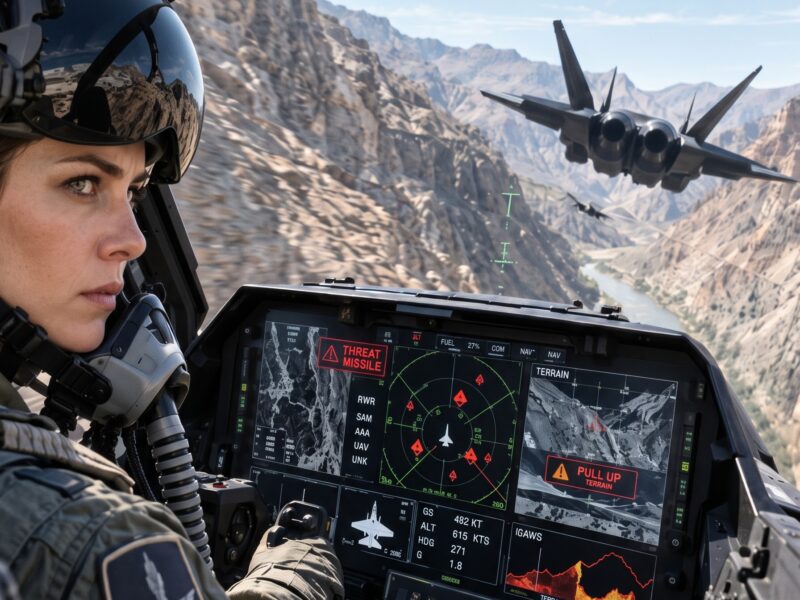
The morning I was publicly grounded on the flight line at Davis-Monthan Air Force Base, my commander called me reckless for disobeying a direct order
The sun over Davis-Monthan Air Force Base in Tucson did not just warm the earth; it radiated off the concrete flight line like a physical force. The heat shimmered in wavy distortion, turning the long rows of mothballed jet fighters into ghostly phantoms. I stood at rigid attention beside the left main landing gear of my A-10 Thunderbolt II, the heavy midday sun baking through my flight suit. Around me, thirty members of my squadron stood assembled in a solemn, silent semicircle.
Lieutenant Colonel Marcus Vance stood directly in front of me. His jaw was set like iron, his dark eyes void of warmth.
“Captain Vance,” he said, his voice carrying clearly across the tarmac despite the low rumble of auxiliary power units in the distance. He didn’t use my first name, Elijah. Here, under the burning Arizona sky, I was merely an officer who had broken the cardinal rule of military aviation. “In my twenty-four years of service, I have never witnessed an act of cowardice disguised as professionalism. You were given a direct order by your commanding officer to lead Flight Alpha on a routine border patrol.”
“It wasn’t a routine patrol, sir,” I said, my voice steady despite the adrenaline pounding in my temples.
“Silence!” Vance snapped. He stepped closer, reaching out to grasp the embroidered cloth flight badge pinned to the chest of my green suit. With a sharp, tearing sound, he ripped the hook-and-loop patch from my chest. He held it up for the squadron to see, then shoved it deep into his trousers pocket. “You are relieved of flight status effective immediately. You will report to the briefing annex and await court-martial proceedings. You’re done flying.”
I kept my eyes fixed on the horizon, staring past his shoulder at the jagged line of the Catalina Mountains. I knew that arguing in front of the men and women I was supposed to lead would solve nothing. It would only cement the narrative Vance was building: that Captain Elijah Vance had lost his nerve.
Two hours earlier, the world had been different. I had sat in the air-conditioned darkness of Briefing Room 3, reviewing the mission parameters for Operation Ghost Sweep—a joint-agency surveillance run along the rugged terrain of the US-Mexico border. Three A-10s were scheduled to fly in a loose trail formation, maintaining visual contact while monitoring remote sensor grids embedded along the border corridors.
As flight lead, I had carefully reviewed the communications sheet. That was when I noticed the discrepancy.
The primary and secondary emergency search-and-rescue frequencies assigned to our flight were wrong. They weren’t the standard theater guard channels, nor were they the updated secure rolling codes issued by Southern Command that morning. Instead, they were routed through an obscure, decommissioned relay server based out of Fort Huachuca—a channel that had been inactive for over a decade.
I had raised my hand immediately. “Sir, the SAR frequencies on the card don’t match the daily SPINS. If we go down or hit a comms dead zone, we won’t be able to punch through to local air traffic control or Sector Search.”
Major Hollis, the squadron intelligence officer, hadn’t even looked up from his tablet. “It’s a pre-set coordination channel for the joint task force, Vance. Fly the card as printed.”
“With respect, Major, if we lose primary radios out over the Baboquivari wilderness, this secondary freq routes to a black hole. It’s an operational hazard.”
“The card is approved,” Hollis had replied coldly. “Focus on your altitude holds, Captain.”
I didn’t drop it. I brought it directly to Lieutenant Colonel Vance ten minutes before step-time. I told him I wouldn’t take three aircraft into a known radio shadow with faulty emergency protocols. I asked for ten minutes to fix the routing sheets.
Vance had looked at me not with concern, but with cold contempt. “You fly the mission you’re assigned, Captain. Or you step aside and let a real pilot take the stick.”
“I won’t lead my wingmen into a trap, sir,” I had said.
That was the magic word. Trap. Vance’s face had flushed crimson. Within five minutes, he had called the entire squadron out to the flight line to make an example of me. He reassigned my aircraft to Captain David “Guns” Miller, with Lieutenants Chen and Ross taking the wing positions.
Now, as the squadron dispersed back into the air-conditioned hangars, I walked alone toward the concrete block structure of the briefing annex. The silence of the desert seemed to mock me. I sat on a folding metal chair in an empty room, staring out the reinforced glass window facing the main runway.
At 11:45 AM, the engines of Flight Alpha howled to life. Three twin-engine A-10s taxied down the yellow line, their long wings loaded with external fuel tanks and optical pod gear. I watched from the window as Miller pushed the throttles forward. The three jets tore down the runway, lifted into the scorching sky, and banked hard south toward the border. They shrank into tiny silver specks, dissolving into the heat shimmer until they were gone.
I sat in that chair for over an hour, the ticking of the wall clock the only sound in the room. I felt an overwhelming sense of isolation. To the rest of the unit, I was the coward who balked at a routine border ride.
At 12:15 PM, the secure red telephone on the wall behind me let out a sharp, electronic blare.
I jumped, turning to look at the red plastic casing. The phone only rang for high-priority operational updates directly from the Air Operations Center. It rang three times before I stepped across the room and picked up the receiver.
“Briefing Annex, Captain Vance,” I said.
A heavy, static-laced silence filled the line. Then, a low voice—someone I didn’t recognize, speaking with hushed urgency—came through the speaker. “Unidentified aircraft just crossed the border line.”
My chest tightened. “Who is this? Repeat your call sign.”
“How many?” the voice murmured, ignoring my question.
“How many what?” I demanded, gripping the receiver until my knuckles turned white.
“How many jets did Vance send south?”
There was a long pause. My heart hammered against my ribs like a trapped bird. “Three,” I whispered.
“They’re gone, Elijah,” the voice said. “Check the grid.”
The line went dead with a loud click.
Before I could process the strange call, the door to the briefing room burst open. Lieutenant Colonel Vance stepped inside. The smug, arrogant composure he had displayed on the flight line two hours ago was completely shattered. His face was gray, a slick coat of sweat glistening on his forehead. His flight cap was clutched in a trembling fist.
“Elijah,” he said, his voice barely above a whisper.
I stood up slowly. “Where are they, Colonel?”
Vance swallowed hard, stepping toward the center table. “We lost radar contact with Flight Alpha.”
“Lost contact? Where? They have satellite tracking pods.”
“The pods went dark,” Vance said, his hand trembling as he leaned against the table. “All three of them. Simultaneously.”
“How long?” I asked, my voice rising in pitch. “How long have they been dark, sir?!”
“Twenty-three minutes,” Vance confessed, looking down at the floor. “We thought it was a transmitter glitched by the heat. We tried reaching them on primary tactical. Nothing. We tried the secondary guard channel.”
“The channel I told you was broken?” I stepped toward him, the anger rising like a flood inside me. “You sent three men into a dead zone with no secondary safety net!”
Vance didn’t yell back. He couldn’t. The gravity of the situation was settling over him like a tomb. “We called Base Operations. Border Patrol has no visual. Radar at Luke Air Force Base shows their squawks disappeared right over the San Rafael Valley.”
I strode over to the wall-mounted light board and flipped the switch, illuminating the large topographic map of the Arizona-Mexico border. I grabbed a dry-erase marker from the ledge and rapidly plotted the coordinates of their last known positions based on the standard mission timeline.
Three small red Xs marked their path along the rugged canyon network of the San Rafael basin. I stepped back, staring at the drawn vectors.
My breath hitched in my throat.
The three flight paths did not form a straight surveillance line. Based on the altered waypoints provided in the morning briefing, the three aircraft had been instructed to fan out at precise three-minute intervals, forming an equilateral triangle over a secluded, unmapped valley surrounded by high mineral-rich ridges.
It wasn’t a search pattern. It was a vector convergence designed to blind ground radar and trap the jets inside a localized signal terrain shadow.
“They weren’t supposed to come back,” I said, the realization chilling me to the bone. “Someone designed this route specifically to pull them into that valley.”
Vance stared at the map, his eyes wide with horror. “That’s absurd. That route was generated by regional operations intelligence.”
“Then regional intelligence sent them into a meat grinder,” I snapped. I reached inside the inner pocket of my flight jacket. My fingers brushed against the thick, yellowed paper I had slipped out of my father’s old military trunk three days ago—the piece of paper that had made me double-check the flight sheets in the first place.
I pulled out the faded black-and-white reconnaissance photograph and slammed it onto the glass table between us.
Vance blinked, looking down at the image. It showed the exact same topographic ridge lines of the San Rafael Valley. Superimposed over the mountain contours were three hand-drawn red flight vectors forming the exact same equilateral triangle I had just drawn on the wall map.
“What is this?” Vance asked, his voice shaking.
“That photograph is twelve years old,” I said, my voice cold and hollow. “It was taken during Operation Silent Shield in 2014. Three A-10s entered that exact valley on a covert recon flight. They suffered total electronic failure and vanished off the scope. The Air Force ruled it an instrument-influenced controlled flight into terrain. They said the pilots flew into the mountain walls during a dust storm.”
Vance looked up at me, his eyes filled with sudden realization. “Your father…”
“My father was Major Thomas Vance,” I said. “He was the flight lead that day. They never recovered the wreckage. They told my mother the terrain was too unstable to conduct a full recovery operation, closed the file, and classified the telemetry data.”
I pointed a finger at the bottom corner of the old photograph. Written in thin, precise black ink was a serial number and a short, handwritten note: The shadow isn’t natural. Don’t trust the relay.
“I recognized the handwriting the second I saw it,” I said, my chest heaving. “It was my father’s. He found out the relay frequencies were compromised twelve years ago. And today, someone printed those same compromised frequencies on David Miller’s kneeboard card.”
Vance slumped into a chair, burying his face in his hands. “My God… what have I done?”
“You didn’t look,” I said ruthlessly. “You were so eager to enforce discipline that you didn’t check the math.”
Suddenly, the secondary emergency receiver mounted on the wall rack crackled to life. A heavy burst of static washed through the speaker, followed by a high-pitched electronic whine that made both of us wince.
Vance jumped up. I stepped closer to the console, leaning over the speaker.
Through the curtain of white noise, a faint, ragged human voice broke through. It was gasping, wet with pain, background noise roaring like rushing wind.
“… static… any station… this is Alpha Two… do you read…”
“David!” I grabbed the handheld microphone, pressing the push-to-talk button. “David, this is Elijah! I read you! Where are you? What is your status?”
Static hissed over the speaker for three excruciating seconds. Then, Captain Miller’s voice returned, strained and trembling with unimaginable fear.
“Elijah…? They’re… they’re gone, man. Chen and Ross… they hit the ridge… there was no warning… everything went dead…”
“David, give me coordinates! Are you on the ground?”
“We didn’t crash because of the weather,” Miller rasped. His breath was coming in short, panicked gasps. “The systems didn’t fail, Elijah… something pulled us down. An EMP or… or ground interdiction. My engines cut out over the ridge… I managed to glide down into the dry wash…”
“Hold your position,” Vance shouted over my shoulder, grabbing for the radio. “David, this is Colonel Vance! We are launching Search and Rescue right now!”
“No!” Miller screamed through the static, the sheer terror in his voice freezing us both in place. “Don’t send… don’t send anyone! Colonel… Captain Vance was right… we were brought here on purpose…”
“David, what are you talking about?” I asked, my heart hammering against my ribs.
“The valley…” Miller whispered, the signal fading as heavy interference swept across the frequency. “It’s not empty, Elijah. We’re not missing… we found it… we found what they buried down here…”
“David! What did you find?!”
A loud, metallic clanking sound resonated through the transmission, followed by the muffled thump of heavy boot steps on loose gravel. Miller let out a sharp, choked intake of air.
“They’re coming up the wash,” Miller whispered, his voice barely audible over the rising roar of static. “They aren’t search teams, Elijah. They have… my God, they’re wearing—”
A deafening burst of automatic gunfire shattered the transmission. The harsh, mechanical rattle of assault rifles filled the room through the speaker, accompanied by the sound of shattering glass and Miller’s short, cut-off scream.
Then, total silence.
The radio dropped back into a flat, steady hiss of ambient white noise.
I stood frozen, holding the microphone, my knuckles bone-white. Beside me, Colonel Vance looked as though he had seen a ghost. The room was deathly quiet, save for the rhythmic clicking of the wall clock.
I turned slowly to look at Vance. The commander who had stripped my wings two hours ago was now staring at me with hollow, terrified eyes.
“Get my flight badge,” I said, my voice dead and cold as ice. “And open the main armory.”
The armory basement beneath Hangar 4 smelled of gun oil, cold steel, and ozone. While Colonel Vance used his master keycard to bypass the security protocols on the heavy steel door, I pulled on a tactical harness over my flight suit, strapping a standard-issue 9mm Beretta holster to my chest and securing a survival knife to my left thigh.
Vance stood at the weapons rack, his hands trembling as he unlocked a crate containing M4 carbines. “Elijah, if I report this to Base Command, they will lock down the perimeter and wait for federal authorities. FBI, Department of Homeland Security—”
“By the time DHS clears the paperwork to cross into that classified sector, David Miller will be dead, and whatever killed my father’s flight twelve years ago will be scrubbed from the earth,” I said, snatching a carbine from the rack and slapping a fully loaded magazine into the mag well. “You saw the flight paths. You heard the gunshots. Someone inside our own chain of command set up that route. If you call Base Command, you are calling the very people who arranged this.”
Vance stopped. His face went pale as the truth hit him. “You think someone in the Air Force…?”
“I think someone with high-level access altered the mission cards and routed three combat jets into a kill box,” I said, leaning in close. “You took my wings to save face. Now you’re going to help me get them back to save those men.”
Vance slowly reached into his pocket. He pulled out my embroidered flight patch, stained with a smudge of dust from the tarmac. He didn’t say a word as he handed it to me. I pressed the velcro back onto the left chest of my flight suit.
Ten minutes later, we were in the maintenance bay behind Hangar 2. Sitting in the shadows, away from the active flight line, was an unassigned, unarmed O-2A Skymaster—a vintage twin-engine observation aircraft used by the base history detachment for static displays and low-altitude reconnaissance checks. It was slow, prop-driven, and completely unarmored. But it had two massive advantages: its analog engines possessed no digital flight computers that could be fried by electronic warfare, and it didn’t require a full ground crew to launch.
I climbed into the left pilot seat, flipping the mechanical toggle switches on the overhead panel. The front and rear inline engines coughed, sputtered, and then roared to life with a vibrating chug that shook the small cabin. Vance climbed into the right seat, holding a secure satellite tablet and a topo map of the border region.
“I called in a low-level maintenance test flight to the tower,” Vance said through his headset. “We have twenty minutes before they realize we’ve crossed the border fence.”
“Then let’s not waste time,” I said.
I taxied the Skymaster out onto the secondary runway, pushed the twin throttles to the wall, and felt the light plane bounce down the asphalt before lifting into the oppressive Arizona heat.
We flew low—less than five hundred feet above the desert floor—following the jagged contours of the terrain to stay below the long-range civilian air traffic radars at Tucson International. Below us, the vast expanse of the Sonoran Desert stretched out in endless shades of brown, scrub green, and sun-bleached rock.
As we approached the Baboquivari Mountains, the terrain grew hostile. Massive granite monoliths jutted up from the earth like broken teeth, casting long, dark shadows across the dry ravines.
“Passing the border grid now,” Vance announced, his eyes glued to the GPS screen. “Five miles north of the target valley.”
“Keep your eyes on the analog instruments,” I warned him. “If my father’s notes were right, the electronic interference isn’t a malfunction. It’s a localized blanket.”
Two minutes later, it hit us.
Without warning, the digital GPS screen on Vance’s tablet flickered, displayed a series of nonsensical characters, and died completely. The digital clock on the instrument panel froze. In the left panel, the electrical fuel gauges dropped to zero, though the mechanical engine needles remained rock steady. The twin propeller engines stuttered for a fraction of a second as their primary alternators surged, but the old mechanical carburetors kept feeding fuel.
“We just crossed the threshold,” I said, pulling back on the yoke to lift the Skymaster over a high ridge of reddish-brown rock. “Look for smoke.”
We cleared the crest of the ridge and banked hard to the left, dipping into the hidden basin known on old military surveys as Sector 14-Delta—a steep, sun-baked canyon completely ringed by high walls of iron-rich rock.
The sight below made my heart drop into my stomach.
Scattered across the floor of the dry wash were three distinct debris fields. The first A-10 had impacted the eastern canyon wall at high speed; a scorch mark forty feet wide marked the point of impact, with twisted fragments of titanium and aluminum spewed across the rocks below. That was Chen.
A mile further south, the second A-10 lay inverted in a deep ravine, its tail section sheared off and its left wing folded like crushed paper. Smoke still rose in a thin, lazy column from the twisted metal. That was Ross.
“Dear God,” Vance whispered, leaning his forehead against the side window. “It’s a graveyard.”
“Look there,” I pointed toward the far western end of the valley floor.
A third A-10 was sitting relatively intact in the middle of a wide, flat dry riverbed. Its landing gear was retracted, but the pilot had managed a belly landing. The heavy titanium armor tub that surrounded the cockpit had done its job—the canopy was shattered, but the airframe was largely whole.
“That’s Miller,” I said. “He glided in.”
I throttled back the twin engines, setting the Skymaster into a steep, descending spiral toward the valley floor. As we dropped below three hundred feet, I spotted something that made my blood run cold.
Surrounding Miller’s downed aircraft were four dark-colored, unmarked tactical all-terrain vehicles. Figures in gray, non-military tactical gear were moving around the plane like ants. Near the tail of the jet, two men were hauling a limp body in a green flight suit toward the back of an enclosed transport truck.
“They have Miller!” Vance shouted. “They’re taking him!”
“They aren’t military,” I muttered, staring at the unmarked vehicles and the heavy weaponry the men carried. “Look at the equipment. That’s private contractor gear. Tactical security.”
“Who are they?”
“The people who didn’t want my father—or Miller—to tell anyone what’s inside this valley.”
I leveled the Skymaster twenty feet off the gravel floor of the wash, dropping the flaps to slow our landing speed. The wheels slammed onto the uneven dirt with a bone-jarring impact. The light plane bounced violently, kicking up a massive cloud of dust as I pumped the mechanical foot brakes, bringing the Skymaster to a halt behind a natural outcrop of boulders three hundred yards from Miller’s crash site.
I cut the engines. The absolute silence of the desert slammed into the cabin.
“Stay with the plane, Vance,” I ordered, unbuckling my harness and grabbing the M4 carbine.
“I’m coming with you,” Vance said, his face determined. “I put those boys in this air, Elijah. I’m not sitting in this cockpit like a coward while you fix my mistake.”
I looked at him for a moment, seeing the genuine remorse and resolve in the older man’s eyes. I reached behind the seat, grabbed a spare Beretta 9mm, and handed it to him. “Keep the safety on until you have a target. Move fast, stay low.”
We slipped out of the cabin into the stifling 100-degree heat. The smell of burning jet fuel and scorched rubber hung heavy in the stagnant air. Crouching behind the line of boulders, we advanced toward the crash site.
Through a gap in the rocks, we watched the operation unfold.
Six armed contractors were standing around the nose of Miller’s A-10. Two of them were using heavy hydraulic cutting tools to tear into the avionics bay beneath the cockpit, pulling out black boxes and flight data recorders and tossing them into a steel incinerator drum burning nearby.
Over by the transport truck, Captain David Miller was bound at the wrists, slumped against the rear tire. His face was bloody, his flight suit torn, but his chest was rising and falling. He was alive.
Standing over Miller was a tall man wearing a tailor-made civilian tactical suit, holding a satellite phone that somehow seemed to function despite the localized jamming field. He had short, graying hair and a cold, calculating posture that screamed former intelligence officer.
“…the retrieval is fifty percent complete,” the man was saying into the phone, his voice carrying over the quiet wash. “Flight Alpha has been neutralized. The crash signatures match a standard spatial disorientation event. Once we burn the telemetry, the Air Force will close the book just like they did twelve years ago.”
He paused, listening to the person on the other end of the line.
“No,” the gray-haired man continued. “The pilot survived the touchdown, but he’s being eliminated now. We cannot risk another leak like the Vance incident in 2014.”
My hand tightened on the grip of my rifle until my knuckles turned white. The Vance incident.
“We have located the old research hatch beneath the primary crash site,” the man added. “The excavation team is already moving the heavy gear down into the subterranean vault. Whatever Thomas Vance left behind in 2014 will be sealed permanently by nightfall.”
He hung up the phone and looked down at Miller. He reached into his belt and drew a suppressed pistol, raising it directly at Miller’s head.
“Vance, take the man on the left,” I whispered, resting the barrel of my M4 over the ridge of the boulder. “On my mark.”
“Mark!”
I squeezed the trigger.
The sudden, violent sharp bark of my M4 carbine shattered the desert silence.
My first burst struck the gray-haired commander square in the chest, the force of the 5.56mm rounds throwing him backward against the side of the transport truck. Beside me, Vance fired three rapid shots with his Beretta, hitting one of the contractors working near the avionics bay.
“Ambush! We have shooters on the ridge!” someone screamed in Spanish.
Chaos erupted around the downed A-10. The surviving four contractors immediately dove for cover behind their armored ATVs, racking the bolts of their automatic rifles and laying down a heavy, sweeping hail of suppressive fire toward our boulder position.
Bullets chipped away at the granite rocks above my head, spraying sharp stone splinters and dust over my face.
“Cover me!” I yelled to Vance.
I popped up over the rock, firing a controlled three-round burst that forced two of the contractors to duck behind their vehicle. Using the brief pause, I broke cover, sprinting hard down the sloping wash toward the rear of the transport truck where Miller was slumped.
Gravel flew from beneath my boots. High-velocity rounds whipped through the air around me with deadly snap-snap sounds. I hit the ground in a hard slide, using the heavy steel frame of the transport truck’s rear axle as cover.
“Elijah…?” Miller groaned, his eyes swollen shut, blood caked around his nose. “You… you came?”
“I told you I was flight lead, Guns,” I said, drawing my survival knife and slicing through the heavy zip-ties binding his wrists. “Can you walk?”
“Leg’s broken,” Miller rasped, grimacing in pain as he pulled himself up against the tire. “They… they took something out of the ridge, Elijah. A vault… under the mountain…”
A grenade detonated fifty feet away, sending a shower of dirt and metal fragments over the truck. Vance was laying down continuous single-shot fire from the boulders, keeping two of the contractors pinned behind the secondary ATV, but he was rapidly running out of ammunition.
“Stay low!” I told Miller.
I leaned out from behind the rear tire, bringing my rifle to my shoulder. I acquired the contractor nearest to Vance’s position and fired twice. The man collapsed into the dirt.
The remaining three contractors realized they were taking fire from two angles. Instead of pushing their attack, one of them threw a gray smoke canister onto the ground. A thick, opaque cloud of white smoke burst forth, instantly enveloping the crash site.
“Fallback to the hatch!” a voice shouted from within the smoke. “Seal the tunnel!”
The sound of heavy boots echoed away from us, heading toward the sheer cliff face at the southern end of the wash.
I ran to Vance, who was leaning against his boulder, breathing heavily, his pistol slide locked back on an empty magazine. “You alright, Colonel?”
“I’m fine,” Vance panted, wiping sweat from his eyes. “Just out of ammo. Did you get Miller?”
“He’s alive, but his leg is shattered. We need to secure the area before they bring in reinforcements.”
We moved quickly back to Miller, dragging him into the shade of the truck frame. Vance stayed with him, using a field dressing from the truck’s medical kit to stabilize his broken leg, while I grabbed a dropped contractor rifle and advanced toward the cliff wall where the men had retreated into the smoke.
As the cloud drifted away in the hot desert wind, I saw what had been hidden for twelve years behind a curtain of scrub brush and loose rock.
It was a heavy, reinforced steel blast door set directly into the solid granite wall of the mountain. It looked like an old Cold War-era bunker entry, but the digital lock pad mounted beside it had been recently replaced with modern, commercial-grade electronics.
The blast door was standing propped open by an iron crowbar.
Beside the entry, painted in faded white military stenciling, were words that made my throat go dry:
U.S. ARMY SIGNAL CORPS – PROJECT ECLIPSE
RESTRICTED ACCESS – LEVEL 5 AUTHORIZATION REQUIRED
I stepped over a tangle of freshly laid heavy-duty power cables that snaked from a portable generator outside, through the blast door, and down into the pitch-black abyss of the mountain.
I pulled a tactical flashlight from the vest of a fallen contractor, clicked it on, and stepped inside.
The air inside the tunnel instantly dropped twenty degrees. It smelled of ancient dust, damp stone, and ozone. The concrete walls were lined with thick bundles of shielded copper wiring and massive, vintage vacuum-tube relay racks that stretched into the darkness like the ribs of a giant iron leviathan.
This was the source of the jamming. Project Eclipse wasn’t an enemy site—it was an abandoned, highly classified US military electronic warfare installation built during the height of the Cold War, designed to create a localized radio and radar dead zone across the entire valley to hide sensitive weapons testing.
And someone had secretly reactivated it.
I advanced cautiously down the sloping concrete corridor, my boots clicking against the damp floor. The beam of my flashlight cut through the dark, illuminating scuff marks and fresh footprints in the dust.
After fifty yards, the corridor opened into a massive underground command chamber. Towering metal banks of mainframe computers from the 1970s lined the perimeter walls, their green indicator lights flickering erratically as power hummed through the newly spliced cables.
In the center of the room was a large glass-topped mapping table. Sitting on top of the table was a black metal flight-case, its latches broken open.
Beside the flight case lay a dusty, blood-stained leather pilot’s jacket.
My heart stopped.
I slowly approached the table, my flashlight beam trembling as it hit the chest of the jacket. Pinned to the leather was a tarnished silver Air Force captain’s wings badge, and above it, a name tag cracked with age:
THOMAS VANCE – MAJ – USAF
My father’s jacket.
Twelve years ago, my father hadn’t died in a random crash. He had landed his plane in this valley, just like Miller had, and he had made it inside this underground facility.
With trembling hands, I reached into the open flight case. Inside were several thick, classified binders stamped with red top-secret seals, alongside a modern hard drive that the contractors had been in the middle of downloading data from when we ambushed them.
I picked up the top paper inside the binder. It was a signed memorandum dated October 14, 2014.
The signature at the bottom was not my father’s.
It was the signature of General Raymond Sterling—the current Vice Chief of Staff of the Air Force, and the man who had personally signed the order sending my squadron to Davis-Monthan two years ago.
The document detailed an illegal, off-the-books partnership between high-ranking military officials and a private defense contractor called Vanguard Tactical. They had been using the blind spot created by Project Eclipse to smuggle unrecorded, advanced military hardware and classified drone technology across the border, selling it to foreign cartels and private buyers for hundreds of millions of dollars.
My father had discovered the anomaly twelve years ago. He had tracked the false routing codes to this facility, retrieved the evidence, and was preparing to expose the network.
So they jammed his flight, forced him down, and buried the truth.
And today, when I started asking questions about the exact same routing codes, they decided to repeat history with my flight.
“He was a brave man, Elijah.”
I spun around, bringing my rifle up.
Standing near the far exit of the chamber, holding an automatic shotgun pointed straight at my chest, was Major Hollis—our squadron intelligence officer.
Hollis didn’t wear his uniform cap. His flight suit was covered in sweat, his face dark with shadows under the faint green glow of the computer racks. He didn’t look like an intelligence officer anymore; he looked like a cornered animal.
“Drop the weapon, Elijah,” Hollis said, his voice echoing coldly off the concrete walls. “You were never supposed to be on this flight card. You were supposed to be grounded. If you had just taken the suspension like a good soldier, you’d still be alive.”
I didn’t lower the rifle. I kept the sights aligned directly on his chest. “You changed the card, Hollis. You put my father’s flight path back into the system.”
“I didn’t have a choice!” Hollis spat, his fingers twitching on the shotgun’s stock. “Do you have any idea how much money moves through this valley? Vanguard Tactical pays more in a single quarter than the Air Force pays its entire officer corps in a decade. General Sterling built an empire down here, and all we had to do was look the other way when three jets went dark once a year.”
“My father didn’t look the other way,” I said, my voice dripping with venom. “What did you do to him, Hollis?”
Hollis gave a bitter, dry laugh. “Your father was stubborn. Just like you. He flew down here thinking he was going to play the hero. He found the binders, but he never made it out of this room. Sterling took care of him personally.”
“And the aircraft?”
“We left them where they fell,” Hollis sneered. “The desert eats everything eventually. A few years of sun and wind, and people forget. But then you showed up at Davis-Monthan. You started digging through old telemetry files. You recognized the pattern. Sterling panicked. He ordered us to run the protocol again—lure you out here, crash the flight, and attribute it to a localized weather anomaly.”
“Except I didn’t fly,” I said, stepping slowly to the left, using a steel server rack for partial cover. “You got Miller, Chen, and Ross instead. Three innocent men.”
“Collateral damage!” Hollis shouted, his patience snapping. “In ten minutes, a demolition crew will detonate high explosives placed throughout these support pillars. This entire bunker will collapse, bringing fifty feet of solid rock down on top of this valley. Miller, the wreckage, your father’s remains, and you—all buried under a million tons of granite. The Air Force will mourn four dead pilots and close the case forever.”
“Not today,” I said.
Hollis racked the slide of his shotgun and pulled the trigger.
The blast of buckshot slammed into the heavy steel server rack beside me, showering me with sparks and sharp metal fragments. I dove to the floor, rolling behind a concrete support pillar as a second shot blasted a crater into the wall where my head had been a second before.
I came out of the roll on my knees, swinging the barrel of my carbine around the edge of the pillar.
Thump-thump-thump!
I fired a burst of three rounds. The bullets struck Hollis in the shoulder and neck. His shotgun clattered to the floor, and he staggered backward, slamming hard against the mapping table before sliding down into a heap on the floor, coughing blood.
I stood up, my heart pounding in my ears, and rushed over to him.
Hollis stared up at me with wide, terrified eyes, gasping for air. “It’s… it’s too late, Vance…” he choked out, pointing a trembling hand toward a yellow industrial control box mounted near the rear exit.
A red digital timer on the box was counting down.
02:45… 02:44… 02:43…
The demolition charges were already set.
I grabbed the black flight case containing my father’s evidence binders and the hard drive, slinging the leather strap over my shoulder. I leaned over Hollis, snatched his secure radio handset from his belt, and turned on my heel, running as fast as my legs could carry me back up the concrete corridor toward the blast door.
“Vance! Get out!” I roared over the handheld radio as I sprinted through the darkness. “The whole ridge is rigged to blow!”
I burst out of the tunnel into the blinding Arizona sunlight.
Outside, Vance had pulled Captain Miller into the rear cabin of the O-2A Skymaster and was already flipping the overhead engine switches. The front propeller was spinning rapidly, coughing blue smoke as it caught fire.
“Elijah, get in!” Vance screamed over the roar of the engines, hanging out the open pilot’s door.
I sprinted across three hundred yards of loose gravel and rocks, the black flight case banging against my ribs with every step. Behind me, deep inside the heart of the mountain, a low, guttural rumble began to build—a tremor that shook the ground beneath my boots like a massive earthquake.
Cracks opened in the sheer cliff face above the bunker door. Massive boulders weighing hundreds of tons began to detach from the wall, crashing down into the wash with deafening impacts.
I reached the Skymaster just as the rear engine roared to life. I leapt onto the wing strut and hoisted myself into the cockpit, slamming the small cabin door behind me.
“Go! Go! Go!” I screamed.
Vance shoved both throttles all the way to the firewall.
The twin-engine Skymaster lurched forward, bouncing violently over the rutted wash as a massive cloud of gray dust and debris billowed out from the mountain behind us.
Fifty feet behind our tail, the mountain face shattered.
A colossal shockwave of dust, rock, and fire erupted from the bunker entrance. The force of the explosion swept across the dry riverbed, lifting the tail of our light aircraft into the air. Vance fought the yoke with all his strength, screaming as he held the nose up.
The Skymaster hit a high ridge of gravel, bounced thirty feet into the air, stalled for an agonizing second, and then its wings caught the hot rising air currents.
The plane climbed into the blue sky just as the entire ridge collapsed inward, swallowing the bunker, the downed A-10s, and twelve years of buried secrets under a massive, impenetrable avalanche of rock and dust.
The flight back to Davis-Monthan was made in almost complete silence, save for the steady, reassuring hum of the Skymaster’s twin propellers.
Below us, the dust cloud over Sector 14-Delta slowly settled into the jagged landscape, leaving behind a smooth, scar-like slope of broken granite that obscured any trace of the tragedy that had unfolded beneath it.
In the back seat, Captain David Miller lay propped against the emergency survival gear, his broken leg bound with makeshift splints. He held a bottle of water in his trembling hands, staring out the window at the receding mountains.
“Chen and Ross…” Miller whispered, his voice cracking with heavy emotion. “They never had a chance, did they?”
“No,” I said, staring straight ahead at the horizon. “They were sent down there to die. But they didn’t die for nothing, David. We have the proof.”
I rested my hand on the heavy black flight case sitting on the floorboard between my feet. Inside were the operational logs, the bank transfer records, and the signed directives from General Sterling—the complete blueprint of a treasonous empire built on the blood of Air Force pilots.
As we cleared the mountain range, the analog interference faded away. The Skymaster’s digital instruments flickered back to life one by one. The GPS lock re-established itself, and the primary tactical radio burst into an absolute frenzy of panicked transmissions.
“…all stations, this is Davis-Monthan Tower, declaring an local emergency, unidentified aircraft inbound from the south…”
“…Flight Lead Alpha, do you copy…”
“…Base Defense Condition Red, all security teams report to the primary runway…”
Lieutenant Colonel Vance picked up the radio handset. He looked at me for a moment, a grim, determined smile touching his lips, then keyed the transmitter.
“Davis-Monthan Tower, this is Lieutenant Colonel Marcus Vance aboard test aircraft Observation Zero-Two,” he said, his voice ringing with absolute authority. “Clear the primary runway immediately. Prepare a medical evacuation unit for one injured pilot. And contact the Office of the Special Inspector General of the Air Force.”
There was a long, stunned pause on the other end of the line.
“Colonel Vance?” the tower controller stammered. “Sir, Base Command has issued an arrest warrant for you and Captain Vance for unauthorized aircraft departure and flight line breach—”
“You tell Base Command,” Vance interrupted, his tone cold as steel, “that Captain Elijah Vance and I are coming in. And we’re bringing the entire truth with us. Out.”
He hung up the microphone and looked over at me. “They’ll be waiting on the tarmac with armed guards, Elijah.”
“Let them wait,” I said.
Fifteen minutes later, the Skymaster touched down on the main runway at Davis-Monthan Air Force Base.
As we taxied toward the main hangar, the scene before us looked like a military blockade. Six heavily armed Security Forces vehicles had formed a barrier across the taxiway, their red and blue lights flashing against the hot afternoon air. Standing in front of the vehicles, surrounded by four elite Air Force Security guards with drawn weapons, was General Raymond Sterling himself.
He stood impeccably straight in his service dress uniform, his silver hair gleaming in the sun, his face an unreadable mask of power and confidence.
I cut the engines. The propellers swung to a stop.
“You ready for this, Captain?” Vance asked, unbuckling his seat belt.
“I’ve been ready for twelve years,” I replied.
We opened the cabin doors and stepped out onto the hot concrete. I picked up the heavy black flight case in my right hand and walked straight toward the line of armed guards, with Vance walking shoulder-to-shoulder on my left.
“Halt!” a Security Forces captain yelled, raising his sidearm. “Stay where you are!”
General Sterling held up a single hand, signaling the guards to stand down. He stepped forward, his eyes fixed on me with supreme disdain.
“Captain Vance,” Sterling said, his voice smooth and commanding. “You have committed multiple acts of high treason today. You stole an aircraft, breached a restricted border zone, and directly violated direct orders from the highest levels of command. You are under arrest under the Uniform Code of Military Justice.”
He looked at Colonel Vance. “And you, Marcus. I expected better from a squadron commander. You let a grief-stricken son lead you into career suicide.”
I didn’t stop walking until I was standing less than three feet from the General. The guards tightened their grip on their rifles, but I ignored them completely.
“My father wasn’t grief-stricken, General,” I said, my voice echoing across the quiet flight line. “He was an officer who found a traitor in his chain of command.”
Sterling’s eyes narrowed slightly, but his composure didn’t crack. “Your father was a bad pilot who flew his jet into a mountain because he couldn’t handle bad weather. And now you’ve done the same.”
“My father left a trail,” I said quietly.
I raised the heavy black flight case and slammed it onto the hood of the nearest Security Forces vehicle with a heavy metallic thud. I reached down, flipped the steel latches open, and pulled out the yellowed 2014 memorandum.
I held it up right in front of Sterling’s face.
“That’s your signature, General,” I said, every word dripping with cold precision. “Authorizing Vanguard Tactical to use Project Eclipse as a blind corridor. Dated two days before my father’s flight disappeared. And inside this drive is every financial record from every offshore account you’ve opened since.”
Sterling stared at the piece of paper. For the first time, the cold, arrogant composure on his face vanished, replaced by a flash of raw, naked shock. His eyes flicked from the document to the flight case, then to me.
“You… you couldn’t have…” he whispered, his voice losing its strength.
“Major Hollis is dead,” I added. “The bunker in Sector 14-Delta is destroyed. But the truth is right here on this hood. And Captain Miller is in that plane right now, ready to give his statement to federal investigators.”
The Air Force Security guards surrounding us looked at each other, confusion and doubt creeping into their faces. The Security Forces captain slowly lowered his sidearm, looking from me to General Sterling.
“Captain,” Sterling said, trying desperately to regain control of his voice, his chest heaving. “You don’t understand the scope of what was being done down there. It was national security—”
“It was murder,” I interrupted, leaning in so close he could hear my breath. “You killed my father. You killed Chen. You killed Ross. You tried to kill Miller, and you tried to kill me.”
I reached into my pocket, pulled out my torn flight badge, and pinned it back onto the velcro patch over my heart.
“I am Captain Elijah Vance, Flight Lead of the 354th Fighter Squadron,” I said, looking him dead in the eye. “And you are relieved of command.”
Two military police vehicles pulled up behind the blockade, their sirens wailing. Four federal agents from the Office of Special Investigations stepped out, walking directly past the Security Forces guards toward General Sterling.
The lead agent looked at me, then at the black flight case sitting on the hood.
“Captain Vance?” the agent asked.
“The evidence is all here, sir,” I said, stepping back and saluting Vance. “Everything you need to clean out the Air Force.”
The agents stepped up to General Sterling, placing him in handcuffs while the squadron assembled near the hangars watched in absolute, stunned silence. The man who had ruled the base with an iron fist was led away into the back of an unmarked black sedan, his legacy shattered in a single afternoon.
I turned around and walked back toward the Skymaster, where medical personnel were already carefully lifting Captain Miller out of the cabin onto a stretcher. As they rolled Miller past me, he reached out, gripping my hand tightly.
“We brought them home, Elijah,” Miller rasped, tears cutting clean lines through the dirt on his face. “Your dad… and the guys. We brought them home.”
“Yeah,” I whispered, squeezing his hand. “We did.”
I stood on the burning concrete of Davis-Monthan Air Force Base as the ambulance drove away toward the base hospital. The hot Arizona wind blew across the flight line, rustling the fabric of my flight suit.
For the first time in twelve years, when I looked south toward the Catalina Mountains, I didn’t see ghosts or shadow valleys. I only saw the open, endless sky—a sky that was finally clear, quiet, and free.
The end.









