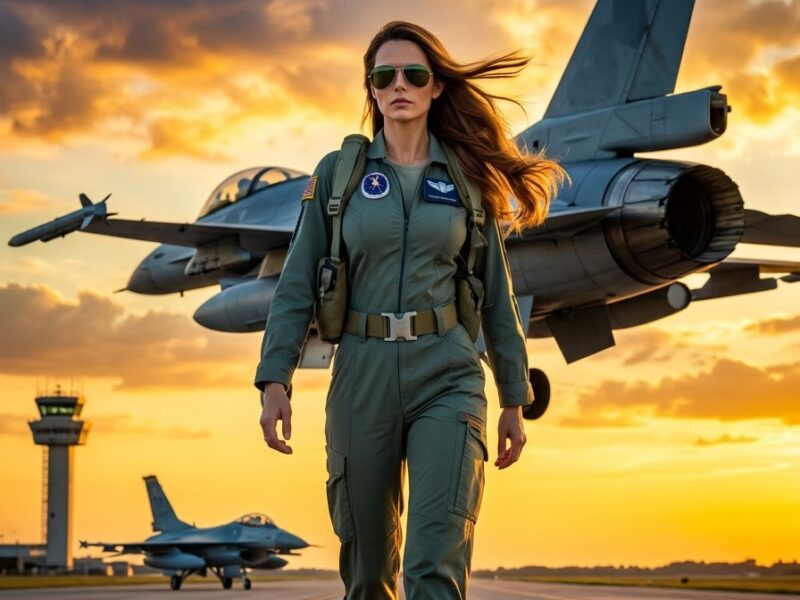
The moment enemy jets screamed across the sky above the California air base, everyone ran for shelter while I stood beside my mop bucket
The scent of pine disinfectant and industrial floor wax had replaced the smell of vaporized kerosene in my nostrils six years ago. Every morning at dawn, before the coastal fog burned off the San Joaquin Valley, I wheeled my battered yellow bucket across the polished gray floor of Hangar Three at Naval Air Station Lemoore. The young naval aviators in their pristine green flight suits swept past me without seeing me. To them, I was just Frank—the stooped old veteran with arthritis in his hands, gray stubble along his jawline, and grease beneath his fingernails. I was the ghost who wiped their boot scuffs off the concrete, patched the leaking fluorescent fixtures, and knew exactly where to kick the break-room vending machine to make it cough up an unpaid can of black coffee.
They called me by my first name with that offhand, polite condescension reserved for furniture and groundskeepers. Not a single man or woman on that flight line had ever looked at the service record stored under three layers of classified vaults in Arlington. To the Navy, Frank Miller was an honorable discharge who had served a single quiet enlistment as an engine mechanic before settling into civilian custodial maintenance.
Then came the scream.
It was not the high-pitched, twin-turbofan spool-up of our stationed F/A-18 Super Hornets, nor was it the deep, throaty rumble of the fifth-generation F-35C Lightning IIs warming up on the tactical apron. It was a vicious, tearing rasp—a sound that vibrated straight through the reinforced concrete floor and shook the water in my mop bucket. It was the howl of non-afterburning high-bypass turbofans pushing an airframe past its limits at low altitude.
A sound I had last heard over the Caspian Sea in the winter of 2004.
Suddenly, the klaxons tore the morning stillness to shreds.
“Condition Red! Condition Red! Unidentified hostile bogies crossing coastal defense perimeter at Point Conception! All personnel, seek shelter! Ground crews, clear the tarmac!”
The hangar erupted into chaos. Mechanics dropped pneumatic wrenches onto aluminum cowlings; ordnance loaders scattered like ants across the tarmac. Flight crews ran in conflicting directions toward the hardened concrete bunkers at the southern perimeter of the taxiway.
I didn’t move. I stood with one wet palm resting against the wooden handle of my mop, looking through the towering open doors of Hangar Three.
High above the coastal range, four black silhouettes tore through the low marine layer. They were flying a tight diamond echelon, so low that the shockwaves ripped sheets of white mist off the jagged peaks. They weren’t using transponders. Their wings were swept back at a radical delta angle, their canards twitching with micro-adjustments that spoke of bleeding-edge, fly-by-wire agility.
Inside the flight ops bay adjacent to my locker, Captain Vance—the base air wing commander—stood surrounded by four young strike-fighter pilots who were desperately strapping on survival vests.
“Get Boar Flight into the air!” one of the younger pilots yelled, his face slick with sweat. “If we catch them in the valley, we can establish an intercept arc!”
“Belay that order!” Vance bellowed, his hands braced flat against the tactical plotting table. “Look at the radar returns! Their radar cross-section is fluctuating between a Cessna and a flock of birds! We don’t know if they’re armed with cruise variants or electronic decoys! Nobody launches until we identify their operational signature!”
I walked past the open door of the ops bay, my rubber-soled work boots squeaking against the wet floor.
“They’re coming from the west,” I said softly.
Vance turned sharply, his face contorted in anger at the civilian interruption. “What did you say, Frank?”
“They aren’t coming down the valley corridor,” I said, pointing the wet tip of my mop toward the serrated ridge of the Coast Range. “Look at the cumulus shelf rolling off Monterey. The cloud formation is moving east at thirty-five knots. If they had come through the radar gap over Paso Robles, that front would have broken into three distinct pressure eddies along their wake. It didn’t. They flew beneath the marine layer over the water, came through the canyon notch at King City, and they’re riding the downdraft straight into your blind sector.”
Vance stared at me, his eyes narrowing in utter incomprehension. “How the hell would a janitor know that?”
“Check your western approach sweep,” I said, turning my back to him. “Before they reach the fuel farm.”
I didn’t wait for his reply. I wheeled my bucket into the narrow maintenance hallway behind the spare-parts depot.
A split second later, the sky tore open.
A thunderous explosion rocked Hangar Three. The blast wave shattered the high glass windows of the mezzanine, showering the pristine deck with thousands of glittering shards. A plume of thick, oily black smoke billowed upward from the southern taxiway where an unmanned fuel bowser had been ripped in half by a high-velocity precision rocket.
The alarms shifted from an oscillating siren to a continuous, earsplitting wail.
“Impact! Direct hit on the taxiway!” voices shrieked over the base squawk boxes. “They’re circling for a strafing run!”
I let go of the mop. The wooden handle clattered onto the concrete, rolling slowly into the spreading pool of soapy gray water.
For the first time in twenty-two years, I turned toward the end of the maintenance hallway, where an unmarked steel fire door had remained padlocked since the hangar was rebuilt after the 1999 seismic retrofit. The brass lock was coated in green verdigris and decades of dust.
I reached into my pocket, pulled out the heavy brass key ring that opened every closet on the base, and slid a long, flat steel pick from behind my veteran’s service card. I shoved it into the padlock cylinder, twisted hard with my thumb, and felt the rusted tumblers snap.
The door swung inward with a heavy, rusted groan.
The room smelled of stale canvas, dry ozone, and cosmoline. There were no lights. I reached out by memory, my fingers brushing against the cold, familiar texture of heavy Nomex hanging from a steel pipe rack.
A flight suit. Sage green, custom-tailored with reinforced Kevlar stitching along the harness points. Stripped of all unit patches, American flags, and operational crests. It bore only a single, faded white leather nametag stitched across the left breast:
GHOST ONE.
Beneath it, resting on a wooden crate, sat an older HGU-55/P flight helmet. Its dark visor was scratched from high-altitude ejecta; its integrated oxygen mask smelled faintly of the peppermint gum I used to chew to keep from vomiting during nine-G sustained turns.
And tucked inside the helmet’s chin strap was a faded color photograph.
In the picture, two young men in flight gear stood beneath the wing of an experimental, radar-absorbent interceptor on an unmapped runway in Nevada. The man on the left was me, thirty years younger, laughing into the desert wind. The man on the right was Colonel Marcus Cole—my commanding officer, my flight lead, and the architect of the Deep Black program that had erased our very existence from military rosters.
Twenty-two years ago, Marcus had gone down in flames over the Barents Sea during a mission that the Pentagon never acknowledged. I had stood on the deck of a covert salvage tug in the dead of winter, watching his empty, flag-draped casket lowered into the gray surf.
“Time to pay the rent, Marcus,” I whispered.
I stripped off my custodial overalls and pulled the flight suit over my thermal shirt. The Kevlar was stiff, but it settled against my shoulders like an old skin. I zippered the legs tight against my work boots, strapped on the G-suit bladders, and picked up the helmet.
When I stepped out of the storage room, the hangar apron was burning.
Across the flight line, parked inside Revetment Seven, sat an older reserve airframe: an F/A-18C Hornet, an analog legacy model kept on flight status only for adversary training and systems calibration. Its maintenance ladders were still hooked to the fuselage; the ground power unit hummed beside its left main gear.
A twenty-four-year-old lieutenant named Miller—no relation, just a kid who had barely logged two hundred hours in the cockpit—was standing beside the boarding ladder, staring paralyzed at the burning fuel tanks on the runway.
I walked straight past him. My gait was no longer the slow, limping shuffle of the janitor. My back was straight, my helmet tucked under my left arm, my right hand checking the emergency canopy release pin on the jet’s left intake.
“Hey! Frank!” the kid yelled, his voice cracking with terror and disbelief. “What are you doing? Get away from that airframe! That’s military property!”
I stepped onto the first rung of the ladder, swung my leg over the cockpit sill, and dropped into the Martin-Baker ejection seat. The seat hugged my hips with familiar, brutal precision.
“Frank, are you crazy?” the lieutenant scrambled up the ladder after me, his hands reaching for the canopy rail. “Who are you?”
I plugged the oxygen hose into my regulator, snapped the communication lead into the left bulkhead console, and looked the young pilot dead in the eye through the opening of my helmet.
“Someone who remembers,” I said.
I slammed the canopy actuator forward. The heavy transparency hissed downward, locking into the sills with a solid, pressurized thud that sealed out the noise of the sirens, the burning fuel, and the boy’s terrified screams.
My fingers didn’t search for switches; they fell onto them.
Master arm: Standby. Fuel flow: Cross-feed on. Left engine crank: Engage.
The high-pressure bleed air spooled the left turbine with a sharp, rising whine that turned into an angry, mechanical roar. The instruments flickered to life in sea-green phosphor.
Twenty-two years of silence vanished in six seconds.
I taxied out of the revetment, the twin General Electric turbofans screaming as I brought the Hornet onto the active runway, scattering debris and fire trucks in my wake. Through the canopy, I saw the four black hostile jets banking hard over the valley, realigning their noses for a final, catastrophic pass on the base’s subterranean ammunition bunkers.
I shoved the twin throttles past the detent into full afterburner.
Two twenty-foot cones of blue flame erupted from the exhaust nozzles, and the world behind me became a blur of speed and smoke as eight tons of thrust slammed me backward into the seat.
The G-forces hit my chest like a falling wall.
My vision grayed at the margins—my sixty-year-old capillaries protesting against the brutal, violent acceleration—but the pneumatic bladders of the G-suit squeezed my calves and thighs with vicious pressure, forcing the blood back into my brain. I leaned into the pain, welcoming the sharp, metallic copper taste that flooded my mouth.
“Airborne at zero-eight-hundred,” I muttered into the oxygen mask. The sound of my own voice was strange, tight, filtered through the rubber diaphragm.
On my primary radar scope, the four hostiles were already turning. They were flying an asymmetric intercept pattern—three aircraft locked in a high wedge, while the fourth lagged three miles behind, operating as a high-altitude sniper with long-range radar guidance.
“Unknown Hornet off the deck,” Captain Vance’s frantic voice cracked through the emergency tactical guard channel. “Unidentified aircraft on the Lemoore runway, abort your climb! You have no tactical authorization! Declare your call sign or we will engage with ground-based surface-to-air missiles!”
I clicked the transmitter once, twice, three times—the old combat code for radio failure/proceeding on primary mission—and flipped the master transponder to zero.
I didn’t need their permission. And I didn’t need their radar.
The modern air-to-air missile is a miracle of mathematics. It calculates lead angles, predicts energy states, and tracks heat signatures with cold, algorithmic perfection. But every missile has a brain, and every brain can be lied to.
The high-altitude enemy sniper fired first.
A thin, pencil-white streak of solid-propellant smoke detached from the belly of the lead hostile, dropping out of the clouds at Mach 4. On my instrument panel, the radar warning receiver began its rhythmic, rising scream: Missile launch. Radar lock. High-P-R-F.
“Come on, then,” I whispered.
I didn’t turn away. I didn’t deploy chaff. I didn’t dive for the terrain.
I pushed the stick forward, pointing the Hornet’s nose straight at the oncoming missile, descending through eight thousand feet at nine-tenths the speed of sound. The closure rate was terrifying—over three thousand miles per hour combined velocity. The missile grew from a pixel into a distinct, razor-sharp needle of gray steel, its optical sensor glinting in the morning sun.
At two miles—less than two seconds from detonation—I pulled the throttles completely to idle, kicked full right rudder, and yanked the stick back into my gut with both hands.
The Hornet did not bank. It violently yawed ninety degrees sideways, the massive twin vertical stabilizers acting as massive airbrakes against the slipstream. The airframe shuddered with a terrifying groan of stressed titanium, shedding three hundred knots of airspeed in a fraction of a second.
The enemy missile’s guidance computer, calculating an intercept on an aircraft moving at Mach 0.9, suffered a catastrophic kinematic tracking error. It couldn’t turn fast enough. It screamed through the empty space where my cockpit had been half a second earlier, detonating harmlessly two miles behind me against the granite wall of the canyon.
“What was that?” a frantic voice shouted over the unencrypted enemy VHF channel. It was an accented, synthetic voice, speaking in coded tactical English. “Lead, the target broke the predictive vector! The radar lost return!”
I didn’t give them time to find it.
As the Hornet drifted downward in the stall, I slammed both throttles back into maximum afterburner. The GE engines reignited with a hollow thump, catching the falling airframe and hurling it vertically into the underbelly of the three-ship enemy formation.
The maneuver had no name in modern NATO manuals. It had been scrubbed from tactical doctrine in 1994 after three test pilots died attempting it over the Tonopah Test Range.
We used to call it the Cold Sheath.
I came out of the cloud deck directly beneath the second hostile jet. He was so close I could read the serial numbers stamped in matte-black stencil on his composite belly. He was an advanced prototype, a stealth delta that looked like a scaled-down tactical bomber.
I didn’t fire an AIM-9 Sidewinder. The missile would have required an infrared lock that his cooled exhaust suppressed.
I selected the M61A1 twenty-millimeter Vulcan cannon.
The mechanical sight dropped onto the center of his right wing root. I squeezed the trigger on the stick.
BRRRRRRRRRRRRT.
The six-barrel cannon beneath my nose spat two hundred rounds of high-explosive incendiary ammunition in a single, two-second burst. The sound inside the cockpit was like a heavy canvas tarp being torn in half by an engine.
The tracers stitched a straight, brilliant red line across the enemy’s fuselage. His right wing sheared clean at the hinge, vomiting burning kerosene into the slipstream. The delta flipped onto its back, spiraling out of control toward the dry lake bed below, the pilot’s ejection seat firing in a violent burst of yellow rocket smoke.
“One down,” I breathed.
The remaining two jets in the low wedge broke formation instantly, executing a high-G split to box me between their crossfires. They were good. They flew with the cold, synchronized discipline of elite mercenary pilots or state-sponsored black operations crews.
The left-hand hostile banked toward the ocean, attempting to drag me into a low-altitude pursuit over the coastal hills, while the right-hand jet climbed into the sun to establish an overhead dive.
“You’re chasing the rabbit, old man,” I murmured, watching the low jet dive toward the jagged pine forests of Big Sur. “I wrote the manual on the rabbit.”
Instead of pursuing the low jet, I pulled the Hornet into an inverted climbing roll, pointing my canopy directly at the aircraft diving from the sun. He hadn’t expected the target to fly directly toward his guns. His nose was pointed down, his velocity climbing past Mach 1.2, his fire-control radar blindingly locked onto my transponder return.
We were closing head-on at two thousand feet.
Through the canopy glass, I saw the pilot’s helmet. It was matte black, featuring a stylized silver emblem painted across the brow: an hourglass crossed by a broken dagger.
My breath stopped inside the rubber mask.
The Hourglass. The private operational crest of the 4477th Tactical Evaluation Squadron’s rogue wing—a black-budget unit that had supposedly been dismantled, its personnel reassigned, its records destroyed following the collapse of the Soviet Union.
“Break!” I yelled into the dead radio, muscle memory overriding reason. “Break left, you idiot, you’re within the frag envelope!”
The enemy pilot didn’t break. He fired his cannon.
A stream of armor-piercing rounds chewed through the port wing of my Hornet, tearing away the outer flap and puncturing the auxiliary fuel bladder. A violent vibration rattled the rudder pedals as raw kerosene sprayed across the heated exhaust, trailing a thirty-foot tail of white vapor behind my aircraft.
The cockpit filled with the pungent smell of burning electrical insulation.
Caution. Flight Control System degraded. Left hydraulic pressure falling.
I ignored the warning lights. I kicked the right pedal, threw the aircraft into a violent barrel roll around his incoming stream of fire, and brought my nose around within forty yards of his tailpipe.
I had half a second.
I pressed the red button on the stick. The remaining Sidewinder on my right wingtip leapt off its rail, ignited with a blinding white flare, and drove itself straight into the hostile’s twin exhaust nozzles.
The explosion blew the tail surfaces into confetti. The black delta tumbled end-over-end through the sky, shedding wings, elevators, and titanium skin before plunging into the side of an unnamed mountain ridge in a massive, rolling orange fireball.
“Two,” I whispered. My left arm was trembling; my knuckles were white against the throttle grip.
The fourth jet—the high-altitude sniper who had remained above the clouds—suddenly broke his orbit. On my tactical display, his radar return did not turn to engage.
He was running.
He turned toward the open Pacific, climbing past forty thousand feet on full afterburner, his transponder broadcasting an encrypted carrier signal that pulsed every three seconds.
I leveled the damaged Hornet at twelve thousand feet. My fuel gauge was showing eleven hundred pounds—barely enough to make the runway approach at Lemoore with the engines idling. The left wing was leaking fuel in a steady, white mist, and the hydraulic pressure was hovering in the red warning zone.
I couldn’t chase him.
“Boar One, this is Lemoore Tower,” Captain Vance’s voice broke through the static, completely stripped of its earlier arrogance. It sounded thin, hollow, stunned by the impossible spectacle that had just played out on their radar scopes. “Unknown pilot… unidentified airframe… whoever you are… the airspace is clear. Cleared for immediate emergency approach, Runway Three-Four Left. Crash trucks are rolling.”
I didn’t answer.
I brought the crippled fighter down through the broken coastal clouds, fighting the uneven lift of the torn wing with constant, minute adjustments of the stick. The landing gear groaned as it dropped into the slipstream; the left main wheel touched down with a violent screech, smoking heavily as the damaged brake locked.
The Hornet rolled to a stop fifty yards from the charred, blackened crater where the fuel truck had exploded forty minutes earlier.
The base was dead silent.
The crash trucks did not spray their foam. The firefighters stood atop their yellow rigs, nozzles lowered, staring through their visors at the shattered wing and the smoking cannon barrels of the reserve fighter.
Dozens of young pilots, ground crewmen, and security personnel were lined up along the flight line, standing as still as statues against the cold morning wind. Among them stood Captain Vance, his hat off, his service jacket unbuttoned, walking slowly toward the ladder with his hands hanging loose at his sides.
Beside him walked the young lieutenant I had pushed aside at the revetment. The boy was white as paper, his eyes fixed on the cockpit as if waiting for a monster to emerge.
I reached up, unlatched the canopy seal, and shoved the heavy glass upward.
The cold air rushed into the cockpit, carrying the sharp stench of scorched copper, exploded cordite, and burning rubber. I reached back, disconnected the oxygen hose, and unbuckled the harness straps. My joints cracked with audible, agonizing pops as I stood up in the seat.
I pulled off the HGU-55/P helmet.
The wind caught my gray hair, blowing it across my forehead. My face was pale, marked with deep, red indentations where the rubber mask had dug into my skin during the nine-G turn.
Vance stopped at the foot of the ladder. He looked up, his mouth slightly open, his gaze shifting from the scorched twenty-millimeter cannon ports to the weathered, wrinkled face of the man who had mopped his office floor at six o’clock that morning.
“Frank?” Vance breathed, his voice barely carrying over the crackle of the cooling engines.
I climbed down the rungs slowly. My left knee, battered by thirty years of hard landings and six years of kneeling on concrete with a scrub brush, gave a sharp, sickening twist when my boots hit the tarmac. I had to catch the ladder rail to keep from falling.
Vance reached out instinctively to support my elbow, but his hand froze an inch from my sleeve.
His eyes had dropped to the left breast of the flight suit.
He saw the faded leather patch. The white, debossed lettering that had been scrubbed from every official Navy personnel ledger in 1999:
GHOST ONE.
Vance took a step backward, his face draining of what little color remained. “That maneuver… the sideways yaw at eight thousand feet… that hasn’t been flown since the evaluations over Groom Lake.”
“I know,” I said, my voice hoarse from the dry oxygen.
“You broke the predictive radar gate by inducing an artificial aerodynamic flat-spin,” Vance whispered, his eyes wide with horrified realization. “Only one man ever cleared that maneuver for tactical deployment. The Pentagon said he died in an experimental engine failure over the Aleutians twenty-two years ago.”
“The Pentagon says a lot of things, Captain,” I replied, tossing my helmet onto the wing root. “Most of them are written by bureaucrats who think an airplane is a spreadsheet with wings.”
The surrounding airmen had closed in, forming a silent, stunned circle around the aircraft. The young lieutenant who had challenged me stepped forward, staring at my hands—hands that were trembling slightly from the adrenaline dump, hands that had cleaned the grease off his toolkits only yesterday.
“You’re… you’re Captain Miller,” the kid stammered. “The Ghost of the Caspian. The guy who shot down four MiG-29s over Baku without using an active radar.”
“That was a long time ago, son,” I said quietly.
“Sir,” Vance said, his posture stiffening into an involuntary, rigid attention. “If you are Nathan Miller… then your records were sealed under Executive Order 12958. You aren’t just retired. You’re classified as a deceased combat asset.”
“Which was convenient for everyone,” I said, unzipping the survival vest and pulling out the faded photograph of Marcus Cole and me. “It kept the Russians from asking questions about what we did over the Caspian, and it kept the Navy from having to explain why an entire test wing had been funded out of an illegal slush fund in Zurich.”
I held the photograph toward Vance.
“Look at the aircraft in the background, Captain.”
Vance leaned down, squinting at the small, square print. The aircraft behind Marcus Cole was a long, needle-nosed interceptor with canted tails and radical leading-edge extensions—the experimental YF-23 Black Widow II, modified with forward-mounted canards that had never appeared in public aviation journals.
“That airframe was scrapped,” Vance said. “Both prototypes are in museums. One is at Dayton, the other is at Torrance.”
“Three were built,” I said, pointing toward the mountains where the two black jets were currently smoldering in the brush. “The third was never delivered to the Air Force. It was assigned to a deep-reconnaissance unit called Project Chimera, run by Marcus Cole out of a closed installation at Tonopah. When Marcus went down in 2004, the third airframe vanished from the flight line overnight. The Navy told me it had been dismantled and buried in the Nevada salt flats.”
“And those jets that just attacked us?” Vance asked, his voice dropping to an urgent whisper.
“Those were the production variants,” I said, my blood turning cold. “Marcus didn’t crash twenty-two years ago, Captain. He defected. Or he was stolen.”
A sudden high-pitched chime interrupted us.
It was not a base siren. It was the handheld tactical radio clipped to the survival harness of my flight suit—an older, analog AN/PRC-112 rescue transceiver that had remained powered by its internal lithium cell inside the locked storage room for two decades.
The frequency was set to the ultra-high emergency channel: two-four-three point zero megahertz.
A channel that had not been monitored by active naval operations since the transition to digital encrypted systems.
The radio hissed with static. The white noise was rhythmic, broken by a series of four distinct, descending tones—the private acoustic call sign of the 4477th Rogue Wing.
The entire flight line went so quiet that the dripping of hydraulic fluid from my damaged wing sounded like a hammer hitting an anvil.
I reached down with a gloved hand and unclipped the radio.
I brought it to my face. I didn’t key the microphone. I just listened.
Through the speaker, over twenty-four hundred miles of tropospheric scatter and encrypted satellite relays, came a voice. It was low, raspy, damaged by years of breathing pressurized liquid oxygen at sixty thousand feet, but the cadence was as unmistakable as my own reflection in the canopy glass.
It was the voice of Colonel Marcus Cole.
“Welcome back, Ghost,” the voice whispered.
The transmission clicked off.
I stood in the center of the runway, the radio heavy in my hand, staring out toward the Pacific where the fourth jet had disappeared into the clouds.
My former commander had just spoken to me from the dead.
And he wasn’t running away.
He was waiting.
The underground briefing room beneath the Wing Headquarters was known as the Hole. It was a concrete bunker built thirty feet below the valley sediment, shielded by three inches of lead plate and surrounded by an active acoustic dampening field.
Captain Vance had locked the heavy blast door from the inside.
Only three people were in the room: Vance, myself, and Rear Admiral Arthur Reyes, the regional commander who had flown in by helicopter from Coronado thirty minutes after the attack. Reyes sat across the steel table, his service dress whites stained with sweat, his eyes fixed on the sage-green flight suit I was still wearing.
“Nathan,” Reyes said, his voice quiet, heavy with forty years of shared history. “When the Pentagon told me you were dead, I gave the eulogy at your empty grave in Arlington.”
“I know, Artie,” I said, leaning back against the cold concrete wall. “I was standing behind the oak tree near the road. You gave a good speech. A little too much about duty and not enough about how much I hated the coffee at Pax River.”
Reyes rubbed his temples, letting out a long, shuddering breath. “Why the mop, Nathan? For six years? You were the best stick this country ever produced. You could have run any defense contractor in the country. You could have been an admiral.”
“Because when a man is dead, Artie, nobody asks him to sign non-disclosure agreements,” I said. “And nobody looks for a ghost in a custodial closet.”
I leaned forward, placing the old AN/PRC-112 radio and the faded photograph on the center of the conference table.
“Marcus Cole is alive,” I said flatly.
Reyes didn’t look surprised. He looked sick.
“We knew,” Reyes whispered, glancing toward the soundproofed ventilation vents. “We’ve known for eighteen months.”
“Then why did you leave this base open to an air strike?” Vance demanded, his voice cracking with rage. “He flew four fifth-generation interceptors through our coastal radar gate! If Captain Miller hadn’t stolen an adversary jet and met them head-on, this entire facility would have been flattened!”
“They weren’t here to flatten the base, Victor,” Reyes said, his eyes shifting back to me. “They were here for the safe.”
I stared at Reyes. “What safe?”
Reyes reached into his leather briefcase, pulled out a digital tablet with a crimson biometric scanner on the corner, and pressed his thumb against the glass. The screen lit up with a high-resolution blueprint of Hangar Three—the very hangar I had been mopping every morning at dawn.
The blueprint did not stop at the concrete floor.
Beneath the central maintenance bay, buried fifty feet beneath the drainage trenches and the hydraulic lifts, was a circular reinforced concrete vault. It had been constructed in 1968 as an emergency command capsule for Strategic Air Command during the height of the Cold War.
“When Project Chimera was shuttered in 2004,” Reyes explained, “they didn’t bury the research in Nevada. They couldn’t. The congressional oversight committees were tearing through Groom Lake with audits. Marcus Cole arranged for the primary avionics prototypes, the radar-absorbent composite formulas, and the flight-control source code to be transferred here, under the guise of an old munitions bunker.”
“And the four jets that attacked us today?” I asked.
“Manufactured by a private defense consortium operating out of an unmapped airfield in Sonora, Mexico,” Reyes said. “Funded by foreign capital, built with stolen American blueprints. But they had one fatal problem, Nathan. They had the airframes, but they didn’t have the kernel code for the neural flight-control system. Without that code, those planes are death traps at high angles of attack. The fly-by-wire system can’t balance the canard lift with the thrust-vectoring nozzles.”
The pieces clicked together in my mind with the cold, mechanical finality of an ammunition belt sliding into a receiver.
“That’s why the lead jet didn’t break when I engaged him,” I said, remembering the black helmet with the Hourglass. “The pilot wasn’t being brave. The computer froze. The flight-control system couldn’t calculate the aerodynamic flutter at Mach 1.2.”
“Marcus knows the code is down there,” Reyes said, pointing at the blueprint of the bunker. “He came to get it himself. But when he saw your aircraft launch… when he realized who was in the cockpit…”
“He broke off the attack,” I finished the sentence.
“No,” Reyes said grimly. “He didn’t break off the attack. Look at the radar telemetry from the fourth jet.”
Reyes swiped the tablet screen. A tactical map of California appeared, showing the flight path of the high-altitude sniper jet that had fled toward the ocean.
The jet hadn’t flown back toward Mexico.
It had climbed to sixty-five thousand feet, banked ninety degrees north over the Channel Islands, and was currently holding a steady, high-altitude orbit over an abandoned naval target range on San Clemente Island.
“He’s not running away,” Vance realized, leaning over the screen. “He’s staging.”
“He’s waiting for Nathan,” Reyes said, looking straight into my eyes. “He transmitted that call sign because he knows you’re the only man alive who can fly the prototype.”
“The prototype is in pieces down in that hole,” I said.
“It isn’t in pieces,” Reyes said quietly. “We didn’t just store the code down there, Nathan. When the program was buried, Marcus had the third YF-23 airframe disassembled, packed into sealed nitrogen containers, and lowered into that capsule. Two hours ago, my maintenance engineers opened the seals. The airframe is pristine. The fuel tanks are flushed. The engines are intact.”
A heavy, suffocating silence descended on the room.
I looked down at my hands. The skin across the knuckles was scarred from decades of wrenching steel and scrubbing floors. The arthritis in my thumbs burned with a steady, dull ache that reminded me of every year I had aged since I last strapped into that black jet.
“You want me to take her up,” I said.
“There is no one else, Nathan,” Reyes said, his voice breaking with emotion. “The digital flight controls on that aircraft were coded to your personal neurological reaction times in 2002. A modern pilot trained on an F-35 would tear the wings off within thirty seconds of takeoff. The computer expects your inputs. Your reflexes. Your memory.”
“He has modern weapons, Artie,” I said. “He has long-range radar-guided missiles that can track a target from eighty miles out. That prototype was built for guns and close-in heat seekers.”
“Then you’ll have to get close,” Reyes said.
I stood up from the table. The floor beneath my feet seemed to hum—not with the vibration of enemy jets, but with the ghost of an engine that had been sleeping beneath the concrete for twenty-two years, waiting for the only man who knew how to wake it up.
“Open the vault,” I said.
The hydraulic lift of the SAC bunker groaned as it rose through the concrete floor of Hangar Three, carrying the black ghost into the sunlight.
She was beautiful.
The modified YF-23 did not look like an aircraft designed by human engineers; she looked like a predatory deep-sea manta ray hammered out of solid graphite and dull charcoal titanium. Her surfaces were completely smooth, free of rivets, panel lines, or national markings. The twin rudders were angled outward at fifty degrees, designed to baffle the heat from her recessed exhaust troughs.
On the left side of the cockpit sill, painted in crisp, non-reflective white lettering, was the single name that had been preserved in the darkness for two decades:
CAPT. N. MILLER – “GHOST ONE”
The ground crews worked in total, reverent silence. They didn’t speak as they connected the high-pressure liquid oxygen lines, nor did they look me in the eye as they helped me pull on the pressurized high-altitude pressure suit—the bulky, rubberized skin required to fly above sixty thousand feet where the atmosphere was too thin to support human blood.
I climbed the boarding ladder.
The cockpit of the prototype was not like the modern digital displays of the F-35; it was a brutal, elegant hybrid of analog dials and early cathode-ray tactical monitors. The center stick was heavy, cast from solid aluminum, contoured to the exact grip of my right hand.
I settled into the seat. I connected the life-support umbilical with a heavy, double-click that echoed inside my helmet.
“System check,” I said into the high-altitude microphone.
The voice of Captain Vance came through the secure headset, crisp and clean. “Telemetry is live, Ghost One. The hydraulic systems are at three thousand PSI. The turbine cores are clear. Runway Three-Four is clear of debris. You have the field.”
I engaged the starter sequence.
The two YF119 prototype turbofans spooled up not with a scream, but with a deep, subterranean roar that shook the very foundations of the base. The vibrations passed straight through the carbon-fiber frame into my spine.
The ghost was breathing again.
I taxied onto the runway, the black nose cutting through the morning haze. The young airmen along the taxiway stood at rigid attention, their salutes held steady as the black shape rolled past.
I didn’t wave. My eyes were fixed on the sky above the Pacific.
“Full afterburner,” I said.
I released the brakes.
The acceleration was not like the Hornet; it was a physical blow that compressed my ribs against my spine, pinning my arms against the armrests as the aircraft reached one hundred and sixty knots in four hundred feet. I pulled the stick back.
The black jet climbed vertically—not at forty-five degrees, not in a gentle spiral, but in a straight, ninety-degree rocket climb that took me through twenty thousand feet in twelve seconds.
The clouds vanished below me, turning into a flat, blinding white floor. The sky shifted from pale blue to deep, bruised violet, and finally to the ink-black darkness of the lower stratosphere.
At sixty-five thousand feet, I leveled the wings.
The air was so thin that the control surfaces had almost no bite; the aircraft flew on pure thrust-vectoring, the computer firing tiny pulses of compressed gas from the nose nozzles to keep the airframe stable.
Ahead of me, thirty miles south over the Channel Islands, sat the black delta.
He was waiting at sixty-eight thousand feet, cruising at Mach 1.6 in a wide, lazy circle, his radar sweeps pulsing across the stratosphere like the sonar pings of a blind whale.
“Marcus,” I said over the unencrypted UHF frequency.
A pause stretched across the radio—five seconds of pure white noise that sounded like the edge of space.
“Nathan,” the voice returned. It was clear now, free of the ground static, carrying that same dry, aristocratic chuckle that had guided me through sixty combat missions in the Balkans and the Middle East. “I knew they’d send you. They don’t have anyone else who knows how to hold the knife.”
“Why, Marcus?” I asked, watching the distance counter tick down on my HUD. Twenty-five miles… twenty miles… “You had everything. You had the command. You had the country.”
“The country died when they handed the skies over to algorithms, Nathan,” Marcus’s voice hissed through the headset. “They took the warrior out of the cockpit and replaced him with procurement officers in air-conditioned trailers in Nevada. They built an automated grid that tracks everything, controls everything, and forgives nothing. I didn’t steal this technology to sell it to an enemy. I stole it to keep it free.”
“You killed two sentries on the ground this morning, Marcus,” I said, my voice cold, steady, devoid of anger. “You destroyed a fuel farm and you tried to blow up twenty kids in Hangar Three. That’s not freedom. That’s just murder with an afterburner.”
“Then come and stop me, Ghost,” Marcus whispered.
His delta pitched upward into a violent, high-altitude loop, diving toward me from seventy thousand feet at Mach 2.
The fight began at the edge of the void.
He fired two long-range semi-active missiles from ten miles out. In the thin air of the stratosphere, missile plumes do not leave smoke trails; they appear as sudden, blinding sparks of magnesium white accelerating across the blackness.
I didn’t maneuver. There was no air to maneuver with.
I toggled the experimental electromagnetic pulse jammer mounted in the prototype’s nose—a system Marcus and I had tested together over the Nevada desert in 2001. A directed burst of microwave energy shot forward in a thirty-degree cone.
The guidance systems of the incoming missiles were fried instantly. Their control fins twitched wildly, their motors sending them tumbling off into the upper atmosphere where their proximity fuses detonated into silent, soundless flashes of light.
Then Marcus was on me.
His delta blew past my canopy at fifteen hundred miles per hour, the shockwave violently buffeting my aircraft despite the thin air. He pulled into a high-G barrel roll, using his forward canards to carve an impossible turn that brought his nose directly onto my six o’clock.
“You’re too old for this, Nathan!” Marcus’s voice laughed over the radio. “Your heart can’t take nine Gs at sixty thousand feet! You’re going to black out!”
He was right.
My vision was already tunneling into a dark, narrow circle. The pressure suit was crushing my chest so hard I could barely draw breath, and the cold was seeping through the seals of my gloves, turning my fingers into numb sticks of wood.
On my display, his gunsight was locking onto my exhaust.
Tone. High tone.
I closed my eyes for a fraction of a second.
I didn’t look at the HUD. I didn’t look at the radar. I looked inside my own memory—to a frozen morning over Lake Baikal in 1997, when Marcus had shown me the one flaw in the canard delta’s aerodynamic trim.
When she turns hard left, Marcus had told me over a bottle of cheap vodka in an unheated briefing shack, the right canard loses three percent of its hydraulic balance. You don’t see it on the gauges. But you feel it in the stick. It pulls like an old horse.
I didn’t turn right to evade him.
I threw the stick hard left, diving directly into his turn radius, cutting across his gunsight before his fire-control computer could calculate the lead.
The two black jets merged in a violent, screaming vortex of titanium and afterburner flame fifty miles off the coast of Santa Barbara.
Marcus yanked his stick to follow me.
And then it happened.
His right canard, stressed by the violent turn in the thin air, fluttered for three-tenths of a second. It wasn’t a mechanical failure; it was an aerodynamic cavitation—the exact flaw he had warned me about twenty-five years ago.
His nose dipped six inches.
It was all I needed.
I pulled the prototype into a violent vertical climb, cut the throttles to idle, and used the thrust-vectoring nozzles to flip the aircraft end-over-end on its own axis. The maneuver pulled eleven Gs.
The darkness closed over my eyes. The blood drained from my brain with such terrifying speed that my chin dropped onto my chest.
Fight it, Frank, a voice whispered in the dark. Fight the mop.
I bit the inside of my lip until the blood filled my mouth. The sharp, blinding pain tore through the blackout. My eyes snapped open.
Marcus’s delta was sliding directly across my nose, three hundred yards ahead, inverted, his cockpit illuminated by the green glow of his own failure lights.
Through the glass of his canopy, I saw him.
He wasn’t wearing a flight helmet; he was wearing the old leather skullcap we had used in the early test days. He looked at me through the quartz transparency.
He didn’t pull the ejection handle. He didn’t reach for the radio.
He raised his right hand to the edge of his brow, rendering a slow, precise, final salute to the ghost he had created.
I squeezed the trigger.
The twenty-millimeter cannon roared. A stream of high-explosive rounds tore through the center of his fuselage, penetrating the primary fuel tank behind the cockpit.
The delta didn’t spiral. It didn’t burn.
It vanished in a brilliant, silent bloom of orange and white fire that lit up the edge of space like a miniature sun.
The shockwave hit my aircraft, tossing the prototype forty degrees off heading, but the fly-by-wire system caught the roll and leveled the wings in the quiet blackness above the world.
I sat in the cockpit, listening to the heavy, ragged sound of my own breath through the regulator.
The sky was empty.
“Lemoore Tower,” I whispered into the microphone, my voice shaking with an exhaustion that reached all the way to my marrow. “This is Ghost One.”
“Ghost One, Lemoore,” Vance’s voice broke through, thick with tears he couldn’t hide. “We have splash on hostile lead. Telemetry shows target destroyed. Nathan… bring her home.”
“Negative, Lemoore,” I said softly, looking out at the vast, curving horizon of the Pacific Ocean, where the black of the sky met the blue of the water in a thin, shining line of silver light.
“Say again, Ghost One?”
“The prototype belongs in the vault, Captain,” I said, reaching down to flip the master fuel feed to the auxiliary tanks. “And Frank belongs in the hangar.”
I banked the black aircraft toward the east, descending slowly through the dark violet sky toward the valley below.
Four hours later, the flight line at NAS Lemoore was quiet.
The prototype had been lowered back into the subterranean silence of the SAC bunker, the hydraulic floor sealed with fresh asphalt, the records returned to the dark vaults where they belonged. The young pilots had been debriefed under the highest national security oaths; within forty-eight hours, the official report would state that an accidental ordnance detonation had occurred during an emergency readiness drill.
At five o’clock that evening, the sun was setting behind the coastal mountains, casting long, golden shadows across the concrete floor of Hangar Three.
The heavy steel fire door at the end of the maintenance hallway was closed, secured by a new, heavy brass padlock.
I walked slowly across the apron, my knees aching with every step, my right hand pushing the battered yellow mop bucket.
The young lieutenant—Miller—was standing beside his F/A-18, a checklist in his hand, watching me as I approached. He didn’t speak. He didn’t ask for an autograph. He didn’t call me Captain.
He simply stood at attention, his heels clicked together, his eyes fixed on the horizon, waiting until I had wheeled the bucket past his ladder.
“Frank?” he said softly as I reached the door.
I stopped, leaning on the wooden handle of the mop, my back turned to him. “Yeah, son?”
“The vending machine in the ready room,” the boy said, his voice trembling slightly. “It stole my quarter.”
I didn’t turn around. A faint, tired smile touched the corners of my mouth beneath the gray stubble.
“Kick it on the left side, kid,” I said, pushing the bucket into the dark. “Right below the coin return. It always gives it back if you know where to hit it.”
The end.









