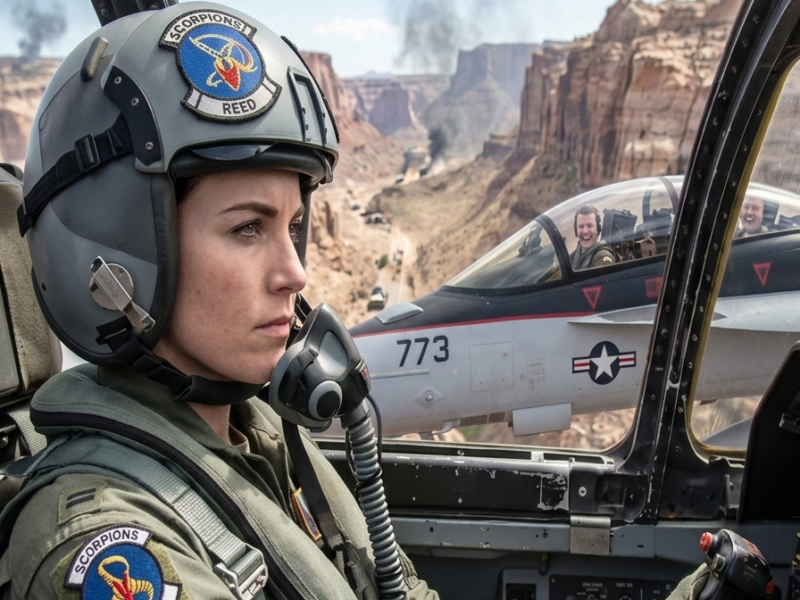
The enemy jets laughed over the Black Sea as I limped across the sky alone, my A-10 coughing smoke and missing half its warning lights
The shattered acrylic of my canopy vibrated violently against my helmet, buzzing like a trapped hornet in a bell jar. Outside, the freezing salt air of the Black Sea whipped through the jagged cracks, carrying with it the unmistakable stench of burning JP-8 jet fuel and scorched electrical wiring. The A-10C Thunderbolt II—my trusty, battle-scarred Warthog—was groaning beneath me, a thirty-thousand-pound leviathan dying one hydraulic system at a time.
My primary flight display was dead, a void of black glass reflecting my blood-streaked visor. Half my warning lights were dark, not because the systems were functioning, but because the master caution panel had been shattered by high-explosive shrapnel. The left engine, a General Electric TF34 turbo-fan, was coughing violently, sending rhythmic shudders straight through the titanium armor bath surrounding my seat and deep into my collarbone.
Through the spiderweb of fractured plexiglass, I caught the metallic flash of two sleek, twin-engine Sukhoi fighters sliding onto my six. They were fast, deadly, and arrogant. They flew in tight formation, sweeping around my crippled bird like grey reef sharks circling a bleeding whale.
Their static-laced radio transmission cut straight through my helmet speakers, broadcasted over the open emergency frequency.
“Easy kill,” one of the foreign pilots said in accented, mocking English. Laughter echoed in the background—a cruel, triumphant sound that sliced through the roar of my dying engine.
I said nothing. I didn’t reach for the radio switch. I didn’t breathe hard. My gloved fingers simply tightened around the flight stick until the leather stretched taut over my knuckles. The aircraft shuddered again, losing another two hundred feet of altitude in a sickening stomach-drop, but I held the nose level.
They had every reason to laugh. They were flying modern air-superiority fighters equipped with thrust-vectoring engines and radar-guided missiles that could turn me into confetti from twenty miles away. I was flying a low-tech tank with wings, leaking oil over the dark, churning waters of the Black Sea, missing half my control surfaces, and trailing a forty-foot plume of black smoke.
They thought I was fleeing. They thought I was a panicked animal trying to crawl back to the NATO airbase across the coastline.
What they didn’t know was that I wasn’t trying to outrun them. I was drawing them into the butcher’s shop.
Three minutes earlier, my wingman, Captain Marcus “Ghost” Vance, had gone down over the rugged coastal mountain range that walled off the sea from the deep interior valleys. We had been flying a routine Reconnaissance Strike Coordination mission when a concealed surface-to-air missile battery opened fire from the ridgeline. Marcus had taken the hit intended for me, diving his aircraft directly into the path of an infrared seeker to mask my radar profile.
His final transmission still burned in my ears, repeating on an endless, agonizing loop behind my eyes. “Widowmaker, this is Ghost Two. I’m hit hard, ejecting over the ridge. Don’t come back for me. Get clear. Don’t come back—”
Then his signal had snapped into harsh, lifeless static.
I had ignored him. I had thrown the throttles forward, banking hard against the mountain peaks, defying the direct order of my flight lead and the frantic shouts of AWACS command.
Then the second missile hit us.
The detonation threw my head back against the seat restraint. Smoke instantly filled the cockpit, blinding me, smelling of burnt oil and melted plastic. Shrapnel tore through the aluminum skin of the left wing, shredding the flaps and disabling the main hydraulic loop. Red master warning lights flickered wildly before burning out entirely.
“Widowmaker One, this is Darkstar Command!” the air traffic controller’s voice had screamed in my ears, crackling with distance and terror. “They’re chasing you! Two bandits on your tail! Break off immediately! You cannot win that fight!”
“I know,” I replied, my voice raspy and devoid of panic.
“Turn south-west! Head for the blue zone! You are critically damaged, Widowmaker! You can’t win!”
I didn’t answer Command again. Instead, I let my eyes drift down to the small, yellowed piece of tape on the right side of my instrument panel. Beneath a layer of soot was a Polaroid photograph Marcus had taken three weeks ago on the tarmac in Romania. We were standing side by side, sweating in our flight suits, holding up lukewarm energy drinks. Beneath the photo, written in permanent marker in Marcus’s messy handwriting, were four simple words:
Nobody gets left behind.
I pulled back on the stick, pitching the nose down hard, diving straight out of the clouds and into the jagged, snow-capped mouth of the valley below.
The two enemy fighters didn’t hesitate. Eager for an easy star on their fuselages, they throttled back, diving down into the tight mountain corridor right behind me.
As the shadow of the mountains swallowed us, the valley opened up into a wide, battle-torn amphitheater. Down below, framed by burning pines and shattered rocks, was the Allied armored convoy we had been sent to protect. It was a disaster zone. Four Stryker vehicles were burning, sending thick columns of white smoke into the cold air. Dozens of infantrymen were pinned behind the twisted metal of their armored carriers, taking heavy machine-gun and mortar fire from high above them.
And there, hidden beneath camouflage netting cut into the limestone cliffs, sat two mobile missile batteries and a heavy anti-aircraft gun—the exact trap that had brought down Marcus. They were laying down a blanket of lead, preparing to wipe the trapped convoy off the map.
A cold, razor-sharp focus washed over me, burning away the fatigue and the pain in my chest.
“Got you,” I whispered to the empty, smoky cockpit.
I waited until the last possible second, pulling the A-10 into a violent, high-G roll that made the frame twist and scream in structural agony. The two pursuing jets, expecting a straight line from a dying plane, were carrying too much speed down the narrow valley. They overshot me, soaring right over my canopy like silver arrows.
For one fleeting, perfect second, their pilot’s situational awareness collapsed. They were looking at me, but they weren’t looking at what was in front of them.
I slammed the flight stick forward and squeezed the trigger of the GAU-8/A Avenger 30mm cannon.
The nose of the A-10 vibrated with demonic force as the seven-barrel rotary cannon roared to life. Depleted uranium shells tore through the air at four thousand feet per second, ripping into the cliffside. The ammunition hit the hidden missile batteries with apocalyptic violence. Explosions rocked the canyon walls, throwing rock, steel, and secondary fire hundreds of feet into the air. The anti-aircraft position collapsed into a avalanche of burning debris.
Below, the pinned soldiers cheered through their radio channels as the oppressive ground fire instantly vanished. The convoy began to move again, rolling forward under the cover of the massive smoke cloud I had created.
The two enemy fighters pulled up violently, turning back toward me in tight, aggressive loops. But their cocky composure was gone. They had realized who they were dealing with.
The lead pilot came back over the open channel, his voice stripped of all laughter, replaced by a trembling, desperate edge.
“You’re… you’re the Widowmaker,” he stammered.
I clicked the radio switch on my throttle. “You’re late.”
I lined up the nose, but right as I prepared to fire my last Sidewinder missile, my good engine gave a sickening metallic clunk. Power plummeted. The cockpit went entirely dark save for the emergency backup lights. The plane plummeted like a stone toward the tree line.
I held my breath. The world went silent, save for the rush of wind against the shattered glass.
Then, with a furious roar of black smoke, the engine caught fire, restarted, and stabilized at fifty percent power. The A-10 clawed its way back above the treeline, stubbornly refusing to die. The two enemy jets, low on fuel and shaken by the sudden loss of their air-defense support, banked hard to the east and sped away into the haze, abandoning the battle.
Ten minutes later, I crossed the border into friendly airspace, the aircraft trembling like a wounded animal. I glanced over my shoulder, looking back toward the jagged mountain peaks where the plume of black smoke from Marcus’s crash site still stained the sky. The convoy was safe. The mission was complete. But I had left my brother in the dirt.
My headset crackled. It was the voice of the Search and Rescue coordinator back at base, sounding hesitant and strangely quiet.
“Widowmaker One, this is Rescue Command. Our forward ground team just reached the crash site of Ghost Two.”
I grabbed the radio mic, my heart pounding against my ribs. “Did you find Marcus? Is he alive?”
There was a long, suffocating pause on the line. The static sounded like dry leaves scraping across concrete.
“Widowmaker… we found the wreckage,” the voice said slowly. “The canopy was blown, but… there are no footprints. No blood. No parachute in the trees. Captain Vance’s cockpit was completely empty. And the ejection seat was never fired.”
I stared out into the darkening horizon, my hand frozen on the controls. The cold ocean wind whistled through the broken canopy, but the real chill was settling deep inside my chest.
The silence inside my helmet felt heavier than the mountain pressure crushing down on the A-10’s damaged airframe.
“Repeat that, Command,” I said, my voice dropping an octave, dead of all emotion. “Say again.”
“Widowmaker One, I say again,” the operator’s voice trembled slightly over the encrypted satellite link. “The forward ground team reached the crash site in Grid November-Seven. The aircraft hit the tree line at high velocity, but the survival cell is intact. The canopy was jettisoned manually from the inside, not blown by the explosive charges. The ejection seat is still locked in the rails. I repeat: Captain Vance did not eject. But he is not in the cockpit.”
I stared out at the jagged white peaks receding behind my wingtip. Manual canopy jettison. That was something you did on the tarmac during an emergency ground shutdown, or… if you survived a dead-stick landing in enemy territory and had to scramble out before the fuel tanks detonated.
“Is there any sign of capture?” I demanded, pushing the throttle as far forward as the coughing engine would allow. “Tracks? Drag marks? Enemy units in the grid?”
“Negative, Widowmaker. The ground team reports zero foot tracks leaving the site. The snow around the wreckage is undisturbed. It’s… it’s like he vanished into thin air.”
“That’s impossible, Command. Planes don’t fly themselves into mountain walls, and pilots don’t evaporate. Look harder.”
“Widowmaker, you are low on fuel, leaking hydraulic fluid, and your airframe is critically compromised. Return to base immediately. That is a direct order from Tactical Air Command.”
I looked down at the fuel totalizer. The needle was bouncing erratically near the red tick mark. The left main wing tank was dry, and the right tank was feeding both the single operating engine and a spray of raw kerosene leaking out behind me. I had maybe twelve minutes of flight time before the engine starved and I became a three-hundred-knot glider over the Black Sea.
“Understood, Command,” I lied. “Heading home.”
I didn’t turn south toward the main NATO airbase at Mihail Kogălniceanu. Instead, I banked hard to the west, descending below the coastal radar ceiling, following the dark, twisting ribbon of the Danube River delta.
If Marcus had stayed with his plane all the way to the ground, he had a reason. He wasn’t just surviving; he was hunting, or he was hiding something. Marcus wasn’t just a wingman; before joining the tactical fighter squadron, he had spent six years in special operations target acquisition. He knew how to disappear. But he also knew the ironclad rule of our flight: Nobody gets left behind.
If he was alive down in that snow-choked hell, he knew I would come back. And he would leave me a breadcrumb.
The sky turned from bruised purple to midnight black as I limped the damaged Warthog into forward operating location Bravo—a former Soviet-era emergency highway strip hidden in a pine forest near the border. The landing gear dropped with a violent mechanical clunk, the nose gear locking only on the third manual emergency pump.
The touchdown was brutal. The blown left tire shredded instantly, sending sparks flying off the asphalt as I fought the rudder pedals to keep the plane from ground-looping into the trees. With a final, agonizing sigh of released pressure, the A-10 ground to a halt fifty yards from a cluster of camo-netted fuel bladders and armored transport vehicles.
Ground crew technicians sprinted toward the plane before the twin propellers had even stopped spinning. Fire extinguishers washed the left wing in white chemical foam.
I popped the manual canopy latch and pulled off my flight helmet. The cold, crisp air of the northern forests hit my face, smelling of pine needles, frozen mud, and burnt rubber. My face was caked in sweat, soot, and dried blood from a small shrapnel cut along my hairline.
“Captain Ross!” a young sergeant shouted, climbing up the crew ladder. “Sir, TAC Command is on the line for you! They are furious! They said you disobeyed a direct vector order!”
I ignored the sergeant’s outstretched hand, pulling myself out of the titanium bathtub and stepping down onto the metal ladder. My knees nearly buckled as my boots hit the freezing concrete. Every muscle in my back felt like it had been pounded by a sledgehammer.
“Where is the Intel section?” I asked, wiping blood from my eyebrow with the back of my flight glove.
“In the mobile tactical unit, sir, but—”
I pushed past him, marching straight toward the green-painted command trailer parked under the canopy of pine branches. Inside, the air was warm, smelling of stale coffee, diesel exhaust, and electric ozone. Monitors lined the walls, displaying live infrared satellite feeds of the mountain ridge where Marcus had gone down.
A tall, grey-haired intelligence colonel turned around as the door slammed shut. His name was Vance—no relation to Marcus, though the cruel irony wasn’t lost on anyone in the room. Colonel Vance was a man made of military regulations and dry paper.
“Captain Ross,” Colonel Vance said, his eyes hard as flint. “You compromised an eighteen-million-dollar asset, disobeyed two direct orders from Air Command, and risked provoking a full-scale border incident with those low-altitude maneuvers.”
“Where is the satellite feed of November-Seven?” I demanded, walking right past him to the main tactical display.
“The search operation is suspended until first light, Captain,” Vance said smoothly, stepping into my field of view. “The region is crawling with irregular enemy infantry and mountain recon units. We aren’t risking a helicopter crew to recover a body in the dark.”
“He’s not a body,” I snapped, towering over the colonel, the adrenaline still coursing through my veins like battery acid. “The ground team said the seat wasn’t fired. He landed that plane. He got out on his feet.”
“And then he vanished,” Vance countered calmly. “In sub-zero temperatures, with enemy patrols fifty meters away. If he didn’t die in the impact, he died of exposure or was executed on the spot. Ground recon found no tracks because the snow was blowing at thirty knots when he went down. It covered everything.”
“Look at the flight telemetry,” I said, pointing a finger at the glowing screen showing the final three seconds of Marcus’s flight path. “Look at the angle of attack! If you’re going into a mountain wall at three hundred knots, you don’t trim the elevator up two degrees right before impact. You do that when you’re flaring for a forced landing. He rode that bird all the way down into the ravine.”
Vance narrowed his eyes. “And why would he do that? Why not pull the yellow handles at five thousand feet like any sane pilot?”
“Because he was carrying the tactical ledger,” a quiet voice spoke from the corner of the trailer.
I turned around. Standing in the shadows beside a rack of server blades was a woman wearing an unmarked black flight suit. Her hair was pulled back in a tight bun, and her left arm was resting in a tactical sling. I recognized her instantly—Major Elena Rostova, a liaison from defense intelligence who had been attached to our wing three days prior.
“What ledger?” I asked, stepping toward her.
Rostova pulled a encrypted tablet from her side pocket and tapped the screen, bringing up an imagery file marked TOP SECRET // NOFORN.
“Captain Vance was not just flying air support today,” Rostova said, her voice low and steady. “He was carrying a hard-drive array containing the decrypted communications of the enemy’s regional command structure. We tapped their network six hours ago. Marcus was downloading the full manifest of their double-agents operating inside our logistics chain.”
My blood ran cold. “You gave him a black-budget intel payload on a strike mission?”
“We didn’t have a choice,” Rostova said evenly. “The server at the forward base was about to be seized by an enemy cyber-attack. We had to air-grap the data and get it out. Marcus volunteered to carry the drive in his flight suit’s hard-case.”
“Which means,” I said, the pieces falling into place with terrifying clarity, “he didn’t eject because if he ejected over enemy lines, they would have searched the wreck, found his parachute, tracked him down in five minutes, and taken the drive.”
“Or,” Colonel Vance interrupted coldly, “he rode it down, survived by some miracle, and is currently trying to sell that drive to the highest bidder.”
I lunged forward, grabbing Vance by the collar of his uniform before I even realized what I was doing. Two armed military policemen in the trailer instantly unholstered their sidearms, aiming them at my chest.
“Take your hands off me, Captain,” Vance said, his voice flat and unbothered.
“Say that again,” I growled, my face inches from his. “Say that about Marcus again.”
“Marcus Vance’s brother was arrested six months ago for espionage in Eastern Europe,” Vance whispered, leaning in closer so the MPs wouldn’t hear. “Did he tell you that, Widowmaker? Did your loyal wingman mention that his family has deep ties to the grey-market syndicates in Odessa? He didn’t drop out of the sky to save a convoy. He flew into that valley because it was the pre-arranged drop zone.”
I stared at Vance, my chest heaving, the world spinning on its axis.
“You’re lying,” I breathed.
“Check his home station quarters,” Vance said, pulling my hands off his shirt. “Check his personal bank records. He’s been bleeding money for two years. He needed an exit strategy. The crash was his staged death.”
“If he wanted to defect, why did he take a SAM hit for me?” I shouted. “Why did he throw his plane in front of a missile aimed at my exhaust?”
Vance adjusted his collar, looking at me with cold, pitying eyes. “Maybe he wanted to make sure the only guy who could track him down was flying a burning plane.”
The silence in the trailer was deafening.
Before I could answer, the red emergency phone on the main console began to ring—a sharp, mechanical tone that cut through the tension like a blade.
Colonel Vance picked it up. “Vance.”
He listened for three seconds. His face didn’t change, but his pale blue eyes flicked over to me, sharpening like cold steel.
“Where?” Vance asked.
He listened for another moment, then slowly hung up the receiver. He looked at me, then at Major Rostova.
“That was the perimeter guard at Gate Three,” Vance said quietly. “An unidentified civilian truck just drove up to the outer fence and dumped an emergency locator beacon on the road before speeding off.”
“Whose beacon?” Rostova asked.
Vance reached out and tapped a key on his console. A high-pitched, rhythmic beep began to pulse over the trailer’s audio speakers.
Beep… Beep… Beep…
“It’s Captain Vance’s personal combat locator,” Colonel Vance said, his voice dropping to a whisper. “And it’s transmitting a localized morse-code package.”
“What’s the message?” I demanded, leaning over the console.
Vance looked at the automated translator spitting out letters on the digital screen.
The text read:
WIDOWMAKER. COME ALONE. THEY ARE INSIDE THE HOUSE.
The rain had turned into a thick, sleet-laden drizzle by the time I slipped out of the perimeter fence of FOB Bravo.
I wasn’t wearing my flight suit anymore. I had swapped it for a muddy set of tactical greens, a heavy water-resistant parka, and a suppressed M4 carbine I had “borrowed” from the armory locker with the help of a sympathetic crew chief. Attached to my chest rig was a night-vision monocular and a handheld GPS unit displaying the localized signal pulse from Marcus’s beacon.
Colonel Vance had ordered a full lockdown of the base five minutes after the message arrived, intending to send a heavily armed Special Forces team to sweep the beacon’s coordinates. I knew what that meant. If Vance truly believed Marcus was a traitor, that team wouldn’t be sent to rescue him—they would be sent to silence him and recover the data drive before any uncomfortable questions could be asked.
I couldn’t let that happen. If Marcus was a traitor, I wanted to look him in the eye and hear it from his own lips. And if he was innocent, if he was being hunted by the very people we were fighting for, then I was the only shield he had left.
I stole an unflagged, matte-black dirt bike from the motor pool, kicking the engine into life and slinging mud into the shadows as I tore through the northern gate before the guards could raise the barrier.
The ride into the mountain foothills was a nightmare of frozen mud, wet gravel, and blinding fog. The wind howled off the Black Sea, driving needles of ice into my exposed face as I pushed the bike up winding logging roads that hadn’t seen maintenance since the collapse of the Soviet Union.
According to the GPS, the signal wasn’t coming from the crash site in the valley. It was coming from an abandoned iron ore processing facility six miles east—a sprawling, rusting ghost town of corrugated steel, crumbling concrete silos, and flooded subterranean tunnels built deep into the limestone cliffs.
I cut the dirt bike’s engine half a mile from the facility, dragging the machine into a dense thicket of spruce trees and covering it with dead branches.
I pulled my night-vision gear down over my left eye. The world dissolved into a glowing green matrix of light and shadow.
The iron plant loomed out of the mist like a jagged, dying dragon. Giant rusty conveyor pipes crossed overhead like broken ribs. High above the main structure, a single steel chimney pierced the low-hanging clouds, belching no smoke, only dripping freezing rainwater onto the concrete below.
I moved forward in a low crouch, weapon raised, stepping carefully over rusted cable wire and shattered glass. Every sound seemed magnified a hundred times—the drip of rain, the creak of wind-whipped sheet metal, the crunch of gravel under my combat boots.
I reached the perimeter wall of the main factory floor and slid through a breached loading bay door.
Inside, the smell of wet iron, motor oil, and decay was overwhelming. Massive industrial machinery sat dormant in the gloom, draped in cobwebs and thick layers of rust.
Beep… Beep… Beep…
The locator signal on my handheld unit was growing stronger. I was right on top of it.
I clicked off the digital screen, relying entirely on my ears and my green-tinted vision. I moved down a long, catwalk-bordered corridor, my weapon aimed at every dark corner, every shadow that seemed to shift in the draft.
“Marcus?” I whispered, my voice barely louder than the hum of the rain outside.
No answer. Only the rhythmic dripping of water from the ceiling into a flooded turbine pit below.
I reached a heavy steel door marked with faded Cyrillic warnings. It was cracked open an inch. A tiny, pulsating amber light flickered from the darkness inside.
I pushed the door open with the muzzle of my rifle, stepping into what appeared to be an old foreman’s office overlooking the factory floor.
Sitting on a rusted steel desk in the center of the room was Marcus’s emergency beacon. Beside it lay his blood-stained flight helmet, the visor cracked down the middle.
And resting right next to the helmet was a silver, military-grade hard drive enclosure—the tactical ledger Major Rostova had talked about.
I took two slow steps into the room, my boots echoing against the iron floorboards. My eyes swept the room. No tripwires. No movement.
I reached out my hand toward the drive.
“I wouldn’t touch that if I were you, Widowmaker,” a voice spoke from the darkness behind me.
The sound of a pistol slide snapping forward echoed through the small room.
I didn’t turn around instantly. I froze, keeping my fingers two inches from the hard drive.
“Marcus?” I asked softly.
“Step away from the desk,” the voice commanded. It was rough, gravelly, and tight with physical pain, but I recognized it instantly. It was Captain Marcus Vance.
I slowly raised my hands, keeping my rifle slung across my chest, and turned around.
Marcus was standing in the shadows of the doorway, leaning heavily against the steel frame. He was wearing his torn green flight suit, stained dark with mud and dried blood along his right flank. His face was pale, drawn, his left eye swollen shut from a massive dark purple bruise that spread down his cheek. In his right hand, he held a suppressed 9mm pistol aimed directly at my chest. His hand was shaking, but his eyes were blazing with a manic, desperate energy.
“You actually came,” Marcus breathed, letting out a short, wet cough that made him wince in agony.
“Nobody gets left behind,” I said, repeating the four words written on the photograph in my cockpit. “Lower the gun, Marcus. What the hell is going on here?”
“Did Vance tell you I was a traitor?” Marcus asked with a bitter, breathless laugh. “Did he tell you about my brother? Did he tell you I was selling out the flight path to the Russians?”
“He mentioned it,” I said carefully, watching the tremor in his gun hand. “He said you staged the crash.”
“He’s a liar, Luke!” Marcus barked, using my first name for the first time since we met. “Colonel Vance isn’t trying to catch a mole! He is the mole!”
The words hung in the cold air of the office, heavier than the iron walls surrounding us.
“What are you talking about?” I asked.
“The tactical ledger on that desk,” Marcus said, pointing his gun barrel briefly at the silver drive before locking it back on my heart. “It’s not a manifest of enemy double-agents. It’s an audit trail. An audit trail showing that Colonel Vance and Major Rostova have been selling real-time Allied troop movements to enemy irregulars for six months! That convoy in the valley today? They weren’t trapped by accident, Luke. They were routed into that kill zone by Vance’s orders!”
My head was spinning. The cold air in the room suddenly felt suffocating.
“Major Rostova was the one who told me about the drive,” I said, my voice barely a whisper. “She said you volunteered to carry it.”
“She set me up!” Marcus yelled, his voice cracking with emotion. “They knew I was starting to track the data leaks. They put that drive in my suit, gave the enemy my exact GPS vector, and paid those Sukhoi pilots to make sure my plane didn’t come back down! They wanted me dead in a mountain impact so they could blame the entire leak on a dead man!”
“If that’s true,” I said, taking a tiny half-step toward him, “why didn’t you eject?”
“Because if I ejected, Vance’s ground recovery team would have picked me up off my parachute harness and put a bullet in the back of my head!” Marcus coughed again, spitting a spray of red onto the concrete. “I had to put that Warthog down in the trees. I had to make them think I died in the wreckage so I could get this drive to someone who could upload it to High Command.”
“Why didn’t you call me on the tactical frequency?” I asked. “Why bring me out here like this?”
Marcus lowered the gun slightly, his eyes glistening with unshed tears. “Because I didn’t know if I could trust you, Luke. I didn’t know if you were in on it too.”
“You know me better than that, Ghost,” I said quietly, reaching up with my hand and slowly pushing the barrel of his pistol down toward the floor. “I almost died in that valley keeping those jets off your back.”
Marcus breathed out a long, shuddering sigh, his body sagging as the adrenaline began to fade, revealing the immense pain he was fighting through. “I’m sorry, man. I’m so damn sorry.”
I stepped forward, catching him under his left shoulder as his knees finally gave out. He groaned as I lowered him gently to the floor against the wall.
“We need to get you to a medical officer,” I said, reaching for my field dressing kit to bind his side. “We take the drive, we get on the bike, and we head straight to the High Command HQ in Warsaw. We bypass Vance entirely.”
“It’s too late for that, Luke,” Marcus whispered, staring past my shoulder toward the dark factory floor below.
I froze.
From down on the main floor, through the open office window, came the faint, distinct sound of crunching gravel. Then the low, purring idle of multiple heavy diesel engines.
I crept over to the shattered window, keeping my head low, and peeked down into the massive dark atrium.
Four blacked-out tactical SUVs had driven straight onto the concrete floor of the factory. Their high-intensity halogen floodlights clicked on all at once, illuminating the interior of the building in a blinding, harsh white glare.
Dozens of armed men dressed in unmarked black tactical gear spilled out of the vehicles, taking up suppression positions behind the rusted machinery.
And stepping out of the front passenger seat of the lead SUV, wearing a heavy winter trench coat and holding a encrypted radio, was Major Elena Rostova.
Beside her, carrying a suppressed submachine gun, stood Colonel Vance.
Vance raised a bullhorn to his mouth. His voice echoed through the vast steel cavern with chilling, mechanized clarity.
“Captain Ross! Captain Vance! We know you’re up in the office! There is no second dirt bike waiting for you! There are no search-and-rescue teams coming!”
Vance paused, letting his words echo off the iron girders.
“Hand over the ledger, Captain Ross, and we might let you die like a pilot instead of a traitor.”
The harsh halogen light cut through the cracked floorboards of the office, casting long, cage-like shadows across the walls. Up on the second floor, Marcus and I were trapped like rats in a drainpipe.
“How many?” Marcus whispered, his teeth grinding against the agonizing pain in his ribs as he forced himself up onto one knee.
“At least twelve,” I answered, keeping my eyes fixed on the floodlights below. “Heavy armor, night vision, automatic weapons. They’re professional mercenaries, not base security.”
“They aren’t here to negotiate, Luke,” Marcus said, pulling a spare 9mm magazine from his pocket and snapping it into his pistol with a sharp clack. “Vance can’t let either of us leave this building alive. If that drive reaches the Inspector General, he’s looking at life in Leavenworth or a firing squad.”
I checked my weapon. One suppressed M4 carbine with three full thirty-round magazines. One sidearm. Two flashbang grenades. We were hopelessly outgunned, trapped in a structure made of decaying metal that offered zero concealment from thermals.
Down below, Colonel Vance’s voice crackled through the bullhorn once more, smooth, clinical, and completely devoid of warmth.
“You have thirty seconds to drop the drive out the window, Luke,” Vance called out. “You’re a decorated pilot. A war hero. The ‘Widowmaker.’ Don’t throw your life away for a man who was already dead the moment his plane hit the trees.”
Beside Vance, Major Rostova stepped forward, raising a small handheld terminal. “We have thermal imaging locked onto your room, Captain Ross. We know exactly where you are standing. If you don’t comply, we will level that entire office with thermobaric grenades.”
I turned my back to the window, sliding down against the wall next to Marcus. The silver hard drive sat between us on the cold floor, its small blue LED light pulsing like a silent, steady heartbeat.
“Is the data encrypted?” I asked Marcus quietly.
“Double-layered hardware encryption,” Marcus replied. “They can’t open it without my biometric key and the master sequence. That’s why they didn’t just blow us up from the outside. They need me alive long enough to cut my thumb off.”
“Good to know,” I muttered. “That gives us about ten seconds of leverage.”
I looked around the small foreman’s office. Behind the desk was a narrow steel maintenance hatch—a vertical shaft used for electrical cabling that dropped thirty feet straight down into the flooded basement beneath the factory floor.
“Can you climb?” I asked Marcus, nodding toward the hatch.
“If I say no, do we get a air strike?” Marcus managed a faint, bloody smile.
“Air strike’s out of ordnance,” I said. “Climb down. The basement leads to the drainage culverts under the river. Go.”
“What about you?”
“I’m going to turn off their lights.”
Marcus stared at me for a second, then nodded. He grabbed the silver hard drive, shoved it into his tactical vest, and dragged himself toward the cable hatch. He popped the rusty latch, swung his legs over the dark opening, and paused, looking up at me through his one good eye.
“Don’t die in a dump like this, Luke,” he said softly.
“I have a plane to fix,” I replied. “Now move.”
Marcus vanished into the dark shaft, his boots scraping against the iron ladder rungs as he descended into the subterranean water below.
I stood up, took a deep breath, and unhooked both flashbang grenades from my chest rig.
“Time’s up, Captain!” Vance’s voice boomed from the factory floor. “Fire!”
CRACK! CRACK! CRACK!
Heavy automatic fire instantly tore through the thin sheet-metal walls of the office. High-caliber rounds chewed through the wood, shattering the remaining window glass into a million glowing diamonds. Metal dust and plaster filled the air, blinding and choking.
I didn’t wait for them to reload.
I pulled the pins on both flashbangs, cooked them for one precise second, and hurled them out the broken window toward the halogen floodlights mounted on the lead SUV.
BANG! BANG!
A blinding flash of white light exploded in the atrium, followed instantly by a deafening, metallic shockwave that shattered the SUV’s headlights and sent the mercenaries stumbling backward, clutching their night-vision goggles in agony. Screams of pain and disorientation echoed off the concrete.
Before the smoke could clear, I stepped up to the window frame, raised my M4, and emptied twenty rounds down into the engine blocks and tires of the remaining vehicles, disabling their pursuit capabilities in three seconds of controlled, devastating fire.
“Retreat! Retreat to the basement!” Vance shouted, his voice stripped of its smooth composure, crackling with sudden panic as his men opened fire blindly into the rafters.
I didn’t stay to watch them recover. I turned around, threw myself down the open cable hatch, and slid twenty feet down the greasy steel ladder, landing with a heavy splash in knee-deep, ice-cold water.
The basement was pitch black, smelling of damp earth, rust, and stagnant water.
“Marcus!” I called out in a sharp, urgent whisper.
“Over here,” a weak voice called back from twenty yards down the vaulted brick tunnel.
I switched on my rifle’s tactical light, cutting a thin beam through the subterranean mist. Marcus was leaning against a brick archway, clutching his bleeding side, his breath coming in ragged, shallow gasps. He had lost too much blood. His skin was gray, his lips blue. He wasn’t going to make it another hundred yards on foot.
“Hold on,” I said, slinging his arm over my shoulder and taking most of his weight onto my back. “The river exit is just ahead.”
We sloshed through the black water, our footsteps echoing loudly through the drainage network.
Behind us, high up in the cable shaft, came the harsh metallic clatter of heavy boots descending the ladder. They were already in the tunnel.
“They’re coming,” Marcus gritted out. “Luke… leave me. Take the drive. Leave me.”
“Shut up,” I growled, digging my boots into the slick mud of the tunnel floor. “We almost made it to the river.”
We burst out of the tunnel mouth into the freezing night air.
The rain had stopped, replaced by a dense, heavy fog that blanketed the riverbank in thick white cotton. Fifty yards ahead, through the mist, sat the swollen, roaring waters of the Danube tributary.
But we didn’t reach the water.
A high-intensity searchlight suddenly cut through the fog from the ridgeline directly above the tunnel exit.
A dark, lethal shadow glided silently over the tree line—a heavily modified, blacked-out MH-60 Black Hawk helicopter, its rotor blades chopping through the air with a deafening, rhythmic thump-thump-thump.
The helicopter hovered fifty feet above the riverbank, its nose-mounted thermal camera locked right onto our positions.
A heavy 7.62mm Minigun swung from the open side door, its six barrels pointed directly at my chest.
Over the helicopter’s external loudspeaker, a voice boomed out—not Vance’s, but Major Rostova’s, speaking from the command deck of the chopper.
“End of the line, Widowmaker,” her voice echoed across the churning river. “Drop your weapons and hand over the drive, or we turn this entire riverbank into a mass grave.”
I stood there in the mud, holding up my dying wingman, my M4 hanging uselessly at my side. The freezing air washed over us, carried by the massive downwash of the helicopter’s rotor blades, bending the tall grass around us flat against the earth.
Marcus looked up at me, his eyes fading, his grip on my shoulder slipping.
“Luke…” he whispered, his voice barely audible over the roar of the engines. “Do it.”
“No,” I whispered back.
Up in the open door of the hovering Black Hawk, a shadowy figure stepped up behind the gunner.
It was Colonel Vance.
He held a remote detonator in his left hand and aimed a silver pistol down at us with his right.
“It was a good run, Widowmaker,” Vance shouted over the thunder of the rotors. “But nobody leaves the house alive.”
He raised his pistol, aiming right between my eyes.
Then, high above the clouds, cut through the night sky, came a sound that made every muscle in my body lock in absolute, terrifying recognition.
It was the deep, demonic, earth-shattering roar of a GAU-8 30mm Gatling cannon.
The sky above the mountain ridge didn’t just light up—it split open.
A blinding arc of yellow tracer rounds, fired at four thousand rounds per minute, torn straight down through the thick cloud layer like a spear of divine lightning.
The heavy 30mm depleted uranium shells hit the blacked-out MH-60 Black Hawk before anyone on the ground or in the air could even react. The helicopter’s tail rotor was vaporized in an instant. The main fuselage twisted violently in mid-air, spouting a cascade of bright orange fire and shredding rotor blades as it spiraled out of control into the dense forest five hundred yards downriver.
The impact rocked the canyon. A massive fireball erupted into the fog, painting the sky in violent shades of crimson and gold.
I threw myself to the ground, pulling Marcus beneath me as the shockwave washed over the riverbank, showering us in hot mud and tiny pieces of burning aluminum.
High above the burning wreckage, emerging from the low-hanging clouds like an ancient, vengeful gargoyle, was the silhouette of a single, battered A-10 Thunderbolt II.
Its left engine was emitting a long trail of white fire, its left wing was missing half its paneling, and its canopy was shattered.
It was my plane.
I stared up into the night sky, my mouth agape, my mind completely paralyzed.
I was standing on the ground. My flight suit was back at the base. My helmet was in the foreman’s office.
Then who was flying my plane?
The crippled A-10 didn’t bank away. It didn’t pull up for altitude. It banked hard to the left, circling low over the iron plant, its single good engine screaming in a high-pitched, desperate whine.
Through the radio transceiver mounted on my chest rig, a voice suddenly broke through the static—a voice that was distorted, metallic, and heavy with breathing.
“Widowmaker One… this is… Alpha Ground Chief,” a raspy, breathing-assisted voice came through the speaker.
It was Master Sergeant Miller—my lead crew chief from FOB Bravo, a forty-five-year-old veteran mechanic who hadn’t logged a combat flight hour in fifteen years.
“Miller?!” I screamed into my chest mic, pulling myself up out of the mud. “What the hell are you doing in my bird?!”
“You left… your keys in the ignition, Captain,” Miller’s voice crackled, punctuated by the violent alarms screaming inside the cockpit above. “Command received… your automated telemetry link ten minutes ago. We realized Vance was compromised… when his private security detail cleared out the motor pool.”
“Miller, that airframe is disintegrating!” I shouted, watching the left wing flutter violently against the aerodynamic stress. “Eject! Pull the handles right now!”
“Negative, Captain,” Miller said with a soft, wheezing laugh. “Ejection system on this side was pinned during your emergency landing… Remember? I haven’t fixed it yet.”
My blood ran cold. The ejection seat was disabled. Whoever was in that cockpit was on a one-way flight.
“Miller…” I choked out, the words catching in my throat.
“I can’t land her, Luke,” Miller said, his voice growing surprisingly calm as the A-10 lined up its final approach over the iron plant. “Hydraulics are completely gone. I’m flying on trim tabs and prayer. But I can make sure… these bastards don’t walk out of this valley.”
Down below, at the breach of the factory tunnel, Colonel Vance’s surviving mercenaries were sprinting out into the open, panic-stricken by the destruction of their helicopter, firing their rifles blindly into the night sky.
Among them, limping badly, his face covered in soot, was Colonel Vance himself. He was screaming into his hand-radio, trying to rally his fleeing men.
The A-10 dropped its nose.
The single working TF34 engine gave one final, glorious roar as Miller pushed the throttle past the mechanical stops. The nose of the Warthog illuminated as the 30mm cannon roared for the last time, laying down a wall of tungsten steel that wiped the mercenaries and the iron factory’s support structures off the face of the earth in a split second of absolute annihilation.
The plane swept low—so low I could feel the heat of its burning engine wash over my face—and then, with a final, majestic rise of its right wing, it cleared the pine trees, crested the ridge, and disappeared into the dark expanse of the Black Sea.
A moment later, far out over the dark waters, a faint orange flash lit up the horizon.
Then, total silence returned to the valley.
The rain began to fall again, soft and cold, washing the ash and the blood from the mud around my boots.
I stood there on the riverbank for a long time, staring out toward the ocean, the cold wind whipping through my hair.
Behind me, Marcus let out a long, ragged breath. I turned around and knelt beside him. He was still clutching the silver hard drive against his chest, his eyes looking up at the clear, starlit patch of sky where the clouds had finally broken.
“Did he… did he get ’em?” Marcus whispered weakly.
“Yeah, Ghost,” I said, my voice thick with emotion, reaching down to gently pull him up. “He got ’em all.”
Three hours later, a flight of four NATO heavy-lift rescue helicopters, escorted by a full squadron of F-35 fighters, descended into the valley.
The tactical ledger was secured and encrypted, transmitted directly to the Supreme Allied Commander in Europe. Within twelve hours, Vance’s network was completely dismantled, leading to the arrest of over two dozen high-ranking double-agents across three continents.
Marcus was airlifted to a military hospital in Germany. He survived three surgeries, two collapsed lungs, and lost his left kidney, but three weeks later, he walked out of the ward on his own two feet.
I didn’t return to the flight line right away.
I spent four days on the cliffs overlooking the Black Sea, standing at the edge of the limestone rocks where the salt spray met the cold mountain wind.
On the fifth day, Marcus joined me. He was wearing his dress uniform, walking with a subtle limp, leaning on a polished wooden cane. He didn’t say anything at first. He just stood beside me, looking out over the dark, restless water where Master Sergeant Miller and my trusty A-10 lay at rest beneath three hundred feet of blue depths.
Marcus reached into his pocket and pulled out a small, framed photograph—the Polaroid we had taken in Romania, slightly bent at the corners, smelling faintly of jet fuel and sea salt.
He stepped up to the edge of the cliff and carefully set the photograph down on a flat granite stone, holding it down with a single, spent 30mm brass shell casing.
Underneath the four words he had written months ago—Nobody gets left behind—he had added one more line in fresh black ink:
The Widowmaker flies forever.
I looked at Marcus, then looked back out toward the wide, open sky.
The sun was finally breaking through the heavy grey clouds, casting long ribbons of golden light across the surface of the Black Sea. The wind shifted, carrying with it the distant, unmistakable hum of jet engines rising from the airbase down the coast.
My flight helmet was sitting on the grass beside my boots.
I picked it up, wiped a speck of dust off the golden visor, and pulled it over my head.
“Come on, Ghost,” I said, stepping away from the cliff edge and walking toward the waiting transport vehicle. “We’ve got a patrol to fly.”
The end









