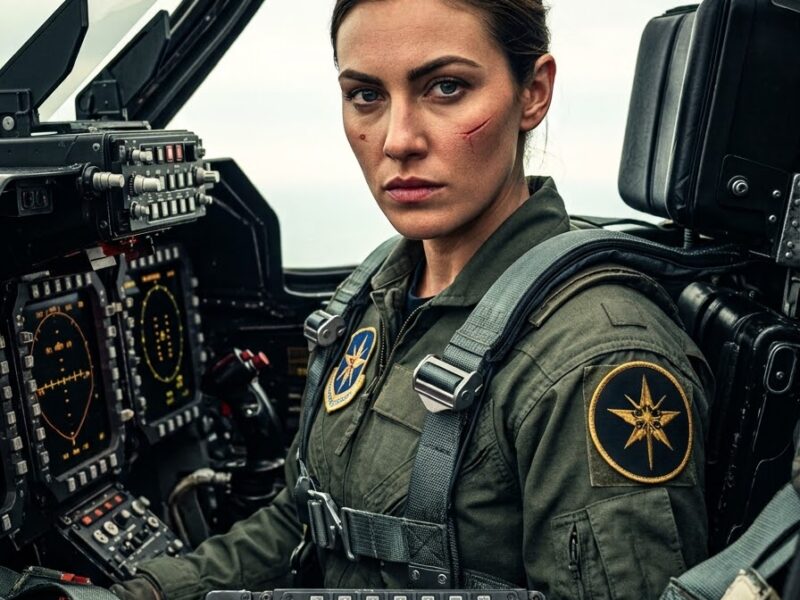
The admiral had already ordered seven Navy SEALs abandoned in a burning valley when I disobeyed his command
The harsh metallic rattle of incoming round fire against our titanium belly armor sounded like hail hitting a tin roof, except each strike carried enough kinetic force to shear off a tail rotor or punch clean through a pilot’s torso.
“Command, we need immediate extraction! We are taking heavy casualties, I repeat, heavy casualties!”
The voice in my helmet belonged to Master Chief Marcus Vance, team leader of the seven Navy SEALs currently pinned down in the jagged maw of the Shahi-Kot Valley. Below us, through the thick veil of smoke and burning diesel, the mountain was vomiting fire. Two Humvees were turned upside down, burning like obsidian torches against the grey dust, and the mortar shells were walking closer to their position with every passing second.
I gripped the collective stick of the MH-60 Black Hawk until my knuckles turned porcelain white. My copilot, Warrant Officer Eric Miller, was rapidly flipping switches on the overhead console as light after light flickered on the caution warning panel.
“Temperature on engine two is spiking, Sarah,” Eric shouted over the intercom, his voice tight, pitching higher than normal. “We’ve got RPG teams on both ridgelines. If we drop below three thousand feet, we’re going into a kill box.”
“They don’t have five minutes, Eric,” I said, my eye glued to the heads-up display. “Look at the thermal signatures. They’re surrounded on three sides. The insurgents are moving up the eastern ravine.”
I hit the push-to-talk button on my cyclic stick, transmitter keyed directly to Tactical Air Operations Command at Bagram.
“Control, this is Hawk-One-Four. We have visual on the team. Requesting permission to commit to low-altitude extraction immediately.”
A heavy, static-laced silence hung in my ears for three endless seconds. Then, a cold, unyielding voice cut through the airwaves. It wasn’t the air traffic controller. It was Vice Admiral Raymond Vance—no relation to the Master Chief below, though the shared surname was a cruel irony of the military roster.
“Hawk-One-Four, this is Admiral Vance,” the voice resonated, devoid of any pitch or human warmth. “Negative on extraction. No aircraft are available for support in that sector. You are ordered to return to base immediately.”
I blinked, staring down at the multi-function display in front of me. The radar sweep clearly showed three Apache attack helicopters hovering in a holding pattern less than fifteen miles north, fully loaded with Hellfire missiles and 30mm cannon rounds.
“Sir, I have three Apaches on my radar at waypoint Bravo,” I countered, my voice trembling with suppressed rage. “We can secure the landing zone. We can reach them right now. They won’t survive another ten minutes down there!”
“That is a direct order, Lieutenant Hayes,” the admiral’s tone hardened, turning to polished ice. “You are running low on fuel, and the airspace is uncoordinated. Break off your approach and pull back to base. Control out.”
The line went dead. Just a hollow hiss of white noise.
Down in the gorge, a bright pink signal flare burst into the dusk sky, spewing thick neon smoke into the mountain haze. It was the desperate, final call of a unit about to be overrun.
Through the electro-optical camera system on my display, I watched the horror unfold in real-time. A heavy mortar shell landed ten yards from the collapsed stone wall where the SEALs were making their last stand. The shockwave lifted two men and slammed them into the debris. One of them didn’t get back up. The remaining six began desperately dragging his motionless body toward a shallow ditch.
“Lieutenant, what are you doing?” Eric yelled, his hands flying to his own set of controls as I slammed the collective down, dropping the Black Hawk into a steep, stomach-churning dive toward the burning gorge.
“Bringing them home,” I said, setting my jaw so hard my teeth ached.
“Sarah, that’s a court-martial! He gave a direct order from Command!”
“He can hang me after we land!” I roared. “Prepare for hot landing! Ready the side guns!”
The sky turned into a nightmare of tracer fire. Red lines crisscrossed the windscreen like a spiderweb made of molten steel. A burst of heavy machine gun fire stitched across our starboard fuselage with a deafening thwack-thwack-thwack. The primary windshield shattered into a spiderweb of safety glass, spraying tiny, razor-sharp crystal shards across my flight suit. A high-pitched alarm began to scream inside the cockpit—a warning light flashing bright crimson across the master caution panel.
“Hydraulic pressure dropping in system one!” Eric screamed, trying to stabilize the pitch. “We’re losing tail rotor control balance!”
“Hold her steady!” I yelled back, pulling hard on the cyclic to flair the aircraft just feet above the rocky ground.
The massive rotors kicked up a hurricane of dust, ash, and burning embers, creating a localized sandstorm that blinded the enemy gunners on the ridge for a brief, critical window. I brought the twin-engine beast down between the pinned-down SEALs and the incoming insurgent fire, using the reinforced metal body of the helicopter as a human shield for the men on the ground.
“Go! Go! Go!” I screamed through the cabin PA system.
The cabin door slid back with a loud bang. Crew Chief Specialist Miller leaned out, spraying 7.62mm rounds from the mounted M134 Minigun into the treeline, the weapon roaring like a chain saw tore through the mountain air.
Out of the dust, shadow figures emerged. The SEALs were moving in a disciplined, desperate scramble. Two of them were carrying a stretcher; three others were firing blind over their shoulders as they retreated toward the open cabin door.
One operator stumbled hard against the frame, his face caked in grey dirt and sweat, his tactical vest drenched in dark crimson blood from a gaping shrapnel wound in his thigh. He almost slipped back into the dirt, but I reached out from the pilot seat, twisting my body around to grab his shoulder harness with my left hand, hauling him over the lip of the deck with sheer adrenaline.
“In! Everyone in!” the Crew Chief hammered his fist against the interior bulkhead. “Up, up, up!”
I pulled the collective back with everything I had. The engines shrieked in protest as a Rocket-Propelled Grenade detonated directly beneath the ground where our tires had rested a split second before. The shockwave threw the tail upward, spinning us thirty degrees off axis.
“Engine one failure!” Eric yelled as fire warning lights bathed the canopy in blood-red light. “We’re single-engine! Engine two is overheating!”
“Pushing forward!” I yelled back, nose-diving the helicopter off the edge of the plateau into the dark ravine below to trade altitude for airspeed, riding the thin margin between flight and a catastrophic death spiral.
The mountain walls rushed past us in a blur of grey rock and flashes of muzzle fire. I held the collective steady, feeling the airframe shudder as if it were about to shake itself apart. Slowly, agonizingly, the heavy bird pulled out of the dive, clearing the southern ridge of the valley by less than fifty feet before plunging into the cool, dark sanctuary of the open sky.
The deafening roar of the air combat zone faded into the rhythmic, laboured thumping of our single remaining engine. For several long minutes, no one spoke. The heavy smell of burnt cordite, sweat, copper, and spilled aviation fuel filled the cabin.
I locked the flight controls into auto-trim and wiped a line of blood from a small glass nick on my forehead. I turned around in my harness to check on the men in the back.
The seven SEALs were slumped against the webbing seats, panting, bleeding, their gear torn to shreds. The crew chief was desperately applying a tourniquet to the leg of the man I had pulled aboard.
Suddenly, the wounded operator lifted his head. His eyes were bloodshot, sunken with exhaustion, but they locked onto my name patch sewn across the left breast of my flight suit: HAYES.
He reached out a trembling, dirt-caked hand and grabbed my flight sleeve, his grip unexpectedly tight.
“What’s your name?” his voice was a ragged whisper through the cabin noise.
“Lieutenant Sarah Hayes,” I answered, watching him carefully.
His eyes widened in utter disbelief. He looked at my face, tracing the contours of my cheekbones, as if he were staring at a ghost.
“Sarah?” he gasped.
“Yes. Easy now, stay still. You’ve lost a lot of blood.”
Instead of lying back down, the man slowly reached inside his torn, blood-soaked collar. His trembling fingers pulled out a chain holding two standard-issue military dog tags—and a third, older, tarnished metal tag that hung alongside them.
With shaking hands, he unclipped the old tag and held it out toward me.
My breath caught in my throat. My heart gave a violent, painful thump against my ribs.
Engraved on the worn silver surface was a name I hadn’t seen on military metal in eight long years:
HAYES, DANIEL M.
SER. 884-02-119
BLOOD TYPE: O POS
My mind went completely numb. The cockpit noise, the engine alarms, the wind howling through the broken windshield—everything evaporated into dead, terrifying silence.
“Where… where did you get that?” I whispered, my voice cracked, barely audible.
The SEAL’s face tightened with profound grief and terror.
“Because your brother gave it to me,” he said softly.
I leaned back, my hand trembling so hard I couldn’t keep it on the console. “That’s impossible. Daniel died eight years ago in a training crash in the Mediterranean. His body was never recovered.”
The SEAL shook his head slowly, leaning closer so only I could hear over the hum of the rotor blades.
“He wasn’t in the Mediterranean, Sarah. And he didn’t die in a crash. He was alive when they buried his file.”
“What are you talking about?”
“Daniel was part of a black-ops logistics unit out of Task Force 77,” the SEAL whispered, his breath raspy. “He discovered a pipeline. Senior commanders… high-ranking brass… they were orchestrating fake ambushes on our own supply convoys to write off crates of advanced weaponry. They were selling them to local warlords for millions in untraceable cash. Daniel found the paper trail. He tried to go to Inspector General. Two days later, his team was sent into an unsanctioned op in the Kunar province. None of them came back.”
My blood ran colder than the high-altitude air rushing through the cockpit. “Who? Who ordered it?”
“The same man who just tried to leave the seven of us to die in that valley tonight,” the SEAL spat, his eyes burning with pure hatred. “Vice Admiral Raymond Vance. He signed Daniel’s death certificate. He classified the mission to seal the records forever.”
The helicopter shuddered as the lights of Bagram Airfield appeared on the horizon ahead. The massive base was illuminated like a bright island in the pitch-black Afghan desert.
“We have evidence,” the SEAL added, leaning his head back against the bulkhead as his strength began to fade. “The seven of us… we weren’t just on a recon mission tonight. We found Daniel’s old field log in an abandoned bunker near the Pakistani border. We have the ledger, Sarah. That’s why Vance tried to burn us alive in that valley. He knew what we had.”
Ten minutes later, the single engine sputtered its final gasp as I slammed the landing gear down onto the concrete pad at the main airfield.
As the rotors spun down to a silent stop, the night sky was suddenly shattered by blinding floodlights. At least twenty armed Military Police officers surrounded our Black Hawk, their M4 carbines raised and pointed directly at our cockpit.
Through the glaring spotlight beam, a figure stepped forward.
Vice Admiral Raymond Vance walked toward the aircraft, flanked by two armed security officers. His dress uniform was immaculate, his boots polished to a mirror shine, his face a mask of cold, unyielding stone.
I unclipped my harness, pushed the cracked door open, and stepped down onto the tarmac, my flight suit stained with mud and my brother’s friend’s blood.
“Lieutenant Hayes,” Admiral Vance said, standing ten feet away, his hands folded neatly behind his back. “You disobeyed a direct lawful order from a superior officer during an active combat operation. Hand over your sidearm. You are under arrest for treason and insubordination.”
I didn’t reach for my holster. I stood my ground, staring straight into his hollow eyes.
“Seven Navy SEALs are standing on this pad alive right now because I disobeyed you, Admiral,” I said, my voice ringing out across the quiet flight line.
Behind me, the cabin door opened, and the wounded SEAL chief stepped down onto the tarmac, leaning heavily on the shoulders of his teammates. He walked slowly until he stood right beside me.
The Admiral’s eyes shifted to the chief. For a fraction of a second, the cold mask cracked. Vance’s jaw twitched, and his eyes widened in subtle, terrifying recognition.
The SEAL reached into his tactical vest, pulled out a small, battered, moisture-stained photograph, and held it up for the Admiral to see.
It was a picture of two young men in desert camouflage, arms draped over each other’s shoulders, smiling in front of an unmarked hangar. One was the chief. The other was my brother, Daniel Hayes.
“Tell her what happened to him, Vance,” the Chief growled, his voice carrying an iron weight that made the surrounding MPs look at each other nervously. “Tell her why you left us to rot in that trench.”
Admiral Vance’s face drained completely of color. He took a half-step back, his fists clenching at his sides.
Before he could speak, every single light on Bagram Airfield suddenly cut out.
The runway lamps, the hangar floodlights, the tower beacons—everything plunged into total, absolute darkness. Emergency sirens began to wail across the installation as backup generators struggled to kick in.
In the pitch-black night, my tactical headset, still hanging from the cockpit door of my Black Hawk, crackled to life with high-frequency static. A clear, calm voice burst through the radio channel—a voice I had dreamed of hearing every night for eight excruciating years.
“Sarah,” the voice whispered through the radio static. “If you can hear this, don’t trust anyone at Command. I’m still alive.”
The transmission abruptly cut off.
A loud mechanical clunk echoed from the dark concrete maintenance bunker fifty yards behind the landing pad. A heavy steel blast door, locked for years under high-security classification, slowly began to slide open into the dark.
The darkness on the airfield was absolute for three harrowing seconds before the amber emergency strobes began to pulse, casting grotesque, sweeping shadows across the tarmac. Panic rippled through the cordon of Military Police. Weapons swayed in the dim light, safety catches clicking off in rapid succession as officers spun around, trying to cover both the darkened perimeter and the opening blast door of Bunker 13.
“Stand down! Keep your weapons trained on the aircrew!” Admiral Vance barked, though his usual razor-sharp composure had vanished. His voice pitched unnaturally high, laced with a raw, desperate edge. “Guard captain, secure those SEALs immediately! They are carrying unauthorized classified material!”
“Don’t you dare lay a hand on my men!” Master Chief Vance growled, stepping forward despite his bleeding leg, his six surviving teammates immediately forming a tight defensive wall around him. They didn’t have weapons drawn, but their posture was lethal. “Try it, Vance. See how these MPs handle taking orders to execute combat veterans.”
The MP Captain hesitated, lowered his rifle barrel an inch, and looked nervously between the Admiral and the seven bloodied men who had just survived hell.
I didn’t wait for the standoff to break. The voice over the static had seized my soul, sending a surge of electricity straight to my limbs. Sarah, if you can hear this… It was Daniel. It was his cadence, his distinct, slightly raspy timber. I knew it better than my own name.
I turned my back on the Admiral and sprinted toward Bunker 13.
“Lieutenant Hayes! Stop or I will order my men to open fire!” Vance screamed behind me.
“Shoot me then!” I screamed over my shoulder without breaking stride. “Because that’s the only way you’re keeping me out of that bunker!”
A gunshot cracked through the night air, biting into the concrete inches from my left boot, but I didn’t stop. I slammed my shoulder against the heavy steel door of Bunker 13 just as it ground to a halt, open barely two feet. I squeezed through the narrow gap into the pitch-black corridor beyond.
Inside, the air was cold, damp, and thick with the heavy stench of old hydraulic fluid and stagnant water. It felt like stepping out of the modern war zone into an abandoned tomb. A faint green glow illuminated the end of the long hallway—the secondary emergency lighting of an underground terminal.
Footsteps echoed behind me. I spun around, grabbing the emergency emergency knife from my chest rig, but relaxed slightly when I saw the wounded SEAL chief, Marcus, squeezing through the door behind me, followed by two of his team members, including their communications specialist, a guy named Miller.
“You shouldn’t be running on that leg, Chief,” I said, my lungs burning as I helped him balance.
“I didn’t survive five hours in a burning valley just to miss the end of this story, Hayes,” Marcus grunted, leaning heavily against the concrete wall. “Your brother gave me a job eight years ago. I intend to finish it.”
“Was that really his voice on the radio?” I asked, my voice cracking in the dark corridor. “Is he down here?”
Marcus looked at me with solemn, pain-filled eyes. “Daniel was taken alive after the ambush in Kunar, Sarah. Vance didn’t just want him silent—he needed Daniel’s biometric access codes. Daniel was the lead systems manager for the logistics network. Without his clearance, Vance couldn’t clear the ghost shipments from the global ledger. For eight years, we thought he was dead. But three weeks ago, we intercepted an encrypted burst transmission originating from deep beneath Bagram. A signal tag that only one person knew how to write.”
We moved quickly down the corridor, descending a steep set of metal stairs that spiraled deep beneath the surface of the airbase. This wasn’t standard military infrastructure; it was a relic of the old Soviet occupation in the 1980s, modified and retrofitted by black-ops contractors after 2001.
At the bottom of the stairs, we reached a heavy reinforced security door. The electronic lock panel was smashed, wires hanging out like torn veins, sparking intermittently in the dark. The door sat ajar.
Inside, a vast underground room stretched into the gloom. Rows of outdated server racks hummed softly, powered by an independent, off-grid battery bank. Monitor screens glowed faint green and blue, displaying real-time global logistics routes, weapons manifests, and offshore banking routing numbers.
And in the center of the room sat a single, lit desk.
On top of the desk was a standard military radio headset, its microphone live, and a small, antique wooden chest. Beside it lay a dog tag chain—identical to the one Marcus had handed me in the helicopter.
I ran to the desk, my heart hammered against my ribs like a trapped bird. “Daniel!” I called out into the shadows. “Daniel!”
Nothing answered except the low, mechanical drone of the server cooling fans.
I reached out and touched the wooden chest. It wasn’t locked. I lifted the lid with trembling hands. Inside rested a thick leather-bound notebook—a hand-written ledger containing thousands of serial numbers for weapon systems, rocket launchers, and thermal optics, accompanied by dates, signatures, and foreign bank account routing codes. On every single page, at the bottom approval line, was the signature of Vice Admiral Raymond Vance.
“This is it,” Marcus whispered, leaning over my shoulder to look at the ledger. “This is the smoking gun. This proves high treason at the highest level of the Joint Chiefs.”
“Where is he, Chief?” I asked, tearing my eyes away from the paper, frantically looking around the empty, subterranean bunker. “If he sent that radio message thirty seconds ago, where is my brother?”
“Look at the screen, Lieutenant,” Miller, the communications specialist, said, pointing a trembling finger at a large central monitor that suddenly flickered to life.
A live camera feed appeared on the display. It was showing a subterranean holding cell—a small, windowless concrete box located even deeper beneath our feet. Inside the cell, sitting on a bare steel cot, was a man in a faded, threadbare flight suit. His hair was long and streaked with grey, his face thin and scarred, but his posture—the way he held his shoulders, the calm, analytical look in his eyes—was instantly recognizable.
It was Daniel.
He was alive.
My hands slammed against the glass monitor. “Daniel…” A sob tore through my chest, eight years of buried grief shattering instantly.
In the video feed, Daniel looked up directly at the camera, as if he knew we were watching him. He raised his hand, pointing three fingers toward his collarbone—a private hand signal our father had taught us when we were kids, meaning I’m okay, stay quiet, watch your back.
Suddenly, the video monitor flickered with red static. A loud, mechanical locking mechanism echoed from the ceiling above us.
CLANG.
The heavy steel blast doors through which we had entered snapped shut with a deafening boom.
From the overhead PA system, a cold, calculated laugh echoed through the cold subterranean room.
“You really are your brother’s sister, Lieutenant Hayes,” Admiral Vance’s voice boomed over the speakers, crisp, clear, and completely stripped of his earlier panic. “Intelligent, idealistic… and foolishly predictable.”
I grabbed the intercom microphone on the desk. “Vance! It’s over! We have the ledger! We have your signatures! Every server in this room is logging your illegal transactions!”
“You think I left those servers running by accident, Sarah?” Vance chuckled softly, a sound that sent a icy chill straight down my spine. “I needed someone with valid pilot credentials and high-level clearance to access this lower sub-level to trigger the final purge sequence. The system required two-factor physical verification to permanently erase the master archive—and your flight suit’s biometric pass just provided it when you stepped through that door.”
On the central monitor, red warning text began flashing rapidly over the financial records and weapons manifests:
SYSTEM PURGE INITIATED. ALL RECORDS PERMANENTLY ERASING IN 180 SECONDS.
SELF-DESTRUCT COUNTDOWN COMMENCED: FACILITY VENTILATION SEALED.
“In three minutes,” Vance continued, his tone cold and detached, “a localized halon gas fire-suppression system will dump eight hundred pounds of asphyxiating gas into that bunker. You, your traitorous SEAL friends, and every trace of your brother’s wild conspiracy theories will be cleanly erased. A tragic accident involving an underground fuel leak. The narrative is already written.”
“You monster!” I screamed into the mic. “Daniel is down there!”
“Your brother ceased to exist eight years ago, Lieutenant,” Vance replied coldly. “And in three minutes, you will join him.”
The speakers went quiet with a sharp click. High-pressure valves near the ceiling suddenly hissed, and a dense, white cloud of Halon gas began pouring rapidly into the room, cutting off the air supply instantly.
The Halon gas descended from the overhead vents like a thick, white fog, heavy and silent. My eyes burned instantly, and a sharp, metallic taste coated the back of my throat as the room’s oxygen levels began to plummet.
“Filter masks! Now!” Marcus barked, pulling his tactical gas mask from his drop-leg pouch and snapping it over his face in one fluid motion. His two SEAL teammates did the same, tossed a spare emergency breather mask from their survival kit toward me.
I caught it, strapping the silicone mask tight over my mouth and nose. The sweet, synthetic taste of filtered air hit my lungs, but I knew it was only a temporary reprieve. Halon didn’t just pollute the air; it displaced oxygen entirely. In less than three minutes, the atmospheric pressure in the sealed subterranean room would drop to lethal levels, suffocating us through our skin regardless of filter masks.
“Miller! Can you override that blast door?” I shouted through the rubber diaphragm of my mask, pointing toward the heavy steel portal that had trapped us inside.
Miller was already at the access panel, his fingers flying across a portable tactical toughbook he had spliced directly into the door’s exposed wire harness. “Negative! Vance has hard-coded a lock-out command from the surface terminal! It’s a closed circuit! The only way out of this room is down!”
“Down?” I asked, rushing over to his side.
Miller pointed his tactical flashlight toward the back corner of the server room. Beneath a heavy steel workbench sat a circular cast-iron maintenance hatch, painted bright yellow, locked with a heavy manual wheel valve.
“That’s the utility conduit leading to the lower detention level,” Miller yelled over the hiss of the gas. “It’s where they run the coolant lines for the sub-level servers! It bypasses the main security blast doors!”
Without waiting another second, Marcus and his teammate grabbed the heavy metal workbench, grunting with exertion as they flipped the massive table onto its side. The iron hatch was exposed. Marcus grabbed the wheel valve, his arm muscles bulging as he fought eight years of rust and corrosion.
With a loud, metallic SNAP, the rust broke. The wheel turned. Marcus heaved the heavy hatch open, revealing a dark, vertical shaft with rusted iron rungs running down into the abyss.
“Go! Go! Go!” Marcus shouted, waving me forward.
I didn’t hesitate. I threw myself into the shaft, my boots finding the slippery iron rungs as I descended rapidly into the darkness. The thick white Halon gas began spilling into the shaft above us like a slow-moving waterfall, chasing us down.
Ten feet, twenty feet, thirty feet down—we climbed until my boots slammed hard onto a wet concrete floor.
We were in a narrow, damp drainage tunnel. The sound of dripping water echoed off the curved stone walls. Up ahead, a single, flickering fluorescent light marked the entrance to the lower detention facility.
I pulled out my sidearm—a standard-issue Beretta M9—and clicked off the safety, leading the way toward the light.
We emerged into a stark, whitewashed hallway lined with five heavy steel cell doors. Each door had a small reinforced glass observation port. The air down here was thick with the smell of damp concrete, bleach, and despair.
I ran from door to door, looking through the glass panels.
Cell 1: empty.
Cell 2: empty.
Cell 3: broken cots and discarded chains.
Then I reached Cell 4.
Inside, sitting on the edge of the steel cot just as I had seen on the monitor, was Daniel.
“Daniel!” I cried out, slamming my hands against the bulletproof glass.
The man on the cot jerked his head up. His eyes, dark and sunken with years of captivity, locked onto mine. For a long, terrifying second, he didn’t move, as if he believed I was another hallucination brought on by years of isolation.
Slowly, he stood up. His frame was thin, his gait hesitant, but as he stepped into the light of the observation port, there was no doubt left in my heart.
“Sarah?” he whispered through the tiny brass speaker grille beneath the glass. “God… Sarah… is it really you?”
“It’s me, Dan! I’m here!” Tears overflowed my eyes, streaking through the dust and gunpowder residue on my cheeks. “I’m getting you out of here!”
“No, Sarah, listen to me!” Daniel slammed his hands against the glass, his voice frantic. “You shouldn’t have come! It’s a trap! Vance isn’t just trying to cover up the weapons ring! The weapons shipments were just the funding mechanism!”
“Funding for what?” Marcus demanded, stepping up beside me, using a heavy iron crowbar he had grabbed from the maintenance shaft to pry at the cell’s electronic lock mechanism.
“Project Blackwing,” Daniel said, his breath fogging the small glass panel. “Vance isn’t working alone. He’s part of a rogue cabal within the Defense Intelligence Agency. They’ve been smuggling advanced electronic warfare units, drone guidance chips, and shoulder-fired anti-air missiles out of Afghanistan and selling them to private mercenary syndicates in Eastern Europe. They aren’t just making money, Marcus—they are arming a private global army!”
SPARK!
Marcus jammed the iron bar deep into the door frame, putting his entire body weight against it. The heavy steel bolt snapped with a loud crack, and the cell door swung open with a screech of tortured metal.
Daniel stumbled out of the cell. I caught him in my arms, pulling him into a tight, desperate embrace. He felt so thin, so fragile compared to the broad-shouldered older brother who had taught me how to fly kites in our backyard in Virginia, but his grip around my shoulders was tight, fierce, and alive.
“I thought I lost you,” I sobbed into his shoulder.
“I never gave up hope, Sarah,” Daniel whispered, pulling back to look at my face. “I knew if anyone could track down that signal, it was you.”
“We don’t have time for a family reunion!” Miller yelled from the end of the hallway, his rifle raised toward the main access staircase. “We’ve got footsteps coming down the main security shaft! Fast!”
The heavy steel door at the far end of the hallway burst open.
Four heavily armed black-ops contractors—wearing unmarked black tactical gear, night-vision goggles, and suppressed assault rifles—poured into the corridor, opening fire without warning.
Suppressed gunshot bursts echoed like loud hammer strikes off the concrete walls: thwip-thwip-thwip-thwip!
“Cover!” Marcus roared, shoving Daniel and me back into the recess of the open cell door.
The SEALs returned fire with brutal, practiced precision. The tight corridor turned into a lethal kill zone. Sparks rained down from the ceiling as bullets tore away chunks of concrete and light fixtures.
One of the black-ops contractors fell, hit in the chest, but three more pressed forward, tossing a small, cylindrical object down the hallway.
“GRENADE!” Miller screamed.
Marcus grabbed a heavy steel locker from inside the cell and slammed it down over the grenade just as it detonated. The muffled explosion blew the locker off its hinges, throwing Marcus backward onto the concrete floor.
“Marcus!” I yelled, pulling him behind cover as blood seeped through his tactical vest from new shrapnel wounds.
“I’m fine! Get Daniel out of here!” Marcus choked out, pointing toward a small ventilation duct near the ceiling at the back of the cell block. “That vent leads to the base’s main storm drainage system! It empties out into the dry riverbed two miles south of the perimeter!”
“I’m not leaving you behind!” I said, squeezing my Beretta’s trigger to lay down suppressive fire through the doorway, dropping another advancing contractor.
“You have to!” Daniel grabbed my wrist, his eyes burning with intense urgency. “The hard drive with the master decrypted files is in my pocket! If Vance gets that drive back, everything we sacrificed for the last eight years means nothing!”
“She’s right, Hayes!” Marcus growled, forcing himself back up onto his knees, gripping his rifle with blood-soaked hands. “We’ll hold this corridor! You get your brother and that drive out to the airfield! Get that data to the civilian press before Vance shuts down the entire region!”
I looked at Marcus, then at his remaining men, who were laying down a continuous wall of lead to protect us. There was no hesitation in their eyes—only pure, absolute resolve.
“Bring them hell, Lieutenant,” Marcus said with a dark, terrifying grin.
I bit my lip, nodded once, and grabbed Daniel’s arm. “Up the vent! Move!”
Daniel scrambled up onto my shoulders, pulled open the rusted aluminum grate, and hauled himself into the narrow air duct. I reached up, grabbed his hand, and swung myself up inside just as a second wave of black-ops mercenaries burst through the corridor doors.
The iron grate slammed shut behind us, cutting off the flashes of gunfire as we began crawling frantically through the dark, dust-filled belly of the underground network, racing toward the light at the end of the tunnel.
The ventilation shaft was a suffocating tomb of rusted sheet metal, dust, and spiderwebs. We crawled on our elbows and knees, the sound of distant gunfire echoing through the duct behind us like muffled thunder. Every inch forward felt like an eternity, my heart pounding violently against my ribs as I kept one hand on Daniel’s foot, terrified that if I let go, he would vanish into the dark again.
After ten agonizing minutes of crawling through the damp, airless tube, the shaft angled sharply upward. A faint beam of pale moonlight filtered through a steel grate above.
Daniel reached the grate first, pressing his back against the metal until the rusted screws gave way with a loud pop. We scrambled out onto the hard, cold earth of the dry riverbed, gasping for fresh night air.
We were outside the main security perimeter of Bagram Airfield, half a mile south of the flight line. To our north, the military base was lit up like a nightmare in motion—searchlights crisscrossing the sky, sirens wailing continuously, and the heavy thump of helicopter rotors echoing across the desert floor.
“They’ve put the entire base on lockdown,” Daniel whispered, ducking low behind a pile of jagged river rocks. He pulled a small, silver flash drive from his torn collar—the master hard drive containing eight years of encrypted financial records, satellite imagery, and intercepted communications. “This contains every transaction Vance ever made. Names of foreign buyers, bank account numbers in Switzerland and the Caymans, and the exact coordinates of six hidden weapons caches across the Middle East.”
“We need to get this to the Department of Defense Inspector General,” I said, checking my pistol magazine. Three rounds left. “Or the Federal Bureau of Investigation.”
“Vance has eyes inside the Pentagon, Sarah,” Daniel said, his eyes filled with a dark, terrible wisdom. “If we send this through standard military communication channels, his people will intercept it and delete it before it reaches an uncorrupted judge. We have to broadcast it publicly. We need to upload the entire encrypted file to every major news outlet and independent global watchdog simultaneously.”
“How?” I looked toward the airfield. “The base’s satellite uplink station.”
“The main comms tower at the airfield control hub,” Daniel nodded. “It has an un-interceptable satellite link directly connected to the international press wire. If we can get inside the control room for five minutes, we can transmit the unredacted files across the entire world.”
“Look,” I pointed toward the perimeter fence three hundred yards away.
A lone military transport vehicle—a heavy, armored Caiman MRAP—was idling near a secondary security gate. The driver was standing outside, smoking a cigarette, watching the chaos unfolding on the main runway.
“Stay behind me,” I whispered to Daniel.
We slithered through the shadows of the riverbed, using the cover of dust and scrub brush to close the distance. Before the guard even noticed our presence, I closed in from his blind spot, driving the butt of my empty sidearm into the side of his tactical helmet. He collapsed onto the dirt without a sound.
Daniel quickly dragged the unconscious guard into the brush while I grabbed his keycard and leaped into the driver’s seat of the MRAP. Daniel slammed the passenger door shut beside me.
“Can you still drive these heavy beasts?” Daniel asked with a weak smile.
“I can fly a broken Black Hawk through a mortar storm, Dan,” I grunted, slamming the heavy vehicle into gear. “I think I can handle a truck.”
I floored the accelerator. The massive diesel engine roared, and the armored vehicle smashed clean through the chain-link security gate, spraying barbed wire across the hood as we careened onto the main airfield tarmac.
Searchlights immediately locked onto us. Sirens shrieked in a frenzy.
“Attention unidentified vehicle! Halt immediately or you will be engaged with heavy ordnance!” a voice boomed from the airfield control tower over the base loudspeaker system.
“Hold on!” I screamed, turning the wheel hard to avoid a line of spike strips laid out by responding MPs.
Tracer rounds rained down upon us like red lightning. Heavy .50-caliber bullets slammed into the MRAP’s armored plating, cracking the reinforced bulletproof glass of the windshield into spiderweb patterns. I kept my foot stomped on the gas pedal, driving the heavy vehicle directly toward the base of the six-story concrete air traffic control tower.
“We aren’t going to make the door!” Daniel shouted, bracing his hands against the dashboard.
“We aren’t using the door!” I yelled back.
I slammed the MRAP into the ground-floor glass foyer of the control tower at forty miles an hour.
CRASH!
Glass, steel framing, and drywall exploded everywhere as the heavy truck smashed into the main lobby, plowing through security turnstiles before coming to a violent stop against the central concrete elevator shaft.
Smoke poured from the crumpled hood. My head slammed against the steering wheel, dazing me for a second, but the surge of adrenaline pushed the pain away.
“Out! Move!” I choked out, throwing my door open.
Daniel grabbed the silver flash drive, and together we sprinted up the concrete fire stairs, bypassing the disabled elevators. One floor, two floors, three floors—our lungs burned, our legs felt like lead, but we didn’t stop until we kicked open the heavy door leading into the main satellite communications control room on the fifth floor.
The room was filled with banks of computer monitors, satellite dish controls, and high-frequency radio equipment. Two civilian technicians raised their hands in terror as we burst inside.
“Out! Everyone out!” I shouted, pointing my empty pistol at them. They didn’t hesitate, scrambling past us into the stairwell.
Daniel immediately dived into the main console, plugging the silver flash drive into the primary satellite uplink terminal. His fingers moved across the keyboard in a frantic blur, bypassing security protocols, setting up a global file distribution protocol.
UPLINK CONNECTED: SAT-COM 09.
TARGET: GLOBAL PRESS WIRE & DOJ SECURE SERVER.
TRANSFER STATUS: PREPARING DATA PACKETS…
“It’s working,” Daniel breathed, a look of profound relief washing over his tired face. “The upload sequence is starting. It needs sixty seconds to complete.”
UPLOAD PROGRESS: 12%… 24%…
Suddenly, the heavy door to the control room slammed open with a deafening bang.
Vice Admiral Raymond Vance stepped into the room, flanked by two elite personal security contractors armed with short-barreled carbines. Vance was holding a heavy chrome-plated .45-caliber pistol in his right hand. His uniform was stained with dust, his face twisted into a mask of pure, murderous rage.
“Step away from the console, Lieutenant,” Vance spat, raising his pistol and pointing it directly at my chest. “Or I will paint this room with your brains.”
I stepped in front of Daniel, blocking his body with my own, staring down the barrel of the Admiral’s gun.
“It’s over, Vance,” I said, my voice steady, cold, and unflinching. “The files are already uploading. The whole world is about to see what you did.”
Vance glanced at the central monitor screen: UPLOAD PROGRESS: 58%… 62%…
A dark, psychotic smile slowly spread across his face.
“You think a file transfer can destroy me, Sarah?” Vance whispered softly. “I own the network. I own the servers. And most importantly… I own the man who controls the kill-switch.”
He didn’t pull the trigger on me. Instead, he raised his left hand and pressed a button on a small remote detonator in his grip.
A massive explosion rocked the top of the tower above us. The massive satellite dish mounted on the roof of the building was sheared off its mountings by a thermal charge, tumbling off the edge of the building and crashing down onto the tarmac far below in a massive shower of sparks and shattered metal.
On the terminal screen, the progress bar froze instantly.
ERROR: SATELLITE CONNECTION LOST. TRANSMISSION TERMINATED AT 74%.
Daniel stared at the screen in utter horror. “No… no, no, no!”
Vance chuckled, taking a step closer, his pistol leveled at my face. “Did you really think I wouldn’t have a contingency plan for my own tower? You lose, Hayes family. Just like you lost eight years ago.”
He pulled back the hammer of his pistol with a sickening click.
“Any last words, Lieutenant?”
The metallic click of the pistol hammer echoed through the ruined control room, sharp and final.
I looked Vance dead in his cold, lifeless eyes, refusing to give him the satisfaction of seeing me flinch. “My father always told me,” I whispered, “that a coward always relies on a kill-switch.”
Vance’s eyes narrowed. His finger tightened on the trigger.
BOOM!
A deafening blast shattered the thick reinforced glass window behind Vance.
A heavy, black steel cable slammed through the frame, accompanied by a rain of glass shards. A shadow figure swung through the shattered window like a vengeful specter, crashing boots-first into the back of Vance’s two contractors, throwing them across the room into the bank of server racks.
It was Master Chief Marcus Vance.
His tactical vest was shredded, his face covered in soot and blood, but his grip on his sidearm was iron-clad. Before Admiral Vance could even turn his head, Marcus slammed the heavy butt of his combat shotgun straight into the Admiral’s jaw.
CRACK!
The Admiral was thrown off his feet, his pistol flying out of his hand and skittering across the smooth floor tiles. He hit the concrete deck hard, spitting blood and teeth, clutching his broken face.
“That’s for my team, you son of a bitch,” Marcus growled, standing over the groaning Admiral, his shotgun barrel pressed firmly against Vance’s forehead.
Behind Marcus, two more SEALs swung through the broken window on rappelling lines, instantly securing the two disarmed contractors on the floor.
“Marcus!” I gasped, staring at him in disbelief. “How did you…?”
“You think a few mercenaries in a basement can stop Team Six?” Marcus smirked through the blood on his face. “We found the emergency armory on sub-level two. Now, Daniel—what’s the status of that transmission?”
Daniel was already back at the keyboard, his hands moving across the keys with lightning speed despite his trembling fingers. “The roof dish is destroyed! The satellite uplink is dead! The transmission stopped at seventy-four percent!”
“Can you re-route it?” I asked, rushing to his side.
“Not through satellite,” Daniel said, pointing frantically at the network diagnostics display. “The local terrestrial fiber-optic line is still active! It runs directly beneath the airfield to the NATO combined joint task force hub in Frankfurt!”
“Then send it!” Marcus urged.
“I can’t!” Daniel slammed his fist onto the console in frustration. “The fiber-optic line requires a physical hard-line bridge from the primary server terminal in the basement! Vance locked the local relay from the master switch down in Bunker 13 before he came up here!”
“Then we go back down,” I said instantly.
“No time,” Daniel looked at the countdown timer on the main display screen. “The automated base override system Vance triggered is going to initiate a hard system wipe of all local fiber nodes in ninety seconds. If someone doesn’t manually flip the bridge switch inside Bunker 13 right now, the entire server network will be permanently wiped clean.”
Every eye in the room turned toward the terminal screen.
Suddenly, a small yellow box popped up in the corner of the master console display.
INCOMING LOCAL RELAY SIGNAL… NODE 13… ACTIVE.
My heart stopped. “What is that?”
On the network map, the locked node inside Bunker 13—the sub-level server room currently flooded with lethal Halon gas—suddenly flashed bright green.
A voice cut through the control room’s intercom system. It was rough, gasping, and heavily distorted by a breather mask, accompanied by the distinct sound of metallic tools clanking against a heavy breaker panel.
“Hawk-One-Four… this is Crew Chief Specialist Miller…” the voice rasped, broken by violent coughing fits. “We… we managed to clear the blast door lock… using the MRAP’s winching cable…”
“Miller?!” I screamed into the comms panel. “Get out of there! The Halon gas is lethal!”
“Not… not yet, Lieutenant…” Miller coughed, his breathing shallow, agonizingly labored. “I’ve got an oxygen tank from the Black Hawk… but it’s empty now… I’m standing right at the master relay switch…”
“Miller, don’t!” Marcus shouted into the mic. “Flipping that breaker under full atmospheric lock will cause a high-voltage back-feed! It’s going to blow the electrical panel!”
There was a long pause on the line. The sound of Miller’s heavy, struggling breaths filled the room, quiet and brave.
“Tell my wife… I made sure those SEALs came home…” Miller whispered softly over the radio. “Daniel… flip your end now!”
In the control room, Daniel grabbed the main execution lever on the console and slammed it forward.
On the screen, Daniel’s voice cracked: “Executing now!”
Down in the subterranean darkness, a brilliant blue electrical flash illuminated the distant windows of Bunker 13 as a massive power surge surged through the subterranean conduits.
On the master display in the control tower, the progress bar suddenly burst back to life, shooting from 74% to 100% in a flash of blinding green light.
TRANSMISSION COMPLETE.
MASTER FILES BROADCAST TO 1,420 GLOBAL MEDIA OUTLETS.
FEDERAL BUREAU OF INVESTIGATION SECURE RECEIVER: ACKNOWLEDGED.
DEPARTMENT OF DEFENSE INSPECTOR GENERAL: RECEIVED.
A heavy, absolute silence descended upon the control tower.
On the floor, Admiral Vance stared up at the green screen, his eyes wide with horror, his mouth hanging open in complete, helpless despair. He knew what those words meant. In less than five minutes, every news network on Earth would be broadcasting his name, his face, his bank accounts, and the unassailable proof of his high treason. His political allies would abandon him; his fortune would be seized; his empire of blood and shadow had crumbled into dust.
Outside, the first light of dawn began to break over the rugged, snow-capped peaks of the Hindu Kush mountains. The sky turned from deep indigo to soft shades of gold and pink.
The heavy thud of rotors echoed from the northern horizon. But these weren’t Vance’s contractors.
Four massive US Marine Corps CH-53 Super Stallion helicopters, escorted by two Cobra gunships, swept over the airfield perimeter, their landing lights illuminating the runway. Federal marshals and military investigators from the Joint Chiefs of Staff were arriving to take control of Bagram Airfield.
Ten minutes later, we walked down the concrete stairs of the control tower out onto the open tarmac.
Admiral Vance was led out in heavy iron handcuffs by two armed US Marines, his head bowed, his face bloody, flanked by military investigators who didn’t even allow him to speak as they shoved him into the back of an armored transport vehicle.
I stood on the edge of the flight line, watching the sun rise over the mountains. Beside me stood Daniel, his thin shoulders wrapped in an emergency wool blanket, staring up at the clear morning sky as if he had forgotten what the sun felt like.
Marcus and his six SEALs walked over to us. They were battered, wrapped in bandages, but their heads were held high. Marcus stepped up to Daniel, reaching out his hand.
“Mission accomplished, Hayes,” Marcus said softly.
Daniel took his hand, shaking it firmly. “Thank you, Marcus. For everything.”
“Don’t thank me,” Marcus smiled, turning his eyes toward me. “Thank your sister. She’s the crazy pilot who decided to drop a Black Hawk into a burning valley when the whole world told her to turn back.”
I looked down at the pad where my broken Black Hawk rested. Its fuselage was peppered with hundreds of bullet holes, its main windshield shattered, its left engine charred black from fire—but it stood there on the concrete, proud, unbroken, and home.
Daniel walked over to me, wrapping his arm around my shoulder, leaning his head against mine.
“Where do we go now, Sarah?” he asked softly, watching the morning light flood the valley.
I looked up at the endless blue sky, feeling the cool mountain breeze against my face, knowing that for the first time in eight long years, the ghosts were finally gone, and the truth was finally free.
“Home, Dan,” I whispered, holding my brother close as the sun rose over the horizon. “We’re going home.”
The end.









