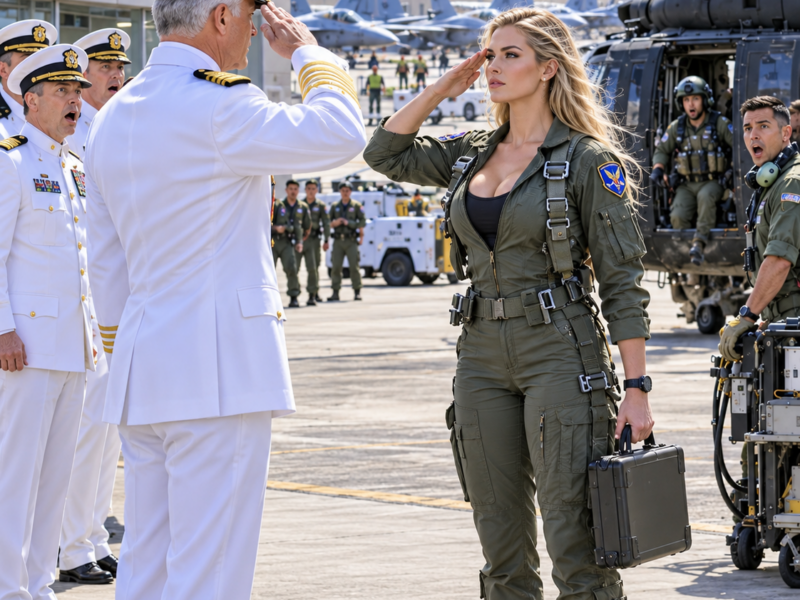
“Six years ago, I walked away from the cockpit believing I had made peace with the worst day of my life
I didn’t move for several seconds.
The words on the screen seemed to have been written directly across the inside of my skull.
Don’t let them recover the recorder without Rachel Vale.
Daniel Mercer had known I would hear that message.
He had known someone would come looking for me.
And he had known I might refuse.
“Who else has heard the transmission?” I asked.
“Only the rescue coordination team and the officers in this room,” Hale said.
“Has anyone touched the recorder?”
“Not yet. The wreckage is unstable, and the weather has prevented the recovery team from reaching it.”
“Good.”
Connor looked at the map.
“Why would he care who recovers a flight recorder?”
I turned toward him.
“Because some things recorded during a mission can be more dangerous than the crash itself.”
Hale dismissed the other officers and closed the operations-room door.
Porter stayed.
So did Maya, Connor, and Senior Chief Ruiz, who had arrived carrying a tablet and a maintenance report.
Hale placed both hands on the table.
“Rachel, I need you to tell me what happened seven years ago.”
I stared at him.
“You already know.”
“I know the official report.”
“Then you know what happened.”
“No,” he said. “I know what the report says happened.”
I looked at the screen again.
The red marker showed the location of the downed helicopter.
The storm was moving across the ridge, and the window for a rescue was closing.
“First, we get Mercer and Price out,” I said. “Then we talk about the recorder.”
Hale nodded.
“Agreed.”
I turned to Porter.
“Can you give me the current wind profile above the ridge?”
He brought up the weather data.
The forecast was ugly.
Winds were shifting rapidly along the western slope, with turbulence expected near the ridgeline. Snow was already accumulating at higher elevations, and the cloud ceiling was dropping faster than predicted.
“There’s a narrow approach from the east,” I said.
Porter studied the map.
“Too narrow for a standard rescue hover.”
“Not if the crew can establish a stable reference on the eastern shelf.”
Connor leaned over the table.
“There’s a rock formation there. I’ve seen it during mountain training.”
“Then you know the shelf is exposed to crosswind.”
“It’s still the closest usable approach.”
“Closest isn’t always safest.”
He looked at me.
“What would you do?”
I pointed to a shallow valley south of the crash site.
“Approach from here. Stay below the ridge until the last possible moment. Then use the eastern shelf as a staging point.”
Maya studied the elevation lines.
“That means the rescue crew would have to climb the final section.”
“Yes.”
“And if the injured man can’t move?”
“Then we bring him to the aircraft with a hoist, if the wind allows it.”
Porter shook his head.
“There’s no guarantee we can hold a hover there.”
“There’s no guarantee we can reach them any other way.”
Hale looked toward the weather screen.
“We have a rescue helicopter ready at the forward detachment.”
“Who is flying it?”
“Lieutenant Commander James Holloway. He’s experienced in mountain recovery.”
“Good. Keep him on the aircraft.”
I looked at Connor.
“Can you brief the crew on the approach?”
He straightened.
“Yes, ma’am.”
“Don’t give them my plan as an order. Give them the terrain, the weather, and the alternatives. Let them make their own decision.”
Connor hesitated.
“You don’t want to tell them what to do?”
“I want them to understand why we’re considering it.”
He nodded slowly.
That was the first time I saw him begin to understand the difference between confidence and judgment.
Ruiz tapped the maintenance report.
“Commander, I found something.”
He enlarged a section of the aircraft’s inspection history.
The downed helicopter had received a hydraulic system replacement eleven days earlier. The work had been signed off by a contractor team attached to the joint aviation program.
“Anything unusual?” I asked.
“The inspection record says the system passed.”
“That isn’t what I asked.”
Ruiz zoomed in on a line near the bottom.
“The forward pressure regulator was replaced, but the part number doesn’t match the approved configuration.”
Connor frowned.
“Could that cause the warning tone?”
“It could,” Ruiz said. “If the regulator failed under load, pressure could fluctuate across both circuits.”
I looked at the aircraft configuration.
“Who authorized the replacement?”
Ruiz shook his head.
“That’s the problem. The approval number belongs to a maintenance office that was closed eighteen months ago.”
Hale’s expression hardened.
“Save the record. Don’t contact the contractor yet.”
I looked at him.
“Why?”
“Because if this is connected to the recorder, I don’t want anyone knowing what we’ve found before we understand it.”
The room went quiet again.
I disliked the implication.
I disliked it even more because it sounded familiar.
Seven years earlier, I had sat in another operations room and watched people become careful with their words.
I had watched an investigation turn into a conversation about what could be proven, what should be reported, and what was best left outside the official record.
I had believed the people asking those questions were protecting the mission.
Then I learned that sometimes they were protecting themselves.
“Admiral,” I said, “what exactly did Daniel Mercer do before this flight?”
Hale didn’t answer immediately.
“He was assigned to an aviation safety review team.”
“Since when?”
“Four months ago.”
“Reviewing what?”
“An old incident involving a classified flight-data system.”
I felt the room tighten around me.
“Which incident?”
Hale met my eyes.
“Your final mission.”
For a moment, I couldn’t hear the rain.
The mission had been called Silver Passage.
A classified nighttime transport through a mountain corridor during a joint recovery operation. Our aircraft had been carrying a small technical team and equipment that were never included in the public mission summary.
I had been the aircraft commander.
Daniel had been my co-pilot.
We had received a warning about a possible obstruction in the corridor, but the information came too late to alter the planned route without exposing the aircraft to a different hazard.
I remembered the vibration.
The sudden change in hydraulic response.
Daniel’s hand gripping the collective.
And the voice on the radio telling us to continue.
We had made the landing.
The aircraft had been damaged.
A ground crew member had been seriously injured.
And the official investigation had concluded that the incident resulted from pilot deviation and poor crew coordination.
I had disputed that conclusion.
Daniel had supported me.
Then the investigation changed direction.
The technical data was classified.
The flight recorder was sealed.
And Daniel disappeared from my life.
I had resigned six months later.
“Why was Mercer reviewing Silver Passage?” I asked.
Hale rubbed his jaw.
“Because he believed the original investigation had used incomplete data.”
“Did he tell you that?”
“He contacted me three months ago.”
“And you didn’t tell me.”
“I didn’t know where you were, Rachel.”
“You knew where I was.”
He looked down.
I stepped away from the table.
“You knew I was at Cascade Point. You approved my assignment.”
“I didn’t know Mercer was going to be on this aircraft.”
“That’s not what I asked.”
Hale didn’t answer.
Porter looked uncomfortable.
Maya and Connor exchanged a glance.
I turned back to the map.
“We’re not going to solve this while two men are freezing on a mountain.”
Hale nodded.
“No. We’re not.”
The rescue crew launched twenty minutes later.
I stood behind the operations console with Connor beside me and Maya monitoring weather updates.
The helicopter appeared on the tracking display as a small symbol moving north through the valley.
Holloway’s voice came through the radio.
“Cascade, Rescue One. Approaching the southern entry point.”
Porter acknowledged.
“Rescue One, weather is deteriorating above six thousand feet. Use caution at the ridge.”
“Copy.”
I watched the symbol move.
“Tell him to stay below the western shoulder,” I said.
Porter relayed the instruction.
A moment later, Holloway answered.
“Understood. We have visual on the cloud wall.”
The helicopter continued.
At the eastern edge of the valley, the tracking symbol slowed.
“Rescue One, Cascade. Status?”
“Wind increasing. Visibility approximately one mile.”
I leaned toward the microphone.
“Holloway, this is Commander Vale.”
A pause.
“Go ahead, Commander.”
“Don’t chase the direct route. Keep the ridge between you and the strongest northwest flow until you’re level with the eastern shelf.”
“Copy.”
Connor watched the display.
“How do you know the wind is stronger on that side?”
“Because the ridge is forcing it over the western face.”
“But the forecast shows the strongest gusts farther north.”
“The forecast is an average. The mountain doesn’t care about averages.”
He nodded.
The rescue helicopter reached the eastern shelf.
For a few seconds, the tracking symbol stopped.
Then it shifted slightly east.
“Holloway?” I said.
His reply came through with static.
“Getting turbulence. We have the site in sight.”
“Can you see the aircraft?”
“Affirmative. Wreckage is below the shelf, about two hundred feet down.”
I closed my eyes briefly.
“Crew?”
“One standing beside the fuselage. The other appears to be inside.”
“Any movement?”
“Standing crewman is waving.”
I looked at the weather.
“Don’t commit to a hover yet.”
Holloway’s voice tightened.
“Understood.”
The helicopter moved around the shelf.
The tracking symbol drifted toward the ridge.
Then the radio filled with a sharp warning tone.
“Rescue One, we’re getting a hydraulic caution.”
Ruiz swore under his breath.
I stared at the screen.
“What system?”
“Stand by,” Holloway replied.
The tracking symbol began to move away from the shelf.
“Rescue One, confirm your status.”
“Pressure fluctuation. Controls remain responsive.”
Ruiz leaned closer to his console.
“Could be the same regulator issue.”
I felt cold spread through my chest.
“Tell him to abort the approach.”
Porter relayed the instruction.
Holloway responded immediately.
“Aborting. Returning south.”
The symbol began moving away from the ridge.
Nobody spoke until the helicopter reached the valley.
The rescue had failed.
But the crew was safe.
I turned to Hale.
“That aircraft needs a full inspection before anyone flies it again.”
He nodded.
“Agreed.”
Connor looked at the weather display.
“We’re running out of time.”
“Yes.”
“Could we send another aircraft?”
“Not with the same configuration.”
Ruiz was already checking the forward detachment’s maintenance records.
“There’s another helicopter available,” he said. “Different maintenance batch. No regulator replacement.”
I looked at the crew information.
“Who is qualified?”
“Commander Porter, Holloway, and Lieutenant Chen.”
Maya straightened.
“I can fly as co-pilot.”
Porter studied the weather.
“Not in these conditions.”
“I’ve completed the mountain rescue qualification.”
“You have, but you haven’t flown this ridge in a storm.”
“I can still help.”
I looked at her.
“She’s right about her qualification. But she’s also right about the conditions.”
Maya’s jaw tightened.
“Then what do you recommend?”
“Send Porter and Holloway. Give them a third crew member who knows the terrain.”
Connor looked up.
“I do.”
Porter turned toward him.
“You’ve flown the route?”
“Six times in training.”
“Not in weather like this.”
“No, sir.”
I studied him.
“Can you tell the difference between a ridge rotor and a sudden loss of control authority?”
He paused.
“I can tell you what the instruments show.”
“That isn’t what I asked.”
He looked at the display.
Then he looked at me.
“I’d need to recognize what the aircraft is doing before the warning system catches up.”
“Good answer.”
Hale folded his arms.
“Rachel, are you proposing to fly?”
“No.”
The word came out before anyone could ask.
I was not ready.
Not yet.
But I could still help them make a decision.
“Send Porter and Holloway. Have Connor join as a terrain observer if Porter approves. Maya stays here and monitors the weather.”
Porter considered it.
Then he nodded.
“Agreed.”
The second helicopter launched forty minutes later.
This time, the approach was slower.
The crew used the southern valley, stayed below the ridge, and waited for a brief break in the cloud before moving toward the eastern shelf.
The wind was still dangerous.
But the aircraft’s configuration was sound, and the crew knew when to hold and when to move.
Holloway reported visual contact.
Then he reported that Daniel was conscious.
“Chief Mercer is alert. He has a lower-leg injury and possible internal trauma.”
“What about Price?”
“Lieutenant Price is trapped in the cabin. He’s responding to voice.”
I gripped the edge of the console.
“Tell them not to move him until they can assess the structure.”
Porter relayed the instruction.
The next twenty minutes seemed longer than the previous six years.
A medic reached Daniel first.
Then the crew began preparing the hoist.
The aircraft held position.
The wind shifted.
For one terrible moment, the tracking symbol moved sideways.
Then it stabilized.
“First patient secured,” Holloway called.
I exhaled.
“Who?”
“Mercer.”
I closed my eyes.
“Continue for Price.”
Another stretch of static.
Then:
“Second patient secured. Both aboard.”
No one cheered.
Not immediately.
We watched the helicopter turn south and disappear into the cloud.
Only when Holloway confirmed they were clear of the ridge did the room begin to breathe again.
Daniel Mercer was alive.
Aaron Price was alive.
And whatever waited inside that second recorder had not been lost to the mountain.
When the rescue helicopter landed, I was waiting on the apron.
The medics brought Daniel out first.
He was strapped to a stretcher, his face pale beneath a streak of dried blood. His left leg was immobilized, and an oxygen mask covered his mouth.
But his eyes were open.
He saw me.
For a moment, neither of us moved.
Then he lifted one hand.
I stepped closer.
“Hello, Daniel.”
His eyes narrowed slightly, as if he were checking that I was real.
“You came.”
“I said I would.”
He tried to smile.
“You didn’t say that.”
“No. I didn’t.”
The medic looked between us.
“Commander, we need to move him.”
I stepped back.
“Of course.”
Daniel’s hand dropped to the stretcher.
As they wheeled him toward the medical building, he turned his head.
“Rachel.”
I leaned down.
“I’m here.”
“Don’t let them take it.”
“I won’t.”
He closed his eyes.
The medical team took him inside.
Aaron Price followed in a second ambulance.
His injuries were less severe, though he had a concussion and a broken wrist. He was awake and able to answer questions.
I watched both ambulances disappear through the medical building doors.
Then I turned to Hale.
“Now tell me what happened seven years ago.”
He nodded toward a quiet conference room.
Inside, he placed a sealed document case on the table.
“The recorder is in this case.”
I didn’t touch it.
“Who recovered it?”
“The rescue crew secured it under the emergency evidence procedure. It has not been opened.”
“Who authorized the procedure?”
“I did.”
“Who else knows?”
“The commanding officer, the rescue team, and the technical custodian.”
“Good.”
Hale opened the case.
Inside was a compact black data unit, scratched along one edge and covered in a thin layer of dried mud.
It looked older than the helicopter that had carried it.
I recognized the casing.
I had seen one like it in the technical compartment during Silver Passage.
“What is that?”
“An auxiliary mission recorder,” Hale said. “It was installed temporarily during the operation.”
“Why wasn’t it listed on the aircraft inventory?”
“Because the installation was part of a restricted test.”
I looked at him.
“Whose test?”
“An experimental flight-data relay system. It was designed to transmit selected aircraft parameters to a ground station.”
“Selected by whom?”
Hale didn’t answer.
I stared at the recorder.
“Daniel found this while reviewing the old mission?”
“He found a discrepancy in the original report. The official recorder showed a hydraulic failure, but the maintenance data didn’t support it.”
“And this device?”
“It recorded the relay instructions and the ground communications.”
I felt the old anger return.
“Then it recorded the order to continue.”
Hale nodded.
“Yes.”
I looked up.
“Who gave it?”
“Colonel Peter Sloane.”
I remembered the voice.
Not the words.
The voice.
A calm instruction delivered over a secure channel while Daniel and I were trying to stabilize an aircraft with failing hydraulic pressure.
Continue the approach.
The route is clear.
The technical team cannot be delayed.
I had obeyed.
Daniel had questioned it.
Then the aircraft had taken damage during landing, and a ground crew member had been injured.
The investigation concluded that I had continued despite an unsafe aircraft condition.
It said nothing about the order.
It said nothing about the relay system.
And it said nothing about the fact that the system had transmitted a false maintenance status to the operations center.
“Was Sloane aware of the hydraulic fault?” I asked.
Hale looked at the floor.
“He had received the warning.”
“And he ordered us to continue.”
“Yes.”
“Why?”
“Because the technical team was carrying equipment that was due to be delivered before a scheduled test window. If the mission was delayed, the program would have lost its authorization.”
I laughed once.
It wasn’t a pleasant sound.
“So he risked a crew to protect a schedule.”
“That appears to be what happened.”
“Appears?”
“We need to verify the recording.”
I nodded toward the device.
“Then let’s hear it.”
The technical custodian arrived with a secure playback unit.
He checked the case seal, documented the recorder’s condition, and connected it without removing the original storage module.
A waveform appeared on the monitor.
The first recording was mostly routine.
Engine checks.
Weather reports.
Crew coordination.
Daniel’s voice came through clearly.
“Hydraulic response is sluggish. I want to hold short.”
Then my voice.
“Pressure is fluctuating. Check the secondary circuit.”
A pause.
Then the ground station.
“Aircraft Two, continue. The route is clear.”
Daniel answered.
“Ground, we have a hydraulic caution.”
The reply came quickly.
“Maintenance status remains green. Continue as briefed.”
I felt my hands go cold.
Daniel’s voice became sharper.
“Who verified that status?”
There was no answer.
Then the ground station spoke again.
“Aircraft Two, comply with the mission directive.”
I remembered looking at Daniel.
I remembered the way he had shaken his head.
I remembered choosing to continue.
The recording moved forward.
A warning tone sounded.
Then another voice entered the channel.
“Abort the approach. Repeat, abort the approach.”
That voice belonged to a flight safety officer.
It had come too late.
The recorder captured the final seconds of the landing, the impact, and the emergency response.
Then it captured a conversation that had never appeared in the official report.
“Who cleared the maintenance status?” someone asked.
A second voice replied.
“Colonel Sloane approved the relay.”
“Was the fault known?”
A pause.
Then:
“He was told.”
The recording ended.
Nobody spoke.
Hale looked at me.
“That’s why Mercer wanted the recorder recovered.”
I stared at the blank monitor.
“Why didn’t he tell me?”
“He was trying to verify the data before bringing it to you.”
“He had seven years.”
“He had four months. He only found the auxiliary recorder’s existence recently.”
I shook my head.
“Who knew it was still out there?”
“Apparently, Sloane.”
The name settled into the room.
“Where is he now?”
“Retired. He left active service two years ago.”
“Does he know Daniel recovered this device?”
“We don’t know.”
I looked at the recorder.
“Then he will.”
Hale closed the case.
“Rachel, the recording is enough to reopen the investigation. But I need you to understand something.”
I turned toward him.
“You’re going to be asked about your decision to continue.”
“I know.”
“You may be asked why you didn’t challenge the order more forcefully.”
“I know.”
“And the original report may be reviewed in public.”
I held his gaze.
“Good.”
He looked surprised.
“You’re prepared for that?”
“I’ve spent six years carrying the blame for a decision I made without knowing the full information. If the truth is going to be examined, then my part should be examined too.”
Hale nodded.
“That may be harder than you think.”
“I’m not asking for it to be easy.”
The next morning, I visited Daniel in the medical ward.
He was sitting upright in bed, his leg elevated, and a tablet resting across his lap.
Aaron Price was in the room next door.
Daniel looked up when I entered.
“You heard it.”
“Yes.”
He set the tablet aside.
“I wanted to bring it to you myself.”
“You could have called.”
“I did.”
I stopped.
“What?”
“Three times. I called your old number. I sent a letter to your last address.”
“I never received anything.”
“I know that now.”
He looked down at his hands.
“When the review began, I found out the original report had been changed after you left the service. I thought you knew.”
“I didn’t.”
“I thought you had decided to stay away.”
“I thought you had.”
For a while, neither of us spoke.
The silence between us had lasted six years.
It was strange to discover that it could still hurt.
“Why did you stay with the review?” I asked.
“Because I knew what happened to you. I knew you were blamed for something that wasn’t entirely your fault.”
“Not entirely?”
He gave me a tired smile.
“You still continued the approach.”
“Yes.”
“And I still agreed to follow you.”
I looked at him.
“I was the aircraft commander.”
“And I was your co-pilot. I could have refused.”
“You did question the order.”
“Not enough.”
I sat in the chair beside his bed.
“We both made decisions.”
“Yes.”
“But the people who gave us the information knew more than we did.”
He nodded.
“That’s what I wanted to prove.”
I looked at his injured leg.
“You nearly died bringing that recorder out.”
“Not quite.”
“Daniel.”
He grew serious.
“The aircraft went down because the hydraulic system failed during the turn. We lost control authority before impact. I managed to get the emergency system engaged, but the pressure never stabilized.”
“What happened after?”
“Aaron got me clear of the cabin. Then we found the recorder.”
“Why take it?”
“Because the recorder was mounted in the equipment bay. I recognized the casing from Silver Passage.”
“You knew what it was?”
“I knew what it might contain.”
He shifted carefully.
“We were on a medical evacuation mission when the aircraft began to fail. But the maintenance problem didn’t make sense. The regulator was not supposed to be in that configuration.”
“Ruiz found the wrong part number.”
Daniel nodded.
“The same contractor had been involved in the old relay program.”
I leaned forward.
“So the two incidents were connected.”
“Not necessarily the same person. But the same system of shortcuts.”
“Did you know the aircraft was unsafe?”
“No. I only suspected it after the first warning.”
I looked at him.
“Why did you tell them not to recover the recorder without me?”
“Because your voice is on it.”
He waited until I met his eyes.
“You need to hear what happened. And you need to decide what to do with it.”
I looked toward the window.
Rain had stopped.
Beyond the glass, the mountains were hidden beneath a low blanket of cloud.
“I thought I was finished with flying,” I said.
Daniel followed my gaze.
“Are you?”
“I don’t know.”
“You don’t have to decide today.”
I turned back to him.
“I don’t know if I can get into a cockpit again.”
He didn’t try to reassure me.
That was one of the things I had always trusted about him.
He never confused comfort with honesty.
“Then don’t,” he said. “But don’t let Sloane make that decision for you.”
The formal review began three days later.
Rear Admiral Hale requested an independent investigation into both the Silver Passage incident and the recent helicopter failure.
The auxiliary recorder was secured, copied under forensic supervision, and entered into evidence.
Maintenance records from both aircraft were compared.
The contractor’s authorization trail was examined.
The original investigation file was reopened.
I was interviewed for nearly nine hours.
I explained the flight, the warning, the order to continue, and the moment I decided to follow it.
I did not claim I had been helpless.
I did not pretend I had made every decision correctly.
I told them what I knew, what I had been told, and what I had not known.
At one point, an investigator asked whether I believed I should have refused the mission directive.
I considered the question.
“Knowing what I know now, yes.”
“And at the time?”
“At the time, I believed the ground station had verified the aircraft’s maintenance status. I was wrong.”
“Would you make the same decision again?”
“No.”
The investigator studied me.
“Why?”
“Because an order does not make a failing aircraft safe. And a mission deadline does not make a warning disappear.”
The review established that Colonel Sloane had received an earlier maintenance warning and authorized the relay system to report a green status despite unresolved concerns.
He had also instructed the operations center to keep the mission on schedule.
The technical data had been altered before the official investigation received it.
The original report had relied on incomplete information.
It had then treated my decision to continue as the primary cause of the incident, while leaving out the instruction that had shaped that decision.
Sloane was contacted and ordered to provide a statement.
He denied deliberately endangering the crew.
He claimed the system had been intended to prevent unnecessary mission delays and that he believed the aircraft remained within safe operating limits.
The recording contradicted him.
The investigation did not erase my responsibility.
I had continued after receiving a warning.
I had been the aircraft commander.
But the official record was corrected to acknowledge that I had received false maintenance information and an unauthorized instruction from the ground station.
The finding that I alone had caused the incident was withdrawn.
The maintenance program was suspended pending review.
The contractor’s access was revoked.
And the people responsible for approving the relay system were referred for further administrative and legal action.
When Hale told me the findings, I felt no triumph.
Only a quiet exhaustion.
Six years of believing I had destroyed my own career had ended with a document stating that the truth had been hidden from me.
I had wanted an apology.
What I received was a correction.
It wasn’t the same thing.
But it was something.
Daniel was discharged from the hospital two weeks later.
Aaron recovered more quickly and returned to limited duty after his concussion symptoms cleared.
Before leaving Cascade Point, Aaron came to my office.
He stood at attention, his left wrist still in a brace.
“Commander Vale.”
“Lieutenant Price.”
“I wanted to thank you.”
“For what?”
“For getting us out.”
“You and Daniel did the difficult part. You survived the crash.”
He shook his head.
“Daniel said you were the reason we were found.”
I glanced at the folder on my desk.
“I gave the rescue crew information. They flew the aircraft.”
Aaron smiled.
“He also said you were the only person who could make a room full of pilots stop talking.”
I laughed.
“He exaggerated.”
“Maybe.”
He hesitated.
“Can I ask you something?”
“Go ahead.”
“Why did you stop flying?”
I looked at him for a moment.
“Because I believed the investigation’s version of what happened. And because I didn’t know how to sit in a cockpit without hearing that warning again.”
Aaron nodded.
“I understand.”
“You do?”
He looked down at his wrist.
“When our helicopter started failing, I thought we were going to die. Daniel kept telling me to stay focused. He said the aircraft was giving us information, not a verdict.”
I smiled faintly.
“That sounds like Daniel.”
“He told me to remember the difference.”
Aaron offered his hand.
“I think I understand it now.”
I shook it.
After he left, I sat alone for a long time.
That evening, Hale came to my office.
He placed a thin folder on the desk.
“Your flight status review.”
I looked at it but didn’t open it.
“What does it say?”
“Your qualifications remain valid for evaluation, subject to the required medical and currency checks.”
“I’m six years out of the cockpit.”
“I know.”
“I’m not asking for a favor.”
“Neither am I offering one.”
He sat across from me.
“The Navy needs experienced people who understand what happens when a crew stops trusting its own judgment. You have that experience.”
“I also have a record.”
“Your record has been corrected.”
“Not forgotten.”
“No.”
He leaned back.
“Rachel, I’m not asking you to return to operational flying. I’m asking whether you’d consider an evaluation flight.”
I looked at the folder.
Six years earlier, I had placed my wings in a drawer and convinced myself I would never need them again.
Now they seemed to be waiting.
“I’ll consider it,” I said.
Hale stood.
“That’s all I wanted.”
At the door, he stopped.
“One more thing.”
“What?”
“Connor Tate asked whether he could sit in on your next simulator session.”
I raised an eyebrow.
“Why?”
“He said he has a few things to learn.”
I couldn’t help smiling.
“Tell him to bring a notebook.”
The evaluation began the following week.
I expected the cockpit to feel unfamiliar.
Instead, the first thing I noticed was the smell.
Warm electronics.
Leather.
A faint trace of hydraulic fluid.
The same smell I remembered from every aircraft I had ever flown.
I climbed into the left seat and adjusted the harness.
My hands were steady.
That surprised me.
The instructor ran through the checks.
I answered each question.
We started the engines.
The rotors began turning.
For a moment, I was twenty feet above the ground and seven years in the past.
Then the aircraft lifted.
The sensation was familiar.
Not comfortable.
Not frightening.
Familiar.
We completed the first set of maneuvers without difficulty.
Then the instructor introduced a simulated hydraulic fault.
A warning appeared.
The familiar tone sounded.
My shoulders tightened.
I kept my hands on the controls.
I read the instruments.
I identified the affected system.
I called the fault.
Then I followed the emergency procedure.
The instructor watched me.
“Your response?”
“Stable.”
“Decision?”
“Return to base.”
“Reason?”
“System redundancy remains available, but the fault is not fully isolated. No reason to continue the training profile.”
He nodded.
“Agreed.”
The simulator ended.
I removed my helmet.
My hands were shaking.
Not because I had failed.
Because I had stayed.
Outside, Connor was waiting.
He looked at me with a seriousness I hadn’t seen on our first day.
“How did it go?”
“Fine.”
“Just fine?”
“Would you prefer a dramatic report?”
He smiled.
“No, ma’am.”
I picked up my helmet.
“You were right about one thing, Lieutenant.”
He looked surprised.
“What was that?”
“I hadn’t flown in six years.”
He lowered his eyes.
“I was wrong about what that meant.”
I nodded.
“Yes.”
He hesitated.
“I owe you an apology.”
“You do.”
“I judged you by an empty file.”
“You judged me by what you couldn’t see.”
He nodded.
“I won’t make that mistake again.”
“Good. Because the next time you do, it might be somebody’s life.”
He accepted that without argument.
Then he looked toward the hangar.
“Are you coming back?”
I followed his gaze.
“I haven’t decided.”
A week later, I received the final evaluation report.
I was cleared to resume flight duties under a gradual currency program.
The first assignment was not a rescue mission or a difficult mountain route.
It was a routine training flight with a senior instructor.
I accepted.
On the morning of the flight, I arrived before sunrise.
The airfield was quiet.
The western sky was pale, and the mountain peaks were still hidden behind clouds.
Daniel was waiting beside the operations building, leaning on a cane.
His leg had healed enough for him to walk short distances, though the doctors had warned him that recovery would take months.
He held out a small object.
My old flight wings.
I stared at them.
“I thought I left those at home.”
“You did.”
“Then how did you get them?”
“I called your sister.”
I took the wings from his hand.
They were slightly tarnished, but the pin was intact.
“Why?”
“Because you should decide what happens to them.”
I turned them over in my palm.
For years, I had thought of those wings as a reminder of what I had lost.
Now they felt like something else.
A reminder of what I had chosen to do.
“I don’t know if I’m the same pilot,” I said.
Daniel smiled.
“You’re not.”
I looked at him.
“That’s supposed to be reassuring?”
“You know more now.”
I fastened the wings to my flight jacket.
“That’s true.”
He leaned closer.
“Rachel?”
“Yes?”
“I never blamed you for what happened on Silver Passage.”
I swallowed.
“You should have.”
“I blamed the people who gave us false information. I blamed myself for not pushing harder. But I never blamed you for trying to bring us home.”
I looked down at the wings.
“I wish I’d known that.”
“So do I.”
For a moment, the years between us seemed smaller.
Not gone.
Not repaired.
But no longer impossible to cross.
The instructor called my name from the hangar.
I turned toward the aircraft.
Daniel stepped aside.
“Go fly.”
I looked back at him.
“Don’t go anywhere.”
“I’ll be here.”
I climbed into the cockpit.
The instructor settled into the right seat and began the preflight checks.
I fastened my harness.
Adjusted my helmet.
Placed my hands on the controls.
This time, when the warning system completed its self-test, I didn’t hear the past.
I heard a machine checking itself.
And I knew the difference.
The aircraft lifted into the morning air.
Cascade Point grew smaller beneath us.
The Pacific stretched beyond the coastline, gray and endless.
Ahead, the mountains waited beneath a line of cloud.
I didn’t need to prove anything to them.
I didn’t need to prove anything to the people watching from the flight line.
I only needed to make good decisions, one at a time.
When we returned, Connor was standing beside Maya near the hangar.
He raised a hand.
I returned the gesture.
Hale watched from the operations doorway.
He didn’t salute this time.
He simply nodded.
That was enough.
I climbed out and handed my helmet to the crew chief.
For the first time in six years, I felt no need to hide it in a bag.
Later that afternoon, I walked into the ready room.
The temporary badge was gone.
A new identification card sat in my pocket.
My flight wings were back on my jacket.
Connor looked up from his notebook.
“Commander Vale?”
“Lieutenant?”
“Can I ask you something?”
“Depends.”
“If the instruments and what you see outside disagree, which one do you trust?”
I pulled out a chair.
“Neither automatically.”
He frowned.
“Then what?”
“You figure out why they disagree. You cross-check. You communicate. You make the safest decision with the information you have.”
He wrote it down.
“And if you don’t have enough information?”
“Then you don’t pretend you do.”
He looked at the page.
I watched him think.
That was how experience was supposed to be passed on.
Not as a story about someone who had never made a mistake.
As a reminder that judgment was built from the moments when a person had to admit what they didn’t know.
Before I left, I stopped beside the main operations display.
The old mission file had been moved to the restricted archive.
The new safety directive was already posted.
No mission schedule could override an unresolved aircraft warning without independent technical verification.
It was a small change.
A sentence on a screen.
But it mattered.
Daniel had recovered the recorder.
Hale had reopened the investigation.
Aaron had survived.
And I had returned to the cockpit without pretending the past had never happened.
I thought about the first morning at Cascade Point, when Connor had looked at my temporary badge and asked whether I needed directions to the administrative building.
I had almost smiled then.
Now I understood something I hadn’t known how to explain to him.
A badge could tell people where you belonged.
A uniform could tell them what you had been trained to do.
A flight record could tell them how many hours you had logged.
None of those things could tell them what you had learned when everything went wrong.
I had spent six years believing that one bad decision had taken my wings away.
The truth was more complicated.
I had made a decision.
Other people had hidden information.
An investigation had turned uncertainty into blame.
And I had allowed that version of events to become the only story I believed about myself.
That was over now.
I wasn’t the pilot who had left Cascade Point six years earlier.
I was the pilot who had come back knowing that courage was not the absence of fear, and experience was not the absence of mistakes.
It was the willingness to face both, and still make the next decision carefully.
Outside, the rotors of another helicopter began to turn.
I looked through the window.
Connor and Maya were heading toward the flight line.
This time, nobody questioned whether they belonged there.
And when the aircraft lifted into the rain-washed sky, I found myself listening—not for the warning that had once ended my career, but for the voices of the people bringing each other home.
The End.









