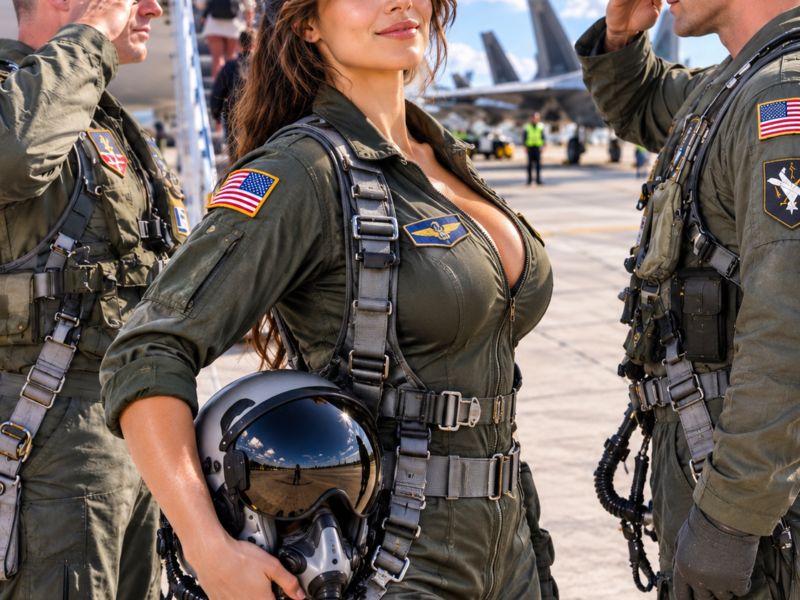
Nobody noticed the quiet woman sitting in seat 12F. Not the nervous businessman beside her.
Kate stared at the hydraulic warning.
The pressure was dropping faster than she had expected.
She checked the backup system again.
The numbers continued falling.
For a moment, the cockpit seemed to grow smaller around her.
The engines were still running.
The aircraft was still airborne.
And 279 people were still alive behind her.
But the systems that allowed her to control the Boeing 777 were beginning to fail one by one.
She reached for the emergency checklist and turned it over.
Her fingers moved quickly across the paper.
She wrote another message.
HOW FAR TO RUNWAY?
Then she held it against the cockpit window.
Daniel Reyes read the words.
He immediately contacted the operations center.
“Raptor 11 to Command. Major Ellison requests distance to nearest suitable runway.”
The response came seconds later.
“Nearest suitable airport is approximately 80 nautical miles northeast. Weather conditions are deteriorating. Heavy snow, low visibility, strong crosswinds.”
Reyes looked at the massive airliner beside him.
“Can she make it?”
The controller hesitated.
“We’re evaluating the situation.”
Reyes knew what that meant.
There was no guarantee.
He looked at the Boeing again.
Kate was still working through the cockpit controls, trying to preserve whatever hydraulic pressure remained.
He keyed his radio.
“Command, I recommend we guide her to the nearest available runway. Waiting for better weather may not be an option.”
“Agreed. Coordinate with the airport. Emergency services are being dispatched.”
Reyes turned toward his wingman.
“Raptor 12, stay on the opposite side. We’re leading this aircraft down.”
“Understood.”
For the first time since takeoff, the two fighter pilots were no longer thinking about interception procedures.
They were thinking about how to bring a damaged passenger aircraft home.
Inside the Boeing, Kate was calculating her options.
She had never flown a commercial aircraft through a complete hydraulic failure.
Her experience with fighter aircraft had taught her how to manage damaged systems, but a Boeing 777 was an entirely different machine.
It was heavier.
Slower to respond.
And carrying hundreds of people who had no idea how close they were to disaster.
She checked the altitude.
Then the engine readings.
Then the remaining flight control indications.
Her mind worked through the possibilities.
She knew that the aircraft had several independent hydraulic systems.
But the fire appeared to have damaged more than one.
If pressure disappeared entirely, she could lose the ability to command the control surfaces through their normal systems.
She looked toward the cockpit doorway.
Diane was standing there.
Her expression was tense.
“Major?”
Kate turned.
“What’s happening in the cabin?”
“People are frightened. Some are crying. A few are praying.”
“Are the crew members keeping everyone seated?”
“Yes.”
“Good. Keep them that way.”
Diane looked toward the instrument panel.
“Can you land this plane?”
Kate paused.
She could have given Diane a reassuring answer.
She could have said yes.
Instead, she looked directly at her.
“I’m going to do everything I can.”
Diane nodded.
It wasn’t the answer she wanted.
But it was the answer she trusted.
“Is there anything I can do?”
“Get the flight attendants to check that everyone is secured. Tell them to prepare for a hard landing. If we make it down, I want the evacuation procedure ready immediately.”
Diane swallowed.
“Understood.”
She disappeared into the cabin.
Kate returned to the controls.
She had no time to waste.
The military operations center had selected an airport near the Alaskan coast.
It was an international airport with a long runway, emergency response teams, and facilities capable of handling a widebody aircraft.
But the weather was deteriorating rapidly.
The airport’s latest report showed heavy snow, freezing conditions, and extremely poor visibility.
The runway was covered with ice.
The ceiling was dangerously low.
Under normal circumstances, a commercial airliner would not attempt an approach without reliable instrument guidance.
Flight 622 had almost none of the systems normally used to make that approach.
Reyes received the airport’s latest conditions.
He looked at the airliner.
Then he looked at the clouds ahead.
“Command, I can lead her to the runway.”
“Raptor 11, explain.”
“I’ll position ahead of the 777 and provide visual guidance as long as conditions permit.”
“Can your aircraft maintain position in that weather?”
“Affirmative.”
“Proceed.”
Reyes took a breath.
“Major Ellison will need to follow my lights.”
The controller acknowledged.
“Understood. We will notify airport emergency services.”
Reyes moved his F-22 slightly ahead of the Boeing.
Then he rocked his wings.
It was a simple signal.
Follow me.
Kate recognized it immediately.
She adjusted the aircraft’s heading.
The 777 slowly turned behind the fighter.
For a moment, she felt a small measure of relief.
Someone on the outside understood what she needed.
But the storm was waiting.
And it was getting worse.
The first wall of snow swallowed the fighters almost instantly.
Visibility collapsed.
The clouds became a solid white mass.
Reyes could barely see beyond his cockpit.
He activated the instruments and maintained the approach heading.
Behind him, Kate focused on the fighter’s lights.
They were her only reliable visual reference.
The runway instruments aboard the Boeing were unreliable.
The navigation displays continued flickering.
And the hydraulic warnings were becoming more frequent.
She knew the danger of losing visual reference.
A pilot’s inner ear could create false sensations during flight.
A turn could feel like level flight.
A descent could feel like a climb.
Without reliable instruments or a visible horizon, even experienced pilots could become disoriented.
Kate forced herself to ignore the sensations.
She watched the lights ahead.
If Reyes banked, she would follow.
If he descended, she would descend.
If he corrected his heading, she would make the corresponding adjustment.
For several minutes, the formation held together.
Then something changed.
Kate pulled gently on the control column.
Nothing happened.
She tried again.
The column felt heavier than before.
She checked the hydraulic pressure.
The final backup system was nearly empty.
Then the pressure disappeared.
The control column became rigid.
Kate pulled with both hands.
It wouldn’t move.
The aircraft began rolling slowly to the left.
She looked at the flight instruments.
The left wing was dropping.
The fighter’s lights were moving away.
“Come on,” she whispered.
She tried the controls again.
Nothing.
The Boeing was no longer responding normally.
“Command, Raptor 11. The 777 is diverging.”
Reyes moved his aircraft to maintain visual contact.
“Major Ellison appears to have lost normal flight control response.”
The controller’s voice tightened.
“Can you stabilize her?”
“Negative. I can’t control her aircraft.”
Reyes watched the Boeing slowly drift away.
Its massive wings were disappearing into the snow.
For a moment, he thought the airliner was about to roll beyond recovery.
Then he noticed something unusual.
The engines were changing thrust independently.
One engine increased power.
The other decreased.
The aircraft shuddered.
Its nose began turning.
Then, slowly, the left bank started correcting.
Reyes stared.
“She’s correcting.”
The controller responded.
“Say again?”
“She’s using asymmetric engine thrust. She’s trying to steer the aircraft through differential power.”
Inside the Boeing, Kate was doing exactly that.
She had lost normal control authority.
But the aircraft still had two working engines.
By carefully adjusting their thrust, she could create yaw and use the resulting aerodynamic forces to influence the aircraft’s direction.
It was an extremely crude technique.
It was also dangerous.
The Boeing had not been designed to make a normal approach that way.
But Kate had spent years learning to manage aircraft with damaged systems.
In fighter training, pilots sometimes practiced handling severe control problems in carefully controlled conditions.
She remembered those lessons.
She remembered the instructors.
And she remembered something one of them had once told her.
When the airplane stops doing what you want, stop fighting the airplane. Find out what it will still allow you to do.
Kate adjusted the engines again.
The aircraft slowly returned toward Reyes’s lights.
“Come on,” she whispered.
“That’s it.”
The nose aligned.
The wings began to level.
Reyes watched in disbelief.
“Command, she’s back on heading. She’s keeping the aircraft airborne.”
The operations center erupted into activity.
Nobody celebrated.
Not yet.
There was still a runway to reach.
And the landing gear hadn’t been deployed.
Kate checked the landing gear indicators.
The normal system depended on hydraulic pressure.
She had almost none left.
She reached for the alternate extension procedure.
The Boeing had an emergency mechanical backup designed to allow the landing gear to extend without relying on the primary hydraulic system.
Kate followed the checklist.
She activated the alternate system.
There was a loud mechanical vibration beneath the cockpit floor.
Then a heavy jolt ran through the aircraft.
She watched the indicator lights.
Two landing gear assemblies showed green.
The third remained dark.
Kate stared at it.
“Not now.”
She checked the checklist again.
The third gear had not fully locked into position.
Without a secure indication, landing would be extremely dangerous.
A landing with an unsecured gear assembly could cause the aircraft to collapse, skid off the runway, or break apart.
She needed to solve the problem before reaching the ground.
Her eyes moved toward the engine controls.
She had already used asymmetric thrust to help steer the aircraft.
Now she considered whether a carefully controlled change in engine power might help shift the aircraft’s movement enough to allow the stubborn gear assembly to complete its deployment.
It was risky.
But the alternatives were worse.
She adjusted the engines.
The aircraft yawed sharply.
Passengers in the cabin were thrown against their seat belts.
Some screamed.
Grant Whitfield grabbed the armrests.
He had no idea what was happening in the cockpit.
He only knew that the airplane seemed to be fighting something invisible.
Then, in the cockpit, the third landing gear indicator changed.
Red.
Then amber.
Then green.
Kate exhaled.
All three gear assemblies showed locked.
She looked toward the storm.
The runway had to be close.
Reyes moved ahead of the Boeing.
His F-22’s lights cut through the snow.
He checked the aircraft’s position.
The airport runway was just ahead.
He contacted the operations center.
“Raptor 11. We are approaching the runway. Visibility remains extremely poor.”
“Emergency vehicles are in position. Runway is cleared.”
“Understood.”
He looked at the Boeing again.
“Major Ellison, you’re lined up.”
Kate couldn’t hear him.
But she saw his fighter move toward the edge of the approach.
Then it began to peel away.
The F-22 was leaving her.
For the first time since the interception, she would be completely alone.
Reyes keyed his radio one last time.
“Good luck, Major.”
He pulled away into the storm.
Kate stared straight ahead.
The runway lights appeared through the snow.
Two rows of faint lights.
A narrow strip of concrete surrounded by darkness and ice.
She checked the airspeed.
Then the engine power.
Then the landing gear indicators.
Everything depended on the next few minutes.
She tightened her harness.
And began the final approach.
Inside the cabin, Diane moved down the aisle.
“Everyone, remain seated. Keep your seat belts fastened. Place your heads down when instructed.”
Passengers were crying.
Some were holding hands.
A little boy clutched a stuffed animal against his chest.
Grant Whitfield looked toward the front of the cabin.
He remembered the quiet woman who had been sitting beside him.
He remembered her calm voice.
Her gentle answers.
And the moment she had stood up despite the warning lights.
He had thought she was simply going to speak with the flight attendants.
Now he understood that she might be the only person capable of bringing them home.
He closed his eyes.
For the first time in his life, he prayed.
The runway rushed toward Kate.
She had no reliable normal flight controls.
The aircraft’s control column remained nearly useless.
She had to manage the approach with the systems still available, carefully adjusting engine thrust to keep the aircraft aligned.
The snow made it difficult to judge the distance.
The runway lights blurred.
The aircraft began drifting slightly to the right.
Kate corrected.
The nose moved back toward the centerline.
She checked the airspeed.
The aircraft was descending.
She adjusted the engines again.
The ground grew closer.
Then the main landing gear touched the runway.
The impact was violent.
The entire aircraft shook.
A deep metallic bang echoed through the fuselage.
Overhead panels rattled.
Passengers screamed.
Luggage shifted inside the overhead bins.
Kate kept her eyes forward.
The aircraft was down.
But it was moving too fast.
She needed to stop.
Without normal hydraulic pressure, the usual systems for controlling the landing rollout were compromised.
She applied the braking available to her and worked carefully with the engines.
The aircraft began to skid.
The runway surface was icy.
She could feel the Boeing moving sideways.
The centerline disappeared beneath the nose.
Kate corrected with the limited control she still had.
For a moment, the aircraft seemed to slide toward the edge of the runway.
Then the tires caught.
The Boeing straightened.
The speed began to decrease.
Kate kept applying the brakes.
The end of the runway was getting closer.
Too close.
She checked the remaining distance.
Then she made one final correction.
The aircraft shuddered.
The engines wound down.
And with a long, grinding groan, Flight 622 finally came to a complete stop.
There was still runway ahead.
The aircraft had made it.
For several seconds, nobody moved.
The engines continued humming.
Warning alarms sounded in the cockpit.
Kate remained in her seat, both hands resting on the controls.
She was breathing heavily.
Her shoulders hurt.
Her hands were trembling.
But the aircraft was no longer falling through the sky.
It was on the ground.
She looked toward the instrument panel.
Then she whispered the words she had been holding back for the entire flight.
“We made it.”
In the passenger cabin, Diane began crying.
She had spent more than twenty years working on commercial aircraft.
She had experienced turbulence, medical emergencies, diversions, and difficult landings.
But nothing had prepared her for what had just happened.
She picked up the cabin interphone.
“Ladies and gentlemen, we have landed safely.”
For a moment, there was silence.
Then the cabin erupted.
People cheered.
Some cried.
Others began applauding.
Grant Whitfield remained frozen in his seat.
He looked toward the front.
He wanted to thank the woman who had left seat 12F.
But he still didn’t know her full story.
He didn’t even know her rank.
All he knew was that he was alive.
And so were the other 278 people aboard.
Emergency vehicles surrounded the Boeing.
Fire crews approached the aircraft.
Medical teams stood ready.
The pilots were carefully removed from the cockpit and transported for medical treatment.
Both were unconscious for several hours, but their condition gradually improved.
The passengers were evacuated after the aircraft had been assessed by emergency personnel.
Kate was the last person to leave the flight deck.
When she stepped into the forward galley, Diane approached her.
“Major Ellison?”
Kate nodded.
Diane looked at her for several seconds.
Then she hugged her.
It wasn’t a formal military greeting.
It wasn’t an official expression of gratitude.
It was simply the embrace of someone who had watched 279 lives nearly disappear.
“Thank you,” Diane whispered.
Kate closed her eyes briefly.
“You kept the cabin under control. You helped me more than you know.”
Diane pulled away.
“I just followed your instructions.”
“And you did exactly what I needed.”
For the first time that night, Kate smiled.
Then a medical officer approached.
“Major, we need to examine you.”
“I’m fine.”
“That’s not what I asked.”
Kate looked at him.
He smiled faintly.
“Please.”
She finally agreed.
The debrief lasted deep into the night.
Investigators wanted to know exactly what had happened.
They asked about the cockpit fire.
The loss of communication.
The hydraulic failures.
The aircraft’s unexpected movements.
And the landing.
Kate answered every question as accurately as she could.
She explained which systems had remained functional and which had failed.
She described the decisions she had made when the normal controls stopped responding.
She also admitted where she had been uncertain.
“I didn’t know whether the aircraft would respond to the engine adjustments,” she explained. “I knew what the theory allowed. I didn’t know exactly how much control I would retain.”
One investigator looked up.
“So you took a chance.”
Kate shook her head.
“I made the best decision available with the information I had.”
The investigator nodded.
“And if it hadn’t worked?”
Kate looked at the table.
“Then we would have needed another option.”
She didn’t say anything more.
She was exhausted.
Her body had finally begun to feel the weight of the entire emergency.
When the debrief ended, she stepped into a quiet corridor.
Daniel Reyes was waiting.
He held two cups of coffee.
“Major Ellison.”
Kate looked at him.
“Captain Reyes.”
He offered her a cup.
“Figured you might need this.”
She accepted it.
“Thank you.”
Reyes leaned against the wall.
“I ran your approach through our simulator on the way back.”
Kate raised an eyebrow.
“And?”
He laughed once.
“Most of the pilots who tried it didn’t make it to the runway.”
“That’s why it’s a simulator.”
“I’m serious.”
“So am I.”
He studied her.
“I’ve been flying F-22s for years. I’ve trained for emergencies. I’ve been in situations where things went wrong very quickly.”
He paused.
“But I’ve never seen someone manage a passenger aircraft like that.”
Kate took a sip of coffee.
“I didn’t have many choices.”
“That’s what impressed me.”
She looked at him.
“What do you mean?”
“You never acted like you had time to panic. Every time something failed, you moved to the next problem.”
Kate gave a tired smile.
“Panic doesn’t repair an airplane.”
Reyes laughed.
“I suppose it doesn’t.”
He looked toward the windows at the end of the corridor.
“Command confirmed your identity before we got the final landing instructions. When I realized who you were, I understood why you stayed so calm.”
Kate shook her head.
“Being a fighter pilot doesn’t make you immune to fear.”
“I didn’t say it did.”
“Good.”
Reyes smiled.
“I said you knew how to work through it.”
For a moment, neither spoke.
Then he added, “When I first saw that woman in the cockpit, I thought I was looking at someone who had no business being there.”
Kate raised an eyebrow.
“And then?”
“Then I read your name.”
He paused.
“And I realized I was looking at someone I should be learning from.”
Kate looked down at her coffee.
“Tonight, I was just a passenger who happened to know what to do.”
Reyes shook his head.
“No, Major. Tonight you were the reason 279 people got another morning.”
The following morning, Kate received an unexpected visit.
A senior general entered the room where she was resting.
Reyes stood up immediately.
Kate followed.
“At ease,” the general said.
He approached her.
“Major Ellison, I wanted to personally thank you.”
“Thank you, sir.”
“Both pilots are conscious. Doctors expect a full recovery.”
Kate visibly relaxed.
“That’s good news, sir.”
“The passengers are being transported to their onward connections. Most have minor injuries or are receiving treatment for shock.”
He paused.
“Your actions prevented a tragedy.”
Kate didn’t respond.
The general studied her.
“You’re scheduled for another two hours of questioning by the safety board tomorrow. After that, you’re going to rest.”
“Yes, sir.”
“Your leave can wait.”
Kate gave a tired smile.
“I think Tokyo can survive without me for another day.”
The general laughed.
“I’m sure it can.”
He turned toward Reyes.
“Captain, good work getting that aircraft to the runway.”
“Thank you, sir.”
“Both of you did your jobs.”
Then he left.
Kate sat back down.
For the first time since the emergency began, she felt she could finally stop thinking about the next problem.
Diane found her later that evening.
Kate had changed into borrowed military fatigues.
The sleeves were too long, and the trousers didn’t fit particularly well.
But she didn’t care.
Diane stood in the doorway.
“Major?”
Kate looked up.
“Come in.”
Diane approached slowly.
“My husband keeps calling. He wants to know what happened.”
Kate nodded.
“What are you going to tell him?”
“I don’t know.”
Diane looked down at her hands.
“I’ve been doing this job for twenty years. I’ve seen emergencies. I’ve helped passengers through panic attacks. I’ve handled medical situations at thirty thousand feet.”
Her voice became softer.
“But last night, I watched two pilots become unconscious. I watched an aircraft lose control. And I watched a woman sitting in a passenger seat walk into that cockpit and take responsibility for all of us.”
She looked at Kate.
“I don’t know how to explain that to him.”
Kate considered the question.
“Tell him the airplane broke.”
Diane smiled weakly.
“And?”
“And someone did everything she could to get it back on the ground.”
Diane laughed.
“That’s all?”
“That’s the truest version.”
Diane shook her head.
“You make it sound so simple.”
“It wasn’t.”
For a moment, they sat quietly.
Then Diane said, “You never looked afraid.”
Kate looked at her.
“I was afraid.”
Diane seemed surprised.
“You were?”
“Of course.”
“Then how did you keep going?”
Kate glanced toward the window.
“Because there were 279 people behind me who needed someone to keep going.”
Diane nodded.
She finally understood.
Two days later, Kate boarded another aircraft.
This time, she was traveling as a passenger again.
The airline had arranged a replacement flight to Tokyo.
Grant Whitfield was among the passengers waiting near the gate.
He recognized her immediately.
“Excuse me.”
Kate turned.
Grant approached with a nervous smile.
“Seat 12F?”
She laughed.
“That’s me.”
He shook his head.
“I’ve been trying to find you.”
“Why?”
“Because I never got the chance to thank you.”
Kate looked uncomfortable.
“You don’t need to.”
“I do.”
He paused.
“I was terrified that night. I thought we were going to die.”
Kate listened.
“You told me turbulence was nothing to worry about. Then you walked toward the cockpit while the rest of us were screaming.”
Grant swallowed.
“I didn’t know who you were.”
“Most people didn’t.”
“I still don’t know how to describe what you did.”
Kate gave him a small smile.
“You don’t have to describe it.”
“But I want to.”
She glanced toward the boarding gate.
“Then tell your family you made it home.”
Grant nodded.
“I will.”
He hesitated.
“May I ask you something?”
“Sure.”
“Were you really confident you could land that aircraft?”
Kate thought about the question.
Then she answered honestly.
“No.”
Grant looked surprised.
“No?”
“I was confident that I could keep trying. That was different.”
He nodded slowly.
For the first time, he seemed to understand.
Kate picked up her carry-on.
“Have a safe flight, Mr. Whitfield.”
“You too, Major.”
She walked toward the gate.
And this time, someone else would be flying the plane.
The investigation into Flight 622 continued for months.
Engineers examined the electrical damage.
Investigators studied the cockpit fire and the failure of the communication systems.
They reconstructed the aircraft’s flight path and examined the data recovered from its remaining recorders.
The final report identified a chain of technical failures that had incapacitated the flight crew and severely compromised the aircraft’s systems.
Kate’s actions became a central part of the investigation.
Her decisions were examined by commercial aviation specialists and military flight instructors.
Some praised her ability to remain calm.
Others emphasized that the situation had involved extraordinary circumstances and that her actions should not be treated as a standard procedure for commercial aircraft emergencies.
Kate agreed.
She never claimed that she had discovered a perfect solution.
She had faced a damaged aircraft with limited options and made decisions under extreme pressure.
That was all.
But the military took particular interest in her experience.
Her squadron invited her to speak with younger pilots about crisis management, decision-making, and the importance of understanding an aircraft’s systems beyond normal operating conditions.
One instructor asked her what she believed had made the difference.
Kate considered the question.
“Training.”
“Anything else?”
“Preparation.”
The instructor waited.
Kate added one more thing.
“Knowing that the people depending on you don’t have another person to call.”
Several months later, Kate returned to the 335th Fighter Squadron.
She walked into the briefing room wearing her flight suit.
A group of younger pilots stood when she entered.
Their commander introduced her.
“Most of you have heard about Flight 622. Major Ellison has agreed to speak about the incident and answer your questions.”
Kate looked around the room.
She recognized some of the faces.
Young pilots who were still building their experience.
Some had never faced a serious emergency.
Others had experienced equipment failures during training.
She stood at the front.
“I want to begin by correcting something you’ve probably heard.”
The room became quiet.
“I didn’t save that aircraft because I was fearless.”
She paused.
“I was afraid. I was tired. I didn’t know whether every decision would work.”
She looked at the pilots.
“But I had trained for difficult situations. I understood the systems I had available. And I kept evaluating the problem as it changed.”
One pilot raised his hand.
“Ma’am, what was the most difficult moment?”
Kate thought about the cockpit.
The unconscious pilots.
The smoke.
The warning alarms.
The fighter jets appearing outside the window.
Then the moment when the control column had become rigid.
“Losing the controls,” she said.
“Because you thought you were going to crash?”
“Because I knew that the aircraft was still carrying people who had no idea how close we were.”
The pilot nodded.
Another asked, “Were you surprised when the F-22s saluted you?”
Kate smiled.
“A little.”
The room laughed.
“I couldn’t return the salute. My hands were busy.”
The laughter continued.
Then she became serious again.
“Those pilots were doing their jobs. They had been sent to intercept an aircraft that wasn’t responding. They didn’t know what they were going to find. When they confirmed I was friendly, their mission changed.”
She looked toward the squadron commander.
“They didn’t just escort an airplane. They helped bring 279 people home.”
The story of Flight 622 eventually reached newspapers and television networks.
Headlines described the quiet passenger who took control of a damaged airliner.
Some called her a hero.
Others focused on the two F-22 pilots who had saluted her.
But Kate avoided most interviews.
She didn’t want to become famous.
She wanted to return to flying.
When asked why she had stepped forward, she gave the same answer every time.
“Because someone had to.”
Years later, passengers from Flight 622 would still remember that night.
Some remembered the violent descent.
Some remembered the snow-covered runway.
Others remembered the moment the aircraft finally stopped.
Grant Whitfield continued telling the story at business dinners.
He always described the woman in seat 12F.
The quiet passenger who had reassured him about turbulence.
The woman who disappeared toward the cockpit when everything went wrong.
And the pilot who brought them all home.
He never became her close friend.
He never learned all the details of her military career.
But he remembered her name.
Kate Ellison.
One evening, long after the incident, Kate sat alone in her home.
Her military flight jacket hung beside the door.
On a shelf was a framed photograph of two F-22 Raptors flying beside a Boeing 777.
Daniel Reyes had sent it to her after the investigation.
Underneath the photograph was a short handwritten note.
For the pilot who reminded us what courage looks like.
Kate looked at it for a long time.
Then she smiled.
She remembered the cabin.
The frightened passengers.
Diane’s trembling hands.
Grant gripping his armrests.
The two fighter pilots appearing through the storm.
And the moment she had seen their salutes.
She had never expected to become part of a story that people would tell for years.
She had simply been a passenger on her way to Tokyo.
A woman in seat 12F.
Someone nobody noticed.
Until the moment everyone needed her.
And when that moment came, she didn’t ask who was watching.
She didn’t ask whether anyone would remember her name.
She just took the controls.
Because sometimes the person who changes everything is the one nobody notices until everything begins to fall apart.
the end.









