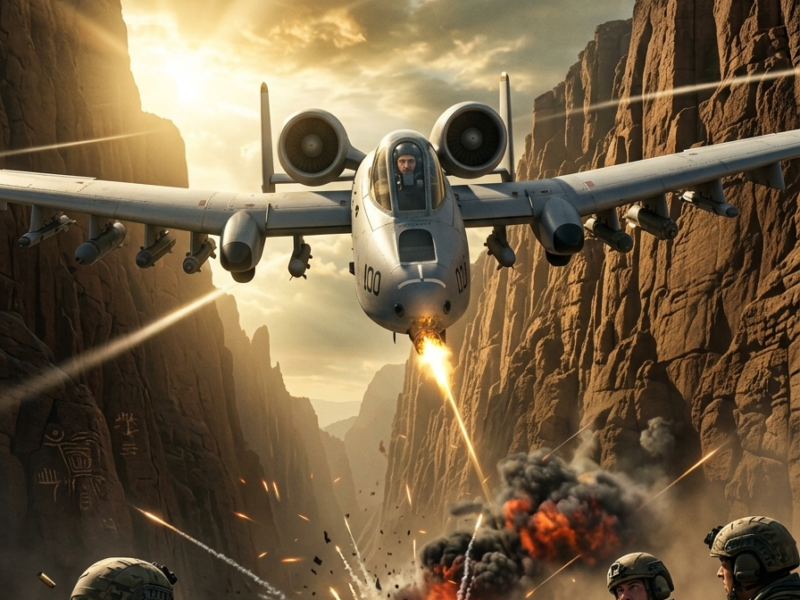
I watched 381 SEALs disappear beneath a wall of smoke over the Syrian desert while my commander ordered me to turn back, but I broke formation and flew straight into the kill zone
The tactical display screen in the dimly lit briefing room of the forward operating base flickered with a cold, pale light. Outside, the night sky over the Syrian desert was a vast expanse of pitch black, broken only by the low, distant rumble of twin-engine turbines idling on the tarmac. Inside, forty men sat in silence, their eyes fixed on the illuminated map projected against the concrete wall.
I sat in the middle row, my hands clasped tightly between my knees. My flight suit felt unusually heavy, damp with cold sweat. I had flown sixty-four combat sorties over three deployments, but something about this mission felt wrong from the moment we received the pre-flight briefing at midnight.
“Listen up,” Lieutenant Colonel Vance growled, his voice rasping from years of heavy smoking and cheap coffee. He stood at the front of the room, holding a wooden laser pointer against the wall. “At 0200 hours, a joint special operations task force comprising 381 Navy SEALs and supporting operators will execute a perimeter sweep along Sector 7. Their objective is to secure high-value intelligence from a fortified compound deep inside enemy-held territory.”
He tapped the wall sharply. The red laser dot hovered over a tight, rocky depression surrounded by steep, unforgiving ridges—a natural terrain trap known to the pilots as the Anvil.
“Your assignment is simple,” Vance continued, scanning the room with eyes that seemed completely devoid of warmth. “You will provide high-altitude air cover. Maintain an orbit at twenty-two thousand feet. You will NOT engage unless directly authorized by my station. You will NOT descend below cloud cover under any circumstances. Am I clear?”
“Sir,” I spoke up, my voice cutting through the hum of the room’s ventilation system. “Sector 7 is notorious for mobile anti-aircraft systems. If the ground team runs into trouble inside the Anvil, high-altitude support won’t be able to distinguish friendly positions from hostiles due to the heavy thermal shadow of the canyon walls. We need clearance for low-altitude close air support.”
Vance slowly turned his head toward me. His gaze locked onto mine, cold and unyielding.
“Lieutenant Mitchell,” he said softly, his voice dropping into a tone that was dangerously calm. “You are an A-10 pilot. You are here to follow flight plans, not design operational strategy. Ground command has absolute control over this engagement. You will stay at twenty-two thousand feet until told otherwise. If a situation arises, command will handle it.”
He didn’t wait for a response. He closed his leather binder with a loud, final snap. “Dismissed to your aircraft.”
Twenty minutes later, I was strapped into the cockpit of my A-10C Thunderbolt II—the legendary ‘Warthog.’ Surrounding my seat were thick titanium armor plates, designed specifically to protect the pilot from heavy ground fire. Beneath the nose sat the massive GAU-8/A Avenger, a seven-barrel 30mm Gatling gun capable of firing nearly four thousand armor-piercing rounds per minute. It was a brutal, industrial machine built for one purpose: to descend into the mud and grit of close-quarters combat and pull pinned-down soldiers out of hell.
As the heavy acrylic canopy lowered and sealed, I glanced at the side console. Nestled near the emergency throttle controls was a sealed, brown paper folder labeled CLASSIFIED: EYES ONLY – TASK FORCE 7. I had noticed it sitting there when I performed my pre-flight ladder check. I assumed ground crew had forgotten a routine flight log, but when I had opened the cover briefly, my eyes landed on a pre-typed casualty report template.
The document already contained the mission date, location, and a pre-calculated casualty estimate: Expected Friendly Loss: 350-400 Personnel.
My blood had turned to ice. Missions always had risk assessments, but never pre-written casualty declarations sitting in the cockpit of a supporting air-craft before a single boot had touched the dirt.
“Warthog One-One, you are cleared for departure,” the tower crackled through my helmet headset.
I advanced the throttles. The twin TF34 engines roared behind me, pushing the heavy aircraft down the runway and up into the endless, silent dark of the Syrian sky.
As we reached our designated altitude of twenty-two thousand feet, the desert below looked completely dead. The green glow of my night-vision goggles transformed the vast sand dunes into a silent sea of emerald shadows. For forty minutes, we orbited in wide, lazy circles.
Then, at 0242 hours, the tactical radio channel erupted into a violent wall of sound.
“Mayday! Mayday! This is Alpha Team Lead! We are ambushed! I repeat, we are in an ambush!”
The raw panic in the commander’s voice sent an immediate jolt of adrenaline through my veins. Through the cockpit window, far below the thick blanket of grey dust, tiny flashes of light began to spark across the desert floor like fireflies drowning in a dark pond.
“All teams, hold positions!” a secondary voice shouted over the static. “Heavy armor moving in from the northern ridge! We have three hundred eighty-one men trapped in the riverbed! They’ve blocked the extraction routes!”
I leaned forward, straining my eyes against the canopy glass. “Command, this is Warthog One-One,” I radioed, my thumb pressing hard against the throttle switch. “I have visual on weapon flashes in Sector 7. I am ready to initiate a gun strafe to clear the northern ridge.”
“Negative, Warthog One-One,” Vance’s voice came back instantly, completely undisturbed by the screams echoing across the ground channel. “Maintain orbital altitude. Do not engage.”
“Sir, they are pinned inside the Anvil!” I yelled into my mask. “They’re being surrounded!”
Below us, a blinding ball of orange fire erupted through the dust.
“Helo down! Transport bird is hit!” the ground commander screamed over the radio. “We just lost Extraction Lead! The LZ is destroyed! We have three hundred eighty-one trapped beneath the smoke! They’re closing in from all sides!”
I stared at the rising column of black smoke. The official casualty report sitting on my side console flashed through my mind like a burning flare. They hadn’t sent those men down there to complete a mission. They had sent them down there to be slaughtered—and we were being ordered to watch it happen from the safety of the clouds.
The radio was absolute chaos.
“Three hundred eighty-one trapped!”
I looked at the coordinates glowing bright green on my digital multi-function display. The red icons indicating enemy forces were multiplying rapidly, creeping down the granite cliffs like a tightening noose around the single, condensed cluster of blue friendlies.
Our mission was supposed to be simple. Cover the extraction, protect the heavy transport helicopters, and return to base before first light. But the plan had been broken long before we took off.
A second explosion ripped through the darkness below. Another transport helicopter, attempting to land blindly through the smoke, caught a heavy rocket-propelled grenade in its tail rotor. The aircraft spun out of control, slamming into the rocky ridge and bursting into a massive wall of fire that illuminated the canyon walls in vivid detail.
“All aircraft, abort mission immediately,” Lieutenant Colonel Vance’s voice cut through the static, cold, mechanical, and entirely unbothered. “I repeat, all air assets fall back to Grid Delta-Nine. Ground forces are deemed unrecoverable. Do not risk air assets.”
I stared at the thick blanket of smoke pouring out of the valley. My breath hitched in my throat.
“Sir,” I said, my voice shaking with a mix of fury and disbelief. “They’re still down there. I can see their infrared strobes. They’re still fighting.”
“We know, Lieutenant,” Vance replied without a second of hesitation. “You have your orders. Fall back to Delta-Nine.”
“Then I’m going back,” I snapped.
“Negative! Warthog One-One, you are ordered to return to orbit! That is a direct lawful order!”
I looked down at the control stick in my right hand. For eight years in the Air Force, I had been taught that discipline was the foundation of everything we did. I had been told there were rules for a reason, that the chain of command saw the full picture while individual pilots only saw a fraction of the sky.
That night, looking down into a burning canyon where nearly four hundred American sailors were being systematically executed, I learned that some rules were written by people sitting in air-conditioned command tents who would never have to hear dying men beg for help over a crackling headset.
“Warthog One-One,” Vance screamed into the radio, his composure finally snapping. “If you drop below cloud cover, I will personally see you court-martialed and imprisoned at Leavenworth for the rest of your life! Acknowledge!”
I didn’t answer him. I reached over to the radio control panel, grabbed the master volume knob, and twisted it hard to the left until the commander’s voice vanished into absolute silence.
I gripped the flight stick with both hands, slammed the throttles into full forward power, and pushed the nose of the heavy A-10 sharply downward.
The heavy titanium nose dropped into the clouds. The grey fog enveloped the canopy for three long, terrifying seconds. The aircraft buffeted violently as atmospheric turbulence slammed against the wide straight wings. My instruments screamed warnings as my airspeed rapidly increased. SPEED BRAKE! TERRAIN AHEAD! PULL UP!
I overrode the warnings, bursting out from the bottom of the cloud deck at less than fifteen hundred feet above the jagged terrain.
The desert rushed toward me with horrifying speed.
The moment my aircraft broke through the cloud ceiling, the night sky lit up with deadly intent. Tracer fire climbed from the valley floor like a blinding storm of red rain. Heavy 23mm anti-aircraft cannons mounted on enemy trucks rattled away, sending explosive shells cracking past my cockpit canopy.
I dropped lower, skimming the contours of the desert hills at three hundred knots.
“Warning! Missile Launch!” the synthetic cockpit voice chimed.
A shoulder-fired surface-to-air missile erupted from a ridge three miles ahead, its bright white tail of smoke curving violently toward my nose. I kicked the right rudder pedal, dumping a shower of burning magnesium flares from the tail pylons. The missile bit on the decoy flares, detonating fifty yards off my left wingtip with a thunderous CRACK that shook the entire twenty-ton aircraft like a ragdoll.
Warning lights flooded the main panel with amber and red warnings. Hyd-2 pressure dropped slightly, but the sturdy flight controls held firm.
I leveled the aircraft out at eight hundred feet, peering through the green haze of my night-vision goggles.
And then I saw them.
In the center of the dry riverbed, completely surrounded by burning metal and steep granite cliffs, were hundreds of tiny dark figures. The 381 SEALs had pulled back into a tight, circular defensive perimeter around a cluster of wounded men. They were crouched behind rocks, overturned supply crates, and the burning wreckage of the first helicopter, firing their rifles in disciplined, desperate bursts against a overwhelming horde of enemy fighters closing in from the northern ridge.
They were vastly outnumbered, low on ammunition, and completely out of time. But they were still fighting.
I lined up the digital reticle on my HUD directly over the enemy positions crawling down the northern slope. My finger wrapped around the dual-stage trigger of the GAU-8 Avenger.
“Warthog One-One,” I muttered to myself, aligning the crosshairs. “Engaging.”
I squeezed the trigger all the way down.
The nose of the A-10 vibrated with tremendous force as the massive 30mm Gatling gun accelerated to its full firing speed of seventy rounds per second.
The sound inside the cockpit wasn’t the sound of gunfire; it was a deep, guttural, deafening roar that sounded like the sky itself was being violently torn in half. The heavy recoil of the gun was so intense it actually slowed the twenty-ton aircraft down by several knots as the armor-piercing depleted-uranium shells sped toward the earth.
Two seconds later, the northern ridge of the valley erupted into a terrifying wall of dirt, rock, and fire.
The thirty-millimeter rounds, each the size of a milk bottle and traveling at three times the speed of sound, struck the enemy positions with devastating power. Rocks were reduced to powder, enemy vehicles were ripped apart into twisted scrap metal, and the advancing wave of insurgent infantry was instantly obliterated beneath a continuous line of violent explosions.
I pulled back hard on the stick, banking the heavy jet into a steep, high-G climbing turn, wrapping around the jagged peaks of the canyon walls. Dust and grey smoke rose hundreds of feet into the air where the enemy line had been just seconds before.
I flipped the communications selector switch from the command frequency to the local tactical ground control channel.
“Ground forces in the riverbed,” I called out, my voice tight as I fought the physical strain of the tight turn. “This is Warthog One-One. I am providing close air support. Identify your front lines with infrared strobes immediately.”
For a moment, there was only heavy static on the line. Then, a ragged, blood-choked voice broke through the speaker.
“Warthog One-One, this is Alpha Lead!” the ground commander shouted, the sound of heavy machine-gun fire crackling loudly behind him. “Where the hell did you come from?! Command said air support was denied!”
“I don’t give a damn what command said,” I replied, rolling the jet back over to align the nose for a second pass. “Mark your targets.”
Suddenly, dozens of tiny, pulsing infrared lights flickered to life along the southern edge of the riverbed. The trapped SEALs were marking their precise perimeter. Less than fifty yards beyond those flashing lights, hundreds of enemy infantry were attempting to scale the embankment to flank the wounded operators.
“We have hostiles breaching our eastern perimeter!” Alpha Lead screamed over the comms. “They’re right on top of us! If you miss by twenty feet, you’re going to hit my men!”
“Hold onto your helmets,” I answered calmly.
I lowered the nose, diving straight toward the flashing infrared lights. I lined up the crosshairs, adjusting for the crosswind howling through the narrow gorge. I squeezed the trigger once again.
The GAU-8 roared. A terrifying stream of fire walked along the dirt slope, passing less than fifteen yards in front of the SEALs’ defensive rocks. The heavy 30mm shells slammed into the enemy breach point, completely erasing the assault team in a cloud of dust and thunderous detonations.
“Holy shit!” a voice yelled over the ground radio. “Direct hit! Direct hit! Whoever you are, keep that gun talking!”
I couldn’t help but smile slightly behind my rubber oxygen mask despite the cold terror gripping my stomach. “Hang on, team. I’m coming back around.”
For the next ten minutes, the sky over Sector 7 became an absolute nightmare of fire and steel.
I made pass after pass through the narrow canyon, pushing the A-10 lower and lower with every run. I released cluster munitions onto heavy mortar positions perched high on the cliffs, dropped laser-guided bombs onto armored trucks attempting to block the southern escape route, and used the remaining rounds of my massive cannon to keep the enemy infantry pinned behind the distant ridges.
Each time I dove into the valley, the enemy anti-aircraft weapons focused their fire entirely on my aircraft. Tracers tore through my wings, punching jagged holes in the aluminum skin. Small-arms fire pinged loudly against the thick titanium cockpit tub beneath my feet, sounding like heavy hail slamming against a tin roof.
My low-fuel warning light illuminated on the forward panel, blinking a steady, alarming amber. FUEL LOW – 1200 LBS REMAINING.
Suddenly, the main command channel forcefully re-engaged on my secondary receiver, overriding the local ground frequency.
“Lieutenant Mitchell!” Lieutenant Colonel Vance’s voice thundered, vibrating through my headset with absolute fury. “You have compromised an active theater operation! Fuel calculations indicate you are at critical bingo levels! You have thirty seconds to turn that aircraft around and return to base, or you will be declared AWOL and engaged by friendly air defense!”
I looked down through the glass canopy.
The smoke in the riverbed was beginning to clear slightly, revealing the 381 SEALs still huddled around their wounded comrades. In the distance, four heavy CH-47 Chinook transport helicopters—sent by a rogue regional commander who had heard my tactical calls—were screaming low over the desert dunes, flying rapidly toward the valley to execute a daring rescue.
They were three minutes away. If I left now, the enemy would re-occupy the ridge cliffs, deploy their shoulder-fired missiles, and blow those defenseless transport helicopters out of the sky before they could ever touch the ground.
Thirty seconds wasn’t enough.
“Command,” I said, speaking into the microphone with a steady, unhurried voice. “My radio is experiencing severe structural interference. I cannot read your last transmission.”
I grabbed the volume knob and ripped it completely off the control console, throwing the plastic piece onto the floor of the cockpit.
Then I leveled my damaged wings, pointed my nose back into the valley, and prepared to play target for three long, agonizing minutes.
My ammunition drum was completely empty. The heavy GAU-8 Avenger, which had poured thousands of rounds into the canyon floor, was silent. My wing pylons were clear, all bombs and rockets expended.
All I had left was twenty tons of titanium, jet fuel, and two roaring engines.
Below me, the four massive CH-47 Chinook helicopters descended into the riverbed like towering grey ghosts, their heavy tandem rotors kicking up massive clouds of sand that completely obscured the valley floor. The ramps dropped, and hundreds of SEALs began frantically dragging their wounded brothers up the rear doors into the safety of the armored cabins.
On the surrounding ridges, enemy forces realized that their window to destroy the trapped task force was rapidly closing. Dozens of insurgent fighters emerged from deep caves and rocky outcroppings, hauling heavy machine guns and shoulder-fired anti-aircraft missile launchers to the edges of the cliffs.
They lined up their sights on the vulnerable, hovering transport helicopters.
I didn’t have a single bullet left to stop them.
I pulled the flight stick hard to the left and jammed the throttles to the stop. I dropped the A-10 down to fifty feet above the ground, flying directly between the cliff faces and the hovering helicopters.
I positioned my damaged, heavy aircraft as a physical shield.
“What is he doing?!” a helicopter pilot screamed over the local frequency. “Warthog One-One, clear the area! You’re in our flight path!”
“Get those men loaded!” I shouted back, my eyes sweeping the rock ledges. “Just load your birds and get out of here!”
A shoulder-fired missile flashed from the eastern cliff. It didn’t track the helicopter; it locked onto the massive heat signature of my two TF34 engines.
The missile slammed directly into my right engine nacelle.
A deafening explosion rocked the cockpit. The entire aircraft pitched violently to the right, throwing my head against the side of the canopy glass. Warning lights exploded across my entire dashboard in a sea of flashing red. ENGINE 1 FAILURE. HYDRAULIC SYSTEM 1 LOSS. FIRE IN RIGHT NACELLE.
The A-10 shuddered violently, losing altitude rapidly. Smoke poured into the cockpit, burning my eyes and throat. I pulled the emergency engine fire extinguisher handle, cutting fuel to the destroyed right turbine while fighting the flight controls with all the physical strength in my arms.
The heavy aircraft stabilized barely twenty feet above the desert sand, limping forward on a single working engine.
“One-One is hit!” the ground commander yelled. “He took a missile for us!”
“Keep loading!” I choked out through my mask, wrestling the heavy stick as the plane drifted sideways. “I’m… I’m still flying.”
For three agonizing minutes, I circled the riverbed on one engine, trailing smoke and fire, drawing every single burst of enemy small-arms fire away from the helpless transports below. Tracers stitched across my belly, shattering my landing light glass and punching holes in my tail fins, but the titanium bathtub holding my seat held firm against the lead storm.
One by one, the four Chinook helicopters lifted off from the sand, their engines straining under the heavy weight of the rescued operators.
“All teams loaded!” Alpha Lead’s voice filled my headset, overflowing with pure emotion. “We have all three hundred eighty-one men! Every single operator is aboard! We are egressing the valley now!”
I watched through my smoke-stained canopy as the four heavy helicopters climbed out of the canyon, banking hard toward friendly airspace to the west.
Only when the last transport cleared the high ridges of Sector 7 did I finally allow myself to turn my single-engined, broken aircraft toward home.
The flight back to the forward operating base was a slow, terrifying nightmare. My single remaining engine sputtered and knocked, its temperatures soaring near the redline limit. My fuel gauge sat at absolute zero; the aircraft was flying on nothing more than residual fumes left in the fuel lines.
When the dark runway of the airbase finally appeared through the morning haze, I didn’t even have enough hydraulic pressure to lower my landing gear automatically. I had to manually pull the emergency landing gear release, letting gravity drop the three wheels into place with a heavy, metallic clunk.
The A-10 touched down hard on the tarmac, bouncing twice before screeching down the center line. The right engine died completely three seconds after touchdown. The damaged aircraft rolled to a slow, shuddering halt right in front of the main hanger bay, trailing thick grey smoke into the clear dawn air.
I sat in the quiet cockpit for a long moment, my hands trembling violently as the emergency system lights slowly flickered and died.
I was alive.
I unclipped my shoulder harness, reached up with weak arms, and manually popped the canopy latch. The glass opened slowly, letting in the cool, crisp morning air of the desert base.
Standing twenty yards away on the tarmac was Lieutenant Colonel Vance.
He stood rigidly, flanked by two armed Military Police officers. His face was completely pale, his jaw clenched so tightly the muscles trembled under his skin. He looked at my damaged, bullet-riddled aircraft not with relief that a pilot had returned, but with a horrifying mixture of fear and rage.
I slowly climbed down the side maintenance ladder, my boots hitting the hot concrete with a dull thud. My legs almost gave out beneath me from sheer physical exhaustion, but I forced myself to stand tall.
Vance stepped forward, stopping three feet from me.
“Lieutenant Mitchell,” he said, his voice cold enough to freeze water. “You disobeyed a direct lawful order from a superior officer in a combat zone. You abandoned your assigned flight profile, compromised tactical security, and destroyed military hardware worth millions of dollars.”
I pulled off my heavy flight helmet, letting it drop to my side. I stared directly into his eyes.
“How many came home?” I asked quietly.
Vance’s eyes flickered slightly. He looked past my shoulder toward the far end of the tarmac, where the four heavy Chinook helicopters had just landed. Medical personnel were frantically running back and forth, unloading stretchers and assisting wounded men off the ramps.
“All of them,” Vance muttered, his voice barely audible over the wind. “All three hundred eighty-one.”
Neither of us spoke for a long, heavy moment. The silence between us was thicker than the smoke still rising from my right engine.
Suddenly, heavy, rapid footsteps echoed across the concrete.
A towering Navy SEAL, his uniform torn, scorched, and soaked in dark red blood, walked straight toward us. His tactical vest was empty of magazines, his face covered in black soot and dirt. He ignored Vance completely, stopping right in front of me.
He slowly unclasped his tactical helmet, pulled it off, and dropped it onto the tarmac at my feet. His eyes were wide, bloodshot, and filled with a deep, haunting shock.
He looked at me for three long seconds, then reached out with a trembling, filth-stained hand and gripped my shoulder tightly.
“We thought nobody was coming,” he whispered, his voice cracking with raw emotion. “We thought they left us to die.”
I looked back over my shoulder at the burning horizon, where the first orange light of the sun was breaking through the black clouds over Sector 7.
“I almost didn’t,” I said softly.
The SEAL nodded once, squeezed my shoulder with immense strength, and turned to walk toward the medical tents without saying another word.
Vance stepped back, motioning to the two Military Police officers. “Take Lieutenant Mitchell to the administrative holding cell. Place him under strict confinement pending a court-martial.”
The two officers stepped forward, looking deeply uncomfortable, but I didn’t fight them. I handed my helmet to one of them, turned around, and walked willingly toward the base command building.
Two days later, I sat alone in a small, windowless holding cell in the basement of the base headquarters. The concrete walls were bare, illuminated by a single flickering bulb overhead. I had been stripped of my flight uniform, wearing a plain grey military jumpsuit while waiting for the transport plane that would carry me to my formal trial.
The heavy steel door of the cell unlocked with a loud, mechanical click.
A junior guard walked in, holding a small tray of food. He set it down on the small wooden desk in the corner, looked at me with quiet respect, and quickly walked out, locking the door behind him.
I didn’t care about the food. But as I glanced at the tray, I noticed something hidden beneath the small plastic water cup.
It was a small, neatly folded piece of yellowed paper.
My heart rate spiked. I stood up from my cot, stepped over to the desk, and picked up the paper. It was dry, ancient, and showed the crisp fold marks of something that had been hidden away for a very long time inside the lining of my cockpit seat.
I unfolded it carefully.
There were only six words written across the middle of the page in dark, fading black ink:
We know why you saved them.
My breath caught in my chest. I turned the paper over. Written in smaller, hurried handwriting near the bottom margin was a second line, accompanied by an official military serial number from thirty years prior:
Captain Edward Mitchell – Operation Silent Horizon, 1996.
My father’s name.
My hands began to shake violently. My father had been an Air Force pilot who was officially reported to have died in a routine training accident over the Nevada desert when I was six years old. I had spent my entire life believing he died in a tragic system failure during a peaceful flight.
Now, sitting in a dark cell in the Syrian desert after saving 381 men from a mission that was never meant to have survivors, the cold, terrifying truth hit me like a physical blow.
My father hadn’t died in a training accident. He had been a pilot who, thirty years ago, sat in a cockpit looking down at a pre-written casualty report—just like the one left in my A-10 before I took off. He had faced the exact same choice, faced the exact same shadow network operating within the highest ranks of military command.
And he had paid for his choice with his life.
I stared at my father’s name written on that yellowed slip of paper, the quiet hum of the basement air vent echoing in the silence of my cell. They hadn’t grounded my father, and they hadn’t been able to stop me.
I folded the paper carefully, slid it deep into the front pocket of my jumpsuit, and sat back down on my cot.
The trial was coming. The court-martial would begin in forty-eight hours. But as I sat in the dark, looking at the solid steel door of my cell, I realized that the fight hadn’t ended in the burning canyon of Sector 7.
It was only just beginning.
The end









