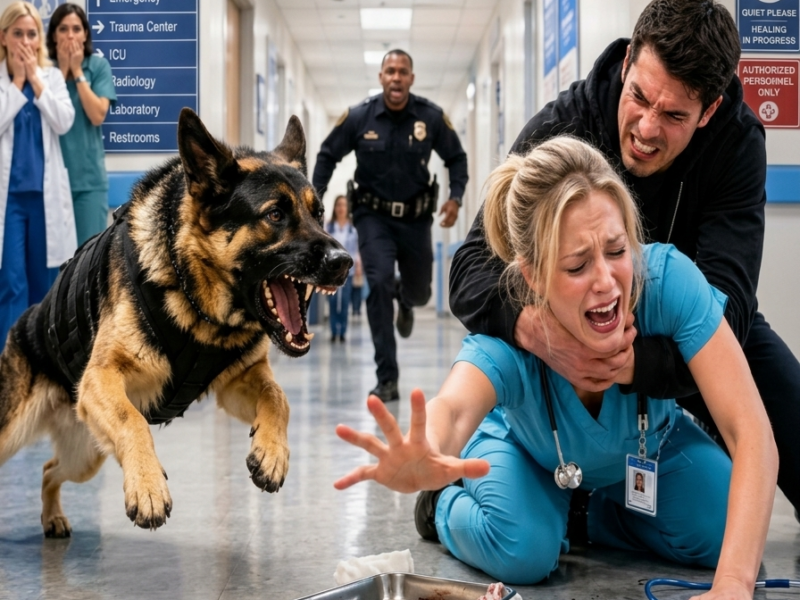
I was standing beside a military hospital supply closet at Fort Bragg when a senior officer laughed after someone shoved a sealed evidence bag into my hands and said, “She’ll absorb this too,”
The cold draft slipping beneath the heavy doors of the Fort Bragg hospital supply wing smelled permanently of iodine, crushed pine needles, and industrial bleach. For six years, that smell had been my anchor. I knew the exact rhythm of the floorboards, the hum of the fluorescent lights in the hallway, and the quiet dignity of a job done without applause. I was Maya Vance, a civilian medical assistant attached to the 82nd Airborne’s logistics depot. To the doctors, I was a blur of blue scrubs moving efficiently through the halls. To the officers, I was invisible.
And in a military facility where ambitions ran hot and mistakes could destroy a career, being invisible was supposed to keep you safe.
That morning began like any other, but the air felt heavy, charged with an unsaid warning. At 0800 hours, a shipment of restricted narcotics—specifically high-potency surgical analgesics used in combat trauma care—disappeared from the vault in the restricted pharmacy. It wasn’t a minor clerical error. It was a federal felony involving military logistics, tens of thousands of dollars in controlled substances, and potential dark-market distribution.
By noon, the whispers had turned into open paranoia. Orderlies looked at each other with narrowed eyes. Doctors closed their office doors. The tension rippled through the sterile corridors until the heavy footsteps of the Military Police echoed down the hallway at two o’clock.
They began searching lockers.
I stood near the supply closet, holding a clipboard loaded with routine inventory receipts, watching the storm move toward me. Staff Sergeant Miller, a young MP with tight shoulders, dumped the contents of locker after locker onto metal folding tables. When he reached mine, he didn’t even look at me. He snapped the padlocked latch with a pair of bolt cutters.
I watched them empty my bag onto the cold metal table.
Pens. A roll of medical tape. A small bottle of lotion. Stethoscope. A half-eaten granola bar. Nothing else.
“Clean,” Sergeant Miller muttered, stepping back.
Before I could breathe a sigh of relief, heavy boots clicked against the linoleum. Captain Reynolds stepped forward. His brass insignia gleamed beneath the harsh artificial lighting. Reynolds was a man built on crisp angles and absolute authority, a rising star in base logistics who treated everyone below his rank as administrative margin error.
“Hold on, Sergeant,” Reynolds said, his voice smooth, calculated, and laced with quiet steel. He stepped into my personal space, his shadow falling completely over me. “You’ve had full clearance access to the restricted pharmacy for six years, haven’t you, Vance?”
I swallowed the dry lump in my throat, keeping my voice steady. “So have dozens of people, Captain. Doctors, shift leads, inventory managers.”
His expression hardened instantly, his blue eyes narrowing into slits. “Don’t make this difficult for yourself, Maya. We know how the system works. We know who spends the late hours near the vault.”
I looked around the corridor. Officers were gathered in small clusters. Staff members stood in doorways. No one spoke up. No one looked me in the eye. I felt a sudden, sickening chill settle deep into my chest. I finally understood what was happening. They didn’t just need to find the missing shipment—they needed a fast, silent resolution that wouldn’t bring external investigators to Fort Bragg. They needed someone quiet. Someone without rank, without powerful connections, without a family line of high-ranking military brass to cause a scandal. Someone nobody would defend.
Me.
“Bring the dog,” Reynolds ordered without turning around.
The heavy door at the end of the hall swung open, and a Belgian Malinois K9 stepped into the room, led by his handler, Master Sergeant Knox. The dog, named Kilo, was a lean, muscle-bound military working animal trained for narcotics detection and scent tracing. His dark eyes scanned the room, hyper-alert.
Knox guided Kilo past the rows of lockers, past the metal desks, and past the scattered evidence table. The room was deathly quiet; the only sound was the sharp, rhythmic breathing of the dog sniffing the air.
Then Kilo stopped.
He didn’t stop at a locker. He didn’t stop at a desk. He turned his long snout directly toward me.
He leaned in, his nose pressing firmly against the hem of my blue scrub jacket. I froze, my pulse hammering against my ribs like a trapped bird.
Then, Kilo let out a low, vibrating growl from deep within his chest.
Gasps rippled through the onlookers. Everyone stared. Captain Reynolds’ lips twitched into a subtle, triumphant smirk.
Handler Knox frowned, his brow furrowing as he pulled slightly on the lead. “That’s unusual. He’s not indicating a package. He’s responding to her.”
“That’s enough for me,” Reynolds said coldly, stepping toward me with a pair of heavy steel handcuffs. “Search her. Thoroughly.”
My heart dropped into my stomach. “I don’t have anything on me! Search my pockets, search my clothes—I haven’t touched those narcotics!”
Knox didn’t move immediately. He watched his dog closely. Kilo circled me once, his tail low, but then he did something completely unexpected. He ignored my pockets. He ignored my jacket entirely. Instead, he lunged forward, straining against his leash toward the drywall directly behind where I had been standing beside the supply closet.
“Kilo, heel!” Knox barked.
But the dog didn’t heel. He shoved his snout against the seam of a metal access panel mounted low on the wall, letting out a sharp, insistent bark.
“What is he doing?” Reynolds snapped, his voice losing its polished cool for a split second.
“He’s keying on the wall space,” Knox said, pulling a multi-tool from his tactical vest. “Stand back.”
Knox unscrewed the rusty latches holding the panel in place and pulled the sheet metal away. Behind it lay a narrow, dust-choked ventilation cavity running between the supply closet and the main pharmacy vault.
Inside that hidden space were dozens of sealed, clear plastic medication packages filled with high-potency vials.
“There it is,” Reynolds declared immediately, pointing a finger at the wall. “Take her into custody!”
“Wait,” Knox said, his light voice cutting through the noise. He reached his gloved hand into the cavity and pulled out the primary inventory sheets taped to the top box. His eyes narrowed. “Maya Vance’s name, signature, and employee ID are stamped on every single one of these log sheets.”
Silence fell over the hallway like a heavy blanket. Nobody spoke. The evidence was absolute, terrifying, and completely flawless. It looked like a multi-month theft operation signed and sealed by my own hand.
I shook my head frantically, tears finally welling in my eyes. “I didn’t sign those! Check the digital stamps! That’s impossible!”
Before Reynolds could grab my arm, Kilo let out another low whine and began frantically scratching at the concrete floor beneath the exposed panel.
“There’s something else down there,” Knox muttered. He crouched lower, extending his flashlight into the dark recess. He reached far into the dust and pulled out a small, black rectangular plastic housing wired into the building’s electrical conduit. A tiny green LED light was steadily blinking on its side.
Captain Reynolds went completely still. His face drained of color so quickly it looked as if he had been struck.
“It’s an unauthorized digital audio recorder,” Knox said slowly, lifting the device. “High-gain microphone. Connected to an internal storage card. Looks like it’s been hardwired into the room’s power grid.”
The room suddenly felt ice-cold.
“Hand that over, Sergeant,” Reynolds commanded, his voice tight, sharp, and laced with panic. “That’s an unapproved security hazard in a classified area. I’ll take charge of the physical evidence.”
“Negative, Captain,” Knox replied calmly, his thumb hovering over the digital interface on the back of the unit. “Protocol dictates all electronic surveillance found during an active MP search is reviewed on-site to identify immediate security breaches.”
Knox pressed play.
A static hiss filled the corridor, coming through the tiny internal speaker. Then a crisp, clear voice echoed off the concrete walls.
It was Captain Reynolds’s voice.
“She won’t fight back,” the recording broadcasted loud and clear.
A second voice, belonging to Lieutenant Chief Logistics Officer Harrison, answered with a dark chuckle: “She never does. Vance has been a ghost here for six years. No family on base, no high-ranking friends. She just takes the work and keeps her mouth shut.”
I stared at Reynolds. My breath hitched in my throat. For the first time in six years, the untouchable Captain couldn’t meet my eyes. He looked down at the linoleum floor, his hands clenching into tight fists at his sides.
The recording continued to play, unforgiving and relentless in its clarity.
“We’ll make it look like she stole everything over the last six months,” Reynolds’ recorded voice said. “I’ll use her credentials to authorize the inventory transfers late at night. When the audit hits tomorrow, the paper trail will point straight to her locker. We split the street cut with the civilian contractor in Raleigh, and the base command gets a nice, neat arrest to close the books.”
My hands began shaking. Not because I was afraid anymore. But because the crushing weight of betrayal was being replaced by a terrifying, burning clarity.
I finally understood why Kilo had stopped beside me and growled. He hadn’t picked up the scent of stolen drugs on my body. He had smelled the fresh plaster, the electronic residue, and the scent of the men who had been secretly lurking around my workstation for weeks, building a trap around my life. He hadn’t found evidence on me. He had found evidence planted around me.
Two Military Police officers stepped forward, their faces grim, shifting their positions to block Reynolds and Harrison from the exits.
“Captain Reynolds, Lieutenant Harrison,” Sergeant Miller said, his hand resting firmly on his sidearm holster. “Step away from the desk. You are under arrest for grand larceny, treasonous distribution of controlled substances, and evidence tampering.”
As the MPs moved in and snapped handcuffs around Reynolds’ wrists, Kilo quietly stepped back toward me. He sat beside my boots and gently rested his heavy head against my trembling right hand. I stroked his soft ears, tears finally spilling over my cheeks.
I thought it was over. I thought the nightmare had reached its end.
Then Knox reached down to power off the device. He paused, his thumb freezing above the screen. His brow furrowed deeply.
“Wait,” Knox whispered, his tone changing from professional calm to utter disbelief. “There’s one more file on this drive. It’s an archived background profile attached to the device’s root directory.”
He turned the small blue-lit screen toward me.
There, stamped in crisp black text beside an embedded military intelligence seal, was my full legal name: MAYA VANCE.
And right beside my name was an official entry date from exactly six years earlier—the exact day I had first walked into Fort Bragg Hospital, long before Reynolds had ever been assigned to this base.
Below the date was a bold, red classification tag that read: SUBJECT OF INTEREST: OPERATION GHOST CURTAIN.
The air in the interrogation room of the Fort Bragg Provost Marshal’s office was suffocatingly still. The fluorescent light fixtures hummed a low, dull pitch overhead, casting harsh glares on the stainless steel table anchored to the floor.
I sat with my hands folded tightly in my front scrub pocket. Across from me sat Major Thomas Vance—no relation to me, though the shared last name had felt like a cruel joke when he showed up thirty minutes after Reynolds was dragged off in cuffs. Major Vance was an officer from the Judge Advocate General’s (JAG) Corps, but the silver eagle on his collar and the plain dark suit he wore suggested he answered to a authority far higher than standard military law.
Between us lay the small black recording device, now connected to a military-grade secure laptop.
“Miss Vance,” Major Vance said, his voice flat, dry, and devoid of emotion. “What you heard in that hallway was a low-level criminal conspiracy by two corrupt officers looking to line their pockets. They have been detained, and they will face court-martial. You are cleared of all charges regarding the stolen pharmaceuticals.”
He made a gesture as if to close the laptop.
“No,” I said, my voice firmer than I had ever heard it sound before. I stood my ground, leaning forward. “Don’t sweep this under the rug, Major. What was that file? Why is my name attached to something called ‘Operation Ghost Curtain’? And why does it start on the exact date I was hired six years ago?”
Major Vance paused, his hand hovering over the laptop lid. He looked at me for a long, silent moment, assessing me not as a civilian clerk, but as a potential liability.
“Six years ago, Miss Vance,” he began slowly, choosing every word with surgical precision, “your father, Dr. Richard Vance, died in a sudden laboratory explosion at a defense research facility in Maryland.”
My heart stopped. The mention of my father felt like a physical blow to my chest. “My father was a civilian biochemist. His death was ruled an industrial accident. A gas leak.”
“That was the story released to the press and to you,” Major Vance replied quietly. “The reality was significantly more complex. Your father was developing a synthetic neural stabilizer designed to counter high-grade chemical warfare agents. Days before his death, three gigabytes of his classified research vanished. The explosion was set intentionally to destroy the lab’s physical hard drives and cover up the theft.”
I stared at him, my breath shallow. “What does that have to do with me? I was twenty-two years old! I was in nursing school!”
“When a lead scientist on a black-budget project dies under suspicious circumstances,” Major Vance said, turning the laptop screen toward me so I could read the text, “military intelligence assumes the missing assets were either sold to a foreign adversary… or passed to a family member for safekeeping.”
I stared at the screen. The document displayed my face, my college transcripts, my medical records, and a detailed daily tracking log covering six years of my life.
0812 hours: Subject arrives at West Gate.
1145 hours: Subject eats lunch alone in courtyard.
1730 hours: Subject departs facility.
Every move I had made. Every day I thought I was just an ordinary, invisible girl working a low-pay job at a military hospital.
“You didn’t just hire me,” I whispered, the horrifying truth dawning on me. “You placed me here. You put me in the supply wing of Fort Bragg so you could watch me.”
“We created the position for you,” Vance corrected smoothly, without a hint of remorse. “We monitored your communications, your bank accounts, your visitors. We waited to see if anyone would contact you to retrieve your father’s stolen work. For six years, nothing happened. You lived a completely unremarkable, quiet life. We were preparing to close the file at the end of this fiscal year.”
“And Captain Reynolds?” I demanded, my hands trembling with anger. “Was he part of your sick little experiment?”
“Reynolds was an idiot,” Vance said bluntly. “A greedy opportunistic parasite who saw a quiet woman with no military backing and thought you were an easy scapegoat for his illegal drug ring. He had no idea ‘Operation Ghost Curtain’ existed. The audio bug he installed to monitor your work routines accidentally caught his own treasonous conversations.”
“So it’s over then,” I spat out, standing up from the metal chair. “I’m done. I resign. I’m leaving this base today.”
“I’m afraid you can’t do that, Miss Vance,” Vance said quietly.
I froze. “Why not? You just said I was cleared!”
Vance tapped a key on his laptop. A new window opened, displaying a high-resolution thermal imaging feed of a unmarked black sedan parked outside the base perimeter wall, near the south gate.
“Because fifteen minutes ago,” Vance said, his eyes locking onto mine with chilling intensity, “an encrypted signal was broadcast from the very same audio recorder Captain Reynolds hid in your wall. It wasn’t just recording locally, Miss Vance. It had a secondary burst transmitter. When Master Sergeant Knox pressed play in the hallway, it triggered an automated data dump to a remote server.”
“Whose server?” I asked, a cold knot tightening in my stomach.
“The same group that paid to have your father’s lab blown up six years ago,” Vance replied. “They didn’t care about Reynolds’ pharmaceutical theft. But when the data transmitted, it flagged your name, your location, and the status of your security file. They now know where you are. And more importantly, they believe the reason you’ve stayed at Fort Bragg for six years is because you are guarding your father’s physical research.”
The door to the interrogation room opened. Master Sergeant Knox walked in, holding Kilo on a short leash. The dog immediately trotted over to my side, nudging my hand with his cold nose.
“Major,” Knox said, his expression grave. “Base perimeter security just reported an unauthorized breach at the western perimeter fence. A civilian maintenance van bypassed the check point using cloned credentials.”
Major Vance stood up, closing his laptop with a sharp click. “They’re not coming for the drugs, Sergeant. They’re coming for her.”
Panic surged through me, hot and blinding. “I don’t have my father’s work! I don’t know anything about synthetic neural stabilizers! I’m just a nurse!”
“They won’t care about your denials, Miss Vance,” Vance said, reaching beneath his desk and pulling out a secure communications radio. “They will take you, strip your mind down through interrogation, and kill you when they find out you have nothing. Your only chance of surviving the next two hours is to stay with us.”
Suddenly, the overhead lights flickered violently and died.
The room plunged into pitch-black darkness. A second later, the deep, chest-rattling boom of an explosion echoed from the lower levels of the administrative building, followed immediately by the blaring, high-pitched shriek of the facility’s emergency lockdown alarms.
Kilo let out a fierce, ringing bark, his body tensing beside me in the dark.
“Emergency power isn’t kicking in,” Knox’s voice called out over the alarm siren. “They cut the main feed lines! They’re inside the building!”
“Knox, secure the civilian!” Major Vance shouted through the gloom.
A sharp crack echoed through the room—the unmistakable sound of a suppressed firearm. A muzzle flash illuminated the darkness for a fraction of a second. Major Vance gasped, his body collapsing heavily against the stainless steel table before dropping to the floor.
I screamed, backing up until my spine hit the cold concrete wall.
“Maya! Down!” Knox roared.
A rough hand grabbed my collar, pulling me down to the linoleum just as a hail of heavy gunfire shredded the wooden door frame above our heads. Wood splinters and dust rained down on us. Kilo was barking wildly, a terrifying, guttural sound of pure combat aggression.
“Take my belt!” Knox ordered, pressing the sturdy tactical canvas of his belt into my hands. “Don’t let go of me or Kilo! We’re moving NOW!”
The administrative basement of the Provost Marshal’s complex was a labyrinth of narrow concrete hallways, utility pipes, and heavy steel fire doors. Emergency strobe lights flashed red against the smoke-filled air, casting long, grotesque shadows along the walls.
Knox moved with practiced, lethal speed, holding a heavy sidearm in one hand and keeping Kilo close with the other. I stumbled behind him, clutching the back of his tactical vest, my heart hammering so hard against my ribs I could barely catch my breath.
“Who are these people?” I yelled over the deafening wail of the security alarms.
“Contractors,” Knox grunted, pausing at an intersection to check the angles. “Professional mercenaries. They don’t use standard military tactics. They hit hard, cut power, and clear rooms with silence.”
Kilo pressed his nose against the floor, his ears pinned back. He let out a low, vibrating whine, pointing his muzzle toward the eastern stairwell.
“Two men coming down the north stairs,” Knox whispered, placing a cold hand over my mouth to keep me quiet. “They have night vision optics. The red strobe light gives us a slight advantage, but if they corner us in these halls, we’re dead.”
“What about the base MPs?” I whispered back frantically once he released my mouth. “This is Fort Bragg! There are thousands of soldiers here!”
“The breach happened during shift change,” Knox said grimly. “And these guys jammed the base radio frequencies before they blew the power sub-station. It’ll take fifteen minutes for a full QRF—Quick Reaction Force—to organize and lock down this sector. We have to survive those fifteen minutes on our own.”
A heavy thud echoed from the end of the hall. The steel double doors leading to the holding cells were shoved open. Two tall figures dressed in matte-black tactical gear stepped into the flickering red light, carrying compact assault rifles fitted with thick suppressors.
“Kilo, attack!” Knox barked.
The Belgian Malinois transformed into a dark missile. He launched himself through the smoke, clearing ten feet in an instant. He hit the first mercenary in the chest, his powerful jaws locking onto the man’s forearm with bone-crushing force. The mercenary screamed, dropping his rifle as he crashed heavily into the concrete wall.
The second mercenary swung his weapon toward the dog.
Crack! Crack!
Knox fired two precise rounds from his handgun. The second attacker slumped to the floor, motionless.
Knox sprinted forward, grabbing Kilo’s harness as the dog released the disabled mercenary. “Move! To the old boiler room!”
We burst through a heavy wooden door into a vast, cavernous room filled with decommissioned iron pipes, rusted water tanks, and thick stacks of yellowing administrative files stored in metal shelving units. The air here was hot, stale, and choked with rust dust.
Knox slammed the heavy door shut and threw a thick iron bar across the brackets. He slumped against the frame, breathing heavily. Blood was dripping down his left forearm where a bullet fragment had grazed his skin.
“You’re hurt,” I said, stepping toward him, my instinct as a nurse overriding my terror.
“Glancing blow,” Knox grunted, tearing off a strip of cloth from his undershirt and wrapping it tightly around the wound. “I’ll survive. But we’re trapped. That door won’t hold if they bring heavy breaching charges.”
I looked around the dark room, desperate for a way out. My eyes landed on the tall metal shelving units lining the back wall, packed tight with dusty cardboard archive boxes spanning decades of base records.
“This is the old medical archives vault,” I realized aloud. “When they built the new wing six years ago, they moved all the paper records from the 1990s down here.”
Knox looked at me, his blue eyes sharp in the dim light. “Why does that matter?”
“Because my father didn’t just work in Maryland,” I said, a sudden memory piercing through the fog of my terror. “Before he was hired by the defense contractor, he spent three months here at Fort Bragg in 1998 as a civilian consultant for the Army Medical Materiel Development Activity. He spoke about it once when I was a child. He said he kept his original research journals locked in a civilian physical archive because he didn’t trust the digital network.”
Knox stared at me. “Are you saying…”
“I thought he was talking about a bank safety deposit box,” I stammered, stepping toward the high shelves. “I never knew what he meant. But for six years, I’ve been sitting right above this basement!”
A massive BOOM shook the door behind us. The iron bar bent inward with a sickening crunch. The mercenaries were using breaching explosives.
“Find it!” Knox shouted, drawing a secondary magazine from his belt and slamming it into his pistol. “If there’s anything in these boxes that explains why people are dying, find it now! I’ll hold the door!”
I sprinted toward the rows of metal shelves. The cardboard boxes were covered in thick gray dust, labeled with faded marker: 1996 LOGISTICS, 1997 PERSONNEL, 1998 SURREAL SUPPLIES.
Another BOOM rattled the room. Hinges ripped free from the concrete frame. A shower of sparks rained down into the dark. Kilo stood between Knox and the door, his growl deep enough to vibrate the metal floor beneath my feet.
My fingers flew across the box labels, ripping opening lids, spilling yellowed papers onto the floor.
Nothing. Nothing. Requisitions. Equipment receipts.
“Maya!” Knox yelled, dropping to one knee as heavy boots began kicking against the dying door. “We’re running out of seconds!”
I reached the very last shelf in the darkest corner of the room. Hidden behind a stack of broken computer monitors was a small, heavy steel cash box painted drab olive green. It had a physical key lock on the front.
Taped to the lid was a yellowed piece of paper with handwriting I would recognize anywhere on earth.
It was my father’s neat, microscopic print.
To my dearest Maya, the note read. If you are reading this, the ghost has finally come for you. I am so sorry.
My hands trembled violently as I grabbed the heavy green box. There was no key. Without thinking, I raised the heavy steel box and slammed it down onto the sharp corner of a metal shelf frame. The rusted lock mechanism snapped with a metallic pop.
I ripped open the lid.
Inside lay two thin leather-bound notebooks filled with my father’s precise chemical diagrams, alongside a silver encrypted USB drive and a sealed envelope stamped with a red wax seal.
BOOM!
The heavy boiler room door finally tore free from its hinges, crashing inward onto the concrete floor. Dense gray smoke poured into the room.
“Suppressing fire!” a harsh voice shouted from the doorway.
Knox returned fire, shooting through the smoke to drive the mercenaries back into the hallway. “Maya! Get down!”
A tall mercenary wearing a full tactical helmet burst through the smoke, stepping past Knox’s line of sight. He aimed his submachine gun directly at me.
Before he could pull the trigger, Kilo hit him from the flank. The dog leaped over a row of file boxes, knocking the mercenary off balance. The gun discharged wild rounds into the ceiling, shattering the overhead pipe. Scalding water sprayed across the room in a thick, blinding fog.
I scrambled backward, tucking the leather notebooks and the USB drive securely into the front pouch of my medical scrubs.
Knox rushed forward, using the distraction of the steam fog to neutralize the remaining shooter with two swift shots. The room suddenly fell into an eerie, suffocating quiet, broken only by the loud, rhythmic hiss of steam leaking from the shattered pipe.
Knox knelt beside Kilo, who was breathing heavily, his dark fur wet with steam and water, but unharmed.
“Is it him?” Knox panted, looking down at the fallen mercenary commander.
Knox leaned down and unclipped the mercenary’s helmet, pulling it off to reveal his face.
I gasped, taking a step back.
It wasn’t a foreign soldier. It wasn’t an unknown mercenary.
It was Colonel Thomas Vance—the JAG officer who had just sat across from me in the interrogation room twenty minutes ago, pretending to investigate Captain Reynolds.
His chest rose and fell in ragged gasps. Blood leaked from a wound in his side. He looked up at me with a bitter, hollow smile.
“You… you really didn’t know,” Colonel Vance coughed, his voice raspy and wet. “All these years… sitting right on top of it… and you didn’t even know…”
“You killed my father,” I said, the words spilling out of my throat like cold ice. “You staged the lab explosion six years ago.”
“Your father… was a fool,” Vance sneered, his breath growing shorter. “He wanted to give the neural stabilizer formula… to the world for free… open-source medical technology… to treat nerve agent casualties… He was going to walk away from a three-billion-dollar military defense contract…”
“So you murdered him,” Knox said, keeping his pistol pointed directly at Vance’s chest. “And you set up a fake surveillance operation at Fort Bragg to keep his daughter under your thumb until you could find where he hid the physical master key.”
“We couldn’t… run the encrypted files without the physical analog key…” Vance whispered, his eyes rolling back slightly. “He locked the digital architecture… with an analog hand-written cipher… that only his physical journals contained… We monitored her… hoping she would lead us to it… But she was just… a stupid… quiet nurse…”
“I wasn’t a stupid nurse,” I said, standing tall above him, clutching my father’s notebooks to my chest. “I was just waiting for the truth.”
Vance let out a long, rattling sigh, his eyes glossing over as his head slumped back against the concrete floor. He was gone.
Outside, the distant, roaring thrum of heavy military helicopter blades echoed through the air. Flashing blue and red lights cut through the high basement windows. The Quick Reaction Force had finally secured the base perimeter. Heavy boots pounded down the stairwell, accompanied by the urgent shouts of dozens of armed Military Police officers.
“Clear!” Knox shouted toward the hallway, holding up his hands while keeping his body positioned squarely in front of me. “Friendly forces inside! Secure the area!”
Within seconds, the boiler room was flooded with armed soldiers, medical corpsmen, and high-ranking base commanders. Flashlights cut through the steam, illuminating the bodies of the mercenaries, the shattered door, and the opened green cash box.
A senior MP officer stepped forward, looking at the dead Colonel on the floor, then at Knox, and finally at me.
“Miss Vance?” the officer asked, his voice stunned. “Are you alright?”
I didn’t answer right away. I reached into my scrubs pocket and pulled out the sealed envelope my father had left inside the steel box. I broke the red wax seal with my thumb and pulled out a folded piece of paper.
My father’s final words were clear, bold, and unwavering:
Maya, if this letter is in your hands, the men who traded honor for profit have failed. The research in these books does not belong to the military, nor does it belong to defense contractors. It belongs to humanity. Give it to the world.
I looked up at the officers surrounding me. The quiet girl who spent six years keeping her head down, taking the blame for other people’s mistakes, and hiding in the shadows of Fort Bragg was dead.
“I am fine,” I said, my voice cutting through the room with absolute authority. “And I have work to do.”
Three months later.
The sharp autumn breeze swept across the pristine marble steps of the National Press Club in Washington, D.C. Cameras flashed incessantly, creating a blinding sea of white light against the afternoon sky. Microphones from dozens of international news agencies were clustered thick across the podium.
I stood behind the podium, wearing a crisp dark blazer instead of my blue hospital scrubs. Beside me sat Master Sergeant Knox, dressed in his formal Army Service Uniform, his chest decorated with commendation medals. And sitting proudly at his side, wearing an official service vest, was Kilo. The dog’s intelligent eyes swept over the crowded room, calm and vigilant.
After the night in the Fort Bragg basement, the military apparatus had tried, predictably, to classify the entire incident. They wanted to bury the truth about Colonel Vance, Captain Reynolds, and the six-year illegal surveillance of a civilian worker under the heavy blanket of “national security.”
They thought I would stay quiet. They thought I would accept a quiet settlement, a non-disclosure agreement, and fade away into ordinary life.
They were wrong.
With Knox’s unwavering support and the protection of independent legal counsel, I had taken my father’s handwritten notebooks and the encrypted USB drive directly to the Department of Justice and an international coalition of medical researchers.
The synthetic neural stabilizer—now named the Vance Compound in honor of my father—was officially placed into the public domain. It was now being manufactured globally at cost, accessible to civilian hospitals, disaster response teams, and military medics worldwide without a single cent going to defense contractors.
Captain Reynolds and the surviving members of Colonel Vance’s shadow network were currently sitting in federal penitentiaries, facing life sentences for treason, conspiracy to commit murder, and grand larceny.
I leaned forward, adjusting the microphone in front of me.
“For six years,” I spoke into the warm air, my voice echoing clearly through the packed auditorium and across millions of live television screens around the world, “I believed that staying quiet was the only way to survive. I believed that if I did my job, kept my head down, and absorbed the hits meant for others, the world would eventually leave me in peace.”
The room was deathly quiet. Every reporter sat frozen, listening to every word.
“I was wrong,” I continued, looking directly into the primary camera lens. “Silence does not protect you from corrupt men. It only gives them a dark place to hide their traps. They chose me because they thought I was weak. They chose me because they thought no one would stand up for a quiet nurse with no power.”
I looked down at Kilo, who raised his head and let out a soft, approving huff against the wooden floor.
“They forgot one simple truth,” I said, a firm, unbroken smile gracing my face for the first time in six years. “The truth has a voice of its own. And once it speaks, no amount of shadow, rank, or power can ever make it quiet again.”
The auditorium erupted into a thunderous wave of applause. Journalists stood from their chairs, shouting questions, but I didn’t need to answer any more of them.
I stepped back from the podium, placing my hand on Knox’s shoulder. He smiled, giving me a firm, respectful nod.
“Where to now, Maya?” Knox asked as we walked down the side steps away from the flashing cameras, Kilo walking faithfully at my right heel.
“Back to work,” I said, looking out at the open city skyline ahead of us. “There’s a new civilian medical foundation opening in Maryland next month. They need a head administrator who knows how to keep accurate inventory.”
Knox laughed, a warm, genuine sound. “Need an security chief?”
I looked down at Kilo, who looked up at me with bright, loyal eyes.
“Only if he brings the dog,” I replied.
We walked together into the bright afternoon sunlight, leaving the ghosts, the lies, and the shadows behind us forever.
The end.









