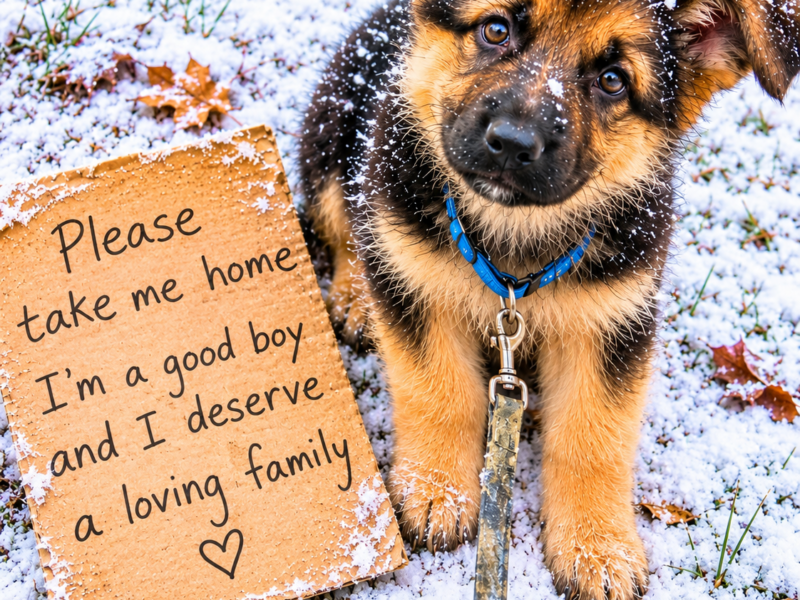
“I thought I was rescuing a puppy from the cold,” I told the elderly woman standing on my porch. “I didn’t know he belonged to anyone.”
I didn’t answer Martha immediately.
I looked at the phone in my hand, then at Emily sitting across from me.
Teddy had woken up and was chewing the corner of his blanket. He seemed perfectly content with the world, which was more than I could say for the three adults whose decisions had somehow turned his adoption into a community crisis.
“What do you mean, some of them have nobody else?” I asked.
Martha took a breath.
“I mean people who have no family nearby. People who can’t drive anymore. People who depend on a familiar volunteer to get them to the doctor. Some of them are widowed. Some have children who live hundreds of miles away. And some are simply too proud to tell anyone how much they need help.”
I leaned back.
“Why are you resigning?”
“Because the committee has lost confidence in my judgment. And because I can’t keep asking volunteers to work under a cloud of suspicion.”
“You made one mistake.”
“Yes, Andrew. I did.”
Her voice was firm.
“And I’m responsible for it. But I’m also responsible for recognizing when my presence is making things harder for everyone else.”
I wanted to tell her she was wrong.
I wanted to tell her that the committee should reconsider, that the online criticism was unfair, and that I could speak to the television station to explain what really happened.
But I remembered what she’d told me before.
She didn’t need me to rescue her reputation.
She needed me to respect her decisions.
So I asked a different question.
“What happens to the people who need rides next week?”
There was a pause.
“That’s what worries me.”
Martha explained that Warm Rides had more than twenty regular participants. Some needed transportation once a week. Others depended on it for recurring medical appointments.
The volunteers knew their passengers personally.
They knew who needed help carrying groceries, who preferred to sit in the front seat, and who became nervous when an unfamiliar person arrived at the door.
The program wasn’t just about getting someone from one place to another.
It was about making sure people didn’t feel like strangers in their own community.
“I’ve spent ten years building that,” Martha said. “I don’t want to see it disappear because of one incident.”
“Then maybe we shouldn’t let it disappear.”
“Andrew, please don’t start making plans before you’ve understood the problem.”
I almost laughed.
She knew me too well.
“All right,” I said. “What do you think I should do?”
“Nothing today. Listen first.”
Then she ended the call.
Emily had been watching me.
“Are you going to help her?”
“I don’t know yet.”
“Why not?”
“Because I think I finally understand that wanting to help isn’t the same as knowing how.”
Emily looked at Teddy.
“He seems to have figured that out.”
I followed her gaze.
The puppy had managed to get his entire head inside a soft toy.
I removed it carefully.
“Apparently, he hasn’t figured out everything.”
For the first time that afternoon, Emily smiled.
But the smile didn’t last.
“Dad, I need to tell you something.”
I put the toy down.
“What is it?”
“I posted the correction.”
I stared at her.
“When?”
“About an hour ago.”
She showed me the post.
She explained that the puppy had been waiting near an organized adoption event, not abandoned. She admitted that she’d misunderstood the situation and that the photograph had encouraged people to make assumptions about Martha.
She also included a short explanation of why she had shared the picture in the first place.
She wanted people to see something kind.
She hadn’t realized how much damage an incomplete story could cause.
“How many people have seen it?” I asked.
“Not as many as the original.”
She looked down.
“And some people are angry.”
I read several comments.
One person accused her of changing the story because she wanted attention.
Another said she should never call herself a photographer again.
I handed the phone back.
“Do you regret posting it?”
Emily considered the question.
“I regret not checking first.”
“That makes sense.”
“But I don’t regret correcting it.”
I nodded.
“Then you did the right thing.”
She looked surprised.
“You’re not mad?”
“I’m not going to punish you for admitting you made a mistake.”
I paused.
“Especially when I made the same one.”
That evening, I contacted Claire Donovan, the television reporter.
I told her I needed to correct something from our interview.
She listened as I explained what had happened.
When I finished, she was quiet.
“Andrew, I understand. But the segment has already been shared widely. If we air a correction, some people may question the entire story.”
“They should.”
“That’s going to change how the foundation sees the donation.”
“I know.”
She asked whether I would be willing to appear on camera again.
I agreed.
The following morning, I returned to the community center.
This time, I didn’t bring Teddy.
I wanted people to hear the truth without the distraction of a cute puppy sitting on my lap.
Claire sat across from me.
The camera operator adjusted the equipment.
Then she asked the same question she had asked before.
“What happened the morning you found Teddy?”
I took a breath.
“I saw a very young German Shepherd puppy sitting beside a cardboard sign. The sign asked someone to give him a loving home. I assumed he had been abandoned.”
I paused.
“That assumption was wrong.”
I explained that Martha Bennett had been organizing a responsible adoption event. She had stepped inside briefly to gather supplies and had made a mistake by leaving Teddy without another volunteer watching him.
I had made a different mistake.
I had taken him without checking the information available.
Then, when people praised me, I had allowed their version of the story to continue.
“I didn’t lie about wanting to protect the puppy,” I said. “But I left out information that mattered. And by doing that, I helped people blame a woman who had spent years helping this community.”
Claire asked whether I regretted taking Teddy.
I looked directly into the camera.
“I regret not asking questions before I acted. I don’t regret making sure he was safe. Both things can be true.”
Then I addressed the charitable donation.
“The foundation has offered $15,000 to support animal care. That’s an incredibly generous offer. But I don’t want anyone to donate because they believe a story that isn’t accurate. The foundation deserves the complete facts before making its decision.”
Claire nodded.
“Do you think Martha should continue organizing community programs?”
“That isn’t my decision.”
I stopped for a moment.
“It’s hers.”
The interview ended.
For the first time since the photograph went viral, I felt as though I had said something I could stand behind.
But honesty didn’t immediately repair anything.
The correction aired that evening.
Some viewers appreciated it.
Others were disappointed.
A few accused me of trying to protect my reputation by changing the story.
The foundation sent a message saying it would temporarily pause the donation while reviewing the updated information.
I read it once.
Then I put my phone away.
Fifteen thousand dollars was a lot of money.
But accepting it under a false impression would have made the entire situation worse.
Meanwhile, Martha was having a difficult conversation of her own.
Her daughter, Laura, had arrived at her house with groceries and a container of homemade soup.
Laura was 52, a tall, slender woman with shoulder-length dark blonde hair and pale blue eyes. She worked at a medical clinic and spent much of her day helping patients navigate schedules, paperwork, and unexpected problems.
She loved her mother.
She was also tired.
For years, she had watched Martha devote nearly every available hour to other people.
When someone needed a ride, Martha found a volunteer.
When a neighbor needed groceries, Martha arranged a delivery.
When a community member became ill, Martha called to check on them.
It was admirable.
But Laura had often been the person helping Martha recover from the exhaustion that followed.
“Mom, you can’t keep doing everything,” Laura said as she placed the soup on the counter.
Martha looked up from her blue notebook.
“I know.”
“Do you?”
“I’ve already resigned from Warm Rides.”
Laura stopped.
“You what?”
“I sent the committee a letter this morning.”
Laura pulled out a chair.
“Why didn’t you tell me?”
“Because I knew you’d tell me not to.”
“Maybe I would have asked you to think about it first.”
Martha closed the notebook.
“I’m tired, Laura.”
Her daughter looked at her carefully.
That was not something Martha said often.
“I don’t want to spend the rest of my life defending every decision I make,” Martha continued. “But I also don’t want to sit here and watch people struggle because I can’t do everything myself.”
Laura sat quietly.
Then she said something she had been holding back for years.
“Mom, I don’t want you to stop helping people. I want you to stop believing that nobody else can help you.”
Martha’s eyes shifted toward the window.
“I’ve never wanted to be a burden.”
Laura reached across the table.
“Sometimes I think you’re so afraid of becoming dependent on someone that you don’t notice when you’re depending on me.”
Martha looked at her daughter.
Laura continued.
“I don’t mind helping you. I really don’t. But sometimes I need you to ask. I need you to let me say yes or no without making me feel like I’m disappointing you.”
For a long moment, Martha didn’t speak.
Then she looked down at her hands.
“I didn’t know you felt that way.”
“I should have told you.”
“Yes,” Martha said softly. “You should have.”
Laura smiled a little.
“And I should have listened when you told me you weren’t ready to give up your work.”
They sat together until the soup grew cold.
Neither woman solved every problem that afternoon.
But for the first time in a long while, they stopped treating concern as criticism.
The next day, I visited Martha.
I didn’t bring a schedule.
I didn’t bring a proposal.
I brought Teddy.
He had been growing more confident in my house, although he still approached new situations with the caution of a puppy who hadn’t yet decided whether the world was friendly.
Martha opened the door.
“Well, look who’s here.”
Teddy immediately recognized her.
His tail began wagging.
Martha knelt, and he rushed into her arms.
I watched them for a moment.
Then I asked whether we could talk.
She invited me inside.
I placed a small notebook on the kitchen table.
“I tried organizing the transportation requests myself,” I admitted.
Martha raised an eyebrow.
“And?”
“I failed.”
She smiled.
“That was quick.”
“I made a schedule. I found volunteers. I calculated routes. It looked perfect.”
“And then?”
“People didn’t want to be moved around like pieces on a board.”
Martha laughed softly.
“Betty Dawson?”
“Betty Dawson.”
“She has been telling people that story for years. I’m surprised you lasted as long as you did.”
I shook my head.
“She was right.”
I told Martha about the residents who had declined my proposed rides.
Linda Porter needed flexibility because her husband was recovering from surgery.
Frank Wilson preferred a familiar driver.
Betty wanted enough time to enjoy the library without feeling rushed.
I had treated every request as a transportation problem.
Martha had understood that each request belonged to a person.
“I thought I could make the program work by building a better system,” I said.
“Systems are useful,” Martha replied. “But they don’t replace relationships.”
She opened her blue notebook.
Inside were handwritten notes about the people who used Warm Rides.
Not just addresses and appointments.
Preferences.
Concerns.
Small details.
One resident liked to be called before a volunteer arrived.
Another needed help carrying groceries up three steps.
Someone else preferred not to discuss medical appointments during the drive.
Martha had remembered these things because she’d taken the time to listen.
I looked at the pages.
“How do we preserve all this?”
“We don’t start by trying to preserve everything,” she said. “We start by asking what people want.”
That became our first real lesson.
Not every resident needed the same service.
Not every volunteer could meet every need.
And not every request required a ride.
Some pharmacies offered delivery.
Some medical offices could connect patients with established transportation services.
Some neighbors were willing to help with groceries but couldn’t drive.
Instead of building another organization around my ideas, we needed to find out what the community was already able to offer.
I wrote one sentence at the top of my notebook.
Ask before arranging anything.
Martha read it.
“That’s a good beginning.”
Then she pointed at the next blank page.
“Now write down what you don’t know.”
I stared at her.
“That’s going to be a long list.”
“Good,” she replied. “It means you’re finally paying attention.”
Over the next several days, we began making calls.
Not to schedule rides.
To listen.
We spoke with residents who had used Warm Rides for years.
We asked which parts of the program mattered most to them and which parts could be improved.
We contacted the medical clinic, local pharmacies, and community organizations to learn what services already existed.
I also spoke with the volunteers.
Some were willing to drive regularly.
Others could help only occasionally.
One offered to make weekly phone calls to residents who lived alone.
Another volunteered to deliver groceries.
A retired nurse offered to help people identify the right community resources when they needed assistance.
Slowly, the picture became clearer.
Warm Rides had never been successful because Martha could do everything.
It had been successful because she had helped people find the right kind of help.
The next challenge was convincing the governing committee to reconsider its suspension.
Martha didn’t want me speaking on her behalf.
So I asked whether she’d be willing to attend a meeting with me.
She thought about it.
“I’ll attend,” she said. “But I’m not going to ask them to reinstate me.”
“Understood.”
“And I don’t want you speaking as though you represent me.”
“Understood.”
“And don’t make a speech about how wonderful I am.”
I smiled.
“I’ll try to restrain myself.”
She gave me a look.
“Andrew.”
“Yes, ma’am.”
“I mean it.”
“I know.”
At the committee meeting, Martha sat beside Laura.
I sat several chairs away.
The committee members reviewed the incident involving Teddy.
Martha acknowledged that she had left him without adequate supervision.
She accepted responsibility for that decision.
She also explained that the adoption activity was separate from Warm Rides and that the public criticism had created confusion about the transportation program.
She didn’t accuse anyone.
She didn’t ask for sympathy.
She simply explained what had happened.
Then I spoke.
I told the committee that I had taken Teddy without checking the adoption notice or contacting anyone responsible for him.
I admitted that I had allowed a misleading version of the story to spread.
I explained that I had tried to organize transportation independently and had failed because I hadn’t listened carefully enough to the people who needed it.
“I don’t believe Martha should be blamed for everything that happened,” I said. “But I also don’t believe her years of service mean she should be exempt from accountability. She made a mistake. I made one, too.”
I looked around the room.
“What I do believe is that the people who depend on this program shouldn’t lose their support because the adults involved made mistakes.”
One committee member asked whether I was proposing that Martha return as coordinator.
I shook my head.
“No. That’s her decision.”
Martha looked at me.
I continued.
“I’m asking the committee to separate the question of one person’s role from the question of whether the community needs a transportation service.”
For the first time, I saw several committee members nod.
They agreed to review the suspension and consider a revised structure.
The program would need clearer volunteer responsibilities, better supervision, and shared administrative duties.
Martha would not be required to return as coordinator.
Instead, a small group of volunteers and community representatives would oversee the work together.
It wasn’t a complete victory.
But it was a beginning.
After the meeting, Laura walked beside her mother toward the parking lot.
“You did well,” she said.
Martha looked at her.
“So did you.”
Laura smiled.
“Does that mean you’ll let me help with the paperwork?”
Martha pretended to consider it.
“Only if you promise not to reorganize my entire filing cabinet.”
“I make no promises.”
They laughed.
I watched them for a moment.
Then Martha turned toward me.
“Thank you for listening today.”
I nodded.
“Thank you for teaching me how.”
She looked toward the community center.
“Now, what about that puppy?”
I glanced down.
Teddy was sitting beside my boot, trying to chew the end of his leash.
“I suppose we still have to figure out where he belongs.”
Martha smiled.
“I think we’ve made some progress.”
The adoption paperwork was completed the following week.
The previous family formally transferred responsibility to the adoption group, and after discussing Teddy’s needs, Martha offered me the opportunity to adopt him.
I didn’t say yes immediately.
Not because I didn’t want him.
I did.
But I wanted to make sure I could provide the time, care, and patience a young German Shepherd needed.
I spoke with my veterinarian.
I reviewed the training recommendations.
I arranged a regular schedule that included exercise, socialization, and proper supervision.
Then I called Martha.
“I’d like to adopt Teddy,” I said.
There was a small silence.
“Are you sure?”
“I am.”
“It’s a long commitment, Andrew.”
“I know.”
“And he’s going to chew things.”
“He’s already chewed things.”
“He’ll probably chew more.”
“I’ve accepted that possibility.”
She laughed.
“Then I think he may have found his home.”
The adoption was completed on a quiet Saturday morning.
Martha brought the paperwork to my house.
Teddy was busy investigating the shoelaces on her boots.
She knelt and rubbed his ears.
“Well, little man,” she whispered. “Looks like you’re staying.”
Teddy licked her cheek.
I signed the final document.
For a moment, I felt the same warmth I’d felt when I first picked him up in the snow.
But this time, there was no assumption.
No dramatic rescue.
No need for strangers to praise me.
Just a decision made with care.
The charitable foundation contacted me two days later.
After reviewing the correction and speaking with the animal welfare group, they decided to keep their offer open.
They no longer wanted the money connected to the story of an abandoned puppy.
Instead, they proposed a general animal care grant to support responsible adoption programs, veterinary assistance, and temporary foster care.
I asked them to make the donation directly to the established animal welfare organization rather than to me.
They agreed.
The $15,000 was approved.
It wasn’t a reward for a heroic rescue.
It was funding for a program that actually needed it.
And that made me far happier than seeing my photograph on another newspaper page.
Warm Rides also began operating again several weeks later.
The committee approved a revised structure with shared leadership, clearer volunteer guidelines, and a process for asking residents what kind of assistance they wanted.
Martha agreed to serve as a volunteer adviser.
She did not return as the sole coordinator.
Laura helped with administrative work, but only after the two of them agreed on boundaries and responsibilities.
I joined the volunteer driver group.
My first passenger was Betty Dawson.
She was waiting outside her house when I arrived, wearing a bright red scarf and holding a library tote bag.
She looked at my truck.
“Are you the man with the puppy?”
“Yes, ma’am.”
“The one who tried to organize my afternoon into twenty-minute pieces?”
I sighed.
“I believe that was me.”
Betty opened the passenger door.
“Well, let’s hope you’ve improved.”
I smiled.
“I’ve been working on it.”
She climbed into the truck and fastened her seat belt.
Then she handed me a small piece of paper.
It was a list of books she wanted to return and a few things she hoped to pick up at the library.
“How long do you need?” I asked.
Betty gave me a suspicious look.
“Are you asking me or the clock?”
“You.”
She smiled.
“Now we’re getting somewhere.”
We reached the library.
Betty spent nearly an hour inside.
She spoke with the librarian, returned her books, and found two new novels.
When she came out, she was carrying a small paper bag and smiling.
“Thank you, Andrew.”
“You’re welcome.”
She settled into the passenger seat.
“You know, Martha has been talking about you.”
I glanced at her.
“Hopefully nothing too damaging.”
“She says you’re learning to listen.”
I started the truck.
“I hope she’s right.”
Betty looked out the window.
“It’s a good skill to learn at any age.”
That evening, I returned home to find Teddy asleep on his bed.
He had grown considerably since the morning I’d found him.
His ears now stood upright more often than they flopped, and his paws were beginning to look proportional to the rest of him.
He was still a mischievous little creature.
He still stole socks.
He still carried his toys into the kitchen.
And he still believed my shoelaces existed specifically for his entertainment.
But he’d become part of my routine.
Not the kind of routine I could control completely.
The kind that made a house feel alive.
A few weeks later, Emily visited again.
She had been working on a new photography project for school.
This time, she wanted to document the volunteers who helped keep the community running.
She photographed Martha reviewing transportation notes with Laura.
She photographed Betty leaving the library with her book bag.
She photographed volunteers carrying groceries to a neighbor’s porch.
And she photographed Teddy sitting beside me in the community center.
But she didn’t publish any of the photographs immediately.
She asked permission first.
She checked names.
She made sure the people in the pictures understood how the images would be used.
When she finished, she showed me the photographs.
“They’re not as dramatic as the first one,” she admitted.
I studied them carefully.
One showed Martha laughing with a volunteer.
Another showed Laura helping her mother sort paperwork.
A third showed Betty sitting in the library window, reading a book.
“They’re better,” I said.
Emily looked surprised.
“Really?”
“They tell more of the story.”
She smiled.
Then she showed me one final photograph.
It was of Teddy.
He was sitting on the floor beside Martha’s chair at the community center.
His head was tilted slightly, and his ears were standing straight.
Martha’s hand rested gently on his back.
I looked at the picture for a long moment.
“That’s the one,” I said.
Emily nodded.
“I thought you’d like it.”
She eventually submitted the photographs to her school journalism teacher.
Her teacher praised the project, particularly the way Emily had included the people behind the community work instead of focusing only on dramatic moments.
Emily still had a lot to learn.
So did I.
But neither of us was trying to pretend otherwise.
One Saturday morning, I drove Teddy to the community building for a small adoption gathering.
This time, the puppy wasn’t waiting alone outside.
Several volunteers were present.
The adoption sign was displayed beside the entrance, and Martha was sitting at a table with the paperwork.
Teddy walked beside me on his leash.
When we reached the doorway, he spotted Martha.
His tail began moving.
She crouched.
“There’s my boy.”
Teddy hurried over and pressed his nose against her hand.
Martha laughed.
I watched them, remembering the first morning I’d found him.
The cardboard sign.
The snow.
The tiny puppy shivering beside the entrance.
I had believed I understood what I was seeing.
I had believed that helping meant acting quickly.
I had believed that being useful meant having the answer.
I was wrong about all three.
Martha stood and looked at me.
“Would you mind helping us set up the chairs?”
“Of course.”
I carried the chairs inside.
Then I returned for another stack.
And another.
Teddy followed me through the doorway, his little paws tapping against the floor.
Later, when the gathering began, a family arrived with two young children.
They were interested in adopting a small mixed-breed dog.
Martha spoke with them patiently, explaining the responsibilities of pet ownership and asking about their home, schedules, and plans for veterinary care.
She didn’t pressure them.
She didn’t promise that love would solve every difficulty.
She simply helped them understand what a commitment meant.
I stood nearby, listening.
Then I noticed something.
The cardboard sign had been placed on a table near the entrance.
The words were the same.
Please take me home.
I’m a good boy, and I deserve a loving family.
I walked over and read it again.
This time, I noticed the sentence differently.
A good boy.
A loving family.
For a moment, I thought about how often people were expected to prove they deserved kindness.
The elderly woman who wanted to remain independent.
The volunteer who was afraid of becoming a burden.
The teenager who had made a mistake and was trying to correct it.
The puppy who had needed someone to protect him without pretending to know everything about his life.
Maybe the world didn’t need more people rushing to be heroes.
Maybe it needed more people willing to ask questions before deciding who needed saving.
When the event ended, Martha walked outside with me.
The February snow had long since melted, and the afternoon sun rested softly over the street.
Teddy sat beside my boot.
Martha looked down at him.
“Do you think he remembers that morning?”
“I don’t know.”
“Neither do I.”
She smiled.
“But I think he’s doing all right.”
Teddy looked up at us.
Then he grabbed the end of my shoelace.
I sighed.
“Some things haven’t changed.”
Martha laughed.
I bent down and gently traded him a chew toy for the lace.
This time, I didn’t try to take it by force.
He accepted the toy and trotted toward the truck.
Martha watched him go.
“You know, Andrew, when I first came to your house, I was furious.”
“I remember.”
“I thought you were another person who had decided he knew what was best without asking.”
“I suppose I was.”
She shook her head.
“But you listened eventually.”
I looked at her.
“You gave me a reason to.”
“No,” she said gently. “You chose to.”
I didn’t argue.
I had spent a long time believing that strength meant being the person everyone could depend on.
Now I understood that being dependable didn’t mean making every decision for someone else.
Sometimes it meant showing up, asking what was needed, and accepting that the answer might not be what you expected.
I opened the truck door.
Teddy climbed into his secured carrier and settled on his blanket.
Martha stood beside the curb, her silver hair catching the afternoon light.
“Take care of that little troublemaker,” she said.
“I will.”
“And remember to ask questions next time.”
I smiled.
“Yes, ma’am.”
I drove home with Teddy sleeping beside me.
The road was quiet.
The sky was clear.
And for the first time in a long while, I wasn’t thinking about what I needed to fix when I got home.
I was thinking about dinner.
About a puppy who would probably steal my socks.
About a community that had found a way to keep helping one another.
And about an elderly woman who had reminded a retired Navy SEAL that courage wasn’t always about taking action.
Sometimes it was about admitting you had been wrong.
That night, Teddy fell asleep beside my chair.
I sat on the floor next to him and watched his chest rise and fall.
He had never needed to be a perfect puppy.
He had never needed to earn a loving home by behaving perfectly.
He had simply needed someone willing to understand that he was a living creature with needs, fears, and a future worth protecting.
I reached down and scratched gently behind his ear.
“Good boy, Teddy.”
His tail moved once against the blanket.
Then he closed his eyes.
And I finally understood what that cardboard sign had been trying to say all along.
Everyone deserves a chance to belong.
Not because they’ve never made a mistake.
Not because they’ve always been useful.
Not because they’ve earned enough praise.
But because being loved shouldn’t require someone to prove they’re perfect.
The end.









