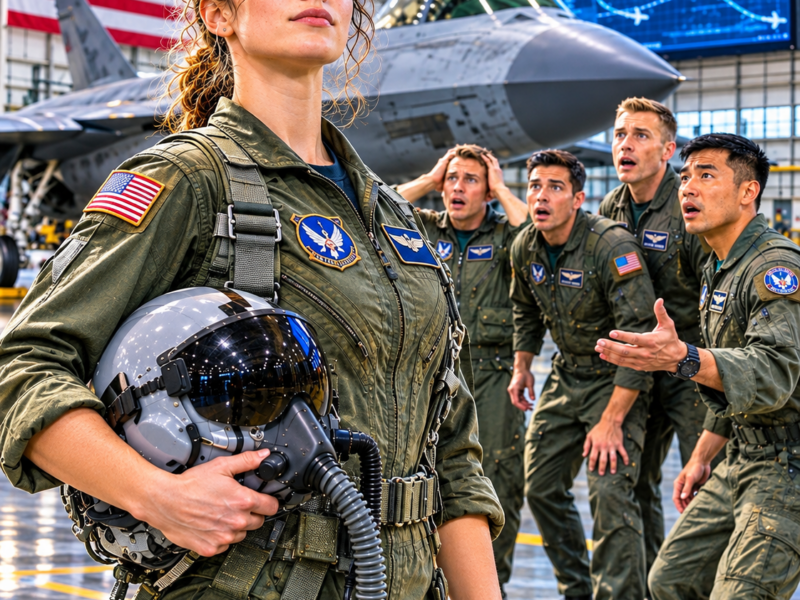
“I stood in a Maine airport hangar while four experienced pilots admitted they couldn’t reach my mother, who was trapped on a tiny island with a dying nine-year
I checked the fuel line twice, then ran my fingers along the control cables. My hands were shaking, but I forced myself to move slowly. Hyram stood beside the hangar, watching me with the expression of a man who had already imagined every possible way this could go wrong.
The radio crackled again.
“Karen, this is Joan. Danny is barely conscious now. His breathing is shallow. We need to get him off this island.”
My mother’s voice was controlled, but I could hear the fear beneath it.
I looked at the clock.
3:14 p.m.
The tide was turning. Pelican Bar, the narrow strip of sand that might give me a chance to land, would soon begin disappearing beneath the water.
Hyram stepped closer.
“Listen to me, Karen. If you go down there, you may not get back up.”
“I know.”
“No, you don’t.” His voice sharpened. “I’ve watched good pilots lose control in those crosswinds. I’ve watched people who had ten times your experience make mistakes they never got the chance to regret.”
I looked toward the runway. Four experienced pilots had already tried to reach Brandt Island. Four had turned back.
And a nine-year-old boy was running out of time.
“Then tell me what I need to know,” I said. “Don’t tell me why I can’t do it.”
For a moment, Hyram said nothing.
Then he walked to the aircraft and placed one hand on Pearl’s wing.
“Keep your approach low and steady. Don’t fight every gust. Let the airplane respond. And if the sand looks wrong, go around. I don’t care how close you are. You go around.”
I nodded.
He leaned closer.
“And Karen?”
“Yes?”
“Don’t mistake courage for invincibility.”
I swallowed. “I won’t.”
He handed me the keys.
That small metal ring felt heavier than anything I had ever held.
I climbed into Pearl’s cockpit and settled into the familiar seat. The airplane smelled of old fabric, oil, and sun-warmed wood. I had flown her dozens of times, but never with a child’s life depending on every decision.
I strapped myself in and checked the instruments.
Fuel: sufficient.
Oil pressure: normal.
Controls: free.
Wind: gusting hard from the northwest.
I started the engine.
Pearl coughed once, then roared to life.
Hyram stood beside the hangar, one hand raised. The other pilots had gathered behind him. Frank Lindall, Sergeant Alan Bastion, Lieutenant Commander Terrence Bowden, and Dub Haskins. Men who had spent years flying through storms and rough weather.
None of them tried to stop me.
I pushed the throttle forward.
Pearl rolled down the grass runway. The tail lifted, the wheels bounced over the uneven ground, and then the earth fell away beneath us.
For a few seconds, everything felt normal.
Then I reached the coastline.
The wind struck the plane like an invisible wall.
Pearl’s left wing dipped. I corrected gently, trying not to overreact. The aircraft shuddered as a gust lifted us, then dropped us again.
“Easy,” I whispered. “Easy, girl.”
The shoreline disappeared behind me.
Ahead lay the dark water of the Atlantic and, somewhere beyond it, Brandt Island.
I had studied the route on maps. I knew the approximate distance, the wind direction, and the tide schedule. I knew where the dangerous rocks lay beneath the surface.
But a map could not show me exactly how the air would behave between the mainland and the island.
I adjusted my heading.
The radio came alive.
“Karen, this is Hyram. Do you read?”
“Loud and clear.”
“Give me your position.”
I reported it.
“Wind is stronger than we expected,” he said. “You’re getting crosswind from the northwest. Keep your eyes open.”
“I see it.”
“Don’t rush.”
I looked down at the water. Whitecaps were breaking across the surface, and the waves seemed to run in every direction. The island appeared as a dark shape ahead, with the narrow airstrip barely visible through the haze.
I took a breath.
Then I saw the problem.
The runway was surrounded by uneven terrain. The crosswind would push Pearl sideways during the final approach. If I tried to land there, I could touch down with too much sideways movement and lose control.
The four pilots had been right about that.
But I hadn’t planned to use the runway.
I was heading for Pelican Bar.
The sandbar lay beyond the island’s southern point. At low tide, it stretched out like a pale ribbon between the rocks and the open sea. From above, it looked almost impossibly narrow.
I had seen photographs of it before. I had also listened carefully when my mother described the weeper, the soft patch of sand that could swallow a person’s leg if they stepped into it.
The landing itself was only half the problem.
I needed to find a firm stretch of sand long enough for Pearl to stop. Then I needed to get Danny aboard without letting the airplane sink or become trapped as the tide came in.
I checked the clock.
3:27 p.m.
The radio crackled.
“Karen, this is Joan. Can you hear me?”
“I’m here, Mom.”
“Danny’s condition is getting worse. He’s drifting in and out.”
I tightened my grip on the controls.
“Tell him I’m coming.”
There was a pause.
“I will.”
I could picture my mother kneeling beside Danny in the little island clinic. She had been a nurse for years, and she knew how to stay calm when everyone else panicked.
But she also knew what a ruptured appendix could do to a child.
I pushed the thought aside and focused on the water ahead.
Brandt Island grew larger. I could see the cluster of houses, the small harbor, and the pale strip of beach beyond the southern rocks.
Then the turbulence began.
Pearl dropped sharply.
My stomach seemed to rise into my throat. I pulled back slightly, then corrected. The aircraft climbed again, but the wind pushed her toward the island.
I remembered Hyram’s warning.
Don’t fight every gust.
I eased the controls and let the plane settle.
The sandbar was now visible.
It looked smaller than it had from the mainland.
Much smaller.
I circled once, keeping enough distance to study the surface. The tide was already moving in. Water flowed over the outer edge, leaving dark, wet bands across the sand.
I searched for the firmest section.
Near the center, I saw a stretch of pale sand that appeared smooth and relatively dry. Beyond it lay a darker patch, almost like a shadow.
The weeper.
I would have to stay well clear of it.
“Karen, this is Hyram,” came the radio. “I can see you approaching the island. What’s your plan?”
“I’m going for Pelican Bar.”
Silence.
Then his voice returned.
“Understood. We’re tracking your position from here. Keep talking to us.”
I swallowed.
“Will do.”
I turned Pearl into the wind and began my approach.
The sandbar rose slowly in the windshield.
I reduced power.
The airspeed dropped.
A gust caught the right wing, lifting it higher than I wanted. I corrected gently. Another gust pushed the nose off course.
I had one chance to line up properly.
If I came in too fast, Pearl could run beyond the firm sand and strike the rocks. If I came in too slowly, the wind could stall the wing before the wheels touched the ground.
I checked the instruments.
Then I looked outside again.
The sandbar was rushing toward me.
For a moment, I thought I had misjudged the distance.
The beach seemed to vanish beneath the nose.
I held my breath.
The wheels touched.
Pearl bounced once.
I kept the wings level.
The second contact was harder. The tires dragged through the sand, and the aircraft jolted violently.
A gust slammed into the side.
The left wing dipped.
I corrected.
The plane swung slightly, then straightened.
I pulled the throttle back and kept the controls steady.
Pearl rolled across the sand.
Ten feet.
Twenty.
Thirty.
The wheels slowed.
The engine sputtered as I cut the power.
Then, suddenly, there was silence.
I sat motionless for a second, listening to my own breathing.
We were down.
I had landed.
But I was not safe yet.
The plane had stopped on a narrow stretch of sand, and the tide was coming in. I could see water creeping toward the outer edge of the bar.
I opened the door and climbed out.
The wind nearly knocked me sideways.
I checked the wheels first. They were resting on firm sand, not sinking. I walked around the aircraft and examined the wings, the landing gear, and the propeller.
Nothing appeared damaged.
Then I saw movement near the island.
A small figure was running toward me.
It was my mother.
She was carrying a medical bag, and beside her was a man helping a child along the sand.
Danny.
Even from a distance, I could see how pale he was.
I ran toward them.
“Mom!”
She looked up, relief flashing across her face.
“You made it!”
“Is he okay?”
She shook her head.
“We have to move now.”
Danny was barely able to walk. His face was gray, and his eyes were half closed. My mother had wrapped a blanket around his shoulders.
I knelt beside him.
“Hey, Danny. I’m Karen.”
He looked at me without speaking.
“I brought a plane,” I said. “We’re going to get you to the hospital.”
His lips moved.
“Am I going to die?”
The question hit me harder than the wind had.
I looked at my mother.
She crouched beside him and took his hand.
“We’re doing everything we can,” she said gently. “You’re going to get help.”
I helped them toward Pearl.
The sand was firm beneath my boots, but I remembered the weeper. I kept everyone away from the darker patch.
When we reached the airplane, I realized another problem.
The cockpit was small. Danny would need to be secured carefully, and my mother would have to sit beside him to monitor his condition.
We couldn’t waste time.
I checked the rear area and moved the small equipment bag behind my seat. My mother helped Danny climb in, supporting his head and shoulders.
He winced and cried out.
“I’m sorry,” she whispered. “I know it hurts.”
She settled beside him and secured his seat belt. Then she placed the medical bag where she could reach it.
I checked the straps twice.
“Mom, is he secure?”
“Yes.”
“Can you keep him still?”
“I’ll do my best.”
I climbed into the pilot’s seat.
The tide was advancing faster than I wanted.
Water now covered part of the sandbar behind us.
I started the engine.
Pearl coughed, sputtered, and came alive.
I looked over my shoulder.
“Everyone ready?”
My mother nodded.
Danny’s eyes were closed.
I pushed the throttle forward.
The wheels began rolling through the sand.
At first, Pearl barely moved. The tires dragged through the soft surface, and the engine strained against the wind.
I kept the nose straight.
The aircraft gathered speed.
A gust pushed us sideways.
I corrected.
The sandbar narrowed ahead.
I could see the water approaching from both sides.
“Come on, Pearl,” I whispered.
The tail lifted.
The wheels bounced over a shallow ridge.
Then the ground dropped away.
For one terrible second, I wasn’t sure we had enough speed.
The plane shuddered.
The left wing dipped.
I held the controls steady.
Then Pearl climbed.
The sandbar fell away beneath us.
We were airborne.
I let out a breath I hadn’t realized I was holding.
Behind me, my mother spoke.
“You did it.”
I didn’t answer.
Not yet.
We still had to get home.
The weather had changed while we were on the island. Dark clouds were gathering over the mainland, and the wind was stronger than before.
I adjusted our heading.
“Mom, how is Danny?”
She checked him.
“Not good. He’s very weak.”
“Keep talking to him.”
“I am.”
I glanced at the fuel gauge.
We had enough fuel to reach the mainland, but I needed to avoid unnecessary detours. The shortest route would take us across the exposed water.
The radio crackled.
“Pearl, this is Hyram. We have you on the radio. Confirm your status.”
I pressed the microphone.
“Hyram, we’re airborne. Danny is aboard. We’re heading for the mainland.”
A burst of static followed.
Then his voice came through, louder than before.
“Copy that. We’re organizing an escort.”
“An escort?”
“Frank, Alan, Terrence, and Dub are taking off. They’ll help guide you through the weather.”
I looked at the dark clouds ahead.
“Tell them to stay clear of my wings.”
There was a brief pause.
Then Hyram laughed.
“That’s the Karen we know.”
For the first time since leaving the mainland, I smiled.
The four pilots were coming.
A few minutes later, I spotted them.
Four aircraft appeared behind and to either side of Pearl, keeping a careful distance. They formed a loose escort around us.
Frank was ahead and to my left.
Alan held position on the right.
Terrence and Dub followed behind.
The sight of them gave me a little more confidence, but it didn’t make the weather any less dangerous.
A wall of gray cloud was moving across our route.
The first snowflakes struck the windshield.
Then more came.
Within minutes, visibility dropped.
The world outside became a blur of gray sky and white snow.
I checked the instruments and kept my heading.
“Mom, can you still hear me?”
“Yes.”
“Keep Danny warm. We may hit some rough air.”
She pulled the blanket closer around him.
“He’s not responding much.”
My stomach tightened.
“Danny?” I called over my shoulder. “Stay with us, buddy.”
There was no answer.
The radio crackled.
“Karen, this is Frank. You’re drifting slightly south. Correct your heading two degrees north.”
I made the adjustment.
“Got it.”
“Your altitude is good. Keep it steady.”
Another gust hit Pearl.
The plane lurched.
My mother grabbed the side of her seat.
I corrected carefully, trying to keep the wings level.
The snow thickened.
For a few seconds, I could barely see the other aircraft.
Then Frank’s voice came through again.
“Don’t chase the plane in front of you. Trust your instruments. We’re here.”
I nodded, though he couldn’t see me.
I had spent months learning how to fly.
I had studied weather charts, memorized procedures, practiced emergency landings, and listened to experienced pilots explain the mistakes they had made.
But no lesson had prepared me for carrying a sick child through a snow squall while four pilots watched over my wings.
I focused on one thing at a time.
Altitude.
Heading.
Airspeed.
Fuel.
The storm seemed endless.
Then a faint shape appeared ahead.
The coastline.
I had never been so happy to see land.
“Frank, I have the coast in sight.”
“Confirmed. You’re almost home.”
I looked at the fuel gauge again.
Still enough.
The mainland airfield was only a few miles away.
I could see the runway through a break in the clouds.
Then the wind shifted.
Pearl’s nose swung to the left.
I corrected and began the approach.
The runway looked longer than the sandbar, but I knew better than to become careless now.
I checked my speed.
I lowered the nose slightly.
The aircraft descended.
“Mom, we’re coming in.”
She looked toward the windshield.
“I see it.”
Danny remained still.
I tried not to think about it.
The runway grew closer.
I lined up with the center.
A gust pushed us sideways.
I corrected.
Another gust struck from the opposite direction.
I held the wings level.
The wheels touched the runway.
Pearl bounced once.
Then settled.
I reduced power and kept her straight as the tires rolled across the wet surface.
We slowed.
Slower.
Slower.
Finally, Pearl came to a stop.
I shut off the engine.
For a moment, nobody moved.
Then I heard shouting outside.
People were running toward us.
A medical team had been waiting near the runway. Someone opened the passenger side, and my mother began explaining Danny’s condition.
Two paramedics carefully lifted him onto a stretcher.
His eyes were closed.
I climbed out and stood beside the plane, feeling the cold air on my face.
“Is he alive?” I asked.
One of the paramedics looked at me.
“Yes. But he needs surgery immediately.”
They loaded Danny into the ambulance.
My mother climbed in beside him.
Before the doors closed, she reached out and squeezed my hand.
“You got him here, Karen.”
Then the ambulance pulled away.
I watched its lights disappear down the road.
The four escort pilots landed shortly afterward.
Frank climbed out first. He walked toward me, his flight jacket flapping in the wind.
“You did a fine job,” he said.
I nodded, unable to find words.
Alan shook my hand.
Terrence gave me a tired smile.
Dub looked at Pearl and whistled.
“That little airplane has more heart than most machines twice its size.”
I laughed, but my legs were beginning to shake.
Hyram arrived in a truck a few minutes later.
He got out slowly and walked toward me.
For a moment, he just looked at me.
Then he placed both hands on my shoulders.
“You brought them home.”
I looked down.
“We almost didn’t make it.”
“But you did.”
He glanced toward the road where the ambulance had gone.
“That’s what matters.”
I finally allowed myself to cry.
Not because I was afraid anymore, but because the fear had nowhere else to go.
Hyram pulled me into a brief, awkward hug.
“You did something extraordinary today,” he said.
I shook my head.
“I just flew the plane.”
“No,” he replied. “You made a decision when everyone else was afraid to make one. And then you accepted the responsibility that came with it.”
I looked at Pearl.
Her wings were dusted with snow, and sand still clung to the tires.
She looked battered, but she had carried us through.
That evening, I went to the hospital.
The doctors had taken Danny into surgery shortly after the ambulance arrived. His appendix had ruptured, and infection had begun spreading through his body.
The operation lasted several hours.
I sat in the waiting room with my mother, Hyram, and the four pilots. Nobody said much.
Every time a door opened, I looked up.
At last, a surgeon came out.
He removed his cap and gave us a tired smile.
“Danny made it through surgery.”
My mother covered her mouth.
The surgeon continued.
“It was serious. He lost a lot of time, and the infection was advanced. But we were able to remove the damaged appendix and begin treatment. The next twenty-four hours will be important.”
I closed my eyes.
Danny was alive.
For the first time all day, I felt the weight of everything that had happened.
I leaned back in the chair and cried.
My mother put an arm around me.
“He’s going to have a chance now,” she whispered.
And that was enough.
The next morning, Danny was still in intensive care, but his condition had stabilized.
Two days later, he opened his eyes.
My mother called me from the hospital.
“He asked about you,” she said.
I drove there as soon as I could.
When I entered his room, Danny was lying beneath a white blanket. He looked pale and tired, but his eyes were open.
I walked toward his bed.
“Hey, pilot,” he whispered.
I laughed.
“Hey, passenger.”
He managed a small smile.
“Did your plane make it?”
“She’s fine.”
“Was it scary?”
I thought about the wind, the water, the snow, and the moment Pearl’s wheels first touched the sand.
“Yes,” I said honestly. “It was scary.”
He looked at me for a moment.
“But you came anyway.”
I sat beside him.
“Of course I did.”
He reached for my hand.
“Thank you.”
I squeezed his fingers gently.
“You just concentrate on getting better.”
And he did.
Over the following weeks, Danny grew stronger. The infection responded to treatment, and he slowly returned to his usual energetic self.
When he was finally allowed to leave the hospital, his mother brought him to the airfield.
He stood beside Pearl, staring up at her yellow wings.
“Is this the plane?” he asked.
“This is her,” I said.
He walked around the aircraft carefully, as if he were meeting someone famous.
Then he looked at me.
“Can I fly with you someday?”
I smiled.
“When your doctor says you’re ready.”
He nodded seriously.
“I’ll remember.”
His mother thanked me more times than I could count. My mother hugged me. Hyram stood nearby, pretending to be interested in a toolbox so nobody would notice how emotional he had become.
The story spread through the small towns along the Maine coast.
Some people called me brave.
Others said I had been reckless.
A few insisted that no seventeen-year-old should ever have been allowed to attempt such a flight.
I understood their concerns.
I had been young. I had limited experience. And the risks had been real.
I also knew that courage did not erase the possibility of failure.
What happened that afternoon could have ended very differently.
But I learned something important from it.
Being young doesn’t mean you have nothing to offer. Having fewer years behind you doesn’t mean you should stop listening, learning, or preparing. And experience is valuable not because it makes someone fearless, but because it teaches them to respect what can go wrong.
I had listened to Hyram.
I had studied the tide.
I had chosen the sandbar because the runway was unsafe.
I had checked the airplane before taking off.
And when the weather changed, I relied on my instruments and the pilots who were guiding me.
I didn’t succeed because I believed I was invincible.
I succeeded because I understood how much I could lose.
Years later, people still asked me about that flight.
They wanted to know whether I had been afraid.
I always told them the truth.
I had been terrified.
But I had also known that a little boy was waiting for help, and there was a chance I could reach him.
Sometimes, the most important thing isn’t being the most experienced person in the room.
It’s being prepared enough to recognize when you can help, humble enough to know your limits, and determined enough to act when the moment comes.
Pearl eventually returned to her ordinary life of short flights along the Maine coast. Her yellow wings carried fishermen, supplies, and the occasional passenger who wanted to see the islands from above.
But whenever I walked past her, I remembered Pelican Bar.
I remembered the rising tide, the fierce wind, and the tiny figure waiting near the clinic.
Most of all, I remembered Danny’s question.
“Am I going to die?”
And the promise I had made without knowing whether I could keep it.
I never forgot that day.
Neither did Danny.
THE END









