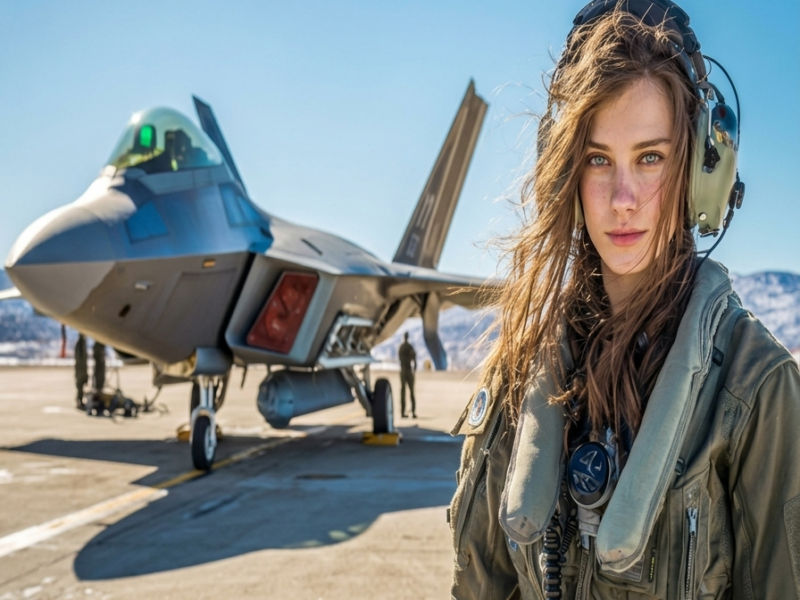
Forty hostile jets screamed across the sky above Nellis Air Force Base while everyone in the command bunker froze
The heat radiating from the tarmac at Nellis Air Force Base was usually a dry, suffocating force, but today it felt thick with grease, jet fuel, and an impending sense of violence. Forty hostile jets—unmarked, low-slung, and moving with mechanical, lethal precision—screamed across the sky above us. Inside the hardened concrete command bunker, three dozen senior officers, tactical analysts, and radar operators froze in absolute, paralyzed silence. Radar screens flashed an ocean of crimson threat vectors. Sirens blared in rhythm with the pounding in my ears.
The first explosion shook the concrete beneath my boots so violently that the overhead LED panels flickered and died before emergency generators kicked in with a guttural hum. Outside, alarms began screaming over the deafening roar of afterburners.
I didn’t wait for a briefing. I sprinted toward the flight line, my flight helmet tucked tightly beneath my arm, my eyes squinting against the sudden wall of heat and blinding glare. Around me, ground crew and mechanics scattered like leaves in a gale, running between burning support vehicles, ruptured fuel tanks, and massive, billowing clouds of oily black smoke. Fire engines roared down the taxiways, their sirens drowned out by the thunder in the sky.
“Get back inside, Captain! That is a direct order! Get back to the bunker!” Colonel Mason’s voice barked through my radio headset, sharp, commanding, and laced with an icy edge that made my skin prickle.
I stopped beside my assigned F-22 Raptor, resting one gloved hand against its heat-resistant composite skin. I turned my head toward the desert horizon. Through the thick smoke, I saw them: dozens of high-agility fighters cutting through the low cloud layer. They weren’t flying like a chaotic strike force attempting a surprise raid. They moved in perfect, synchronized wedges, utilizing our base’s known radar blind spots with terrifying accuracy.
“This isn’t random,” I said into my collar mic, my voice steady despite the adrenaline pouring through my veins. “They know our emergency defense vectors, Colonel. They know exactly where our surface-to-air batteries are offline for maintenance.”
There was a long, suffocating silence over the comms channel. The static hummed softly.
Then Mason’s voice returned, dropped to a quiet, cold register. “You don’t have clearance to analyze this situation, Emily. Stand down and report to the underground bunker immediately.”
I didn’t answer. I grabbed the ladder and climbed into the cockpit, my hands shaking—not from fear, but from a sudden, sharp clarity.
Three years earlier, my father, Major Thomas Vance, had died during a routine night training mission over the Nevada Test and Training Range. His aircraft had suddenly dropped off the primary radar, lost all communication, and slammed into the dry lake bed at Mach 1.5. Colonel Mason had been the lead investigating officer who signed the final military report. Mechanical failure due to severe spatial disorientation. Case closed. File sealed.
I had never believed a single word of it. My father had logged over four thousand hours in fighter cockpits; he knew the desert skies better than he knew his own backyard.
I flipped the battery switches, engaged the auxiliary power unit, and felt the twin Pratt & Whitney engines roar to life beneath me. The canopy slid shut, sealing out the smell of burning jet fuel and replacing it with the dry, artificial oxygen of the life-support system. As I taxied onto the damaged runway and slammed the throttles forward into full afterburner, the force pressed me deep into my ejection seat.
My Raptor vaulted into the smoke-filled sky. Below me, the base looked like a sprawling, chaotic inferno. The enemy formation split cleanly into two groups: twenty fighters plunged toward the main runways to deliver precise strike munitions, while the remaining twenty vanished from my primary radar grid, dropping into the terrain-following altitude behind the mountains.
Suddenly, my cockpit warning system lit up with an amber caution light. A high-frequency radio signal was pinging off my receiver—not an enemy signal, but an encrypted, internal military identification code originating from the eastern edge of Nellis itself.
My blood turned cold.
“Command, someone on the ground is guiding them,” I reported, my fingers tightening around the flight stick. “They’re broadcasting a target beacon from inside the base perimeter.”
Mason’s reply was instantaneous, skipping standard radio protocols entirely. “Captain Vance, turn your aircraft around now. Do not engage. Stand down!”
That was the moment the floor dropped out of my stomach. He wasn’t surprised by my report. He wasn’t demanding coordinates or calling security forces. He was terrified that I had detected the signal.
Ignoring his direct orders, I banked the Raptor hard to the left, pulling six Gs as I sliced through the thick smoke columns toward the eastern perimeter. Below me stretched the desolate, restricted storage zones—old steel hangars left over from the Cold War era.
I brought the jet low, skimming three hundred feet above the desert floor, my eye tracking the source of the encrypted ping. Deep in a wash between two arid hills sat a small, isolated maintenance hangar. Its heavy corrugated steel doors were pushed wide open. Inside, illuminated by the harsh glow of computer monitors, sat a tactical communications array, its dish pointed directly toward the sky, actively feeding flight telemetry to the incoming hostiles.
And standing right beside the transmitter, wearing an immaculate flight suit, was Colonel Mason.
I brought the Raptor into a steep hover-like bank, circling the structure. Mason looked up through the open roof vents. Even from the air, I could see his face clearly on my optical sensors. He reached out to a master control console and abruptly shut everything down. The transmitter light died.
For one terrible, weightless second, the sky inside my helmet became dead silent.
Then, a sudden burst of static washed over an unassigned emergency frequency. My heads-up display flickered wildly as a legacy call sign flashed in bright green alphanumeric characters across my visor:
RAVEN-12
It was my father’s old call sign. The call sign of a dead man, buried three years ago in a flag-draped casket.
A heavily encrypted, digitized voice crackled into my headset, distorted by legacy compression filters.
“Emily… if you’re hearing this, your father didn’t crash.”
I forgot how to breathe. The controls felt light in my hands, the jet momentarily forgotten as my heart hammered against my ribs.
“He found out who was selling our flight data and advanced stealth telemetry to foreign syndicates,” the voice continued, urgent and fading against growing signal interference. “They cut his oxygen line and wiped his flight recorder.”
Behind my jet, forty hostile aircraft were closing in on the base, their munitions dropping on critical infrastructure, but the battle above Nellis suddenly meant nothing compared to the war inside my head. I now understood what Mason had been protecting for three years. It wasn’t military secrecy—it was his own treason.
Just before the transmission dissolved into complete white noise, the voice whispered one final, devastating line:
“Don’t trust the man standing beside you. Raven-12 out.”
I rolled the F-22 around and flew back toward the tarmac, bringing the aircraft down hard onto a cleared taxiway. I popped the canopy, unbuckled my harness, and dropped to the pavement, drawing my service sidearm from its holster.
Across the smoke-streaked apron, Colonel Mason was walking toward me, flanked by two armed Security Forces airmen who looked confused, terrified, and completely unaware of what was happening. Mason’s face showed no fear now. He stopped thirty feet away, adjusted his cap, and stared directly into my eyes.
And then, slowly, he smiled.
“Put the weapon away, Captain Vance,” Colonel Mason said, his voice dropping into a calm, patronizing cadence that sent a chill straight down my spine. “You’re stressed. You’ve just witnessed an unprecedented surprise attack on American soil. Lower your sidearm before you commit an act of high treason.”
The two young Security Forces airmen beside him shifted uncomfortably, their M4 carbines held at low-ready. They looked back and forth between their base commander and me—a decorated fighter pilot standing in a flight suit with a drawn pistol while smoke billowed into the sky behind us.
“He’s the target beacon!” I shouted to the airmen, keeping my sight aligned squarely on Mason’s chest. “Check his personal communications pad! He just transmitted our base’s automated defense protocols to an incoming strike force from Hangar 9!”
The airmen hesitated. One of them, a young sergeant named Perez, glanced nervously toward Mason. “Sir?”
“Captain Vance is suffering from severe tactical hypoxia, Sergeant,” Mason said smoothly, not taking his cold blue eyes off mine. “Her father suffered from similar psychological breakages before his fatal crash. It’s a tragic family history. Disarm her and take her into custody. That is a direct order from your commanding officer.”
Perez took a hesitant step forward. “Captain, please drop the—”
“He killed my father!” I snapped, my finger pressing lightly against the trigger. “And right now, forty hostile fighters are flattening our secondary installations because he gave them the access codes!”
Before Perez could react, a massive explosion tore through the base armory half a mile away. The shockwave slammed into us like a physical wall, throwing Perez and the other airman off balance. Dust and gravel rained down around us.
Mason didn’t flinch. In that split second of total distraction, he reached into his jacket, pulled a heavy tactical pistol, and fired twice.
The shots were terrifyingly precise. Both airmen dropped to the concrete, hit in their side armor panels, incapacitated instantly.
I dived behind a heavy aluminum maintenance cart as a third round cracked through the air where my head had been a second before. Metal splinters flew off the cart, biting into my arm.
“You always were too much like Thomas, Emily!” Mason shouted over the roar of distant jet engines and crackling fires. “Curious. Righteous. Completely blind to how the real world operates!”
I leaned out from behind the cart and fired three quick rounds. Mason scrambled behind a concrete blast barrier, his boots crunching on broken glass.
“Why?” I yelled, my heart hammering against my chest as I rechecked my magazine. “You were his wingman for five years! You sat at our dinner table!”
“Because the military establishment is broken!” Mason shouted back, his voice echoing off the corrugated metal of the nearby hangars. “Your father believed in flags and oaths! He didn’t see that the defense contractors, the politicians, and the intelligence agencies were buying and selling our lives every single day! I simply cut out the middleman. The syndicate I work for pays in real currency, Emily. Not medals and plastic plaques given to widows!”
I squeezed my eyes shut for a brief second, processing the bitter clarity of his words. My father hadn’t died in a tragic accident. He had been murdered because he possessed honor in a system Mason had corrupted.
“Who sent that message?” I demanded, peaking around the edge of the cart. “Who was using Raven-12’s call sign?”
Mason laughed—a short, ugly sound. “A ghost, Emily. A ghost created by your father’s old friends in Special Intelligence before I managed to clean house. But it doesn’t matter who sent it. You’re not leaving this base alive.”
I heard the distinct sound of a heavy diesel engine approaching fast from around the corner of Hangar 4. A black, unmarked armored SUV pulled up, its doors flying open. Three men in tactical gear without military insignia stepped out, carrying short-barreled automatic rifles.
“Secure the captain,” Mason ordered them quietly. “Then erase the telemetry logs in the main command center. We leave in five minutes.”
I was outgunned, pinned behind a thin sheet of aluminum, with three mercenaries advancing on my position and Mason orchestrating the execution of the entire base command structure. I looked over my shoulder toward my idling F-22. The ladder was still attached. The engines were still humming at flight-idle, consuming fuel, ready to fly.
I had only one chance.
I pulled a tactical smoke grenade from my vest—standard issue for emergency survival kits—pulled the pin, and slammed it onto the concrete beneath me. Instantly, a thick, impenetrable cloud of gray chemical smoke erupted, enveloping the maintenance cart and the taxiway.
Automatic gunfire cut through the haze, bullets richocheting off the pavement and pinging against metal. I didn’t run away from them; I ran directly through the thickest part of the smoke, trusting my memory of the flight line layout.
I burst out of the grey cloud right at the base of my jet’s ladder. I scrambled up the rungs, threw myself into the ejection seat, and slammed the canopy closure switch.
Bullets slammed into the reinforced canopy glass, leaving spiderweb cracks but failing to penetrate the multi-layered polycarbonate shield. Down on the tarmac, Mason stood watching me, his eyes wide with sudden fury as he realized what I was about to do.
I didn’t wait for taxi clearance. I didn’t line up with the runway. I slammed both throttles forward into full afterburner.
The Raptor surged forward like a unleashed missile, its twin engines scorching the pavement, blasting the armored SUV backwards and scattering the mercenaries like ragdolls in the extreme thermal wash. The jet leapt into the air after less than eight hundred feet of ground roll, rocketing straight up into the smoke-filled clouds.
Inside the cockpit, my tactical displays were flashing wildly. The primary defense network was completely dead. But as I reached five thousand feet, my secondary survival display picked up a hidden, hard-coded data transmission originating from a remote radar installation sixty miles north in the desert—a facility known as Site 4.
The transmission was repeating a single line of automated code:
RAVEN-12 RECOVERY PROTOCOL ACTIVATED. PROCEED TO COORDINATES.
My father’s allies were still out there. And Mason was about to realize that the ghost he thought he had buried three years ago was coming back to hunt him down.
The sky over the Nevada desert was turned a bruised shade of purple as the sun began to dip behind the jagged black teeth of the mountains. Behind me, the massive plume of smoke rising from Nellis Air Force Base was visible for fifty miles—a dark scar across the horizon marking the complete collapse of our regional defense command.
I flew low, keeping the F-22 tucked down in the twisting canyons to stay beneath civilian radar networks and whatever secondary tracking systems Mason’s syndicate had deployed. My fuel gauges were dropping steadily into the red zone. The afterburner takeoff had consumed critical gallons, and my left engine was showing a minor hydraulic pressure warning from a hit taken during the ground ambush.
“Focus, Emily,” I whispered to myself, wiping a smear of blood from a small cut on my forehead.
My tactical screen displayed the coordinates provided by the encrypted transmission. They led to a desolate stretch of dry lake bed deep inside the restricted weapons testing range—an area marked on modern maps as abandoned since the late 1980s.
As I crested a final rocky ridge, the target came into view. It was an old, concrete runway half-buried in windblown sand, surrounded by rusted radar towers and collapsed wooden barracks. At the far end of the strip sat a single, heavily reinforced underground bunker, its blast doors thrown open to reveal a dimly lit interior.
I brought the Raptor down hard on the cracked concrete, the tires screaming as I deployed the speed brakes and reversed the thrust. The jet rolled to a halt just yards from the open bunker entrance.
I cut the engines. The sudden silence that filled the cockpit was overwhelming, punctuated only by the ticking of the cooling metal and the rapid sound of my own breath inside the flight helmet.
Unbuckling my harness, I grabbed my sidearm, popped the canopy manual release, and stepped down onto the cold desert sand. The wind whistled through the rusty structural steel of the dead radar towers, sounding like a high-pitched moan.
“Hands where I can see them, Captain Vance,” a voice called out from the darkness of the bunker entrance.
It wasn’t a computer-generated voice. It was human, raspy, and aged by years of harsh desert air.
A tall figure stepped out into the twilight, wearing an old-style flight jacket with faded patches. In his right hand, he held a sidearm pointed down at the ground. His hair was completely white, his face etched with deep lines of fatigue and survival.
I froze. The gun in my hand felt suddenly heavy.
“Major… Vance?” I breathed, my voice barely a whisper.
The man paused, his eyes softening slightly as he stepped further into the light. He looked so much like my father, yet broken by years of isolation. But as he drew closer, I recognized the distinct scar running down his left jawline. It wasn’t my father.
It was Lieutenant Colonel Marcus Reed—my father’s squadron commander who had reportedly retired and vanished from public life six months after my father’s death.
“I’m sorry, Emily,” Reed said softly, lowering his weapon completely. “Your father isn’t here. Thomas really is gone. But his memory… and his work… are very much alive inside this hole.”
I swallowed hard, the sting of disappointment burning in the back of my throat, quickly replaced by a sharp surge of anger. “You used his call sign. You lured me out here using his voice.”
“I used the only key that could get you out of Nellis before Mason executed you,” Reed replied, turning toward the dark bunker. “Come inside. We don’t have much time. Mason’s syndicate has satellite coverage over this quadrant every forty minutes, and your jet’s heat signature is glowing like a flare on their thermal imaging.”
I followed Reed down a steep concrete ramp into the subterranean facility. The air inside was cool, smelling of ozone, old paper, and hydraulic fluid. The room was packed with retrofitted military servers, bank monitors displaying real-time global radar networks, and stacks of heavily classified intelligence folders.
“How long have you been operating out of here?” I asked, looking around the improvised command post.
“Since the night your father died,” Reed said, sitting down heavily in a worn swivel chair before a bank of screens. “Thomas realized that a cabal of high-ranking military officers—led by Mason—was systematically harvesting our advanced avionics data and selling it to foreign entities through a shell company called Apex Defense Solutions. When Thomas tried to take the evidence to the Inspector General, Mason tampered with his flight systems.”
Reed pressed a key on the main console. A series of flight logs and encrypted audio files appeared on the monitors.
“I couldn’t save Thomas,” Reed continued, his voice heavy with old guilt. “Mason suspected I knew something, so I faked my retirement and went off the grid before he could put a bullet in my back too. I’ve spent three years gathering the hard digital evidence needed to dismantle his entire network.”
“He just facilitated a full-scale attack on Nellis,” I said, leaning over the console to inspect the data streams. “Why? Why expose himself so openly?”
“Because today wasn’t just an attack on Nellis,” Reed said, pointing to a flashing red map of North America. “It was a distraction. The jets that bombed your flight line were old unmanned drone fighters modified to look like foreign hostiles. Mason staged the strike to create a state of absolute military chaos.”
He pulled up a secure logistics route originating from a naval base in California.
“While the entire defense network is focused on the ‘invasion’ at Nellis,” Reed explained, “Mason is moving the master hardware of our newest autonomous flight AI—the Project Aegis core—out of the country via a private transport plane taking off from a hidden strip in northern Nevada in less than two hours. If that core leaves US airspace, every automated defense system in the country will be completely compromised.”
I looked down at my flight gloves, feeling the cold rage settle deep into my bones. Mason hadn’t just destroyed my father’s life and my base; he was preparing to sell out the entire nation.
“Where is the transport taking off?” I asked softly.
Reed looked up at me, a mixture of pride and dread in his eyes. “A private landing strip in the Black Rock Desert. But Emily… your F-22 is almost out of fuel, and Mason has an entire squad of private contractors guarding that strip. You can’t do this alone.”
“I’m not alone,” I said, looking at the bank of server screens. “You have access to the base automated defense overrides, don’t you?”
Reed slowly nodded. “I still have backdoors into the network that Mason hasn’t patched.”
“Then load my jet with fuel from your emergency supply,” I said, checking my pistol’s chamber with a sharp metallic snap. “And get ready to give me air support. We’re finishing what my father started.”
The night sky over the dry wilderness of northern Nevada was pitch black, devoid of moon or cloud cover. I flew the F-22 at a agonizingly low altitude—barely a hundred feet above the jagged terrain—using night-vision systems and synthetic vision displays to navigate through the deep desert canyons.
Beside me in my helmet, Reed’s voice came through on a closed-circuit, laser-directed communication beam that couldn’t be intercepted by conventional radio scanners.
“I’m reading your position, Emily,” Reed reported from the subterranean bunker sixty miles behind me. “You are six minutes out from the Black Rock landing strip. I’ve bypassed their outer perimeter radar by feeding them a false loop of clean telemetry, but once you break radio silence, they’re going to know you’re there.”
“What’s the status of the transport aircraft?” I asked, keeping my hands perfectly still on the flight controls.
“A heavy cargo plane—a modified C-130 without markings—is currently on the taxiway,” Reed replied. “They’re finishing the loading process right now. Mason’s personal SUV is parked beside the main loading ramp. He’s planning to board that plane himself.”
“He’s not getting on that plane,” I said grimly.
I pushed the throttles forward slightly, feeling the jet accelerate smoothly. Reed’s automated ground crew setup at the old bunker had refueled my Raptor and loaded two precision-guided munitions onto my internal weapon bays. It was a minimal combat loadout, but in the hands of a determined pilot, it was more than enough.
As I cleared the final line of low hills, the Black Rock landing strip stretched out before me—a long, dark ribbon of asphalt laid across the brilliant white salt flats. Floodlights illuminated the rear loading ramp of a massive four-engine cargo transport. Men in black tactical gear were rolling heavy, temperature-controlled metal crates up the ramp.
Standing near the nose of the transport, wearing a heavy winter parka over his uniform, was Colonel Mason. He was holding a satellite phone, gesturing wildly as he issued orders to his mercenaries.
“Emily, you have three mobile anti-aircraft missile units stationed around the perimeter,” Reed warned in my earpiece. “They just brought their radar systems online! They’ve picked up your engine noise!”
“Locking target vectors now,” I muttered, my thumb flicking open the weapon selector switch on the flight stick.
A harsh, high-pitched tone filled my headset as the F-22’s targeting computer locked onto the radar signatures of the three ground units.
“Fox two!” I shouted, firing two tactical missiles in rapid succession.
The internal weapons bay doors snapped open for a fraction of a second, releasing the munitions before sealing shut to preserve the jet’s stealth profile. The missiles dropped away, their rocket motors igniting with a blinding burst of white fire that lit up the desert floor.
Two miles ahead, double fireballs erupted into the darkness as the anti-aircraft units exploded in violent succession. Secondary detonations rippled across the perimeter as ammunition caches cooked off, sending showers of red sparks high into the night sky.
Panic erupted on the landing strip below. The mercenaries scattered, firing assault rifles uselessly into the sky as the dark shape of my Raptor roared overhead at six hundred miles per hour.
I banked the jet into a tight, eight-G turn, circling back over the airstrip. Down on the tarmac, the C-130 transport began spooling up its massive turboprop engines, preparing to make a desperate takeoff run down the dark runway before I could execute another attack pass.
“Reed, cut their runway lights!” I commanded.
“Done,” Reed replied instantly.
The floodlights lining the asphalt died instantly as Reed uploaded the override code to the local generator grid, plunging the entire facility into total darkness save for the burning wrecks of the anti-aircraft vehicles.
The C-130 swerved violently on the tarmac, its pilots struggling to maintain alignment on the darkened runway. The heavy aircraft lurched forward, gaining speed, its massive props slicing through the dusty air.
“Mason is inside that cargo hold with the Aegis core!” Reed shouted through the comms. “If that plane gets airborne, you won’t be able to shoot it down without destroying the data!”
“I’m not shooting it down,” I said, setting my flight flaps and dropping my landing gear. “I’m cutting off its escape.”
I brought the F-22 down onto the runway directly in front of the accelerating cargo plane, touching down on the asphalt at nearly two hundred miles per hour. The two massive aircraft roared toward each other down the narrow strip of concrete like two metallic titans on a collision course.
Mercenary gunners standing on the open rear ramp of the C-130 opened fire, heavy caliber rounds tearing through the sky and bouncing off the desert floor around me.
I held my ground, keeping the Raptor lined up dead center on the runway, refusing to blink.
At five hundred feet of separation, the pilot of the C-130 panicked. Realizing I wasn’t going to turn away, he slammed on his emergency brakes and yanked the control wheel hard to the left to avoid a head-on collision.
The massive cargo plane skidded sideways, its tires exploding off the rims with deafening pops. The left wing dipped low, striking the ground and sending a massive shower of white sparks across the salt flats before the entire aircraft swerved off the runway and ground to a halt in the deep, soft sand, completely disabled.
I brought my jet to a smooth stop fifty yards away, turning the nose so the bright taxi lights illuminated the side of the crippled transport.
I unbuckled my harness, pulled my sidearm, and stepped out into the cold desert wind. The game of hide-and-seek was over. It was time to settle the score.
The night air of the Black Rock Desert felt thin and freezing against my face as I stepped down from the F-22’s ladder. The ground around the disabled C-130 was silent save for the hissing of ruptured hydraulic lines, the groaning of twisted metal, and the distant, dying crackle of burning brush.
I kept my pistol raised, moving with slow, deliberate steps through the cloud of dust settling around the cargo plane.
The heavy hydraulic ramp at the rear of the transport groaned as it slowly lowered to the ground. Inside the dimly lit cargo hold, surrounded by secure server racks, three mercenaries lay unconscious from the violence of the crash.
Standing in the center of the hold, bleeding from a deep cut above his left eye but still holding a heavy automatic pistol, was Colonel Mason.
“You just don’t know when to die, do you, Emily?” Mason coughed, wiping blood from his chin with the back of his tactical glove.
“Drop the weapon, Mason,” I said, stepping into the mouth of the cargo ramp, my sights centered directly between his eyes. “It’s over. Reed has already transmitted your financial records and the telemetry logs to the Department of Defense and the FBI. Federal agents are en route to this grid right now.”
Mason let out a raspy, bitter laugh, taking a slow step toward me. “Federal agents? Do you really think this ends with handcuffs and a trial, Captain? The people I work for don’t fit into courtroom docks. They own the judges. They own the senators. Even if you bring me in, I’ll be walking free in six months under a protected intelligence non-disclosure agreement.”
“My father thought the law mattered,” I replied, my hand rock-steady on the grip of my gun. “I’m starting to think he was too gentle.”
“Your father was a fool!” Mason spat, his eyes wide with a desperate, frantic energy. “He had the same choice you have right now! He could have walked away with ten million dollars in a Swiss account! He could have ensured your future, your safety, your entire life! But he chose an empty concept of duty! And what did it get him? A marked grave in a dry desert!”
“It got him something you will never have,” I said softly. “An honorable name.”
Mason’s face contorted into a mask of pure rage. He raised his pistol to fire.
I didn’t hesitate. I squeezed the trigger twice.
The heavy double shot echoed like thunder inside the metallic cargo hold. Mason froze, his eyes widening in shock as the force of the rounds knocked him backward against the central Aegis server rack. His pistol slipped from his fingers, clattering against the aluminum floor deck.
He slid slowly down the side of the server cabinet, leaving a dark streak against the metal, before coming to a rest on the floor. He looked up at me, his breathing shallow and rattling, the arrogant conviction entirely gone from his eyes.
“Your father…” Mason whispered, his voice fading into a barely audible rasp, “…he said… you’d finish it…”
He slumped sideways, his eyes turning glassiness as his breathing stopped completely.
Silence settled over the cargo bay. I stood there for a long moment, my gun lowered, watching the man who had torn my family apart and betrayed his oath finally face justice.
“Emily? Emily, do you read me?” Reed’s voice crackled through my headset, filled with anxious static. “Status! Are you alright?”
I took a deep, clear breath, feeling a massive weight lift from my chest for the first time in three long years.
“The target is down, Reed,” I said quietly into the mic. “The Aegis core is secure. Mason’s network is dead.”
There was a long pause on the other end of the line, followed by the sound of a long, shuddering sigh of relief from the old lieutenant colonel. “Copy that, Captain. Inbound military transport helicopters are ten minutes from your location. Help is on the way.”
I walked over to the main server rack containing the Aegis core, pulled the master data drive from its slot, and secured it inside my tactical vest. Then I walked out onto the rear ramp of the C-130 and looked up at the stars above the desert floor.
The air was clean and cold. In the distance, the faint, rhythmic thumping of helicopter blades echoed through the mountain passes—not enemy hostiles, but friendly recovery forces arriving to clear the field.
I reached into my flight jacket and pulled out a small, faded photograph I had carried in my pocket every single day since graduating from the Air Force Academy: my father standing beside his F-15 fighter, smiling under the bright Nevada sun, wearing his old squad patch.
I looked at his face, then turned my eyes toward the quiet, wide-open sky above me.
“Case closed, Dad,” I whispered to the night wind. “Case closed.”
The end.









