“Your sister gets the entire $6.9 million estate. You get one dollar.” The lawyer’s words hit me like a punch.
The lawyer looked down at the document, adjusted his glasses, and spoke the first name.
“Daniel.”
For a moment, I thought he was simply addressing me.
Then he continued.
“Daniel Walter Bennett, grandson of Walter James Bennett, is hereby named the sole primary beneficiary of the Bennett Family Trust, including all real estate holdings, investment accounts, stocks, and remaining assets, with an estimated total value of six million, nine hundred thousand dollars.”
Nobody moved.
I stared at him, waiting for him to correct himself.
Paige let out a nervous laugh.
“Okay, that’s not funny.”
The lawyer didn’t smile.
“I’m not making a joke, Ms. Bennett.”
My mother leaned forward so quickly that her chair scraped against the floor.
“Excuse me? You just told us Paige inherited everything.”
“That was the preliminary statement Walter instructed me to read,” he answered calmly. “The document I’m reading now is his final, legally executed estate plan.”
Paige’s face turned pale.
“So what exactly do I get?”
The lawyer turned another page.
“One dollar.”
The room went completely silent.
Then my mother slammed her palm against the conference table.
“Absolutely not!”
I barely heard her.
My eyes were fixed on the signature at the bottom of the document.
Walter James Bennett.
Grandpa’s familiar handwriting.
The same handwriting that had appeared on birthday cards, grocery lists, and little notes he used to leave on my workbench.
The lawyer continued.
“Your grandfather anticipated that his final decision might cause disagreement. He took several steps to ensure his wishes would be carried out.”
My father finally spoke.
“What kind of steps?”
“First, the trust will be administered by an independent financial management firm. Daniel will receive the benefits of the estate, but no family member can pressure him into changing its terms.”
Mom shook her head.
“This is ridiculous. Walter was sick. He wasn’t thinking clearly.”
The lawyer looked directly at her.
“Walter underwent two separate mental competency evaluations before signing these documents. Both confirmed that he understood exactly what he was doing.”
Paige crossed her arms.
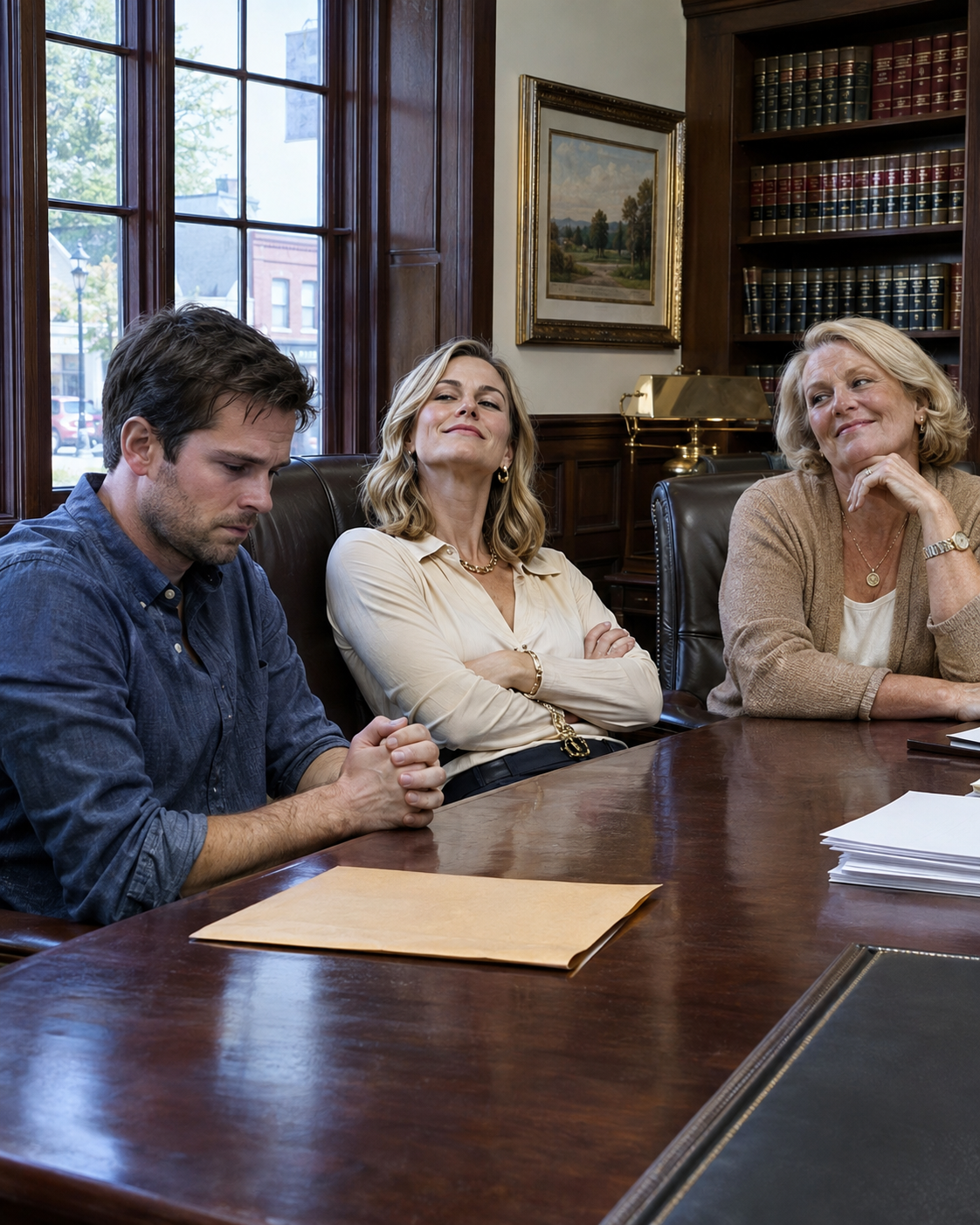
“He was dying. People do strange things when they’re dying.”
“Your grandfather considered that possibility,” the lawyer replied. “That’s why he also recorded a video statement explaining his decisions.”
My mother froze.
“A video?”
“Yes.”
The lawyer reached into his briefcase and removed a small black flash drive.
“He instructed me to play it if anyone questioned his state of mind.”
I felt my throat tighten.
Grandpa had recorded a message?
Nobody had told me.
The lawyer connected the drive to the conference room television.
A moment later, the screen flickered.
And there he was.
Grandpa Walter.
Sitting in his favorite brown recliner, wearing the blue sweater I had given him two Christmases earlier.
He looked thinner than I remembered.
His cheeks were hollow, and his hands trembled slightly.
But his eyes were clear.
“Hello, everybody,” he began.
My heart nearly stopped.
Hearing his voice again hurt more than I expected.
“I imagine this isn’t going the way some of you planned.”
Paige looked away.
Grandpa gave a small, tired smile.
“Before anybody starts arguing, I want you to understand something. I didn’t make this decision because I was angry. I made it because I’ve spent years watching what this family has become.”
He paused to catch his breath.
“I love both my grandchildren. That has never changed. But love doesn’t mean pretending people have treated each other fairly.”
My mother whispered, “Walter, what have you done?”
On the screen, Grandpa continued.
“Paige, you’ve been given more chances than most people receive in a lifetime. Your parents paid your rent, replaced your cars, covered your credit cards, and rescued you whenever things got difficult.”
Paige stared at the floor.
“And Daniel?”
Grandpa’s voice softened.
“Daniel was told to work harder.”
I pressed my fingers against my eyes.
“He worked two jobs while finishing school. He built a business without asking for handouts. And when I became sick, he showed up every weekend, even when I told him he should be out enjoying his life.”
Mom shifted uncomfortably.
Grandpa looked straight into the camera.
“I don’t want anyone confusing that with a financial transaction. Daniel didn’t visit me because he expected an inheritance. He visited because he cared whether I was lonely.”
My father lowered his head.
Then Grandpa said something that made the entire room uncomfortable.
“There’s something else you all need to understand about the money.”
The lawyer paused the recording.
Mom immediately turned toward him.
“Why did you stop it?”
“Because Walter left specific instructions about this section,” he replied.
He opened another folder.
“Before we continue, I need to explain the legal consequences of challenging the estate.”
Paige rolled her eyes.
“Of course. More paperwork.”
The lawyer ignored her.
“Anyone who contests the trust and triggers the forfeiture provision risks losing whatever inheritance was assigned to them. Walter also directed that a fifty-thousand-dollar donation be made to a designated charity if a qualifying challenge occurs.”
Mom laughed bitterly.
“So he planned to punish us from beyond the grave?”
“He planned to protect his decisions,” the lawyer answered.
My father rubbed his forehead.
“And if we simply accept it?”
“Then the trust will proceed according to its terms.”
Mom turned toward me.
“Daniel, say something.”
I looked at her.
For once, I didn’t know what to say.
She pointed toward the documents.
“Tell him you don’t want this. Tell him you’ll split it with your sister.”
I blinked.
“Mom, I haven’t even had time to understand what’s happening.”
“There’s nothing to understand. This is family money.”
Paige nodded.
“Exactly. Grandpa wouldn’t want us fighting.”
Something inside me shifted.
For years, whenever Paige needed something, I was told family came first.
But when I needed help, family suddenly meant learning to stand on my own.
I looked at my mother.
“Why didn’t family come first when I needed a place to stay after my apartment flooded?”
She stared at me.
“What?”
“Five years ago. My apartment flooded. I asked if I could sleep in the guest room for two weeks.”
Mom waved her hand.
“That was different.”
“You told me I was a grown man and needed to solve my own problems.”
“Because you did.”
I nodded slowly.
“And Paige was twenty-eight when you paid off her credit cards.”
Paige snapped, “Seriously? You’re bringing that up now?”
I turned toward her.
“You brought up sharing.”
Dad raised his hand.
“Everybody calm down.”
But nobody was calm.
Mom stood and pointed at me.
“If you walk out of here with all that money, don’t expect this family to welcome you back.”
The words hit me harder than I wanted to admit.
Not because they were surprising.
Because I had heard versions of them my entire life.
Grandpa’s recorded face remained frozen on the television.
I looked at it, remembering the last conversation we’d had before he died.
He had squeezed my hand and whispered, “Don’t spend your whole life trying to earn a seat at a table where nobody makes room for you.”
At the time, I thought he was talking about business.
Now I wasn’t so sure.
I turned back toward the lawyer.
“Please finish the video.”
Mom sat down with a sharp sigh.
The lawyer pressed play.
Grandpa appeared again.
“Now, there’s something I want Daniel to know.”
My chest tightened.
“I know people will say I left him this money because he took care of me. That’s not true. I left it to him because I trust his judgment.”
He glanced down at a sheet of paper.
“I also know he might feel guilty.”
A tear slipped down my cheek.
Grandpa seemed to look directly at me.
“Daniel, guilt is not the same thing as responsibility. You are not responsible for fixing every bad decision someone else makes.”
Paige made a quiet sound of disgust.
But Grandpa wasn’t finished.
“I want you to build something good. Not because you owe me, but because you’ve already shown me what kind of man you are.”
Then his voice became firmer.
“And to my son and daughter-in-law, I have one final thing to say.”
Dad looked up.
“You taught one child that the world owed her everything. You taught the other that he deserved nothing unless he earned it twice.”
Mom’s lips parted.
“That was never our intention,” she whispered.
Grandpa continued.
“Maybe it wasn’t. But intentions don’t erase consequences.”
He paused.
“I hope someday you understand that.”
The video ended.
For several seconds, nobody spoke.
Then Paige pushed her chair back.
“This is insane.”
She grabbed her purse.
“I’m getting my own lawyer.”
The attorney folded his hands.
“You’re entitled to seek independent legal advice.”
Paige pointed at me.
“And don’t think this is over.”
I didn’t answer.
I was still looking at the blank television screen.
Because for the first time in my life, someone had defended me in front of my entire family.
And the person who did it was already gone.
The next forty-eight hours were a nightmare.
My phone barely stopped ringing.
Mom called eleven times the first evening.
Paige sent twenty-three messages.
Dad left three voicemails asking me to call him privately.
At first, I ignored everything.
I needed time to think.
Six point nine million dollars.
The number didn’t feel real.
I still had a mortgage, a ten-year-old pickup truck, and a property management business that operated out of a small rented office.
My biggest financial concern the previous week had been whether I could afford to hire another maintenance technician.
Now I was apparently wealthy.
But I didn’t feel wealthy.
I felt exhausted.
On the third morning, Dad showed up at my office.
He stood in the doorway holding two coffees.
“Can we talk?”
I considered telling him to leave.
Instead, I pointed toward the chair across from my desk.
He handed me a cup.
“Black. The way you like it.”
I almost smiled.
He had never remembered how I took my coffee before.
Dad sat down and stared at the floor.
“Your mother is having a hard time.”
I waited.
“Paige too.”
Still, I said nothing.
He sighed.
“Look, I know things weren’t always fair.”
That surprised me.
It was the closest he’d ever come to admitting anything.
“Not always fair?” I repeated.
He rubbed his hands together.
“Your mother and I made mistakes.”
“What kind of mistakes?”
He looked uncomfortable.
“Daniel, I’m trying here.”
“So am I.”
Dad stared at me for a long moment.
Then he finally said what he’d come to say.
“Paige is in serious financial trouble.”
I leaned back.
“What kind of trouble?”
“She has debts.”
“How much?”
He hesitated.
“About four hundred and eighty thousand dollars.”
I nearly dropped my coffee.
“What?”
“Credit cards. Personal loans. Some business expenses.”
“What business?”
Dad looked away.
“The boutique.”
Paige had opened a clothing boutique two years earlier.
Mom had posted pictures of its grand opening all over Facebook.
They’d called Paige an entrepreneur.
When I opened my property management business, Mom had asked whether I was planning to get a real job.
I stared at Dad.
“Didn’t the boutique close last year?”
“Yes.”
“And she’s still carrying almost half a million dollars in debt?”
He nodded.
“Your mother and I have been helping her, but we can’t keep doing it.”
Something in his expression made me uneasy.
“What aren’t you telling me?”
Dad looked toward the window.
“We took out a second mortgage.”
I sat forward.
“On your house?”
He nodded.
“How much?”
“Two hundred and twenty thousand.”
I stared at him.
My parents had spent years telling me how irresponsible I was for starting a business.
Meanwhile, they’d risked their home to keep Paige comfortable.
Dad leaned forward.
“Daniel, with what your grandfather left you, helping her wouldn’t even make a dent.”
There it was.
The real reason he’d come.
Not to apologize.
Not to ask how I was handling Grandpa’s death.
He wanted money.
I set my coffee down.
“Dad, do you remember what Grandpa said in the video?”
He sighed.
“Don’t do that.”
“Do what?”
“Use his words against us.”
I shook my head.
“I’m asking a question.”
He stood.
“Your sister could lose everything.”
I looked around my office.
At the scratched desk I’d bought secondhand.
At the filing cabinets I’d carried upstairs myself.
At the framed photograph of Grandpa standing beside my first company truck.
Then I looked back at my father.
“Dad, I nearly lost everything three years ago when two major clients canceled their contracts in the same month.”
He frowned.
“I didn’t know that.”
“Because you never asked.”
He opened his mouth, then closed it.
“I worked fourteen-hour days for six months,” I continued. “I sold my motorcycle. I skipped vacations. I borrowed equipment instead of buying it.”
Dad looked down.
“Why didn’t you come to us?”
I couldn’t believe the question.
“Because you told me not to.”
He stood there quietly.
Finally, he picked up his keys.
“I hope you don’t regret this.”
I watched him leave.
For the first time, I realized that disappointing my father didn’t feel nearly as painful as it used to.
A week later, I received a letter from Paige’s attorney.
She intended to challenge Grandpa’s estate plan.
Her lawyer claimed Walter had been vulnerable during his illness and that I might have exercised undue influence.
I read the letter three times.
Then I called the estate attorney.
“Can she actually do this?”
“She can attempt it,” he said. “But your grandfather prepared extensively.”
He explained that Walter had met privately with independent attorneys, completed medical evaluations, and signed his documents with witnesses.
There were also detailed records of his financial decisions.
“Your grandfather was a careful man,” the attorney said.
I smiled sadly.
“That he was.”
But then he added something unexpected.
“There’s another matter we should discuss.”
My stomach tightened.
“What matter?”
“One of the properties in the trust has a tenant situation that needs attention.”
I frowned.
“Which property?”
“A small apartment building on Maple Street.”
I knew the building.
Grandpa had owned it for decades.
It was old, but well maintained.
“What happened?”
“One of the tenants contacted our office. She’s concerned about a possible rent increase following the estate transfer.”
“Has anyone told her the rent is going up?”
“No. But she received a letter claiming the building would soon be sold.”
I sat upright.
“Who sent the letter?”
“We’re investigating.”
I asked him to forward me a copy.
Ten minutes later, I was staring at a scanned page.
The letter was unsigned, but it contained a sentence that made my blood run cold.
“New ownership will be reviewing all existing rental arrangements.”
I recognized the wording.
Paige had used almost the same phrase in an email years earlier when she tried to convince Grandpa to sell the building.
At the time, she’d wanted him to cash out and invest in her boutique.
He refused.
I called the lawyer back.
“I think I know where this came from.”
He told me not to confront anyone until we had more information.
But I couldn’t stop thinking about the tenants.
Grandpa had always kept the rents reasonable.
Several residents were retirees.
One was a single mother raising two children.
He knew their birthdays.
He fixed their leaking faucets himself until his health made that impossible.
The next morning, I drove to Maple Street.
An elderly woman named Mrs. Collins answered the first apartment door.
She recognized me immediately.
“Daniel! Your grandfather talked about you all the time.”
My throat tightened.
She invited me inside.
Her kitchen smelled like cinnamon and fresh coffee.
She showed me the letter.
“I was afraid we’d have to move,” she said.
I shook my head.
“Nobody is being forced out. Not because of this inheritance.”
Her shoulders relaxed.
“Your grandfather promised this building would always be a safe place for people like me.”
I looked around her small apartment.
There were family photographs on every shelf.
A knitted blanket covered the couch.
Grandpa had understood something important.
A building wasn’t just an investment.
For the people living inside it, it was home.
I promised Mrs. Collins I would investigate the letter and keep her informed.
As I walked back toward my truck, my phone rang.
It was Paige.
“Did you enjoy your little visit?” she asked.
I stopped walking.
“What?”
“Maple Street. I heard you were there.”
“How did you know?”
She laughed.
“People talk.”
I gripped the phone.
“Did you send those letters?”
A long silence followed.
Then she said, “That property is worth a fortune, Daniel. You’re sitting on millions while everyone else struggles.”
“Answer my question.”
“You always act like you’re better than me.”
“No. I just want to know whether you’re frightening elderly tenants to pressure me into selling.”
Her voice turned sharp.
“You think Grandpa was some kind of saint? He wasn’t perfect.”
I stared at the building.
“I never said he was.”
“Well, maybe you should learn a little more about him before you start acting like his replacement.”
She hung up.
For the first time since the will reading, I felt something besides grief and anger.
I felt curious.
What had she meant?
Two days later, the estate attorney called.
“We’ve received a response from Paige’s lawyer.”
I braced myself.
“She’s withdrawing the challenge.”
I blinked.
“Already?”
“Apparently, after reviewing the estate documents and the forfeiture provision, her attorney advised against proceeding.”
I sat back.
“So it’s over?”
“The formal challenge appears to be over. But there’s something else.”
I closed my eyes.
Of course there was.
“Your grandfather left a separate packet concerning the Maple Street property. He requested that you receive it only after the estate dispute was resolved.”
My pulse quickened.
“What’s inside?”
“I think you should come in.”
The following morning, I returned to the same conference room where my family had humiliated me.
This time, I came alone.
The lawyer placed a worn brown envelope in front of me.
Across the front, Grandpa had written:
For Daniel. When you’re ready to understand what matters.
Inside were several photographs, a handwritten letter, and a yellowed newspaper clipping.
The clipping showed a young couple standing in front of the Maple Street building.
The man was Grandpa.
The woman beside him was my grandmother, who had died when I was nine.
They were smiling, holding a set of keys.
The headline read:
LOCAL COUPLE TURNS ABANDONED BUILDING INTO AFFORDABLE HOMES.
I smiled.
I’d never seen the article.
Then I unfolded Grandpa’s letter.
“Daniel,
If you’re reading this, I hope the worst of the arguing has passed.
I know I’ve left you a great deal of money, but I don’t want you to confuse money with success.
The first building your grandmother and I bought was Maple Street.
We nearly lost it three times.
We worked nights. We repaired plumbing ourselves. We painted apartments after our regular jobs.
Your grandmother believed everyone deserved a decent place to live, even when they couldn’t afford the nicest one.
She used to say that people remember how you treated them when they had nothing to offer you.
I want you to remember that.
There is something else I need to tell you.
Years ago, your father asked me to sell Maple Street so he could invest the money in a business opportunity.
I refused.
He became angry.
Later, he asked again, this time saying the money would help Paige.
I refused again.
Not because I didn’t love them, but because I had made a promise to your grandmother.
That building was never meant to be a family emergency fund.
It was meant to be a home.
Whatever you decide to do with my estate, please don’t let anyone convince you that protecting what matters is selfish.
Love,
Grandpa.”
I read the letter twice.
Then I sat quietly for several minutes.
Suddenly, Paige’s comments made sense.
She’d known Grandpa refused to sell the building.
She’d probably hoped I would be easier to pressure.
But the letter gave me something more important than an explanation.
It gave me direction.
Over the next month, I worked with the trust managers and attorneys to organize the estate.
I learned that the $6.9 million figure included several properties, investments, and trust accounts.
It wasn’t a giant pile of cash waiting in a checking account.
There were taxes to consider, repairs to schedule, insurance policies to review, and long-term responsibilities.
I kept running my business.
I still arrived at the office before eight.
I still answered tenant calls.
I still drove my old truck.
But I began making plans.
First, I arranged a full inspection of the Maple Street building.
The roof needed repairs.
Two apartments needed updated heating systems.
The parking lot had drainage problems.
I approved the work.
Then I met with the tenants.
Some were nervous when they saw me standing at the front of the room.
I understood why.
New owners often meant new rules.
I told them I wasn’t planning to sell the building.
I explained the repairs.
And I promised that any future rent adjustments would be handled carefully and transparently.
Mrs. Collins began crying.
After the meeting, she pulled me aside.
“Your grandfather would be proud.”
I looked away.
I still wasn’t used to hearing those words.
That evening, I received a message from Mom.
It was the first one in almost two weeks.
“Your father and I are selling the house. I hope you’re happy.”
I stared at the screen.
Then another message arrived.
“We gave you everything we could, and this is how you repay us.”
I started typing an angry response.
I wanted to list every birthday they had forgotten.
Every achievement they had dismissed.
Every time they’d compared me to Paige.
But I deleted it.
Instead, I wrote:
“I’m sorry you’re facing financial problems. I hope you find a solution. But I won’t be changing Grandpa’s wishes.”
Mom responded immediately.
“You’ve become a selfish man.”
I set the phone down.
For once, I didn’t feel the need to defend myself.
Three months later, Paige showed up at my office.
I almost didn’t recognize her.
Her expensive handbag was gone.
She wore jeans, sneakers, and a plain gray sweater.
She looked tired.
“Can I come in?” she asked.
I hesitated, then stepped aside.
She sat across from my desk.
For a long moment, neither of us spoke.
Finally, she said, “I got a job.”
I looked up.
“Where?”
“A medical supply company. Customer service.”
I nodded.
“That’s good.”
She gave a humorless laugh.
“It’s not exactly glamorous.”
“Most jobs aren’t.”
She looked around my office.
“Did you really build all this yourself?”
I frowned.
“You know I did.”
“I guess I never thought about what that meant.”
That surprised me.
She rubbed her hands together.
“Mom and Dad are moving into a smaller place next month.”
“I heard.”
“Dad’s been working extra shifts.”
I nodded.
She stared at the floor.
“I didn’t come here to ask for money.”
I waited.
“I came because I wanted to know something.”
“What?”
She looked directly at me.
“Did Grandpa hate me?”
The question caught me off guard.
For a moment, I saw the little girl who used to follow me around the backyard, begging me to help her climb the old oak tree.
Before the comparisons.
Before the money.
Before we learned to compete for our parents’ attention.
“No,” I said quietly.
Her eyes filled.
“How can you be sure?”
“Because he told you in the video. He loved you.”
She swallowed.
“Then why did he leave me a dollar?”
I thought carefully before answering.
“Because he wanted you to understand that being loved doesn’t mean you’re entitled to everything someone owns.”
She wiped her cheek.
“I really thought he’d always take care of me.”
“I know.”
She looked at the photograph of Grandpa beside my first company truck.
“I was awful to you at the lawyer’s office.”
I said nothing.
“I was awful before that, too.”
It wasn’t a complete apology.
But it was more honesty than I’d heard from her in years.
Then she took a folded paper from her pocket.
“I need to show you something.”
My stomach tightened.
It was a copy of the Maple Street letter.
“I sent these,” she admitted.
“I figured.”
“I thought if the tenants got scared, you’d sell the building quickly. Then maybe you’d give me some money to keep the peace.”
I felt anger rise in my chest.
“Those people thought they were losing their homes.”
“I know.”
“Mrs. Collins barely sleeps when she’s worried. She’s seventy-eight years old.”
Paige covered her face.
“I know, Daniel. I know.”
For a moment, I considered telling her to leave.
Instead, I asked, “Why are you telling me this now?”
She lowered her hands.
“Because I started working with people who are struggling. Real people. People who can’t afford medicine or rent. And every day, I hear how scared they are.”
Her voice cracked.
“I never thought about what it felt like to be on the other side.”
I leaned back.
“Paige, admitting what you did doesn’t erase it.”
“I know.”
“You need to apologize to the tenants.”
She nodded.
“I will.”
“And you need to stop blaming everyone else for your choices.”
She stared at me.
Then she whispered, “I’m trying.”
I wanted to believe her.
But I had spent too many years confusing promises with change.
So I told her the truth.
“I hope you succeed. But I’m not giving you money.”
She nodded again.
“I didn’t expect you to.”
When she left, I sat alone for a long time.
I didn’t know whether we’d ever be close.
But for the first time, I wondered whether we might eventually become something other than enemies.
Six months after Grandpa’s death, I made a decision that changed my life.
I established the Walter Bennett Opportunity Scholarship.
It wasn’t a huge national foundation.
It started with a simple goal.
Every year, we would help several hardworking students who were balancing school with jobs, family responsibilities, or financial hardship.
Students like I had once been.
I worked with a local community college to develop the program.
The first year, we selected five recipients.
One was a single mother studying nursing.
Another was a young man working nights at a grocery store while studying electrical engineering.
A third was a woman returning to school after caring for her sick father.
Their stories reminded me of something Grandpa used to say.
“Hard work matters, but sometimes hardworking people need somebody to open a door.”
At the scholarship ceremony, I stood behind a podium holding a piece of paper.
I’d prepared a speech.
But when I looked at the students and their families, I couldn’t read it.
Instead, I told them about Grandpa.
I told them how he taught me to change a tire.
How he made me redo a crooked shelf because he said a job worth doing was worth doing right.
How he never laughed at my small beginnings.
Then I said something I hadn’t planned.
“For most of my life, I thought success meant proving people wrong.”
I looked around the room.
“But someone who loved me taught me that success can also mean helping other people move forward.”
My voice shook.
“This scholarship isn’t about giving anyone an easy life. It’s about making sure hard work has a fair chance.”
The audience applauded.
I stepped away from the podium, overwhelmed.
Then I noticed someone standing near the back of the room.
Dad.
He was wearing an old navy jacket.
His hair looked grayer than I remembered.
He wasn’t smiling.
But he was clapping.
After the ceremony, he approached me.
“Your grandfather would have liked that,” he said.
I nodded.
“Thanks.”
He looked toward the students taking pictures with their families.
“You did a good thing.”
I waited for the request.
The question about money.
The complaint about Mom.
The reminder that Paige was struggling.
But none came.
Instead, he said, “I owe you an apology.”
I stared at him.
He took a slow breath.
“I spent years telling myself I was being a good father because I pushed you to be independent.”
I looked down.
“But I didn’t push Paige the same way. And when you succeeded, I acted like it was because we raised you right.”
His voice grew quieter.
“The truth is, you succeeded in spite of some of the things we did.”
I felt my throat tighten.
Dad looked at me.
“I should have been proud of you a long time ago.”
For years, I had imagined hearing those words.
I thought they’d make everything better.
But standing there, I realized an apology couldn’t give me back the years I’d spent feeling unwanted.
It could only change what happened next.
“Thank you for saying that,” I told him.
He nodded.
Then he asked, “Do you think we could get coffee sometime?”
I thought about it.
“I think we could try.”
He smiled faintly.
It wasn’t a perfect ending.
But it was a beginning.
Mom was different.
She never apologized.
She continued telling relatives that Grandpa had been manipulated and that I had stolen Paige’s future.
At first, those stories hurt.
Then something unexpected happened.
A cousin called me.
She said Mom had been complaining at a family gathering.
But when someone asked why Grandpa had trusted me with the estate, Mom couldn’t answer.
My cousin told me, “People are starting to remember how your grandfather talked about you.”
Apparently, Grandpa had been proud of my business for years.
He’d told relatives about my first employee.
My first major contract.
The time I helped a tenant repair storm damage without charging extra.
I had never known.
For so long, I’d believed nobody noticed what I was building.
But Grandpa had been telling anyone who would listen.
That knowledge meant more to me than any argument I could have won.
I stopped trying to correct Mom’s version of events.
People who wanted the truth could ask.
People who preferred gossip could keep it.
I had a life to live.
A year after the will reading, I drove to Maple Street on a Saturday morning.
The repairs were finished.
The building had a new roof, fresh paint, updated heating, and a small garden near the entrance.
Mrs. Collins was outside watering flowers.
She waved when she saw my truck.
“Daniel! Come look at this.”
She led me toward a wooden bench beneath a young maple tree.
A small brass plaque had been attached to the back.
It read:
IN MEMORY OF WALTER AND ELEANOR BENNETT.
WHO BELIEVED EVERYONE DESERVES A PLACE TO CALL HOME.
I stared at it.
“Who did this?”
“The tenants,” Mrs. Collins said proudly. “We all pitched in.”
I ran my fingers across the letters.
For a moment, I couldn’t speak.
Mrs. Collins placed a hand on my shoulder.
“Your grandfather helped a lot of people. We wanted you to know.”
I sat on the bench.
The morning sun warmed my face.
Somewhere nearby, a child was laughing.
A screen door slammed.
Someone was cooking breakfast.
Ordinary sounds.
The sounds of people living their lives.
And suddenly, I understood why Grandpa had loved this building so much.
It wasn’t about the rent.
It wasn’t about the property value.
It was about what happened inside those walls.
I thought about the day of the will reading.
Mom laughing.
Paige smirking.
Dad staring at the table.
And me, sitting there believing I’d been worth only one dollar.
I wished I could go back and tell that version of myself something.
Not that he was about to inherit millions.
Not that his family would finally face consequences.
But that his value had never depended on their approval.
A few minutes later, my phone buzzed.
It was a message from Paige.
She had sent a photograph.
It showed her standing outside the medical supply company, holding a small certificate.
Employee of the Month.
Underneath, she’d written:
“First time I earned something without anybody pulling strings. Thought you’d appreciate that.”
I smiled.
Then I typed:
“Grandpa would have been proud. Congratulations.”
She responded a minute later.
“Thanks, Daniel.”
It was a small exchange.
But sometimes small things matter.
I put my phone away and looked at the plaque again.
Grandpa had left me an enormous inheritance.
But the money wasn’t the greatest gift.
The greatest gift was the freedom to stop chasing love from people who only offered it when I met their conditions.
I didn’t need to punish my family.
I didn’t need to rescue them.
I didn’t need to prove I was better than Paige.
I could let them make their choices while I made mine.
And I could choose to build something that would outlast me.
Before leaving, I placed my hand against the plaque.
“Thank you, Grandpa,” I whispered.
The wind moved gently through the young maple tree.
For a moment, I imagined him sitting beside me, wearing his old blue sweater and smiling that quiet smile.
I could almost hear him saying, “You did good, kid.”
I stood, walked toward my truck, and looked back one last time.
A year earlier, I’d walked into a lawyer’s office hoping my family might finally see my worth.
Now I understood that the people who truly love you don’t need a bank statement, a title, or an inheritance to recognize it.
They see it in how you live.
In how you treat people.
In what you choose to do when nobody is watching.
Grandpa had seen me long before anyone else did.
And because of him, I had finally learned to see myself.
The money would help me build a future.
But his love had already given me something no amount of money could buy.
A reason to stand tall.
And the courage to keep walking forward.
Because the greatest inheritance isn’t always what someone leaves in your hands.
Sometimes, it’s what they leave in your heart.
And sometimes, the richest person in the room isn’t the one who receives the most.
It’s the one who finally understands what truly matters.