When my mother slapped my hand away from the stolen bank statement in our living room, she called me selfish in front of Ashley
I stared at the message until the letters blurred together, while the noise of investors talking behind me seemed to fade into another world.
“Emma?”
Jake’s voice pulled me back.
I turned the phone toward him.
He read the three words and frowned.
“Who’s Richard?”
“My stepfather.”
Jake’s expression changed.
“Does he have anything to do with your company?”
“Not directly.”
“Then why would your dad tell you to ask about him?”
I didn’t have an answer, and that frightened me more than anything that had happened that day.
My father had never written casually.
Every line in that notebook had a purpose, and now I was holding proof that he had expected me to discover something about Richard years after his death.
I looked across the room.
My mother and Ashley were still there, whispering near the exit.
I walked toward them.
“Where’s Richard?”
My mother stiffened.
“He’s at work.”
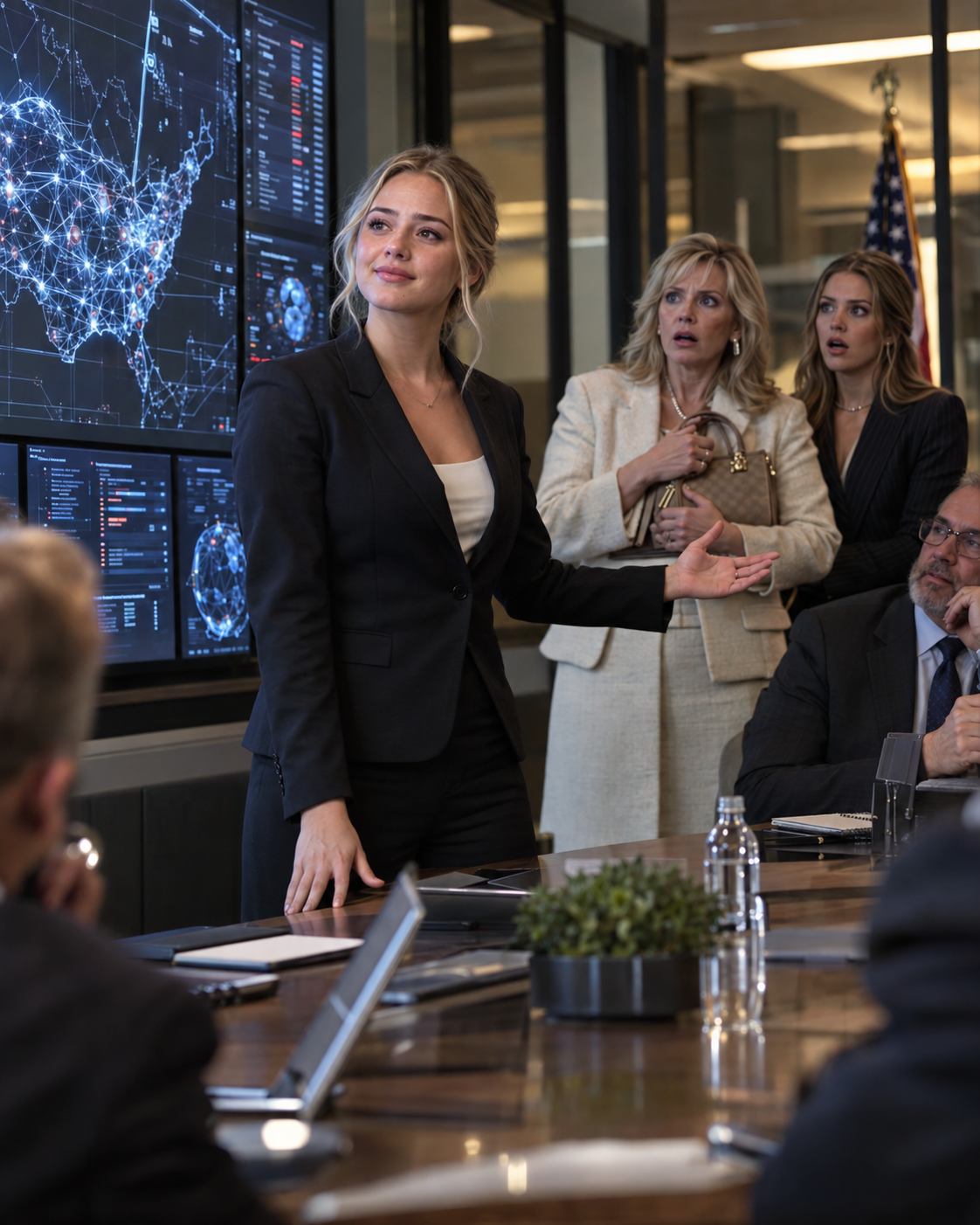
“Call him.”
Her eyes narrowed.
“Why?”
I held up my phone.
“Because Dad left me a message.”
She went pale before she even saw the screen.
When I showed it to her, she stopped breathing for a second.
“Where did you get that?”
“Someone sent it to me.”
Ashley stepped closer.
“Mom, what’s going on?”
My mother shook her head.
“Nothing.”
I almost laughed.
“That’s what you said when you took the money.”
She looked at the floor.
“Emma, please, not here.”
“Then tell me at home.”
She hesitated.
Finally, she whispered, “Richard knew your father better than you think.”
That sentence followed me all the way back to the office.
Jake locked the door behind us, and we pulled the notebook from my desk.
I opened it from the beginning, scanning every page for my stepfather’s name.
Nothing.
Then I noticed the binding.
One section near the back was thicker than the others.
I ran my fingernail along the leather and felt a seam.
Jake brought over a small blade.
“I hate that this is becoming a spy movie.”
I looked at him.
“It stopped being a family argument hours ago.”
He carefully lifted the lining.
A folded envelope slid out.
My hands started shaking before I even opened it.
Inside was a photocopy of a contract between my father and a company called Northstar Systems.
At the bottom was a signature.
Richard Cole.
I read the page twice.
Richard had worked as a consultant for my father’s company during the final year of his life.
The contract was for access to early research on adaptive security.
My father’s handwritten note was clipped to the copy.
“Richard insisted this technology was too dangerous to control without him.”
There was another line beneath it.
“I refused.”
A cold feeling spread through my chest.
Jake took the paper from me.
“This could explain the warning.”
“There’s more.”
I turned the next page.
My father had written about an attempted transfer of his research to a private company without his approval.
The name was Northstar.
Then came something that made my stomach drop.
He had written that he was considering removing Richard’s access before an upcoming meeting.
The date was three days before my father’s death.
I couldn’t hear anything for several seconds.
“My dad’s death was ruled an accident.”
Jake looked at me carefully.
“Emma, don’t jump to conclusions.”
“I’m not.”
I pointed at the page.
“I’m asking what happened.”
That night, my mother finally agreed to meet me alone.
We sat at a diner twenty minutes from her house because she didn’t want Richard hearing us.
She looked exhausted without her makeup.
For the first time in years, she looked like the woman I remembered.
“Your father and Richard had a falling-out,” she said.
“About the technology?”
She nodded.
“Richard wanted a partnership.”
“My father said no.”
“He said Richard was trying to control something he didn’t understand.”
“And then Dad died.”
My mother closed her eyes.
“The police said it was an accident.”
“Did you believe them?”
She didn’t answer.
That silence was an answer of its own.
I leaned forward.
“Mom, what aren’t you telling me?”
She rubbed her hands together.
“The night before your father died, Richard came to the house.”
My heart slammed against my ribs.
“Why?”
“They argued.”
“About what?”
“Your father’s company.”
“Did you hear them?”
“Some of it.”
She swallowed hard.
“Your father told him to leave.”
I waited.
“What happened after that?”
“Richard left around midnight.”
“And Dad?”
“He stayed in his study.”
My mother’s voice cracked.
“The next morning, I found him.”
I reached across the table but stopped before touching her.
“Why didn’t you tell anyone Richard was there?”
She looked at me with tears in her eyes.
“Because Richard told me your father had been drinking and that if the police started digging into the company, you could lose everything.”
I felt sick.
“And you believed him.”
“I was scared.”
“You let me believe Dad’s death was simple because you were scared.”
She cried silently.
“I thought I was protecting you.”
“No.”
My voice broke.
“You were protecting yourself.”
She looked up.
“That isn’t fair.”
“Neither was what you did with the fund.”
“I know.”
For the first time, she said it without defending herself.
“I know.”
The next morning, Jake and I contacted an attorney who specialized in business fraud and intellectual property disputes.
We gave him the contract, the notebook pages, and the records showing the transfer of my college fund.
He didn’t promise us anything.
He simply told us to preserve every document and avoid confronting Richard alone.
That afternoon, Richard called me.
His voice was calm.
“You’ve been asking questions.”
“Someone sent me a page from Dad’s notebook.”
Silence.
“Emma, your father was under enormous pressure near the end.”
“Did you steal his research?”
“I invested in it.”
“You tried to take it.”
“Your father was emotional.”
I looked at Jake, who was quietly recording the call.
Then Richard said something that made the room turn cold.
“Your father should have listened to me.”
I swallowed.
“Why?”
“Because he knew what would happen if he didn’t.”
“What does that mean?”
He hung up.
That was the first moment I realized the secret wasn’t only about money.
It was about what my father had known.
We spent the next three days searching old company records, archived emails, and the backup drives my father had kept at home.
On the fourth night, Jake found something.
A deleted email had been recovered from an old server.
It was sent from Richard’s private account to someone at Northstar.
The subject line was simple.
“After David.”
My hands went cold.
The email described my father’s death as an opportunity to acquire his research quietly.
Richard had written that the family would be distracted by grief and that I was too young to understand the value of the work.
I read the sentence again and again.
“He planned to take it after Dad died.”
Jake nodded.
“But we still need to know what happened that night.”
The attorney helped us request old records and connect with a retired detective who had worked on my father’s case.
The detective remembered the accident.
He also remembered something that had never made it into the official report.
A second set of tire tracks had been found near the scene.
“Why wasn’t that investigated?”
The detective sighed.
“The report said they were probably unrelated.”
“Probably?”
“Your stepfather was questioned.”
I stared at him.
“Richard?”
“He said he had been driving home alone.”
“Did anyone verify it?”
The detective looked at me.
“No.”
A week later, our attorney discovered that Richard had quietly moved assets out of several business accounts after my father died.
The pattern was too deliberate to ignore.
But there was still one missing piece.
The original notebook.
My father had given me a leather-bound copy filled with his theories, but the detective said there had once been a second notebook referenced in the case file.
I searched every box I had inherited.
Nothing.
Then I remembered something my mother had said years earlier.
After my father died, she had stored some of his belongings in the attic of our old house.
Richard had emptied the attic before they moved.
I called my mother.
“Where are Dad’s things?”
She went silent.
“Some of them are still in the garage.”
“Which ones?”
“His desk.”
My heart raced.
“Mom, don’t touch anything.”
When I arrived, she was waiting beside a dusty wooden desk.
The drawers were locked.
“I never knew what to do with it,” she whispered.
Jake examined the bottom panel.
There was a hidden compartment.
Inside was a flash drive wrapped in plastic.
I stared at it.
My father’s initials were written across the tape.
We took it to the attorney’s office.
The drive contained video recordings.
The first was a meeting between my father and Richard.
My father looked tired but furious.
“You’ve been accessing files without authorization.”
Richard leaned forward.
“I’m trying to save this company.”
“You’re trying to own it.”
“I know what this technology is worth.”
“So do I.”
Richard’s face hardened.
“Then you know someone like Northstar will take it.”
“Not while I’m alive.”
The video ended.
The second file was timestamped hours before my father’s death.
Richard was standing in the same study.
I could barely breathe.
My father was behind the desk.
He looked terrified.
“You need to leave.”
Richard said something we couldn’t hear.
Then my father reached toward the camera.
The recording cut out.
The third file began minutes later.
The camera had been moved.
We saw Richard leaving the house.
He carried a small black case.
My father’s second notebook was inside it.
I covered my mouth.
“He took it.”
Jake whispered, “Yes.”
But the final file changed everything.
It showed my mother entering the study after Richard left.
She looked at my father.
She touched his shoulder.
Then she saw the camera.
Her face changed.
She walked directly toward it.
She whispered, “Emma, if you’re seeing this, I failed you.”
The recording stopped.
My mother had never known the camera was still running.
I looked at her.
She began sobbing.
“Your father told me Richard was dangerous.”
“Why didn’t you tell me?”
“Because he threatened us.”
“With what?”
“He said he’d destroy the company, ruin our finances, and make sure you inherited nothing.”
I stared at her through the tears.
“So you gave him the one thing he couldn’t take.”
She nodded.
“The fund.”
My anger finally broke.
“You thought giving Ashley my future would keep him away.”
“I thought I could buy time.”
I understood then that my mother had not planned the theft alone.
She had been frightened, manipulated, and selfish in ways that still had consequences.
Fear explained her choice.
It did not erase it.
Richard was arrested weeks later after investigators connected the recovered emails, the hidden video files, and financial transfers to Northstar.
The case against him was still developing, and the truth about my father’s death remained tangled in evidence and unanswered questions.
But the notebook was recovered.
Inside it was one final message.
My father had written it in the days before he died.
“Emma, people will try to convince you that the easiest life is the safest life, but safety built on silence is only another kind of prison.”
I cried when I read it.
Not because he had predicted what happened.
Because he had known me well enough to believe I would survive it.
Months later, the Mitchell Protocol launched under my name and my father’s.
The company grew faster than I expected.
The money I earned was more than I had ever imagined, but the greatest change had nothing to do with money.
I stopped measuring my worth by whether my mother approved of me.
I stopped waiting for Ashley to understand.
I stopped thinking success meant making people regret underestimating me.
Success, I learned, was waking up and realizing their opinion no longer controlled my life.
My mother asked to see me one afternoon.
She handed me a small envelope.
“I found this behind your father’s desk.”
Inside was a photograph of me at eight years old, sitting beside my father while he taught me my first line of code.
On the back, he had written, “She’ll build something someday.”
My mother cried.
So did I.
But I didn’t tell her everything was forgiven.
Some wounds close without becoming scars you stop feeling.
Some trust, once broken, cannot be rebuilt in the shape it had before.
What we could build was something smaller and more honest.
A relationship with boundaries.
A relationship where love did not require surrender.
That night, I returned to the office alone.
The building was quiet.
The servers hummed behind the glass.
I opened my father’s recovered notebook one last time.
On the final blank page, beneath all his equations, there was a sentence I had never noticed.
“There is one person who knows the full truth.”
Below it was a phone number.
I recognized the area code.
It belonged to the detective who had just told me Richard was under investigation.
My phone rang before I could dial.
The retired detective was calling.
“Emma, I just found something in the original case file.”
I stood very still.
“What?”
His voice dropped.
“Richard wasn’t the only person at your father’s house that night.”
I looked at the photograph on my desk.
For the first time since everything began, I felt that old fear return.
“Who else was there?”
The detective paused.
Then he said my mother’s name.
I closed my eyes.
Outside the window, the city lights blurred against the glass, and suddenly I understood that some truths don’t disappear when justice arrives.
Sometimes, they wait until the people you love are ready to hear them.
And as I reached for my mother’s number, the detective added one final sentence that made my heart stop.
“Emma, your father left one last recording, and he made it clear that he wanted YOU to hear it only after you knew the truth about your mother.”
We listened to the recording before calling my mother.
My father’s voice was weaker than in the earlier videos.
“If you’re hearing this, something happened that I couldn’t stop.”
There was a long pause.
“Your mother came here tonight.”
My chest tightened.
“I asked her to leave because Richard had threatened her, but she refused to go until she knew I was safe.”
My eyes filled with tears.
Then Dad continued.
“Emma, your mother is afraid, but fear can make good people make terrible choices.”
I looked at Jake.
He didn’t say a word.
My father’s voice became softer.
“Don’t confuse her fear with your worth.”
The recording ended.
For several minutes, neither of us moved.
Then I called my mother.
She answered on the first ring.
“Emma?”
“Why were you there that night?”
She cried before she spoke.
“Because your father called me.”
“And why did you lie?”
“I thought Richard would come after you.”
I closed my eyes.
“You should have told me.”
“I know.”
This time, there was no excuse.
No defense.
Just two people standing on opposite sides of years of pain.
“I can’t erase what you did to me,” I said.
“I know.”
“But I don’t want to carry your fear for the rest of my life.”
My mother whispered, “Then don’t.”
We met the next day.
There were tears, difficult silences, and truths neither of us could change.
But for the first time, she told me everything without trying to make herself the hero.
She had been afraid.
She had made selfish choices.
She had failed me.
And she was finally willing to admit it.
I forgave her slowly, not because the past deserved forgiveness, but because I deserved freedom from carrying it.
I kept boundaries.
I kept my father’s notebook.
And I kept building.
Years later, people would ask how I created the Mitchell Protocol.
They expected a story about genius, sacrifice, or some secret formula.
I always told them the truth.
It started with my father believing in me before I knew how to believe in myself.
It survived because Jake stood beside me when everyone else walked away.
And it became successful because, at the moment my family tried to convince me that my future had no value, I finally stopped asking them to recognize it.
Some people will only respect your dream after it makes money.
Some will love you only when your success makes them proud to claim you.
And some will hurt you because they are too frightened to face what your growth says about their own choices.
But none of that decides what you are worth.
I learned that your life cannot be built around proving people wrong.
It has to be built around becoming someone you can respect when nobody is watching.
My father never got to see the company carry his name.
He never saw the first thousand customers.
He never stood in a room filled with applause.
But every night, when the servers hum and the city falls quiet, I still hear his voice in the back of my mind.
“Never let anyone tell you what you can achieve.”
This time, I understand what he really meant.
He wasn’t telling me to fight everyone who doubted me.
He was telling me not to become a prisoner of their doubt.
And sometimes, the greatest revenge is not watching the people who hurt you fall.
Sometimes, it is waking up one morning and realizing they no longer have the power to decide who you become.