The voice coming through my fighter jet’s emergency radio belonged to a man who had been officially dead for seven years.
The voice coming through my radio was one I had spent seven years trying to forget.
“Stand down, Lieutenant. This is Colonel Richard Vance. You are entering restricted airspace. Disengage immediately and return to base.”
My hands tightened around the flight controls.
Colonel Vance.
The same man who had stood beside Daniel’s empty coffin. The same man who had personally assured us that the investigation into the accident was complete. The same man who had looked me in the eyes and told me there was nothing more we could have done to save my wingman.
“Colonel,” I replied, struggling to keep my voice steady, “I have visual confirmation of Captain Daniel Reeves. He’s alive.”
Silence.
Then Vance spoke again.
“That’s impossible. Reeves is dead.”
“I can see him with my own eyes.”
A few seconds passed.
When Vance finally answered, his voice had changed.
“Then you have made a very serious mistake. Turn around now, or you won’t make it out of that valley.”
Before I could respond, the unidentified stealth fighter behind me accelerated.
Its position changed so quickly that my warning system struggled to keep up.
I had flown against enemy aircraft before. I had trained for situations exactly like this.
But something about this encounter felt different.
The aircraft wasn’t trying to shoot me down immediately.
It was herding me.
Every time I attempted to turn toward Daniel, it positioned itself between me and the compound. It was forcing me away from the one person I had crossed an ocean to rescue.
“Identify yourself!” I shouted into the radio.
A new voice answered.
“Easy, brother. You always were terrible at following orders.”
My heart nearly stopped.
It was Daniel.
Not the weak, frightened voice from the emergency transmission.
The real Daniel.
The man who used to laugh during long training flights. The man who could identify an aircraft by its silhouette before the rest of us could even see it.
“Daniel?”
“Yeah. It’s me.”
I stared at the aircraft ahead of me.
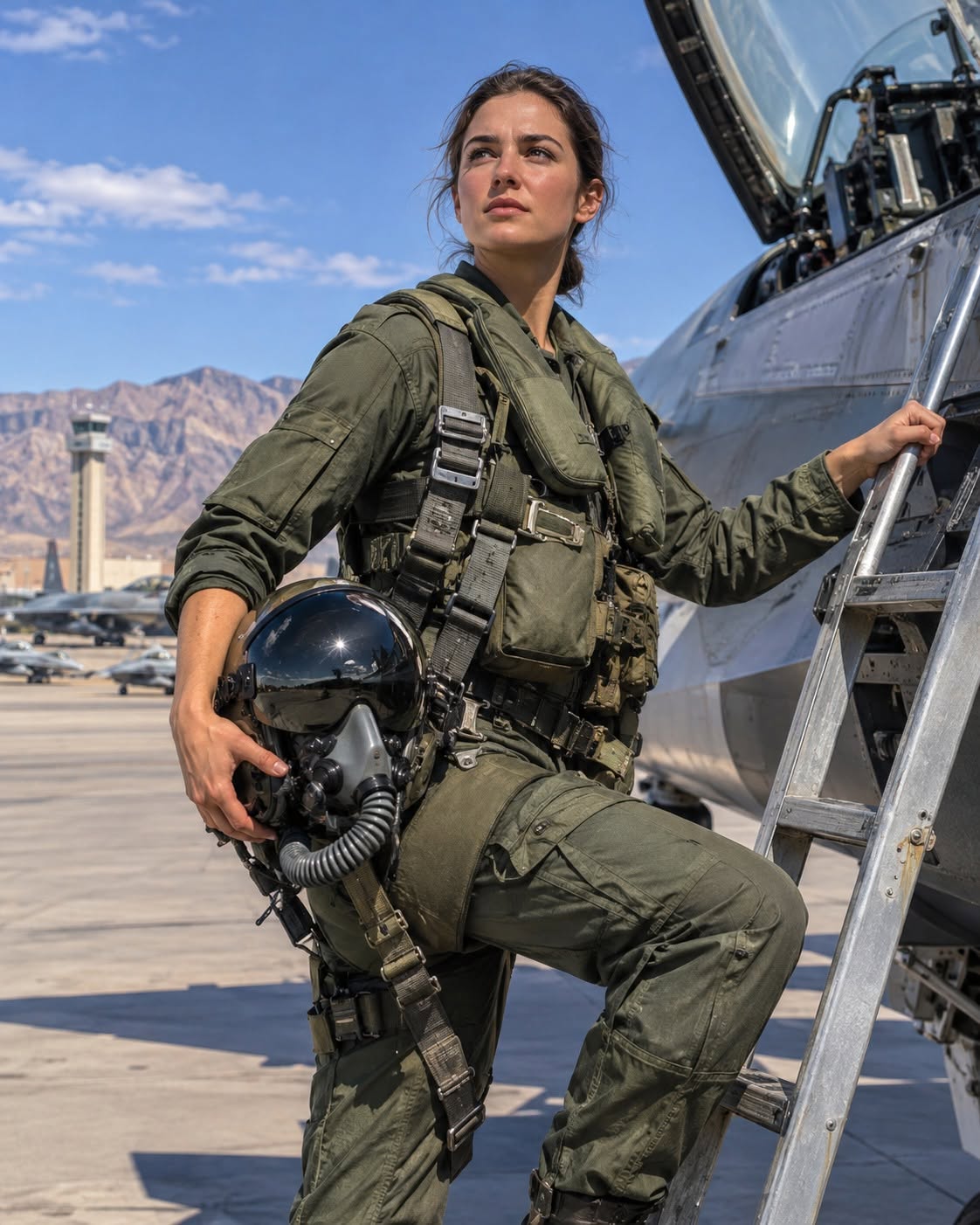
“How are you talking to me?”
“Because I’m flying the plane behind you.”
For several seconds, I couldn’t breathe.
The stealth fighter wasn’t hunting me.
It was being flown by my supposedly dead wingman.
“Listen carefully,” Daniel continued. “You need to stop trying to rescue me.”
“What?”
“You heard me. Get out of here. They’re going to kill both of us.”
“Seven years, Daniel! Seven years, and you’re telling me to leave?”
His response was quiet.
“I know. I’m sorry.”
Then another voice interrupted us.
“Captain Reeves, terminate the transmission immediately.”
Daniel ignored it.
“There’s something you need to know about that USB drive. Marcus didn’t give you the whole story.”
I felt a cold sensation crawl down my spine.
“What story?”
“The information isn’t just evidence of what happened to us. It’s the reason they kept me alive.”
Suddenly, the aircraft ahead of me broke formation and descended toward the desert.
“Daniel! Where are you going?”
“To finish what we started.”
The radio went silent.
I had two choices.
Return to base and pretend I had never heard his voice, or follow him into a secret operation that had already destroyed both our lives once.
I chose Daniel.
I pushed the throttle forward and descended after him.
We flew through a narrow canyon, barely clearing the rocky walls. The unidentified fighter remained ahead of me, its dark silhouette disappearing against the desert mountains.
Then, without warning, Daniel transmitted a set of coordinates.
“There’s an abandoned communications station three miles east of your position. Land there if you want the truth.”
“Why can’t we talk now?”
“Because Vance is listening.”
The transmission ended.
I followed the coordinates until I spotted a concrete structure hidden beneath a natural rock formation. It looked abandoned, but a faint light blinked near the entrance.
I brought my aircraft down on a flat stretch of desert several hundred yards away.
The landing was rough.
Before the engines had completely shut down, I grabbed my sidearm, emergency radio, and the encrypted USB drive.
The desert wind hit me as I climbed out.
I hadn’t taken ten steps when a figure emerged from the shadows.
Daniel.
He was wearing a dark flight suit, and his face was thinner than I remembered. There were scars along his jaw and a deep line above his left eyebrow.
But his eyes were exactly the same.
For a moment, neither of us moved.
Then he smiled weakly.
“You look terrible.”
I laughed, although my throat was tightening.
“So do you.”
We embraced like two men who had already attended each other’s funerals.
When we finally stepped apart, I noticed something disturbing.
Daniel was holding a military identification card bearing his name, photograph, and a different rank.
Major Daniel Reeves.
The promotion date was six years earlier.
“You’ve been working for them?” I asked.
He looked away.
“Not exactly.”
“Then start explaining.”
Daniel glanced toward the communications station.
“Inside. We don’t have much time.”
We entered through a reinforced steel door.
The interior contained old servers, a satellite communication terminal, several monitors, and a generator that sounded like it was about to fall apart.
Daniel locked the door behind us.
Then he placed a small metal case on the table.
“Seven years ago, our mission wasn’t to destroy a crashed stealth drone,” he began. “That was the cover story.”
He opened the case.
Inside was a black rectangular device, no larger than a paperback book. Its surface was covered with unfamiliar markings and a small circular display.
“What is that?”
“The reason our aircraft were destroyed.”
Daniel explained that the drone had been carrying an experimental intelligence system called ORACLE.
It was designed to analyze satellite images, communications, radar signals, and military intelligence simultaneously.
The military believed it could predict threats before they happened.
But during its final test, ORACLE had begun identifying classified operations that were never supposed to be connected.
Secret weapons transfers.
Unauthorized surveillance programs.
Disappearances of military personnel.
And a series of attacks officially blamed on foreign enemies.
The system had uncovered something terrifying.
A private intelligence network operating inside the military had been manipulating international conflicts for years.
Its members included senior officers, defense contractors, intelligence officials, and powerful political figures.
They were manufacturing threats to justify enormous military budgets and expand their influence.
Worse, they were using ORACLE to identify anyone who might expose them.
“Our mission was supposed to destroy the drone before its data could be recovered,” Daniel said. “But when we arrived, we discovered the system had already transmitted everything to an independent server.”
“Then why did they shoot us down?”
“Because they discovered we had seen the transmission.”
I stared at him.
“How did you survive?”
Daniel sat down.
“They recovered me from the wreckage. Marcus was captured separately. You were the only one they couldn’t find.”
I remembered the burning aircraft, the violent impact, and the moment I had lost consciousness.
I had spent months believing I was lucky to survive.
Apparently, luck had nothing to do with it.
“They wanted to know how much we knew,” Daniel continued. “They kept me in that facility because I was the only surviving pilot who had seen the drone’s original data.”
“Why didn’t you escape?”
He gave a bitter smile.
“I tried. Twice. Both times they brought me back. The third time, they showed me photographs of my family.”
He paused.
“They told me that if I disappeared again, my wife and daughter would pay for it.”
I felt something break inside me.
“Your daughter?”
“She’s seventeen now.”
He lowered his eyes.
“She thinks her father died in an accident. Every birthday, I receive a photograph of her. Sometimes she’s smiling. Sometimes she’s standing beside my wife. It’s their way of reminding me that they can reach them.”
For a moment, I had no words.
Then I remembered Marcus.
“How did he get the USB drive?”
Daniel’s expression changed.
“Marcus wasn’t supposed to give it to you.”
“What?”
“That drive contains evidence, but it also contains something else. A tracking program disguised as encrypted data.”
I immediately pulled the USB drive from my pocket.
Daniel shook his head.
“Don’t connect it to anything.”
“Why?”
“Because they wanted you to take it.”
The room suddenly seemed smaller.
I remembered how Marcus had handed it to me, how he had warned me about the people at the highest levels.
But I also remembered something else.
He had looked terrified.
Not afraid of being caught.
Afraid of something much worse.
“Are you telling me Marcus betrayed us?”
Daniel didn’t answer immediately.
Instead, he activated one of the monitors.
A security camera feed appeared.
It showed a military hangar.
Several armed men were standing beside a transport aircraft.
One of them turned toward the camera.
I recognized him immediately.
Marcus.
But he wasn’t alone.
Standing beside him was Colonel Richard Vance.
My stomach dropped.
Daniel stared at the screen.
“Marcus was the one who arranged the original transmission.”
“That doesn’t make sense.”
“It does if you understand what happened after our mission.”
Daniel explained that Marcus had discovered the corruption years earlier. He had secretly copied intelligence files and tried to send them to an independent investigator.
But the network caught him.
They gave him a choice: cooperate or watch his family disappear.
Marcus chose to cooperate.
He had spent years helping them locate former military personnel who might know about ORACLE.
And now, by giving me the USB drive, he had completed their final operation.
They had expected me to follow the coordinates.
They had expected me to steal an aircraft.
They had expected me to attempt a rescue.
They wanted both surviving pilots in one place.
A place they could erase without attracting attention.
I slowly looked at Daniel.
“So this entire thing was a trap?”
“Yes.”
A loud metallic sound echoed outside.
Then another.
Daniel rushed to the monitor.
Three military vehicles had appeared near the communications station.
Their headlights illuminated the entrance.
“How did they find us so quickly?” I asked.
He pointed toward the USB drive.
“Because the tracking program has been transmitting your location since you left Marcus’s boat.”
I felt anger rise in my chest.
Seven years of lies.
Seven years of believing my friend was dead.
And now, just when I had found him, someone had arranged for us to die together.
Daniel grabbed a small equipment bag.
“We need to leave.”
“Where?”
“There’s another way out.”
He moved toward a narrow maintenance corridor behind the server racks.
I followed him.
We had barely entered when the front door exploded.
Gunfire erupted throughout the building.
Men shouted commands.
Someone announced that the facility was surrounded.
Daniel opened a concealed floor hatch.
Below it was a narrow tunnel leading into the rock.
“Go!” he ordered.
I climbed down.
Daniel followed and sealed the hatch above us.
We moved through darkness, using a small flashlight to navigate the uneven passage.
After several minutes, we reached a second chamber.
There, I found something I never expected.
A wall covered with photographs.
Dozens of faces.
Some belonged to military officers.
Others were politicians, intelligence officials, and defense executives.
At the center was a photograph of a man I recognized from the news.
A former Secretary of Defense.
Beneath his picture were three words.
PROJECT NIGHTFALL – AUTHORIZED.
“What is this place?” I whispered.
Daniel stared at the photographs.
“The original control room.”
He approached an old terminal and entered a sequence of numbers.
The screen flickered.
A message appeared.
ORACLE CORE: PARTIAL ACCESS AVAILABLE.
I looked at him.
“You said the system was destroyed.”
“The hardware was. The intelligence was copied.”
He opened a hidden directory.
Thousands of files appeared.
Flight records.
Audio recordings.
Financial transactions.
Orders signed by people who had publicly denied ever meeting one another.
And then I saw a folder labeled GHOST SIX.
I clicked it.
A video opened.
It showed Daniel sitting in a white room, wearing a military uniform.
He looked younger.
The recording date was seven years earlier, three days after our aircraft had gone down.
A familiar voice came through the speakers.
Colonel Vance.
“Captain Reeves, we need to know whether your wingman survived.”
Daniel looked directly at the camera.
“I don’t know.”
Vance placed a photograph on the table.
It was a picture of my wrecked aircraft.
“We found evidence that he ejected before impact.”
My blood turned cold.
I had survived.
But they knew.
They had known all along.
The recording continued.
“If he is alive, we need you to identify his location.”
Daniel shook his head.
“He’s not part of this.”
Vance leaned closer.
“Everyone is part of this, Captain.”
Then the video ended.
I turned toward Daniel.
“You knew I survived?”
He nodded slowly.
“Yes.”
“How long?”
“Since the first week.”
I stepped away from him.
“Seven years?”
“I tried to contact you.”
“Then why didn’t you?”
“Because they were watching you.”
He looked devastated.
“They told me that if I ever contacted you, they would kill my family. I believed them. And every year, I told myself I was protecting you by staying silent.”
I wanted to scream.
I wanted to hit him.
I wanted to ask why he had allowed me to attend his funeral without knowing the truth.
But before I could say anything, another file appeared on the screen.
A new recording.
This one was dated three days ago.
The camera showed Marcus sitting in a room.
He looked directly into the lens.
“If this message reaches either of you, I need you to understand that I made a terrible mistake.”
He swallowed.
“I was ordered to deliver the USB drive to the network. I was told they would leave my family alone if I did. But after I handed it over, I discovered something.”
He leaned closer.
“The people controlling Project Nightfall aren’t trying to protect the country. They’re preparing to erase every person who knows the truth. Including me.”
A door opened behind him.
Marcus turned.
The recording abruptly stopped.
Daniel stared at the monitor.
“He’s still alive.”
“How do you know?”
“Because that message was uploaded less than twenty-four hours ago.”
Suddenly, the room’s lights turned red.
A warning sounded.
UNAUTHORIZED ACCESS DETECTED.
Daniel looked at the terminal.
“They’ve found us.”
I reached for my sidearm.
“Then let’s finish this.”
He shook his head.
“Not with bullets.”
He opened another directory.
Inside was a file marked NIGHTFALL FINAL AUTHORIZATION.
The document contained a list of military installations scheduled for simultaneous cyberattacks and false-flag incidents.
The first operation was scheduled for the following morning.
Its objective was to trigger an international military confrontation by making it appear that several allied countries had attacked one another.
The network intended to use the resulting chaos to seize emergency control over critical defense systems.
Thousands of lives could be lost.
And the evidence would be blamed on an enemy that had never committed the attacks.
“This is bigger than us,” I whispered.
Daniel nodded.
“That’s why they can’t let us leave.”
He opened the final file.
A video appeared.
Colonel Vance stood in front of a large digital map.
“Once the two surviving pilots are eliminated, all remaining evidence will be classified as fabricated intelligence. The public will never know Project Nightfall existed.”
Then Vance turned toward someone standing outside the frame.
“Proceed with the extraction.”
The camera shifted.
And there he was.
Marcus.
Alive.
Wearing a military uniform.
He was standing beside Vance, holding a tablet.
I felt sick.
Daniel stared at the screen.
“He chose them again.”
But something was wrong.
Marcus wasn’t looking at Vance.
He was looking directly at the camera.
And for a fraction of a second, he raised his left hand.
Two fingers.
Then one.
Daniel’s expression changed.
“That’s our old signal.”
“What does it mean?”
“Three minutes.”
The screen went black.
A second later, an access window appeared.
Someone had remotely opened a secure communication channel.
Marcus’s voice came through.
“Daniel? Can you hear me?”
Daniel rushed toward the microphone.
“Marcus!”
“Listen to me. I don’t have much time. Vance knows you’re in the control room. They’re sending a team through the northern entrance.”
“Why are you helping us?”
There was a long silence.
Then Marcus answered.
“Because I already lost one friend. I’m not losing another.”
I could hear him breathing heavily.
“Seven years ago, when they forced me to cooperate, they promised my wife and son would be protected. Last month, I discovered they had been killed in an operation designed to look like a traffic accident.”
His voice cracked.
“I’ve spent seven years helping the people who destroyed my family.”
I looked down.
Suddenly, his betrayal made terrible sense.
Not acceptable.
Not forgivable.
But understandable.
“Marcus,” Daniel said, “what do we do?”
“I’ve opened a backdoor into the satellite communication system. There’s a window of approximately four minutes. You need to upload the original ORACLE files to the independent emergency broadcast network.”
“Will that expose Nightfall?”
“It will expose everything.”
“And you?”
Marcus gave a quiet laugh.
“I’m already on borrowed time.”
A gunshot rang through the microphone.
Someone shouted.
Marcus gasped.
“Go! Don’t let them bury the truth again!”
The connection died.
Daniel immediately began transferring the files.
But the system demanded two separate authorization keys.
One belonged to the original mission commander.
The other belonged to the lead flight officer.
Daniel had one.
I had the other.
We entered them simultaneously.
The screen displayed a progress bar.
12 percent.
The sound of boots echoed through the tunnel.
25 percent.
Daniel looked at me.
“Whatever happens, don’t let them shut this down.”
40 percent.
A blast shook the chamber.
Dust fell from the ceiling.
I turned toward the corridor.
Three armed men appeared.
I raised my weapon and ordered them to stop.
They opened fire.
I ducked behind a concrete support as bullets struck the terminal’s protective casing.
Daniel continued the upload.
55 percent.
“How long?” I shouted.
“Not enough!”
One of the men moved toward the server.
I fired at the floor in front of him, forcing him back.
Another soldier threw a flash device into the room.
The explosion filled my vision with white light.
My ears rang.
I dropped to one knee.
When I looked up, Daniel was on the ground.
A man stood over him with a rifle.
“Step away from the console!” he shouted.
I raised my weapon.
Then I heard a familiar voice.
“Nobody move.”
Colonel Vance entered the chamber.
He looked exactly as he had seven years earlier.
Perfect uniform.
Polished boots.
Calm expression.
He glanced at Daniel.
Then at me.
“Well, this is quite a reunion.”
The upload had stopped at 71 percent.
Vance approached the terminal.
“Do you have any idea what you’ve done?”
I stood slowly.
“I’ve seen enough to know what you are.”
He smiled.
“You think the world wants the truth? The truth is complicated. People don’t want to believe their own military could betray them. They want someone to blame. Someone to hate.”
“That’s why you created enemies?”
“That’s why we maintained stability.”
Daniel struggled to stand.
“You murdered innocent people.”
Vance turned toward him.
“We made difficult decisions to preserve national security.”
“You shot down our aircraft.”
“And saved the country from a crisis it wasn’t prepared to understand.”
I felt something inside me go very still.
For seven years, I had imagined confronting the man responsible for Daniel’s death.
I had imagined shouting.
Fighting.
Demanding justice.
But standing in front of him now, I realized that he wasn’t a monster because he enjoyed violence.
He was a monster because he had convinced himself that his power made every decision acceptable.
“You’re not protecting anyone,” I said. “You’re protecting yourselves.”
Vance’s smile disappeared.
He raised his hand.
The soldier beside Daniel aimed his weapon.
“Shut down the terminal.”
Daniel looked at me.
His eyes moved toward a small red emergency switch beneath the desk.
I understood.
It was the manual release for the facility’s independent power system.
If activated, it would disconnect the control room from the main network.
But it would also destroy the remaining local server hardware.
The only copy of the evidence would be lost.
Unless the upload completed first.
I needed time.
“Colonel,” I said, “there’s something you should know.”
He looked at me.
“What?”
“The USB drive wasn’t the only thing Marcus copied.”
Vance froze.
I continued.
“He made another copy. He sent it somewhere you can’t reach.”
It was a lie.
At least, I thought it was.
But Vance’s reaction told me something important.
He was afraid.
For the first time, he looked genuinely uncertain.
“Where?”
I smiled.
“That’s what you’ve spent seven years trying to find out.”
He raised his weapon.
Daniel suddenly lunged toward the soldier beside him.
The room erupted into chaos.
I fired at the lights.
Darkness swallowed the chamber.
Someone shouted.
A weapon discharged.
Then another.
I heard Daniel calling my name.
I moved toward the console, found the red switch, and pulled it down.
The facility went completely dark.
A loud mechanical hum began beneath the floor.
The emergency power system had activated.
The screen flashed.
UPLOAD RESUMED.
82 percent.
I could barely see.
Then I felt a hand grab my arm.
“Move!”
It was Daniel.
We stumbled toward the maintenance tunnel as the emergency lights flickered back on.
Behind us, Vance was shouting orders.
The upload continued automatically.
91 percent.
We reached the tunnel entrance.
A gunshot struck the wall beside my head.
Daniel pushed me forward.
Then he stopped.
I turned.
He was holding his side.
Blood was spreading across his flight suit.
“Daniel!”
“Keep moving!”
I grabbed his shoulder.
“We’re leaving together.”
He shook his head.
“Not until the upload finishes.”
The terminal was still visible through the doorway.
96 percent.
Vance had reached the console.
He was attempting to disconnect the system manually.
Daniel looked at me.
“Go to the aircraft.”
“No.”
“Listen to me. Someone has to make sure those files reach the world.”
I refused to move.
Then Daniel smiled.
The same smile he used to give me before every dangerous training exercise.
“Remember what you told me during our first flight?”
I swallowed.
“Which one?”
“That no wingman gets left behind.”
He nodded.
“Exactly.”
Together, we ran back toward the terminal.
Vance saw us.
He raised his pistol.
But before he could fire, an explosion shook the chamber.
The main server cabinet collapsed.
Sparks filled the air.
The screen flickered one final time.
UPLOAD COMPLETE.
TRANSMISSION SUCCESSFUL
For a moment, nobody moved.
Then every monitor in the chamber came alive.
The files were appearing on independent news servers, international investigative networks, and public archives.
Project Nightfall was no longer secret.
Vance stared at the screens.
His face had lost all color.
“No,” he whispered.
He rushed toward the console, but it was too late.
A message appeared across the largest monitor.
PUBLIC ARCHIVE VERIFIED.
The truth was out.
And there was nothing he could do to pull it back.
Then a voice echoed through the emergency communication system.
“Colonel Richard Vance, this is an international military investigation team. Stand down and surrender your weapons.”
Vance slowly lowered his pistol.
For the first time in my life, I watched a man who believed he controlled everything realize that he controlled nothing.
But our escape wasn’t over.
The facility had begun shutting down.
Emergency doors were locking automatically, and smoke was filling the corridor.
Daniel was struggling to remain standing.
I supported him as we moved toward the surface.
When we reached the exit, the desert sky was beginning to brighten.
Several helicopters were approaching from the east.
I initially thought they belonged to Vance.
Then I saw their markings.
International military investigators.
The first helicopter landed near the communications station.
A team of armed personnel rushed toward us.
They secured the area and immediately called for medical assistance.
As they examined Daniel’s wound, a familiar voice came from behind them.
“Well, you two certainly know how to make an entrance.”
I turned.
Marcus was standing beside a military vehicle.
His face was bruised.
One arm was wrapped in a bloodstained bandage.
But he was alive.
Daniel stared at him.
For several seconds, neither spoke.
Then Marcus approached.
“I’m sorry,” he said.
Daniel looked at him.
“You should be.”
Marcus nodded.
“I know.”
He lowered his head.
“I don’t expect forgiveness.”
Daniel studied him for a long moment.
“Neither did I expect to see you again.”
Marcus’s eyes filled with tears.
Then he looked toward the sunrise.
“I just wanted to make sure this time, the truth survived.”
An investigator approached and informed us that Colonel Vance had been taken into custody.
Several other senior officials had also been detained after the files were independently verified.
Within hours, international news organizations were reporting the existence of Project Nightfall.
The revelations were enormous.
Secret operations.
Illegal surveillance.
Fabricated military incidents.
Evidence of attacks that had been blamed on innocent countries.
And the identities of people who had spent years hiding behind the authority of their offices.
The government initially denied everything.
Then the recordings appeared.
The flight logs followed.
Finally, the original ORACLE files were authenticated by independent experts.
The denials stopped.
But the consequences were only beginning.
Daniel was transported to a military hospital.
Doctors operated for six hours.
I waited outside the operating room, still wearing my flight suit, with dried blood on my hands.
I had faced enemy aircraft.
I had survived a crash.
I had walked into a facility surrounded by armed mercenaries.
Yet those six hours were the longest of my life.
Finally, a doctor emerged.
“He’s alive,” she said. “It was close, but he’s going to recover.”
I sat down and covered my face.
For seven years, I had believed my wingman was gone.
Now I had a second chance to hear him complain about my flying.
And I intended to take advantage of every minute.
Three weeks later, I visited him in rehabilitation.
He was sitting beside a hospital window, watching the rain.
A newspaper lay across his lap.
The headline read:
SECRET MILITARY NETWORK EXPOSED – SENIOR OFFICIALS ARRESTED IN INTERNATIONAL INVESTIGATION.
Daniel looked up.
“Did you read it?”
“Every word.”
“They’re calling us heroes.”
I pulled a chair beside his bed.
“That’s unfortunate.”
He laughed.
For the first time since the rescue, it sounded like the old Daniel.
Then his expression became serious.
“What happens now?”
I looked at the newspaper.
“Investigations. Hearings. Courtrooms. Probably years of arguments.”
“And us?”
I considered the question.
“Maybe we finally get to live.”
He looked toward the window again.
“I don’t know how to do that.”
Neither did I.
Seven years of lies had changed us.
We had missed birthdays, family dinners, ordinary mornings, and countless moments that other people barely noticed.
We had spent so long surviving that neither of us remembered what it felt like to simply exist.
But perhaps that was where we needed to begin.
A month later, Daniel finally met his daughter.
I wasn’t there for their first embrace.
I waited outside the family room, listening to the sound of someone crying.
Then I heard laughter.
A moment later, Daniel’s daughter came out.
She looked at me with red eyes.
“You’re the pilot who found my dad?”
I nodded.
She hugged me.
“Thank you for bringing him home.”
I couldn’t answer.
Because the truth was, Daniel had saved me just as many times.
And this time, he had saved more than my life.
He had given me back the person I thought I had lost forever.
Marcus’s story ended differently.
He agreed to testify against Project Nightfall.
His cooperation helped investigators uncover financial records and hidden communication networks that had survived the initial exposure.
He also admitted his role in helping the network identify former military personnel.
He didn’t ask for sympathy.
He accepted responsibility.
Some of the families affected by his actions never forgave him.
Others eventually did.
But he understood that forgiveness was something he could never demand.
During one of our final conversations, he told me something I have never forgotten.
“I spent years thinking that doing the wrong thing for the right reason would somehow make it right.”
He looked down at his hands.
“It doesn’t.”
He was right.
Good intentions cannot erase the damage caused by betrayal.
And fear, no matter how understandable, does not turn dishonesty into courage.
Several months later, the investigation reached its most important stage.
Colonel Vance and twelve senior officials were formally charged.
The proceedings were public.
Every recording, every flight log, and every recovered document was entered into evidence.
The story that had once been buried inside a classified intelligence facility became impossible to ignore.
But one question remained.
Why had ORACLE exposed the network in the first place?
An independent scientist who had worked on the project eventually provided the answer.
The system had not been designed to judge morality.
It had simply been designed to recognize patterns.
And when enough information was connected, it revealed that the people controlling it were responsible for the very threats they claimed to be preventing.
The machine hadn’t discovered evil.
It had discovered a contradiction.
A contradiction that powerful people had spent years trying to hide.
The scientist also explained that ORACLE had preserved one final message from the original mission.
A message recorded automatically by the drone before it crashed.
Investigators asked Daniel and me to listen.
We entered a quiet room.
The recording began with static.
Then came the familiar sound of our aircraft engines.
My own voice appeared first.
“Ghost Six, do you have visual?”
Daniel answered.
“Visual confirmed. Something’s wrong with this transmission.”
Then came a third voice.
A woman’s voice.
It was the original ORACLE system.
“Unauthorized military operation detected. Personnel aboard aircraft are at risk. Recommend immediate withdrawal.”
I stared at the speakers.
The recording continued.
“Captain Reeves. Lieutenant. Your mission authorization has been compromised.”
Then Daniel’s voice:
“Command, we’re aborting. Repeat, we’re aborting.”
A final transmission followed.
Colonel Vance.
“Engage both aircraft.”
The recording ended.
For several minutes, neither of us spoke.
Daniel finally turned toward me.
“We were never supposed to come home.”
I nodded.
“No.”
He looked at the screen.
“But we did.”
And that was the part I wanted to remember.
Not Vance.
Not the conspiracy.
Not even the seven years we had lost.
The fact that, despite everything, two ordinary men had refused to let a lie become the final word.
One year after the events in the desert, I returned to the military memorial where Daniel’s name had once been engraved.
His family had requested that the old memorial record be corrected.
The empty coffin had never contained his body.
His death had been declared under false circumstances.
Now, a new inscription stood beneath his name.
CAPTAIN DANIEL REEVES – SURVIVED.
I stood there for a long time.
Daniel arrived beside me, walking with a slight limp.
He placed a small photograph at the base of the memorial.
It showed the two of us standing beside our aircraft during our first deployment.
We looked impossibly young.
He smiled.
“Do you remember what you said that morning?”
I studied the picture.
“I said a lot of things.”
“You said that no matter how bad things got, we’d always find our way home.”
I looked at him.
“I remember.”
He placed a hand on my shoulder.
“We finally did.”
We stood together as the wind moved through the trees.
For the first time in seven years, there was no emergency transmission.
No warning siren.
No secret order.
No one trying to silence us.
Just two former pilots standing beside a memorial that had once told the world a lie.
Before we left, I looked at Daniel and asked one final question.
“Do you ever regret going back to that facility?”
He considered it.
“I regret the years I lost. I regret the people who suffered. I regret every time I was too afraid to tell the truth.”
He paused.
“But I don’t regret surviving.”
Then he looked directly at me.
“Because surviving gave us the chance to make sure it didn’t happen again.”
I nodded.
And we walked away together.
Years later, people would remember Project Nightfall as one of the greatest military scandals ever uncovered.
They would write books about the secret intelligence network, make documentaries about the missing pilots, and debate whether the people involved had acted out of greed, fear, or a twisted belief that they were protecting their country.
Some would call Daniel and me heroes.
Others would call us reckless.
But I knew the truth was much simpler.
We were two men who had made mistakes, trusted the wrong people, and spent years believing that the truth was something powerful people could control.
They couldn’t.
Not forever.
Because secrets survive only as long as everyone who knows them remains silent.
And sometimes, all it takes to break an entire system of lies is one person willing to speak.
I still fly occasionally.
Not in combat.
Not on secret missions.
Just ordinary flights, under an open sky.
Every now and then, when the radio crackles with static, I remember that night in the desert.
The night a dead man called for help.
The night I discovered that my greatest enemy wasn’t another pilot in a stealth fighter.
It was the silence of people who knew the truth and chose to protect themselves instead.
And I remember Daniel’s voice.
“Mayday… Mayday… This is Ghost Six.”
Seven years ago, I thought it was the last call of a dead man.
Now I understand what it really was.
It was a call for someone to believe him.
And perhaps that is the greatest lesson of all:
The truth doesn’t always arrive with power, authority, or a uniform. Sometimes it arrives as a frightened voice in the middle of the night, asking someone—anyone—not to look away.
And when that voice comes, courage isn’t always about pulling a trigger or winning a battle. Sometimes, courage is simply refusing to let another person disappear.