“The nurse froze when she saw my blood type, and while I lay bleeding into a donation bag
For the first time in twenty years, I left the Pentagon carrying an official promotion recommendation in one hand and a question in the other.
I should have felt victorious.
Instead, I felt uneasy.
General Richard Sterling’s final words followed me all the way down the marble corridor.
“There is one more thing you need to know about the night Emily was injured.”
He had stopped there.
He had watched my face for a reaction.
Then someone entered the room, and the moment was gone.
I told myself there was probably nothing mysterious about it.
Military investigations were full of details that sounded more dramatic than they really were.
A transportation error.
A depleted blood bank.
A teenager in a terrible accident.
A lucky donor arriving at exactly the right moment.
That was enough.
It had to be.
But the next morning, I found an envelope waiting outside my office.
There was no return address.
Only my name.
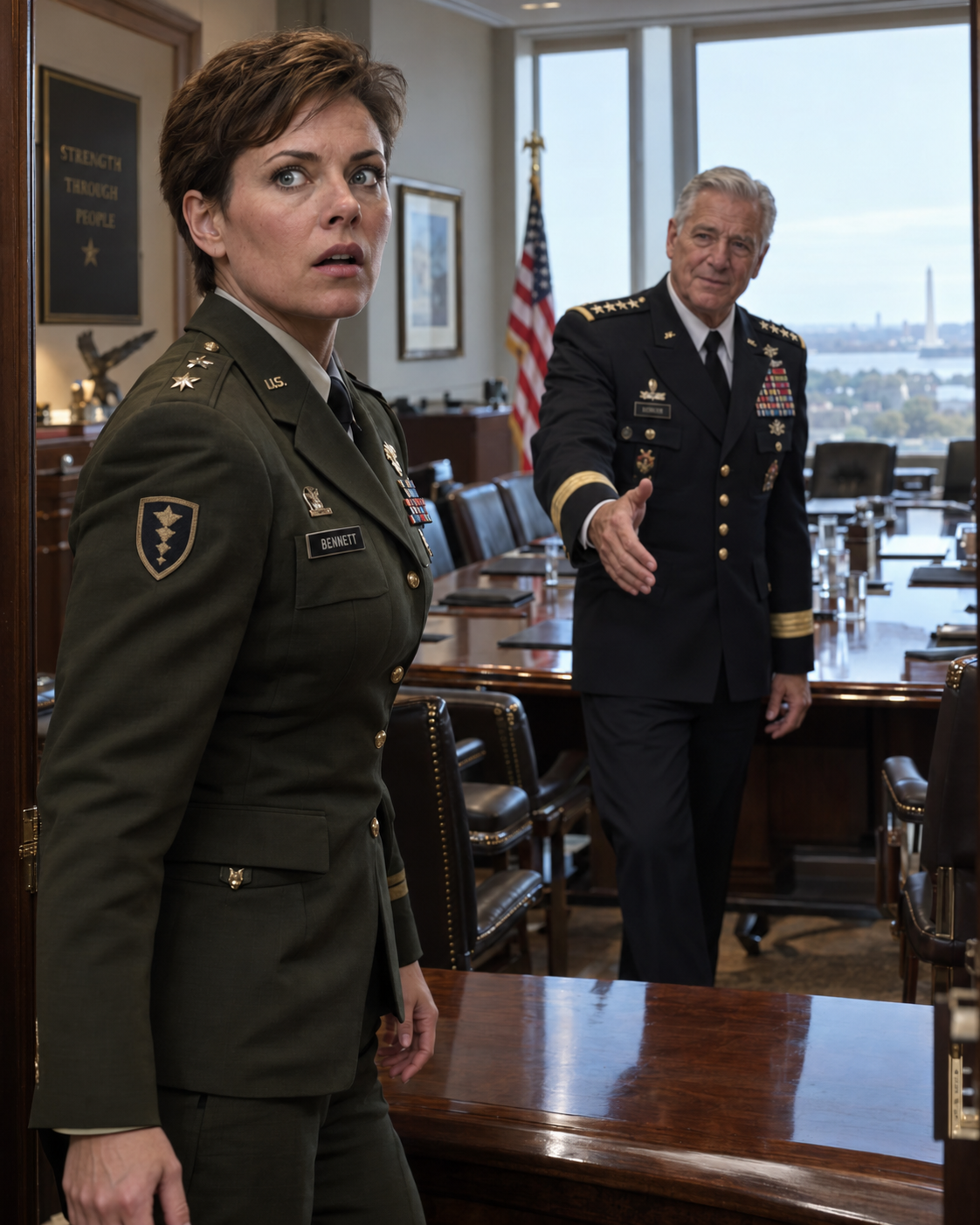
Major Laura Bennett.
I stood there for several seconds before opening it.
Inside was a single photocopy.
It was a hospital intake record from the night Emily had been brought into the trauma center.
I recognized her name immediately.
What I didn’t recognize was the notation stamped across the bottom.
“TRANSFER REQUEST DENIED.”
I read it twice.
Then a third time.
My stomach tightened.
The hospital hadn’t simply been short on blood.
Someone had requested an emergency transfer of reserve blood from another regional facility.
The request had been denied.
I looked at the signature.
My heart sank.
Lieutenant Colonel Miller.
I sat down slowly.
For months, Miller had told us that emergency transfers were being restricted because of “operational conservation requirements.”
I had assumed those restrictions came from higher command.
Apparently, they hadn’t.
Someone at our level had made the decision.
And someone had known exactly what the consequences could be.
I called General Sterling’s office.
His aide told me he was expecting me.
When I entered, Sterling didn’t ask whether I had read the document.
He already knew.
“You found it.”
“Sir, why wasn’t this included in the audit?”
“Because I wanted you to see it before everyone else did.”
He turned toward the window.
Emily was still in the hospital.
She was improving every day, but she wasn’t out of danger.
“Major, the blood shortage was only the beginning.”
I waited.
“Your reports warned us about cold-chain failures,” he said.
“Then we discovered altered inventory numbers.”
He placed another folder on the desk.
This one was thicker.
“Someone wasn’t merely ignoring problems.”
He looked directly at me.
“Someone was making the problems disappear on paper.”
My mouth went dry.
The room suddenly felt colder.
“How long?”
“We don’t know yet.”
He opened the folder.
Inside were shipment manifests, warehouse temperature logs, emergency transfer requests, and internal emails.
At first glance, they looked ordinary.
Then I noticed something.
Dates.
Several shipments had supposedly arrived at the depot during hours when the receiving dock had been closed.
Some refrigeration units had reported temperatures that were physically impossible.
Several signatures belonged to employees who had been on leave.
“This isn’t a mistake,” I whispered.
“No.”
Sterling’s voice was quiet.
“It isn’t.”
He told me that Miller and the regional director had already been removed from their positions pending investigation, but the inquiry had uncovered something more disturbing.
Money had been redirected.
Maintenance contracts had been repeatedly renewed with the same vendors.
Equipment that should have been replaced had been marked as fully operational.
Emergency stock had been reported as available when it wasn’t.
And every time someone like me submitted a warning, the paperwork somehow disappeared into another office.
I thought about all the nights I had stayed late rewriting reports.
All the meetings where people smiled politely and told me I was being overly cautious.
All the times Miller had said, “That’s just how the system works.”
Suddenly, I understood why he had been nervous when the audit began.
He wasn’t afraid of an inspection.
He was afraid someone would finally follow the paper trail.
Sterling pushed a photograph across the desk.
It showed a refrigerated medical truck parked outside a warehouse.
The timestamp was from six months earlier.
“What am I looking at?”
“The truck that was supposed to transport emergency blood reserves.”
I studied the photograph.
Something caught my attention.
The truck’s rear door was open.
Two men were standing behind it.
One was Miller.
The other was a civilian I didn’t recognize.
“Who is he?”
“That’s the question.”
Sterling handed me another photograph.
The same man was meeting someone outside a private office building.
Then another.
The same man entering a medical supply company.
Then another.
A handshake.
A warehouse.
A payment record.
My chest tightened.
“Are you saying Emily’s accident was connected to this?”
Sterling didn’t answer immediately.
“I am saying we don’t know.”
That distinction mattered.
He wasn’t accusing anyone without evidence.
Neither was I.
But the possibility was enough to keep me awake that night.
For the next several weeks, my life became a blur of interviews, audits, warehouse inspections, and meetings that lasted long after sunset.
I was formally appointed to lead the new joint medical logistics task force.
The promotion recommendation followed.
But I barely noticed.
I had spent twenty years believing logistics was about numbers.
Now I understood that every number represented a human being waiting somewhere.
A missing unit of blood wasn’t a missing box.
A failed refrigerator wasn’t a failed machine.
A delayed shipment wasn’t merely a late delivery.
Somewhere, there was always a person whose life depended on that item arriving.
And I had been watching those numbers disappear for years.
One afternoon, I visited Emily.
General Sterling had warned me not to expect much.
She was still weak.
Machines surrounded her bed.
Her hair was pulled back loosely, and her face looked much younger than I had imagined.
When she saw me, she smiled.
“You saved me.”
I shook my head.
“I gave blood.”
“Same thing.”
“No,” I said softly.
“Your doctors saved you.”
She smiled again.
“My grandpa said you were the reason they had the chance.”
I didn’t know what to say.
So I sat beside her.
For a while, neither of us spoke.
Then she asked something that surprised me.
“Did you know him before that night?”
“No.”
She looked toward the window.
“That’s what makes it strange.”
“What do you mean?”
She hesitated.
“My grandpa said you were there exactly when they needed you.”
I smiled faintly.
“Sometimes people get lucky.”
Emily’s expression changed.
“I don’t think it was luck.”
I looked at her.
She reached toward the small table beside her bed and picked up a folded piece of paper.
“My mom gave me this.”
I opened it.
It was a copy of an emergency dispatch record.
The timestamp made my skin prickle.
The emergency blood alert had been issued only seven minutes before I received it.
But according to the hospital’s internal system, the shortage had been recognized almost an hour earlier.
Someone had delayed the public alert.
I looked at Emily.
“Where did your mother get this?”
“I don’t know.”
She shrugged.
“She said Grandpa told her not to throw anything away.”
I folded the paper carefully.
That night, I returned to my office and reopened the investigation.
Something had changed.
Until then, I had been investigating negligence.
Now I had to investigate the possibility that someone had deliberately manipulated an emergency response.
I requested every timestamp associated with the blood shortage.
Every alert.
Every transfer request.
Every inventory adjustment.
Every phone call.
The pattern emerged slowly.
Almost painfully slowly.
The blood bank had not suddenly become empty.
The reserve had been declining for months.
The system had simply hidden it.
Then I found the first major discrepancy.
A shipment listed as destroyed had actually been delivered.
The receiving signature was mine.
I stared at the document.
My name.
My signature.
But I had never received that shipment.
Someone had forged my signature.
For a moment, I couldn’t breathe.
Then I looked at the date.
It was three months before Emily’s accident.
I pulled every document carrying my signature.
There were twelve.
Twelve questionable transactions.
Twelve shipments.
Twelve pieces of evidence that could have made me look responsible for shortages I had spent years warning about.
Someone hadn’t merely ignored my reports.
Someone had been building a paper trail that could eventually make me the scapegoat.
I called Sterling immediately.
He arrived less than twenty minutes later.
I placed the documents on his desk.
He didn’t touch them.
“Now you understand why I brought you into this.”
“Someone was preparing to blame me.”
“Possibly.”
He paused.
“Don’t let anger turn possibility into certainty.”
I nodded.
That was why I respected him.
He had enough power to destroy careers with a sentence.
Yet he insisted on evidence.
We expanded the investigation.
Within another month, federal investigators became involved.
The civilian vendor from the photographs was identified.
His name was Daniel Cross.
He owned a medical transportation company that had received millions of dollars in regional contracts.
His company wasn’t automatically guilty of anything.
But investigators discovered that several contracts had been renewed without competitive review.
Then came the financial records.
Payments had moved between companies.
Consulting fees had been issued for services that appeared never to have occurred.
Several individuals connected to the regional logistics office had received unexplained benefits.
Miller eventually agreed to cooperate.
I was present when he gave his statement.
He looked nothing like the confident officer who used to walk through our warehouse criticizing everyone else’s paperwork.
He looked old.
Tired.
Afraid.
He admitted suppressing reports.
He admitted altering performance summaries.
But when investigators asked whether he had deliberately endangered patients, he lowered his head.
“I thought I was protecting the department.”
No one spoke.
“Every year they told us to improve efficiency,” he continued.
“If we reported the shortages, we would lose funding.”
“So you hid them.”
His eyes filled with tears.
“Yes.”
I wanted to hate him.
Part of me did.
But watching him sit there, I realized something uncomfortable.
Systems rarely collapse because one person wakes up and decides to become a villain.
They collapse because ordinary people make small compromises until the compromises become normal.
One report disappears.
One number changes.
One inspection gets postponed.
One warning becomes inconvenient.
Then one day, someone is bleeding on an operating table.
And suddenly every little compromise has a face.
Emily’s face.
The investigation continued for months.
Several people lost their positions.
Some faced criminal charges.
Others were cleared after investigators found no evidence connecting them to wrongdoing.
The vendor contracts were frozen.
The regional blood distribution system was rebuilt.
Emergency reserves were increased.
Cold-chain equipment was replaced.
Independent audits became mandatory.
And for the first time in years, people began reading the warnings that logisticians like me had been writing.
But the part I remember most happened almost a year after that stormy Tuesday.
I was back at the same community clinic.
The same fluorescent lights.
The same orange chairs.
The same faint smell of antiseptic.
I had come to donate again.
Not because anyone had ordered me to.
Because I wanted to.
When I finished, I walked outside.
The rain had stopped.
A young woman stood near the entrance.
She looked nervous.
She was holding a donor card.
“Excuse me,” she said.
I turned.
“Are you Major Bennett?”
I smiled.
“Yes.”
She looked at the blood donor chair behind me.
“My brother received blood here last year.”
I didn’t know what to say.
She continued.
“The doctors said they weren’t sure he’d make it.”
Her voice trembled.
“Someone told me you helped change the system after that.”
I shook my head.
“A lot of people did.”
She smiled through tears.
“Then thank you.”
She walked away before I could answer.
I stood beneath the gray sky and watched her disappear into the crowd.
For a moment, I thought about General Sterling.
About Emily.
About the old man in the canvas jacket.
About the reports buried in filing cabinets.
About the forged signatures.
About all the lives hidden behind numbers on a spreadsheet.
Then my phone vibrated.
It was General Sterling.
His message contained only one sentence.
“Laura, I found something else.”
I stared at the screen.
After everything we had uncovered, I thought I was finally finished with the past.
I was wrong.
Attached to his message was a photograph.
An old photograph.
Taken before Emily’s accident.
In the background stood Daniel Cross.
Beside him stood someone I recognized immediately.
Someone I had trusted.
Someone who had spent years telling me that my warnings were unnecessary.
I zoomed in until the image became blurry.
My hands began to shake.
Because the person standing beside Cross wasn’t Miller.
It wasn’t the regional director.
It wasn’t anyone we had already investigated.
It was someone much higher.
Someone whose name had never appeared in a single report.
I looked up at the rain-darkened sky.
For the first time since that Tuesday night, I understood something terrifying.
Saving Emily had not ended the story.
It had only opened the door.
And somewhere behind that door was a truth powerful enough to explain why my warnings had been buried for so long.
I put my phone back into my pocket and started walking.
I didn’t know what I would find.
I only knew that I would keep looking.
Because sometimes doing the right thing doesn’t end when the danger passes.
Sometimes it begins there.
And if I had learned anything from that stormy night, it was this: the smallest act of courage can expose a much larger darkness, but once you see that darkness clearly, you have to decide whether you are willing to walk into it.
I was.
This time, I wasn’t walking in alone.