The first time I heard my daughter laugh after the accident, I nearly dropped my phone. And the person who made it happen wasn’t one of the expensive specialists I’d paid millions to hire.
“There’s one thing I’d need to know before I say yes…”
Owen looked at me across the conference table, his fingers resting on Grace’s drawing.
“If this place succeeds, what happens to the children whose parents can’t afford to pay?”
I hadn’t expected that question.
I’d spent three weeks working with architects, medical consultants, and financial advisors. The proposal included a state-of-the-art rehabilitation center, an indoor therapy pool, adaptive playgrounds, specialized classrooms, and residential accommodations for families traveling from other states.
The estimated cost was twenty-eight million dollars.
I could afford it.
What I hadn’t considered was the question Owen had just asked.
“I suppose we’d establish a scholarship program,” I said.
He shook his head gently.
“That’s not what I mean.”
“Then what do you mean?”
“I mean the little boy whose mother works two jobs and still can’t afford physical therapy. The girl whose insurance stops paying after twelve sessions. The veteran who needs help but doesn’t know how to ask for it.”
He paused.
“Would they be welcome here? Or would they have to prove they deserved a place?”
I stared at him.
For years, I’d lived in a world where access was determined by money. If Grace needed a specialist, I hired one. If a treatment wasn’t available locally, we flew somewhere else.
I’d never stopped to consider how many families didn’t have those choices.
“Everyone would be welcome,” I said.
Owen studied my face.
“Even if they couldn’t pay a dollar?”
“Even then.”
He looked down at the drawing.
“Then we have something worth discussing.”
I smiled, relieved.
But he wasn’t finished.
“And I want one more thing.”
“Name it.”
“No promises that every child will walk again. No advertisements showing kids getting out of wheelchairs as if that’s the only kind of success that matters.”
His voice was calm, but there was something deeply personal behind it.
“Caleb has spent his whole life being told what he can’t do. I don’t want him growing up in a place that measures his worth by whether his body can do what someone else’s can.”
I felt my throat tighten.
“What would you measure instead?”
Owen smiled faintly.
“Whether they leave believing their lives are worth living.”
That evening, I sat beside Grace’s bed longer than usual.
She was arranging miniature boats along her windowsill.
“Mom, do you think Owen will move away?”
I brushed her hair behind her ear.
“I don’t know yet, sweetheart.”
She looked down.
“Caleb says his dad might get a new job.”
“That’s true.”
“Will Caleb go too?”
“Probably.”
Grace was quiet for a moment.
Then she asked a question that broke my heart.
“Is everyone I love going to leave?”
I felt the familiar ache I’d carried since the accident.
Her father, Daniel, had been gone for fourteen months.
Some nights, Grace still slept with one of his old sweatshirts tucked beneath her pillow.
I pulled her close.
“Some people leave because they have to, honey. But that doesn’t mean they stop loving us.”
She rested her head against my shoulder.
“Daddy didn’t want to leave.”
“No,” I whispered. “He didn’t.”
“Then why did he?”
I closed my eyes.
I’d answered that question a hundred different ways.
None of them had ever felt sufficient.
“Because something terrible happened that nobody wanted.”
Grace considered my words.
“Can good things happen after terrible things?”
I looked at the little boats.
“Yes, sweetheart. I believe they can.”
She smiled sadly.
“Then maybe the new place can be one of them.”
I kissed her forehead.
“Maybe it can.”
Three days later, Owen called.
“I’ve made a decision.”
I held my breath.
“I’d like to help you build the center.”
Relief rushed through me.
“That’s wonderful.”
“But I can’t accept the director position.”
I frowned.
“Why not?”
“Because I’m not qualified to run a medical facility. I’m a veteran with experience in adaptive recreation and peer support. I know how to help kids feel comfortable trying difficult things. That doesn’t make me a physician or a rehabilitation administrator.”
I leaned back in my chair.
He was right.
I’d been so desperate to keep him near Grace that I’d offered him a position based on gratitude rather than qualifications.
“What role would you want?”
“Let me develop the adaptive recreation program. Hire experienced clinicians to oversee treatment. And let families help make decisions about how the place operates.”
“Done.”
“One more condition.”
I laughed.
“You negotiate harder than my corporate attorneys.”
“Only when it matters.”
“What is it?”
“Caleb gets to decide whether he wants to be involved. He’s my son, not a symbol for a fundraising campaign.”
I stopped smiling.
“Of course.”
Owen exhaled.
“Then let’s build something good.”
For the first time since Daniel died, I felt excited about a future I couldn’t completely control.
We named the project Harbor House.
Grace chose the name.
“Because boats need somewhere safe to come home,” she explained.
I thought it was perfect.
We purchased an abandoned elementary school on twelve acres outside town. The building had wide hallways, a large gymnasium, and enough surrounding land for accessible gardens and outdoor therapy areas.
The renovation began in September.
Within weeks, construction crews filled the property.
Architects redesigned entrances. Occupational therapists advised on equipment. Parents reviewed plans for bathrooms, quiet rooms, and family spaces.
Owen insisted that children be included in the planning.
At our first youth advisory meeting, Grace rolled into the room beside Caleb.
Caleb walked carefully with his forearm crutches, concentrating on each step.
Grace raised her hand.
“The playground needs a pirate ship.”
One architect smiled.
“A pirate ship?”
“With a ramp,” she said firmly. “So everybody can get on.”
Caleb nodded.
“And places to sit when your legs get tired.”
Another child suggested a sensory garden.
A teenage girl wanted an art studio.
A boy who used a communication device requested a music room.
By the end of the meeting, our architects had more useful ideas than they’d collected in six weeks of professional consultations.
I began to understand what Owen meant.
We weren’t building a place for children.
We were building it with them.
Then, just as everything seemed to be coming together, I received a phone call that threatened to destroy the entire project.
It came from my company’s chief financial officer, Martin Keller.
Martin had worked for me for eleven years. He was meticulous, conservative, and rarely called unless something was serious.
“We need to talk,” he said.
“About what?”
“The Harbor House funding.”
I frowned.
“What about it?”
“There’s a problem with the foundation account.”
My stomach tightened.
“What kind of problem?”
“An eight-million-dollar problem.”
I drove straight to the office.
Martin was waiting with our general counsel and two members of the finance team.
A stack of documents covered the conference table.
He explained that the construction fund had been established through a charitable foundation connected to my company.
Several major corporate donors had pledged support.
But someone had used forged authorization documents to transfer eight million dollars into an account controlled by a newly formed consulting company.
The money was gone.
I stared at him.
“How is that possible?”
“We’re still investigating.”
“Who approved the transfer?”
Martin hesitated.
“Your electronic signature appears on the documents.”
“That’s impossible.”
“I know.”
I stood so quickly my chair rolled backward.
“Then find out who did it.”
The next forty-eight hours were chaos.
Auditors arrived.
Our bank froze several accounts.
Attorneys reviewed contracts.
And construction at Harbor House slowed to a crawl.
Then the story leaked.
A local news station reported that millions had disappeared from a charity intended to help children with disabilities.
The headline was devastating.
MILLIONAIRE MOTHER’S REHABILITATION FOUNDATION UNDER INVESTIGATION.
By noon, my phone wouldn’t stop ringing.
Donors demanded explanations.
Contractors wanted guarantees.
Parents who had enrolled their children called in tears.
One mother left a voicemail that I listened to three times.
“My son has been waiting for a place like this his whole life. Please tell me it’s still happening.”
I sat alone in my office, staring at the phone.
For the first time in years, I felt completely helpless.
That evening, Owen found me at the construction site.
I was sitting on the floor of what would eventually become the children’s art room.
He lowered himself onto a stack of drywall.
“Rough day?”
I gave a bitter laugh.
“You could say that.”
He waited.
I told him everything.
The missing money.
The investigation.
The possibility that the foundation would collapse before opening.
When I finished, he was silent.
Then he asked, “Are you going to quit?”
I looked at him.
“Eight million dollars is missing, Owen.”
“I heard you.”
“The press thinks I’m a criminal.”
“I heard that too.”
“Then how can you ask me that?”
He leaned forward.
“Because none of those things answers my question.”
I looked away.
“I don’t know.”
Owen nodded.
“That’s an honest answer.”
I rubbed my forehead.
“I thought I could build something that would make Grace happy again. Now I’ve made everything worse.”
“Grace was happy before Harbor House existed.”
I looked up.
“Because of you.”
He shook his head.
“Because she found people who saw her as more than what happened to her.”
His words stung.
Not because they were cruel.
Because they were true.
“You don’t have to save every child,” he continued. “You just have to create a place where people can help each other.”
I stared at the unfinished walls.
“What if I fail?”
“Then you figure out what went wrong, ask for help, and try again.”
He stood.
“That’s what we tell the kids every day.”
The next morning, I made a decision.
Instead of hiding behind attorneys and public relations statements, I called a meeting with every family involved in the project.
More than seventy people came.
Some were angry.
Some were frightened.
Others simply wanted answers.
I stood before them without a prepared speech.
“Eight million dollars was stolen from this project,” I began. “I don’t know who took it yet. But I can promise you that we’re cooperating fully with investigators.”
A man in the front row raised his hand.
“Does that mean the center won’t open?”
“I don’t know.”
A murmur spread through the room.
I swallowed.
“But I know something else. This project belongs to more than one person now. And if you’re willing, I’d like us to decide together what happens next.”
A woman stood near the back.
Her name was Teresa Alvarez.
She had two children, one of whom used a wheelchair.
“My husband is an electrician,” she said. “He can help with the wiring.”
Another parent raised his hand.
“I’m a carpenter.”
A woman near the aisle said she managed nonprofit grants.
Someone else offered accounting assistance.
Within twenty minutes, people were volunteering skills, contacts, and time.
I stood there, stunned.
I’d spent my entire career believing leadership meant having the answers.
That morning, I learned it could also mean admitting when you didn’t.
Over the following weeks, Harbor House became something extraordinary.
Local businesses donated materials.
A university offered graduate students supervised clinical placements once the facility opened.
A retired architect volunteered to review accessibility plans.
Families organized fundraising events.
The town’s high school held a benefit concert.
None of it replaced the stolen money.
But it kept the project alive.
Then, one Friday afternoon, Martin called again.
“We found something.”
I hurried to his office.
He showed me a series of transactions connected to the missing funds.
The money had passed through three accounts before reaching a company registered in Delaware.
The company’s listed director was a man named Richard Vale.
I recognized the name immediately.
Richard had been my late husband’s business partner.
After Daniel died, Richard had offered to help manage several investments.
He’d also attended the first Harbor House fundraising dinner.
“Why would Richard steal from a children’s charity?” I asked.
Martin looked grim.
“Because he may have been stealing from your family long before this.”
The investigation uncovered a complicated scheme involving false invoices, inflated management fees, and unauthorized transfers from accounts Daniel had established years earlier.
Richard had apparently been using my trust in him to conceal financial misconduct.
The foundation transfer was the largest and most reckless theft.
But it wasn’t the first.
I felt physically sick.
Richard had attended Daniel’s funeral.
He had hugged Grace.
He had looked me in the eyes and promised to help protect my husband’s legacy.
I remembered something Daniel once told me.
“Trust people, Claire. But never confuse trust with refusing to ask questions.”
I’d forgotten that lesson.
Investigators gathered the evidence.
Richard was arrested six weeks later.
Some of the missing funds were recovered, though not all.
The case would take years to resolve.
But Harbor House could finally move forward.
I thought that would be the greatest challenge we’d face.
I was wrong.
It happened on a rainy Tuesday in February.
Grace and Caleb were participating in a supervised adaptive recreation session at the temporary rehabilitation center.
They were building a miniature harbor using wooden blocks, toy boats, and a shallow water table.
Owen was helping another child nearby.
Grace wanted to reach a blue boat that had drifted toward the far edge.
Caleb offered to help.
“I can get it,” he said.
He stepped around the table, but his foot caught on a loose floor mat.
He lost his balance.
As he fell, he struck the edge of a low cabinet.
The sound was terrible.
Grace screamed.
By the time Owen reached him, Caleb was on the floor, crying and clutching his arm.
An ambulance took him to the hospital.
I arrived twenty minutes later.
Owen stood outside the examination room, pale and motionless.
“How is he?”
“They’re checking for a fracture.”
I touched his shoulder.
“He’s going to be okay.”
Owen didn’t answer.
Then he whispered, “I should’ve been watching him.”
“Owen—”
“I should’ve seen the mat.”
“It was an accident.”
He turned toward me.
“That’s what people always say.”
Something in his voice made me stop.
He sat down heavily.
For the first time since I’d met him, the steady, reassuring man who always seemed to know what to say looked completely lost.
“I spent years in places where one mistake could get someone killed,” he said quietly. “I came home thinking I could finally keep the people I loved safe.”
His eyes filled.
“Then Caleb was born, and I realized I couldn’t protect him from everything.”
I sat beside him.
He continued.
“His mother left when he was two. She couldn’t handle the appointments, the uncertainty, the constant fear.”
He swallowed.
“I promised myself I’d never let him feel abandoned.”
“You haven’t.”
“But I can’t even keep him from getting hurt in a therapy room.”
I took his hand.
“Being a good father doesn’t mean preventing every fall.”
He looked at me.
“Then what does it mean?”
I thought of Daniel.
Of Grace.
Of all the nights I’d lain awake wondering whether I could have changed what happened.
“It means being there when they need you afterward.”
Owen covered his face.
And finally, he cried.
Not quietly.
Not politely.
He cried like a man who had been carrying too much for too long.
I stayed beside him until the doctor returned.
Caleb had fractured his wrist.
He would need a cast and several weeks of modified activities, but the injury was expected to heal.
Owen nearly collapsed with relief.
When we entered the room, Caleb was sitting upright, examining his bright green cast.
“Dad,” he announced, “I look like a superhero.”
Owen laughed through his tears.
“You sure do, buddy.”
Caleb noticed his father’s expression.
“Are you crying?”
“A little.”
“Because I got hurt?”
“Because I love you.”
Caleb considered that.
Then he held out his uninjured hand.
“It’s okay, Dad. I still want to sail boats.”
I turned away before they could see my tears.
But the accident had consequences.
The rehabilitation center conducted a safety review.
Owen voluntarily stepped away from leading sessions while staff examined the incident.
Some parents questioned whether Harbor House should employ someone without formal clinical credentials.
A local columnist suggested that our project had placed emotional storytelling above professional standards.
For the first time, Owen considered leaving.
He came to my office one evening and placed a resignation letter on my desk.
“I don’t want to become a liability.”
I stared at the paper.
“You’re not a liability.”
“Claire, a child got hurt.”
“Yes. And we need to learn from that.”
He shook his head.
“Maybe the other job is still available.”
I felt panic rising.
But this time, I didn’t offer him money.
I didn’t beg him to stay.
I simply asked, “What does Caleb want?”
Owen looked surprised.
“He wants to stay.”
“And what do you want?”
He stared at the resignation letter.
“I want to finish what we started.”
“Then let’s do it properly.”
Together, we worked with the center’s clinical director and independent safety specialists to improve our procedures.
We removed loose mats, updated supervision plans, and clarified the responsibilities of recreation staff and licensed therapists.
Owen completed additional training in adaptive recreation safety and emergency response.
The incident was documented transparently.
No excuses.
No cover-ups.
No attempts to protect reputations at the expense of children.
When Owen returned to the program, Grace greeted him with a handmade sign.
WELCOME BACK, CAPTAIN OWEN.
Caleb stood beside her, proudly displaying his green cast.
Owen read the sign.
Then he looked at the children.
“Ready for another adventure?”
Grace grinned.
“Only if you let us steer.”
He laughed.
“Wouldn’t have it any other way.”
By summer, Harbor House was nearly finished.
The old school had been transformed.
Sunlight poured through wide windows.
The hallways were bright and accessible.
The therapy pool had a gentle-entry ramp.
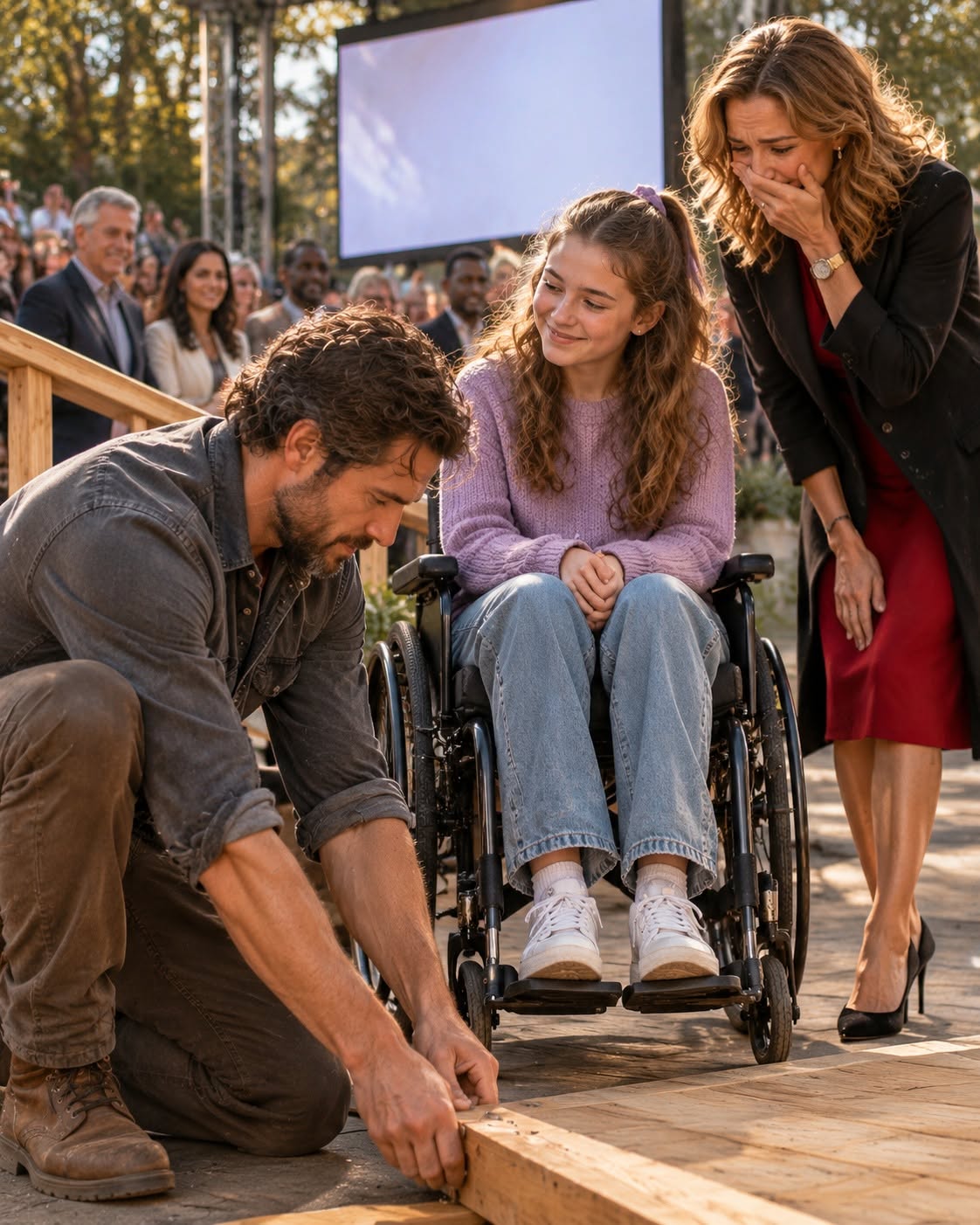
The playground included Grace’s pirate ship, complete with a wheelchair-accessible deck.
The art studio overlooked a garden filled with flowers planted by local families.
And in the center of the building stood a large wooden boat.
It was an enlarged version of the little toy Owen had used with Grace during their first session.
A local carpenter had built it as a gift.
Children could sit inside, turn the wheel, and imagine traveling anywhere in the world.
Above it, a sign read:
EVERY JOURNEY DESERVES A HARBOR.
We scheduled the grand opening for August 17.
It would have been Daniel’s forty-second birthday.
I hadn’t planned that.
Grace had chosen the date.
“Daddy always liked birthdays,” she explained. “He said they were for celebrating being alive.”
The morning of the opening, I woke before sunrise.
For a moment, I reached toward the empty side of my bed.
Old habits.
Old grief.
Then I noticed a photograph on the nightstand.
Daniel and Grace at the beach, laughing as a wave splashed their feet.
I picked it up.
“I wish you could see this,” I whispered.
At nine o’clock, hundreds of people gathered outside Harbor House.
Families.
Doctors.
Veterans.
Volunteers.
Local officials.
Children in wheelchairs, children using walkers, children running across the grass, and children who needed quiet spaces away from the crowd.
Everyone had a place.
I stood at the podium, looking out at them.
I’d prepared a speech about resilience, community, and hope.
But when I saw Grace beside Owen and Caleb, the words suddenly felt too small.
So I folded the paper.
“Fourteen months after my husband died,” I began, “I thought money could fix anything.”
The crowd grew quiet.
“I hired the best specialists. I bought the best equipment. I searched the world for answers.”
I looked toward Grace.
“But the first time I heard my daughter laugh again, it wasn’t because someone had discovered a miracle treatment.”
My voice trembled.
“It was because someone had asked her where she wanted to sail.”
Owen lowered his head.
I continued.
“Harbor House exists because one man reminded me that healing isn’t always about changing what happened to us. Sometimes it’s about discovering what is still possible.”
I looked across the crowd.
“Today, this building opens its doors to every family who needs it, regardless of income. And I want you to know something.”
I paused.
“This place doesn’t belong to me.”
I gestured toward the volunteers, clinicians, parents, and children.
“It belongs to all of you.”
The applause was overwhelming.
Then Grace rolled toward the microphone.
She had insisted on giving her own speech.
I’d helped her practice, but she refused to tell me what she planned to say.
She adjusted the microphone.
“Hi. I’m Grace.”
A few people laughed warmly.
“I used to think my life was over because I couldn’t walk anymore.”
My heart tightened.
“I thought I couldn’t do anything fun. And I thought everybody would eventually get tired of helping me.”
She looked at Owen.
“Then Captain Owen showed me a boat.”
He smiled.
“And Caleb became my best friend.”
Caleb waved enthusiastically.
Grace continued.
“I still get sad sometimes. I still miss my daddy. And sometimes I get mad because things are harder for me.”
She paused.
“But I learned that having a hard day doesn’t mean you have a bad life.”
The crowd went completely silent.
Then she said something I’ll carry with me forever.
“My legs don’t work the way they used to. But my dreams still do.”
I covered my mouth.
Grace smiled.
“So if you’re scared to try something, you can come here. We can be scared together. And then maybe we can have fun anyway.”
The applause began slowly.
Then people stood.
Owen wiped his eyes.
Caleb clapped so hard he nearly dropped his crutch.
And I realized that my daughter had just given the speech I’d spent months trying to write.
After the ceremony, the children rushed toward the playground.
Grace and Caleb headed straight for the pirate ship.
Owen followed, carrying the original wooden boat.
I watched them from a bench beneath a maple tree.
A woman sat beside me.
She introduced herself as Rebecca.
Her son, Noah, was eight years old and had recently experienced a spinal cord injury.
She looked exhausted.
“I don’t know how you did it,” she said.
“Did what?”
“Kept going.”
I thought about her question.
“I didn’t always.”
She looked at me.
“There were days I couldn’t get out of bed. Days I was angry at everyone. Days I thought I’d never feel happy again.”
Rebecca’s eyes filled.
“That’s exactly how I feel.”
I nodded.
“Then you’re not alone.”
She watched Noah approaching the pirate ship.
“Does it get easier?”
I considered my answer carefully.
“Some things do. Some things don’t. But you find new ways to live around the pain.”
She wiped her cheek.
“I just want my little boy back.”
I looked toward Grace.
“I know.”
For a while, we sat quietly.
Then Noah laughed.
It was a small sound.
Barely audible over the playground noise.
But Rebecca heard it.
Her entire body went still.
She turned toward me, tears spilling down her face.
“He hasn’t laughed in months.”
I felt my own eyes fill.
Across the playground, Grace was pretending to steer the pirate ship through a storm.
Caleb was shouting instructions.
Noah was laughing.
And Owen stood nearby, smiling.
The moment felt strangely familiar.
Almost like watching my own life begin again.
But the greatest surprise came later that afternoon.
As the celebration wound down, Owen approached me carrying a small wooden box.
“Grace asked me to give you this.”
I opened it.
Inside was the original toy boat.
Its paint was chipped.
One corner had been repaired.
And on the bottom, someone had carved three names.
GRACE.
CALEB.
DANIEL.
I stared at the third name.
Owen spoke softly.
“Grace wanted her dad to be part of the crew.”
My hands began shaking.
I ran my thumb over the letters.
“She remembered.”
“Of course she remembered.”
I looked at him.
“Thank you.”
He shook his head.
“Don’t thank me. She came up with it.”
I held the boat against my chest.
For so long, I’d been afraid that moving forward meant leaving Daniel behind.
That laughing again would somehow betray him.
That building a new life meant forgetting the one we’d lost.
But Grace understood something I hadn’t.
Love doesn’t disappear when someone dies.
It changes shape.
It becomes memories.
Stories.
Small traditions.
And sometimes, a name carved into the bottom of a wooden boat.
That evening, after everyone had gone home, Grace asked me to take her back inside Harbor House.
We rolled through the quiet hallways until we reached the large wooden boat in the center of the building.
She asked me to help her into the captain’s seat.
I did.
Then she patted the bench beside her.
“Come on, Mom.”
I climbed in.
She turned the wooden wheel.
“Where are we going?” I asked.
She thought for a moment.
“Somewhere Daddy would’ve liked.”
I smiled.
“The ocean?”
“Maybe.”
“The mountains?”
“Maybe.”
“Then where?”
She looked at me.
“Somewhere we haven’t been yet.”
I felt tears gathering.
“That sounds like a good place.”
She reached for my hand.
“Mom?”
“Yes, sweetheart?”
“Are you happy?”
I looked around the room.
At the bright walls.
At the artwork made by children.
At the wooden boat that had somehow become the center of our lives.
Then I looked at my daughter.
“Yes,” I said. “I am.”
She smiled.
“Good. Because I think Daddy would want that.”
I pulled her close.
And for the first time since the accident, I believed it completely.
Over the next three years, Harbor House grew beyond anything we’d imagined.
We opened additional therapy programs, expanded financial assistance, and partnered with hospitals to help families transition home after serious injuries.
Owen became director of adaptive recreation after earning the qualifications needed for the role.
He also helped establish a mentorship program connecting veterans with children who wanted guidance, encouragement, and friendship.
Caleb grew taller.
His coordination challenges remained, but he developed remarkable confidence and a talent for painting.
Grace became obsessed with marine biology.
She filled her bedroom with books about whales, coral reefs, and underwater exploration.
At thirteen, she announced that she wanted to become an ocean scientist.
I smiled.
“Then we’ll find a way to get you to the ocean.”
She rolled her eyes.
“Mom, I already have a plan.”
Of course she did.
The following summer, Harbor House organized its first accessible sailing expedition.
Twelve children and their families spent a week learning to sail with trained instructors on specially adapted boats.
Grace and Caleb were among them.
On the final day, I stood on the dock watching Grace take the helm.
Owen sat nearby, supervising alongside the sailing instructor.
Caleb helped adjust a line.
The boat moved slowly across the water.
Grace looked back at me.
“Mom!”
I waved.
“Be careful!”
She laughed.
“We’ve got this!”
Then she turned toward the open water.
The sunlight caught her hair.
The breeze lifted the edges of her life jacket.
And I heard that laugh again.
The same laugh that had stopped me in the doorway of a little therapy room years earlier.
Only this time, I didn’t freeze.
I laughed too.
Because I finally understood.
I’d spent so long trying to give my daughter back the life she’d lost that I nearly missed the beautiful life she was building.
I had wanted her to walk again.
To run.
To dance.
To become the girl she had been before the accident.
But Grace had never needed to become that girl again.
She needed the freedom to become whoever she was going to be next.
As the boat sailed farther into the harbor, Owen raised one hand.
Grace waved back.
Caleb shouted something I couldn’t hear.
And I stood on the dock with tears on my cheeks, watching three people who had changed my life without ever promising to fix it.
I thought about Daniel.
About the day we lost him.
About the impossible silence that followed.
And about the little wooden boat that had started everything.
There was still grief in my heart.
There always would be.
But there was room for joy beside it now.
Room for friendship.
Room for new dreams.
Room for a future that didn’t look anything like the one I’d planned.
That night, I wrote a letter to Daniel.
I told him about Grace’s sailing trip.
About Caleb’s paintings.
About Owen and Harbor House.
I told him how frightened I’d been after he died, and how desperately I’d tried to control everything because I couldn’t bear losing anything else.
Then I wrote the words I’d needed to say for years.
I couldn’t give our daughter her old life back.
But I finally learned how to help her love the life she has.
I folded the letter and placed it beside his photograph.
Outside, the wind moved softly through the trees.
From Grace’s bedroom came the sound of laughter as she talked to Caleb on the phone.
I sat there listening.
And I knew, with a certainty no amount of money could ever buy, that we were going to be okay.
Not because every problem had been solved.
Not because the pain had disappeared.
But because we had stopped waiting for life to become perfect before allowing ourselves to live it.
Years earlier, I’d believed that love meant protecting my daughter from every hardship.
Owen had shown me something different.
Love could mean standing beside someone while they faced the difficult parts of life themselves.
It could mean giving them the tools to choose their own direction.
It could mean letting go of the future you imagined so they could discover one of their own.
And sometimes, it could be as simple as placing a little wooden boat in front of a frightened child and asking one question.
“Where would you like to sail?”
Because the greatest gift we can give someone who has lost their way isn’t a promise that the storms will end.
It’s the knowledge that their journey is still worth taking, their dreams still matter, and they don’t have to sail alone.