The first thing Captain Dylan Reid said when I walked into the briefing room at Nellis Air Force Base was, “Looks like they sent us a librarian.”
At 4:37 the next morning, my phone rang.
I was already awake.
Outside my quarters, the wind rattled the windows, and distant thunder rolled across the Nevada desert.
Major Grant Miller’s name appeared on the screen.
“Vance, get to operations. Now.”
I sat up.
“What’s happened, sir?”
“The weather’s moving faster than predicted. And we’ve got another problem.”
“What kind of problem?”
He hesitated.
“Someone changed the mission data overnight.”
For a moment, I thought I’d misheard him.
“Changed it how?”
“That’s what we’re trying to find out.”
The call ended.
I dressed in less than three minutes.
By the time I reached the operations building, the hallway was crowded with technicians, intelligence personnel, and flight supervisors.
Major Miller stood beside a computer terminal.
Dylan was there, too.
He looked irritated rather than concerned.
“Nice of you to join us, Vance.”
I ignored him.
“Sir, what changed?”
Miller pointed to the digital mission map.
“The updated route was uploaded at 0210. The eastern corridor has been moved nearly twelve miles closer to the mountain ridge.”
I leaned toward the screen.
The new route cut directly through the area I’d identified as vulnerable to terrain masking and deteriorating communications.
“Who authorized this?”
Miller’s jaw tightened.
“That’s the problem. The system shows an approved revision, but nobody in this room remembers signing off on it.”
Dylan folded his arms.
“It’s probably an administrative update.”
I turned toward him.
“An administrative update doesn’t move four fighters into a worsening weather corridor without a documented review.”
He frowned.
“You’re assuming the worst.”
“I’m checking the facts.”
Miller raised a hand.
“Enough. Both of you.”
He turned to the mission systems officer.
“Can we verify the source?”
The officer nodded.
“We’re reviewing the access logs. It may be a synchronization error between the exercise planning network and the aircraft mission-data system.”
I studied the display.
Something bothered me.
The revised route didn’t simply move us toward the storm.
It also removed one of the alternate exit points we’d agreed to use if communications failed.
I pointed to the missing waypoint.
“Where’s Echo Seven?”
The officer leaned closer.
“It isn’t there.”
“It was there last night.”
He checked the previous version.
His expression changed.
“She’s right.”
Miller looked at me.
“What does that mean?”
“It means if someone follows this version during a communications failure, they may have fewer options for exiting the corridor.”
Dylan shook his head.
“We’re experienced pilots, Clara. We can navigate without somebody holding our hands.”
I turned toward him.
“Then you should have no objection to verifying the route before we fly it.”
He opened his mouth.
Then closed it.
Major Miller studied the screen.
“Nobody launches until we understand the discrepancy.”
For the first time since arriving at Nellis, I felt a small measure of relief.
But it lasted less than ten minutes.
A colonel entered the room carrying a tablet.
Colonel Richard Halden.
He was overseeing the evaluation program.
He had a reputation for demanding results, and everyone knew senior leadership was watching the exercise closely.
“Major Miller,” he said, “why are the aircraft still on the ground?”
Miller explained the route discrepancy and the weather concerns.
Halden listened without interrupting.
Then he looked at his watch.
“We have observers arriving in forty minutes.”
“Yes, sir.”
“And we’ve already delayed this evaluation twice.”
“Yes, sir.”
Halden glanced toward the mission board.
“Can we use the previous route?”
I stepped forward.
“Sir, the previous route includes a corridor where terrain and weather could degrade our communications. We can mitigate some of the risk, but conditions are approaching the limits established in the exercise plan.”
He studied me.
“Captain Vance, correct?”
“Yes, sir.”
“You’re the pilot who raised these concerns yesterday?”
“Yes, sir.”
He looked at Miller.
“Has anyone else independently confirmed her assessment?”
Derek stepped forward.
“I have, sir.”
Sam nodded.
“Me too.”
Dylan remained silent.
Halden considered that.
Then he said, “We’ll conduct a revised risk assessment. If the conditions exceed the approved limits, the exercise changes or stops. The schedule is not a reason to ignore the rules.”
I hadn’t expected that answer.
Neither had Dylan.
Halden turned toward the systems officer.
“And nobody touches those mission files until we know why the route changed.”
He walked out.
Miller exhaled.
Then he looked at me.
“Vance, good catch.”
I nodded.
But my attention remained on the missing waypoint.
Because I’d seen something like this before.
Not the exact error.
Not the same aircraft.
But the same dangerous pattern.
A small inconsistency.
A missing safeguard.
A team under pressure to proceed.
And a room full of people hoping the problem would turn out to be nothing.
The last time I’d seen that pattern, someone had died.
His name was Lieutenant Evan Cross.
And for three years, I’d carried the memory of his final radio call.
By 0700, the technical team had identified a likely cause of the route discrepancy.
An outdated mission-planning package had been loaded into the exercise system during an overnight update.
The package contained a proposed route that had never received final approval.
The missing waypoint was part of that outdated version.
There was no evidence of deliberate interference.
But the error had passed through several checks without being caught.
Miller ordered a complete verification of the aircraft mission data.
The weather continued to deteriorate.
Then came the decision nobody expected.
Colonel Halden changed the exercise.
Instead of flying the original low-level route through the eastern corridor, Raven Flight would conduct a revised scenario in a safer portion of the range.
The evaluators would introduce simulated communications failures and changing tactical conditions.
The goal would be to test how the pilots responded when their original plan became unusable.
Dylan looked furious.
“So we’re getting a watered-down exercise because somebody got nervous?”
Miller turned toward him.
“Captain Reid, the purpose of training is to test your judgment, not your willingness to ignore a risk assessment.”
Dylan’s face reddened.
“Sir, I wasn’t suggesting—”
“I know exactly what you were suggesting.”
The room went quiet.
Miller continued.
“You’re leading Raven Flight today. I expect you to demonstrate that you can adapt.”
Dylan nodded stiffly.
“Understood, sir.”
As we walked toward the flight line, Sam caught up with me.
“Well, that was uncomfortable.”
I smiled faintly.
“Which part?”
“All of it.”
Derek joined us.
“You were right about the route.”
“We were right to check it,” I replied.
He looked at me for a moment.
“You always talk like that?”
“Like what?”
“Like you don’t want credit for anything.”
I glanced toward the aircraft.
“Credit doesn’t make an unsafe plan safer.”
He nodded slowly.
“Fair enough.”
We reached the flight line.
Four F-15EX fighters waited beneath a gray morning sky.
Ground crews moved between them, completing inspections and preparing the aircraft.
I stopped beside mine.
Its dark canopy reflected the clouds overhead.
For a moment, I felt the familiar combination of anticipation and unease.
I loved flying.
That had never changed.
But there was a difference between loving the sky and believing it owed you anything.
I placed my helmet on the ladder and began my preflight checks.
A crew chief named Technical Sergeant Lena Ortiz approached.
“Morning, Captain.”
“Morning, Sergeant.”
She handed me the maintenance documentation.
“Aircraft’s ready. All inspections complete.”
I reviewed the paperwork carefully.
Ortiz watched me.
“You’re the one who caught the mission-data issue?”
“I noticed something that needed checking.”
She smiled.
“Good. We like pilots who read things.”
I laughed.
“Apparently, that makes me a librarian.”
Ortiz raised an eyebrow.
“Then I hope you brought your library card.”
For the first time that morning, I genuinely smiled.
An hour later, Raven Flight was airborne.
The storm remained east of our operating area.
Visibility was acceptable, and the revised mission stayed within the approved weather limits.
Dylan led the formation.
Derek flew second.
Sam third.
I occupied the trailing position.
Again.
I didn’t complain.
We completed the initial portion of the exercise without incident.
Then the evaluators introduced the first simulated failure.
Our tactical data link disappeared.
A message appeared on the training display indicating a simulated communications degradation.
Dylan responded quickly.
“Raven Flight, execute contingency Bravo.”
We transitioned to the rehearsed procedures.
For several minutes, everything worked.
Then the scenario became more complicated.
A simulated threat appeared near the western boundary.
Dylan directed Derek toward it.
Sam adjusted his position to maintain coverage.
I monitored the formation and checked our location against the prebriefed boundaries.
Then the radio crackled.
“Raven Three, report position.”
Sam responded.
“Raven Three, established west of the primary reference point.”
His voice sounded strained.
I glanced at the display.
Something wasn’t right.
Sam’s aircraft was drifting farther from the planned formation than expected.
I called him.
“Raven Three, confirm your reference.”
He answered.
“Stand by.”
A few seconds passed.
Then his voice returned.
“Clara, I’m getting conflicting navigation indications.”
I felt my stomach tighten.
This wasn’t part of the simulated data-link failure.
At least, it hadn’t been briefed that way.
I looked toward Sam’s aircraft.
He was maintaining controlled flight, but his position was becoming difficult to reconcile with the information he was reporting.
“Dylan, Raven Four. Raven Three may have an actual navigation discrepancy. Recommend terminating the tactical portion until we verify.”
Dylan answered immediately.
“Negative. Stay in position. It’s part of the scenario.”
I checked the training instructions.
There was no indication that Sam’s primary navigation system was supposed to malfunction.
“Raven Lead, this may be an unplanned equipment issue.”
Dylan’s reply came sharp.
“Vance, I said maintain position.”
I took a breath.
There it was again.
The moment when speaking up meant challenging the person in charge.
I could almost hear Evan Cross’s voice from three years earlier.
“Clara, my display doesn’t match yours.”
I pushed the memory aside.
“Raven Lead, I recommend a safety termination for Raven Three. We need to establish whether the indications are simulated or real.”
There was a pause.
Then Derek spoke.
“Raven Two concurs. I’m seeing an inconsistency in Three’s reported position.”
Dylan didn’t answer immediately.
Finally, he said, “Raven Flight, knock it off. Terminate the tactical scenario.”
Relief washed through me.
We coordinated with range control and began separating from the exercise in accordance with our procedures.
But Sam’s problem was getting worse.
“Raven Three,” he called, “I’ve got a flight-control caution.”
My chest tightened.
Dylan responded.
“Raven Three, say again.”
“Flight-control caution. Aircraft handling feels abnormal.”
The radio went quiet for a fraction of a second.
Then Dylan’s voice returned.
“Raven Three, maintain safe flight. We’ll coordinate recovery.”
I looked toward Sam.
His aircraft was still flying.
But its movements had become less smooth.
He made a small correction.
The fighter responded more sharply than expected.
Then he corrected again.
“Raven Three, I’m having trouble keeping it settled.”
I felt my heartbeat accelerate.
A simulated exercise had become a real emergency.
And we were still airborne over the Nevada desert.
Dylan contacted range control.
Emergency support was activated.
The nearest suitable recovery options were reviewed.
Sam continued flying while working through the appropriate emergency procedures.
I stayed far enough away to avoid interfering, but close enough to observe.
“Sam,” I said, “focus on your aircraft. We’ll handle the coordination.”
His breathing came through the radio.
“Copy.”
Then he added, “Clara, I’m scared.”
The admission was so unexpected that nobody spoke for a moment.
Sam Reyes was one of the most naturally talented pilots I’d ever flown with.
He joked through briefings.
He laughed at mistakes.
He rarely admitted uncertainty.
Now his voice was shaking.
I kept mine steady.
“That’s okay, Sam. Stay with your training. One task at a time.”
He acknowledged.
We continued toward the recovery area.
Then another caution appeared in Sam’s cockpit.
He reported it immediately.
Dylan’s voice tightened.
“Raven Three, advise aircraft controllability.”
Sam hesitated.
“Degraded. Still controllable, but I’m working hard.”
The emergency checklist and aircraft procedures would determine what happened next.
I knew that.
But I also knew what fear could do to a pilot.
It could narrow your attention.
Make every warning feel like a catastrophe.
Make you forget the options still available.
I remembered Evan.
The radio.
The confusion.
The moment everything had gone wrong.
And I realized I was gripping my controls too tightly.
I loosened my hands.
Breathed.
Focused.
“Raven Lead,” I said, “recommend keeping the formation clear and letting Three work the emergency with minimal radio traffic.”
Dylan answered.
“Agreed.”
For the first time, there was no argument.
Only teamwork.
As we approached the recovery area, Sam reported that the aircraft was becoming increasingly difficult to control.
Ground personnel reviewed his indications and provided support.
The emergency response team prepared for either a landing or an ejection if the aircraft could no longer be flown safely.
I looked toward Sam’s fighter.
It was moving unevenly now.
The problem was unmistakable.
“Raven Three,” Dylan said, “we need your assessment.”
Sam’s voice came back.
“I don’t think I can safely land it.”
My stomach dropped.
There was a brief pause.
Then Dylan replied.
“Understood. Follow the emergency procedures and coordinate with control.”
I watched Sam’s aircraft from a safe distance.
He had to make the decision.
Not me.
Not Dylan.
The pilot in the damaged aircraft.
The person who could feel what the machine was doing.
Sam reported that the aircraft had become uncontrollable.
He was directed toward an appropriate unpopulated area and initiated the emergency ejection sequence in accordance with the applicable procedures.
A moment later, I saw the canopy separate.
Then the ejection seat.
Then a parachute opening against the gray sky.
I stopped breathing.
For a terrible second, all I could see was Evan Cross.
The flash of an aircraft disappearing.
The silence that followed.
The years of questions.
Then Sam’s voice crackled over the emergency frequency.
“Raven Three. I’m under canopy.”
I closed my eyes for half a second.
He was alive.
The damaged aircraft continued away from the recovery area and crashed in a remote section of the range.
A column of smoke rose from the desert.
Emergency responders were already moving.
Dylan’s voice came over the radio.
“Raven Flight, maintain assigned recovery procedures. Three is under canopy. Rescue is responding.”
I heard the strain beneath his words.
But he remained focused.
We returned to base.
The landing felt strangely ordinary.
The runway appeared.
The wheels touched down.
The aircraft slowed.
I taxied toward the parking area with my hands trembling.
When I shut down the engines, I sat in the cockpit for several minutes.
I couldn’t move.
Then someone tapped the side of the aircraft.
Technical Sergeant Ortiz.
She looked up at me.
“Captain?”
I opened the canopy.
“Yeah?”
“You’re home.”
I stared at her.
Then I nodded.
“Yeah.”
She helped me down the ladder.
My legs felt weak.
I removed my helmet.
For the first time since the emergency, I allowed myself to think about what had almost happened.
Sam.
Evan.
The storm.
The mission-data error.
The moment Dylan had finally listened.
I walked toward the operations building.
And that’s when I saw Dylan.
He was standing alone beside the entrance.
His helmet hung from one hand.
He looked nothing like the confident pilot who’d mocked me in the briefing room.
“Clara.”
I stopped.
“How’s Sam?”
“Rescue team has him. He’s conscious. Possible leg injury, but he’s talking.”
I exhaled.
“Thank God.”
Dylan looked down.
Then he said something I never expected.
“I almost killed him.”
I stared at him.
“Dylan…”
“No.”
He shook his head.
“When you reported the discrepancy, I assumed you were trying to challenge me. I treated a safety concern like a personal insult.”
I didn’t answer.
He looked toward the runway.
“If Derek hadn’t backed you up, I might’ve kept pushing the scenario.”
I took a breath.
“You did terminate it.”
“Eventually.”
He looked at me.
“That shouldn’t have taken three people.”
For a long moment, neither of us spoke.
Then he asked, “Why didn’t you tell us?”
I frowned.
“Tell you what?”
“Who you really are.”
My stomach tightened.
“What do you mean?”
He hesitated.
“Major Miller asked me to review the training records after we landed. I saw the authorization restrictions attached to your file.”
I kept my expression neutral.
“Those restrictions exist for a reason.”
“I know.”
He looked at me.
“But I’ve been treating you like a rookie because I couldn’t see your experience.”
I shook my head.
“You didn’t need to know my history to listen to a valid concern.”
He stared at me.
Then slowly nodded.
“You’re right.”
That was the first honest conversation we’d had.
But it wasn’t the last.
The next morning, Major Miller called us into his office.
Sam was recovering at the base medical facility.
His injuries were painful but not life-threatening.
The aircraft had been destroyed.
An investigation was underway.
Miller looked exhausted.
“I want to make something clear,” he began.
“The exercise was properly terminated once the unplanned discrepancy was recognized. The emergency response worked. Captain Reyes survived.”
He paused.
“But we have serious questions to answer.”
Dylan nodded.
“Yes, sir.”
Miller looked at me.
“Captain Vance, your actions will be reviewed as part of the investigation. So will everyone else’s.”
“Understood.”
He leaned back.
“There’s another matter.”
I felt my stomach tighten.
He opened a folder.
Inside was a request from the evaluation command.
They wanted a detailed assessment of the mission-planning discrepancy and the communication failures within Raven Flight.
Miller looked directly at me.
“Clara, your background includes specialized work in high-risk flight operations. I can’t discuss the details here, but I know enough to understand why you were assigned to this program.”
Dylan glanced toward me.
I kept my eyes on Miller.
“Yes, sir.”
“The evaluation team wants you to help review the human-factors portion of this incident.”
I hesitated.
“Sir, I was part of the flight.”
“Which is why you’ll provide your account, not serve as an independent investigator.”
He slid the folder toward me.
“Your experience may help us identify questions the investigators should examine.”
I nodded.
“Understood.”
Miller looked at Dylan.
“And Captain Reid, you’re going to participate in that review.”
Dylan straightened.
“Yes, sir.”
“Not to defend your decisions. To understand them.”
Dylan nodded again.
For the first time, I saw him accept an uncomfortable assignment without arguing.
The investigation lasted several weeks.
The technical findings were complex.
Sam’s aircraft had experienced a flight-control system malfunction that developed during the exercise.
The precise sequence required detailed analysis.
The earlier mission-data error was a separate issue, but it revealed weaknesses in configuration control and verification.
The investigators also examined how Raven Flight responded to unexpected information.
They interviewed every pilot.
Reviewed communications.
Studied the exercise planning process.
And evaluated whether the flight had been prepared to recognize and respond to real emergencies during simulated failures.
The conclusions weren’t simple.
No single person had caused everything.
But several small problems had aligned.
An outdated planning file.
A changing weather forecast.
A leader reluctant to accept challenges.
A team that hadn’t fully established how to distinguish simulated problems from real ones.
And an aircraft malfunction nobody had anticipated.
The final report recommended changes to mission-data verification, exercise safety procedures, and crew coordination training.
It also recommended clearer procedures for stopping an exercise when a pilot reported an unplanned aircraft discrepancy.
The changes were adopted.
But the most important change happened in a room without investigators, cameras, or senior officers.
It happened when Dylan walked into the squadron briefing room carrying four cups of coffee.
He placed one in front of me.
One in front of Derek.
One in front of Sam, who had returned on crutches.
Then he sat down.
“I owe all three of you an apology.”
Nobody spoke.
Dylan looked at Derek.
“You backed up a safety concern when I didn’t want to hear it.”
He turned toward Sam.
“You trusted me to lead you. I let my pride get in the way.”
Sam looked down.
Then Dylan faced me.
“And Clara…”
He stopped.
For a moment, I thought he might change his mind.
Instead, he said, “I treated you like you had to prove you belonged here.”
I waited.
“You didn’t.”
He swallowed.
“I was wrong.”
The room was silent.
Then Sam grinned.
“Well, this is awkward.”
Derek laughed.
Dylan managed a small smile.
Sam leaned back.
“Can we agree that nobody gets to call Clara a librarian anymore?”
I raised an eyebrow.
“Actually, I kind of like it.”
They stared at me.
I smiled.
“Somebody has to make sure you all read the instructions.”
For the first time, all four of us laughed together.
It didn’t erase what had happened.
But it was a beginning.
A few days later, I visited Sam at the rehabilitation clinic.
He was working through physical therapy.
His leg was healing, though the doctors expected several more weeks before he could return to normal activity.
He looked up when I entered.
“Hey, Librarian.”
I smiled.
“Careful. I know where you keep your training records.”
He laughed.
Then his expression softened.
“Clara, can I ask you something?”
“Sure.”
“Have you ever ejected?”
I hesitated.
“Yes.”
His eyes widened.
“Really?”
I nodded.
“Once.”
He studied me.
“Was it like mine?”
I looked toward the window.
“Different circumstances.”
He waited.
I took a breath.
“It happened during an operation I can’t discuss in detail.”
He nodded.
“But I remember the fear. And I remember what it felt like afterward.”
Sam looked down.
“I keep hearing the warning tones.”
“That’s common after something frightening.”
“Sometimes I wake up thinking I’m still in the cockpit.”
I sat beside him.
“Have you told your medical team?”
He shook his head.
“I don’t want them thinking I can’t handle flying.”
I looked at him.
“Sam, getting help doesn’t mean you’re weak. It means you’re taking your recovery seriously.”
He was quiet.
Then he asked, “Did you get help?”
I stared at my hands.
For a long moment, I didn’t answer.
Then I said, “Not soon enough.”
That was the truth.
Three years earlier, after Evan Cross died, I’d convinced myself I could handle everything alone.
I’d kept flying.
Kept working.
Kept smiling when people asked whether I was okay.
But at night, I’d replayed his final radio call until I could barely sleep.
Eventually, I sought professional support.
It helped.
Not because it erased what happened.
But because it taught me how to live with the memory without letting it control every decision.
I looked at Sam.
“You survived something terrifying. You don’t have to pretend it didn’t affect you.”
He nodded slowly.
“Okay.”
Then he smiled faintly.
“Thanks, Clara.”
I squeezed his shoulder.
“Anytime.”
That evening, I returned to my quarters and opened the small wooden box beneath my bed.
Inside was the silver-wing patch I’d carried for years.
Beside it lay a photograph of Evan Cross.
He was smiling beside an aircraft, holding a paper cup of coffee.
I remembered the day the photograph was taken.
He’d complained that the coffee tasted like engine oil.
I’d told him to stop whining.
He’d laughed.
Two weeks later, he was gone.
I picked up the photograph.
For years, I’d avoided looking at it.
Not because I wanted to forget him.
Because remembering hurt.
But now, something had changed.
Sam had survived.
Dylan had listened.
The team had learned.
And I was beginning to understand that honoring Evan didn’t require carrying guilt forever.
I sat on the edge of the bed.
Then I whispered, “We did better this time.”
The words weren’t a declaration of victory.
They were a promise.
To keep learning.
To keep speaking up.
To keep listening.
And to never let pride become more important than the person flying beside me.
Two months later, Raven Flight returned to the training range.
The weather was clear.
The mission data had been independently verified.
The contingency procedures were reviewed.
And every pilot understood the conditions that would require terminating the exercise.
Dylan led the briefing.
He stood beside the mission board.
Then he looked toward me.
“Captain Vance, anything you’d like to add?”
I studied the chart.
“One alternate recovery point should be reviewed again. The terrain clearance looks acceptable, but I’d like to confirm the weather assumptions.”
Dylan nodded.
“Good catch. Let’s check it.”
Nobody laughed.
Nobody rolled their eyes.
Nobody treated the question like a challenge to authority.
We reviewed the information.
Made a small adjustment.
Then continued.
It took less than five minutes.
But those five minutes meant more to me than any medal I’d ever received.
Because the culture had changed.
Not perfectly.
Not permanently.
But enough that someone could raise a concern without fearing humiliation.
And that mattered.
The flight itself went smoothly.
We completed the exercise.
Returned to base.
And landed without incident.
When I climbed out of my aircraft, Dylan was waiting beside the ladder.
He extended his hand.
“Good flying, Clara.”
I shook it.
“You too.”
He smiled.
“Still think I’m an arrogant jerk?”
I considered the question.
“Sometimes.”
He laughed.
“Fair.”
Then he looked toward the other aircraft.
“But I’m working on it.”
I nodded.
“That’s all any of us can do.”
Several weeks later, Colonel Halden invited me to his office.
I expected another review.
Instead, he handed me a letter.
It was an assignment offer.
A position helping develop advanced flight-safety and decision-making training for operational squadrons.
I stared at it.
“Sir, why me?”
Halden smiled.
“Because you understand something we need more people to teach.”
“What’s that?”
“Technical skill matters. But the ability to challenge assumptions, recognize uncertainty, and work as a team matters just as much.”
I looked down at the letter.
The position would allow me to keep flying while helping younger pilots develop the judgment that had taken me years to learn.
It was exactly the kind of work I’d never imagined doing.
Then Halden added, “Your restricted operational history isn’t the reason we’re offering this.”
I looked up.
“Sir?”
“It’s your conduct here. You raised concerns with evidence. You supported the team during an emergency. And you helped turn a difficult incident into an opportunity to improve.”
I swallowed.
“Thank you, sir.”
He nodded.
“Think it over.”
I did.
For three days.
Then I accepted.
My final evening with Raven Flight was quiet.
No elaborate ceremony.
No speeches.
Just dinner at a small restaurant outside the base.
Derek ordered too much food.
Sam told terrible jokes.
Dylan insisted on paying the bill.
At the end of the evening, he handed me a small package.
“From all of us.”
I opened it.
Inside was a leather-bound notebook.
On the cover, someone had embossed two words.
THE LIBRARIAN.
I laughed.
“Seriously?”
Sam grinned.
“Open it.”
Inside were handwritten notes from the three pilots.
Derek had written:
THANK YOU FOR ASKING THE QUESTIONS WE DIDN’T KNOW WE NEEDED.
Sam’s message read:
THANK YOU FOR HELPING ME FIND MY WAY HOME.
Then I turned to Dylan’s page.
His handwriting was careful.
Clara,
I thought leadership meant being the strongest voice in the room.
You taught me that sometimes it means being the first person willing to listen.
I can’t undo how I treated you.
But I can make sure I never treat another pilot that way.
Thank you for giving me the chance to learn.
— Dylan
I stared at the page.
For a moment, I couldn’t speak.
Then I closed the notebook.
“Thank you.”
Dylan smiled.
“You’re welcome, Librarian.”
We laughed.
The next morning, I packed my belongings.
Before leaving, I stopped by the hangar.
My F-15EX stood beneath the lights.
The aircraft looked almost peaceful.
I walked around it slowly.
Then I touched the edge of the wing.
I thought about the first day I’d arrived.
The jokes.
The assumptions.
The way Dylan had looked at my restricted record and decided he knew everything about me.
I thought about Sam’s parachute opening against the gray sky.
The investigation.
The apologies.
The changes.
And I realized something.
I’d spent years believing my past was something I needed to hide.
Not because I was ashamed of my service.
But because I didn’t want people treating me differently because of what I’d done.
I wanted my judgment to stand on its own.
I still believed that.
But I also understood that keeping my history private didn’t mean keeping my lessons to myself.
I could teach what I’d learned without revealing what needed to remain protected.
I could honor Evan without turning his death into a story about my own courage.
And I could help other pilots without needing them to know every detail of my past.
As I turned to leave, Technical Sergeant Ortiz called from across the hangar.
“Captain Vance!”
I looked back.
She held up a clipboard.
“Don’t forget your final maintenance acknowledgment.”
I laughed.
“Wouldn’t dream of it.”
She smiled.
“That’s why we like you.”
I signed the paperwork.
Then she extended her hand.
“Safe flying, ma’am.”
I shook it.
“Same to you, Sergeant.”
Outside, the Nevada sun was rising.
The sky stretched clear and blue above the mountains.
I stood beside my car for a moment, holding the notebook.
Then I reached into my flight bag and took out the old silver-wing patch.
I studied it.
For years, it had represented a chapter of my life I thought I needed to keep locked away.
Now it reminded me of something else.
The people who’d taught me.
The people I’d lost.
The responsibility that came with being trusted in the air.
I placed it carefully inside the notebook.
Not on the cover.
Not where everyone could see it.
Just inside.
Where it belonged.
Then I drove away from Nellis.
In the years that followed, I taught hundreds of pilots.
Some were experienced.
Some were brand-new.
Some were confident to the point of arrogance.
Others were so afraid of making mistakes that they hesitated to speak.
I taught them emergency procedures.
Risk assessment.
Crew coordination.
Decision-making under pressure.
But the lesson I returned to most often was simple.
A warning doesn’t become less important because it comes from someone younger.
A question doesn’t become disrespectful because it challenges a plan.
And a leader doesn’t become weaker by admitting uncertainty.
One afternoon, a young lieutenant approached me after a training session.
“Ma’am, can I ask you something?”
“Of course.”
He hesitated.
“What if I notice something wrong, but everyone else thinks it’s fine?”
I looked at him.
“Then you explain what you see, why it concerns you, and what you recommend.”
“What if they laugh?”
I smiled faintly.
“Sometimes they will.”
He looked discouraged.
I continued.
“But embarrassment is temporary. The consequences of ignoring a real safety concern may not be.”
He nodded slowly.
Then he asked, “How do you know when to stop pushing?”
I thought about Major Miller.
About Colonel Halden.
About Dylan.
About Sam.
And about Evan Cross.
“You follow the procedures and use the appropriate channels,” I said. “You stay respectful. You stay factual. And you remember that the goal isn’t to win an argument.”
“What’s the goal?”
“To make the best decision possible with the information available.”
He considered that.
Then he smiled.
“Thank you, ma’am.”
I nodded.
“You’re welcome.”
After he left, I opened the leather notebook Raven Flight had given me.
The pages were worn now.
The cover had softened with age.
I turned to Dylan’s message.
Then to Derek’s.
Then to Sam’s.
Finally, I reached the back, where I’d placed Evan’s photograph beside the silver-wing patch.
I looked at his smile.
For the first time, the memory brought more gratitude than pain.
I closed the notebook.
Outside, fighter jets roared across the sky.
The sound shook the windows.
I smiled.
Because I finally understood that the greatest legacy of a pilot isn’t always found in the missions they complete or the aircraft they fly.
Sometimes it’s found in the people who return home because someone had the courage to speak.
Sometimes it’s found in a commander who learns to listen.
Sometimes it’s found in a frightened pilot who discovers that asking for help is not a failure.
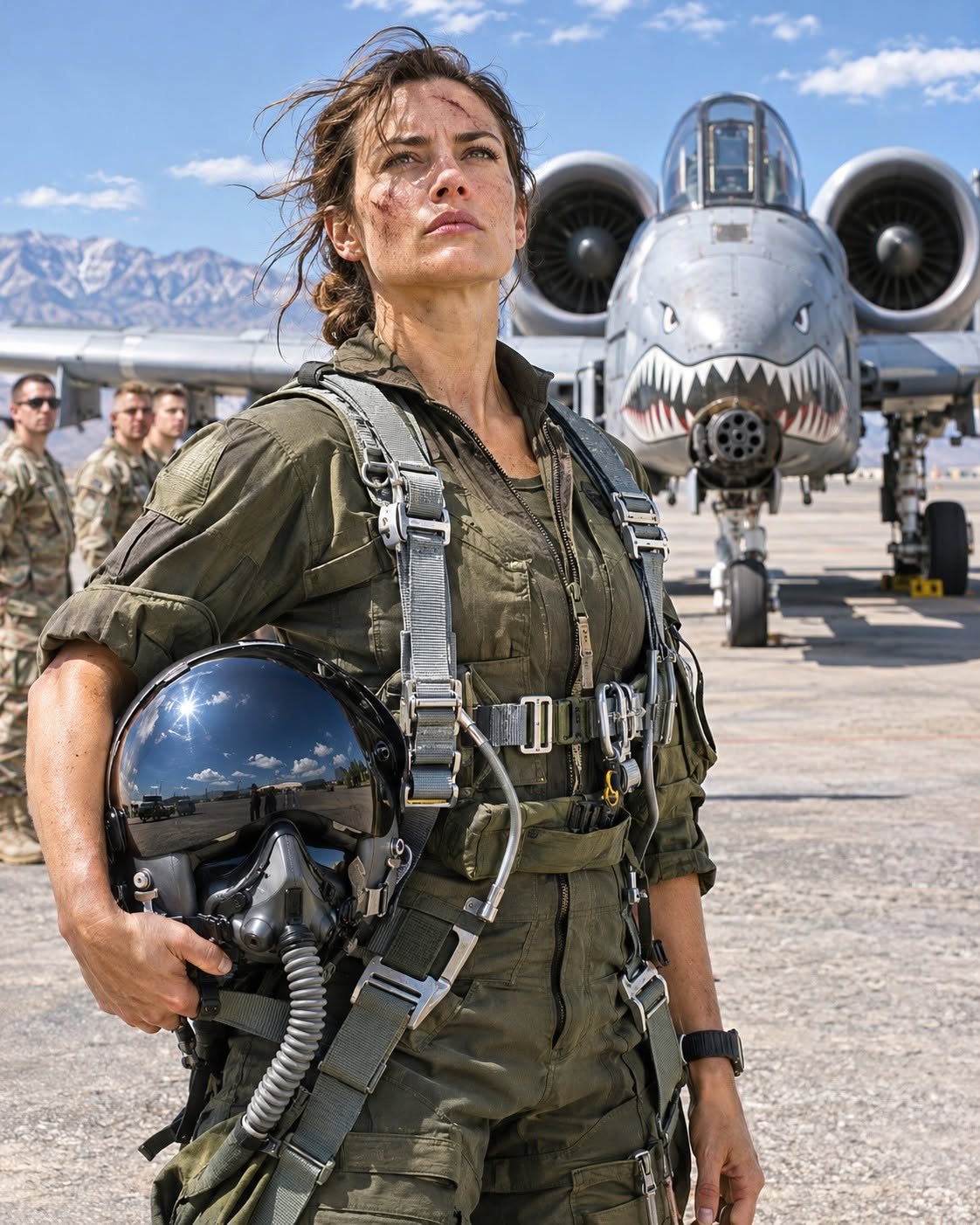
And sometimes it’s found in a quiet person standing at the back of a briefing room, holding a helmet, waiting for the right moment to say something nobody wants to hear.
I was still that person.
Still the woman Dylan had called a librarian.
Still the pilot whose record didn’t tell the whole story.
But I no longer cared whether people knew what I’d done before.
I cared whether they understood what mattered now.
Because real leadership isn’t about being the loudest voice in the room. It’s about creating a room where the quietest voice can speak—and where everyone is wise enough to listen.
And if there was one lesson I hoped every pilot carried into the sky, it was this:
Never let pride silence a warning, never mistake confidence for competence, and never forget that the person beside you may see the danger you cannot.