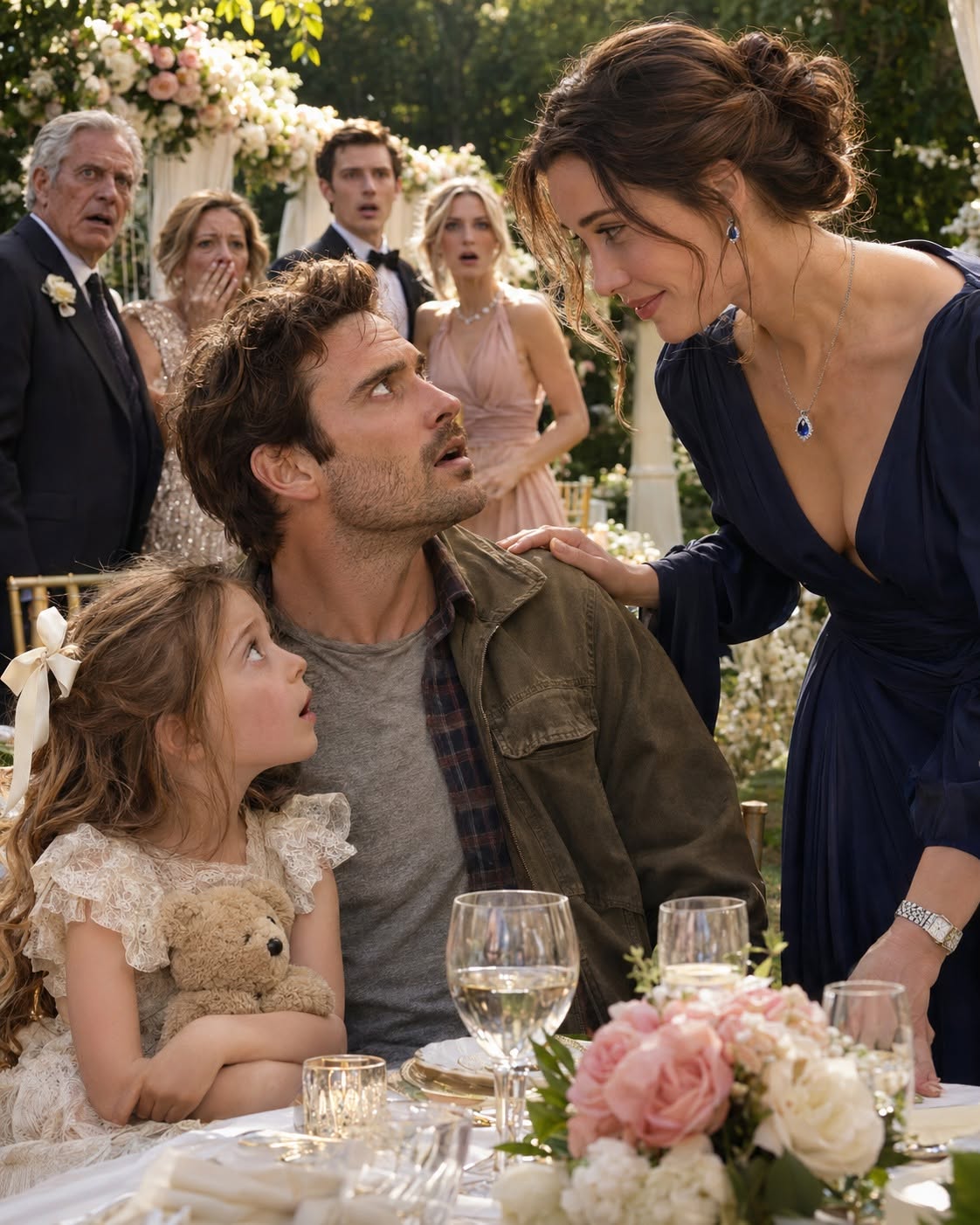
The entire ballroom laughed when Vance Miller raised his glass and announced that I was a lonely man who would probably die alone.
“Margaret Reed.”
I nearly dropped the remote.
That was my wife’s name.
She had been dead for almost seven years, and hearing her name spoken on national television felt like someone had suddenly opened a door to a room I had spent years keeping closed.
Clarissa looked down at the papers in front of her.
“Seven years ago, Margaret Reed, a public school employee and a volunteer representative for her district’s retirement committee, raised concerns about certain investments being managed through Thornfield Capital.”
I stopped breathing for a moment.
Margaret had worked as an elementary school librarian for twenty-eight years. She loved children, collected old mystery novels, and believed that borrowing someone’s umbrella without returning it was practically a criminal offense.
During the final year of her life, she had mentioned problems involving the retirement committee.
But then came the hospital visits, the diagnosis, and the terrible realization that our remaining time together was much shorter than we had imagined.
Eventually, everything else stopped mattering.
Clarissa continued.
“Mrs. Reed submitted a formal complaint requesting an independent review of several investment agreements. That review never took place. Earlier this year, another individual identified similar irregularities and reported them through Thornfield Capital’s internal compliance system.”
A photograph appeared on the television screen.
It was my employee identification picture.
“That individual was Thomas Reed.”
I sat down heavily.
Four months before the ballroom incident, I had discovered discrepancies in a series of investment performance reports. Funds were being transferred between accounts in ways that appeared to conceal significant losses.
I had reported my findings to senior management.
Two weeks later, I received an email telling me the matter had been resolved and that no further investigation was necessary.
I hadn’t believed it.
But I had never realized the accounts were connected to Margaret’s original complaint.
Clarissa turned another page.
“Following Mr. Reed’s report, Thornfield Capital continued presenting these investments to prospective clients. My company was among those approached.”
The reporters immediately began shouting questions.
“Are you accusing Thornfield of financial misconduct?”
“Was the relationship part of an investigation?”
“Did Mr. Reed give you confidential company information?”
Clarissa raised her hand.
“No. Mr. Reed never provided me with confidential documents. Everything my legal team has uncovered was obtained through authorized due diligence, public records, and individuals who independently chose to come forward.”
She paused before looking directly into the camera.
“As for our relationship, I met Thomas at a charity event where several people thought humiliating a widower was appropriate entertainment. I didn’t know about his report that evening. I only knew that someone was being treated cruelly.”
Her expression softened.
“Everything that happened between us afterward was personal. And I will not allow anyone to turn something meaningful into a weapon against him.”
I covered my mouth with my hand.
For days, I had convinced myself that disappearing was the noble thing to do.
Now I was watching the woman I cared about risk her reputation to defend mine.
Then Clarissa announced that Sterling Ventures had suspended negotiations involving a substantial investment partnership with Thornfield.
She confirmed that her legal team had submitted relevant findings to financial regulators and requested an independent investigation.
Before leaving the microphone, she addressed one final question.
“Ms. Sterling, are you saying you still consider Thomas Reed your partner?”
For the first time during the press conference, she hesitated.
“That’s a question Thomas and I need to answer together.”
The cameras followed her as she walked away.
I turned off the television.
The silence inside my house was unbearable.
I picked up my phone and called her.
She answered after the second ring.
“Thomas?”
“I saw everything.”
“I thought you might.”
“Why didn’t you tell me?”
“I tried. You stopped answering my calls.”
There was no anger in her voice, which somehow made me feel worse.
“Clarissa, I thought I was protecting you.”
“By disappearing?”
“I didn’t want you to lose everything because of me.”
She was quiet for several seconds.
“Thomas, I spent thirty years building a company because I wanted the freedom to make my own decisions. Please don’t take that freedom away from me by deciding whom I’m allowed to care about.”
I closed my eyes.
She was right.
“Can I see you?”
“Yes. But there’s something you should know first.”
“What?”
“Thornfield’s board is meeting tomorrow morning. They’re preparing to terminate your employment.”
My stomach tightened.
“And they’re not stopping there,” she added.
“They intend to blame the investment discrepancies on you.”
The following morning, Owen arrived at my house before sunrise.
He looked as though he hadn’t slept.
“You’re not going to believe this.”
He placed a folder on my kitchen table.
Inside was a copy of the termination recommendation Thornfield’s legal department had prepared.
The document accused me of unauthorized modifications to financial reports, improper communication with external investors, and serious violations of company policy.
My name appeared beside transactions I had never approved.
Some were dated during a vacation I had taken to visit my sister in Oregon.
“They’re manufacturing a case against me,” I said.
Owen nodded.
“Vance has been telling executives that you manipulated the numbers because you wanted to embarrass the company and impress Clarissa.”
I almost laughed.
For seventeen years, I had arrived early, stayed late, and corrected mistakes other people received credit for fixing.
Now those same people were preparing to destroy me.
“There’s something else,” Owen said.
He showed me an internal message instructing employees not to communicate with me.
“People are scared, Thomas. Management is threatening disciplinary action against anyone who cooperates with outside investigators without going through company lawyers.”
“How did you get these documents?”
“I’m still authorized to see them.”
I pushed the folder back toward him.
“Then you need to be careful. Get independent legal advice before you do anything else.”
Owen looked offended.
“You think I’m going to abandon you?”
“No. I think you have two children and a mortgage. I don’t want them coming after you too.”
He leaned forward.
“Do you remember what you did when my son was in the hospital?”
Of course I remembered.
Owen’s youngest had needed emergency surgery three years earlier. I’d covered his responsibilities for several weeks without making an issue of it.
“You told management I was working remotely so I wouldn’t lose my bonus,” he continued. “You brought groceries to my house. You never asked for anything.”
“Anyone would have done that.”
“No, Thomas. That’s the problem. Most people wouldn’t.”
He stood and collected his things.
“I’m not helping because you’re dating someone rich. I’m helping because you’re my friend.”
After Owen left, I contacted an independent employment attorney named Rachel Donovan.
Clarissa had recommended her but made it clear that the decision was mine.
Rachel agreed to represent me and immediately sent formal notices demanding that Thornfield preserve records relevant to the allegations.
Then she asked a question I hadn’t expected.
“Did your wife keep copies of her retirement committee correspondence?”
I thought about the cardboard boxes in my attic.
“I haven’t opened most of her things since she died.”
“Would you be willing to look?”
That afternoon, I climbed the attic stairs.
Margaret’s belongings were exactly where I had left them.
Her winter coats. Christmas decorations. Birthday cards. A collection of coffee mugs given to her by former students.
I sat on the floor surrounded by memories I had spent years avoiding.
Eventually, I found a green filing box labeled SCHOOL DISTRICT.
Inside were meeting minutes, retirement statements, handwritten notes, and copies of letters addressed to Thornfield Capital.
Margaret had documented everything.
She had questioned unexplained administrative fees, conflicting valuations, and repeated delays in receiving financial statements.
One letter had been addressed directly to the executive supervising the retirement investment program at the time.
His name made me stare at the page for several minutes.
Vance Miller.
Before becoming regional manager, Vance had supervised client relationships involving municipal and educational retirement funds.
He had personally responded to Margaret’s complaint.
His letter was dismissive, assuring her that she lacked the financial expertise to understand the investment structure.
At the bottom of her copy, Margaret had written a note in blue ink.
Being difficult is sometimes the only way to make people listen.
I smiled despite the tears running down my face.
That sounded exactly like her.
But the most important discovery was a letter dated only three weeks before her death.
Margaret had requested that the district reconsider its relationship with Thornfield.
Attached to the letter was a list of employees who had supported her concerns.
Several were elderly retirees who depended almost entirely on their pensions.
One name stood out.
Eleanor Whitman.
I remembered Eleanor. She had worked in the school cafeteria and used to bring Margaret homemade bread.
When I called her, she was surprised to hear my voice.
“Thomas! Goodness, it’s been years.”
We talked briefly before I explained why I was calling.
The warmth disappeared from her voice.
“Oh, honey. That mess.”
“What happened after Margaret died?”
“They told us the investments were safe. Then they said some of our supplemental retirement payments would have to be reduced because of market conditions.”
“Did anyone investigate?”
“We tried. Eventually, most of us gave up.”
She explained that several retired employees had returned to work because their expected income had fallen.
Eleanor herself, at seventy-three, was cleaning motel rooms three mornings a week.
I felt sick.
While Thornfield’s executives had been collecting bonuses and attending expensive charity dinners, elderly people were scrubbing bathrooms to pay for medication.
That evening, I brought Margaret’s documents to Rachel.
She spent an hour reviewing them.
When she finished, she removed her glasses.
“Thomas, these records don’t prove every allegation. But they establish that concerns were raised years before you supposedly created the problem.”
“Can we use them?”
“Absolutely. And we should get copies to the appropriate investigators.”
For the first time since the video appeared online, I felt something other than fear.
I wanted answers.
The next morning, Thornfield summoned me to its headquarters.
Rachel accompanied me.
When we entered the conference room, Vance was already seated beside the chief executive and two corporate attorneys.
Gloria Vance, who had laughed at the ballroom, sat near the end of the table. She was a senior communications officer and looked unusually uncomfortable.
Vance greeted me with a rehearsed expression of sympathy.
“Thomas, I wish things hadn’t reached this point.”
“Neither do I.”
He slid a document across the table.
It was a separation agreement.
Thornfield was offering me eighteen months of salary, continued health insurance, and a neutral employment reference.
In exchange, I would agree to broad confidentiality restrictions, waive certain legal claims, and acknowledge responsibility for unauthorized activity involving company financial records.
Rachel barely glanced at the document.
“My client will not sign this.”
Vance ignored her.
“Thomas, think about your circumstances. You’re fifty-four. Finding another position after this kind of publicity won’t be easy.”
I looked at him.
“You knew my wife.”
His expression changed.
“Excuse me?”
“Margaret Reed. She wrote to you seven years ago about the retirement investments.”
He shifted in his chair.
“I dealt with thousands of clients.”
“You told her there was nothing wrong.”
“Based on the information available to me at the time.”
“And now you’re telling people I created problems she identified seven years ago?”
Nobody spoke.
Rachel placed copies of several documents on the table.
The chief executive began reading.
Vance’s face turned red.
“These are outdated materials. They’re completely irrelevant.”
“Then you shouldn’t have any difficulty explaining them to investigators,” Rachel replied.
The chief executive looked toward the corporate attorneys.
One asked for a private discussion.
Vance pushed back his chair.
“This is ridiculous. We’re talking about a disgruntled employee who’s using his billionaire girlfriend to settle personal grievances.”
I felt the familiar humiliation rising inside me.
But this time, I didn’t lower my eyes.
“You made fun of me for being alone, Vance. You accused me of things I didn’t do. Now you’re offering me money to accept responsibility for decisions that were made years before I discovered them.”
I leaned forward.
“I’m not interested in your money. I want you to stop lying.”
For once, Vance had nothing clever to say.
The meeting ended without an agreement.
Thornfield terminated my employment that afternoon.
Seventeen years of service ended with a brief email and instructions for returning my company laptop.
I sat alone in my car outside the building for nearly an hour.
Despite everything, losing my job hurt more than I expected.
It had been my routine after Margaret’s death. The place I went when my house felt too empty.
Now even that was gone.
My phone rang.
It was Clarissa.
“Where are you?”
“Outside the office.”
“Have you eaten?”
“No.”
“Neither have I. Come over.”
I expected her to send a driver or invite me to an exclusive restaurant.
Instead, she gave me the address of her private residence.
When I arrived, she answered the door wearing jeans, a gray sweater, and reading glasses.
There were two bowls of soup on her kitchen table.
“Homemade?” I asked.
“Don’t get excited. I opened a can.”
For the first time in weeks, I laughed.
We ate quietly.
Then she reached across the table.
“Thomas, there’s something I need to explain.”
She told me that some members of her company’s board were unhappy about her press conference.
The Thornfield partnership had taken months to negotiate. Walking away from it could damage relationships with several major financial institutions.
One director had suggested that her personal feelings had compromised her professional judgment.
“What are you going to do?” I asked.
“I’ve stepped away from the independent review. The findings need to stand on their own.”
“Are you in danger of losing your position?”
“Possibly.”
I put down my spoon.
“Clarissa, I can’t let you—”
She raised an eyebrow.
“You’re doing it again.”
I stopped.
She squeezed my hand.
“I don’t need you to rescue me. I need you to stop running away every time you’re afraid something good might end.”
I looked at our hands.
“I haven’t been good at this since Margaret died.”
“I know.”
“Sometimes I feel guilty when I’m happy.”
Clarissa’s eyes softened.
“My husband left me twenty years ago. He told me I was impossible to love because I cared too much about my work. For a long time, I believed him.”
I had never heard her speak about that part of her life.
“Then you came along,” she continued. “And you were the first man in years who asked how my day had been and actually listened to the answer.”
I smiled.
“You have very long days.”
“Unfortunately, yes.”
We sat together until midnight, talking about everything except Thornfield.
When I finally stood to leave, she walked me to the door.
“Thomas?”
“Yes?”
“Next time you’re scared, call me. Don’t disappear.”
“I promise.”
She kissed me gently.
And for the first time in seven years, loving someone didn’t feel like betraying the woman I had lost.
Over the next month, the investigation intensified.
Former employees began contacting Rachel and the regulators. Several described pressure to approve questionable reports or ignore discrepancies.
But the strongest evidence came from someone I never expected.
Gloria Vance.
She called Rachel and requested a confidential meeting.
When I arrived, Gloria was sitting in the attorney’s office with her hands wrapped around a coffee cup.
She couldn’t look at me.
“I owe you an apology.”
I waited.
“At the ballroom, I laughed because everyone else was laughing. I knew it was cruel, and I did it anyway.”
She swallowed.
“And the video that ruined your reputation came from my department.”
Rachel sat forward.
Gloria explained that Vance had instructed her team to create a short promotional recording during a previous investor reception.
My appearance in the original footage was entirely innocent.
I had been answering general questions about financial risk.
The edited version rearranged parts of the conversation to suggest I had promised access to Clarissa and her business connections.
Gloria admitted she had approved the misleading edit, supposedly for an internal review.
Later, she discovered that someone had distributed it to a gossip website.
She had kept the original footage, along with emails discussing the edits.
“Why are you coming forward now?” I asked.
Her eyes filled with tears.
“My father saw Clarissa’s press conference. He spent forty years working for the city. He asked me what kind of person would steal from retirees and destroy anyone who tried to stop them.”
She looked at me.
“I couldn’t answer him.”
I wasn’t ready to forgive her completely.
But I was grateful she had finally chosen to tell the truth.
Her evidence changed everything.
The original recording was eventually released with appropriate permissions, exposing the misleading edits.
News organizations that had repeated the allegations issued corrections.
Thornfield’s board placed Vance on leave while an independent investigation examined his conduct and the firm’s investment practices.
Months later, regulators announced enforcement proceedings against the company and several former executives.
The findings identified misleading investment disclosures, failures of supervision, and improper handling of employee complaints.
Vance lost his position.
Additional civil proceedings followed, and several individuals faced penalties for their roles in the misconduct.
Thornfield eventually agreed to a substantial settlement that included compensation for affected retirement accounts.
The money could never return the years people had spent struggling.
But when Eleanor called me to say she could finally quit her motel job, I knew something worthwhile had come from the ordeal.
As for my dismissal, Thornfield offered a settlement, corrected my employment record, and formally withdrew its allegations against me.
They also offered to reinstate me with a significant promotion.
I declined.
I had spent too many years measuring success by how quietly I could endure being unhappy.
Instead, I opened a small independent financial consulting practice with Owen, who had decided to leave Thornfield after the investigation.
We specialized in reviewing investment arrangements for public employees, nonprofit organizations, and retirement committees.
Our first office had secondhand furniture, terrible carpeting, and a coffee machine that leaked whenever someone filled it too quickly.
I loved every inch of it.
Clarissa offered to invest when we started.
I thanked her but declined.
Not because accepting help was wrong, but because I needed to build something that belonged to me and Owen without complicating our professional independence.
She understood.
Her contribution arrived in a different form.
On opening day, she brought sandwiches, helped arrange chairs, and spent twenty minutes trying to assemble a bookshelf without reading the instructions.
The billionaire founder of Sterling Ventures was remarkably bad at assembling furniture.
I discovered that she was also terrible at miniature golf, incapable of keeping houseplants alive, and absolutely convinced that every movie would improve if it were twenty minutes shorter.
She discovered that I snored, organized groceries alphabetically, and still wore shirts that should have been thrown away fifteen years earlier.
We fell in love with the ordinary things.
Nearly a year after the ballroom incident, I received an invitation to speak at a retirement association’s annual dinner.
Eleanor was among the organizers.
When I arrived with Clarissa, the room was filled with teachers, cafeteria workers, custodians, and retired municipal employees.
A photograph of Margaret stood near the entrance.
The association had established an annual award in her memory recognizing people who advocated for the financial protection of public workers.
I had no idea they intended to give me the first one.
When Eleanor called my name, I walked toward the stage with tears already forming.
She handed me the award and hugged me.
“Your wife started something,” she whispered. “Thank you for finishing it.”
I looked out at the audience.
Clarissa was seated near the front, smiling.
“I spent years believing that keeping my head down was the safest way to live,” I told the room. “My wife knew better. She understood that silence can become permission when people are being mistreated.”
I looked at Margaret’s photograph.
“I wish she could have seen tonight.”
Eleanor spoke from beside me.
“She would have been proud.”
After the dinner, Clarissa and I walked outside.
She slipped her arm through mine, exactly as she had done in that ballroom.
“Darling,” she said playfully, “I’ve been looking everywhere for you.”
I laughed.
“I think I’ve finally stopped hiding.”
Six months later, I asked her to marry me.
There were no photographers, expensive restaurants, or spectacular arrangements.
We were sitting on a park bench eating ice cream.
I pulled a modest ring from my pocket and asked whether she would consider spending the rest of her life with a middle-aged man who took far too long to choose a breakfast cereal.
She started crying before I finished.
“Only if you promise never to disappear on me again.”
“I think I can manage that.”
We married the following spring in a small garden surrounded by friends and family.
Owen stood beside me.
Eleanor attended wearing the pearl necklace Margaret had once helped her choose for her daughter’s wedding.
And on a small table near the entrance, beside photographs of Clarissa’s late parents, stood a picture of Margaret.
Clarissa had put it there herself.
When I asked her about it, she smiled.
“She’s part of the reason you became the man I love. Why wouldn’t she belong here?”
That was when I understood how fortunate I was.
Not because I had married a billionaire.
Not because my former employer had finally acknowledged the truth.
But because I had found someone who never asked me to erase my past to make room for our future.
I sometimes remember Vance raising his champagne glass and telling an entire ballroom that I would probably die alone.
He believed loneliness was something to be ashamed of, and wealth was something that made people important.
He was wrong about both.
There are lonely people in mansions and deeply loved people in tiny apartments. There are wealthy men who possess nothing worth admiring and ordinary workers whose kindness changes entire lives.
The night Clarissa took my arm, she didn’t give me value.
I already had it.
I had simply forgotten.
And perhaps that’s what I want people to remember most about our story.
Never mistake someone’s quietness for weakness, their loneliness for failure, or their kindness for an invitation to hurt them.
You have no idea what battles the person standing beside you has survived.
And if you ever find yourself in a room where everyone is laughing at someone who cannot bring themselves to fight back, you don’t have to be wealthy or powerful to make a difference.
You only have to be willing to cross the room.
Clarissa did that for me.
Margaret had done it for people who needed someone to defend them.
And now, every morning when I unlock the door of my little consulting office, I try to do the same for someone else.
Because the most meaningful thing we can leave behind isn’t the fortune we accumulated, the titles we earned, or the applause we received.
It’s the number of people whose lives became a little better because, when it would have been easier to look away, we chose to stand beside them.