The admiral took one look at my beat-up pickup truck, glanced at the stack of complaints in my personnel file, and decided I was the last person who belonged on his naval air station.
“Sir, I think we both have some explaining to do.”
For several seconds, Admiral Arthur Sterling said nothing. The unredacted dossier remained open on his desk, its pages filled with names, dates, commendations, and classified assignments he had never expected to see attached to the man he’d spent the last twenty-four hours trying to remove from his installation.
He finally leaned back.
“Commander, I read your file. I read every page. I know about the operations in Kandahar, the evacuation in Syria, and the incident over the Black Sea. I know how many times you were recommended for promotion, and how many times you turned it down.”
I kept my expression neutral.
“Then you know I wasn’t here to make your life difficult, Admiral.”
He rubbed the bridge of his nose.
“No. But you certainly managed to.”
That almost made me smile.
Sterling closed the dossier.
“Tell me something. When I ordered you off the base, why didn’t you tell me who you were? Why didn’t you show me this file? You could have stopped me in thirty seconds.”
“Because, sir, the moment I started using my real credentials to defend myself, the cover would have been compromised. And because I wanted to see whether the mission could survive the decisions being made by people who didn’t know the truth.”
His jaw tightened.
“That sounds like an accusation.”
“It sounds like a report, sir.”
He stood and walked toward the window overlooking the runway. Beyond the glass, the early morning light spread across the hangars, illuminating the same flight line where he’d watched the SEALs salute my aircraft the night before.
“I’ve been commanding installations for thirty years,” he said. “I’ve made decisions that saved lives. I’ve also made decisions I regret. But I’ve never had an officer deliberately allow me to believe he was incompetent.”
“Respectfully, sir, I didn’t allow you to believe anything. I simply didn’t correct your assumptions.”
He turned.
“And that’s supposed to make me feel better?”
“No, sir.”
For the first time, Sterling laughed. It was a short, tired sound, but it was genuine.
Then his expression returned to something more serious.
“Who approved the fabricated disciplinary record?”
I knew the question was coming.
“Washington.”
“Names, Commander.”
“Grant. The liaison who managed the cover package. And two people from the counterintelligence division who approved the personnel profile.”
Sterling returned to his desk and picked up the dossier.
“Your cover wasn’t supposed to get you expelled.”
“No, sir. It was supposed to make me forgettable.”
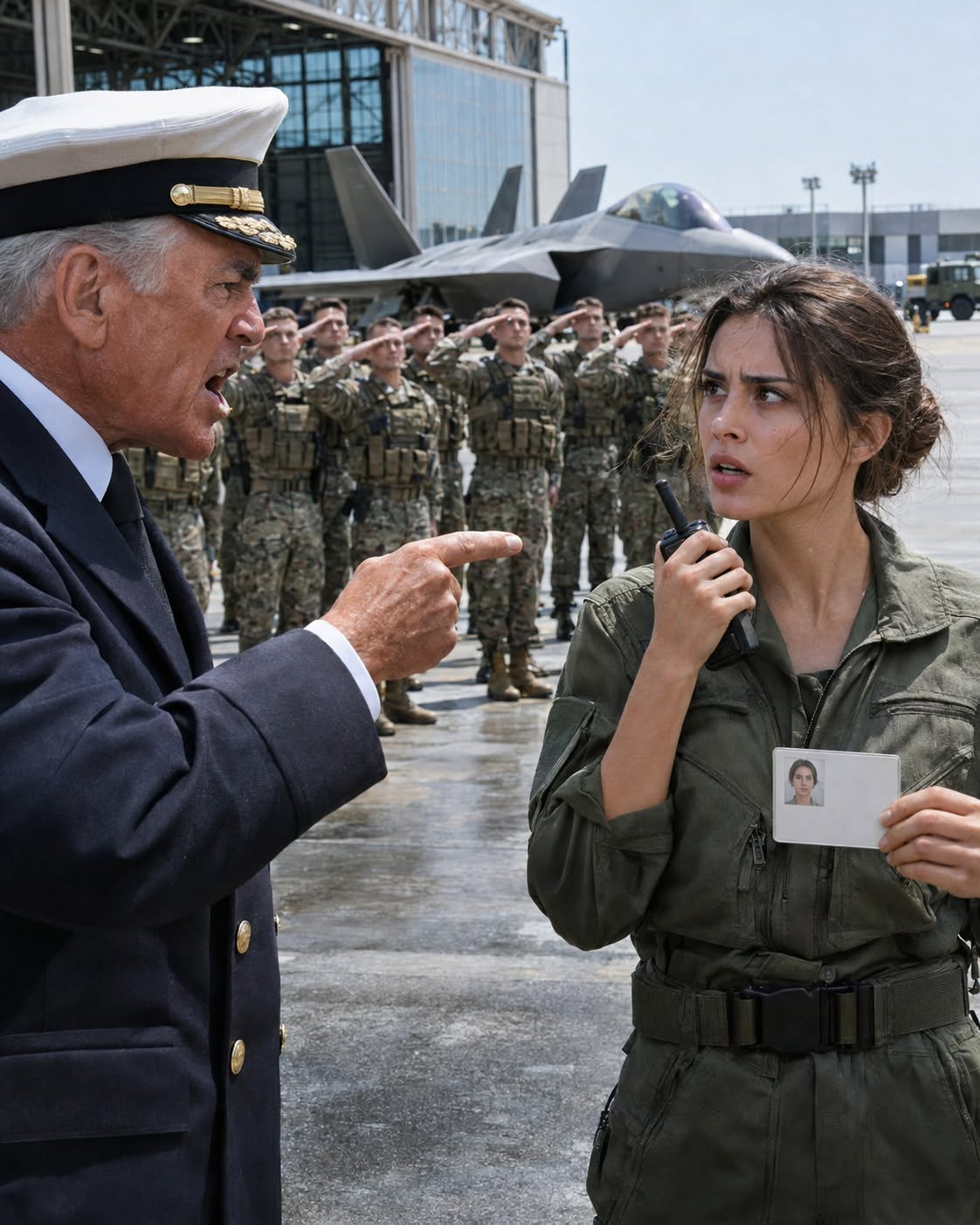
“And I nearly removed you from the installation.”
“Yes, sir.”
He looked at me for a long time.
“I want you to understand something. I didn’t make that decision because of your file alone. I made it because I saw a pattern. Complaints. Missed appointments. Disrespectful behavior. I thought I was protecting this installation from a problem.”
“You were protecting it from the person you thought I was.”
“And I was wrong.”
The admission was quieter than I expected.
Before I could answer, the office phone rang.
Sterling picked it up.
“Admiral Sterling.”
I watched his expression change.
“What do you mean, the mission logs are missing?”
He listened.
“Which logs?”
Another pause.
“Cardinal?”
The word seemed to pull all the warmth out of the room.
He glanced toward me.
“Who has access to the mission records?”
I already knew where this was going.
“Sir,” I said, “if the logs are missing, we need to secure the command center immediately.”
Sterling covered the receiver.
“Someone has accessed the mission archive after your return. They downloaded the flight authorization records, communications timestamps, and the operational roster.”
My stomach tightened.
The mission had been successful. Every member of the SEAL team had returned. The air support had arrived exactly when needed. But Cardinal wasn’t simply a mission. It was a carefully constructed operation designed to prevent a much larger threat.
If someone had the roster, they had the identities of the people involved.
And if they had the flight records, they could reconstruct exactly how the operation had been carried out.
“Sir,” I said, “lock down the archive. Nobody leaves the secure building until we know who accessed it.”
Sterling immediately issued the order.
Then he looked at me.
“Commander, whatever happened between us yesterday is finished. You’re in charge of finding out who took those files.”
I shook my head.
“Not alone, sir. I need Commander Vance, Master Chief Thorne, and the original security officer who signed off on the archive access.”
“Granted.”
“And I need you to authorize a full audit of the command system. No exceptions.”
Sterling nodded.
“Do it.”
For the first time, he didn’t ask me to explain why.
By the time we reached the secure operations room, the base was awake. Personnel moved through the corridors with hurried steps. Security officers stood at the doors, checking credentials. The atmosphere had changed from ordinary morning routine to something sharper, more dangerous.
Commander Nadia Vance was already waiting beside a workstation.
She looked at me, then at Sterling.
“Admiral. Commander. We have a problem.”
“Tell us,” Sterling said.
Vance turned the screen toward us.
“Someone accessed the Cardinal archive at 0417. They used a valid credential belonging to Lieutenant Colonel Daniel Mercer, who was assigned to cyber operations. The access was authorized, but the download was unusual.”
“Where’s Mercer now?” I asked.
“According to his duty roster, he’s in Building Twelve.”
“According to his duty roster,” I repeated.
Vance nodded.
“His office is empty. His vehicle is still in the parking lot. His badge was used at the archive door, but the camera shows someone wearing a maintenance jacket.”
Sterling stepped closer.
“Was the footage altered?”
“Not according to the system. But the camera was offline for eleven minutes before the access occurred.”
I studied the screen.
“Someone knew exactly which camera to disable.”
Master Chief Thorne arrived with two of his team members.
“Ghost,” he said. “You called?”
“Someone has the mission roster. I need you to help locate Mercer, but no one moves without authorization. We don’t know if he’s compromised, cooperating, or being used.”
Thorne gave a short nod.
“Understood.”
Sergeant Mensah appeared moments later, carrying a tablet.
“I checked the aircraft logs. The Raptor wasn’t touched. But somebody tried to access its maintenance data remotely.”
That was the moment I understood the real danger.
The person who stole the records wasn’t looking for the aircraft.
They were looking for me.
The fabricated disciplinary file had been designed to make my identity impossible to recognize. The stolen records had been designed to make the cover irrelevant.
Someone had put the pieces together.
And they were already inside the base.
“Sterling,” I said, “we need to assume Cardinal has been compromised.”
The admiral looked around the room.
“Then we treat this as a threat to the installation. Lock the perimeter. Nobody leaves without authorization.”
I raised a hand.
“Sir, with respect, a full perimeter lockdown could alert whoever is responsible. If they’re still inside, they’ll know we’re onto them.”
Sterling looked at me.
“What do you recommend?”
“Quiet containment. Keep normal operations running. Restrict access to the archive without announcing why. And let the person who stole the files think they got away with it.”
Thorne smiled faintly.
“Now we’re talking.”
Within the hour, we had a list of twelve people who could have accessed the archive. Six had legitimate reasons. Four were easy to eliminate. One was on leave.
The last was Daniel Mercer.
Except Mercer wasn’t the man in the maintenance jacket.
Vance found that out when she checked the base’s biometric records.
“The credential was cloned,” she said. “Mercer’s badge hasn’t been used in three days. The person who accessed the archive used a temporary fingerprint override.”
“Who issued the override?” Sterling asked.
Vance hesitated.
“Your office.”
The room went silent.
Sterling stared at the screen.
“That is impossible.”
“Someone used the admiral’s emergency authorization to create a temporary access credential,” Vance said. “The approval was digitally signed, but the signature doesn’t match the admiral’s device.”
I felt the pieces coming together.
Someone had access to the command structure. Someone had studied the routines, the credentials, and the people who trusted the system.
And someone had deliberately placed my fake disciplinary record in front of Sterling.
The question wasn’t whether they’d wanted me removed.
The question was why.
I asked Vance to pull every communication connected to Grant’s office during the last seventy-two hours. She worked quickly, cross-checking routing records, encrypted messages, and authorization requests.
Then she stopped.
“Ghost. I think I found something.”
She opened a file.
It was a message sent to the base two days before my arrival.
The sender was listed as a government liaison office.
The subject line read: **Personnel Risk Assessment — Commander Ghost.**
But there was no official record of the office that had sent it.
It was a fake.
Someone had manufactured my disciplinary file and sent it directly to Sterling before I even arrived.
I stared at the screen.
“That’s not part of my cover.”
Sterling slowly stood.
“Then someone wanted me to remove you.”
“Not just remove me,” I said. “They wanted me to believe I was doing it for the right reasons.”
Thorne crossed his arms.
“Somebody knew the mission was coming.”
“Or somebody wanted Cardinal to fail,” Vance said.
I looked at the timestamp.
The message had been sent from a network terminal inside the base.
Not Washington.
Not an outside source.
Someone here had been watching us from the beginning.
Then a second alert appeared on Vance’s screen.
A perimeter camera had detected a vehicle leaving through the south service gate.
It was an ordinary gray sedan.
No markings.
No military plates.
The driver had shown a temporary clearance card and been waved through by a security officer who was now missing from his post.
“Do we have the plate?” I asked.
“Partial,” Vance replied.
“Send it to local law enforcement. Quietly.”
Thorne was already moving.
“Team, let’s go.”
“Wait,” I said.
He stopped.
“Don’t chase the car. We don’t know where it leads. If they’re expecting a pursuit, they’ll have a plan. I want the gate officer found first.”
Thorne studied me for a moment, then nodded.
“Good call.”
Two of his men went to locate the missing security officer. The rest stayed on standby.
Sterling looked at me.
“Commander, who do you think is behind this?”
I didn’t answer immediately.
Because there was one person I hadn’t yet mentioned.
Grant.
My contact in Washington.
The man who had sent me the cover identity, coordinated the operation, and assured me the personnel file was clean.
The man who had told me the timeline was changing.
I requested a secure line.
Sterling gave me access to his private office, and Vance established a connection through a protected channel. Grant answered on the third ring.
“Ghost. You’re back early.”
I felt my pulse slow.
“Cardinal is complete.”
“Good. We need you to close out the paperwork and return to Washington.”
“Someone accessed the mission archive.”
Silence.
Then Grant said, “That shouldn’t be possible.”
“Someone cloned a credential, accessed the roster, and tried to pull aircraft maintenance data. The cover file that Sterling received was fabricated outside our system.”
Grant exhaled.
“Listen to me. Don’t make this bigger than it is. Secure the archive, destroy the remaining mission records, and come back. I’ll handle the investigation.”
I glanced at Sterling.
The admiral had heard every word.
“Why would I destroy evidence?” I asked.
“Because it’s classified. Because you’re exposed. Because I said so.”
That was enough.
Grant had never spoken to me like that. He had always been precise, cautious, and respectful. Now he sounded like a man trying to keep something from slipping out of his hands.
“Grant,” I said, “who sent the personnel risk assessment?”
“Ghost, you’re tired. You’re overthinking this.”
“Who sent it?”
“Come back to Washington. We can talk face-to-face.”
The connection went dead.
Sterling stared at me.
“I take it that’s not normal.”
“No, sir.”
Vance began tracing the call. Within minutes, she discovered Grant’s office had requested the mission roster twice before the operation launched. Both requests had been denied.
But the request had been routed through an internal authorization chain.
And the final approval belonged to someone with access to the Cardinal program.
Someone whose name was buried behind layers of classification.
Someone who had been in the system long before I arrived.
The next name appeared on the screen.
**Rear Admiral Victor Hale.**
Sterling went pale.
“Hale has been overseeing special operations coordination for years.”
“Then he knows the mission,” I said.
“Or he knows enough to destroy it.”
Vance checked another record.
“Hale’s aircraft is scheduled to depart in forty minutes. He’s leaving the installation.”
Sterling reached for the phone.
“Stop his departure.”
I caught his wrist before he could dial.
“Sir, if he’s involved, he’ll know we’re suspicious the moment you make that call. We need to let him leave.”
Sterling stared at me.
“You want to let a potential traitor walk out?”
“I want to know where he goes when he thinks nobody’s watching.”
Thorne returned.
“Found the gate officer. He’s alive. Someone knocked him unconscious and took his clearance card. He remembers a man wearing civilian clothes. Said the man had a silver ring with a black stone.”
Vance looked at Hale’s personnel photo.
A silver ring.
Black stone.
Sterling slowly lowered his phone.
“That’s Hale’s ring.”
We had our suspect.
But we still didn’t have proof.
And I wasn’t going to let the admiral make the same mistake twice.
Hale’s aircraft left the runway at 0926.
We watched it disappear into the morning sky.
Then, instead of pursuing him, we waited.
Thirty-seven minutes later, a message arrived through the same compromised liaison channel.
**CARDINAL HAS BEEN TERMINATED. ALL PERSONNEL ARE TO STAND DOWN.**
It was signed by Grant.
Sterling read it twice.
“Can they terminate the mission after completion?”
“Not without the proper review,” Vance replied. “And this isn’t an official order.”
I looked at the message.
Grant wasn’t simply trying to stop an investigation.
He was trying to erase the connection between himself, Hale, and the stolen records.
I requested that the message be preserved.
Then I called Thorne.
“Master Chief, I need your team ready. We’re not going after Hale. We’re going to protect the people he might be trying to reach.”
“Where?”
“Washington.”
Thorne paused.
“You’re sure?”
“I’m sure someone is trying to close the door before we see what’s behind it.”
Sterling stood beside me.
“Commander, you’re not going to Washington without authorization.”
I turned.
“Sir, I don’t need to go anywhere. I need you to issue an official inquiry, freeze Hale’s access, and protect every person connected to Cardinal.”
He studied me.
“You want me to trust you?”
“No, sir. I want you to trust the evidence.”
He nodded.
“That’s a better answer.”
Within the next two hours, Sterling authorized a joint investigation. Vance preserved the digital records. Thorne’s team was placed on protective standby, and the base’s security division quietly began reviewing the access logs.
The first breakthrough came from an unexpected source.
Sergeant Mensah.
He had been checking the maintenance data when he noticed something strange. The remote access attempt hadn’t targeted the aircraft’s systems. It had targeted a diagnostic archive containing a single file.
A file created six months earlier.
A file named **NIGHTGLASS**.
I opened it through the secure review channel.
The contents were not aircraft specifications or mission details.
It was a list of names.
Twenty-three military personnel.
Each one had been involved in a classified operation over the previous three years. Some were pilots. Some were intelligence officers. Some were members of special operations teams.
Beside each name was a notation.
**TRANSFERRED.**
**RETIRED.**
**KILLED IN ACTION.**
Except several of those people weren’t dead.
They had disappeared.
And one of the names belonged to a pilot I had personally flown with.
Captain Elias Ward.
My former wingman.
The man who had saved my life during the Black Sea incident, only to be declared missing eighteen months later.
I stared at the screen so long that Vance finally spoke.
“Ghost?”
I closed my eyes for a second.
“Ward wasn’t killed.”
“Do you know where he is?”
“No.”
But I knew what the file meant.
Cardinal wasn’t the real operation.
It was a diversion.
The stolen roster, the fake disciplinary file, the attempted archive access—everything had been designed to draw attention toward me while someone tried to recover NIGHTGLASS.
Hale and Grant weren’t simply trying to compromise an air operation.
They were protecting a network that had been quietly removing military personnel from official records.
Sterling stepped closer.
“Commander, what is this?”
I looked at him.
“It’s the reason my cover was created.”
The room became painfully quiet.
I had spent years believing Ward was dead. I’d attended the memorial. I’d stood beside his family while they received a folded flag. I’d carried the guilt of the last transmission he made.
Now his name was sitting in a file that someone wanted erased.
And suddenly, Cardinal had become personal.
I requested permission to contact Washington directly through an independent channel. Sterling authorized it. The response came from a senior oversight office within minutes.
The investigation was no longer limited to Naval Air Station Jacksonville.
It was federal.
Grant was suspended pending investigation.
Hale’s aircraft was redirected to a secure facility, where he was detained for questioning. The silver ring was removed and photographed. His personal devices were secured.
The first interrogation revealed little.
Hale denied knowing NIGHTGLASS.
Grant refused to speak.
But the evidence continued to grow.
Three days later, a secure message arrived for me.
No sender name.
No official routing.
Just four words.
**WARD IS ALIVE. TRUST NO ONE.**
I read it once.
Then again.
Sterling was standing across the room when I lowered the screen.
“What’s wrong?”
I looked out at the runway.
For the first time in years, I didn’t know whether the next mission would take me into the sky or into the darkest corner of my own past.
“Sir,” I said, “I need to request leave.”
He frowned.
“Leave? Where?”
I handed him the message.
He read it without moving.
Then he looked up.
“Commander, if this is true, you’re not going alone.”
I shook my head.
“That’s not how this works.”
He gave me a stern look.
“Yesterday, I told you to stay away from the flight line and the SEAL compound. Today, I’m telling you I won’t let another officer walk into a trap because I was too proud to admit I didn’t know what I was looking at.”
I almost laughed.
“You’ve had a change of heart, Admiral.”
“Don’t get used to it.”
That night, Thorne met me near the south perimeter fence.
The same place where he’d first asked whether he could trust my air support.
He was carrying a folded piece of paper.
“Got something for you,” he said.
It was a location.
An abandoned airfield outside a small town in Virginia.
A place that had been closed for years.
“Ward?” I asked.
“Maybe. The message came through a source we trust. But we don’t know who’s waiting there.”
I looked at the coordinates.
Then at Thorne.
“Tell your team to stand down. This is not a SEAL operation.”
He didn’t argue.
“Then who goes?”
I folded the paper.
“Me.”
At dawn, I drove my beat-up pickup out of Jacksonville.
No escort.
No aircraft.
No official orders.
Just a faded truck, a sealed dossier, and the feeling that the past had finally found a way to reach me.
The abandoned airfield was quiet when I arrived.
Tall grass covered the old runway. Rusted hangars stood against the gray sky. A windsock hung motionless beside a broken tower.
I parked near the entrance and walked toward the largest hangar.
Someone was waiting inside.
A man in a dark jacket.
Older than I remembered.
Thinner.
But the eyes were unmistakable.
“Elias.”
He looked at me for a long time.
Then he smiled.
“Hey, Ghost.”
I couldn’t move.
For eighteen months, I’d believed he was dead.
I had carried the guilt, the grief, and the unanswered questions.
Now he was standing in front of me.
Alive.
I took a step forward.
“Ward. What happened?”
He glanced toward the hangar door.
“Before I tell you, you need to understand something. Hale isn’t the mastermind. Grant isn’t the mastermind. They’re both pieces of a much bigger operation.”
“Then who is?”
Ward’s expression hardened.
“Someone who has been signing our orders for years.”
He reached into his jacket and pulled out a small encrypted drive.
“The people behind NIGHTGLASS have been using classified operations to move personnel off the books. Some were compromised. Some were recruited. Some were forced into silence. But the network has one purpose.”
“What’s that?”
He looked directly at me.
“To build a private military force that answers to no elected authority.”
I felt the weight of the words.
“And who’s running it?”
Ward didn’t answer immediately.
Instead, he handed me the drive.
“Someone you trusted.”
My stomach tightened.
“Who?”
He took a breath.
“Admiral Sterling.”
For a moment, the world seemed to stop.
The admiral who had apologized.
The man who had helped secure the investigation.
The officer who had watched the SEALs salute my aircraft and admitted he’d been wrong.
I stared at Ward.
“That’s impossible.”
“That’s what I thought,” he said. “Until I found his signature on the first NIGHTGLASS authorization.”
I didn’t want to believe it.
But the evidence was in my hand.
And the only way to find out whether Sterling was guilty was to return to Jacksonville.
I turned toward the truck.
Ward stopped me.
“Ghost. There’s something else.”
“What?”
“Sterling knows you’re coming back.”
I looked at him.
“How?”
Ward’s face was grim.
“Because the message telling you I was alive didn’t come from me.”
The airfield suddenly felt colder.
Someone had wanted me to find Ward.
Someone had wanted me to hear the accusation.
Someone had wanted me to bring the drive back to the admiral.
I looked down at the encrypted drive.
Then I put it in my pocket.
“Then let’s give them what they expect.”
Ward raised an eyebrow.
“What does that mean?”
I smiled.
“It means we’re going to Jacksonville.”
And for the first time since Cardinal began, I wasn’t going to hide behind a cover story.
I was going to let the people behind NIGHTGLASS see exactly who they had been trying to manipulate.
Because if Admiral Sterling was innocent, we would prove it.
And if he was guilty…
I would make sure he never had the chance to disappear another American again.
The drive back to Jacksonville took nearly seven hours.
Ward rode in the passenger seat, watching the highway and saying very little. The man I remembered had been loud, sarcastic, and impossible to ignore. The man beside me now seemed to have aged ten years in eighteen months.
“You’re still driving that thing?” he finally asked.
I glanced at the pickup.
“She’s reliable.”
“She sounds like she’s dying.”
“She’s earned the right to complain.”
He laughed softly.
It was the first time since I’d found him that the silence between us felt normal.
But when we reached the base, the humor disappeared.
Sterling was waiting in his office.
He stood behind his desk with both hands resting on the dossier.
“Commander,” he said. “You brought someone.”
Ward stepped forward.
“Admiral.”
Sterling’s face went pale.
“Captain Ward?”
“You remember me.”
“I thought you were dead.”
“That’s what someone wanted you to think.”
I placed the drive on the desk.
“Sir, we need to discuss NIGHTGLASS.”
Sterling looked at it.
Then he looked at Ward.
Then at me.
“Where did you get that?”
“From the person you supposedly authorized to disappear.”
Sterling didn’t touch the drive.
Instead, he walked to the door and locked it.
“I knew this day might come,” he said.
My hand moved instinctively toward my side.
“Sir?”
He turned.
“Ghost, I did sign the first authorization.”
Ward’s expression changed.
I felt the room tighten.
Sterling continued.
“Years ago, we were dealing with personnel who had been compromised by foreign intelligence. There were operations that couldn’t be officially acknowledged. We created a temporary program to protect people whose identities had been exposed.”
“Temporary?” Ward asked.
“That’s what it was supposed to be.”
“Then why were people disappearing?”
Sterling lowered his head.
“Because someone changed the program. The original authorization was limited to protecting compromised personnel. NIGHTGLASS became something else. People were transferred without consent. Records were falsified. Some were recruited. Others were imprisoned under false identities.”
“Who changed it?” I asked.
Sterling looked at the drive.
“Victor Hale.”
“Then why did you keep signing the orders?”
His voice cracked.
“Because by the time I realized what had happened, I was being blackmailed.”
He pulled a second folder from his desk.
Inside were photographs.
His wife.
His son.
His granddaughter.
Each picture had been taken from a distance.
“Someone threatened my family,” he said. “They told me if I refused to cooperate, they would make sure my son never saw his daughter again.”
Ward shook his head.
“You could have reported it.”
“I tried.”
Sterling opened another folder.
A report dated two years earlier.
An internal complaint.
It had been closed without investigation.
The investigator’s name was Grant.
I felt anger rise.
“You knew about Grant?”
“I suspected him. I couldn’t prove it. Every time I tried to move against Hale, the evidence disappeared. I thought I was protecting my family. Instead, I was protecting the people who were hurting others.”
He looked at me.
“I was wrong.”
I had heard those words before.
But this time, they weren’t an apology for a bad judgment call.
They were an admission of complicity.
Ward stepped closer.
“Admiral, I need to know what happened to the people on that list.”
Sterling opened the folder.
“Some were recovered. Some are still missing. And some may have chosen to remain hidden because they believe the government abandoned them.”
The room went silent.
I looked at the drive.
“We have to expose the entire network.”
Sterling nodded.
“There’s a problem. Hale has already been detained, but Grant hasn’t been located. The last trace of him came from a private terminal in Washington.”
Ward’s face tightened.
“Then he’s running.”
“No,” I said. “He’s trying to finish something.”
I opened the drive using the secure forensic system.
The files began loading.
Names.
Authorization codes.
Transfer records.
Payment schedules.
Then a video file appeared.
It was timestamped from the night Cardinal launched.
I pressed play.
Grant appeared on the screen.
He was standing in a room I didn’t recognize, talking to someone outside the camera’s view.
“Sterling is still useful,” he said. “He’ll keep signing the paperwork as long as his family remains the leverage. Ghost is the bigger problem. If he gets the roster, he’ll find Ward.”
A voice replied.
“Then let him.”
Grant frowned.
“You want him to find Ward?”
“Ghost is predictable. He’ll follow the trail. He’ll bring the drive back. And Sterling will do what he’s always done. He’ll confess to the parts we need him to confess to.”
I leaned closer.
“Who are you?” Grant asked.
The voice answered.
“Someone who knows that people like Ghost are easier to control when they think they’re fighting for justice.”
The camera shifted slightly.
A hand appeared in the frame.
A gold signet ring.
I recognized it immediately.
Not Sterling’s.
Not Hale’s.
The ring belonged to the civilian oversight director who had approved every special operations authorization for the past four years.
**Director Malcolm Reed.**
The man who had once presented me with a commendation.
The man who had told my family I was a hero.
The man who had personally signed Ward’s memorial.
Ward sat back.
“That’s him.”
Sterling stared at the screen.
“Reed oversees the entire special operations authorization process.”
“Which means he can erase every investigation,” I said.
The video ended.
A new file appeared.
**NIGHTGLASS — FINAL TRANSFER.**
The location was a naval supply depot outside Washington.
The transfer was scheduled for that evening.
If Reed was moving the remaining personnel, we had hours.
Sterling picked up the phone.
“I’m calling federal oversight.”
I stopped him.
“Sir, we need a clean channel. Reed controls the authorization system. If we use the normal chain, he’ll know.”
Sterling looked at me.
“What do you suggest?”
I turned to Ward.
“Can you get in touch with anyone from NIGHTGLASS who escaped?”
He nodded.
“I know someone.”
“Then find them. We need a witness who can confirm Reed’s involvement.”
Thorne was contacted through an independent channel. His team was placed on standby, but we agreed that the operation would be handled by a small group of investigators and military personnel with no connection to NIGHTGLASS.
Sterling made one final decision.
He handed me his command authorization.
“Commander, I am placing myself under investigation. I will not be involved in the operation to apprehend Reed. I will surrender every document I have and cooperate with the inquiry.”
I looked at him.
“You understand what that means?”
“Yes.”
“Your career may be over.”
He nodded.
“Then it should be.”
There was no dramatic speech.
No attempt to justify himself.
Just a man finally accepting the consequences of what he’d allowed.
That night, we arrived at the depot.
It was an old warehouse surrounded by fencing and empty loading docks. A few trucks sat near the entrance. The lights inside were dim.
We had no idea how many people were there.
No idea who was armed.
No idea whether the missing personnel were being held against their will.
We waited until the independent investigators arrived.
Then the operation began.
The first discovery was made inside the warehouse.
A dozen people were sitting in a room with no windows.
Some wore military uniforms.
Others were dressed in civilian clothes.
They looked exhausted.
When the door opened, a woman stood up.
“Are you here to take us somewhere else?”
I stepped forward.
“No. We’re here to take you home.”
She stared at me as if she didn’t believe the words.
Then she began to cry.
We found twenty-three people.
Not all of them wanted to return to military service. Some had been forced into the program. Others had been recruited after their identities were compromised. Several had spent months believing their families had been told they were dead.
Among them was a young pilot named Lieutenant Rebecca Shaw.
She had been missing for eleven months.
Her parents had received a letter stating she died during a classified deployment.
She was alive.
And when she saw Ward, she ran toward him.
“Captain!”
He caught her before she fell.
For the first time since the airfield, Ward broke down.
He held her, crying openly, while the investigators secured the warehouse and began documenting every piece of evidence.
Director Reed was arrested before he could leave the depot.
Grant was found two hours later in a hotel near the airport.
Hale’s testimony confirmed the network’s existence.
And the NIGHTGLASS files revealed something even worse.
The operation had been running for years.
It had used military authority, false personnel records, and the fear of classified disclosure to silence people who had been taken.
The investigation lasted eight months.
Sterling testified before a federal review board. He admitted signing the original authorization, failing to recognize the program’s corruption, and continuing to cooperate after discovering evidence of abuse.
He was relieved of command.
His career ended without ceremony.
But he didn’t ask for sympathy.
He gave the investigators every record he had.
Grant and Reed were convicted of conspiracy, unlawful detention, falsification of military records, and multiple federal offenses. Hale cooperated with prosecutors and faced his own consequences.
The people recovered from NIGHTGLASS were given the choice to return to service, retire, or receive assistance rebuilding their lives.
Ward chose to return to flying.
Shaw returned to her family.
Some never wore a uniform again.
And none of them were forced to explain why.
Six months after the investigation closed, I was summoned to Washington.
The review board offered me a promotion.
I declined.
They offered me a permanent position in special operations coordination.
I declined that, too.
Instead, I asked for something nobody expected.
A new program.
One designed to investigate covert personnel transfers, protect military whistleblowers, and prevent classified authority from becoming a weapon against the people it was supposed to protect.
I called it **HARBOR**.
Not because it was a place to hide.
Because it was a place to come back to.
The program was approved after months of review. Its authority was limited. Its records were protected by independent oversight. And every decision involving personnel required a second set of eyes that couldn’t be silenced by a single signature.
Sterling sent me a letter after the program launched.
It was handwritten.
“Commander,
I spent too many years believing rank made me right. I mistook silence for discipline and paperwork for truth. You taught me that the most dangerous mistakes aren’t always made by bad people. Sometimes they’re made by good people who stop asking questions.
I don’t expect forgiveness.
I only hope the next officer who walks into my old office is judged by what they do, not by what someone says about them.
Arthur Sterling.”
I folded the letter and placed it inside my desk.
I never replied.
Not because I hated him.
Because forgiveness wasn’t something I could issue like an order. It was something he would have to earn through the choices he made after the uniform no longer gave him authority.
A year later, I returned to Jacksonville.
My old pickup was still running, although Mensah insisted it was held together by “faith, bad wiring, and pure stubbornness.”
The flight line had changed.
New aircraft.
New personnel.
New mission boards.
But the south perimeter fence was still there.
Thorne stood beside it, holding a coffee.
“You’re late, Ghost.”
“Traffic.”
“Your truck is traffic.”
I laughed.
Behind him, a dozen SEALs were preparing for a training exercise. Ward was back in the air. Vance had been promoted. Mensah was still arguing with maintenance about parts that apparently didn’t exist.
And Admiral Sterling?
He was no longer an admiral.
He was working as a civilian consultant for a veterans’ recovery organization, helping former service members navigate the system he’d once failed to question.
I saw him once, across a parking lot.
He noticed me.
We both stopped.
He didn’t salute.
Neither did I.
He simply nodded.
I returned the gesture.
Then I kept walking.
Some people think justice means watching someone fall.
I used to think that, too.
But I learned that justice is more complicated. Sometimes it means exposing the truth. Sometimes it means protecting the people who were forgotten. Sometimes it means giving someone the chance to do better without pretending their mistakes never happened.
And sometimes the hardest thing you can do is refuse to let the next person inherit the same broken system.
The admiral had looked at my truck, my fake personnel file, and my reputation, and decided I was the last person who belonged on his base.
He was wrong about me.
But I was wrong about something, too.
I had believed that being the best at my job meant keeping everything to myself. That if I was strong enough, I could carry the secrets, the losses, and the failures without letting anyone see what they cost.
Ward’s disappearance had taught me how heavy that belief could become.
NIGHTGLASS taught me what happens when people with authority stop believing they owe the truth to anyone.
And HARBOR taught me something I wish I’d learned much earlier.
No one should have to become a ghost to survive the people who are supposed to protect them.
A year after the last NIGHTGLASS victim came home, I received a final message from Rebecca Shaw.
It was a photograph.
She was standing in front of a small civilian aircraft with her father beside her. Both were smiling. Her message contained only one sentence.
**“I flew again today. This time, nobody told me I was supposed to be dead.”**
I saved it.
Then I walked outside, where the afternoon sun was shining over the runway.
My pickup was waiting.
The aircraft were moving.
The people I had fought to bring home were living their lives.
And for once, the mission didn’t need a codename.
It didn’t need a salute.
It didn’t need anyone to know who Ghost was.
It only needed one thing.
Everyone made it home.
And that was enough.