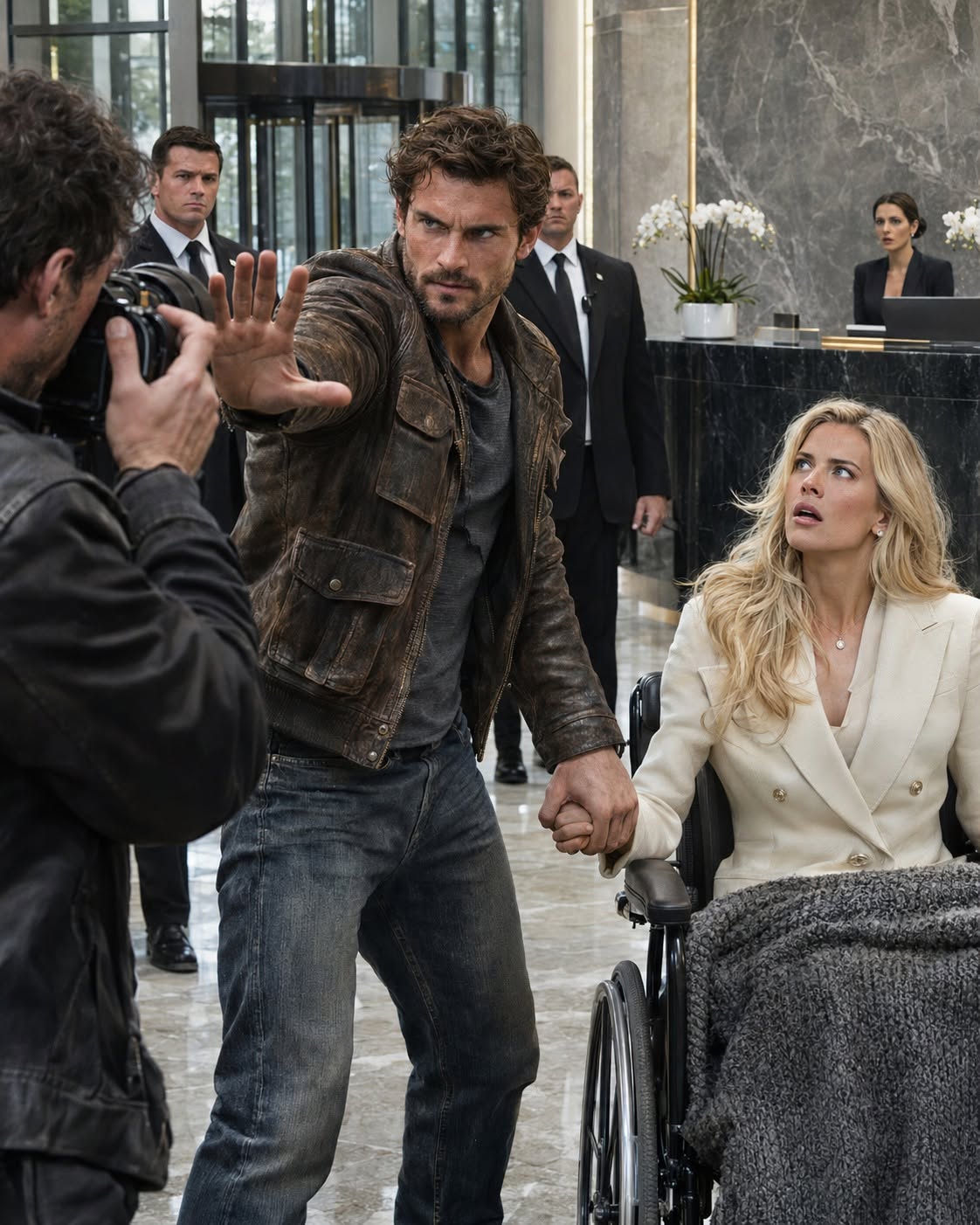
“Take your hands off my wheelchair,” I warned the man standing over me. He smiled and leaned closer. “Or what? You’ll have your bodyguard carry you away?”
THE WOMAN WHO REFUSED TO BE SAVED
“My mother said you should know that she never blamed you for what happened at Pier Nine.”
Toby’s voice was small, but the words seemed to shake the entire office.
I looked at Owen.
All the color had drained from his face.
“What did you just say?” I whispered.
Toby glanced at his father, then back at me.
“Mom said she tried to tell you something important before she died. She said you never got her letter.”
Owen crouched beside his son.
“Buddy, remember what we talked about?”
“But you said she deserved to know!”
“I know.”
I looked between them.
“Who was your mother?”
Owen slowly stood.
“Her name was Claire Brooks. She worked for your company eight years ago. She was a safety compliance engineer at the Port Nine terminal.”
The name struck something deep inside my memory.
Port Nine.
I remembered the accident.
A cargo restraint system had failed during a late-night loading operation. A container shifted, crushing a section of the loading platform. One worker, Luis Ortega, had died. Two others had been seriously injured.
I remembered the investigation.
I remembered the reports.
And I remembered signing the final document stating that the accident had resulted from an isolated equipment failure.
“Claire was the engineer who raised concerns about that equipment,” I said.
Owen nodded.
“She reported repeated safety violations. She said the restraint system was being operated with a faulty interlock. She sent warnings to management several times.”
My throat tightened.
“Why wasn’t I told?”
“Because someone made sure you never saw her reports.”
He reached inside his jacket and removed a small brown envelope.
“My wife kept copies of everything. Maintenance records, emails, inspection results, and the original reports she submitted.”
I stared at the envelope.
“Who stopped them from reaching me?”
Owen looked directly at me.
“Martin Cole.”
For several seconds, I couldn’t speak.
Toby moved closer to his father.
“Mom said you were a good person. She said you just didn’t know.”
I looked at the little boy.
His mother had been dead for two years, and he was standing in my office trying to deliver a message she’d left behind.
Something inside me broke.
“I’m sorry,” I whispered.
Toby frowned.
“Why?”
I swallowed.
“Because your mother deserved to be heard.”
Owen placed the envelope on my desk.
“There is something else you need to know. I didn’t apply for this position by accident.”
My eyes returned to him.
“What does that mean?”
“I knew Claire had kept evidence. After she died, I found the documents among her belongings. I spent months trying to determine whether the information was genuine and whether Martin was still involved in the same practices.”
“You came here to investigate him?”
“I came here because I believed he was preparing to force you out. I also believed you might be in danger if he realized someone had the original evidence.”
I stared at him.
“So the job interview was a lie?”
“No. My experience is real. My security training is real. And everything I’ve done to protect you has been genuine.”
“But you withheld this information.”
“Yes.”
“Why?”
He looked down at Toby.
“Because my wife spent the last months of her life trying to get someone to listen. I didn’t want to hand over the only evidence she had to someone who might be working with the man responsible.”
I felt anger rising, but beneath it was something more painful.
Betrayal.
“You should have trusted me enough to let me decide.”
Owen nodded.
“You’re right.”
He didn’t defend himself.
He didn’t ask me to understand.
He simply stood there and accepted what I’d said.
I picked up the envelope.
“Leave the documents with me. I’ll have our legal department examine them.”
“What about my job?”
I looked at him.
“Your job is security. Until we understand everything, you’re temporarily removed from executive protection duties.”
He nodded.
“I understand.”
Toby looked worried.
“Are you firing Daddy?”
I immediately softened my voice.
“No, sweetheart. Your father and I have some things to figure out. None of that is your fault.”
He studied my face.
“Okay.”
Before leaving, Owen turned toward me.
“Claire believed you could make this right.”
Then he walked out.
I sat alone for almost an hour.
The brown envelope remained on my desk.
I had spent years fighting people who believed my wheelchair made me unfit to lead a company. I’d learned to recognize prejudice, manipulation, and condescension.
But I had never considered that someone inside my own organization might have used my disability as a convenient distraction from something much worse.
Martin had spent months questioning my decisions, criticizing my security arrangements, and suggesting that the company needed a more physically capable leader.
Perhaps the real reason he wanted me removed had nothing to do with my wheelchair.
Perhaps he was afraid of what I might discover if I remained in charge.
I called our general counsel.
“Clear your afternoon,” I said. “We’re reopening the Port Nine investigation.”
Within twenty-four hours, the legal department had confirmed that several documents in Owen’s envelope were genuine.
The original maintenance reports had been submitted to the company’s internal compliance system.
They had also been marked as resolved without the required inspection.
The electronic approval trail showed that the closure had been authorized through Martin’s office.
But the most disturbing document was an email.
It was dated three days before the accident.
Claire had written to Martin:
The restraint system cannot safely operate under these conditions. If we continue loading, someone will eventually be killed. I will not sign another inspection certificate until the equipment is repaired.
Martin’s response was brief.
You are not authorized to interfere with operational decisions. Further disruption will be considered a failure to perform your duties.
Three days later, Luis Ortega was dead.
I closed the email.
For years, I’d carried the memory of that accident as a tragedy caused by an equipment failure.
Now I understood that it might have been preventable.
And someone had known.
I called Martin.
He answered on the second ring.
“Evelyn. What a pleasant surprise.”
“I want to discuss Port Nine.”
There was a pause.
“What about it?”
“Claire Brooks.”
Silence.
Then he laughed.
“That’s ancient history. Why are we discussing former employees?”
“Because I have her original reports.”
His voice changed.
“Where did you get those?”
I looked at the phone.
“That’s an interesting question, Martin. Isn’t it?”
He ended the call.
I immediately contacted our outside attorneys and requested an independent investigation.
I also instructed the legal department to preserve every record connected to Port Nine, including archived emails and maintenance logs.
Martin had no idea how much evidence remained.
Or so I thought.
The following morning, I arrived at the office to discover that Martin had called an emergency board meeting.
The subject was my leadership.
Again.
He had prepared a presentation questioning my judgment, my security arrangements, and my ability to oversee the company during what he described as a period of instability.
He also intended to introduce evidence that Owen Brooks had concealed his background and obtained his position under false pretenses.
I wasn’t surprised.
What surprised me was how quickly he moved.
He knew about the investigation.
Someone had warned him.
I asked our legal team to attend the meeting.
Then I called Owen.
He answered immediately.
“I’m listening.”
“Martin is holding an emergency board meeting. He intends to use your background against me.”
“I expected that.”
“I need to ask you something. Can you provide the original documents and explain how you obtained them?”
“Yes.”
“Then I need you there.”
There was a pause.
“Are you sure?”
“No. But I need the truth more than I need to feel comfortable.”
He arrived thirty minutes later.
Toby was with him.
Owen explained that his regular childcare arrangement had fallen through. He had already contacted his sister, who was on her way.
I told him to take his son to the family waiting room.
Before he left, Toby approached my desk.
“I hope you find the truth about my mom.”
I smiled gently.
“So do I.”
He hesitated.
“Can I still give you my picture?”
I looked at the drawing of me in silver armor.
“Absolutely.”
He handed it to me.
Then he followed his father.
When the board meeting began, Martin was already standing beside the presentation screen.
He looked confident.
“Evelyn, before we discuss the company’s future, I believe we need to address a serious breach of trust.”
He displayed Owen’s employment application.
“Your head of security withheld important information about his background. He had a personal connection to a former employee involved in a historical investigation. He used his position to gain access to confidential corporate information.”
Several directors turned toward me.
Martin continued.
“This raises serious questions about your judgment.”
I waited until he finished.
Then I placed the brown envelope on the table.
“Before we discuss Mr. Brooks, I believe we should discuss something considerably more serious.”
Martin’s expression tightened.
I handed copies of Claire’s reports to the directors.
“Eight years ago, a worker named Luis Ortega died at our Port Nine terminal. Two other employees were seriously injured. The company concluded that the accident resulted from an isolated equipment failure.”
I looked around the table.
“That conclusion was false.”
Nobody spoke.
“An internal safety engineer warned management repeatedly that the cargo restraint system was defective. Her reports were deliberately closed without proper inspection. Three days after her final warning, the accident occurred.”
Martin stood.
“This is outrageous.”
I turned toward him.
“Sit down, Martin.”
He remained standing.
“You’re allowing an outside security employee to manipulate you with fabricated documents.”
“Our independent legal team has already verified the original submission records.”
He looked toward the attorneys.
One of them opened a folder.
“We have confirmed that the documents are authentic. We are also reviewing the approval history and related communications.”
Martin’s face had become pale.
I continued.
“Claire Brooks tried to report these problems. She was ignored. Her warnings disappeared from the records presented to me. I signed a report based on information that had been deliberately withheld.”
A director named Patricia Shaw leaned forward.
“Are you saying someone falsified the investigation?”
“I’m saying we have evidence that the original investigation was incomplete and that senior management interfered with the safety reporting process.”
Martin slammed his palm against the table.
“You cannot reopen an eight-year-old accident based on the claims of a disgruntled employee’s husband!”
I looked directly at him.
“Then you’ll have no problem explaining why your signature appears on the order that closed her reports.”
The room went silent.
Martin glanced toward the screen.
For the first time, he looked genuinely frightened.
Then he made his move.
“Perhaps we should discuss the real issue here. Evelyn has become emotionally unstable. She’s allowing personal feelings to interfere with business decisions. And now she’s prepared to damage this company over an incident that has already been settled.”
I felt the old anger rising.
But before I could respond, Patricia spoke.
“Martin, did you authorize the closure of those reports?”
He didn’t answer.
“Did you?”
He looked toward the directors.
Then he turned to me.
“You have no idea what you’re doing.”
I leaned forward.
“Then explain it to me.”
He gathered his papers.
“This meeting is over.”
“No,” I said. “It isn’t.”
He stopped.
I placed another document on the table.
It was a copy of a proposed agreement between Martin and a private investment group.
The agreement outlined a plan to acquire a controlling interest in the company after a leadership change.
The proposed acquisition would include a restructuring of several terminal operations, including Port Nine.
The same terminal where Claire had raised her concerns.
Martin stared at the document.
“Where did you get that?”
“From the company’s own financial records.”
Patricia picked up the agreement.
“Martin, what is this?”
He said nothing.
The board’s independent counsel requested that the meeting be suspended pending an investigation.
Martin objected.
He argued that the documents were incomplete and that the proposed agreement was merely an exploratory business discussion.
But the damage was done.
The directors had seen enough to understand that this was no longer a disagreement about leadership style.
It was a potential corporate misconduct investigation.
The board placed Martin on administrative leave.
He was escorted from the building that afternoon.
I watched through the glass wall as he walked toward the elevators.
He didn’t look at me.
I didn’t feel victorious.
I felt exhausted.
Because even if Martin was held accountable, Luis Ortega was still dead.
Claire was still gone.
And no investigation could return either of them.
That evening, I asked Owen to meet me in my office.
He arrived alone.
“I owe you an apology,” I said.
He looked surprised.
“You don’t.”
“I do. I was right to be angry that you withheld information. But I also know you were trying to protect something your wife spent years fighting for.”
He sat down.
“I should have told you sooner.”
“Yes, you should have.”
He nodded.
I looked at him.
“Why didn’t you give the documents to the authorities?”
“I tried. The first attorney I spoke with said the evidence was old and that proving deliberate interference would be difficult. Another investigator told me the company had already settled the accident.”
“And then?”
“I got scared. Claire was gone. Toby was four. I didn’t have the money to fight a corporation, and I didn’t know whether anyone would believe me.”
I understood more than I wanted to.
He had been a widower trying to raise a child while carrying something too heavy to put down.
“Why did you stay when you could have taken the documents somewhere else?”
He looked at me.
“Because I saw what Martin was doing to you. I saw how he treated you in meetings. And I knew Claire had believed you were the one person who might listen if you ever learned the truth.”
I looked away.
“Your wife had more faith in me than I had in myself.”
Owen said nothing.
After a moment, I asked, “Would you consider coming back?”
He hesitated.
“Under what conditions?”
“Full disclosure. Independent security review. And no more secrets between us.”
He nodded.
“That’s fair.”
I extended my hand.
He shook it.
Then he said something I hadn’t expected.
“Claire would have been happy.”
I looked at him.
“I’m sorry I never got to meet her.”
“Me too.”
The investigation continued for months.
The company cooperated with federal authorities and an independent safety commission.
We discovered that Port Nine wasn’t the only terminal affected by questionable maintenance approvals.
Several facilities had been operating with outdated safety equipment, and inspection records had been altered to make the systems appear compliant.
The company had to suspend operations at two terminals while the equipment was replaced.
The financial consequences were severe.
Our stock price dropped.
Several major clients temporarily paused contracts.
The board questioned whether I should remain CEO during the investigation.
Martin’s attorneys attempted to portray the entire matter as a personal vendetta.
But the documents were difficult to explain away.
A former compliance manager eventually provided testimony confirming that Martin had instructed staff to close reports without proper inspections.
The evidence established that he had concealed safety warnings and falsified portions of the internal investigation.
He was eventually charged with multiple offenses related to the misconduct.
The company also reopened the case involving Luis Ortega and reached a new settlement with his family.
I personally attended the meeting.
His widow, Maria, sat across from me.
She was older than in the photographs I’d seen, and there was a sadness in her eyes that no amount of money could repair.
I placed the findings in front of her.
“We failed your family,” I said. “I signed a report that should never have been approved. I didn’t know what had been hidden from me, but I was responsible for making sure the investigation was honest.”
She looked at me for a long time.
“Does knowing that bring him back?”
“No.”
“Does it give my children their father?”
“No.”
She nodded.
“Then don’t tell me this fixes anything.”
I lowered my head.
“I won’t.”
She closed the folder.
“But if you really want to honor him, make sure nobody else has to sit where I’m sitting.”
I promised her I would.
And this time, I understood the weight of that promise.
The company introduced a new independent safety office with direct reporting authority to the board.
No senior executive could close a serious safety complaint without an external review.
Employees received protected channels to report violations.
And every terminal underwent a complete inspection.
It was expensive.
It was inconvenient.
It delayed operations.
But it was necessary.
Through it all, Owen returned to work.
He never tried to become more important than his role.
He continued checking entrances, reviewing security arrangements, and asking permission before helping me with anything involving my wheelchair.
One afternoon, I noticed him standing beside the office window.
“You’re unusually quiet.”
He turned.
“Just thinking.”
“About what?”
“Claire.”
I rolled closer.
“Missing her?”
“Every day.”
He smiled faintly.
“She used to say that if she ever met you, she’d probably argue with you about something.”
I laughed.
“That sounds promising.”
“She respected you. But she also thought you were too stubborn.”
“She would have been right.”
He looked down.
“Sometimes I worry Toby is forgetting her.”
I considered that.
“Does he talk about her?”
“All the time. But he’s young. His memories are changing.”
“Then tell him the stories. Show him the photographs. Let him know that remembering her doesn’t mean he has to stop growing.”
Owen nodded.
“I try.”
I looked toward the little drawing Toby had given me.
It was still beside my computer.
“Do you know what I think?”
“What?”
“Your son has already figured out something most adults spend their entire lives trying to understand.”
“What is that?”
“That strength doesn’t always look the way people expect.”
Owen smiled.
“I think Claire would agree.”
A few weeks later, Toby visited the office again.
This time, he came with a small backpack and a new drawing.
He placed it on my desk.
It showed three people standing beside a large ship.
One had a wheelchair.
One was tall and wearing a dark jacket.
The third was a little boy holding a yellow balloon.
I smiled.
“Is this us?”
Toby nodded.
“And that’s my mom,” he said, pointing to a small figure standing on the ship’s deck.
I felt my throat tighten.
“She’s beautiful.”
“She is.”
He looked at me.
“Daddy says you helped fix what happened to her.”
I glanced toward Owen.
He gave a small shake of his head, as though he hadn’t expected Toby to say that.
I crouched as much as my body allowed.
“Your mom helped fix something, Toby. She was brave enough to tell the truth, even when people didn’t want to hear it.”
“Was she a hero?”
I smiled.
“Yes. But not because she wasn’t afraid.”
He tilted his head.
“Then why?”
“Because she did the right thing even when she was afraid.”
Toby seemed satisfied.
Then he asked, “Can we put the picture somewhere everyone can see?”
I looked at the empty wall beside my desk.
“Actually, I have a better idea.”
The following month, we opened a small memorial room at the Port Nine terminal.
It wasn’t a grand building.
It was a quiet space near the main entrance, with photographs of workers, a record of the accident, and a permanent display explaining the safety changes made afterward.
One section was dedicated to Claire Brooks.
Her original warnings were displayed beside the new reporting policy.
At the bottom was a simple sentence:
A warning ignored today can become a tragedy tomorrow.
Maria Ortega attended the opening.
So did several former employees.
Owen stood beside Toby near the back.
I asked Maria to say a few words.
She spoke about Luis, about their children, and about the years she had spent wondering whether anyone had truly understood what happened.
Then she looked at the display.
“I’m glad the truth finally came out,” she said. “But I hope the people who work here remember that safety isn’t a document on a wall. It’s what you do when nobody important is watching.”
Her words stayed with me.
After the ceremony, Toby ran toward the memorial display.
He pointed to his mother’s photograph.
“Daddy, look!”
Owen knelt beside him.
“I see her, buddy.”
“She looks happy.”
“She was.”
Toby turned toward me.
“Can I tell her something?”
I nodded.
He stood quietly for a moment.
Then he whispered, “We told them, Mom.”
I turned away to hide my tears.
That evening, I returned to my office and found Owen waiting near the door.
“Everything all right?”
He nodded.
“I wanted to thank you.”
“For what?”
“For listening.”
I looked at him.
“Your wife deserved that long before I met you.”
He smiled sadly.
“Maybe. But today she finally got it.”
We stood in silence.
Then I noticed something.
Owen wasn’t wearing the faded jacket he’d worn on his first day.
He had a new one.
It was dark blue, clean, and properly fitted.
I smiled.
“New jacket?”
“Toby picked it out.”
“Good taste.”
“He also insisted I stop looking like someone who sleeps in his truck.”
I laughed.
“Smart kid.”
Owen looked toward the office windows.
“You know, when I first came here, I thought my job was to protect you from people like Martin.”
“And now?”
“Now I think my job is to make sure you have the space to protect yourself.”
I looked at him.
“That might be the best description of your job I’ve ever heard.”
He smiled.
Then he asked, “Are you going to be at the school fundraiser on Saturday?”
I raised an eyebrow.
“Why?”
“Toby wants to show you the model ship he’s building. Apparently, you’re required to inspect it.”
“Is it seaworthy?”
“I’m not sure.”
“Then I suppose I have to come.”
His expression softened.
“I’d like that.”
I looked at him for a moment.
There was no need to rush anything.
We had both lost people we loved.
We were both learning how to build lives around that absence.
But I realized I no longer felt the need to keep every part of myself behind a locked door.
“Saturday,” I said.
He nodded.
“Saturday.”
Six months later, the company completed its safety overhaul.
The financial recovery was slow, but the business survived.
The board renewed my contract unanimously.
Martin’s legal case continued, and his name disappeared from the company’s leadership records.
But the most important change wasn’t financial.
It was cultural.
Workers began reporting problems earlier.
Managers stopped treating maintenance warnings as inconveniences.
And employees who had once been afraid to challenge senior leadership started speaking up.
At our annual company meeting, I stood before nearly two hundred employees.
I didn’t give a speech about profit margins or expansion.
I spoke about Claire.
I spoke about Luis.
And I spoke about the difference between being successful and being worthy of people’s trust.
“Leadership isn’t measured by how many people obey you,” I said. “It’s measured by whether people feel safe enough to tell you when you’re wrong.”
I paused.
“Sometimes the person who saves your company isn’t the person sitting at the head of the table. Sometimes it’s the person on the loading dock who notices a loose bolt. Sometimes it’s the employee whose report never makes it to your desk. And sometimes it’s a little boy who reminds everyone in the room that a person deserves to be seen as more than their circumstances.”
I looked toward the back.
Owen was standing beside Toby.
Toby waved.
I smiled.
After the meeting, I invited them both to dinner.
Toby talked almost the entire evening about his model ship.
He had painted it blue and named it The Claire.
I asked why.
“Because my mom liked the ocean,” he explained.
“That’s a wonderful name.”
He looked at me seriously.
“Do you think she would like it?”
I nodded.
“I think she’d love it.”
Owen watched his son with a softness that made me understand how much he had carried alone.
Later, when Toby had gone to play in the next room, Owen and I sat together by the window.
“I’ve been thinking about something,” he said.
“That’s usually how trouble begins.”
He laughed.
“Would you be interested in having dinner with me sometime? Just the two of us.”
I looked at him.
For years, I’d believed that a relationship would require someone to accept me despite my wheelchair.
I’d become so accustomed to that idea that I hadn’t noticed how insulting it was.
I didn’t need someone to overlook my disability.
I needed someone who respected my independence, understood my boundaries, and saw me as a complete person.
Owen had never treated my wheelchair as the most important thing about me.
He had never confused helping me with controlling me.
And he had never asked me to pretend I wasn’t afraid.
I smiled.
“Dinner sounds nice.”
He looked relieved.
“Good.”
“But I choose the restaurant.”
“Fair enough.”
“And you are not allowed to push my chair unless I ask.”
He grinned.
“I wouldn’t dream of it.”
We laughed.
A year after Toby first walked into my office, I returned to the Port Nine memorial room.
The afternoon sun came through the windows.
The photograph of Claire stood beside the record of her original safety warnings.
I placed a small bouquet of white flowers beneath it.
Owen and Toby arrived a few minutes later.
Toby was taller now, and he carried a new notebook.
He looked at the photograph.
“Hi, Mom.”
Owen placed a hand on his shoulder.
I watched them for a moment.
Then Toby turned toward me.
“Can I ask you something?”
“Of course.”
“Do you still need a bodyguard?”
I laughed.
“Occasionally.”
He considered that.
“Good. Daddy needs a job.”
Owen groaned.
“Toby.”
“What? It’s true.”
I laughed harder than I had in weeks.
Then Toby looked at my wheelchair.
“Do you remember the first picture I made you?”
“I still have it.”
“Good. Because I made another one.”
He opened his notebook.
This time, the drawing showed a woman sitting in a wheelchair at the front of a ship.
Behind her stood a man and a little boy.
There were waves beneath the ship, but the sky was clear.
At the top, Toby had written:
CAPTAIN EVELYN. SHE DOESN’T NEED SOMEONE TO DRIVE HER SHIP. SHE JUST NEEDS PEOPLE WHO WILL HELP HER KEEP IT SAILING.
I read it slowly.
Then I looked at him.
“That’s the best picture you’ve ever made.”
He grinned.
Owen slipped his hand into mine.
And I understood something I’d spent years struggling to explain.
People had often mistaken my independence for loneliness.
They assumed that because I refused to be treated as helpless, I didn’t want anyone beside me.
They were wrong.
I wanted friendship.
I wanted love.
I wanted people who would stand with me when life became difficult.
I simply didn’t want anyone deciding that my disability gave them the right to take control of my life.
Owen had understood that before I knew how to explain it.
Claire had understood that a warning mattered even when it came from someone without authority.
And Toby had understood that a person could be strong without being invulnerable.
I looked at the memorial one last time.
For years, I had believed the greatest threat to my company was losing control.
Now I knew it was refusing to listen.
A leader who cannot hear uncomfortable truths eventually loses the ability to protect the people who depend on her.
A person who refuses every helping hand may discover that independence has quietly become isolation.
And someone who judges another person’s strength by what their body can or cannot do will never understand the courage it takes to keep moving forward.
I had built a shipping company.
I had survived an accident.
I had fought boardroom battles and learned to live in a world that constantly underestimated me.
But the most important lesson of my life came from a little boy with a box of crayons.
Strength isn’t about standing without help.
It’s about deciding for yourself when to stand alone and when to let someone stand beside you.
As we left the memorial room, Toby reached for my hand.
Owen walked on my other side.
Nobody pushed my wheelchair.
Nobody tried to lead me.
We simply walked together toward the afternoon light.
And for the first time in a very long time, I understood that being independent didn’t mean having to face the world alone.
THE END