Please don’t marry him just because everyone says you should,” my mother whispered beside the chapel doors
I stared at the photograph until the pixels blurred.
The man in it was younger than Lucas was now, maybe twenty-four, but there was no mistaking him.
Same crooked left eyebrow.
Same slight tilt of the head.
Same expression that suggested he was listening to a conversation he had no interest in joining.
Behind him stood a marble staircase, two enormous floral arrangements, and a bronze plaque bearing a name I had heard my mother mention exactly once at a charity dinner.
Montgomery.
The Montgomery family had been wealthy for so long that money had become part of their mythology. Hotels, logistics, commercial real estate, private equity, foundations. Their name appeared on buildings in Los Angeles and San Francisco.
At the center of it all was Eleanor Montgomery.
I called Lucas again.
This time he answered.
“Where are you?”
“At the shop.”
“I need to see you.”
“Emma—”
“Now.”
There was a pause.
“Okay.”
When I arrived, the front door was locked even though it was the middle of the afternoon.
Lucas opened it from inside.
His face told me he already knew what I had seen.
I held up the photograph.
“Who is this?”
He didn’t answer.
“Lucas.”
He closed his eyes.
“That’s me.”
“Why are you dressed like that?”
“Because that’s how I used to dress.”
“Who are they?”
He sat down on a metal stool.
“My family.”
The words were so quiet I almost missed them.
“What family?”
He rubbed both hands over his face.
“The Montgomerys.”
I waited for the punch line.
There wasn’t one.
“You’re a Montgomery?”
“Yes.”
“How?”
He gave me a tired smile.
“That’s generally how family names work.”
I didn’t smile back.
“Don’t.”
He nodded.
“My father is Thomas Montgomery. My mother is Eleanor.”
“The Eleanor Montgomery?”
“Yes.”
The room seemed suddenly too small.
I thought about the shop.
The used lift.
The cracked concrete floor.
The sandwiches.
The tacos.
The way he counted every expense twice.
“You lied to me.”
“No.”
“You omitted an entire dynasty.”
“I didn’t tell you.”
“That’s a very elegant way of saying it.”
He stood.
“I never wanted you to love me because of them.”
“You don’t get to decide what I deserve to know.”
“I know.”
“Then why?”
He was quiet for so long I thought he wouldn’t answer.
Finally he said, “Because I spent twenty-five years being introduced before anyone met me.”
He told me the story in pieces.
His father had expected him to enter the family company after college. His mother had already arranged internships, board meetings, charity galas, private dinners with investors.
His future had been designed so completely that even his hobbies were scheduled.
“I wanted to build something nobody could give me,” he said.
“So you disappeared.”
“I left.”
“For five years.”
“I needed to know who I was without the surname.”
“Why didn’t you tell me?”
“Because when I met you, you didn’t know.”
He looked at me.
“You saw a mechanic.”
“I saw Lucas.”
“Exactly.”
That hurt.
Because I understood him.
And I was still angry.
“Those investigators found you.”
“Julian found me.”
“Did he?”
Lucas nodded.
“He came here before the permit complaint.”
“What did he want?”
“He offered me money.”
“How much?”
“Enough to make this shop unnecessary.”
“What did you say?”
“No.”
Lucas told me Julian had offered to make the permit issue disappear if Lucas ended our relationship and left town.
When Lucas refused, the complaint arrived.
I believed him.
But belief wasn’t the same as peace.
“Why didn’t you tell me?”
“Because I thought I could fix it.”
I laughed bitterly.
“You sound exactly like every man who thinks protecting a woman means deciding what she gets to know.”
His face fell.
That landed.
“I was wrong.”
The words came quietly.
“I should have told you.”
“Yes.”
“I was afraid.”
“Of me?”
“Of losing you.”
I looked at the man I’d fallen for and realized the secret had never really been about money.
It was about shame.
He wasn’t ashamed of being rich.
He was ashamed of how badly he had once wanted to escape the person everyone expected him to be.
And somehow, that made me understand him more.
But I wasn’t ready to forgive him yet.
The investigation into his shop lasted another three weeks.
Diana—an attorney Lucas hired after the permit suspension—eventually proved the complaint had been filed with fabricated photographs and altered inspection records.
Julian had tried to make the sabotage look legitimate.
When confronted, he denied everything.
Then his private investigator accidentally provided the evidence that connected him to the complaint.
Julian had assumed money made him untouchable.
It didn’t.
The county reinstated Lucas’s permits.
His employees came back.
Customers returned.
And Lucas went back to work.
For a while, we moved carefully around each other.
Not because we didn’t love one another.
Because love had become more serious.
We had to learn whether it could survive truth.
One Saturday morning, I found Lucas sitting alone behind the shop.
He had a cup of coffee in one hand and a stack of invoices in the other.
“You look terrible.”
“Good morning to you too.”
I sat beside him.
He handed me the coffee.
“I’ve been thinking.”
“That’s dangerous.”
“I want to tell you everything.”
He did.
Not every financial detail.
Not every Montgomery family argument.
But the important things.
He had left after a confrontation with his father over control of his life. He had spent two years working under assumed privacy—not a fake identity, but deliberately avoiding public attention. He had rented a room, repaired fleet vehicles, saved money, and eventually opened the shop.
The five-year gap wasn’t a criminal mystery.
It was the blank space left by a person trying to become himself.
“When I met you,” he said, “I didn’t want to go backward.”
“You don’t have to.”
“I know.”
He reached for my hand.
“But I don’t want to hide from you anymore.”
That was when I forgave him.
Not because the secret suddenly didn’t matter.
Because he had finally trusted me enough to let me see the parts of his life he had spent years protecting.
A month later, he proposed.
There was no orchestra.
No helicopter.
No diamond the size of a doorknob.
He took me to the same harbor where we’d eaten tacos on our first date.
He held out a small ring.
“I know you could have had a very different life.”
“So could you.”
He smiled.
“Would you choose this one?”
I looked at him.
“Yes.”
We got engaged.
My mother was thrilled.
Then she learned who Lucas really was.
The reaction was complicated.
Brenda went silent.
My mother suddenly became very interested in the Montgomery family history.
At dinner, she asked Lucas whether he intended to return to the family business.
“No.”
“But you’re the heir.”
“I don’t want to be.”
Brenda nearly choked.
“You can’t just walk away from that kind of money.”
Lucas smiled.
“Apparently I can.”
My mother looked at me.
“Emma, do you understand what you’re giving up?”
I answered before Lucas could.
“Nothing.”
Brenda disagreed.
She pulled me aside afterward.
“You have any idea how many women would kill for the life you could have?”
“That’s exactly the problem.”
“What?”
“You’re still talking about a life. I’m talking about a person.”
She rolled her eyes.
“He’s playing poor.”
“No. He’s living honestly.”
“You’ll regret this.”
Maybe I would.
That was the uncomfortable truth.
Nobody can promise the future.
Not even people who love you.
We planned a small wedding at an old chapel overlooking the ocean.
Lucas wanted his employees there.
I wanted my father, my cousins, a few close friends.
My mother wanted two hundred guests.
We settled on eighty.
The morning of the wedding, Lucas was nervous.
I found him outside the chapel in his suit, staring at his hands.
“You okay?”
“I’ve rebuilt engines under worse pressure.”
I laughed.
“This is worse?”
“Much.”
I kissed him.
“You’re allowed to be scared.”
He smiled.
Then the music started.
I walked down the aisle.
Lucas looked at me the way he had looked at me on the side of that highway.
Not like an opportunity.
Not like an obligation.
Like a person.
The ceremony was simple.
We talked about choosing each other.
About building a home rather than inheriting one.
About the life we wanted to make instead of the one other people had designed.
Then, just before the vows, Lucas stopped.
His face changed.
I followed his gaze toward the chapel doors.
An older woman stood there.
Elegant.
Straight-backed.
Silver hair pulled into a flawless knot.
She wore no dramatic expression.
She didn’t need one.
Every person in the chapel seemed to recognize her.
Lucas whispered one word.
“Mother.”
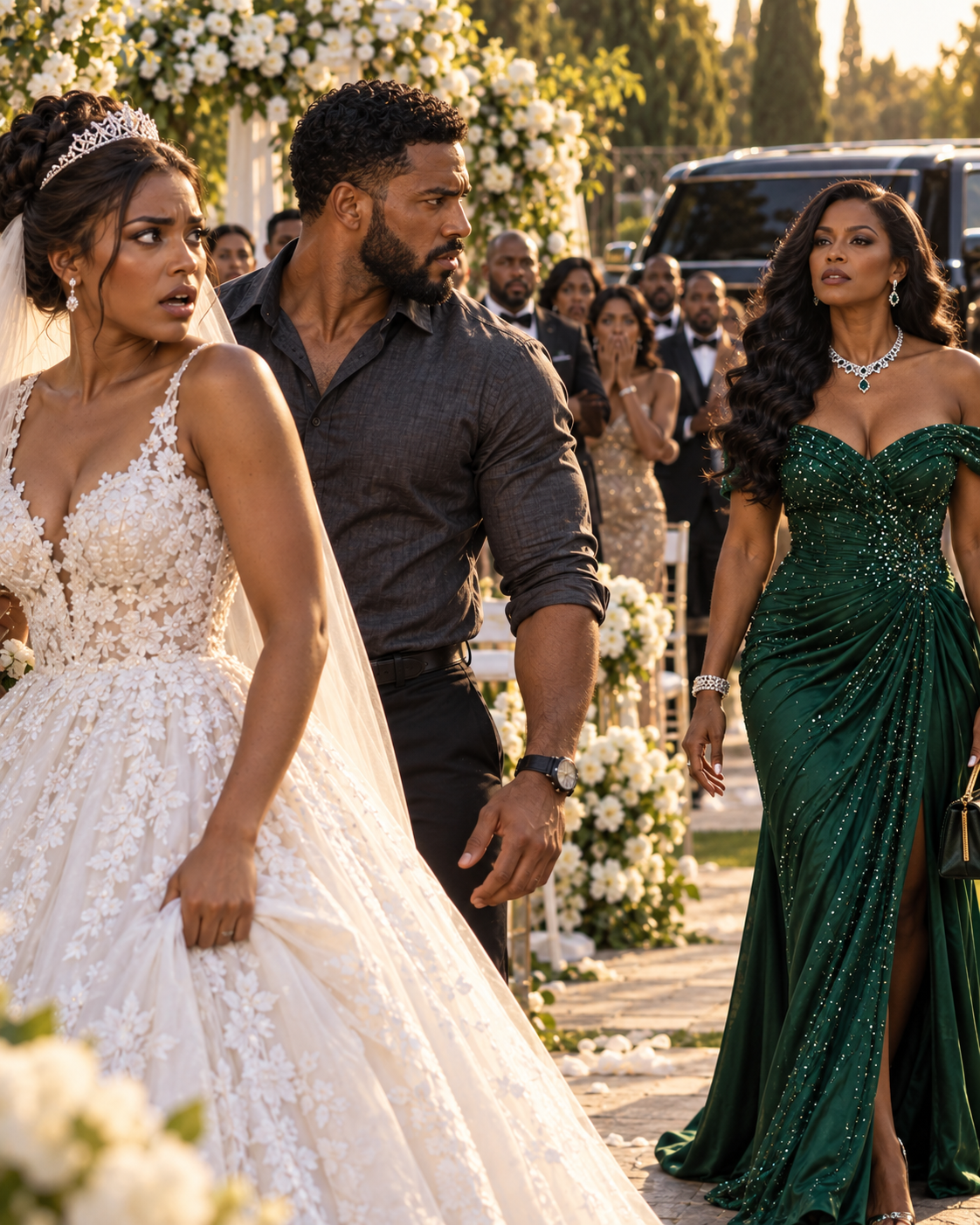
Eleanor Montgomery walked down the aisle alone.
My mother stood so quickly her chair scraped the floor.
Brenda’s mouth fell open.
Eleanor stopped beside Lucas.
For several seconds, neither spoke.
Then she touched his cheek.
“You were really going to do this without me.”
Lucas swallowed.
“I didn’t know if you’d come.”
“I’m your mother.”
His eyes filled.
“That’s never been the easiest thing to remember.”
Something softened in her face.
“I know.”
Then she turned toward me.
“Emma.”
I nodded.
“I’m sorry for arriving this way.”
I didn’t know what to say.
She looked at Lucas.
“He is stubborn.”
“I’ve noticed.”
That earned the smallest smile.
Then she said, “But he is my only son.”
The room went silent.
My mother looked as though she’d forgotten how to breathe.
Brenda sat down.
Lucas took my hands.
“I should have told you before today.”
“You should have.”
“I don’t want the company.”
“I know.”
“I don’t want the mansion.”
“I know.”
“I don’t want the life they built for me.”
He squeezed my hands.
“But I want you.”
My throat tightened.
“Then marry me.”
He smiled.
“Gladly.”
We finished the ceremony.
There were tears.
There was laughter.
There were people whispering about billions of dollars and family empires and the Montgomery heir who had chosen a repair shop over a boardroom.
I barely heard any of it.
Because when Lucas said his vows, he didn’t mention money.
He didn’t mention his family.
He didn’t mention the future waiting for him.
He talked about a roadside shoulder.
A dead battery.
A woman who brought him sandwiches because she kept her promises.
When it was my turn, I told him I loved the man who had fixed my car before I knew his last name.
And I meant it.
Afterward, outside the chapel, Brenda approached me.
For once, she didn’t have an argument prepared.
She looked at Lucas across the lawn.
“So you’re really staying with the shop?”
Lucas nodded.
“Yes.”
“Even now?”
“Especially now.”
She shook her head.
“I don’t understand you.”
He smiled.
“I’ve had practice.”
My mother hugged me.
She whispered that she was sorry.
I told her I knew.
It wasn’t perfect.
Families rarely become perfect because one truth comes out.
But something had shifted.
A few weeks after the wedding, Lucas returned to the shop.
The Montgomery lawyers wanted him in Los Angeles.
The board wanted him in New York.
His mother wanted him at least occasionally involved in the family foundation.
He agreed to none of it full-time.
He kept the shop.
He expanded it slowly.
He hired another apprentice.
He still came home smelling like oil.
And sometimes, when the workday ended, we’d sit on the curb outside the shop with takeout balanced on our knees.
One evening, I asked him whether he ever regretted leaving.
He thought about it.
“Sometimes.”
I waited.
“Not the life I chose.”
He took my hand.
“Just the years I spent thinking I had to disappear to become myself.”
I understood.
Because I had spent years thinking I had to please my family to deserve their love.
Neither of us had escaped perfectly.
We had simply stopped letting other people write the ending.
And whenever someone asked me what happened when I married into the Montgomery dynasty, I corrected them.
I didn’t marry into anything.
I married Lucas.
The man who stopped on a hot roadside without asking what I could pay him.
The man who built a shop with his own hands.
The man who had once walked away from a billion-dollar inheritance because he wanted a life he could recognize when he looked at it.
Years later, his mother still occasionally sent him invitations embossed with gold lettering.
He still occasionally sent them back.
And the shop stayed exactly where it had always been.
Between the tire warehouse and the welding supply store.
A little louder.
A little busier.
Still smelling like rubber, coffee, and engine oil.
Sometimes I would watch Lucas disappear beneath the hood of a customer’s car, and I’d remember the first time I’d seen him on that roadside.
Back then, I thought he had rescued me because he knew how to fix an engine.
I was wrong.
He rescued me by showing me what it felt like to stand beside someone who never asked me to become smaller so his life could look bigger.
And when he finally came out from under the hood, wiping grease from his hands, I would reach for him without caring who was watching.
Because the richest thing either of us ever built was never the life other people thought we should want.
It was the one we chose when nobody else was holding the pen.