My husband slapped me in the middle of his mother’s ballroom, then stood there while 600 guests watched me bleed
Part 2
When my mother entered the ballroom, the room went quiet again.
I couldn’t hear what she said at first.
Then her voice carried through the open doors.
“Which one of you is Beatrice Sterling?”
Someone answered.
My mother walked farther into the room.
“I am Martha Vance.”
Beatrice looked at her from across the crowd.
“And you are?”
“The mother of the woman your son just struck.”
Nobody spoke.
My mother didn’t shout.
She didn’t need to.
She walked toward Beatrice slowly, carrying the kind of calm that made people uncomfortable.
Beatrice straightened.
“I don’t believe this is appropriate.”
My mother stopped a few feet away.
“No.”
Her eyes moved toward Julian.
“It wasn’t appropriate when your son hit my daughter either.”
Julian looked at the floor.
My mother studied him.
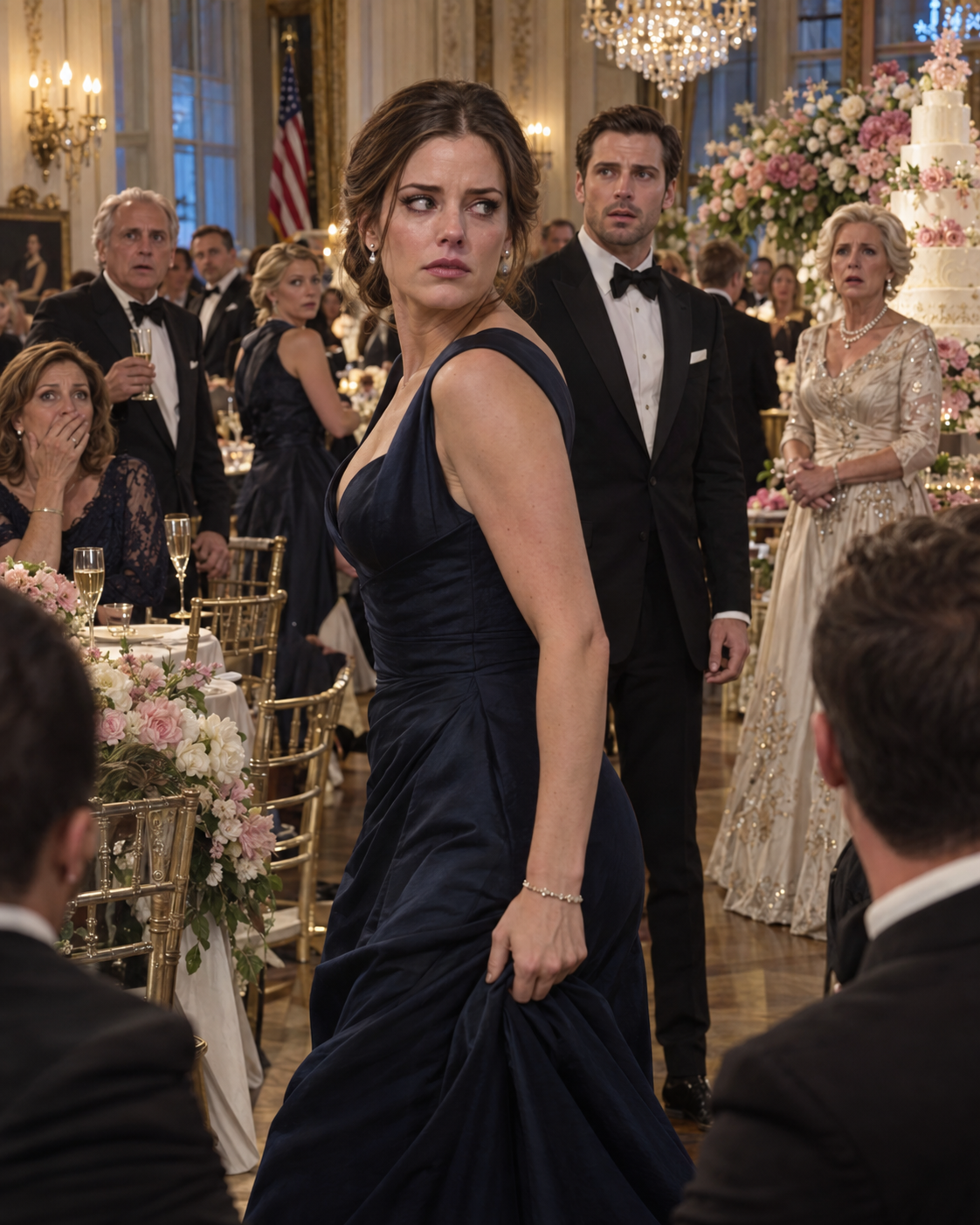
“Look at me.”
He didn’t.
“Look at me, Julian.”
Slowly, he raised his eyes.
My mother shook her head.
“I spent thirty-two years teaching my daughter that love should make her feel safe.”
She looked at Beatrice.
“You spent years teaching your son that protecting his mother’s pride mattered more than protecting his wife.”
Beatrice’s face tightened.
“You don’t understand our family.”
My mother smiled sadly.
“No, Beatrice.”
“I understand families perfectly.”
She stepped closer.
“A woman who raises a son to publicly strike his wife has built a lie, not a legacy.”
Someone near the staircase inhaled sharply.
Beatrice looked around, searching for support.
Nobody came.
Not the senator.
Not the CEOs.
Not the old family friends.
Not even the women who had laughed beside her earlier.
My mother turned toward Julian.
“And you.”
He swallowed.
“You had one job tonight.”
Julian whispered, “Mrs. Vance…”
“No.”
Her voice remained calm.
“Don’t call me that.”
She looked directly into his eyes.
“You had one moment when you could have chosen courage.”
He said nothing.
“You chose your mother.”
My mother paused.
“And now you have to live with that choice.”
Beatrice finally found her voice.
“This is a private family matter.”
My mother looked around the ballroom.
“Private?”
She glanced at the six hundred people surrounding them.
“Your son made it public.”
The words settled over the room like ash.
Then my mother turned and walked back toward the doors.
She didn’t threaten Beatrice.
She didn’t insult her.
She didn’t demand an apology.
She simply returned to me.
When she reached the steps, she sat beside me again.
“Let’s go home.”
I looked at her.
“What about them?”
My mother shrugged.
“They can keep their mansion.”
I looked back through the glass doors.
Julian was standing alone.
Beatrice stood several feet behind him.
For once, they looked exactly like what they were.
A mother and son trapped inside the consequences of their own choices.
I got into my mother’s car.
Neither of us spoke until we reached the highway.
Then she reached over and took my hand.
“You don’t have to explain tonight.”
I stared out the window.
“I thought if I tried hard enough, she’d eventually accept me.”
My mother squeezed my fingers.
“Sweetheart, some doors are locked from the inside.”
I cried then.
Not loudly.
Just silently, with my forehead against the cold window.
The next morning, I woke up in my childhood bedroom.
My cheek was swollen.
My phone contained twenty-seven messages.
Some were from people who had been at the party.
Some were from people I barely knew.
One came from Julian.
“I’m sorry.”
I stared at those two words for a long time.
Then I deleted the message.
On Monday morning, I hired Evelyn Thorne.
She was forty-eight, brutally direct, and had a reputation for making wealthy men discover that money did not automatically make them untouchable.
I sat across from her in a quiet office overlooking downtown Hartford.
She studied the photograph my mother had taken of my face that morning.
Then she closed the file.
“Do you want a divorce?”
“Yes.”
“Do you want to reconcile?”
“No.”
“Do you want revenge?”
I thought about it.
Then I shook my head.
“I want my life back.”
Evelyn nodded.
“Good.”
She opened another folder.
“That’s something I can work with.”
The divorce papers were filed that afternoon.
I expected Julian to fight.
He didn’t.
Not once.
He didn’t contest the filing.
He didn’t demand money.
He didn’t threaten me.
He simply signed.
That somehow hurt more than I expected.
Four years of marriage reduced to a stack of papers and a signature.
During the proceedings, I learned things I had never known.
Not because Julian had confessed.
Because once the marriage began unraveling, people who had remained silent started talking.
One former Sterling associate told Evelyn that Beatrice had spent years quietly telling people I was temporary.
Another admitted that Julian had been warned more than once that his mother’s behavior was becoming cruel.
A former family employee said Beatrice had once joked that I would eventually “learn my place.”
And then Evelyn found something else.
A letter.
It had been written by Julian’s father years earlier.
The letter had never been sent.
In it, he had described his own fear of Beatrice’s control.
He wrote that the Sterling family had spent decades confusing obedience with loyalty.
He wrote that Julian needed to learn the difference before becoming trapped in the same pattern.
At the bottom of the page was one sentence that stayed with me.
“A family name means nothing if the people carrying it are afraid to tell the truth.”
I read it three times.
Then I understood why Julian had never defended me.
It wasn’t because he didn’t know what was happening.
It was because he had spent his entire life learning what happened when he did.
That didn’t excuse him.
But it explained the shape of his cowardice.
And somehow, that made the ending sadder.
The divorce became final eight months later.
By then, the Sterling family had begun to fracture in ways that had nothing to do with me.
Business partners who had worked with them for decades quietly moved elsewhere.
One major investor withdrew.
Then another.
A foundation board began asking questions about financial decisions.
Several longtime associates resigned.
None of it happened in one dramatic explosion.
That was the strange part.
The Sterling empire didn’t collapse like a building.
It emptied like a house with a slow leak.
Room by room.
Person by person.
Relationship by relationship.
People who had once answered Beatrice’s calls stopped calling back.
The annual Mother’s Day gathering was canceled the following year.
There was no announcement.
No explanation.
Just an empty date on a calendar that had once been circled months in advance.
Someone told a friend of mine that Beatrice blamed me.
Maybe she did.
I never asked.
By then, I had stopped measuring my life by what she thought of me.
Part 3
A year after that night, I moved into an apartment in Boston.
It wasn’t large.
There was no marble staircase.
No ballroom.
No iron gates.
No staff waiting behind doors.
The kitchen was tiny.
The hallway creaked.
The radiator made a strange clicking sound every morning.
I loved it.
My living room had two windows that faced east.
Every morning, sunlight spilled across the wooden floor.
I bought a small table from a secondhand shop.
I hung photographs without worrying whether anyone would approve.
I bought blue mugs because I liked them.
I learned how to make soup.
I learned how to sleep without checking the clock.
And one Saturday morning, I bought a pot of lavender.
I carried it onto the balcony and set it beside the railing.
The wind moved through the little purple flowers.
I stood there with my coffee in both hands.
And suddenly, I realized something.
I wasn’t waiting for someone to become angry.
I wasn’t rehearsing what I would say if Beatrice insulted me.
I wasn’t wondering whether Julian would defend me.
I wasn’t measuring every sentence before speaking.
I wasn’t bracing for impact.
For the first time in years, my body didn’t feel like it was waiting for a storm.
I was thirty-two years old.
And I was free.
People sometimes ask me whether I regret marrying Julian.
I used to say yes.
Now I don’t.
Regret makes the past feel like wasted time.
I don’t believe my years were wasted.
They taught me what silence costs.
They taught me that cruelty does not become elegance just because it happens in a beautiful room.
They taught me that a family can have money, influence, history, and a famous name, and still be profoundly broken.
Most importantly, they taught me something my mother had tried to teach me long before I understood it.
Belonging should never require you to disappear.
A few months after I moved, my mother came to visit.
She stood on my balcony and looked at the lavender.
“You kept it alive.”
I laughed.
“Barely.”
She touched one of the flowers.
“It looks happy.”
I looked at her.
“So do I.”
She smiled.
“Yes.”
Then she looked toward the apartment behind me.
“Because nobody here is asking you to earn your right to exist.”
That sentence stayed with me.
Years earlier, I had thought freedom would feel dramatic.
I imagined walking away with music playing behind me.
I imagined a courtroom victory.
I imagined the Sterling family watching me leave and finally understanding what they had lost.
But freedom wasn’t dramatic.
It was quiet.
It was waking up without fear.
It was choosing what to wear without imagining someone’s judgment.
It was laughing too loudly.
It was leaving dishes in the sink.
It was buying flowers because I liked them.
It was hearing a man’s voice become sharp in a restaurant and realizing I didn’t have to stay.
It was understanding that I could leave a room before someone hurt me.
And perhaps most of all, it was realizing I no longer needed anyone to regret losing me.
The last time I saw Julian was almost two years after the Mother’s Day party.
We passed each other outside a coffee shop.
He looked older.
Not ruined.
Not broken.
Just tired.
He stopped.
“Elena.”
I stopped too.
For a moment, neither of us spoke.
Then he said, “How are you?”
I thought about lying.
Instead, I smiled.
“I’m good.”
He nodded.
“I’m glad.”
I studied his face.
There was something I had once desperately wanted to see there.
Regret.
But when I finally saw it, it didn’t satisfy me.
It simply made me sad.
He looked toward the sidewalk.
“I was wrong.”
I said nothing.
“I should have protected you.”
I took a slow breath.
“Yes.”
He looked at me.
“I don’t expect you to forgive me.”
“I know.”
He nodded.
Then he asked, “Do you ever think about us?”
I looked at him for a long moment.
“I think about who I was before I learned to be afraid.”
His eyes lowered.
“I wish I could go back.”
“I can’t.”
“I know.”
We stood there in the morning sunlight.
Then I said the only thing I needed him to understand.
“You didn’t lose me that night, Julian.”
He looked up.
“I lost you every time you watched me hurt and decided silence was easier.”
His face changed.
I didn’t wait for an answer.
I walked away.
This time, nobody followed me.
That night, I went home and watered the lavender.
The city outside my window was loud and restless.
Cars moved through the streets.
People laughed on sidewalks.
A siren sounded somewhere in the distance.
Life kept moving.
I stood on the balcony and watched the sunset turn the buildings gold.
For years, I had thought the opposite of being rejected was being accepted.
I was wrong.
The opposite of rejection is not acceptance.
It is knowing you do not need permission to belong to yourself.
I touched one of the lavender flowers.
It was small.
Delicate.
Still alive.
And for the first time, I understood why that little plant meant so much to me.
I had spent years trying to survive inside someone else’s garden.
Now I had finally grown my own.
And nobody was ever going to convince me again that I needed to earn the right to stay.