My husband slammed his phone onto our granite kitchen island and told me I was no longer allowed to touch a dollar of his money
David stared at the envelope as though the paper itself had become radioactive.
“You’re evicting me?”
I leaned against the dining table.
“No.”
His expression flickered with relief.
“I’m giving you exactly what you asked for.”
He looked confused.
“Your money is yours, and mine is mine.”
I tapped the notice.
“So is your life.”
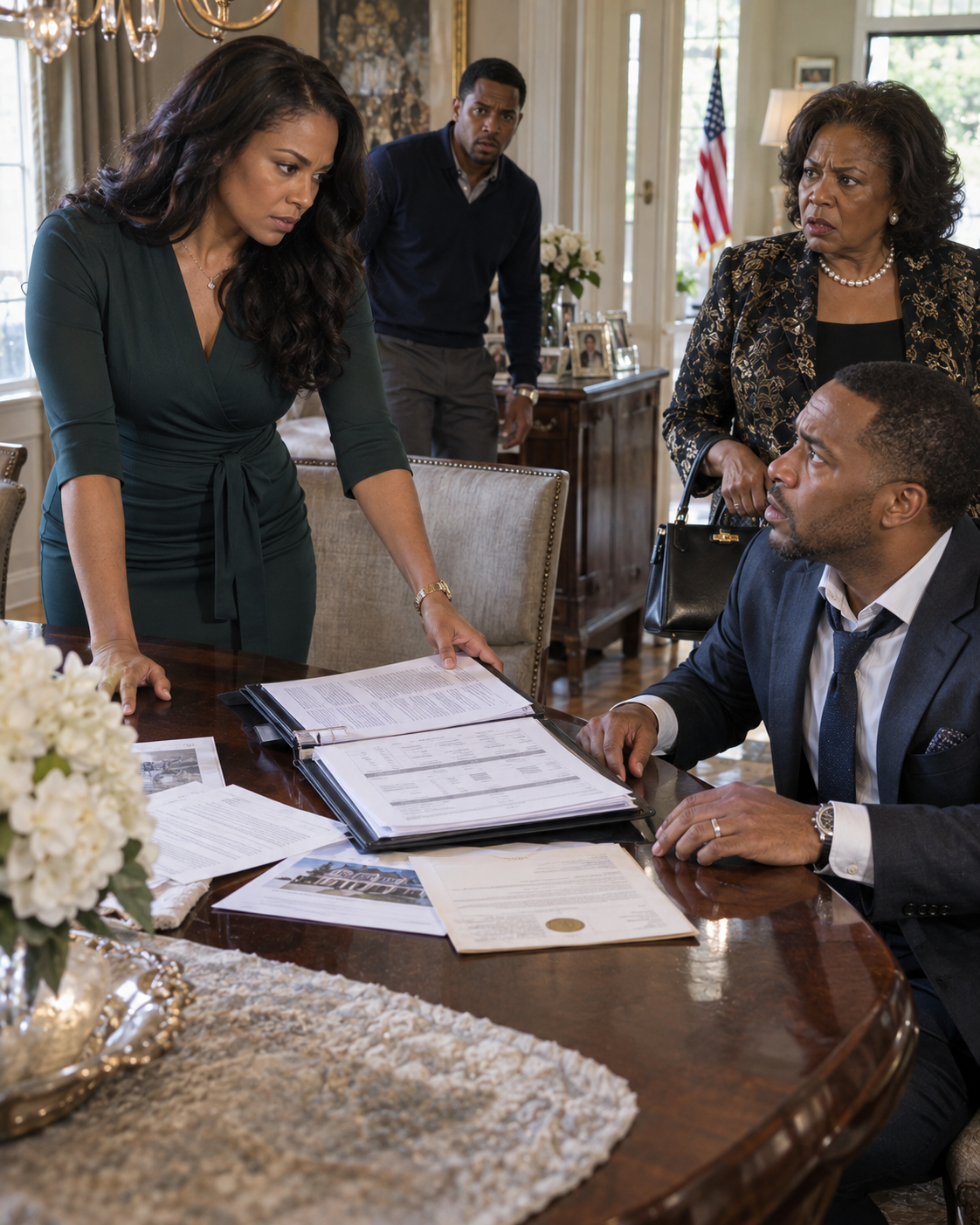
Evelyn grabbed the document from his hands.
“This is ridiculous.”
“No,” I said quietly.
“This is accounting.”
Todd stepped closer.
“You can’t throw family out.”
I looked at him.
“You’re right.”
He smiled.
“Good.”
“I can’t throw family out.”
His smile disappeared.
“But I can stop financing adults who aren’t my family.”
The room became silent.
For years, I had imagined what it would feel like to finally say those words.
I expected satisfaction.
Instead, I felt tired.
Deeply tired.
Because there is nothing glamorous about discovering that people you fed, housed, protected, and defended were never grateful for you.
They were simply comfortable.
And comfort can look remarkably similar to love when you have been inside it long enough.
David pushed the papers away.
“You’re bluffing.”
I shook my head.
“Ask the attorney.”
“What attorney?”
“Mine.”
His eyes narrowed.
“When did you hire one?”
“The morning after you told me my money was mine.”
Evelyn looked at David.
“You didn’t know?”
He ignored her.
“Rachel, this is our home.”
“No.”
I corrected him.
“This was our home.”
He stood.
“You can’t do this.”
“I already did.”
Todd laughed nervously.
“She thinks she’s some kind of billionaire now.”
I looked at him.
“No.”
Then I pointed toward the front door.
“I think I’m a woman who finally read her own bank statements.”
That ended the argument.
Not because they accepted it.
Because for the first time, they realized I wasn’t negotiating.
David left the next morning.
He packed his clothes first.
Then his watches.
Then the television.
Then the sound system he had insisted was necessary for the living room.
When he reached the kitchen, he stopped.
His eyes moved across the room.
“This is where we used to eat together.”
I looked at him.
“Yes.”
He swallowed.
“Do you remember when we first moved in?”
“I remember.”
“We were happy.”
I didn’t answer.
Because that was the hardest part.
We had been happy once.
Not constantly.
Not perfectly.
But enough.
That was what made the ending hurt.
David wasn’t a stranger.
He was someone I had loved long enough to know exactly how he liked his coffee.
Exactly how he reacted when he was embarrassed.
Exactly which jokes made him laugh.
And exactly how much of himself he had slowly turned into someone else’s approval.
He picked up a box.
“Do you really want me gone?”
I looked at him.
“I wanted a husband.”
He stopped.
“I wanted someone who saw what I was carrying.”
His jaw tightened.
“I worked too.”
“I know.”
“You act like I did nothing.”
“I don’t think you did nothing.”
I stepped closer.
“I think you believed your paycheck was proof that you were more valuable than me.”
He stared at the floor.
“And I let you believe that for years.”
That was the first time he looked ashamed.
Not angry.
Not defensive.
Ashamed.
Then he left.
Two weeks later, his mother called.
I almost didn’t answer.
When I did, she didn’t say hello.
“You’ve ruined my son.”
I sat at my desk at the Copper Whisk.
“No.”
“You destroyed his life.”
“No.”
“He lost his truck.”
“That was his truck.”
“He had to move.”
“That was his apartment.”
“He can’t afford the house.”
“That was the point.”
She went silent.
Then her voice became smaller.
“Where am I supposed to go?”
I closed my eyes.
There it was.
Not David.
Not Todd.
Not even anger.
Fear.
For the first time, Evelyn wasn’t demanding.
She was asking.
And I almost felt sorry for her.
Almost.
“You need to talk to David.”
“He says he can’t help me.”
I looked out through the restaurant window.
People were sitting at tables beneath warm lights.
Families.
Couples.
Friends.
People paying for food they had actually ordered.
“You taught him that my money belonged to the family.”
She said nothing.
“Now you’re learning what that lesson costs.”
She hung up.
Three days later, Todd’s car disappeared from the driveway.
The repossession company arrived before sunrise.
He stood outside in sweatpants, staring as the truck pulled his sports coupe away.
I watched from the upstairs window.
He looked toward the house.
For one second, I thought he might understand.
Then he shouted that I was heartless.
I closed the curtain.
The hardest part wasn’t watching them lose things.
It was realizing how many of those things had been purchased with my silence.
A month after David moved out, I received a call from my accountant.
“Rachel, there’s something you need to see.”
I met him at his office.
He turned his monitor toward me.
“This is an old corporate account.”
I frowned.
“I don’t recognize it.”
“You shouldn’t.”
“Then why are you showing it to me?”
He looked uncomfortable.
“Because your former husband is listed as an authorized manager.”
My stomach tightened.
“What?”
“The account predates your marriage.”
I leaned closer.
“Whose money is in it?”
He hesitated.
“Yours.”
I stared at the screen.
That couldn’t be right.
My accountant opened an archived file.
Seven years earlier, when the Copper Whisk was still operating out of a rented kitchen, I had created an emergency business reserve.
I remembered the account.
But I had never managed it personally.
My old financial adviser had.
When he retired, the account was transferred to another firm.
I had forgotten about it.
Apparently, David hadn’t.
“How much?”
My accountant turned the screen toward me.
I stopped breathing.
There was more than $180,000 in the account.
It had been untouched for years.
Except for one recent withdrawal.
$40,000.
Transferred two months before our argument.
To Northstar Holdings.
I knew that name.
David had mentioned it once.
A “business opportunity.”
At the time, I hadn’t cared.
Now I did.
“Where did the forty thousand go?”
My accountant opened another document.
“That’s the strange part.”
“What?”
“The recipient account belongs to a company registered to your husband’s brother.”
Todd.
I leaned back.
Suddenly the family drama made sense.
The money hadn’t only been funding their lifestyle.
Someone had been moving money behind my back.
I called my attorney.
She came to the office that afternoon.
We traced the transfer.
Then another.
And another.
Over three years, nearly $190,000 had moved from accounts connected to my business into companies controlled by David or Todd.
Some transfers had been disguised as consulting fees.
Some were labeled reimbursements.
Some had no explanation at all.
My attorney looked at me.
“Did you authorize these?”
“No.”
“Did David have access?”
“Apparently.”
“Then we need to determine how.”
That question haunted me for days.
I kept thinking about all the times David had asked me for passwords.
All the times he had offered to “help” with paperwork.
All the times he had sat beside me while I was exhausted, signing documents without reading every line.
Then I remembered something.
A rainy Tuesday three years earlier.
David had brought me coffee while I was editing a sponsorship contract.
“Let me organize these files for you.”
I had smiled.
“You’re sweet.”
He had kissed my forehead.
I had trusted him.
That memory hurt more than the money.
Because money can be replaced.
Trust cannot.
The investigation lasted months.
We discovered that David had used old authorization forms to access accounts I had assumed were closed.
Todd had created invoices for services that were never performed.
Evelyn had received payments described as “family consulting.”
Nobody had consulted anyone.
They had simply learned that Rachel would pay.
And I had spent years proving them right.
When David was confronted through attorneys, he denied everything.
Then he blamed Todd.
Todd blamed David.
Evelyn claimed she knew nothing.
For the first time, the family that had always presented itself as inseparable began turning on itself.
I didn’t enjoy watching it.
That surprised me.
I had imagined revenge would feel warm.
It didn’t.
It felt cold.
Like standing outside a burning building and realizing you used to live inside it.
Eventually, the missing money was recovered through settlement proceedings.
Not all of it.
Enough.
David lost his corporate position after the financial investigation reached his employer.
Todd was forced to repay part of what he had taken.
Evelyn moved into a smaller apartment.
Nobody apologized in the beginning.
They were too busy being angry.
Then, months later, David came to the restaurant.
He stood outside the kitchen until I noticed him.
He looked different.
No designer suit.
No expensive watch.
No arrogant posture.
Just a tired man in a plain jacket.
“Can I talk to you?”
I wiped my hands on a towel.
“You have five minutes.”
He nodded.
“I was wrong.”
I waited.
“I thought money made me important.”
He looked around the kitchen.
“Then I realized I didn’t even know how much of this you built.”
“You didn’t ask.”
“I was embarrassed.”
“About what?”
“That my wife made more money than me.”
I said nothing.
He looked down.
“So I made your success smaller.”
That sentence landed harder than I expected.
Because it was honest.
He continued.
“I told myself you didn’t need me.”
I answered quietly.
“You didn’t need to compete with me.”
“I know.”
“No, David.”
He looked up.
“You don’t know.”
I stepped closer.
“I didn’t need you to earn more.”
I pointed toward the dining room.
“I needed you to respect what I earned.”
His eyes filled.
“I miss you.”
I felt something move inside me.
Not love.
Not longing.
Grief.
I missed who we had been before money became a scoreboard.
But missing someone doesn’t mean you should return to them.
“I loved you,” I said.
He swallowed.
“Past tense?”
I nodded.
“I think I started losing you the first time you made me feel guilty for being successful.”
He wiped his face.
“I wish I could change it.”
“So do I.”
He looked at me for a long time.
Then he asked the question I had secretly feared.
“Is there someone else?”
I almost laughed.
“No.”
“Then maybe…”
“No.”
He nodded.
He didn’t argue.
That was how I knew he finally understood.
He left the restaurant without another word.
Six months later, the Copper Whisk opened its second location.
The opening night was packed.
My parents sat at the first table.
My father, whose therapy had once started a war in my kitchen, raised a glass.
“To my daughter.”
I smiled.
“To us.”
He shook his head.
“No.”
He pointed around the restaurant.
“To you.”
I looked around.
My employees were laughing.
Customers were eating.
My mother was crying because she always cried at openings.
And for the first time, I realized something I had never understood when I was married.
Providing for people and being valued by them are not the same thing.
I had spent years confusing the two.
I thought if I kept paying, forgiving, fixing, and sacrificing, eventually they would see what I was worth.
But people who benefit from your silence rarely volunteer to end it.
You have to.
That became the lesson I carried with me.
Boundaries aren’t punishment.
They are information.
They tell people what access to you actually costs.
And independence isn’t about proving you don’t need anyone.
It’s about knowing you can survive without abandoning yourself.
A year after the divorce, I changed the locks on the old house one final time.
I stood in the empty kitchen.
The granite island was still there.
The ceramic bowl was still there.
Even the tiny crack in the tile near the pantry remained.
I remembered David throwing his phone.
I remembered his mother smiling.
I remembered how small I had felt for about three seconds.
Then I remembered what happened afterward.
I had not destroyed their lives.
I had simply stopped funding the illusion they had built around mine.
My phone buzzed.
A message from an unknown number.
“Rachel, you don’t know the whole truth about the money.”
I stared at the screen.
Another message appeared.
“David didn’t start the transfers.”
My heart began pounding.
Then a third message arrived.
“You need to ask Evelyn what happened seven years ago.”
I stood alone in the kitchen, reading the words again.
For years, I thought the story had begun with one argument over three hundred dollars.
Now I wasn’t sure.
Maybe that argument had only opened a door that had been locked long before I knew it existed.
I looked toward the empty hallway.
The house was silent.
My phone buzzed one final time.
“Don’t trust the person who taught David how to access your accounts.”
I didn’t breathe.
Because there was only one person who had helped me set up those accounts in the first place.
And her name was written on the oldest document in my financial records.
My mother.