My brother-in-law looked me straight in the eye at a family cookout and said something that made everyone laugh.
The general waited for my answer.
For a moment, the entire backyard seemed to go silent. The wind moved through the trees, the grill continued to crackle, and somewhere near the fence, a child stopped playing with a football.
My brother-in-law, Daniel, was still standing beside the table, holding the little model airplane he had spent most of the afternoon showing off.
I looked at my wife, Emily. She gave my hand a gentle squeeze.
Then I turned back to the general.
“Yes, sir,” I said. “They can know the call sign. But nothing beyond what has been cleared for public release.”
The general nodded.
“Understood.”
He turned toward my family.
“Ladies and gentlemen, the officer standing before you is not simply an experienced military pilot. Within our community, he is known as Viper.”
My mother blinked.
“Viper?” she repeated.
The general smiled faintly.
“Yes, ma’am. For years, that name has been associated with some of the most demanding aviation missions our service has undertaken.”
Daniel shifted his weight.
I could almost hear the questions forming in his head.
The general continued.
“His record includes operational assignments that cannot be discussed here. He has flown missions under circumstances most people will never encounter, made decisions under extraordinary pressure, and brought other personnel home when the odds were not in their favor.”
He paused.
“And recently, his actions during a particularly difficult operation were reviewed at the highest levels of our command. He has been selected to receive one of the Air Force’s highest decorations for valor.”
My mother brought a hand to her mouth.
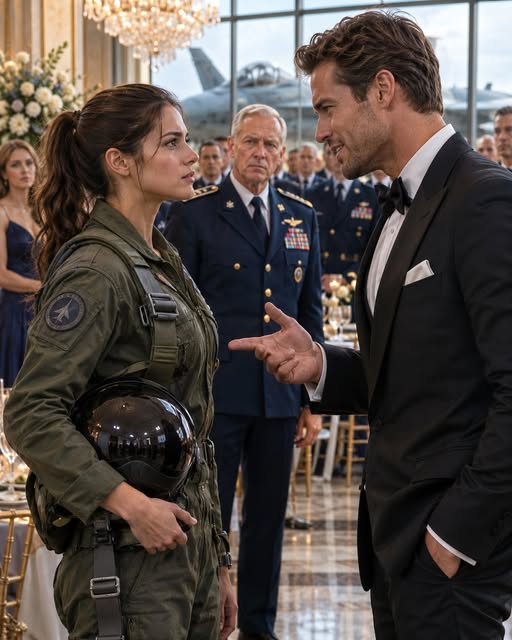
Emily’s eyes filled with tears.
Daniel stared at me as if he were seeing a completely different person.
But the general wasn’t finished.
“I’m here today because we need him at the base. There’s been a development involving an operation from his previous deployment, and his experience is essential to the briefing.”
I nodded.
“When do we leave, sir?”
“Within the hour.”
That was when my brother-in-law finally found his voice.
“Hold on. You’re telling me he’s some kind of decorated combat pilot?”
The general looked at him.
“I’m telling you that his service speaks for itself. But I’d rather not turn a family gathering into a military awards ceremony.”
Daniel swallowed.
“Right. Of course.”
I could see embarrassment spreading across his face.
For most of the afternoon, he had been treating me like someone who knew nothing about aviation. Now a four-star general was standing in our backyard, personally asking for my help.
It was an uncomfortable reversal.
And strangely, I didn’t feel victorious.
I felt tired.
Because the truth was that I had never wanted to compete with Daniel.
I had never wanted to prove that I was a better pilot, a more important officer, or a more impressive member of the family.
I had simply wanted to enjoy a Saturday afternoon with the people I loved.
The general closed his folder.
“I’ll give you a few minutes with your family.”
“Thank you, sir.”
He walked toward the SUV.
As soon as he was out of earshot, my mother approached me.
“Why didn’t you ever tell us?”
I looked at her.
“What would you have wanted me to tell you?”
“That you were doing all these things. That you were…”
She struggled to find the right words.
“Important.”
I shook my head.
“Mom, I’m not important because of what I fly or what medals I might receive. I’m your son. That’s enough.”
She hugged me so tightly that I almost lost my balance.
Emily stepped closer.
“I knew you had difficult assignments,” she said quietly. “But I didn’t know about the recognition.”
“There are things I can share and things I can’t.”
“I know.”
She looked toward the driveway.
“I’m proud of you.”
I kissed her forehead.
“That’s all I need.”
Then I noticed Daniel standing alone near the grill.
His model airplane was still in his hand.
He looked as though he wanted to say something but couldn’t find the courage.
Finally, he walked over.
“Can we talk?”
I nodded.
We moved a few steps away from the table.
For several seconds, neither of us spoke.
Then he looked down at his shoes.
“I owe you an apology.”
I waited.
“I was showing off. I know I was.”
He let out a nervous laugh.
“Actually, I think I was showing off all afternoon.”
“You were.”
He winced.
“Yeah. I deserved that.”
I smiled slightly.
“Daniel, I’m not angry.”
“Maybe you should be.”
“Why?”
“Because I made you look foolish in front of everyone. I kept acting like you didn’t know anything about flying.”
I looked at the model airplane in his hand.
“That’s a nice aircraft.”
His expression changed.
“You really think so?”
“It’s a good model. Is that a commercial jet?”
“An Airbus A320.”
“Regional airline?”
He nodded.
“Mostly domestic routes. Short and medium-haul flights.”
I examined the small aircraft.
“You know, I always liked the way commercial pilots manage their workload. It’s a different kind of flying, but the precision is impressive.”
Daniel looked surprised.
“You mean that?”
“Of course.”
He stared at me for a moment.
Then he said something I hadn’t expected.
“I’ve always wanted to fly military aircraft.”
I raised an eyebrow.
“Really?”
“Since I was a kid. My dad used to take me to air shows. I applied to the Air Force Academy when I was younger, but I didn’t get in. Eventually, I went through civilian training and joined the airline.”
He shrugged.
“Sometimes I think I spend so much time telling people how difficult my job is because I need them to believe I made the right choice.”
That admission changed the conversation.
For the first time that day, I wasn’t talking to the arrogant brother-in-law who had spent hours trying to impress everyone.
I was talking to a man who had spent years measuring himself against an imaginary version of the person he thought he should have become.
I understood that feeling more than he realized.
“Daniel,” I said, “there’s nothing wrong with being proud of your career. But you don’t have to make someone else’s career smaller to make yours meaningful.”
He nodded slowly.
“I know.”
“And for what it’s worth, I wouldn’t want you flying the missions I’ve flown.”
He looked up.
“Why not?”
“Because the world doesn’t need every pilot doing the same thing. It needs good pilots doing different jobs well.”
He glanced at the model airplane again.
“I guess I forgot that.”
Before I could respond, the general called from the driveway.
“Lieutenant Colonel? We need to move.”
Daniel straightened.
“Lieutenant Colonel?”
I turned toward him.
“That’s my rank.”
He shook his head in disbelief.
“Right. Of course it is.”
I laughed.
“Take care of that airplane.”
Then I walked toward the SUV.
But as I reached the vehicle, Daniel called after me.
“Hey, Viper?”
I stopped.
He held up his model aircraft.
“Would you sign it?”
For a second, I didn’t know what to say.
He looked embarrassed.
“Not because I think you owe me anything. I just… I’d like to remember today.”
I walked back.
He handed me the marker.
This time, there was no joke.
I carefully wrote my call sign beneath the wing.
Then I handed it back.
“Now you have to keep flying safely,” I told him.
He smiled.
“I will.”
I climbed into the SUV beside the general.
As we pulled away, I saw Emily standing near the driveway with my mother.
Daniel was still holding the model airplane.
He wasn’t looking at the signature anymore.
He was watching the vehicle disappear down the street.
I didn’t know it then, but that afternoon would change more than just his opinion of me.
It would change the way our entire family understood the people who served in uniform.
And it would eventually bring Daniel and me closer than either of us expected.
THE BRIEFING
The drive to the base took approximately forty minutes.
The general sat across from me in the back seat, reviewing the documents in his folder.
I knew better than to ask questions until he was ready to speak.
Eventually, he closed the folder.
“Your brother-in-law seems like an interesting character.”
I looked out the window.
“He’s a good man. He just enjoys an audience.”
The general chuckled.
“I’ve met a few officers like that.”
“I’m sure you have, sir.”
His expression became serious.
“Viper, I want you to understand something before we arrive. This isn’t a routine briefing.”
I turned toward him.
“What happened?”
“An aircraft carrying a civilian technical team experienced an emergency during a transfer operation overseas. The situation is still developing. Several of the people involved have worked with your previous unit.”
My attention sharpened.
“Are they safe?”
“Most of them. One crew member is unaccounted for, and communications have been unreliable.”
I looked down at the folder.
“What’s my role?”
“We need your operational perspective. You know the personnel, the environment, and the limitations of the equipment involved.”
“Understood.”
The general watched me carefully.
“There’s another reason I came personally.”
I waited.
“The review board has completed its assessment of your previous deployment. Your nomination has been approved.”
I didn’t react immediately.
For years, I had trained myself not to celebrate anything until the job was finished.
“Thank you, sir.”
“You don’t sound surprised.”
“I’ve learned not to expect anything.”
He nodded.
“That’s probably one of the reasons you’re still here.”
When we reached the base, several officers were waiting inside the operations building.
I recognized two of them.
Major Collins, who had served alongside me during my last deployment, and Colonel Hayes, who had supervised the mission that had earned me the nomination.
Collins approached immediately.
“Viper. Good to see you.”
“Good to see you, Major.”
He shook my hand.
“Still keeping everyone waiting?”
“Only the people who deserve it.”
He laughed.
For the next three hours, we worked through the situation.
There were maps, reports, intelligence summaries, and questions that required careful answers.
I wasn’t there to be celebrated.
I was there because people needed decisions made correctly.
By the time the briefing ended, the general had approved a new coordination plan.
As I gathered my notes, Colonel Hayes approached.
“One more thing,” he said.
I turned.
“Your award ceremony has been scheduled for next month.”
I nodded.
“Understood.”
“Your family has been invited.”
That caught my attention.
“My family?”
“Yes. Your wife, your mother, and anyone else you want to bring.”
I considered that for a moment.
“Can I ask something?”
“Of course.”
“Would it be possible to keep the ceremony focused on the people who served with me?”
Hayes smiled.
“That’s exactly what we intended.”
He placed a hand on my shoulder.
“You should let your family see this part of your life, Viper. Not the classified details. Not the things they aren’t allowed to know. Just the truth that you were never doing this alone.”
I thought about Emily standing in the driveway.
Then I nodded.
“I’ll bring them.”
THE PHONE CALL
That evening, I returned home later than expected.
The backyard had been cleaned.
The folding chairs were stacked, the empty plates were gone, and the little table where Daniel had displayed his model airplane was empty.
Emily was sitting on the couch.
She looked up when I entered.
“How bad was it?”
“Complicated.”
“Are you okay?”
“I’m fine.”
She studied my face.
“That’s not what I asked.”
I sat beside her.
“I’m okay, Em.”
She rested her head against my shoulder.
For a while, we simply sat together.
Then she asked the question I had been expecting.
“Were you scared today?”
I turned toward her.
“At the cookout?”
She nodded.
“Not because of Daniel. Because of what happened when the general arrived. You looked different. Like you were suddenly somewhere else.”
I took a breath.
“Sometimes, when someone from the military shows up unexpectedly, my mind goes straight to the worst possibilities.”
“Because of your deployments?”
“Yes.”
She took my hand.
“You don’t have to pretend with me.”
I looked at her.
“Sometimes I wish I could tell you everything.”
“I know.”
“But I can’t.”
“I know that too.”
She leaned closer.
“Just promise me something.”
“What?”
“When you come home, really come home. Don’t leave half of yourself somewhere I can’t reach.”
Her words stayed with me.
Because she was right.
I had become so accustomed to compartmentalizing my life that sometimes I forgot how to put the pieces back together.
“I’ll try,” I said.
She smiled sadly.
“That’s all I ask.”
My phone vibrated.
A message from Daniel appeared.
It was a photograph of the model airplane.
My signature was visible beneath the wing.
Underneath it, he had written:
“Thanks for today. I owe you more than an apology. Maybe sometime you could tell me about what being a pilot has taught you. Not the classified stuff. Just the things that matter.”
I read it twice.
Then I showed Emily.
She smiled.
“That’s a start.”
I typed a response.
“Anytime. And I still want to hear about your airline career. I have a feeling you know a thing or two I don’t.”
A few seconds later, he replied.
“Deal.”
THE AWARD CEREMONY
Four weeks later, my family arrived at the base.
My mother wore a navy-blue dress.
Emily wore the silver necklace I had given her on our wedding anniversary.
Daniel came wearing a dark suit.
He carried the same model airplane, carefully packed inside a protective case.
When he saw me in uniform, he stopped.
For a moment, he simply looked.
Then he approached.
“That’s a sharp uniform.”
“Thanks.”
He glanced at the ribbons and decorations.
“I suppose I should stop pretending I understand all of those.”
“You can ask.”
“Maybe another time.”
Before we entered the ceremony hall, the general greeted my family.
He shook my mother’s hand and thanked her for supporting her son.
Then he turned toward Daniel.
“Good to see you again.”
Daniel smiled awkwardly.
“Likewise, sir.”
The general looked at the model airplane.
“You brought it.”
“I did.”
“Good. I hope you haven’t let him damage it.”
Daniel laughed.
“He signed it. That’s enough.”
Inside, the ceremony was simple.
There were officers, enlisted personnel, family members, and a few representatives from the command.
When my name was called, I walked forward.
The general read the citation.
He spoke about the mission, the difficult conditions, and the decisions made by the entire team.
He mentioned my leadership.
He mentioned the crew members who had trusted me.
He mentioned the lives protected because people had trained together and refused to abandon one another.
I stood still as the decoration was placed on my uniform.
But I wasn’t thinking about the medal.
I was thinking about the people who weren’t standing in that room.
The crew chief who had worked through the night.
The young officer who had followed instructions despite being terrified.
The maintenance team that had kept an aircraft operational under difficult circumstances.
The men and women whose names would never appear in a newspaper.
When the general finished, he stepped back.
The room applauded.
My mother was crying.
Emily was smiling through tears.
Daniel stood quietly, holding the model airplane against his side.
After the ceremony, several people approached to congratulate me.
I accepted their handshakes, thanked them, and eventually found my family near the entrance.
My mother hugged me.
“I wish your father could have seen this.”
I closed my eyes.
“So do I.”
She pulled back.
“He would have been so proud.”
Daniel approached.
He looked at the decoration on my uniform.
“Can I ask you something?”
“Sure.”
“Do you ever feel like people only respect you because of the things you’ve done?”
I considered the question.
“Sometimes.”
“Then how do you know when someone actually respects you?”
I smiled.
“When they treat you the same way before they know what you’ve accomplished.”
He looked down.
“I think I failed that test.”
“You did.”
He laughed quietly.
“Fair enough.”
Then he surprised me.
“I’ve been thinking about something.”
“What?”
“Our airline is organizing a program for young students interested in aviation. We visit schools and talk about flight careers.”
“Sounds worthwhile.”
“I wondered if you’d consider joining me sometime. You could talk about military aviation, and I could explain the civilian side.”
I smiled.
“Why me?”
He shrugged.
“Because I think the kids should hear from someone who understands that flying is about more than sitting in a cockpit.”
I looked at him.
“That actually sounds like a good idea.”
He grinned.
“Great. I’ll send you the details.”
Then he became serious again.
“And, Viper?”
“Yeah?”
“I’m sorry I needed a general to arrive at a barbecue before I understood what kind of person you were.”
I shook my head.
“You don’t need to apologize for not knowing my job. Just don’t assume you know someone’s worth because you haven’t seen their résumé.”
He nodded.
“I won’t.”
A DIFFERENT KIND OF FLIGHT
Two months later, Daniel and I stood inside an elementary school gymnasium.
Around sixty students sat in rows of folding chairs.
Some wore homemade pilot wings.
Others held drawings of fighter jets, helicopters, and passenger aircraft.
Daniel went first.
He explained how he had become an airline pilot, what training involved, and why communication mattered in the cockpit.
He talked about weather, teamwork, checklists, and the responsibility of carrying hundreds of passengers safely.
The students listened carefully.
Then it was my turn.
I walked to the front.
A boy near the second row raised his hand before I had even started.
“Do you fly fighter jets?”
I smiled.
“I’ve flown military aircraft, yes.”
“Have you ever been in a dogfight?”
A few students laughed.
I considered how to answer.
“Let’s just say military flying isn’t always like what you see in movies.”
The boy nodded as though that was the most fascinating thing he had ever heard.
A girl near the window raised her hand.
“What’s the hardest part of being a pilot?”
I looked at Daniel.
He smiled and motioned for me to answer.
“People might expect me to say flying in bad weather or dealing with emergencies. Those things are difficult. But I think the hardest part is remembering that other people are trusting you.”
The room became quiet.
“When you’re flying, you aren’t just responsible for yourself. You’re responsible for your crew, the people beside you, and sometimes people you’ll never meet. That means you have to stay humble enough to keep learning.”
The girl nodded.
Then another student asked,
“Which one is better? Military pilots or airline pilots?”
Daniel and I looked at each other.
I smiled.
“That’s a dangerous question.”
The students laughed.
Daniel stepped forward.
“Here’s the answer. A good pilot doesn’t need to prove that another pilot is worse.”
I looked at him.
He grinned.
“I’m learning.”
The students applauded.
After the presentation, a small boy approached me.
He couldn’t have been more than ten.
His name tag read MICHAEL.
“Sir?”
“Yes?”
“Can I ask you something?”
“Absolutely.”
He looked down at his shoes.
“My dad used to be in the Air Force. He doesn’t fly anymore. Sometimes he says he wasn’t good enough to stay.”
I crouched slightly so we were at eye level.
“Do you think he’s a good dad?”
Michael nodded immediately.
“He helps me with homework. He makes breakfast on Saturdays.”
“Does he take care of you?”
“Yeah.”
“Then I’d say he’s pretty good at something important.”
The boy smiled.
“But what about flying?”
I paused.
“Listen, Michael. A person’s worth isn’t determined by how long they wear a uniform or how many hours they spend in the sky. Sometimes the bravest thing someone can do is recognize that life has changed and find a new way to serve the people they love.”
He stared at me.
“Do you think my dad is still a hero?”
I placed a hand on his shoulder.
“I think you should tell him what you just told me. And then ask him to make breakfast next Saturday.”
Michael laughed.
“I will.”
As he ran back toward his classmates, Daniel approached.
“I heard that.”
“Good.”
He shook his head.
“You know, I used to think being a pilot meant being the person everyone looked up to.”
“And now?”
“Now I think it means being someone people can count on.”
I smiled.
“That’s a better definition.”
THE CALL THAT CHANGED EVERYTHING
Three months after that school visit, Daniel called me late one evening.
His voice sounded different.
“Hey. Are you busy?”
I was sitting at the kitchen table reviewing paperwork.
“Not really. What’s going on?”
“My flight had an emergency today.”
I straightened.
“Everyone safe?”
“Yes. We landed safely. But it was close.”
“What happened?”
He explained that shortly after departure, the aircraft had developed a technical issue.
The crew had followed the emergency procedures, communicated with air traffic control, and returned safely.
No one had been injured.
But something had happened after landing.
“One of the passengers started having a panic attack,” he said. “An older man. He was convinced we were going to crash.”
I listened.
“I stayed with him until the medical team arrived. He kept apologizing for being afraid.”
“There’s nothing to apologize for.”
“I told him that.”
Daniel paused.
“Then he asked me something.”
“What?”
“He asked if I had been scared.”
I smiled slightly.
“What did you tell him?”
“I said yes.”
I waited.
“And then I told him that being a professional doesn’t mean you never feel afraid. It means you know what to do even when you do.”
I leaned back.
“That was a good answer.”
He laughed.
“I thought you’d say that.”
For a moment, neither of us spoke.
Then he said,
“I think I finally understand what you meant at the barbecue.”
“What did I mean?”
“That you don’t have to announce what you’ve done to know who you are.”
I smiled.
“Sounds like you’re getting there.”
“I’m trying.”
He hesitated.
“By the way, I have something for you.”
“What?”
“Remember the model airplane?”
“Of course.”
“I’ve bought another one.”
“Why?”
“Because I want to give the original to the aviation program at the school. With your signature underneath the wing.”
I was quiet.
“Daniel, that’s your airplane.”
“I know. But I think it could mean something to those kids.”
He continued.
“I’ll keep the new one. The old one has a better story now.”
I laughed.
“That’s probably the first time I’ve heard someone describe a model airplane that way.”
“There’s a first time for everything.”
THE SECOND COOKOUT
The following summer, we held another family barbecue.
This time, Daniel arrived early.
He helped arrange the chairs, carried food from the kitchen, and spent nearly an hour playing football with the younger children.
He brought a new model airplane.
But he didn’t place it in the middle of the table.
Instead, he set it beside the grill and helped my mother prepare dinner.
When the relatives gathered, someone asked about his flying career.
Daniel began explaining a recent international route.
Then he stopped and laughed.
“I’m doing it again.”
Everyone smiled.
My mother shook her head.
“Doing what?”
“Talking too much about airplanes.”
He pointed toward me.
“Apparently, I’ve got a reputation to protect.”
I laughed.
“You’re doing fine.”
A few minutes later, Daniel approached me with two drinks.
He handed one over.
“Can I tell you something?”
“Sure.”
He looked across the backyard.
“Last year, when the general arrived, I felt about two inches tall.”
“I noticed.”
“I thought everyone was looking at me. Like I was some idiot who had been exposed.”
I took a sip.
“And now?”
“Now I realize the worst part wasn’t that I didn’t know what you had done. It was that I thought I needed to be better than you.”
He shook his head.
“I had a good career, a loving family, and a job I was proud of. But I spent the afternoon trying to prove I was important.”
I nodded.
“People do that sometimes.”
“Do you?”
I thought about it.
“More than I’d like to admit.”
He smiled.
“Really?”
“Of course. The difference is that I have people who remind me when I’m getting carried away.”
He glanced toward Emily.
“She’s good at that.”
“The best.”
We stood quietly for a moment.
Then Daniel said,
“I wanted to ask you something about your next assignment.”
“Go ahead.”
“Are you still flying?”
“For now.”
“Do you ever think about stopping?”
I looked toward the trees.
“Sometimes.”
“Why?”
I took a breath.
“Because the older I get, the more I understand what it costs. Not just physically. There are things you carry home, even when you leave the mission behind.”
Daniel listened.
“I’m proud of my service. I wouldn’t trade the people I’ve flown with for anything. But I also know that one day, I want to spend more time with Emily. I want to see my family without looking at the clock. I want to be around for ordinary things.”
Daniel nodded.
“Like barbecues?”
“Especially barbecues.”
He laughed.
Then he raised his glass.
“To ordinary things.”
I tapped my glass against his.
“To ordinary things.”
A SURPRISE FROM MY MOTHER
Just before sunset, my mother called everyone toward the table.
She had something she wanted to show us.
It was an old photograph.
My father stood beside a small private aircraft, wearing a faded baseball cap.
I hadn’t seen the picture in years.
He had never been a pilot, but he had loved aviation.
When I was young, he used to take me to the local airport and watch the aircraft land.
He would explain how the wings generated lift, how pilots communicated with control towers, and why every flight depended on people working together.
I stared at the photograph.
“Where did you find this?”
“In the old family album,” my mother said.
She turned it over.
There was handwriting on the back.
My father’s handwriting.
It read:
“One day, my boy will fly farther than I ever could. I hope he remembers that the sky is big enough for everyone.”
I couldn’t speak.
Emily reached for my hand.
Daniel stood beside me, looking at the photograph.
Then he said quietly,
“That’s a good line.”
I nodded.
“Yeah. It is.”
My mother smiled.
“Your father always believed you two would find your way in life.”
She looked at Daniel.
“He would have liked you.”
Daniel smiled sadly.
“I wish I could have met him.”
“You would have gotten along.”
We passed the photograph around the table.
For once, nobody talked about ranks, aircraft types, flight hours, or awards.
We talked about my father.
We talked about the things he had taught us.
We remembered how he used to whistle while cooking, how he always arrived early, and how he believed a person’s character was revealed by the way they treated someone who couldn’t offer them anything in return.
And somehow, sitting there with my family, I understood something I had missed for years.
I had spent so much time thinking about the sky that I had almost forgotten the people waiting for me on the ground.
THE LAST LESSON
Later that evening, Daniel and I stood near the driveway.
He had brought the signed model airplane back from the school program.
The students had taken photographs with it, and several had written little messages on a card attached to the display.
One message stood out.
“Thank you for showing us that there is more than one way to be a hero.”
Daniel handed it to me.
I read it twice.
Then I looked at him.
“You’re keeping this one?”
“Absolutely.”
He placed the model airplane carefully on the passenger seat of his car.
Before getting in, he turned back.
“Hey, Viper?”
“Yeah?”
“Do you think you could teach me something sometime?”
“Like what?”
“Not how to fly a fighter jet. I think I’ve missed that opportunity.”
I laughed.
“Probably.”
He smiled.
“I mean how you handle pressure. How you make decisions when everything seems to be happening at once.”
I thought for a moment.
“That’s something we can work on.”
He nodded.
“Thanks.”
Then he hesitated.
“And I want you to know something.”
“What’s that?”
“When the general came to that barbecue, I thought you were going to humiliate me. I thought you would finally tell everyone how much better you were.”
I shook my head.
“I never wanted that.”
“I know. That’s what makes it worse.”
He looked toward the house.
“You had every opportunity to embarrass me, but you didn’t. You let me discover how wrong I was on my own.”
I smiled.
“Sometimes people learn more when you give them room to change.”
Daniel extended his hand.
I shook it.
But he pulled me into a quick hug instead.
“I’m glad we’re family,” he said.
“Me too.”
He climbed into his car and drove away.
I stood in the driveway for a few seconds, watching the taillights disappear.
Then Emily came outside.
“What are you thinking about?”
I looked up at the evening sky.
“Something my father wrote.”
She slipped her arm through mine.
“What was it?”
I repeated his words.
“The sky is big enough for everyone.”
She smiled.
“Sounds like he was a wise man.”
“He was.”
We walked back toward the house together.
My uniform was hanging in the closet.
The medal from the ceremony was safely stored away.
My military records remained in a locked office.
And somewhere in a passenger seat, a little model airplane carried a signature that had once meant very little to the man holding it.
But I knew something Daniel was only beginning to understand.
A person’s greatness isn’t measured by how loudly they talk about their accomplishments.
It isn’t measured by the title on their business card, the number of people who recognize their name, or how impressive their stories sound around a dinner table.
It’s measured by what they do when nobody is watching.
By how they treat people who have nothing to offer them.
By whether they can celebrate another person’s success without feeling smaller themselves.
And by whether they have the courage to admit when they’re wrong.
A year earlier, Daniel had handed me a marker and told me that maybe someday I would get to fly something like his model airplane.
I could have answered with my rank.
I could have listed my awards.
I could have told him about missions that would have silenced the entire backyard.
But I hadn’t.
Not because I was hiding something out of shame.
Because I had finally learned that not every challenge deserves a response.
Sometimes silence isn’t weakness.
Sometimes it’s confidence.
And sometimes the most powerful thing you can do is allow someone else the dignity of discovering the truth without forcing it upon them.
A few days later, Daniel sent me a photograph from the aviation program.
He was standing beside a group of students, holding the signed model airplane.
Underneath the photograph, he had written:
“Today, I told them about two pilots who taught me that respect has nothing to do with the aircraft you fly. It has everything to do with the person you are.”
I smiled and saved the photograph.
Then I sent him one sentence:
“Keep teaching them to fly, brother.”
He replied almost immediately.
“Only if you keep reminding me how to stay grounded.”
I laughed.
And for the first time since that afternoon when a black SUV had pulled into my family’s driveway, I realized that the general’s visit had given me something far more valuable than recognition.
It had given my brother-in-law and me a chance to see each other clearly.
He had learned that he didn’t need to be the most impressive person in the room.
And I had learned that sometimes the greatest part of serving your country isn’t the mission, the aircraft, or the medal waiting at the end.
It’s coming home.
It’s holding the hand of the person who waited for you.
It’s sitting around a backyard table with people who love you.
And it’s knowing that when the conversation turns to who is the better pilot, you don’t have to say a word.
Because the people who truly matter already know who you are.
THE END