Julian, don’t turn around,” Harrison whispered, his hand closing around my wrist beneath the gala table
For several seconds, I didn’t understand the sentence.
I read it again.
Then a third time.
Harrison still doesn’t know what we’ve planted.
The room seemed to contract around me. The rain outside had become louder, or perhaps I had simply become more aware of it.
“Who is A?”
Mother didn’t answer immediately.
Her investigator, a narrow-faced man named Thomas Reed, stood near the window with his hands folded behind his back.
“Alister Beaumont,” he said.
My father-in-law.
Even in our own family, his name had acquired the weight of a closed door.
Alister had founded Beaumont Vector twenty-eight years earlier, built it from a handful of engineers in a Boston warehouse, and turned it into one of the most valuable private technology companies in the country. Harrison had joined the company after graduate school and eventually became its chief executive.
Father and son had spent the last four years barely speaking.
Their feud was legendary inside the company and boringly private outside it.
Or so I’d thought.
I stared at Thomas.
“How long have you known?”
“Forty-seven hours.”
“And Harrison?”
“We don’t believe he knows.”
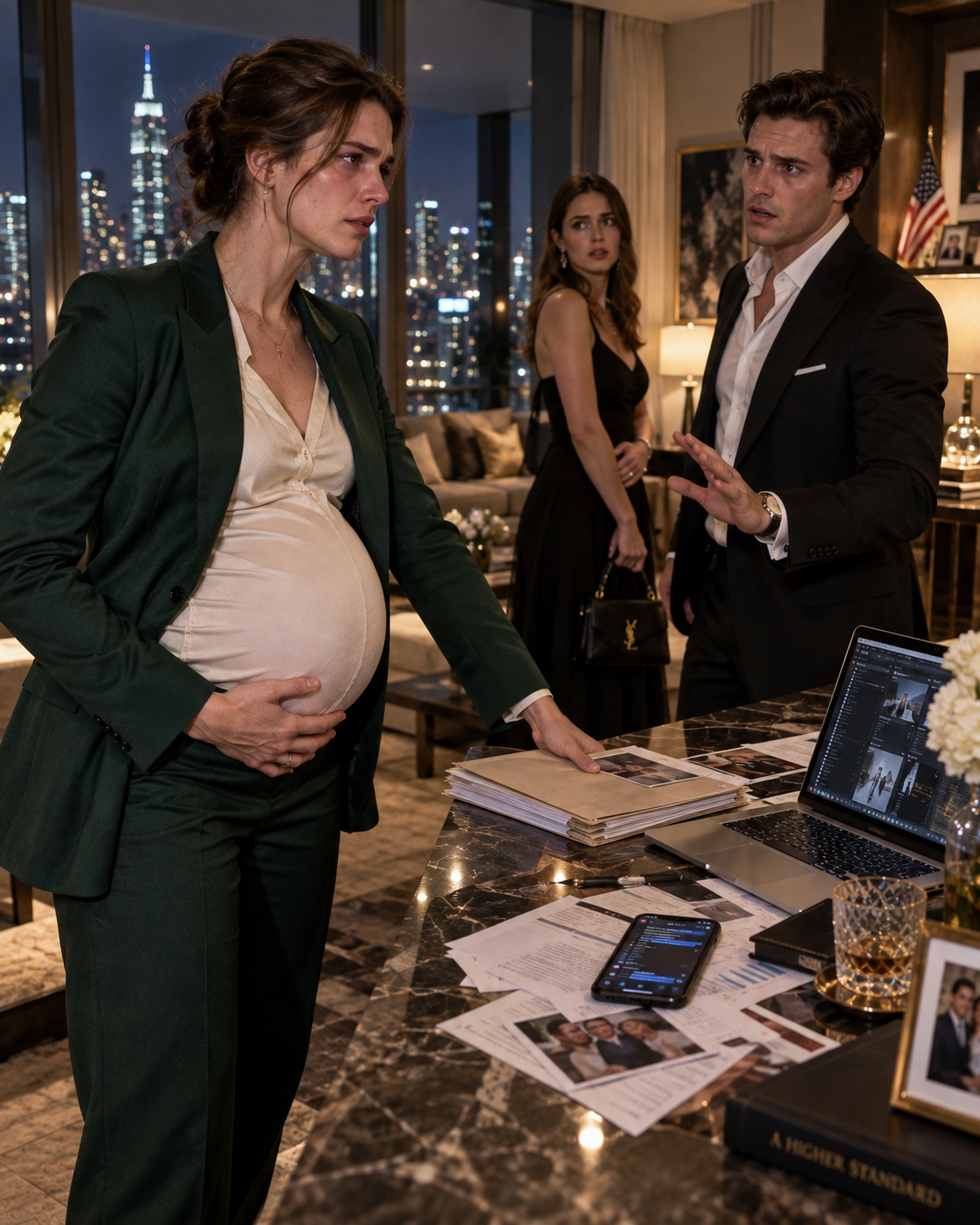
Mother leaned against the windowsill.
“We had to be certain before we involved him.”
I looked back at the screen.
There were hundreds of messages.
Not all of them were incriminating. Some were ordinary. Scheduling. Gallery events. Hotel names. Invitations. Photographs of paintings. Payments routed through consulting companies I didn’t recognize.
Then there were the strange ones.
References to server access.
An executive named Martin who had suddenly changed his opinion about Harrison’s leadership.
A private investor who had been approached about purchasing Beaumont Vector shares.
A phrase that appeared repeatedly:
“Phase three.”
I scrolled until my hand started shaking.
“What does planted mean?”
Thomas came closer.
“We don’t know yet.”
That answer frightened me more than if he had said something terrible.
The hospital had become my entire world by then.
The nurses changed shifts. The same woman brought me tea every morning. A physical therapist taught me how to move without putting unnecessary strain on my body. My son kicked at three in the afternoon almost every day, as if he had developed his own little schedule.
Harrison visited twice.
The first time, he stood beside my bed for eleven minutes without sitting down.
“I was wrong,” he said.
I kept my eyes on the window.
“About Clara?”
“About everything.”
I almost laughed.
It came out as a breath.
“You’ll have to be more specific.”
He lowered himself into the chair.
“I’ve known her for about a year.”
That hurt differently than the kiss.
Not because it was new information, but because of the casual way the truth had been rationed to me.
“Was it an affair?”
He rubbed both hands over his face.
“It became one.”
“That’s not an answer.”
“Yes.”
I closed my eyes.
He continued quietly.
“It ended months ago.”
I looked at him.
“You kissed her at the gala.”
“I know.”
“Then it didn’t end.”
“I was angry.”
“At me?”
“No.”
“At who?”
He didn’t answer.
That silence told me enough to make my stomach tighten.
“Your father?”
He looked up sharply.
I had never seen Harrison look afraid of me before.
“Why would you say that?”
“Because Mother has already started digging.”
He stood.
“What did she find?”
I didn’t tell him.
Not yet.
That was the first lie I had ever deliberately told my husband.
It was a small one.
But it changed something inside me.
After he left, Thomas returned with a new file.
“We found the source of the payments.”
He put a folder on the table.
Three shell companies.
Two were registered in Delaware.
One in Luxembourg.
All ultimately connected to an investment vehicle controlled by Alister Beaumont.
I stared at the documents.
“But why Clara?”
“Because she was useful.”
“She makes digital installations.”
“She also has a background in information architecture and penetration testing.”
I frowned.
“That’s not what her gallery biography says.”
“No.”
Thomas opened his laptop.
“Her public work is immersive art. Her private work, according to what we’ve recovered, includes data extraction and social engineering.”
I thought of the gala.
Her silver dress.
Her hand on Harrison’s chest.
The way she had smiled at me earlier that evening when she’d been introduced as one of the foundation’s featured artists.
I remembered something I hadn’t thought about since.
She had asked me whether our new European data center was already operational.
At the time, I’d answered without thinking.
“It’s almost finished.”
She had smiled.
“Congratulations.”
Now my skin crawled.
“What did she take?”
“We’re still determining that.”
“Then how do you know there’s a plot?”
Thomas looked at Mother.
She gave him a small nod.
He turned his laptop toward me.
There was a message thread between Clara and someone identified only as A.
“Once the transfer is complete,” Clara had written, “Harrison will look compromised enough for the board to fracture.”
Alister’s response came eight minutes later.
“Make sure Julian is visible.”
I read the line twice.
My mouth went dry.
“Why me?”
Thomas hesitated.
“Because you’re a controlling shareholder.”
I knew that.
What I hadn’t known was how much.
When I married Harrison, I had inherited voting shares from my grandfather through a family trust. I’d never treated them as leverage. In our marriage, we spoke about them as if they were part of the furniture.
I had 18.7 percent of Beaumont Vector.
Harrison had 31 percent.
Alister had been reduced to 9 percent after years of litigation and restructuring.
Together, Harrison and I controlled the largest voting block.
“Alister needed Harrison isolated,” Mother said. “He needed you angry, publicly embarrassed, and emotionally separated from your husband.”
I stared at her.
“And the scandal?”
“Would make Harrison look compromised. It would give Alister allies on the board.”
I thought about every photograph taken at the gala.
Every phone raised during the speeches.
Every gossip column that would publish the image of Harrison kissing Clara beneath a Beaumont Foundation banner.
Then I remembered something else.
There had been cameras in the service corridor.
A photographer from a financial magazine had been standing near the elevators.
At the time, I had assumed he was waiting for a celebrity.
Now I wasn’t so sure.
The next morning, a photograph appeared online.
It showed Harrison and Clara kissing.
The headline called it “A Beaumont Marriage in Crisis.”
By lunch, three board members had requested private conversations with Harrison.
By evening, the company’s stock valuation in secondary markets had begun to wobble.
And then something unexpected happened.
Harrison called me from his office.
“I need you to listen carefully.”
I sat up in bed.
“I’m listening.”
“My father is trying to remove me.”
“I know.”
“No, Julian. You don’t.”
His voice was strained.
“Someone accessed our internal systems using my credentials.”
I went completely still.
“How?”
“I don’t know.”
“Are you sure?”
“Yes.”
“Could Clara have done it?”
Silence.
Then he said, “Possibly.”
I looked toward the door.
Mother was standing there.
She had heard every word.
Harrison continued.
“But there’s something worse.”
“What?”
“The access occurred six months ago.”
I felt cold.
Six months.
Before the gala.
Before the affair.
Before I had ever heard Clara’s name.
“Why didn’t you tell me?”
“Because I thought it was an internal security issue.”
“You thought?”
“I handled it.”
“You hid it.”
“Yes.”
His voice cracked on the last word.
And suddenly I understood something I hadn’t wanted to understand.
Harrison wasn’t innocent.
But he might not be the architect either.
He had lied to me.
He had betrayed me.
He had made decisions without me.
Yet someone else had been building a trap around both of us while we were busy hurting each other.
That was harder to forgive than a simple affair.
It meant our private failures had become someone’s public weapon.
Two days later, I left the hospital against my doctor’s recommendation.
Mother nearly killed me with her expression.
“You are on bed rest.”
“I am going home.”
“Those are not the same thing.”
“I know.”
The penthouse was silent when we arrived.
No staff.
No flowers.
No television.
Only Harrison waiting beside the windows overlooking Central Park.
Clara was there too.
She wore a black coat and held her hands clasped in front of her.
I stopped in the doorway.
For the first time since the gala, I felt something other than pain.
Clarity.
“Why is she here?”
Harrison looked at Clara.
She didn’t speak.
“I asked her to come,” he said.
Mother moved beside me.
Thomas stood behind us with two other members of our family’s security team.
I walked slowly into the room.
Every step hurt.
But I kept walking.
I placed a folder on the dining table.
Then another.
Then another.
“These are the messages between Clara and your father.”
Harrison didn’t touch them.
His face had gone pale.
Clara whispered, “You don’t understand.”
“No,” I said. “I understand perfectly.”
She shook her head.
“You think I wanted this?”
“You kissed my husband.”
“Because I was supposed to make the photograph believable.”
Harrison flinched.
I looked at him.
“Believable?”
Clara’s eyes filled with tears.
“I was told Harrison would never forgive Alister if he knew what was happening. I was told the company was going to be destroyed and that Harrison would be blamed. I thought I was helping expose corruption.”
I stared at her.
“By sleeping with him?”
Her face crumpled.
“I was wrong.”
There it was.
Not a mastermind.
Not a glamorous villain.
A frightened woman who had convinced herself that the thing she was doing was necessary.
I hated that answer because it made her human.
And humans are harder to hate cleanly.
Harrison finally opened the folder.
He read in silence.
Then he reached the final page.
His hands began to shake.
“This isn’t all of it.”
Thomas nodded.
“No.”
Harrison looked up.
“What else?”
Thomas placed a flash drive on the table.
“We recovered an encrypted archive from Clara’s secondary device.”
He paused.
“It contains instructions from Alister to trigger the takeover after the gala.”
Harrison stared at the drive.
“Who was supposed to receive the company?”
“An investment consortium.”
“Who?”
Thomas gave him the name.
Harrison sat down.
His father had spent years claiming he wanted his son to succeed.
Apparently, he had simply wanted to be the man standing behind the throne.
I watched Harrison scroll through the messages.
Then he stopped.
“Julian.”
I didn’t answer.
“This one is from Alister.”
“What does it say?”
Harrison looked at me.
“He told Clara that if you left me, I would lose the voting block.”
I felt my chest tighten.
“He knew you would take my shares with you?”
Harrison nodded.
“Yes.”
“And he knew you would be vulnerable without me.”
He didn’t answer.
The room was quiet.
Then I understood the final piece.
Alister hadn’t only wanted the company.
He had wanted Harrison dependent.
He had wanted me gone because my shares made Harrison powerful.
And he had used our marriage as the hinge on which the entire plan turned.
I walked toward Harrison.
He stood.
For a moment, neither of us spoke.
Then he said the one thing I had needed him to say weeks earlier.
“I’m sorry.”
I swallowed.
“I believe you.”
His eyes filled.
“But I don’t forgive you.”
He nodded.
“I know.”
That was the beginning of the end of our marriage.
Not because there was another woman.
Not because there was a scandal.
Because something inside me had finally stopped confusing love with surrender.
Over the next six weeks, the company became a battlefield.
Harrison moved first.
He called an emergency board meeting, presented the forensic evidence, and suspended every executive connected to the consortium.
Alister denied everything.
Then the encrypted records were authenticated.
He stopped denying it.
Instead, he claimed he had been protecting Beaumont Vector from Harrison’s reckless leadership.
Some board members believed him.
Others didn’t.
I didn’t attend the meeting.
I was home, enormous and exhausted, with my feet swollen and my son rolling beneath my heart.
For once, I didn’t need to be in the room to matter.
My voting shares were enough.
When Harrison asked how I would vote, I sent one sentence through counsel.
“Whatever protects the company without requiring me to return to the marriage.”
Three days later, Alister was removed from the board.
Harrison remained chief executive.
The takeover collapsed.
The newspapers called it a stunning corporate recovery.
They photographed Harrison leaving the headquarters in a dark suit, surrounded by lawyers.
He looked exactly like the man people expected him to be.
Only I knew how tired he was.
Our divorce was finalized quietly.
There were no public accusations.
No interviews.
No dramatic statements.
I moved into a townhouse overlooking the park and spent the last month of my pregnancy learning how to live without measuring every decision against another person’s expectations.
Then, on a snowy morning in February, my son was born.
His name was Henry.
He arrived furious and healthy, with a shock of dark hair and a cry so indignant that the nurse laughed.
I held him against my chest and started crying.
Not because I was sad.
Because for the first time in months, nothing was being demanded of me.
No company.
No marriage.
No family.
No performance.
Just this small warm weight breathing against my skin.
Harrison came to see him two days later.
He stood at the nursery window.
“You have his grandfather’s hands,” he whispered.
I looked down at Henry.
“Let’s hope he doesn’t inherit the family habit of making everything complicated.”
Harrison smiled.
It was the first genuine smile I’d seen from him in months.
He touched the baby’s blanket but didn’t touch me.
“I’ve started therapy.”
I raised an eyebrow.
“I didn’t know you were capable of saying that sentence.”
“I wasn’t.”
That almost made me laugh.
He looked toward the window.
“The company is stable.”
“I heard.”
“My father is gone.”
“I heard that too.”
He nodded.
Then he said, “It’s very quiet now.”
I understood what he meant.
The victory he had spent years chasing had finally arrived.
And there was nobody beside him to celebrate it.
I didn’t feel triumph.
I felt something stranger.
Pity, perhaps.
Or simply the sadness of watching someone receive exactly what he thought he wanted and discover that it wasn’t enough.
Months later, I incorporated Beaumont Meridian Holdings.
Mother helped me structure it.
I kept my shares in Beaumont Vector but stopped treating them as a family obligation.
I invested in clean-energy infrastructure, independent software companies, and several young founders who reminded me of myself before I had learned to confuse belonging with obedience.
People asked whether I was trying to build a rival empire.
I always said no.
I was building a life.
The distinction mattered.
One warm afternoon, I sat on a bench in Central Park with Henry asleep against my shoulder.
The trees had begun turning green.
Children chased pigeons near the fountain.
A saxophone player somewhere behind me was attempting a song he almost knew.
My phone buzzed.
It was a message from Harrison.
He had sent no words.
Only a photograph of the Beaumont Vector skyline at sunset.
I stared at it for a long time.
Once, that building had felt like the center of my universe.
Now it looked small.
Not because it had changed.
Because I had.
I put the phone away.
Henry stirred.
I kissed the top of his head and watched sunlight move across the grass.
For years, I had thought wealth meant owning enough that nobody could take your place from you.
I had been wrong.
Real wealth, I discovered, was being able to leave a room without wondering whether the world would collapse behind you.
It was choosing peace without needing anyone to call it victory.
It was waking up beside a child who knew nothing about board votes, family names, betrayal, or the old expectations that had shaped me.
And as the afternoon light spilled over us, I realized I had finally built the one kingdom nobody in my family had ever taught me how to inherit.
My own.