I watched Captain Trevor Hayes abandon seventy-two trapped soldiers from a storm-shrouded canyon
“You were there before.”
Nathan said it so quietly that I almost thought the wind had carried the words from somewhere else.
The runway still smelled like scorched rubber, hot metal, and aviation fuel.
My A-10 sat behind us with one wing chewed open, hydraulic fluid streaking down its battered skin.
I looked at Nathan.
“Before what?”
He didn’t answer immediately.
His eyes moved toward the crowd of operators gathered near the hangar.
Then he lowered his voice.
“Before today.”
A medic called for Nathan from the other side of the ramp.
He ignored them.
“There was another canyon,” he said.
“Six years ago.”
The memory arrived before the details did.
A younger Nathan.
A different unit.
A night extraction gone wrong.
A team pinned behind a rock shelf.
And a pilot who had stayed far too long overhead.
I had flown that mission.
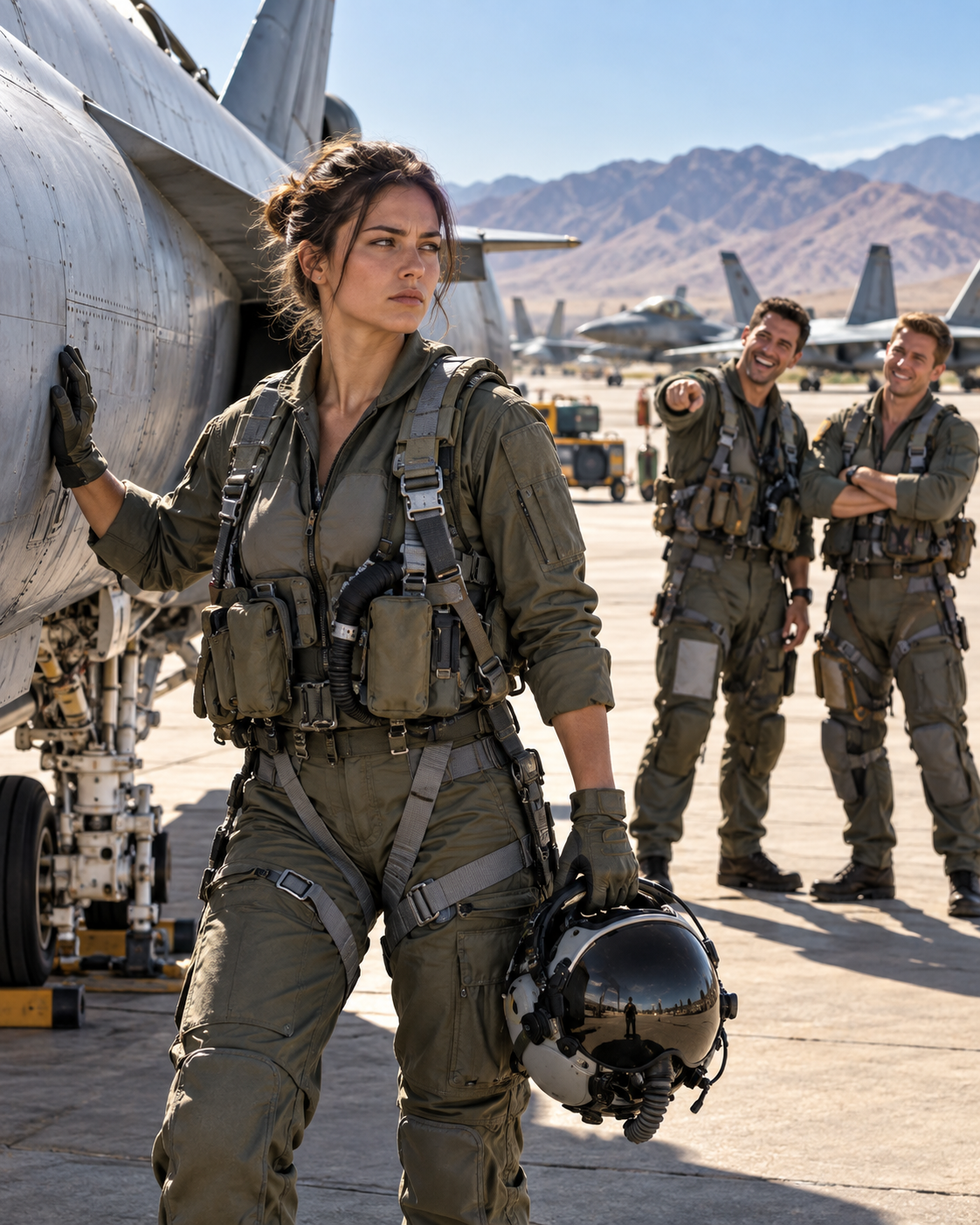
I just hadn’t known Nathan was one of the soldiers beneath me.
“You were Ironclad then?”
He nodded.
“Different name.”
I stared at him.
“That was you.”
“Yes.”
The realization hit harder than the landing.
Six years earlier, I had heard a voice on an emergency frequency telling a pilot that the men on the ground were running out of time.
I had stayed until the last helicopter cleared the valley.
One soldier had been left behind.
I had returned alone.
That soldier had been Nathan.
“You saved my life,” he said.
I looked away.
“I was doing my job.”
“No.”
His voice cracked.
“You gave us thirteen extra minutes.”
I didn’t know what to say.
Thirteen minutes.
Sometimes that was all the distance between a military report and a funeral.
That night, after the medical teams finished checking us, I sat alone in the hangar beside my aircraft.
Jesse found me there.
He carried two bottles of water and lowered himself onto a tire.
“You okay?”
“I think so.”
He looked at the A-10.
“She definitely isn’t.”
I laughed for the first time since landing.
“No.”
He nodded toward the wreckage.
“People used to tell me that aircraft was obsolete.”
“They still do.”
“After today?”
I shrugged.
“Tomorrow they’ll find something new to complain about.”
Jesse smiled.
Then he grew serious.
“Why did you go back?”
I stared at my hands.
Because the truth was harder to explain than the mission.
“I’ve seen what happens when everyone decides something is too dangerous.”
He waited.
“My brother died during a rescue operation when I was young.”
Jesse looked at me.
“I never told anyone that.”
I kept staring at the floor.
“He was a paramedic.”
“He went into a building everyone else had evacuated.”
“Why?”
“To get one more person out.”
I swallowed.
“When they brought him home, my mother kept saying he should have known better.”
Jesse was quiet.
“Maybe that’s why I hate hearing people say something is impossible.”
The next morning, the command review began.
Normally, an aircraft loss brought questions about tactics, maintenance, judgment, and risk.
This one brought all of them.
Colonel Harris sat at the head of the table.
Hayes sat across from me.
Several senior officers filled the room.
The air felt colder than it should have.
Colonel Harris looked at me.
“Walk us through the decision to remain on station after ammunition depletion.”
I told him.
No embellishment.
No heroic language.
I described the riverbed.
The enemy movement.
The evacuation window.
The aircraft limitations.
When I finished, he turned to Hayes.
“Captain.”
Hayes looked at his notes.
“I assessed the weather and terrain as outside the safe envelope for the F-35.”
“Understood.”
Colonel Harris looked back at me.
“Why did you believe your aircraft could do what his could not?”
I paused.
“I didn’t believe it could do everything.”
That caught his attention.
“I believed it could do one thing extremely well.”
“What?”
“Stay.”
Silence filled the room.
I expected someone to criticize the answer.
Instead, an older officer nodded slowly.
The formal investigation continued for weeks.
Every decision was reconstructed.
Every radio transmission examined.
Every piece of debris cataloged.
The damaged aircraft was moved into a maintenance hangar where technicians worked around the clock.
I visited it every evening.
I ran my hand along the torn fuselage.
There were scratches beneath the cockpit.
Old ones.
New ones.
Stories written in metal.
One night, the senior maintenance chief walked beside me.
“You want the ugly news?”
“I usually get that first.”
He smiled.
“The right wing won’t be repaired.”
I knew what he meant.
The aircraft would be retired.
“That Warthog has more combat hours than some pilots have flight hours.”
“She served well.”
“She did more than that.”
He looked at me.
“She gave you a runway to come home to.”
I touched the nose gear.
“Then that’s enough.”
But the war did not pause for paperwork.
Three days later, Nathan came to my quarters.
He had changed into clean clothes, but the exhaustion remained in his eyes.
“We have another problem.”
I stood.
“What?”
He handed me a tablet.
A grainy satellite image showed the ravine.
A new convoy was moving through the area.
“Same network?”
“Likely.”
“Why are you showing me?”
He looked at me.
“Because someone wants to know how we knew they were there.”
I frowned.
“What do you mean?”
Nathan expanded the image.
One vehicle was different.
It had no visible markings.
It was positioned behind the insurgent formation.
“We found evidence that the ambush was too coordinated.”
“You think they had inside information?”
“We know they did.”
The room went quiet.
The mission briefing had been classified.
Only a limited number of people knew the route.
Someone had leaked it.
The successful rescue had disrupted more than an attack.
It had exposed a network.
Nathan lowered the tablet.
“The brass is worried.”
“About the soldiers?”
“About who sent the ambush.”
The investigation shifted.
Suddenly, the question wasn’t only how we had survived.
It was why seventy-two highly trained operators had been deliberately funneled into a kill zone.
The next week, we were summoned to a secure facility.
There, a civilian intelligence analyst named Mara Ellis showed us financial records, satellite imagery, and intercepted communications.
She explained that the insurgent force had been receiving sophisticated equipment through a chain of intermediaries.
The weapons were not simply battlefield leftovers.
They had modern targeting systems.
Protected communications.
Advanced anti-aircraft capability.
Someone was funding them.
Someone with access.
Nathan leaned forward.
“Who?”
Mara didn’t answer directly.
“We’re still tracing the money.”
I looked at the screen.
One company appeared repeatedly.
A defense subcontractor based in the United States.
Its contracts included aviation maintenance and battlefield logistics.
My stomach tightened.
“Could they have compromised the mission?”
“They could have,” Mara said.
“Could they have targeted our aircraft?”
She met my eyes.
“That is one possibility.”
I thought about my damaged engine.
The exact point where it failed.
The perfect timing of the anti-aircraft attack.
The way the enemy had seemed to know precisely when we were vulnerable.
That night, I couldn’t sleep.
I walked outside.
The base was nearly silent.
Floodlights painted everything pale.
Far across the runway, the hangar doors were open.
My old A-10 was visible inside.
I walked toward it.
A technician was still working nearby.
He looked up.
“You should be sleeping.”
“So should you.”
He smiled.
I stood beneath the damaged wing.
“Can I ask you something?”
“Sure.”
“Could the engine failure have been caused before the mission?”
He wiped his hands.
“I can’t tell you without the teardown.”
“Then do it.”
He frowned.
“The board is already deciding whether the aircraft is combat damage or mechanical failure.”
“Do the teardown anyway.”
He looked at me for several seconds.
Then he nodded.
Two days later, he called.
“Come alone.”
I knew immediately it wasn’t good news.
Inside the engine bay, he pointed to a piece of twisted metal.
“This wasn’t caused by the anti-aircraft fire.”
My throat tightened.
“What caused it?”
“We found evidence of foreign material inside the intake system.”
I stared at him.
“From the base?”
“Possibly.”
“Can you prove it?”
“Not yet.”
He pointed again.
“There are tool marks.”
Cold moved through me.
Someone had tampered with the aircraft.
The thought was almost unbearable.
The enemy had fired on us.
But perhaps the enemy hadn’t been the only threat.
Nathan joined me after midnight.
We stood under the hangar lights while the evidence team photographed the engine.
“Someone tried to weaken the aircraft before launch.”
Nathan’s jaw tightened.
“Can they identify who?”
“Not yet.”
I looked down the row of aircraft.
“Then we need to know who had access.”
Over the next several days, investigators reviewed maintenance records.
One name kept appearing.
A civilian contractor assigned to our base.
He had recently transferred from another facility.
His access badge had been used at strange hours.
He always had an explanation.
None were impossible.
That was what made him dangerous.
They watched him for three days.
Then he vanished.
His vehicle was found abandoned outside the perimeter.
Inside was a duffel bag containing burner phones, access cards, and photographs of our flight schedules.
The base locked down.
For the first time, the people mocking old aircraft stopped laughing.
The sabotage investigation became a federal case.
The contractor was eventually captured several states away.
He refused to explain who had paid him.
But investigators traced enough transactions to expose a larger network.
The attack on Task Force Ironclad had not been random.
The goal had been to destroy the team before they discovered a weapons pipeline crossing several regions.
Someone had expected the canyon to become a graveyard.
Instead, seventy-two soldiers survived.
Because one battered aircraft stayed.
Months later, the official review was complete.
Hayes approached me outside the briefing room.
He looked uncomfortable.
“I owe you something.”
“What?”
“An apology.”
I said nothing.
He continued.
“I judged your aircraft because I judged what I could see.”
I smiled faintly.
“That’s how most people operate.”
“No.”
He shook his head.
“That isn’t good enough.”
He looked at me.
“I was wrong about the mission, too.”
I didn’t need to answer.
He removed his gloves.
“Can I ask you one thing?”
“Sure.”
“Why didn’t you eject?”
I thought about the question.
The canyon.
The voices on the radio.
The memory of my brother.
Nathan standing beneath the aircraft.
The thirteen extra minutes from years before.
“Because there were people below me who didn’t get to choose whether the day was dangerous.”
Hayes lowered his head.
“That makes sense.”
He walked away.
I watched him go.
I didn’t feel victorious.
That surprised me.
The whole thing had never really been about proving one aircraft better than another.
The F-35 had a role.
My A-10 had a role.
Every tool had strengths.
Every pilot had limits.
The real mistake was believing technology could replace judgment, courage, teamwork, or the willingness to accept responsibility when the situation became complicated.
That lesson followed me long after the investigation ended.
I was offered promotions.
Awards.
Public recognition.
I accepted some of it and refused most of the spectacle.
The thing I cared about was quieter.
Training.
I began teaching younger pilots and JTACs about judgment under pressure.
I taught them that the best plan on paper could become the wrong plan the moment reality changed.
I taught them to respect technology without worshiping it.
I taught them to listen to the person on the ground.
And I told them something my grandfather had once told my father.
“A machine can carry you a long way.”
“But character decides what you do when it fails.”
Years passed.
Nathan and I remained close.
He eventually transferred units, but whenever we crossed paths, he found me.
Sometimes we talked about missions.
Sometimes we didn’t.
The canyon became something we both carried without needing to name.
One evening, long after the official reports were archived, Nathan called me.
“Got something for you.”
“What?”
“A package.”
The next day, he handed me a small metal case.
Inside was a patch from the first operation where I had unknowingly saved his life.
He had kept it for six years.
“I thought you should have it.”
I turned it over.
Written on the back was a single sentence.
“Thirteen minutes changed everything.”
I looked up at him.
“You kept count.”
“I never forgot.”
Neither did I.
That night, I returned to the hangar.
The old A-10 was gone.
Retired.
Its place on the ramp was empty.
For a strange moment, I felt the same ache I had felt when losing people.
But then I realized something.
Aircraft didn’t need to live forever to matter.
People didn’t either.
What mattered was what they carried forward.
The courage.
The lessons.
The names.
The memory of someone staying when leaving would have been easier.
I stood there beneath the silent lights and heard footsteps behind me.
It was Jesse.
He held a set of keys.
“Command wants you tomorrow morning.”
“For what?”
He smiled.
“You’ll find out.”
The next day, I walked into a briefing room and saw senior officers, engineers, medics, and pilots waiting.
A large screen displayed the image of my battered A-10 over the canyon.
I frowned.
“What is this?”
The commanding officer smiled.
“We’re building a new training program.”
“For what?”
“Decision-making in degraded environments.”
He pointed at the photograph.
“You’re teaching the first course.”
I laughed.
“You want me to teach people about a thirty-year-old airplane?”
“No.”
He tapped the screen.
“We want you to teach them what happened when everything modern failed at once.”
I looked around the room.
Suddenly, I understood.
The story wasn’t really about the Warthog.
It wasn’t about the F-35.
It wasn’t even about me.
It was about the dangerous moment when someone decides that another person’s life is too risky to save.
The course became one of the most demanding programs on the base.
Young pilots came through the doors believing speed solved everything.
They left understanding that judgment had a different kind of speed.
The ability to notice.
The courage to question.
The discipline to stay calm when the plan collapsed.
Years later, I was invited back to the same runway where I had landed on one wheel and bare metal.
The concrete had been repaired.
The scorch marks were gone.
But I knew exactly where the sparks had dragged across the ground.
Nathan stood beside me.
“You ever think about what would have happened if that aircraft had failed five minutes earlier?”
“Yes.”
“What do you think?”
I looked toward the mountains.
“I think somebody else would have had to try.”
Nathan shook his head.
“No.”
I turned.
“You don’t know that.”
He smiled sadly.
“I know this.”
He pointed toward the dozens of young service members moving across the ramp.
“Now there are hundreds of people who know what it means to stay.”
I looked at them.
That was the part no medal could explain.
One decision becomes a story.
A story becomes a lesson.
A lesson becomes a habit.
And eventually, a habit becomes someone else’s chance to come home.
The sun dropped behind the hangars.
The runway turned gold.
I remembered the voices from the canyon.
The fear.
The static.
The certainty that I had one job left.
Stay.
My A-10 had been called a relic.
A tractor.
A museum piece.
But when everything beautiful and expensive had to turn away, that battered machine had given us something far more valuable than speed.
It had given us time.
And time had given seventy-two people a future.
I still carry the scar across my shoulder from that day.
Sometimes, when the weather changes, it aches.
I don’t resent it anymore.
Pain can be a cruel teacher.
But it can also be a witness.
It reminds me that survival is never as simple as walking away.
Sometimes survival means carrying the memory of everyone who couldn’t.
Sometimes courage isn’t charging forward.
Sometimes it’s staying exactly where you’re needed, even after the world tells you you’re foolish for remaining there.
As Nathan and I turned toward the hangar, my phone vibrated.
A new message had arrived from an unknown number.
The photograph attached to it showed the canyon from above.
The timestamp was from that afternoon.
But beneath the image was a sentence that neither of us had expected.
“We know who sabotaged your aircraft.”
Nathan read it twice.
Then he looked at me.
I stared at the mountains.
For the first time in years, I didn’t feel afraid of what the past still had waiting.
I only felt ready.
Because I had finally learned that the hardest missions don’t end when the engines stop.
Sometimes, that’s when the real mission begins.