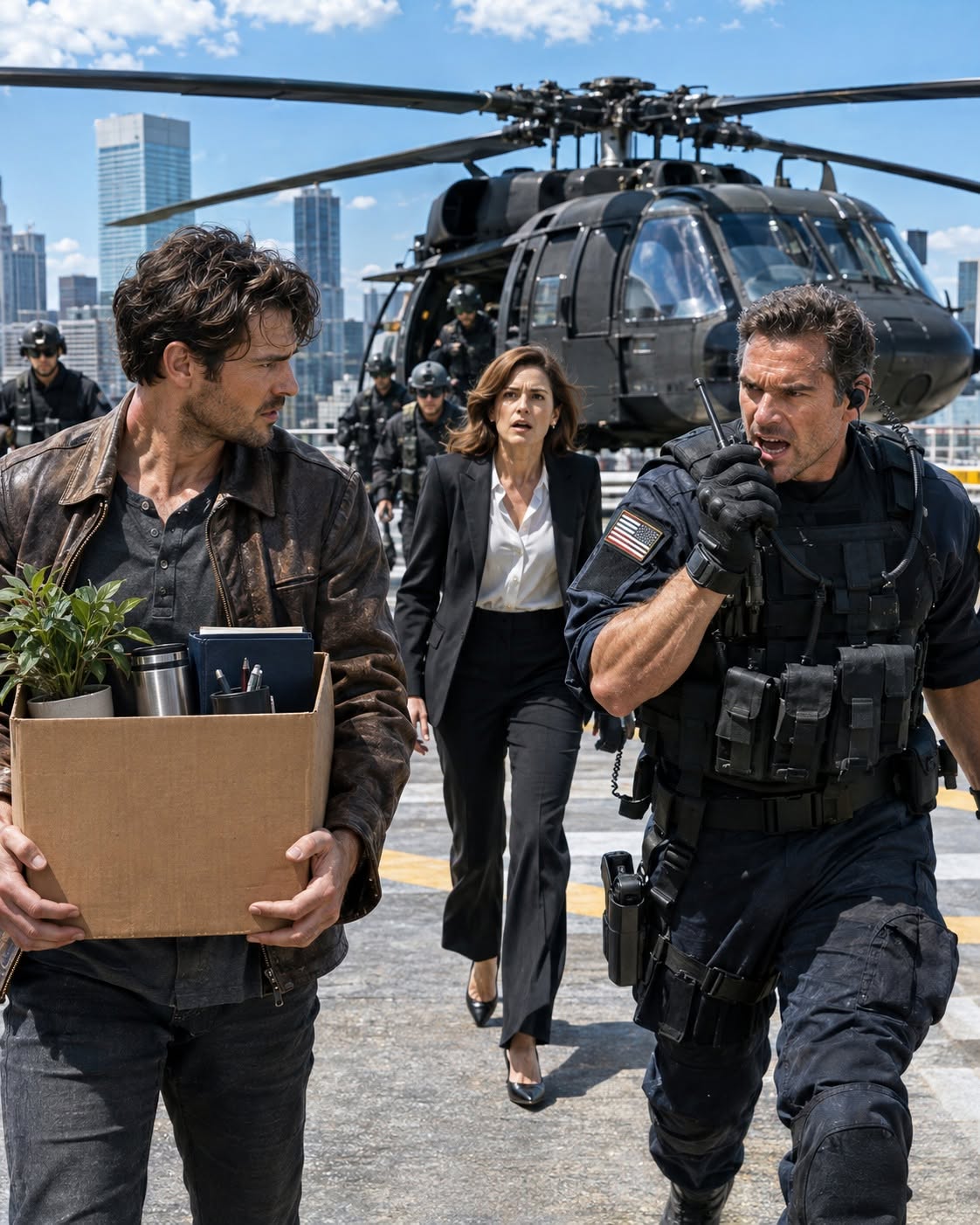
I was fired after 12 years at Apex Horizon Logistics because of one misplaced digit. But before I could even get home
I stared at the handwritten name on the reconciliation log.
For several seconds, I couldn’t breathe.
It was Daniel Cross.
The former director of network operations.
The man who had personally approved my promotion twelve years earlier.
The man who had stood beside me after the valley evacuation accident and promised that the company would never abandon me.
And the man who had testified during the internal investigation that the routing failure was my responsibility.
“That’s impossible,” I whispered.
Evelyn Hayes pulled out a chair and sat beside me.
“Look at the timestamp.”
I leaned closer.
The handwritten alteration had been entered at 2:17 a.m., nearly forty minutes before the convoy entered the restricted road.
The status had originally been marked UNSAFE.
Someone had crossed it out and replaced it with APPROVED.
Beneath the alteration was Daniel’s authorization code.
I felt something cold settle in my chest.
“Daniel told the investigators he was asleep at home that night.”
“According to his statement, yes,” Evelyn replied. “But the access log shows his credentials were used from the operations center.”
Maya Lin opened another window.
“There’s more. The digital version of this log was modified three days after the accident. The handwritten original was never supposed to survive the archive migration.”
I looked at her.
“Why are you showing me this now?”
She hesitated.
“Because someone tried to destroy it last week.”
Before I could ask another question, the emergency alarm sounded throughout the operations room.
A red warning appeared across the main display.
NORTH TRANSFER YARD — EVACUATION CORRIDOR FAILURE.
Liam’s voice crackled through the radio.
“Nomad, we’ve got another problem. One of the rescue teams is approaching the old East Ridge crossing. The system says it’s clear, but the bridge inspection expired six months ago.”
I pushed my chair back.
“Tell them to stop immediately. Nobody crosses that bridge.”
“Already trying. Their communication signal is dropping.”
I turned toward the control panel.
The software migration had done more than corrupt the safety approvals. It had also disconnected several sections of the fallback relay network.
The exact system I had designed twelve years earlier was now being used against the very purpose it had been built to serve.
“Meredith,” I said, “I need complete access to the original network. Not the new dashboard. The physical relay controls.”
The CEO looked at Clara.
“Give him the authorization.”
Clara folded her arms.
“He’s no longer an employee. This is a serious liability.”
Meredith’s expression hardened.
“Then I’ll accept the liability.”
She turned to me.
“Do whatever you need to do.”
I opened the archived network diagram.
The old relay system had been designed with three independent communication paths. Even if the central software failed, local operators could still receive verified route information through physical backup stations.
But someone had disabled two of those paths.
I traced the interference to a server cluster in the company’s western data center.
“Someone didn’t just make a mistake during migration,” I said. “They deliberately disabled the safety checks.”
Maya leaned over my shoulder.
“Can you prove that?”
“I can. But first, I need to get those rescue teams out.”
I pulled up the original route map and began identifying the last verified safe corridors.
There was a problem.
The chemical leak had spread farther than the initial reports suggested. Wind conditions were pushing vapor toward the northern access road, while the eastern route was blocked by an overturned tanker.
The only viable evacuation corridor was an old maintenance road running behind the industrial rail yard.
It wasn’t listed in the current system.
But I remembered it.
Twelve years earlier, I had included that road as an emergency contingency. It was narrow, poorly maintained, and unsuitable for ordinary freight traffic.
However, it had been inspected and reinforced after the valley accident.
I found the archived inspection certificate.
“There’s our way out.”
Evelyn examined the map.
“That road passes near an old chemical storage facility.”
“Yes. But it has a separate drainage barrier and a higher elevation than the surrounding yard. It’s the safest available option, provided the latest field inspection confirms the surface is clear.”
Liam came back over the radio.
“Nomad, I need coordinates.”
I gave him the location and instructed him to have the county ground team verify the road before anyone entered it.
For the next twenty minutes, the operations room became a storm of activity.
Liam coordinated the rescue aircraft.
Evelyn worked with county emergency personnel.
Maya monitored the corrupted routing database.
Meredith contacted the regional emergency command center.
And I worked through the old relay network, restoring the independent safety checks one section at a time.
Then the first good news arrived.
“Nomad, this is Brooks. We’ve got the maintenance road confirmed. Ground crews are moving.”
I closed my eyes briefly.
“How many people?”
“Forty-three workers accounted for. Twelve more at the loading terminal.”
“Don’t rush the final group. Keep them away from the northern access road.”
A few seconds later, Liam replied.
“Understood.”
Then the radio went silent.
I stared at the communication panel.
“Brooks?”
Nothing.
“Liam, respond.”
Still nothing.
Evelyn approached.
“We’re losing signal coverage in that sector.”
I knew what that meant.
If the relay network failed completely, Liam’s aircraft might lose contact with the ground team at the worst possible moment.
I switched to the manual emergency frequency.
“County rescue aircraft, this is Nomad. Do you copy?”
Static.
Then a faint voice.
“Nomad… we have visual contact with the last group.”
I leaned forward.
“Do not approach the terminal from the east. The wind has shifted.”
“We’re seeing the vapor plume moving south.”
My stomach tightened.
The maintenance road was south.
I checked the weather feed.
A sudden change in wind direction had altered the evacuation window.
“Brooks, stop the convoy at the reinforced service gate. Do not continue until county safety confirms the air readings.”
“Copy.”
I looked at Evelyn.
“We need another route.”
She studied the map.
“There’s a rail service tunnel beneath the western embankment.”
“Too dangerous without a current structural inspection.”
“Then what?”
I examined the old network diagram again.
A tiny symbol caught my attention.
A secondary access gate.
It had been installed after the valley accident, when I had insisted that every major transfer yard needed an evacuation route that didn’t depend on the primary road system.
The gate connected to a paved county access lane.
But it had been removed from the digital maps during the recent migration.
“That’s it.”
Maya found the old maintenance records.
“The gate is still there. It was inspected last month.”
I transmitted the revised route to Liam.
This time, the signal came back immediately.
“Nomad, we have the gate. Ground team is moving.”
Minutes passed.
Then the county command center confirmed that the final workers had reached a safe staging area.
No fatalities.
Several people had been treated for respiratory exposure, but all had been accounted for.
I leaned back in my chair.
For the first time since the morning, I allowed myself to breathe.
Meredith approached me.
“You saved them.”
I shook my head.
“The rescue teams saved them. I just remembered something the system had forgotten.”
She looked at the display.
“That’s not a small thing.”
Before I could answer, Maya spoke from the opposite workstation.
“There’s something else.”
She had opened the server access records.
“The same administrator account that disabled the fallback relays also accessed your personnel file yesterday.”
I turned toward her.
“Which account?”
Maya enlarged the screen.
“Daniel Cross.”
The room became silent.
Clara suddenly stood.
“This is getting ridiculous. Daniel hasn’t worked here for months.”
Evelyn looked up.
“That’s interesting. His credentials are still active.”
Meredith’s expression changed.
“Daniel resigned six months ago. His access should have been terminated.”
Maya nodded.
“Exactly.”
She opened another record.
The system showed that Daniel’s credentials had been used repeatedly over the previous month, including the morning of my termination.
Then she displayed a second name.
Clara Vance.
I looked at her.
Clara’s face went pale.
“Those records don’t prove anything,” she said quickly. “HR systems are connected to administrative accounts. My name could appear because I approved the personnel review.”
Maya shook her head.
“Your credentials were used to access the archived project designation. Specifically, the handwritten-to-digital reconciliation process.”
Clara stepped toward the screen.
“Turn that off.”
Meredith didn’t move.
“Why?”
“Because these records are confidential.”
Evelyn slowly closed the folder in front of her.
“Not when they may be evidence in a public safety investigation.”
Clara looked at Meredith.
For the first time, she seemed unable to find the right words.
I returned my attention to the old reconciliation log.
There was another detail I hadn’t noticed.
Beside Daniel’s authorization code was a small handwritten note.
Approved under executive exception — D.C.
I looked at Meredith.
“Who was CEO twelve years ago?”
“Arthur Bell.”
“Was he involved in the original accident investigation?”
Meredith nodded.
“He chaired the emergency review committee. He retired four years ago.”
Evelyn turned another page.
“Then we need to speak with him.”
Arthur Bell lived in a large house overlooking the river, several miles from the city.
By late afternoon, Evelyn had secured the necessary authorization to question him about the archived records.
I went with her, along with Maya.
Meredith stayed at headquarters to coordinate the emergency response and preserve the company’s systems.
We found Arthur sitting in his study.
He was older than I remembered, with silver hair and a walking cane resting beside his chair.
When he saw me, his expression changed.
“Nomad.”
He hadn’t called me by my real name in years.
“Mr. Bell.”
He looked at Evelyn.
“What’s happened?”
She placed the reconciliation log on his desk.
“We’re reopening the investigation into the valley evacuation accident.”
Arthur didn’t touch the document.
Instead, he looked at me.
“I thought that matter was settled.”
“It was settled because everyone accepted Daniel Cross’s version of events,” I replied.
Arthur looked away.
Evelyn opened her folder.
“The original records show that the unsafe crossing was manually approved before the convoy entered it. The authorization is linked to Daniel’s credentials and an executive exception.”
For a long moment, Arthur said nothing.
Then he slowly lowered himself into his chair.
“I wondered when someone would find that.”
My heart began pounding.
“You knew?”
Arthur closed his eyes.
“I knew there had been an unauthorized change. I didn’t know exactly who had made it until much later.”
“Then why did you let me take the blame?”
His face tightened.
“Because the company was already in trouble. The accident had damaged our largest contracts. Investors were threatening to withdraw. We had a government review coming, and Daniel convinced me that admitting the truth would destroy the entire operation.”
I stared at him.
“So you let everyone believe I had approved an unsafe route.”
“You were the project architect. Your name was already on the system.”
“But I had designed the safety restrictions specifically to prevent that road from being used.”
Arthur looked down at his hands.
“I know.”
The words struck harder than I expected.
For twelve years, I had carried the weight of an accident I had spent my life trying to prevent.
I had replayed every decision, every warning, every conversation.
I had questioned whether I had missed something.
And now the former CEO was telling me he had known.
“Why?” I asked.
Arthur took a long breath.
“Daniel had been under pressure to meet delivery deadlines. A major client was threatening penalties because the northern corridor was delayed. He authorized the crossing to keep the shipment moving. When the convoy crashed, he altered the records. I approved the cover-up because I believed we could contain the damage.”
“And Clara?”
Arthur looked surprised.
“Clara wasn’t involved back then. She joined years later.”
Evelyn exchanged a glance with Maya.
“Then why would she be accessing the old records now?”
Arthur hesitated.
“Because Daniel has been trying to sell the company a new logistics platform. He wanted to remove the old emergency architecture entirely. He said the legacy system was too expensive to maintain.”
I leaned forward.
“What does that have to do with my termination?”
Arthur looked directly at me.
“Your old project was the only thing standing in his way. The company had an independent safety certification tied to your original design. If the designation was shown to be invalid, they could abandon the system without triggering a full review.”
Everything began falling into place.
NMD 17.
NMD 71.
A single transposed digit.
My termination hadn’t been a clerical accident.
It had been a calculated attempt to discredit the original project and remove the person who could challenge the new system.
But there was still one missing piece.
“Why would Daniel do this now?”
Arthur looked at Evelyn.
“Because he’s bidding to acquire the company.”
The next morning, Meredith called an emergency board meeting.
I wasn’t invited as an employee.
I wasn’t even officially a consultant.
I was there as a witness in a public safety investigation.
That distinction mattered.
When I entered the boardroom, Daniel Cross was already seated beside several directors.
He looked exactly as I remembered him.
Perfect suit.
Expensive watch.
Calm expression.
He smiled when he saw me.
“Well, this is unexpected.”
Meredith stood at the head of the table.
“Daniel, we need to discuss your access credentials and your involvement in the transfer yard incident.”
Daniel leaned back.
“I left this company six months ago. I have no operational responsibilities.”
Maya placed a printed access report on the table.
“Your administrator credentials were used to disable the independent relay network.”
“Those credentials could have been copied.”
“Then perhaps you can explain why they were also used to access the original NMD project archive.”
Daniel glanced at Clara.
She stared at the table.
I took a seat.
Daniel finally looked at me.
“Still carrying old grudges, Nomad?”
“No,” I replied. “I’m carrying the records you thought nobody would find.”
His smile disappeared.
Evelyn stepped forward.
“We also recovered the original reconciliation log from the valley accident. It indicates that an unsafe crossing was manually approved under your credentials.”
Daniel laughed softly.
“That document is twelve years old. Its authenticity is questionable.”
“Then you’ll welcome a forensic examination,” Evelyn replied.
He looked toward the directors.
“This is becoming a circus. We’re dealing with a software migration, not a criminal conspiracy.”
Meredith opened a folder.
“Then let’s discuss the migration.”
She displayed the software change history.
The new platform had been configured to inherit old safety approvals automatically. The independent verification layer had been disabled shortly before the migration.
The change had been approved through an administrator account.
Daniel’s account.
“Your proposed acquisition platform was supposed to replace the entire emergency architecture,” Meredith said. “And you knew the system was using outdated approvals.”
Daniel’s jaw tightened.
“The company needed modernization.”
“Modernization doesn’t mean removing safety controls.”
He turned toward me.
“You’ve always been obsessed with your old system. Technology moves forward. Your architecture was outdated.”
I met his eyes.
“Then why did your new system depend on its safety records?”
For the first time, Daniel had no immediate answer.
Maya placed another document on the table.
It was a chain of emails recovered from a company backup server.
The messages showed Daniel discussing the NMD designation discrepancy with Clara.
One line stood out.
Once the original project architect is removed, the legacy approval can be challenged without an independent review.
Clara covered her mouth.
Meredith looked at her.
“Did you know what you were participating in?”
Clara shook her head.
“I was told the designation discrepancy was genuine. Daniel said the project had been incorrectly registered and that the termination was necessary for compliance.”
Daniel turned sharply.
“Don’t.”
But Clara continued.
“He said the audit would be easier if we acted before the board meeting. He promised that my position would be protected.”
Evelyn asked, “And did he instruct you to access the archived personnel file?”
Clara nodded.
“He told me to replace the original designation with the corrected digital entry. I thought I was fixing a record.”
I watched her carefully.
“You never checked the handwritten archive?”
“No.”
“Even when I told you it existed?”
She lowered her eyes.
“No.”
Her answer was quieter than the others.
For a moment, I felt anger rising inside me.
Then I remembered the people standing outside the transfer yard, waiting for a route that might lead them to safety.
I had spent twelve years believing one mistake could destroy a career.
Now I understood that the real danger wasn’t a misplaced digit.
It was the decision to stop asking questions.
Daniel pushed his chair back.
“This meeting is over.”
Evelyn stood.
“Not for you.”
Two investigators entered the room.
Daniel looked around as if he expected someone to intervene.
No one did.
His face changed when Evelyn informed him that the evidence would be referred for further investigation into records tampering, unauthorized system access, and the falsification of safety approvals.
He was escorted out.
Clara remained seated.
The board did not immediately dismiss her. Instead, her access was suspended pending an independent review of her role.
Meredith looked at me.
“I owe you an apology.”
I said nothing.
She continued.
“We failed you. We allowed a flawed process to destroy twelve years of service, and we nearly allowed the same failure to put dozens of lives at risk.”
I looked at the empty chair Daniel had left behind.
“An apology is a beginning. It isn’t a correction.”
Meredith nodded.
“Then tell me what correction looks like.”
I thought about it.
“First, preserve every original record. Second, independent safety investigators must have access to the systems without asking company executives for permission. Third, no one should be dismissed or disciplined over a technical discrepancy without a documented review.”
She wrote each point down.
“And fourth?”
I looked toward Maya.
“Give the people who actually understand the system a seat at the table before something goes wrong.”
Meredith closed her notebook.
“Agreed.”
Three weeks later, the investigation produced its first major findings.
The valley evacuation accident had not been caused by my routing design.
The unsafe crossing had been deliberately approved by Daniel Cross, and the subsequent records had been altered to conceal his decision.
Arthur Bell’s role in suppressing the original evidence was also formally documented.
The company issued a public correction.
My name was cleared.
The statement was short, but one sentence mattered more than all the others.
Apex Horizon Logistics acknowledges that its previous findings regarding the NMD 17 project architect were inaccurate and that the employee was wrongly held responsible for decisions made without his authorization.
I read it twice.
Then I folded the printed copy and put it in my desk drawer.
I didn’t celebrate.
There was no celebration big enough to return twelve years of peace.
But there was something I hadn’t expected.
Relief.
For the first time since the accident, I could think about that night without wondering whether I had failed everyone.
The board offered me my old position back.
They also offered a substantial compensation package and a new title: Director of Emergency Systems.
I declined the position.
Meredith called me personally.
“May I ask why?”
“Because I don’t want to return to the same structure that allowed this to happen.”
She was silent for a moment.
“Then what would you accept?”
I had already been thinking about that question.
“I’ll help rebuild the safety network, but it needs to operate independently. The county should have oversight. The engineers should be able to report problems without fear of retaliation. And no executive should be able to override an emergency safety restriction alone.”
Meredith listened carefully.
“We can establish an independent safety division.”
“Not just a division. A separate oversight board with authority to stop operations when the evidence demands it.”
She took a breath.
“That will be difficult.”
“Keeping people safe usually is.”
A week later, the board approved the proposal.
I accepted a six-month contract as an independent systems adviser.
Not as an employee.
Not as a subordinate.
And certainly not as someone who owed the company his loyalty at any cost.
The first meeting of the new safety oversight board took place on a rainy Tuesday morning.
Liam Brooks attended on behalf of the county rescue service.
Evelyn Hayes represented public safety.
Maya Lin became the independent audit director.
Meredith sat at the far end of the table.
There was one empty chair beside me.
It had been reserved for the next employee who wanted to raise a concern.
I asked why nobody had filled it.
Maya smiled.
“People are still getting used to the idea that they can speak freely.”
“Then keep it empty until someone needs it.”
As the meeting ended, Liam approached me.
“You know, when I landed on that rooftop, I thought I’d find you furious.”
“I was.”
“Didn’t look like it.”
“I’ve had twelve years to practice.”
He laughed.
Then his expression softened.
“Seriously, Nomad. What you did saved lives.”
I glanced at the map displayed on the wall.
The new system showed every emergency corridor with its last inspection date, verification source, and approval history.
No automatic inheritance.
No hidden overrides.
No single administrator with unchecked authority.
“That wasn’t just me,” I said.
Liam nodded.
“Maybe not. But someone had to remember why the system was built.”
Six months later, I received a letter from a young logistics engineer named Hannah.
She had joined Apex Horizon only two months earlier.
Her message was brief.
She had discovered a discrepancy in a regional evacuation map. A senior supervisor had told her to ignore it because the software showed the route as approved.
She had remembered the training session about the valley accident.
And instead of staying quiet, she had filed an independent safety report.
The route was investigated.
Her concern turned out to be valid.
A damaged overpass had been incorrectly marked as suitable for emergency traffic.
The issue was corrected before an evacuation ever became necessary.
At the bottom of her letter, she wrote:
“I was afraid reporting it would cost me my job. But after hearing what happened to you, I decided that staying silent would cost more.”
I read that sentence several times.
Then I called Maya.
“Do we still have that empty chair?”
“Yes.”
“Tell Hannah it’s hers at the next meeting.”
A year after the day I was fired, I returned to the Apex Horizon headquarters.
The lobby looked almost exactly the same.
The polished floors.
The glass walls.
The security desk.
The elevators that carried executives to offices where decisions could change hundreds of lives.
But something was different.
Beside the reception desk stood a new display.
It contained the company’s emergency safety principles.
At the bottom was a small plaque.
Project NMD 17 — Built to keep people moving. Designed to bring everyone home.
I stood there for a while.
A security officer approached.
“Are you here for a meeting?”
I smiled.
“Something like that.”
He checked the visitor list and looked up.
“You’re the Nomad, aren’t you?”
I nodded.
He shook my hand.
“Glad you’re back.”
For a moment, I couldn’t think of anything to say.
Then I walked toward the elevators.
Meredith was waiting upstairs.
She had changed, too.
The board had replaced several old policies, opened the company to independent safety audits, and established protections for employees who reported dangerous practices.
The company was still profitable.
It was still ambitious.
But now it had learned that efficiency without accountability was simply another kind of risk.
We stood together beside the operations room window.
Below us, trucks moved through the loading yard in carefully organized lines.
“Do you ever regret not taking the director position?” she asked.
“Sometimes.”
She looked surprised.
I smiled.
“But then I remember why I left.”
She nodded.
“Do you think you’ll ever forgive us?”
I watched a rescue vehicle pass through the gate.
“Forgiveness isn’t a contract, Meredith. You don’t earn it by offering someone a title or writing a statement. You earn it by making sure the next person doesn’t have to go through the same thing.”
She didn’t argue.
And I respected her for that.
Before leaving, I stopped by the old conference room.
The same table was still there.
The same glass walls.
Even the same chairs.
I remembered Clara sliding the termination notice across the table.
I remembered holding a cardboard box in the lobby while people watched.
I remembered thinking that twelve years of dedication had been reduced to two incorrect digits.
For a long time, I believed my story was about being fired for a mistake I hadn’t made.
But that wasn’t the whole story.
It was about what happened when people in power cared more about protecting their reputations than protecting the truth.
It was about how one ignored warning could become an accident, how one altered record could become a tragedy, and how one frightened employee could be pushed into silence.
Most importantly, it was about the people who refused to stay silent.
I had once believed that being loyal meant standing by a company no matter what.
Now I understood something different.
Loyalty should never mean protecting wrongdoing.
And experience should never be measured only by how long someone has stayed in a building.
Sometimes the person who knows where the danger is hiding is the very person everyone else has stopped listening to.
As I stepped into the elevator, my phone vibrated.
A message from Liam.
Got a new emergency network project for you. Interested, Nomad?
I looked at the message and smiled.
For twelve years, Apex Horizon had called me Nomad because I could find a way through almost any obstacle.
But I finally understood that the name meant something else.
I wasn’t tied to one office, one title, or one company.
I belonged wherever my knowledge could help people get home safely.
I typed my reply.
Send me the plans. But this time, we’re building a system where nobody has to be a hero to make it work.
Then I stepped out into the afternoon sunlight.
Behind me, the company continued moving.
Ahead of me, there was another road to build.
And for the first time in twelve years, I was choosing the direction myself.