I knew something was wrong with that airplane before we ever left the gate. But when I tried to warn the captain, he laughed at me in front of the crew. He had no idea who was sitting beside him.
I looked at Arthur, then at the engine temperature climbing steadily toward the red.
“Prepare for both,” I said.
He blinked.
“What?”
“We keep the runway as our preferred option, but we prepare the cabin for ditching right now. If this engine quits, I don’t want anyone wasting a second wondering what comes next.”
Arthur nodded and reached for the radio.
Outside, lightning illuminated the clouds in a blinding white flash.
The aircraft shuddered.
A warning tone sounded again.
I glanced at the engine display.
The temperature was still rising.
“Daniel,” Arthur said quietly, “we may not make it.”
I tightened my grip on the controls.
“Then we’re going to give ourselves every possible chance.”
I contacted Anchorage Center and explained our situation.
The controller’s voice was remarkably calm.
“Flight 417, emergency services are standing by at Cold Bay. Confirm souls on board.”
“Two hundred twenty-three total. Fuel remaining approximately twenty-six minutes at current indications. One engine operating with abnormal temperature. Second engine inoperative.”
There was a brief pause.
“Flight 417, understood. You have priority. Advise if you require a water landing.”
I looked at the navigation display.
Cold Bay was still painfully far away.
The airport sat near the edge of the Alaska Peninsula, surrounded by unforgiving terrain and cold water.
We had enough altitude to keep trying.
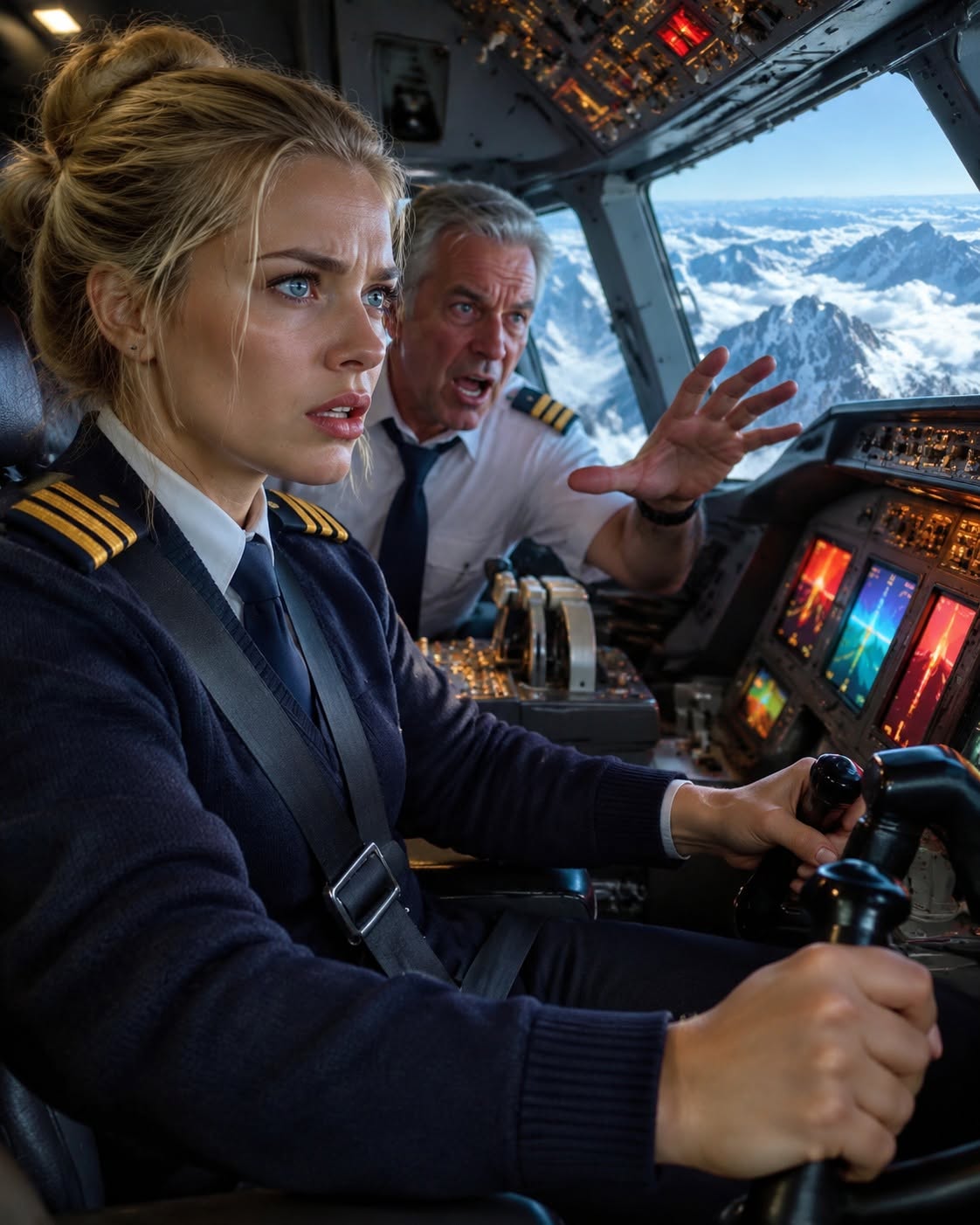
But not enough to waste.
Arthur studied the engine indications.
“Temperature’s stabilizing.”
I glanced over.
He was right.
For several seconds, the number stopped climbing.
Then it dropped slightly.
I exhaled.
“Good. Keep monitoring it.”
He looked toward me.
“Should we increase power?”
“Not unless we need it. We don’t know how much this engine can tolerate.”
Arthur nodded.
The man who had laughed at my concerns before departure was gone.
In his place sat someone frightened, exhausted, and finally willing to listen.
I wasn’t angry with him anymore.
There would be time for questions later.
Right now, I needed a captain who could help me keep the airplane flying.
“Arthur, I need you with me.”
He looked up.
“I am.”
“Then focus on the next task. Not what happened before.”
His jaw tightened.
“Understood.”
I keyed the intercom.
“Evelyn, this is Daniel. We’re attempting to reach an airport, but I need you to prepare the cabin for a possible emergency landing on water. Use the procedures. Keep everyone seated and secured.”
Her reply came immediately.
“Understood. We’re preparing now.”
I heard the steadiness in her voice.
It helped more than she could have known.
Behind the cockpit door, 221 passengers and cabin crew members were depending on us.
And Evelyn was about to face a nightmare of her own.
Later, she told me what happened in the cabin during those minutes.
The lights had dimmed when the engines failed.
Several passengers were crying.
A little girl named Sophie had asked her mother whether airplanes could swim.
An elderly man had begun praying quietly.
And a teenage boy near the back was trying to hide the fact that his hands were shaking.
Evelyn moved through the aisle with her crew, checking seat belts, explaining brace positions, and making sure passengers understood where their life jackets were located.
She didn’t promise everything would be fine.
She didn’t tell them there was nothing to fear.
Instead, she looked people in the eyes and gave them something more useful.
Clear instructions.
One step at a time.
A young businessman grabbed her wrist as she passed.
“Are we going to die?”
Evelyn stopped.
She looked at him.
“I don’t know what’s going to happen,” she said. “But I know what you can do right now. Keep your seat belt fastened, listen carefully, and help the person beside you stay calm.”
He released her wrist.
Then he turned toward the elderly woman sitting next to him.
She was struggling to tighten her seat belt.
He helped her.
That small act changed something.
A few rows away, another passenger began helping a frightened child.
People who had boarded as strangers started looking after one another.
And while I fought to keep the aircraft in the sky, Evelyn was doing something equally important.
She was keeping fear from turning into chaos.
Back in the cockpit, Arthur suddenly leaned forward.
“Daniel, look at the fuel balance.”
I glanced at the display.
The difference between the tanks had increased.
My stomach tightened.
That was the imbalance I’d noticed before departure.
The one I’d asked maintenance to investigate.
The one Arthur had dismissed.
Now, with one engine damaged and the other struggling, the readings looked far more serious.
“That’s not normal,” Arthur whispered.
“No.”
He swallowed.
“You saw it before we left.”
I didn’t answer.
“Daniel…”
“Not now.”
He nodded.
I reviewed the indications with him and asked him to cross-check them against the applicable emergency procedures.
The numbers suggested a fuel-system problem, but we couldn’t determine its exact cause from the cockpit.
We had to manage the aircraft we had, not the aircraft we wished we had.
Then the radio crackled.
“Flight 417, Cold Bay reports visibility improving slightly. Winds remain strong and gusty. Runway is available.”
I looked at the distance remaining.
We were closer.
But our altitude was dropping faster than I liked.
Arthur noticed it too.
“Can we make it?”
I studied the instruments.
“If the engine holds and the conditions don’t get worse, we have a chance.”
“And if it doesn’t?”
I looked toward the black water beneath us.
“Then we use the best remaining option.”
He went quiet.
A minute later, another warning appeared.
Engine vibration.
I felt it before I saw it.
A faint trembling through the controls.
Then a stronger shudder.
Arthur stared at the display.
“That’s getting worse.”
I adjusted our plan to preserve the aircraft’s remaining performance while staying within the emergency procedures.
The vibration continued.
I could almost feel the airplane asking us to stop.
But there was nowhere to stop.
Not yet.
I looked at the clock.
We had been dealing with the emergency for less than twenty minutes.
It felt like an entire lifetime.
Then I heard a sound I hadn’t heard in years.
Julian’s voice.
Not through the radio.
Not from anywhere outside the aircraft.
Just a memory, sudden and clear.
“Don’t fight the airplane, Danny. Listen to what it’s telling you.”
Julian used to say that during training.
He’d been the calm one.
The pilot who could find humor in the middle of a difficult mission.
The friend who always seemed to know when I was pushing too hard.
I remembered the last time we’d flown together.
A clear morning.
A routine training exercise.
Nothing that should have ended in tragedy.
But a mechanical failure had turned that ordinary day into the worst day of my life.
I’d spent years wondering whether I could have done something differently.
Whether I’d missed a warning.
Whether I’d failed him.
Now I was sitting in another damaged aircraft, hearing alarms, watching numbers change, and feeling the same helplessness creeping into my chest.
I touched the dented coin through my jacket.
Then I forced myself back into the present.
Julian was gone.
But 223 people were still here.
And they needed me to make decisions based on what was happening now.
“Arthur, give me the latest runway information.”
He read it aloud.
The wind was shifting.
Visibility was poor but improving.
Emergency vehicles were waiting.
The approach would be difficult.
But it remained possible.
Then the controller called again.
“Flight 417, be advised, rescue vessels are being positioned along the coastal approach corridor as a precaution.”
I felt a small surge of gratitude.
People were preparing for us.
On the ground.
On the water.
In the tower.
We weren’t alone.
The aircraft descended through another layer of cloud.
For a moment, I could see the ocean.
Black waves.
White foam.
Nothing but cold water stretching toward the horizon.
Then the clouds swallowed everything again.
Arthur looked at me.
“Daniel, I need to tell you something.”
I kept my eyes on the instruments.
“Go ahead.”
“I’ve been flying for thirty-one years.”
“I know.”
“I’ve always believed experience meant knowing when someone else was wrong.”
He swallowed.
“But somewhere along the way, I stopped listening.”
I didn’t answer.
He continued.
“When you raised those concerns, I thought you were trying to prove something.”
“I wasn’t.”
“I know that now.”
His voice cracked.
“I was afraid of looking weak in front of a younger pilot.”
I glanced at him.
He looked older than he had that morning.
Tired.
Ashamed.
Human.
“Arthur, listen to me.”
He turned.
“We can talk about everything that happened after we land.”
He nodded.
“If we land.”
I looked him directly in the eyes.
“Help me make that happen.”
For the first time since the emergency began, he managed a small smile.
“Yes, sir.”
We were approaching the point where a successful landing at Cold Bay might still be possible.
But the engine vibration was increasing.
Then came another warning.
Oil pressure.
My stomach dropped.
The remaining engine was beginning to show signs of serious trouble.
Arthur stared at the display.
“Daniel…”
“I see it.”
The aircraft trembled.
I could feel the vibration through the seat.
We were still descending.
The airport was closer now, but not close enough to make me comfortable.
I contacted air traffic control.
“Flight 417, our remaining engine is deteriorating. We may lose thrust before reaching the runway.”
The controller responded immediately.
“Understood. Emergency services remain ready. Advise intentions.”
I looked at the navigation display.
Then at the weather.
Then at the engine.
We were running out of choices.
Arthur watched me.
“What are you thinking?”
I took a breath.
“I’m thinking we need to stop hoping the engine will recover and start planning for what happens if it doesn’t.”
We reviewed the remaining options.
The coastline ahead was rugged.
The water was deadly cold.
A ditching would be extremely dangerous, especially in heavy seas.
But stretching an unstable engine beyond its capability could leave us without control of where we came down.
I made the decision.
“We continue toward Cold Bay while the aircraft can sustain the approach. But if the engine fails before we reach a viable landing position, we commit to the safest reachable emergency landing area. No last-second guessing.”
Arthur nodded.
“Agreed.”
I radioed the controller with our updated plan.
Then I asked Evelyn for a cabin readiness report.
Her voice came back steady.
“Cabin secured. Passengers briefed. Crew ready.”
I closed my eyes for half a second.
“Thank you, Evelyn.”
She replied, “Bring us home, Daniel.”
I opened my eyes.
“I’ll do everything I can.”
The next four minutes were the longest of my life.
The aircraft descended through broken clouds.
Cold Bay appeared briefly ahead, a narrow strip of pavement surrounded by unforgiving terrain.
I could see the runway lights.
For the first time since the engines failed, home seemed possible.
Arthur pointed.
“Runway in sight.”
“I have it.”
Then the remaining engine gave one violent shudder.
The vibration became a deep, grinding roar.
A warning flashed.
The engine lost power.
Our last source of thrust was gone.
Arthur stared at the instruments.
“Oh, God.”
I felt the aircraft begin to sink.
But I didn’t panic.
Not because I wasn’t afraid.
I was terrified.
I simply knew panic would take away the little time we had left.
“Arthur, confirm the failure and work the checklist.”
He moved immediately.
I maintained control, protecting our airspeed as the aircraft became a glider once again.
The runway was ahead.
But the distance was closing too slowly.
We were losing altitude too quickly.
I could see the shoreline.
A narrow stretch of water separated us from the airport.
For one terrible moment, I thought we were going to fall short.
Arthur looked at the altitude.
“Daniel, we’re low.”
“I know.”
“The runway…”
“I see it.”
I adjusted our flight path within the aircraft’s remaining energy.
The nose responded sluggishly.
The controls felt heavier than they should.
The runway lights grew larger.
Then the aircraft began to drift.
A strong gust pushed us sideways.
I corrected carefully.
Too much correction could cost us precious speed.
Too little could leave us misaligned.
Arthur called out the airspeed.
Then the altitude.
Then the distance.
His voice was calm now.
Focused.
The captain who had nearly destroyed our working relationship was finally acting like the partner I needed.
We crossed the shoreline.
The runway was directly ahead.
But we were still low.
Far too low.
I could see the approach lights rushing toward us.
For a split second, I thought about pulling back.
Trying to stretch the glide.
Trying to force the airplane to fly farther than its remaining energy would allow.
Then Julian’s voice returned.
“Listen to what it’s telling you.”
I held the aircraft at a controllable attitude.
The ground rose toward us.
We crossed the airport boundary.
The landing gear struck the runway hard.
A violent impact slammed through the cabin.
The aircraft bounced.
Then came down again.
I heard a sharp metallic bang.
One side of the landing gear collapsed.
The airplane lurched violently.
Arthur shouted something I couldn’t understand.
The aircraft began sliding sideways.
Sparks flashed past the cockpit windows.
The sound was deafening.
Metal grinding against pavement.
Passengers screaming.
Loose objects crashing through the cabin.
I fought to keep the aircraft aligned as much as the damaged landing gear allowed.
The runway rushed beneath us.
Then the airplane veered toward the edge.
For a moment, I thought we were going to leave the pavement and break apart.
But the aircraft slowed.
The grinding became a series of heavy jolts.
Then one final impact.
And silence.
Not complete silence.
There were alarms.
The sound of breathing.
Someone crying behind the cockpit door.
But the terrible roar of the sliding aircraft had stopped.
I stared through the windshield.
We were on the ground.
We had stopped.
Arthur looked at me.
Neither of us spoke.
Then I reached for the radio.
“Cold Bay Tower, Flight 417. Aircraft stopped on the runway. Both engines inoperative. Possible landing gear collapse. Request immediate fire and rescue response.”
The controller answered.
“Flight 417, emergency vehicles are approaching. Remain on frequency.”
I turned to Arthur.
“Let’s secure the aircraft.”
He nodded.
We moved through the appropriate shutdown and evacuation procedures.
Then I contacted Evelyn.
“Evacuate as directed. Fire crews are outside. Follow the emergency procedures.”
Her reply came immediately.
“Understood.”
Only then did I allow myself to breathe.
But the nightmare wasn’t over.
As the cabin crew began the evacuation, a flight attendant reported smoke near the rear of the aircraft.
Firefighters were already approaching.
The evacuation became urgent.
I could hear the sounds through the cockpit door.
Instructions.
Footsteps.
Crying.
The unmistakable noise of emergency slides deploying.
Arthur and I completed our remaining duties and checked the cockpit area.
Then we moved toward the cabin.
The scene was chaotic.
Passengers were leaving through the usable exits under the crew’s direction.
Some were crying.
Others looked stunned.
A little boy clutched a stuffed bear.
An elderly woman was being assisted toward an exit.
Evelyn stood near the forward door, directing people with a voice that somehow remained strong.
“Leave everything! Keep moving! Follow the crew!”
I helped direct passengers toward the exits while firefighters coordinated the response outside.
Then Evelyn grabbed my arm.
“Daniel, there’s someone still in the back.”
My stomach tightened.
“Who?”
“An elderly passenger. He’s having trouble moving.”
I looked down the aisle.
Smoke was becoming visible near the rear section.
A flight attendant was already with the man, helping him toward the nearest safe exit.
I moved to assist, following the crew’s evacuation coordination.
The passenger was the elderly gentleman I’d noticed before departure.
He wore a small anniversary pin on his jacket.
His wife stood several rows ahead, refusing to leave without him.
“Harold!” she cried.
He tried to smile.
“I’m coming, sweetheart.”
Together, we helped him move toward the exit.
Firefighters took over as we reached the doorway.
His wife was waiting below.
When she saw him, she began sobbing.
They embraced on the cold pavement.
I turned away.
Because suddenly, I couldn’t see Harold.
I could only see Julian.
The friend who hadn’t come home.
The family who’d waited for a phone call that never brought good news.
I felt my knees weaken.
Evelyn caught my arm.
“Daniel?”
“I’m okay.”
She looked at me.
“No, you’re not.”
I tried to answer.
But my body had finally reached its limit.
The world tilted.
The last thing I remember was Evelyn calling for a medic.
When I woke up, I was lying in a hospital bed.
A heart monitor beeped beside me.
My shoulder ached.
My head felt heavy.
And for one terrible second, I thought I was back in the military hospital where I’d learned Julian was dead.
I sat up too quickly.
A nurse hurried over.
“Easy. You’re safe.”
I looked around.
“Where am I?”
“Cold Bay medical facility. You were treated for exhaustion, dehydration, and a shoulder injury.”
I swallowed.
“The passengers?”
She smiled.
“Everyone was evacuated.”
I stared at her.
“Everyone?”
She nodded.
“All 223 people aboard survived.”
I closed my eyes.
For a moment, I couldn’t breathe.
Then tears began running down my face.
I didn’t try to stop them.
The nurse placed a hand on my shoulder.
“You’re okay.”
I shook my head.
“No.”
She looked concerned.
I opened my eyes.
“I’m better than okay.”
A few hours later, Arthur entered my room.
His left arm was in a sling.
There was a bruise along his cheek.
He looked exhausted.
But he was alive.
He stood beside my bed for a moment.
Then he said, “I owe you an apology.”
I looked at him.
“Arthur…”
“No. Please.”
He pulled up a chair.
“I’ve spent thirty-one years telling younger pilots to respect experience.”
His voice trembled.
“But I forgot that experience is supposed to make you more willing to listen, not less.”
I remained quiet.
He looked down.
“You warned me about the fuel readings. You warned me about the weather. And I dismissed you because I thought admitting concern would make me look weak.”
I swallowed.
“We don’t know yet what caused the failures.”
“I know.”
He looked up.
“But I do know I didn’t treat your concerns the way I should have.”
For a long moment, neither of us spoke.
Then he said, “I’m going to tell the investigators everything.”
I nodded.
“So am I.”
He looked surprised.
“Even the parts that make me look bad?”
“Especially those.”
He smiled sadly.
“Fair enough.”
Then he extended his hand.
I shook it.
Not because everything was forgiven.
Not because the investigation no longer mattered.
But because we had both survived.
And because telling the truth was the only way to honor the people who’d trusted us.
The investigation began almost immediately.
Federal aviation investigators examined the aircraft, maintenance records, flight data, and cockpit recordings.
The airline suspended both Arthur and me from flight duties while the investigation continued.
I understood.
After an accident that serious, every decision deserved scrutiny.
But the waiting was difficult.
Reporters camped outside my apartment.
Television stations called constantly.
Strangers sent letters.
Some called me a hero.
Others questioned why we’d departed in deteriorating weather.
A few suggested the landing had been nothing more than luck.
I stopped reading the news.
Instead, I spent my mornings walking.
Sometimes for hours.
I needed the quiet.
But the quiet brought memories.
The engine warnings.
The runway rushing toward us.
The sound of metal grinding against pavement.
And Julian.
Always Julian.
One afternoon, I received a letter without a return address.
Inside was a photograph.
It showed a young woman standing beside a little boy.
Both were smiling.
On the back, someone had written:
MY SON STILL HAS HIS MOM BECAUSE OF YOU.
I sat at my kitchen table staring at the photograph.
Then I opened the next envelope.
A handwritten note from Harold and his wife, Margaret.
They’d been married fifty-two years.
They were traveling to celebrate their anniversary when Flight 417 nearly ended their story.
Harold wrote that he’d spent the past week holding Margaret’s hand every chance he got.
At the bottom, he added:
THANK YOU FOR GIVING US MORE TIME.
I read that sentence over and over.
More time.
That was what we’d fought for.
Not glory.
Not recognition.
Not a headline.
Time.
Time for birthdays.
Time for apologies.
Time for ordinary mornings.
Time for people to tell each other they were loved.
A week later, Evelyn called.
“Daniel, there’s someone who wants to meet you.”
I hesitated.
“Who?”
“Julian’s sister.”
My entire body went cold.
“Julian Vance?”
“Yes.”
I sat down.
I hadn’t spoken to Julian’s family in years.
After the accident, I’d attended the funeral.
I’d stood beside his parents.
I’d tried to find the words to explain how sorry I was.
But eventually, I’d disappeared.
I couldn’t bear the guilt.
I couldn’t bear the memories.
And I couldn’t bear looking into the eyes of people who had lost someone I loved.
“Why does she want to see me?”
Evelyn paused.
“She saw the news. She said she thinks it’s time you talked.”
I stared at the squadron coin on my desk.
Then I whispered, “Okay.”
We met three days later at a quiet café.
Her name was Rebecca Vance.
She looked so much like Julian that I nearly turned around when she walked through the door.
Same dark eyes.
Same crooked smile.
Same way of tilting her head when she studied someone.
“Daniel?”
I stood.
“Rebecca.”
She hugged me before I could say anything.
I froze.
Then slowly hugged her back.
When we sat down, she placed a small envelope on the table.
“Julian left something for you.”
I stared at it.
“What?”
She nodded.
“We found it years ago. But you disappeared before we could give it to you.”
My hands began shaking.
Inside was a photograph of Julian and me standing beside our aircraft.
We were laughing.
Young.
Confident.
Certain the world would always give us another tomorrow.
Behind the photograph was a handwritten note.
Danny,
If you’re reading this, I’m probably late for something again.
Remember what I keep telling you. Flying isn’t about proving you’re fearless. It’s about making good decisions when you’re scared.
And if I ever do something stupid, don’t spend the rest of your life blaming yourself.
You were the best wingman I could’ve asked for.
Keep flying.
Keep living.
And for God’s sake, learn to enjoy a day off.
— Julian
I couldn’t see the words anymore.
Tears blurred the page.
Rebecca reached across the table.
“He never blamed you.”
I shook my head.
“You don’t know that.”
“Actually, I do.”
She leaned forward.
“He talked about you constantly. He trusted you more than anyone.”
I stared at the photograph.
She continued.
“After the accident, our family received the investigation report. Daniel, the failure wasn’t something you caused.”
“I know what the report said.”
“But you never believed it.”
I looked away.
Rebecca’s voice softened.
“You couldn’t save him. That doesn’t mean you failed him.”
The words hit harder than anything I’d heard since the accident.
I covered my face.
For years, I’d carried Julian’s death like a sentence.
A punishment I thought I deserved.
I’d convinced myself that leaving the military was the only way to stop the pain.
But the pain had followed me.
Into civilian aviation.
Into every cockpit.
Into every moment when something went wrong.
And now, sitting across from Julian’s sister, I finally understood.
I’d been trying to repay a debt that didn’t exist.
Rebecca waited until I could speak.
Then she smiled.
“Julian would’ve loved the story about Flight 417.”
I laughed through my tears.
“He would’ve made fun of my landing.”
“Absolutely.”
“He would’ve said I used too much runway.”
She grinned.
“And then he’d have bought you a beer.”
I looked down at the coin.
For the first time in years, it didn’t feel like a weight.
It felt like a memory.
Something precious.
Something I could carry without letting it crush me.
Several months later, investigators released their findings.
The report identified a chain of failures involving the aircraft’s fuel and engine systems, including maintenance deficiencies and indications that required further attention before departure.
The initial fuel imbalance had been a warning sign, though it was not by itself proof of the failures that followed.
The report also examined our decision-making, the weather, and the cockpit communication breakdown.
Arthur’s dismissal of my concerns was criticized.
So was the airline’s broader culture of schedule pressure and inadequate escalation procedures.
The investigation did not reduce the accident to one mistake or one person.
It described a series of weaknesses that had aligned in the worst possible way.
The airline introduced new maintenance verification requirements.
Pilots received additional training on challenging authority, responding to technical discrepancies, and making diversion decisions.
Arthur accepted responsibility for his conduct and retired from active flying.
He later began speaking to aviation students about the dangers of arrogance in the cockpit.
As for me, I completed the required evaluations and training before returning to flight status.
But I made one decision that surprised everyone.
I didn’t return to the same airline.
Instead, I accepted a position as a flight instructor and aviation safety mentor.
The pay was lower.
The schedule was different.
And the work was quieter.
But it gave me something I’d been missing for years.
A sense of purpose that wasn’t built around proving myself.
My first class included twelve young pilots.
Some were confident.
Some were nervous.
A few were convinced they already knew everything.
I recognized myself in all of them.
On the first day, I placed Julian’s dented squadron coin on the desk.
Then I asked a question.
“What’s the most dangerous sentence a pilot can say?”
One student raised his hand.
“Mayday?”
I smiled.
“No.”
Another guessed, “We’re out of fuel.”
“Not quite.”
They looked confused.
I picked up the coin.
“The most dangerous sentence is often, ‘I’ve done this a thousand times. I know what I’m doing.'”
The room went quiet.
I told them about Flight 417.
Not the dramatic version from television.
The real version.
The warnings.
The mistakes.
The uncertainty.
The fear.
The teamwork.
The people on the ground who prepared for us.
The cabin crew who kept passengers focused.
And the captain who finally learned to listen.
When I finished, a young woman in the front row raised her hand.
“Sir, were you a hero?”
I thought about the question.
Then I shook my head.
“I was a pilot doing my job during an emergency.”
She frowned.
“But you saved everyone.”
I smiled.
“A lot of people helped make that happen.”
I pointed toward the coin.
“And I learned something important along the way.”
“What’s that?”
“Being good at something doesn’t mean you stop needing other people.”
Years passed.
I continued teaching.
Some of my students became airline captains.
Others flew medical transport aircraft.
A few joined the military.
Every now and then, one would send me a message after making a difficult decision.
A diversion.
A canceled flight.
A rejected takeoff.
A maintenance delay.
They usually apologized for bothering me.
I always told them the same thing.
“You made a decision that protected people. That’s worth talking about.”
One evening, nearly five years after Flight 417, I received an invitation.
The survivors were organizing a reunion.
They wanted me to attend.
At first, I hesitated.
I wasn’t sure I wanted to revisit that day.
Then I thought about Rebecca.
About Julian’s letter.
About the years I’d spent running from memories.
So I went.
The reunion was held in a hotel ballroom overlooking the ocean.
When I walked inside, conversations stopped.
For a moment, I felt uncomfortable.
Then a little boy ran toward me.
He was about eight.
He stopped in front of me and looked up.
“Are you Captain Daniel?”
I smiled.
“That’s me.”
He held out a photograph.
It showed a young woman and a toddler.
“My mom says you helped us get home.”
I knelt.
“What’s your name?”
“Oliver.”
“Nice to meet you, Oliver.”
He smiled.
“She says I was too little to remember.”
I looked at the photograph.
“That doesn’t matter.”
He considered that.
Then he asked, “Were you scared?”
I laughed softly.
“Very.”
He nodded.
“Me too. When I go to the dentist.”
I smiled.
“That’s understandable.”
He leaned closer.
“But my mom says being brave means doing something even when you’re scared.”
I looked toward his mother, who was watching us with tears in her eyes.
“Your mom is pretty smart.”
Oliver grinned.
“I know.”
Then he ran back to her.
I stood.
Across the room, I saw Harold and Margaret.
They were holding hands.
Still wearing their anniversary pins.
Harold waved me over.
“Daniel!”
I smiled.
“Harold.”
He shook my hand.
Margaret hugged me.
Then Harold said, “We’ve got something to tell you.”
I raised an eyebrow.
“What?”
He grinned.
“We’re celebrating fifty-seven years next month.”
I laughed.
“That’s wonderful.”
Margaret squeezed his hand.
“And we’re still traveling.”
I smiled.
“Good.”
Harold leaned closer.
“Though my wife insists on checking the weather forecast before every flight now.”
Margaret elbowed him.
“Someone has to be sensible.”
We laughed.
For the rest of the evening, I listened to stories.
A couple who’d welcomed their first grandchild.
A businessman who’d changed careers after realizing he hated the life he was living.
A young woman who’d finally reconciled with her father.
A family who’d taken the vacation they’d been postponing for years.
Ordinary stories.
Beautiful stories.
Stories that existed because 223 people had been given more time.
Near the end of the evening, Evelyn approached me.
She looked exactly as I remembered.
Calm.
Warm.
Steady.
“How are you doing?” she asked.
I looked around the room.
“Better than I expected.”
She smiled.
“Good.”
I hesitated.
“Evelyn, can I ask you something?”
“Of course.”
“How did you stay so calm that day?”
She laughed softly.
“I wasn’t calm.”
I stared at her.
“You sounded calm.”
“That’s different.”
She looked toward the survivors.
“I was terrified. But I knew the passengers needed instructions more than they needed to know how scared I was.”
I nodded.
She continued.
“And I trusted you and Arthur to do your jobs.”
I looked down.
“We almost didn’t.”
“But you kept working together.”
She smiled.
“That’s what mattered.”
Later that night, I stood alone on the balcony overlooking the water.
The ocean was calm.
The sky was clear.
Stars reflected faintly on the surface.
I reached into my pocket and took out Julian’s coin.
The metal was still dented.
The edges were worn smooth.
For years, I’d carried it as a reminder of someone I couldn’t save.
Now I carried it as a reminder of someone who had taught me how to live.
I turned the coin over in my hand.
Then I whispered, “We made it, Jules.”
A breeze moved across the balcony.
I smiled.
Not because I believed Julian could hear me.
But because I finally felt free to remember him without drowning in regret.
The next morning, I returned to the flight school.
A new group of students was waiting.
One of them looked particularly nervous.
He was young.
Barely twenty.
His hands shook slightly as he checked his training materials.
I sat beside him.
“First day?”
He nodded.
“Yes, sir.”
“What’s your name?”
“Ryan.”
I smiled.
“Well, Ryan, you look like you’ve got a question.”
He hesitated.
“What if I’m not good enough?”
I thought about Arthur.
About Julian.
About Evelyn.
About the runway at Cold Bay.
Then I answered.
“Nobody starts out knowing everything.”
He looked at me.
“What if I make a mistake?”
“You probably will.”
His eyes widened.
I smiled.
“That’s why we train. That’s why we use checklists. That’s why we ask questions and listen to each other.”
He nodded slowly.
I leaned closer.
“And if something doesn’t feel right, you speak up.”
“Even if the instructor disagrees?”
“Especially then.”
He smiled.
I stood and walked toward the classroom.
Before beginning the lesson, I placed Julian’s coin on the desk.
Then I looked at the students.
“All right,” I said. “Let’s talk about what it really means to be responsible for other people’s lives.”
Outside, an airplane climbed into the morning sky.
Its engines sounded smooth.
Its wings caught the sunlight.
And for the first time in a very long time, that sound didn’t remind me of loss.
It reminded me of possibility.
I had once believed that being a great pilot meant having the skill to overcome any emergency.
Now I knew better.
A great pilot isn’t someone who never makes mistakes.
It’s someone who respects the possibility of making them.
Someone who listens when another person raises a concern.
Someone who understands that experience is valuable only when it remains open to learning.
And someone who remembers that every aircraft carries more than passengers.
It carries birthdays that haven’t happened yet.
Apologies that haven’t been spoken.
Children waiting at windows.
Parents waiting for phone calls.
And ordinary futures that deserve the chance to unfold.
That was what I wanted my students to understand.
Not how to become heroes.
How to become people others could trust.
Because courage without humility can become recklessness.
Confidence without listening can become arrogance.
And experience without curiosity can become dangerous.
But when skill is guided by humility, when fear is met with preparation, and when people choose teamwork over pride, extraordinary things become possible.
I still keep Julian’s coin with me.
Not as a lucky charm.
Not as a promise that every flight will end safely.
But as a reminder of the most important lesson aviation ever taught me.
The strongest person in the cockpit isn’t the one who always has the answers. It’s the one who knows when to listen, when to ask for help, and when to put every life ahead of personal pride.
And if there’s one thing I hope every young pilot remembers long after leaving my classroom, it’s this:
You don’t earn the right to be trusted by proving you’re never afraid. You earn it by making responsible decisions even when you are.