Garrett’s hand was still around my wrist when he pointed toward the rideshare idling in the rain and said
“If you walk into that hotel right now, Mara, you’re going to destroy everything I’ve built.”
Arthur kept driving for another block before asking, “Do you want me to turn around?”
I looked at the rain-streaked window. The city had become a watercolor of brake lights and umbrellas, everything familiar softened into something I could no longer recognize.
“Yes,” I said. “Take me back.”
Garrett was still on the phone.
“You don’t understand what I’m saying.”
“I understand perfectly.”
“No, you don’t. Serena is fragile right now.”
I closed my eyes.
There it was again.
Serena’s feelings had somehow become my responsibility.
“Garrett, I need you to listen carefully. I’m not going to walk into that ballroom and pretend this is normal.”
“This is one night.”
“No. It’s ten years.”
Silence.
Arthur glanced at me in the mirror but didn’t interrupt.
Garrett’s voice dropped.
“If you leave, you’ll regret it.”
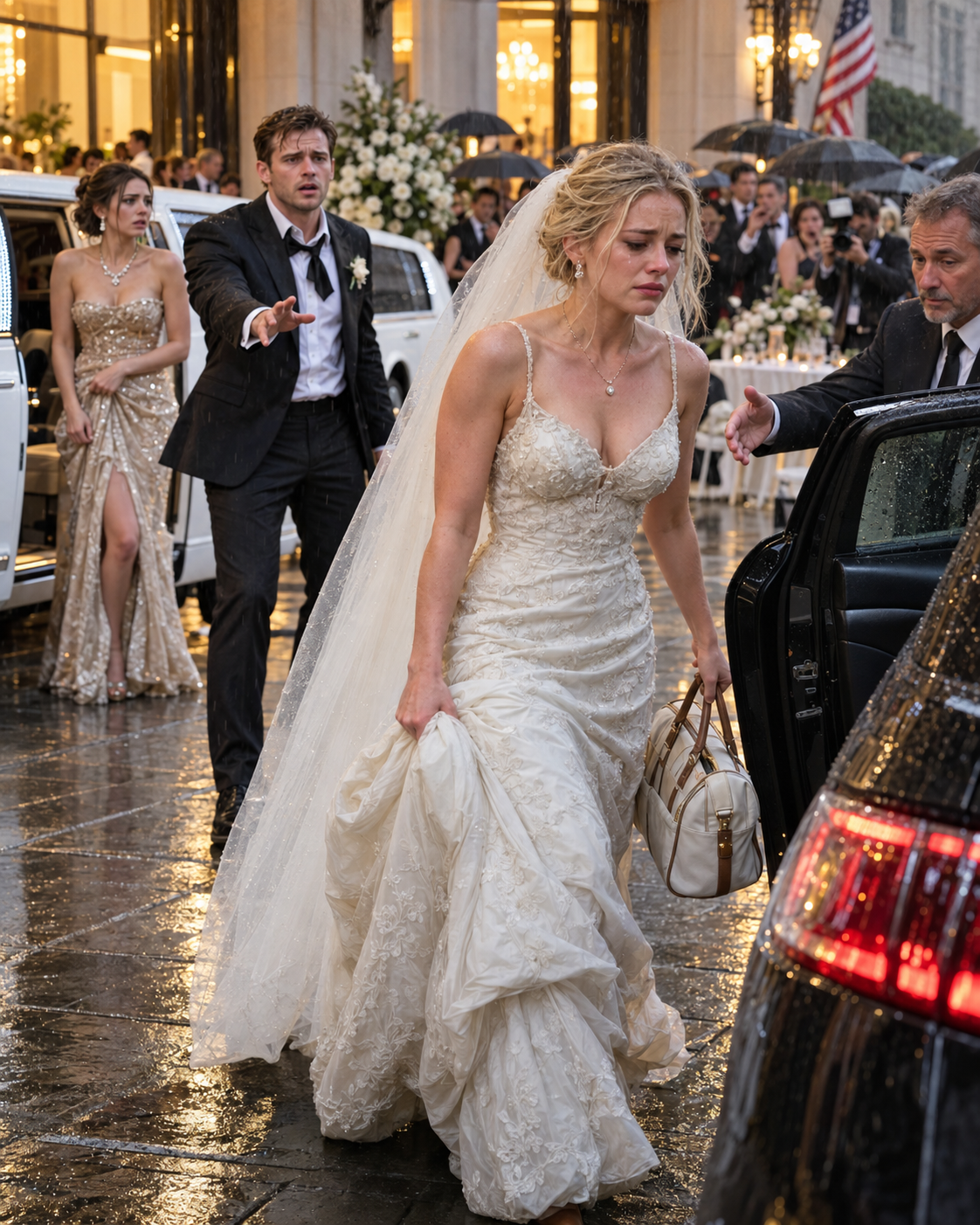
That was the last thing he said before I ended the call.
Arthur turned the car around.
He didn’t ask questions after that.
Maybe he had driven enough people through bad days to know that explanations often arrived later.
When we pulled beneath the hotel awning again, the limousine was gone.
The music from the ballroom had already started.
Not wedding music.
Something bright and electronic, chosen for the entrance Serena had wanted.
I paid Arthur and reached for the door.
“Wait,” he said.
I turned.
“If you need somewhere to sit for a minute, there’s a diner two blocks away. Coffee’s terrible, but it’s open.”
I almost smiled.
“Thank you.”
“For what?”
“For giving me somewhere to go that isn’t this.”
He nodded once.
“Then go get your things.”
The bridal suite was on the third floor.
I expected someone to stop me.
Nobody did.
The hallway smelled faintly of lilies and expensive perfume. My shoes clicked against the marble, and with every step I became more aware of how strangely calm I was.
My mother had once told me that shock could look like peace.
I didn’t understand what she meant until then.
Inside the suite, my overnight bag was beside the vanity.
I packed without crying.
Passport.
Wallet.
Medication.
Recipe journal.
Phone charger.
The small velvet box containing my father’s old watch, which Garrett had planned to give me that evening as a wedding gift.
I put it back.
That was his.
Not mine.
Then I noticed the cake knife on the counter.
The silver handle had a tiny burn mark near the base from the time I dropped it beside a caramel pan while developing my brown-butter pear tart.
I picked it up and put it in my bag.
My work had always felt safer than my relationship.
At least dough obeyed the truth of its ingredients.
I was halfway down the hall when I heard shouting from the ballroom.
Then laughter.
Then applause.
A waiter rushed past me with his eyes fixed on the floor.
“Is everything all right?” I asked.
He stopped.
His face changed when he recognized me.
“Ms. Sterling…”
“What happened?”
He swallowed.
“Nothing.”
Another crash came from inside.
I opened the ballroom door.
The first thing I saw was Serena standing beneath the floral arch.
The second was the cake.
It was on the floor.
Six tiers of almond sponge, salted caramel, dark chocolate mousse, pistachio cream, and citrus curd lay in a ruined heap of icing and sugar flowers.
My cake.
Serena was laughing.
Not happily.
Wildly.
Her hair had come loose, the necklace was still at her throat, and Garrett stood ten feet away looking as if someone had erased the floor beneath him.
A guest was filming.
Someone else had already started a livestream.
Serena lifted both hands.
“I told you!” she shouted. “This is what weddings are supposed to feel like!”
Nobody laughed this time.
Garrett saw me.
His face went white.
“Mara.”
I didn’t answer.
Serena turned.
For one strange second, her expression was almost embarrassed.
Then she saw the cameras.
And something hardened.
She raised her champagne glass.
“Well,” she said, “the bride made it.”
A woman near the bar whispered, “Oh my God.”
I looked at Garrett.
He started walking toward me.
I held up one hand.
“Don’t.”
He stopped.
“You don’t get to explain this.”
“I didn’t know she was going to—”
“You knew enough.”
His mouth opened.
Nothing came out.
That was when the room changed.
Not because I screamed.
Not because I made a scene.
Because I simply walked away.
Outside, Arthur was still at the curb.
He had apparently decided to wait.
When I opened the door, he looked at me and said, “You got your things?”
“Yes.”
“Where to?”
I gave him an address six hours away.
My parents’ house.
I hadn’t been there in almost three years.
My father answered the door wearing an old gray sweatshirt and house slippers.
He stared at me.
I stared back.
Then my mother came around the corner.
Neither of them asked why I had come.
My mother just opened her arms.
I folded into them.
For the first time that day, I cried hard enough to make my ribs hurt.
My father stood behind her with one hand on my shoulder.
“We’ve got you,” he said.
I believed him.
The next morning, the internet was full of my wedding.
Not mine, technically.
Serena’s.
There were clips of her entering beneath the arch, laughing beside Garrett, wearing my necklace.
There was the cake.
There was her drunkenly smashing the final tier with both hands.
There was the moment I walked into the ballroom and turned around.
One video had been viewed more than two million times.
The comments were vicious.
Some people called Serena pathetic.
Some called Garrett a coward.
Others decided I had staged the entire thing for attention.
I stopped reading.
My attorney, Elaine Porter, didn’t.
She arrived at my parents’ house on Monday morning carrying three folders and the expression she wore when she had already found something she didn’t like.
“You own more of Sterling Restaurant Group than Garrett has ever admitted publicly,” she said.
“I know.”
“No. I don’t think you do.”
She opened the first folder.
Inside were licensing agreements.
My recipes.
My pastry formulations.
My signature desserts.
The proprietary production methods I had developed over eight years.
They had been licensed to Sterling Restaurant Group because Garrett had convinced me that we were building one company together.
Elaine tapped the page.
“These expire under several conditions.”
I looked at her.
“Which conditions?”
“Personal separation. Breach of certain partnership obligations. Misuse of intellectual property. There are also clauses concerning personal guarantees.”
I stared at the signatures.
Mine.
His.
Dates I remembered.
Conversations I remembered differently.
“Can he keep using the recipes?”
“Not without renegotiating.”
“And the financial guarantees?”
She slid another document toward me.
“You personally guaranteed several expansion loans.”
My stomach dropped.
“How much?”
She told me.
I went quiet.
It wasn’t enough to destroy me.
It was enough to frighten me.
Elaine leaned back.
“You can choose to walk away from all of this.”
I thought about the restaurants.
The kitchens.
The employees who had nothing to do with Garrett’s choices.
The line cooks who had stood beside me at midnight testing sauces.
The pastry assistants who knew how to pipe my buttercream roses.
“What happens to them?”
“That’s the hard part.”
I looked at the rain outside my parents’ window.
“I don’t want anyone punished for what he did.”
Elaine nodded.
“Then we structure the separation carefully.”
For the first time, I understood that leaving someone didn’t have to mean burning every bridge behind you.
It could mean simply refusing to keep paying the toll.
Over the next month, Sterling Restaurant Group began unraveling.
Not because I wanted it to.
Because investors discovered how dependent the company had become on my recipes, my guarantees, and my production systems.
Several contracts were renegotiated.
Two lenders demanded new collateral.
One investor withdrew entirely.
Then someone leaked internal messages from the group chat.
The same people who had called Serena Garrett’s “true match” were suddenly insisting the jokes had been harmless.
They weren’t harmless.
They were evidence.
Garrett called me twenty-three times in one week.
I answered none.
His attorney contacted Elaine.
Elaine responded.
Serena disappeared back to Toronto.
Then, unexpectedly, she gave an interview.
I watched only the first minute.
She said Garrett had been useful because she knew I was important to him.
She said she had wanted to make me jealous.
She said she never intended to marry him.
“He was easy to manipulate,” she said.
I shut the laptop.
For months, I had imagined Serena as the person who stole something from me.
The truth was uglier and smaller.
She hadn’t stolen my future.
She had exposed how little protection Garrett had ever given it.
That distinction mattered.
My parents’ house became my temporary headquarters.
My mother cleared a shelf in the kitchen for my baking equipment.
My father built a wooden worktable from salvaged maple.
I started with three recipes.
Pear tart.
Brown-butter cake.
Lemon brioche.
I made them because they were mine before they belonged to anyone’s restaurant menu.
At first I sold them at a Saturday farmers market.
Then a coffee shop asked to carry them.
Then another.
I used my surname on the labels.
Sterling.
Not Garrett’s company.
Mine.
People asked if it was a comeback.
I hated that word.
I hadn’t gone anywhere.
I had just stopped standing where someone else told me to stand.
Six months after the wedding, I signed a lease on a narrow storefront with tall windows and a cracked brick wall.
It was too small for what I had once imagined.
That was precisely why I loved it.
There was no investor board.
No expansion target.
No restaurant opening calendar.
Just six ovens, a prep table, three employees, and a bell above the door.
My father painted the sign.
My mother planted herbs behind the building.
Arthur came to the opening.
I recognized him immediately.
He stood near the pastry case holding a paper cup of coffee.
“The terrible kind?” I asked.
He smiled.
“Still terrible.”
I gave him a box of pear tarts.
He tried to pay.
I refused.
“You’re part of the origin story.”
He looked embarrassed.
“I just drove.”
“That day, you drove me home.”
He nodded.
“Sometimes that’s the whole job.”
Nine months after the wedding, I entered the National Pastry Championship.
I almost withdrew twice.
The theme was transformation.
I created a sugar-and-chocolate centerpiece called Return Trip.
At its center was a solitary woman inside a small sculpted rideshare, traveling through rain toward a house glowing amber in the distance.
I didn’t make her beautiful.
I made her tired.
Her shoulders were rounded.
Her hands were wrapped around a recipe journal.
Behind her, on the road, I sculpted a black limousine disappearing into the rain.
The judges stood around it for a long time.
One asked why I had chosen a car instead of a traditional symbol of renewal.
“Because,” I said, “sometimes going back is the first time you move forward.”
I won the gold medal.
For several seconds, I couldn’t process what they were saying.
Then I heard my mother’s voice from the audience.
She was crying.
My father was standing beside her, clapping with both hands above his head.
Arthur was there too.
He had driven six hours to watch.
After the ceremony, snow began falling.
I stepped outside with the medal still around my neck.
That was when I saw Garrett.
He looked older.
Not dramatically.
Just enough that I could tell time had finally been allowed to touch him.
He held something against his chest.
My recipe journal.
The first one.
The cheap black notebook I had used when I was twenty-six and Garrett and I were still living in a one-bedroom apartment above a laundromat.
“You kept that?” I asked.
“I found it in storage.”
I took a breath.
“You came here to return it?”
“Yes.”
He held it out.
I didn’t take it immediately.
“What happened to the company?”
“Outside management owns most of it now.”
I nodded.
“I heard.”
He looked at the snow.
“I read something.”
“What?”
“Your hospital records.”
My body went still.
Garrett’s voice shook.
“I asked for them because I couldn’t remember the dates.”
I remembered them.
That was the problem.
He swallowed.
“The miscarriage.”
I said nothing.
“I remembered being at the investor dinner. I remembered you calling. I remembered being angry that you kept calling.”
His eyes filled.
“I had convinced myself you were asking me to come because you were scared. I told myself there would always be another night to talk about it.”
He looked at me.
“There wasn’t.”
Snow gathered on his coat.
“I spent ten years calling you strong because it let me pretend I wasn’t asking you to carry things I should have carried with you.”
I stared at the journal in his hands.
There was a time when hearing him say those words would have felt like getting oxygen back.
Now it felt like hearing an old song in a room where I no longer lived.
“I’m sorry,” he said.
Not theatrically.
Not defensively.
“I’m sorry for the wedding. I’m sorry for Serena. I’m sorry for every time I made your patience responsible for my failures. And I’m sorry I didn’t come when you needed me most.”
I finally took the journal.
His fingers released it slowly.
“Do you want me to forgive you?” I asked.
“No.”
He looked down.
“I want you to know I finally understand.”
That hurt more than an excuse would have.
Because I believed him.
And believing him meant I had to accept that some people can become honest only after the person they hurt no longer needs their honesty.
“Thank you for telling me,” I said.
His eyes closed.
“Is there any chance—”
“No.”
I said it quietly.
He nodded.
There was no argument.
No grand gesture.
No promise that he would change.
Just a man standing in falling snow with the consequences of ten years finally visible on his face.
“I loved you,” I said.
“I know.”
“I probably always will, in some small way.”
He looked at me.
“But I don’t want that life back.”
He nodded again.
Then he walked away.
I stood there until he disappeared beyond the arena lights.
My mother found me five minutes later.
She didn’t ask what happened.
She just slipped her arm through mine.
“Ready to go home?”
I smiled.
“Yes.”
A year later, my flagship bakery opened downtown.
The storefront was bigger than the first one but still warm enough to feel like a kitchen instead of a corporation.
Arthur attended the grand opening wearing a suit that didn’t quite fit.
My father cut the ribbon.
My mother cut the cake.
It was six tiers.
I had to laugh when I saw it.
She had deliberately made it that way.
“No smashed cake this time,” she said.
“Promise?”
“Your father is guarding it.”
He nodded solemnly.
“Professional security.”
That evening, I stood behind the front window after everyone left.
Snow had turned to rain.
Across the street, a wedding procession passed the bakery.
A limousine rolled slowly beneath the streetlights.
For a second, I watched it.
I expected the old ache.
The question.
The instinct to chase.
Instead, I noticed the reflection in the glass.
My name was above the door.
MARA STERLING.
Behind me were warm lights, cooling pastries, my parents laughing in the kitchen, Arthur arguing with my father about coffee, and shelves filled with recipes nobody had the right to take from me.
The limousine disappeared around the corner.
I didn’t follow it.
I turned off the front light, locked the door, and went home.