Before I could touch the champagne, Eleanor lifted her glass and smiled at the table. ‘To Arthur’s retirement
I didn’t speak for several seconds.
Tara didn’t fill the silence.
She knew me well enough to understand that when I became quiet, I wasn’t calm. I was assembling facts.
“Send me everything,” I said.
“I already did.”
“Who is the lender?”
“Private commercial lender out of Chicago. The application was made fourteen months ago. The loan is secured against company assets, but your personal financial profile was used to establish repayment capacity.”
“My signature?”
“Not exactly.”
I opened the document again.
There was an authorization page attached to the application. It referenced the power of attorney I had signed the previous year for a property transaction involving Arthur’s company.
“Can they legally do this?”
“That’s why you need a lawyer before you talk to anybody in the family.”
I closed my eyes.
There was something almost insulting about how ordinary the kitchen looked. The refrigerator hummed. A coffee mug sat beside the sink. One of Mark’s mail envelopes was still on the counter.
My life had not visibly changed.
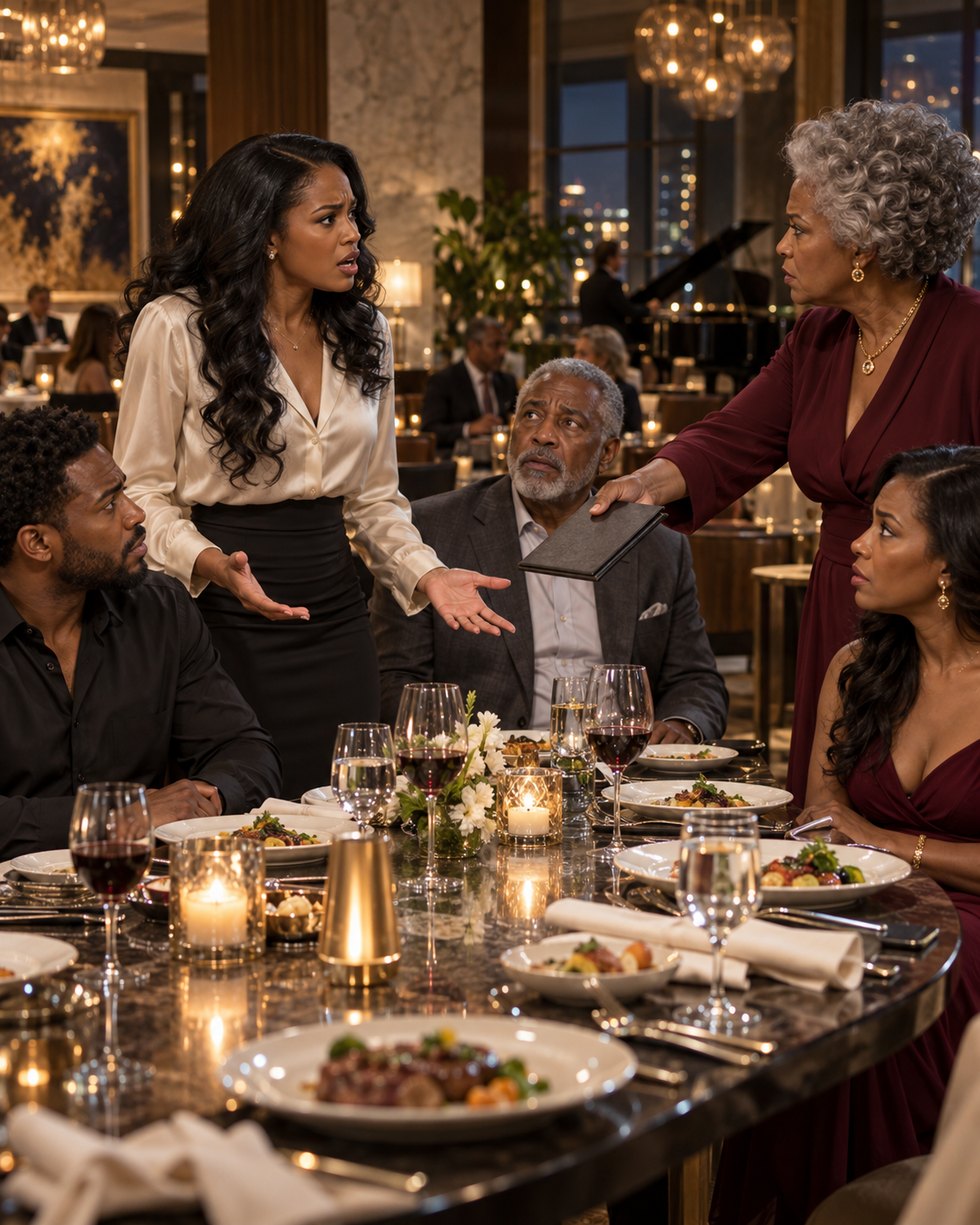
That was the frightening part.
A person could be financially endangered without anything in the room looking different.
Tara worked in forensic accounting and had been one of my closest friends since graduate school. She had a gift for noticing the small things people ignored because they were too boring to be dangerous.
“There’s more,” she said.
“Tell me.”
“Vance Construction is insolvent.”
I laughed once, but there was no humor in it.
“Arthur has been saying they’re struggling.”
“They’re beyond struggling.”
“How bad?”
“Bad enough that if the loan defaults, creditors are going to start circling everything.”
I looked toward the window.
“Then why are they spending money like that?”
“I think that’s the question you should be asking.”
That sentence followed me through the next hour.
I called Nathan Hayes at 8:26.
Nathan was my cousin’s husband, a corporate attorney who had represented me once before when I opened my consulting business. He was not a dramatic man. He wore the same navy suit almost every day and had the irritating habit of pausing before answering questions, as if he wanted to remove every emotional word from the room before dealing with the facts.
When I finished explaining, he said, “Do not contact Arthur.”
“I wasn’t planning to.”
“Do not contact Eleanor.”
“Definitely wasn’t planning to.”
“And do not confront Mark until I understand the documents.”
That one hurt.
“Why?”
“Because if Mark knew about this, you need to know what he knew and when he knew it. If he didn’t know, you need to avoid giving him information that could contaminate a later statement.”
The word statement made my stomach tighten.
“What should I do?”
“Freeze your credit. Separate your accounts. Change every password. Send me copies of every power of attorney you’ve ever signed.”
“I only remember one.”
“Then we’ll start there.”
By noon, I had canceled every automatic payment connected to Arthur or Eleanor.
That was when I discovered how deeply my life had been threaded into theirs.
A utility bill for the lakehouse.
An insurance premium.
A membership renewal.
A monthly transfer Mark had described as “help with his dad’s office.”
I sat at my desk and stared at the list.
Six years of small conveniences.
Nothing individually outrageous.
Together, they formed a life I had been quietly financing.
That afternoon, Mark came home.
He didn’t ask whether I had slept.
He stood in the kitchen and said, “Mom says you’re making a big deal out of nothing.”
I turned around slowly.
“Does she?”
“She was upset.”
“So was I.”
“You humiliated everyone.”
“No. I left a dinner I was ambushed into paying for.”
“Claire, can we not do this?”
I almost smiled.
It was the same sentence he had used for years.
Can we not do this?
Whenever his father needed money.
Whenever his mother made a cutting remark.
Whenever I asked why a supposedly struggling company had a new SUV.
Whenever I said I was uncomfortable.
Can we not do this?
“I need to ask you something,” I said.
His face changed.
Not much.
Just enough.
“Did you know your father’s company was insolvent?”
He sat down.
That was my answer before he spoke.
“How long?”
He rubbed both hands over his face.
“I didn’t know the exact numbers.”
“How long?”
“Over a year.”
The kitchen seemed to tilt.
“And you didn’t tell me?”
“I was trying to fix it.”
“By doing what?”
He didn’t answer.
“Mark.”
“I thought Dad could turn it around.”
“With what money?”
He stared at the floor.
“Yours.”
The word was so quiet I almost missed it.
I stepped back.
He stood immediately.
“That’s not what I meant.”
“It is exactly what you meant.”
“I thought we were helping them temporarily.”
“You knew about the loan.”
“I knew Dad was trying to get financing.”
“Using me?”
“I didn’t know it would involve your personal profile.”
I laughed bitterly.
“You knew about the power of attorney.”
His silence was longer this time.
Then he said, “Mom handled the paperwork.”
My heart sank.
Not because Eleanor had done something I hadn’t expected.
Because Mark was still trying to place the action one step away from himself.
“Did you see the family group chat?”
He went pale.
“What group chat?”
“The one Tara found.”
That was a bluff.
I hadn’t seen it.
Not yet.
His reaction told me I needed to wait.
He sat down again.
“Claire…”
“What?”
He pulled out his phone.
“I should have told you.”
Then he opened a conversation titled Vance Family.
There were hundreds of messages.
I scrolled.
At first, they were ordinary.
Thanksgiving plans.
Birthday reminders.
Pictures of Arthur’s golf outings.
Then I found the messages from fourteen months earlier.
Eleanor had written: We need to keep Claire close and comfortable. She earns more than all of us combined and doesn’t mind helping when she thinks it’s temporary.
Another message appeared.
Arthur: The lender wants stronger personal support.
Eleanor: Then use the authorization she already signed. Mark can handle the conversation.
My thumb stopped moving.
Mark whispered, “I didn’t write those.”
I looked at him.
“I know.”
There were more.
Messages about the lakehouse.
Messages about the SUV.
Messages about the dinner.
One from Eleanor two weeks before Arthur’s retirement banquet said: If we make the dinner a celebration of Claire’s generosity, she won’t want to cause a scene. Public gratitude will make it harder for her to refuse.
I read that line twice.
Then a third time.
The humiliation at Harroves suddenly had a different shape.
It hadn’t been spontaneous.
It had been planned.
The dinner wasn’t just an expensive celebration.
It was a public conditioning exercise.
They wanted everyone around that table to see me as the person who paid.
So when the bills from Arthur’s collapsing company began surfacing, the story would already be established.
Claire always helps.
Claire agreed.
Claire has money.
Claire said she’d cover it.
I put the phone down.
Mark was crying.
I had seen him cry only three times in our marriage.
That didn’t make me forgive him.
It made everything worse.
“Why?” I asked.
He swallowed.
“Because I was scared.”
“Of what?”
“Losing my family.”
I nodded slowly.
“And you thought I was the expendable part?”
“No.”
“But you acted like it.”
He covered his face.
I walked upstairs and closed the bedroom door.
That night, I slept in the guest room.
The next morning, Nathan called.
“The lender’s attorney has contacted you.”
My stomach dropped.
“What do they want?”
“Confirmation that you acknowledge the debt.”
“I don’t.”
“Good. Don’t communicate with them directly. I’m handling it.”
He had already drafted a formal revocation of the power of attorney.
We signed it that afternoon.
Then came the harder part.
Nathan helped me put a litigation hold on my financial records, secure copies of my employment verification history, and notify the relevant institutions that I disputed any obligation created without my authorization.
I also moved my personal accounts into new structures that Arthur’s company had never touched.
For the first time in years, I changed my financial life without asking Mark what he thought.
That felt strange.
Not freeing.
Not yet.
Just strange.
Three days after the dinner, I called Eleanor.
“Can you come to dinner?”
There was a pause.
“You want to apologize?”
“No.”
Another pause.
“Then what is this about?”
“I think we should clear the air.”
She sounded relieved.
“I knew you’d come around.”
“I’ll see you at seven.”
I hung up.
Nathan had asked me not to confront them without legal protection.
So I didn’t.
Instead, I prepared.
I printed every document.
Every transfer.
Every invoice.
Every message.
Every discrepancy.
Tara organized the financial records into a timeline.
Nathan reviewed everything twice.
I placed each section into a folder with a name printed on the front.
Arthur.
Eleanor.
Mark.
Lender.
Lakehouse.
Company.
At six-thirty, I set the dining room table.
I cooked braised short ribs, rosemary potatoes, glazed carrots, and a chocolate tart.
It was the kind of meal Eleanor loved.
When Mark arrived with his parents and three other relatives, she kissed my cheek.
“I knew my girl would come to her senses.”
I smiled.
“I hope everyone brought an appetite.”
For nearly an hour, we talked about ordinary things.
Arthur complained about traffic.
Eleanor discussed a charity gala.
Someone mentioned a neighbor’s renovation.
I served dinner.
I poured wine.
I listened.
And I waited.
When the plates were cleared, Eleanor leaned back.
“Well,” she said, “I think we’ve all had enough time to cool off.”
I folded my hands on the table.
“Yes.”
Arthur cleared his throat.
“I don’t like family tension.”
“I don’t either.”
“So maybe we can put the misunderstanding behind us.”
I reached for the first folder.
“It wasn’t a misunderstanding.”
I placed it in front of him.
Arthur opened it.
The color drained from his face.
“What is this?”
“Your company’s current financial position.”
Eleanor stared at me.
“Claire, what are you doing?”
“Something I should have done years ago.”
I opened the second folder.
“This is the loan application that used my employment information.”
Mark closed his eyes.
Arthur pushed his chair back.
“You have no right to—”
“I have every right.”
My voice remained quiet.
“That loan was obtained using a power of attorney I signed for a single property transaction. My attorney has formally revoked it.”
Arthur looked at Mark.
Mark didn’t meet his eyes.
Then I placed the transcripts on the table.
Eleanor stopped breathing for a moment.
“You went through our private messages?”
“No.”
I looked at Mark.
“He gave them to me.”
Her face changed.
For the first time since I’d known her, she looked genuinely frightened.
“You wouldn’t understand the context.”
“I understand it perfectly.”
I slid the page toward her.
She read the sentence about keeping me close and comfortable.
Then she looked at me.
“Claire—”
“No.”
The word came softly.
She stopped.
I wasn’t shouting.
I wasn’t shaking.
I wasn’t interested in making them feel what I had felt.
I simply wanted them to see the architecture of what they had built.
“You turned my kindness into an expectation,” I said. “Then you turned the expectation into a financial instrument.”
Arthur stared at the table.
Mark whispered, “I’m sorry.”
I looked at him.
“I believe you are.”
His eyes filled.
“But being sorry doesn’t undo what you knew.”
He nodded.
That was the moment I stopped waiting for him to become the husband I had needed.
Not because he was evil.
Because he had made a choice.
Over and over.
Quietly.
When no one was watching.
I stood.
“This is my home. I am asking all of you to leave.”
Eleanor’s mouth fell open.
“You’re throwing us out?”
“Yes.”
“After everything we’ve done for you?”
I almost laughed.
Then I remembered something important.
People rarely admit what they owe you when they are convinced you owe them more.
Arthur stood.
“This isn’t over.”
“I know.”
He walked toward the door.
Mark remained seated.
“Claire.”
I waited.
“I don’t have anywhere to go.”
I looked at him for a long moment.
“You have a family.”
He flinched.
“So do I.”
Then I walked him to the door.
The fallout came faster than I expected.
Arthur’s partners had been told the company was financially distressed, but they had not known the full extent of the debt or the disputed use of my financial information.
Once the documents surfaced, two of them hired their own attorneys.
A third withdrew from the remaining projects.
Within weeks, Vance Construction was no longer functioning as the company Arthur had spent decades building.
The lakehouse went on the market.
The SUV was sold.
The renovations stopped halfway through the kitchen.
The country-club whispers eventually reached Eleanor’s charity circle, and invitations became less frequent.
None of that gave me satisfaction.
It mostly made me tired.
The divorce was quieter.
There were meetings.
Documents.
Negotiations.
A mediator who seemed determined to keep everyone civil.
I appreciated that.
I didn’t want revenge.
I wanted separation.
There was one final complication.
The lender disputed the revocation and initially claimed that the original authorization gave them reason to believe Arthur’s use of my financial information was legitimate.
Nathan fought it.
The evidence mattered.
The language of the original power of attorney mattered.
The timeline mattered.
Most of all, the records showed I had never knowingly guaranteed the company’s debt.
Months later, the disputed liabilities were formally removed from my personal obligations.
When Nathan called to tell me, I was sitting in my office with a half-eaten sandwich and a stack of client proposals.
“It’s done,” he said.
I leaned back in my chair.
“Really?”
“Really.”
I looked out the window.
Cars moved along the street below.
People hurried toward lunch.
Nobody knew anything about the dinner at Harroves.
Nobody knew about the group chat.
Nobody knew how close I had come to losing something I had spent my entire adult life building.
And for some reason, that anonymity felt like peace.
Mark and I finalized the divorce shortly afterward.
He moved into a small apartment across town.
For several months, he sent occasional messages.
Some were apologies.
Some were memories.
One simply said, I finally understand what I did.
I never answered that one.
Not because I wanted him to suffer.
Because I had spent too many years answering for everyone else.
I was learning the difference between cruelty and silence.
Sometimes silence was just a boundary.
A year after the night at Harroves, I signed the lease on a small office downtown.
The name on the glass door read Vance Advisory Group.
I kept my married surname.
Not for Mark.
Not for Eleanor.
Not for Arthur.
For myself.
I built the firm slowly.
At first, I advised women who were starting businesses.
Then women who were divorcing.
Then women who had spent years allowing spouses, parents, siblings, or partners to handle every financial decision because they had been told money was complicated and trust was easier.
I never told them what choices to make.
I taught them how to read what they had signed.
How to ask questions.
How to keep copies.
How to understand a power of attorney before handing it to someone they loved.
How to recognize the difference between generosity and obligation.
My first conference room was barely large enough for four chairs.
I loved it.
One afternoon, a young woman sat across from me holding a folder in both hands.
“My husband says I don’t need to understand our finances,” she said.
I looked at her.
Then I pushed a notepad toward her.
“Then let’s start with the first thing you do need to understand.”
She waited.
“Everything that has your name on it.”
She nodded.
We began.
That evening, after she left, I locked the office and stood for a moment in the hallway.
I thought about Harroves.
The champagne.
The white tablecloth.
The $4,327 bill.
The way Mark had stared at his plate.
For a long time, I thought the most painful part had been discovering they had used me.
It wasn’t.
The hardest truth was realizing how willingly I had made myself useful because I believed being needed was the same thing as being loved.
I don’t believe that anymore.
Love can ask for help.
Marriage can require sacrifice.
Family can lean on you when life becomes difficult.
But none of those things require you to disappear inside the needs of other people.
I turned off the lights.
Outside, the city was beginning to glow against the dark.
My phone buzzed as I reached the elevator.
A message from Tara.
She had attached a photograph of the old Harroves menu I had once scribbled numbers on.
Underneath it, she wrote: Look how much trouble started with one dinner.
I smiled.
Then I deleted the photograph.
I didn’t need it anymore.
The bill had been paid in a way none of us expected.
Not with my money.
With the truth.
And for the first time in a very long time, the life waiting for me belonged entirely to me.