At the Denver courthouse, my mother stared straight through me while the judge ordered me to pay the woman I loved $2,166
Part 2
My attorney was silent for several seconds after I explained what had happened.
Then he said, “Did you keep everything?”
“Every text.”
“Every payment?”
“Every receipt.”
“Every court filing?”
“Yes.”
He exhaled slowly.
“Then we may have something.”
The motion was filed under court fraud and fraud upon the court.
I learned that overturning a final judgment was difficult, but proving that a settlement had been secured through deliberate deception was an entirely different matter.
We began rebuilding the case one piece at a time.
A mutual friend provided sworn testimony that my mother had privately admitted she “needed to make the judge believe” Clara had been afraid of me.
Another friend testified that my father had asked whether she could “remember any fights” that never actually happened.
Then came the voicemail.
It was from a woman who had worked with my mother at a local nonprofit.
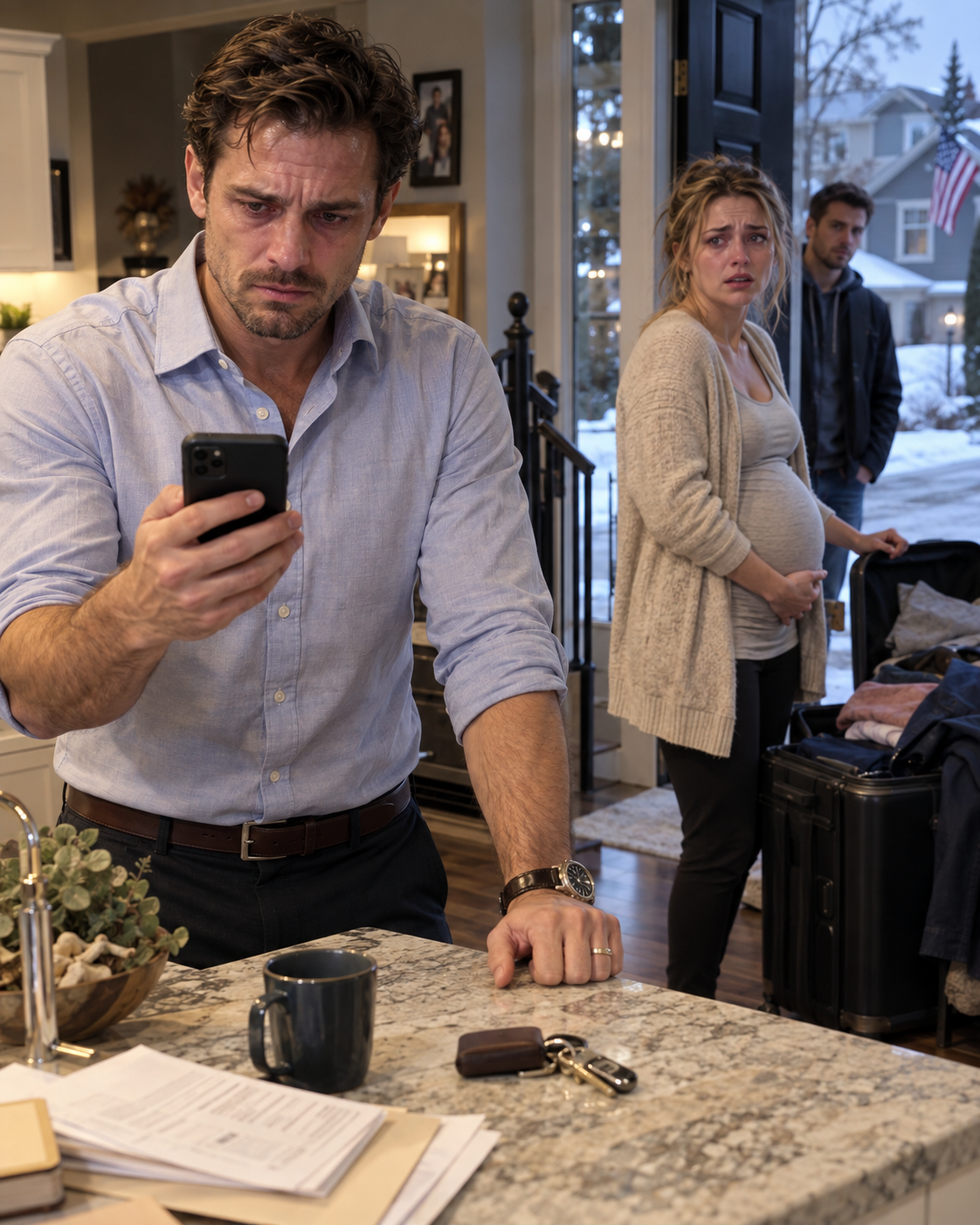
Apparently, my mother had called her months before the divorce trial.
The woman had saved the message because the request had disturbed her.
My attorney played it in his office.
My mother’s voice filled the room.
“Just say he was aggressive, okay?”
The woman on the recording asked, “But I never saw that.”
My mother replied, “You don’t have to say you saw it directly.”
Then came the words that changed everything.
“The judge needs a reason to ignore those texts.”
I felt a strange pressure behind my ribs.
Not rage.
Something quieter.
Something colder.
Confirmation.
My mother’s lies had not been impulsive.
They had been planned.
My father’s testimony was not mistaken memory.
It was coordinated deception.
Clara’s messages were not desperate venting.
They were evidence of intent.
We attached everything.
The texts between Clara and Felix.
The voicemail.
The sworn statements.
Financial records.
Communication logs.
My attorney looked at me across the conference table.
“If the judge accepts this, the original decree can be vacated.”
I nodded.
“And the money?”
“We’ll ask the court to order restitution.”
For the first time in years, hope entered the room.
The hearing was scheduled three weeks later.
When I walked into the same courtroom, Clara looked almost unrecognizable.
Her hair was pulled into a loose knot.
She wore a plain sweater.
Felix sat beside her, pale and angry.
My mother and father sat behind them.
Nobody spoke to me.
The judge entered.
Everyone rose.
Then we sat.
My attorney stood first.
He did not raise his voice.
He did not need to.
He laid out the timeline.
The affair had begun before conception.
They had discussed using me as the baby’s father.
They had discussed my income.
They had planned for Clara to leave while positioning herself as a victim.
And while the court was considering the evidence, my parents had supplied false testimony to make the messages look like trauma-driven words instead of deliberate financial planning.
Then the voicemail played.
The courtroom became silent.
My mother stared at the floor.
My father looked at her.
Clara began to cry.
Felix leaned toward her and whispered, “Don’t say anything.”
The judge heard it.
I saw his expression change.
When my attorney finished, the judge looked directly at my parents.
“Are you both maintaining your prior testimony?”
Neither answered.
The judge asked again.
My father finally whispered, “I believed what I said.”
My attorney stood.
“Your Honor, we have evidence that he did not simply believe it. He helped manufacture it.”
The judge reviewed the documents in silence.
Minutes later, he announced that the original decree was vacated.
The $52,000 in alimony payments were ordered repaid.
Clara and Felix were made jointly responsible.
My parents were referred for criminal perjury charges.
Clara covered her face.
Felix stared at me as if I had committed some terrible act by refusing to finance their lies.
Outside the courthouse, reporters were not waiting.
There were no cameras.
No dramatic crowd.
Just cold wind and traffic.
My attorney shook my hand.
“You got your life back,” he said.
I looked toward the courthouse doors.
“No.”
I swallowed.
“I got the truth back.”
The consequences arrived slowly.
My parents spent heavily on attorneys.
The savings they had built over decades disappeared.
The house they had lived in for years was gone.
Eventually they moved into a run-down apartment on the edge of Aurora.
Felix and Clara’s wages were garnished.
The expensive lifestyle vanished.
Felix took warehouse shifts and overnight delivery work.
Clara picked up extra nursing shifts and weekend caregiving jobs.
People who had once treated my income like an unlimited resource were suddenly counting every dollar.
I never celebrated their suffering.
But I also did not rescue them.
That distinction mattered to me.
For years, I had confused forgiveness with obligation.
They had taught me that family meant sacrifice.
Now I understood that family without honesty was simply leverage.
Then, four months after the ruling, my father had a heart attack.
My mother called me from the hospital.
Her voice was barely recognizable.
“Please come.”
I said nothing.
“He wants to see you.”
I stared at the wall in my kitchen.
“I’m not coming.”
She began to cry.
“He’s dying.”
I closed my eyes.
“I know.”
Then I hung up.
People later told me I should have gone.
Maybe they were right.
Maybe there is supposed to be some final moment when blood becomes more important than betrayal.
But I had spent my entire childhood waiting for my father to choose me.
He never did.
I was not going to spend his final hours begging for the role he had refused to give me.
Two days later, an envelope arrived.
My father’s handwriting was on the front.
I opened it at my kitchen table.
The letter began with an apology.
He admitted he had favored Felix since childhood.
He admitted he had always seen me as the responsible one, the one who could survive without help.
Then he wrote something I still remember.
“I thought protecting Felix once more would keep this family together.”
But the next sentence broke whatever remained.
“I used you because I knew you could carry the blame.”
I read the letter twice.
Then I folded it.
For years, I had imagined an apology from my father as something that would heal me.
Instead, it felt like finally receiving a receipt for something I had already paid for.
I walked outside.
The wind pushed dead leaves across the sidewalk.
I lit a match.
And I burned the letter.
I watched the paper curl into black ash.
I did not cry.
I did not feel free.
Not yet.
But something heavy finally stopped asking me to carry it.
Part 3
The legal battle was over, but peace did not arrive overnight.
There were still mornings when I woke up expecting another accusation.
There were still moments when I saw an unknown number and felt my stomach tighten.
There were still nights when I wondered whether I should have fought harder sooner.
Then Clara’s parents contacted me.
They were ashamed.
They had believed her story during the divorce.
Now they knew what she and Felix had done.
They came to meet me at a quiet restaurant in Denver.
Her father looked older than I remembered.
Her mother kept her hands clasped in her lap.
Finally, her father said, “We can’t undo what she did.”
I said nothing.
“We can offer you money,” he continued.
“Not as payment for what happened. We know nothing could be enough for that.”
He placed an envelope on the table.
Then he looked me in the eyes.
“Our only condition is that Clara and Felix leave Colorado permanently.”
I looked at the envelope.
Then I looked at the two people who had spent years believing I was the monster in their daughter’s story.
“I have one condition too,” I said.
“What?”
“Once they leave, I never hear from them again.”
He nodded.
“They’ll go.”
They did.
Within months, Clara and Felix relocated to another state.
The house, the courts, the phone calls, the lies, the constant fear of the next betrayal all became memories attached to addresses I no longer visited.
I used the buyout to stabilize my finances.
I kept working, but I stopped working to escape.
I started working because I finally had something worth building.
A few years later, I led the structural design team on a major project in downtown Denver.
One evening, I stood inside the unfinished building and looked up at the steel frame disappearing into the dark.
Thousands of tons of material were held together because every connection had been calculated.
Every load had a path.
Every weakness had to be acknowledged before the structure could stand.
I thought about my old life.
How badly I had wanted people to hold me up.
How often they had chosen to make me carry them instead.
Then I met someone new.
Her name was Emily.
She was a school counselor who laughed easily and did not treat kindness like a transaction.
The first time I told her about my family, I expected her to look at me differently.
She didn’t.
She simply reached across the table and said, “You deserved better.”
Those four words almost broke me.
Not because they were dramatic.
Because they were simple.
Because for once, someone saw the wound without asking me to prove it existed.
We took our time.
No rushing.
No pretending.
No promises built on fear.
Eventually, I realized something strange.
I no longer checked the locks twice.
I no longer hated hearing my phone ring.
I no longer felt the need to explain myself to people committed to misunderstanding me.
Peace had not arrived as a grand victory.
It had arrived quietly.
It looked like coffee on Sunday mornings.
It sounded like laughter in a kitchen.
It felt like sleeping without fear.
Years after the divorce, I drove past the courthouse where everything had nearly destroyed me.
I slowed at the intersection.
For a moment, I remembered the cold steps, the judgment, my mother’s lies, my father’s voice, and the humiliation of walking away with a debt created by people who claimed to love me.
Then the light changed.
I drove on.
That was the moment I finally understood what I had spent so many years getting wrong.
I thought winning meant making them regret what they had done.
It didn’t.
Winning was becoming a man who no longer needed anything from them.
I had once been the overlooked older brother.
The reliable son.
The wallet.
The scapegoat.
The man everyone assumed would quietly absorb the damage.
But I was not built to absorb damage forever.
I was built to build.
And the life I created after they tried to destroy me was stronger than anything they had taken from me.
Sometimes people spend years trying to convince you that losing them means losing everything.
They do not understand that some losses are actually exits.
Some betrayals are warnings.
And some endings are the first honest foundation you have ever been given.
I never got the family I wanted.
I never got the childhood apology.
I never got the years back.
But I got something I had never had before.
A life that did not depend on being chosen.
That night, standing on my balcony with Emily beside me, I watched the Denver skyline glow against the mountains.
She slipped her hand into mine.
“You seem far away,” she said.
I looked at the lights below us.
“I’m not.”
I squeezed her hand.
“For the first time, I’m exactly where I belong.”
And for once, the silence that followed did not feel empty.
It felt like peace.