At Christmas dinner, my mother laughed in front of a room full of relatives and said she wished she had taken birth control
I took the envelope from Fiona, but I did not open it immediately.
For years, I had imagined what my grandfather might have said to me if he were still alive.
Now that his handwriting was trembling in my hands, I suddenly felt afraid to know.
Fiona stood on the porch with snow collecting on the shoulders of her coat.
She looked nothing like the woman from her carefully edited videos.
“You should read it,” she said.
“Why did you keep it?”
“I didn’t.”
She shook her head.
“Mom did.”
That answer hurt more than I expected.
I stepped aside.
“Come in.”
Fiona entered the cabin slowly.
She glanced around at the rough wooden shelves, the unfinished chairs, and the workbench scarred by years of use.
“It looks like him,” she said.
“Grandpa?”
She nodded.
“He used to say this was the only place where nobody cared what things looked like.”
I almost smiled.
“That sounds like him.”
We stood in silence near the stove.
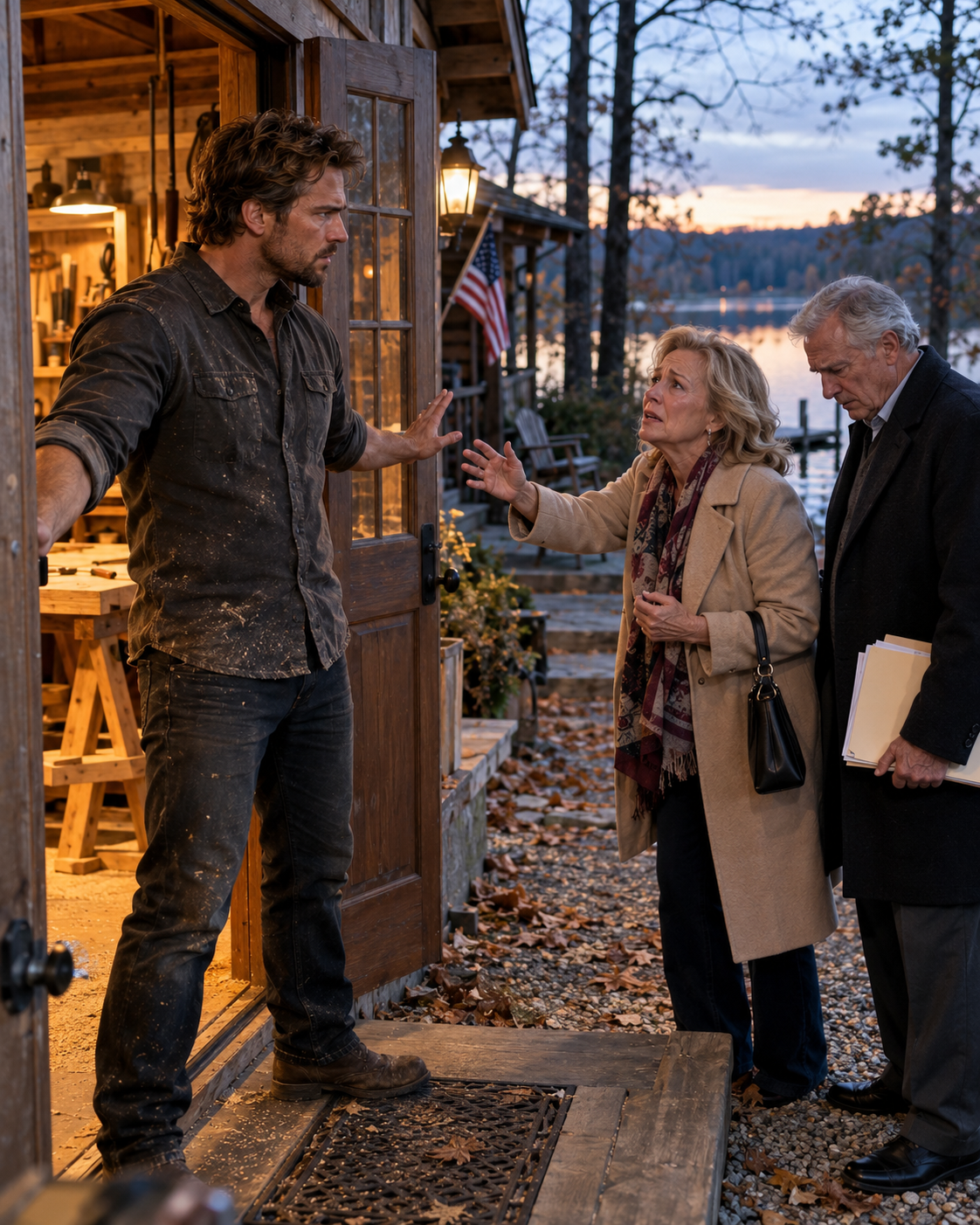
Then Fiona looked at the envelope.
“Mom found it after the funeral.”
“Why didn’t she give it to me?”
“She said you would get arrogant if you knew Grandpa had chosen you.”
I stared at her.
“That sounds like Mom.”
Fiona lowered her eyes.
“She also said the cabin would eventually be mine anyway.”
I felt the old anger rise.
“Did you believe her?”
“For a while.”
The honesty in her voice stopped me.
She sat at the kitchen table.
“I spent my whole life believing Mom loved me because I was beautiful.”
I said nothing.
“She loved what happened when people looked at me.”
That sentence hung between us.
“I think I started performing before I even knew what I was doing.”
She rubbed her eyes.
“Every photo, every dress, every sponsor, every fake smile.”
“What changed?”
She laughed bitterly.
“Losing all of it.”
I sat across from her.
“The sponsors?”
“The followers.”
She looked out the window.
“When the bank investigation started, brands disappeared overnight.”
“I’m sorry.”
She looked surprised.
“You mean that?”
“Yes.”
“Even after what I did?”
“You hurt me.”
She nodded.
“I know.”
“But I don’t want you destroyed.”
Her eyes filled.
“I gave Mom your tax documents.”
“I know.”
“She said she needed them to prove something to the bank.”
“You believed her.”
“I wanted to believe her.”
That difference mattered.
I opened the envelope.
Inside was a single letter folded three times.
My grandfather had written it in blue ink.
“My dear Ethan, if you are reading this, then I am no longer around to explain why I made this choice.”
I read slowly.
“I know your parents see your life as small because it does not impress strangers.”
I stopped there.
Fiona looked down.
I continued.
“But I have watched you build things with your hands, repair what others discard, and remain honest when dishonesty would have been easier.”
My throat tightened.
“I am leaving you the cabin because you understand the difference between value and appearance.”
There were tears in Fiona’s eyes now.
My grandfather continued.
“I do not want you to spend your life proving your worth to people who refuse to see it.”
I stared at the page.
The next paragraph was shorter.
“Use what I leave you to create something useful.”
At the bottom, he had written, “Build something that outlasts pain.”
I folded the letter.
For a while, all I could hear was the fire cracking in the stove.
“I hated you,” Fiona whispered.
I looked at her.
“When?”
“Always.”
The word came out before she could soften it.
“I hated that Grandpa talked to you differently.”
“What did he say?”
“He told me once that you had the rarest kind of confidence.”
I looked down.
“What did he say about you?”
She smiled sadly.
“He said I was talented at getting people to look at me.”
I almost laughed.
“That sounds less flattering.”
“It was.”
She wiped a tear away.
“I thought being admired was the same as being loved.”
“And now?”
“I don’t know what it is yet.”
I reached across the table.
She hesitated.
Then she took my hand.
We stayed that way without saying anything.
It was the first honest touch we had shared as adults.
Outside, snow kept falling.
Inside, something old and brittle began to loosen.
The next morning, Arthur called.
“I need you to come to town.”
I drove to his office.
He had several files spread across his desk.
“The bank completed its review.”
“And?”
“The deed fraud was only one piece.”
He handed me a document.
“Your parents had been manufacturing financial statements for years.”
I read through it.
Fake business revenue.
Inflated property values.
Hidden accounts.
Loans secured by assets they did not legitimately own.
“They were drowning before they used my name,” I said.
Arthur nodded.
“The forged deed was an attempt to delay the collapse.”
I closed the file.
“Are they going to prison?”
“That depends on the prosecutors.”
He pushed another folder toward me.
“This concerns your grandfather.”
I opened it.
Arthur looked almost amused.
“Harold was more thorough than most people realize.”
Inside was a series of legal documents outlining the long-term future of the Millbrook property.
I scanned the first page.
Then the second.
Then I looked up.
“This can’t be right.”
“It is.”
My grandfather had built a condition into the estate.
The cabin and workshop were mine during my lifetime.
After that, the property would transfer into a charitable trust.
I kept reading.
The trust would fund a woodworking and trades program for foster children.
Free classes.
Scholarships.
Tools.
Mentorship.
A place where teenagers who had spent years being told they were unwanted could learn to build something real.
Arthur smiled.
“Your grandfather believed that skill could restore dignity.”
I sat back.
He had known exactly what my family had refused to see.
He had not chosen me because I needed the money.
He had chosen me because he trusted what I would do with it.
I drove back to the cabin before sunset.
Fiona was still there.
She had helped herself to one of my old sweaters and was attempting to make coffee.
“It tastes terrible,” she said.
“You put grounds in the wrong filter.”
“I am an influencer, not a barista.”
I laughed.
She looked startled.
Then she laughed too.
It felt unfamiliar.
It also felt good.
I told her about the trust.
Her smile faded.
“He really believed in you.”
“He really believed in what I might build.”
She stared toward the workshop.
“I want to help.”
I looked at her.
“I don’t know how.”
“Neither do I.”
She took a breath.
“But I want to learn.”
I nodded.
“Then start there.”
The first week of rebuilding was not glamorous.
We cleared old lumber from the back room.
We repaired the roof over the finishing bench.
We sanded cabinets until our hands hurt.
Fiona hated the dust.
I found that funny.
“You always wanted everything spotless.”
She sneezed.
“I am evolving.”
“You are covered in sawdust.”
“I know.”
She smiled.
“For once, I don’t care.”
News about my parents spread through town.
Gerald lost his position.
The banks pursued the outstanding loans.
Eleanor stopped answering calls from people who once invited her to charity luncheons.
The same people who had praised her taste suddenly had nothing to say.
My father called twice.
I did not answer.
On the third call, he left a voicemail.
“I know you hate me.”
I listened.
“I don’t blame you.”
His voice shook.
“I thought if I looked successful, eventually I would feel successful.”
He paused.
“I was wrong.”
I deleted the voicemail.
Not because I hated him.
Because I no longer needed to carry his confession.
A month later, the bank scheduled the foreclosure hearing on the remaining properties.
Arthur told me I did not need to attend.
I went anyway.
Not to rescue them.
Not to punish them.
Just to witness the end of something that had controlled my childhood.
Eleanor sat beside Gerald in a courthouse hallway.
She looked exhausted.
When she saw me, she stood.
“Please.”
I stopped several feet away.
“We need somewhere to go.”
“You have family.”
“You are my family.”
She looked at me as though the word itself should open my wallet.
I remembered Christmas.
Her wineglass.
Her laugh.
The room full of relatives pretending not to hear.
“No,” I said.
Her face collapsed.
“You can really turn your back on your mother?”
“I turned my back on being used.”
Gerald lowered his head.
“You’re right.”
Eleanor stared at him.
He continued.
“We made him responsible for everything because it was easier than admitting what we had done.”
I looked at my father.
It was the first honest thing he had ever said to me.
“I hope you figure things out,” I told him.
Then I walked away.
It did not feel triumphant.
It felt like closing a door that had been open in the middle of winter.
Back at Millbrook, the first group of foster teenagers arrived for a Saturday workshop.
There were six of them.
One barely spoke.
One kept his hood over his head.
Another insisted he was only there because his caseworker made him come.
I understood that attitude immediately.
I had once believed nobody stayed unless they wanted something from you.
I placed a piece of maple on the workbench.
“Today we’re making stools.”
One boy frowned.
“I’ve never built anything.”
“Neither had I when I started.”
He looked at the tools.
“What if I mess up?”
I handed him a pencil.
“Then we fix it.”
He looked at me.
“That’s it?”
“That is almost always it.”
They began.
The room filled with the sounds of measuring, cutting, sanding, and occasional frustration.
Fiona sat at the other end of the bench teaching a girl how to use a chisel safely.
She was patient.
Careful.
Completely different from the person I remembered.
At lunch, the quiet boy asked me why I had started woodworking.
I thought about my mother.
My father.
Fiona.
The Christmas dinner.
The years of feeling like the extra child.
“My grandfather taught me that when something breaks, you don’t automatically throw it away.”
The boy looked at the old workshop.
“Did that work for you?”
I smiled.
“I’m still finding out.”
Weeks became months.
The program grew.
Local tradespeople donated tools.
A contractor offered apprenticeships.
A school counselor sent more teenagers.
Some made chairs.
Some made picture frames.
One girl built a small jewelry box for the foster mother who had taken her in.
When she finished, she held it against her chest and cried.
I knew then what my grandfather had wanted.
Not furniture.
Not money.
Proof.
Proof that a person could take something damaged and make it useful again.
One evening, after everyone had gone, Fiona stood beside me on the dock.
The lake was black beneath a red sunset.
“I changed my phone number,” she said.
“Good.”
“I deleted most of my old accounts.”
“You don’t have to disappear.”
“I know.”
She looked toward the workshop.
“I just don’t want to spend my life performing anymore.”
I nodded.
“Who are you going to be?”
She smiled.
“I guess I get to find out.”
I bumped her shoulder.
“That sounds terrifying.”
“It is.”
We laughed.
For the first time, being siblings did not feel like competing.
It felt like two people finally standing on the same shore.
Then Arthur arrived one afternoon carrying another folder.
“You’re becoming a regular problem for me,” I said.
He smiled.
“I have one final document.”
I opened it.
It was an amendment from my grandfather.
My hands started shaking before I finished the first paragraph.
He had left one more instruction.
If I ever chose to expand the workshop into a school, the trust would release additional land and funds immediately.
Arthur pointed toward the far side of the property.
“There is an old barn back there.”
“I know.”
“He wanted it restored for a dormitory.”
I stared at him.
“He planned all of this?”
“Years ago.”
“Why didn’t he tell me?”
Arthur smiled.
“Because he knew you might build something even better.”
After Arthur left, I walked to the barn.
The doors groaned open.
Inside were old beams, broken windows, and dust-covered shelves.
But above the rafters, someone had painted four words in faded white letters.
“Make room for more.”
I stood beneath them for a long time.
Then I heard footsteps behind me.
One of the teenagers from the program stood at the doorway.
“Mr. Mercer?”
“Yeah?”
“Can I help fix this place?”
I looked at the barn.
Then at the boy.
Then at the workshop my grandfather had trusted me with.
“Yeah,” I said.
“You can.”
He smiled.
And as we carried the first broken board outside together, I realized the people who had once called my life small had accidentally given me the freedom to build something enormous.
Not an empire.
Not an image.
Not a perfect family.
Something better.
A place where nobody had to earn their right to belong by pretending to be someone else.
The lake reflected the evening sky.
The workshop windows glowed behind us.
Fiona was laughing with the other students.
And somewhere in the quiet of that old barn, I could almost hear my grandfather’s voice.
Build something that outlasts pain.
For the first time, I knew exactly what he meant.
Pain can be inherited.
So can shame.
So can fear.
But so can craftsmanship, courage, and the decision to break a cycle instead of passing it forward.
I had spent years thinking my family had failed to give me a life worth having.
I finally understood that they had only left me a space to build one for myself.
And as I lifted the next board into place, Arthur’s earlier words came back to me with one final promise hidden inside them.
My grandfather had not only left me a workshop.
He had left me the beginning of a legacy.