At 14F, I watched the flight attendant laugh when I claimed I could help the cockpit, and the captain looked at my old military ID
Part 2
The first maneuver was deliberately small.
A gentle altitude change.
Nothing dramatic.
Nothing that would frighten the passengers.
But it altered the geometry between us and the approaching fighter.
“Flight two,” I said over the tactical channel, “descend three thousand feet.”
The other aircraft acknowledged.
“Flight three, begin a slow turn south.”
“Flight four, maintain heading until I call.”
Captain Pendleton looked at me.
“You’re moving all four?”
“I’m keeping them from becoming one target.”
The hostile fighter adjusted.
I watched the symbol move.
Exactly as I expected.
“Now.”
Our aircraft climbed.
Another descended.
The third turned.
The fourth slowed its turn just enough to create separation.
The formation broke apart without looking like it had broken apart.
The hostile aircraft hesitated.
That hesitation was everything.
I had spent years studying fighter tactics, and one principle had never changed.
A pilot could have superior weapons, superior speed, and superior maneuverability.
But if you could disrupt his decision cycle, you could buy time.
And time was what we needed.
The first fighter accelerated.
“He’s moving toward us,” Nora said.
“I know.”
“He’s locking again.”
“I know.”
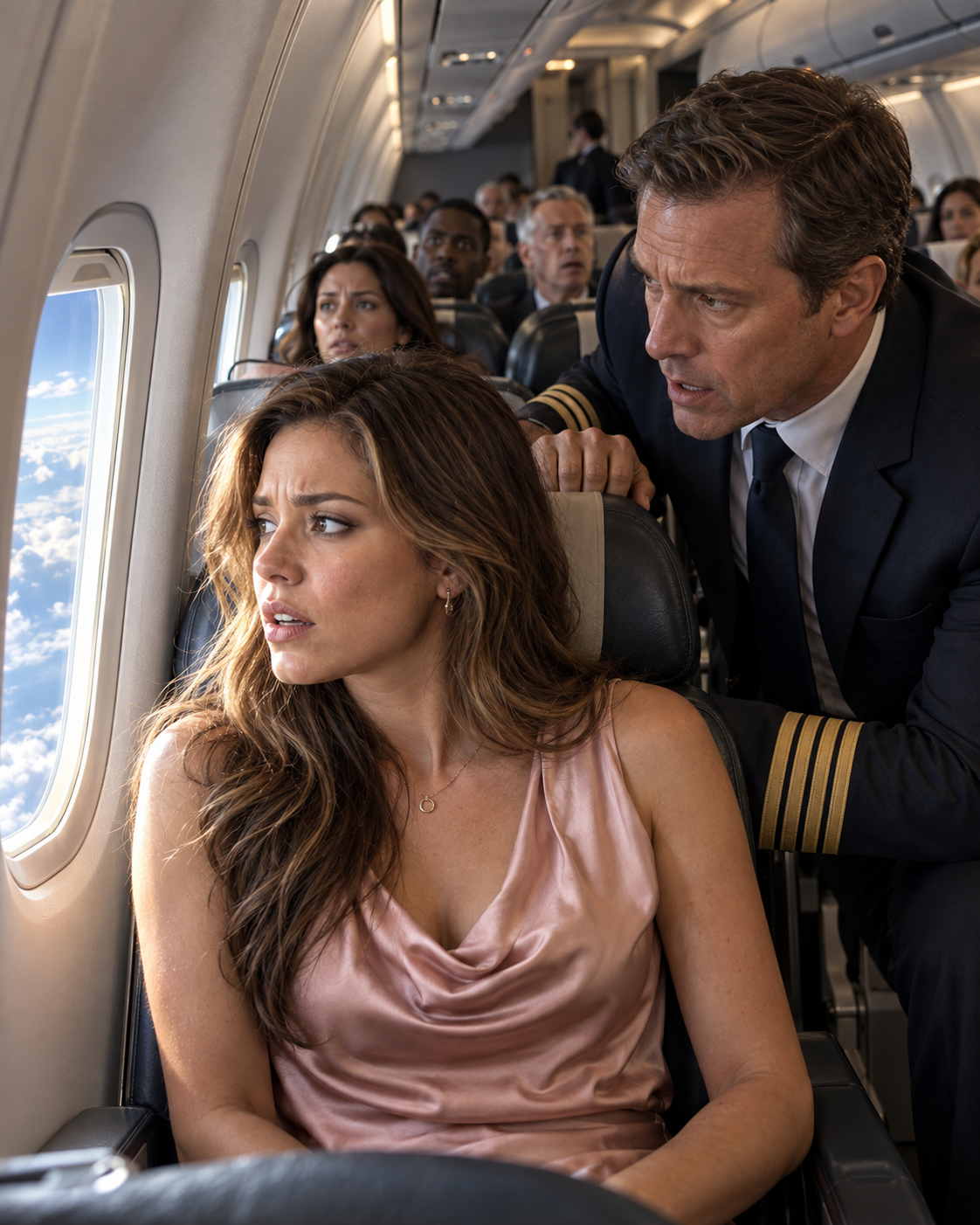
Her voice cracked.
“What if he fires?”
I looked at her.
“Then we react.”
“But what if—”
“We don’t fight the next five minutes in our imagination.”
She went quiet.
I understood her fear.
I felt it too.
Fear doesn’t disappear because you’re trained.
Training simply teaches you where to put it.
The hostile fighter crossed our projected path.
I ordered another coordinated altitude change.
Not enough to create panic.
Enough to make his targeting solution unstable.
The fighter turned.
We turned.
He climbed.
We descended.
Then the second fighter moved toward another civilian aircraft.
I immediately redirected that aircraft’s heading.
“Flight four, left turn now.”
The pilot responded.
“Confirmed.”
“Hold it.”
Seconds passed.
Then the targeting radar disappeared.
Nora looked at me.
“He lost us.”
“Not yet.”
The first fighter moved again.
He was probing.
Testing.
Looking for the easiest aircraft.
I remembered something from my years in the cockpit.
The most dangerous enemy isn’t always the one who attacks first.
It’s the one who learns faster than you do.
So I refused to let them learn.
Every move we made forced another adjustment.
Every adjustment cost them time.
The four airliners moved through the dark like slow, glowing ships on an invisible ocean.
I became aware of the sound of my own breathing.
In.
Out.
In.
Out.
The cockpit smelled like electronics and cold coffee.
For one strange second, I remembered my first combat mission.
I remembered being twenty-six and believing bravery meant not being afraid.
I knew better now.
Bravery was being afraid and still thinking clearly.
“Daniel,” Arthur said quietly, “how long?”
I checked the tactical clock.
“Seven minutes.”
His jaw tightened.
“That’s a long time.”
“It is.”
The second fighter suddenly accelerated.
The radar symbol jumped toward Flight Three.
“Turn now.”
Flight Three banked.
The fighter followed.
“Climb.”
The airliner climbed.
“Level.”
It leveled.
The hostile aircraft adjusted again.
I watched the geometry change.
He was trying to predict the aircraft’s next movement.
So I made the next movement unpredictable.
“Flight One, descend.”
“Flight Two, hold.”
“Flight Three, turn right.”
“Flight Four, slow down.”
Four different commands.
Four different directions.
Four massive civilian aircraft suddenly occupied different layers of the sky.
The hostile pilots had speed.
They had missiles.
They had radar.
But they no longer had a simple target.
Then the first fighter crossed directly ahead of us.
Close enough that the radar return seemed to jump across the screen.
Nora gasped.
I didn’t move.
I watched.
The fighter turned.
The lock began again.
“He’s committed,” I said.
Arthur looked at me.
“What does that mean?”
“It means he’s angry.”
“And that’s good?”
“It means he’s predictable.”
I gave another command.
The four aircraft shifted simultaneously.
The fighter overshot the geometry.
His targeting solution collapsed.
For the first time, I heard relief in Nora’s voice.
“You did it.”
“No.”
I kept watching the radar.
“We bought another minute.”
The clock continued moving.
Five minutes.
Then four.
Then three.
The hostile aircraft made another pass.
This time, they did not attempt a direct lock.
They moved farther away.
I understood immediately.
They were trying to reset.
They were waiting for us to relax.
I refused.
“Keep everyone moving.”
Arthur stared at me.
“How long can you keep this up?”
“As long as the pilots stay disciplined.”
“And after that?”
I looked at the tactical display.
“After that, we hope our friends arrive.”
Then the radio came alive.
“Military interceptors inbound.”
My chest tightened.
“How many?”
“Four.”
I closed my eyes for one second.
“Distance?”
“Approximately two minutes.”
Two minutes.
We had survived four.
We only needed two more.
But the hostile fighters seemed to know something had changed.
Their behavior became more aggressive.
The first accelerated.
The second split away.
“They’re making one final approach,” I said.
Arthur’s hands tightened.
Nora whispered, “Why?”
“Because they know they’re running out of time.”
The fighter moved toward Flight Two.
I ordered a climb.
He followed.
I ordered a turn.
He followed.
Then Flight Two disappeared behind another aircraft’s radar return.
For one terrifying second, I couldn’t tell which symbol belonged to which plane.
I leaned closer.
There.
A faint return.
Still moving.
Still alive.
“Found you,” I whispered.
Then four new contacts appeared.
Fast.
Extremely fast.
Coming from the southwest.
I didn’t need an identification code.
I already knew.
Four F-15s entered the tactical picture.
And for the first time since the attack began, I allowed myself to breathe.
Part 3
The arrival of the fighters changed the atmosphere inside the cockpit instantly.
The four F-15s moved into position with the confidence of aircraft built for exactly the kind of problem we had been surviving.
The hostile fighters saw them too.
Their aggressive approach disappeared.
Their targeting radar went cold.
They turned east.
The F-15s followed.
No missile was fired.
No dramatic explosion lit the sky.
There was simply a moment when everyone in our cockpit understood that the nightmare was ending.
Captain Pendleton whispered, “They’re leaving.”
I nodded.
“Yes.”
Nora looked at me.
Her eyes were wet.
“Are we safe?”
I watched the radar until the hostile contacts disappeared beyond the tactical boundary.
“Yes.”
She covered her face with both hands.
For several seconds, nobody spoke.
Then Arthur removed his headset.
“Lieutenant Colonel Mercer.”
I turned.
“Thank you.”
I shook my head.
“Don’t thank me.”
He looked confused.
“Thank the pilots who arrived.”
“They wouldn’t have arrived in time without you.”
I didn’t know what to say to that.
Praise had always made me uncomfortable.
Maybe because praise makes you remember the things you survived.
The cabin crew eventually announced that there had been a serious security incident and that the situation was under control.
They did not explain everything.
They didn’t need to.
Passengers sensed enough.
When I finally stepped out of the cockpit, the cabin went silent.
Two hundred and sixteen faces turned toward me.
For a moment, I felt more exposed than I had ever felt in a fighter aircraft.
Then someone started clapping.
One person.
Then another.
Then an entire cabin erupted.
I stood there in my gray sweater and jeans while strangers applauded a man they knew almost nothing about.
A woman near the aisle was crying.
An older man stood and pressed his hand against his heart.
A little boy looked up at his mother and asked, “Was he a pilot?”
His mother nodded.
I lowered my eyes.
I wanted to tell them I wasn’t a hero.
I wanted to tell them I had only done what training had demanded.
But then I saw a father holding his sleeping daughter against his chest.
And I realized something.
Sometimes the difference between a hero and an ordinary person is nothing more than being in the right seat when the wrong thing happens.
I walked toward the back of the plane.
The applause followed me.
It wasn’t pride I felt.
It was weight.
Because every person clapping had trusted someone they didn’t know to get them home.
And I knew how easily that trust could have ended differently.
When we landed at Heathrow, military personnel were waiting.
The debrief lasted for hours.
There were questions about radar signatures, command authorization, communication procedures, and every decision I had made during those six minutes.
I answered all of them.
Carefully.
Precisely.
Without exaggeration.
When the final officer closed the folder, he looked at me.
“You could have stayed in military aviation.”
I smiled faintly.
“I already did my time.”
He nodded.
“Do you miss it?”
I thought about the cockpit.
The darkness.
The radar.
The sound of Nora’s breathing.
The four airliners moving through the sky.
I thought about all the people I had known who never got the luxury of retirement.
“Sometimes,” I said.
“But mostly, I miss the people I was before it.”
He didn’t ask what I meant.
I’m grateful for that.
A week later, I returned to my civilian consulting job.
I wore the same gray sweater.
I drank coffee at my desk.
People asked about the flight.
I told them it had been complicated.
I never told the story the way the passengers remembered it.
I never called myself their savior.
Because the truth was simpler.
I was an old pilot sitting in seat 14F when someone needed a pilot.
That was all.
But sometimes, late at night, when the office was empty and the coffee had gone cold, I would remember the radar screen.
Four civilian aircraft.
Two armed fighters.
Twelve minutes.
Six minutes survived.
And I would remember the little boy asking his mother if I had been a pilot.
Then I would look at my reflection in the dark window and finally understand something I had spent years avoiding.
You don’t always get to choose when your past comes back for you.
Sometimes it finds you quietly, disguised as an ordinary flight, a stale cup of coffee, and a gray sweater.
And sometimes the life you thought you had left behind is still carrying a lesson you were meant to give away.
I never flew a combat mission again.
But whenever I boarded an airplane after that night, I looked at the cockpit door differently.
Not because I wanted to go back.
Because I finally understood that courage isn’t about living forever in the moment when you were strongest.
It’s about knowing when to step forward, even after you have spent years trying to become invisible.
And somewhere above the Atlantic, four hundred strangers went home to their families because, for six minutes, one retired pilot remembered exactly who he was.