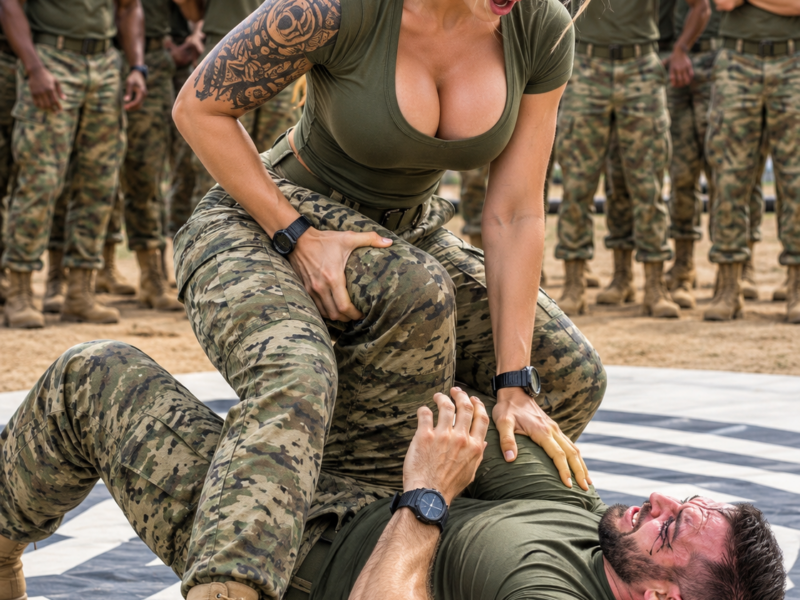
“The entire training ground went silent when the Navy SEAL colonel ordered everyone to stop
For several seconds, nobody moved.
Colonel Hayes looked at Mason.
“Who accessed the archive?”
“We’re still tracing the login, sir. But it came through the facility’s secure network. The account belonged to Lieutenant Commander Elias Voss.”
My stomach tightened.
I knew that name.
I had spent six years trying not to remember it.
“That’s impossible,” I whispered.
Hayes turned toward me.
“Why?”
“Because Elias Voss died six years ago.”
Mason glanced between us.
“Then somebody is using a dead man’s credentials.”
“Not just his credentials,” I said. “His authorization phrase.”
Hayes’s expression hardened.
“What authorization phrase?”
I looked at the technician’s tablet.
“Ask him to check whether the login included a secondary authentication code.”
Mason hesitated.
“Why?”
“Because if it did, the person accessing the archive knows something that wasn’t included in the official personnel records.”
Hayes took the tablet.
A moment later, his face changed.
“There’s a secondary code.”
I closed my eyes.
It was happening again.
The past wasn’t buried.
It was coming back for me.
“Colonel, I need to see the archive.”
“Not until you tell me who you are.”
I looked at him.
“My name is Claire Bennett. I served in a special operations intelligence unit. Six years ago, I was attached to a mission called Black Viper.”
Mason stopped moving.
Hayes pulled out a chair.
“Sit down.”
“I’d rather stand.”
He accepted that.
“Tell me what happened.”
I looked at the door to make sure it was closed.
Then I began.
Six years earlier, I had been a senior communications and intelligence specialist attached to a small joint task group operating overseas.
Our assignment had been to locate a missing intelligence officer who had allegedly obtained evidence of a network selling military access codes.
The operation was designated Black Viper.
The team had six members.
Elias Voss was our commanding officer.
He was brilliant, demanding, and trusted by everyone who served with him.
At least, we thought we could trust him.
The other members were Sergeant Daniel Cross, Lieutenant Mara Ellis, specialist Jonah Price, communications officer Samuel Reed, and me.
We had spent months preparing.
We knew the terrain.
We knew the risks.
We had contingency plans for nearly every situation.
What we didn’t know was that someone had already given away our location.
The night we entered the operation area, our communications went dark.
Our extraction route was compromised.
A vehicle we had been told was secure never arrived.
Then we received an order to move to a secondary location.
It was signed by Voss.
We followed it.
That was our mistake.
The location was already under surveillance.
We were ambushed before we reached the perimeter.
Cross was wounded.
Jonah disappeared in the confusion.
Samuel stayed behind to help him.
Mara and I were separated from the others.
I remembered the sound of radio static.
The dust.
The shouting.
And Voss’s voice telling us to abandon the original plan.
Then came the final transmission.
“All personnel, mission terminated. No recovery authorized.”
I had never forgotten those words.
I had survived because Mara dragged me into an abandoned service building and treated the wound in my shoulder.
We waited two days.
When the opportunity came, we escaped through a civilian evacuation corridor.
But when we finally reached a friendly checkpoint, we learned that the official report listed the entire team as missing or presumed dead.
Worse, it claimed the mission had been compromised because of unauthorized actions by the team.
Our names were buried beneath a classified investigation.
And Elias Voss was listed as killed during the operation.
I had never believed the report.
I had heard his voice after the attack.
He had been alive.
And he had ordered us to abandon the others.
When I finished, Colonel Hayes remained silent.
Mason had stopped looking amused.
“Why didn’t you report what happened?” he asked.
I looked at him.
“I did.”
He frowned.
“To whom?”
“Three different investigators. Two military offices and one intelligence review team.”
“What happened?”
“Nothing. My statements were sealed. My access was revoked. Then I was told that discussing the operation could compromise ongoing national security work.”
Hayes leaned forward.
“And the insignia?”
I looked at my wrist.
“The Black Viper mark was issued to the original team. It was never meant to be displayed publicly. We used it to identify authenticated communications when normal channels were compromised.”
“How did it end up on your watch?”
“It was on the strap when we were deployed. I kept it because it was the only thing I had left from that operation.”
Hayes looked at Mason.
“Get the archive team in here. Nobody accesses anything without my authorization.”
Mason nodded and left.
I turned toward the colonel.
“There’s something else.”
“What?”
“The device in the training structure. It wasn’t just a transmitter. It was testing the facility’s communications response.”
Hayes’s eyes narrowed.
“Explain.”
“The repeated signal wasn’t random. It was a challenge pattern. Whoever installed it wanted to know which systems would respond and how quickly the facility would isolate the compromised frequency.”
“You think someone used our drill to test the network?”
“Yes.”
“Why?”
I looked at the photograph on the tablet.
“Because they knew I’d be here.”
Hayes stared at me.
“You’re saying this was arranged?”
“I’m saying the device was placed where I would find it. The radio feed used an old Black Viper pattern. And now someone has accessed the archive using Voss’s credentials.”
The colonel stood.
“Then this is no longer a training exercise.”
He opened the door.
“Lock down the facility’s external network. Preserve all recordings. Nobody leaves until we establish what happened.”
A voice answered from the hallway.
“Understood, sir.”
Mason returned with two technical specialists.
One was a woman in her forties named Lieutenant Commander Rachel Kim.
She introduced herself quickly and placed a laptop on the table.
“We traced the archive access,” she said. “The login came from a terminal inside this building.”
Hayes looked at her.
“Which terminal?”
Kim turned the screen toward us.
“Room 214. The temporary operations office.”
I recognized the room.
It was where the visiting consultants had checked in that morning.
“Who used it?”
Kim opened the access log.
“Several people had temporary authorization.”
She scrolled.
Then stopped.
“One account stands out.”
The name on the screen made my blood run cold.
Mason Rourke.
Everyone turned toward him.
Mason stared at the display.
“I didn’t access that archive.”
Kim didn’t look up.
“Your credentials were used at 09:42.”
“I was outside the training structure at that time.”
“That doesn’t mean your credentials weren’t used.”
Mason stepped forward.
“Someone must have copied my access card.”
Hayes raised a hand.
“Nobody is accusing you yet. We are establishing facts.”
I studied Mason’s face.
He looked angry.
But beneath the anger, I noticed something else.
Fear.
“Where was your access card during the first drill?” I asked.
He turned.
“On me.”
“Are you certain?”
“Yes.”
“Then show us.”
He pulled the card from his pocket.
Kim examined it.
“That’s not the original card.”
Mason frowned.
“What?”
“The facility cards have a small security marking along the lower edge. Yours doesn’t.”
She held it up.
“Someone gave you a duplicate.”
Mason looked at the card as though it had appeared in his hand by magic.
“I got this at registration.”
“Who handed it to you?”
He hesitated.
“A contractor. I don’t remember his name.”
Hayes’s expression darkened.
“Describe him.”
“Older guy. Gray hair. Blue jacket. He said he was with facility support.”
Kim began searching the visitor log.
“There was no contractor matching that description.”
Mason sat down.
For the first time, he seemed to understand that he might have been used.
I leaned toward him.
“Did he say anything else?”
Mason rubbed his forehead.
“He asked whether I’d be participating in the second phase. He knew I was assigned to your group.”
I felt a chill.
“Did he ask about me?”
Mason looked up.
“He asked whether the civilian consultant was really Claire Bennett.”
The room went quiet.
Hayes turned to Kim.
“Find every camera recording from registration.”
She nodded.
I stared at the duplicate access card.
Someone had arranged for me to come here.
Someone had placed a device inside the training structure.
And someone had used Mason’s credentials to reach the Black Viper archive.
It wasn’t a coincidence.
It was a message.
A message that said they knew exactly where I was.
The technical team worked for nearly an hour.
They isolated the compromised terminal and recovered part of the access session.
The archive had been opened.
A file had been downloaded.
The filename was simple.
BLACK_VIPER_FINAL_REPORT.
Hayes opened the file in a secure viewer.
The first page contained the official mission summary.
The second contained a list of personnel.
The third contained a photograph.
I recognized the six of us immediately.
Voss stood in the center.
He looked younger.
Confident.
Alive.
I felt my throat tighten.
Then I noticed something behind him.
A man standing near the edge of the photograph.
His face was partly obscured by shadow.
I leaned closer.
“Who is that?”
Kim enlarged the image.
Hayes studied it.
“Do you recognize him?”
I shook my head.
“Not from the mission.”
Kim checked the file metadata.
“This image was added to the report three weeks after the original archive was created.”
“By whom?” Hayes asked.
She examined the record.
“An administrator account.”
“Name?”
Kim looked up.
“Deputy Director Adrian Mercer.”
Hayes went completely still.
I knew that name too.
Mercer had led the internal review into the Black Viper mission.
He had been the person who interviewed me after my return.
He had told me there was no evidence Voss had survived.
He had also warned me that further questions could damage my career.
“He’s retired,” Hayes said.
Kim shook her head.
“Not according to the personnel system.”
She pulled up another record.
“His status changed yesterday. He was granted temporary access to this facility as a senior external adviser.”
Hayes stared at the screen.
“Who authorized that?”
Kim checked.
Then she looked at him.
“You did, sir.”
The room fell silent.
Hayes slowly turned toward the door.
“I didn’t authorize any external adviser.”
Kim looked at the record again.
“Your digital signature is attached.”
I felt my pulse quicken.
“Then someone has copied the colonel’s credentials too.”
Hayes said nothing.
He looked at me.
“Claire, how much do you remember about the original mission’s authentication system?”
“Enough.”
“Could someone recreate the Black Viper challenge pattern?”
“Only if they had access to the original codebook.”
Kim’s hands stopped over the keyboard.
“There’s a problem.”
She turned the laptop toward us.
“The device we recovered from the training structure transmitted a challenge sequence that matches the original Black Viper authentication protocol.”
I felt the room tilt.
“That’s impossible.”
“Why?”
“Because the codebook was destroyed after the operation.”
Hayes looked at me.
“Are you certain?”
“I watched it happen.”
“Then somebody kept a copy.”
A knock sounded.
A security officer opened the door.
“Colonel, we have a situation at the main gate.”
Hayes stood.
“What situation?”
“An individual has arrived claiming to be Deputy Director Mercer. He says he needs to speak with Ms. Bennett immediately.”
I stopped breathing.
Kim checked the visitor camera.
A man stood outside the gate in a dark coat.
His hair was silver.
His posture was straight.
His face was older, but unmistakable.
Adrian Mercer.
Hayes stared at the screen.
“Bring him to the secure conference room. Search him, verify his credentials, and keep him under observation.”
The officer hesitated.
“Sir, he says he has authorization from headquarters.”
“Then headquarters can confirm it. Nobody enters until we do.”
The officer left.
I turned to Hayes.
“Don’t let him near the archive.”
“I won’t.”
“Don’t let him speak to me alone.”
“I won’t.”
For the first time that morning, I was grateful that the colonel had taken me seriously.
A few minutes later, the security team reported that Mercer’s credentials were valid.
But his authorization to enter the facility had been forged.
He was escorted into a secure interview room.
Hayes asked me to remain in the observation area.
I agreed.
Through the glass, I watched Mercer sit across from the colonel.
He didn’t look nervous.
He looked disappointed.
As though someone had failed to follow a schedule.
Hayes placed the photograph on the table.
“Explain this.”
Mercer glanced at it.
“An old mission record.”
“Why was it altered?”
“Records are amended all the time.”
“Why did you use my credentials to access this facility?”
Mercer smiled faintly.
“I didn’t.”
“Your name appears on the authorization.”
“Then your security system has a problem.”
Hayes leaned forward.
“Who placed the device in the training structure?”
Mercer folded his hands.
“I have no idea what you’re talking about.”
I watched his expression.
He was too calm.
Too prepared.
Then he looked toward the observation window.
Directly at me.
He smiled.
My stomach turned.
He knew I was watching.
The colonel followed his gaze.
“Do you recognize her?”
Mercer turned back.
“Of course.”
“Then tell me what happened to her team.”
His smile disappeared.
“They disobeyed orders.”
I felt my hands clench.
Hayes remained calm.
“Which orders?”
“The mission was compromised. They were instructed to withdraw.”
“By whom?”
“Commander Voss.”
I stepped closer to the glass.
“That’s a lie.”
Hayes glanced toward me.
Mercer didn’t.
“Ms. Bennett is emotionally invested. Her account has never been independently verified.”
I pressed the intercom.
“My account was verified by the medical team that treated my shoulder, by the checkpoint personnel who received us, and by the original radio recordings.”
Mercer finally looked toward the window.
“Those recordings were never authenticated.”
“They were made on the encrypted channel you told us was secure.”
He leaned back.
“You’re remembering things incorrectly.”
I felt the old anger rising.
But this time, I didn’t let it take over.
“Then let’s examine the original archive.”
Mercer’s face changed.
Only slightly.
But I saw it.
Hayes saw it too.
“Why don’t you want us to open the full file?” the colonel asked.
Mercer said nothing.
Kim entered the room with a tablet.
“Colonel, we recovered another file from the compromised terminal.”
She placed it on the table.
“It’s an audio recording.”
Hayes looked at me.
“Do you recognize the date?”
I nodded.
“It was recorded during the final operation.”
He played it.
Static filled the room.
Then Voss’s voice came through.
“All personnel, hold position. The withdrawal order is not authenticated. Repeat, do not move until I confirm.”
My breath caught.
The recording continued.
A second voice interrupted.
“Command says you are to abandon the eastern team.”
Voss responded.
“Who is command?”
“Mercer.”
Then came a pause.
Voss spoke again.
“That isn’t possible. Mercer is not on this channel.”
The recording ended.
No one moved.
Mercer stared at the table.
Hayes played the audio again.
“Is that your voice?” he asked.
Mercer looked up.
“Audio can be manipulated.”
“Then you’ll have no objection to an independent forensic examination.”
Mercer said nothing.
I looked at him through the glass.
“You told us the mission had been terminated. You told the investigators Voss had ordered the withdrawal. But he was trying to stop us from following your instructions.”
Mercer finally turned toward me.
“You have no idea what was happening.”
“Then explain it.”
He shook his head.
“You were a junior specialist. You were never supposed to know the larger objective.”
“What larger objective?”
He looked at Hayes.
“This conversation is over.”
Hayes stood.
“Not yet.”
Mercer reached into his coat.
The security officer moved immediately.
“Hands where I can see them.”
Mercer froze.
A small data device lay in his palm.
The officer removed it.
Kim examined it from a distance.
“That’s not an approved storage device.”
Hayes looked at Mercer.
“What were you planning to do with that?”
Mercer said nothing.
The device was secured.
Then Kim checked its external markings.
Her face went pale.
“Colonel, this contains the original Black Viper codebook.”
I felt the air leave my lungs.
The codebook had been destroyed.
Or so we had been told.
Hayes turned toward me.
“Claire, you said the codebook was destroyed after the mission.”
“It was.”
“Who destroyed it?”
“I did.”
Mercer gave a small laugh.
“Did you?”
I stared at him.
He leaned forward.
“You were the last person assigned to secure the field communications package. You never saw what happened after you left the staging area.”
I remembered that night.
The burning container.
The instructions.
The way Voss had insisted that the codebook be destroyed before we withdrew.
Then I remembered something else.
The small metal case I had carried out of the operations building.
It had been empty.
I had assumed the codebook was inside.
But I had never checked.
My voice dropped.
“You switched it.”
Mercer smiled.
“Someone did.”
Hayes looked at Kim.
“Can you verify the device?”
She nodded.
“We’ll need a forensic team, but the structure matches the original codebook.”
Mercer leaned back.
“You people think you’ve uncovered a conspiracy. You’ve uncovered a document.”
Hayes’s expression was cold.
“Then why did you bring it here?”
Mercer looked at me.
“Because she was supposed to come back.”
My heart hammered.
“Why?”
“Because the original operation was never about the missing intelligence officer.”
He paused.
“It was about the people who knew what the officer had discovered.”
I stepped closer.
“What did he discover?”
Mercer looked at me for a long moment.
Then he said the words that changed everything.
“He discovered that military access codes were being sold through a network inside our own intelligence system. And he had evidence that senior officials were involved.”
I stared at him.
“Who?”
Mercer smiled again.
“People you don’t have the clearance to name.”
Hayes stood.
“That’s enough.”
Mercer continued.
“Voss was ordered to recover the evidence. Instead, he decided to protect it. His team became a liability.”
“Where is Voss?” I demanded.
Mercer looked directly at me.
“Ask the person who has been sending you messages.”
I felt my blood run cold.
“What messages?”
Hayes turned toward me.
“Have you received anything?”
I shook my head.
Then I remembered the envelope.
It had arrived at my apartment three days before the training exercise.
No return address.
Inside was a single photograph of the Black Viper insignia.
On the back were four words.
You were not forgotten.
I hadn’t told anyone.
Not even Hayes.
I reached into my pocket and showed him the photograph I’d taken of it.
His expression darkened.
“Why didn’t you report this?”
“Because I didn’t know who I could trust.”
He looked at Mercer.
“Did you send it?”
Mercer shook his head.
“Not me.”
“Then who?”
For the first time, he looked genuinely uncertain.
“I don’t know.”
Kim’s tablet chimed.
She checked the screen.
“Colonel, we have an incoming encrypted message on the isolated network.”
Hayes looked at her.
“From where?”
“An external source. It used the Black Viper authentication pattern.”
I stared at the screen.
“Open it.”
Hayes hesitated.
“Claire—”
“Please.”
Kim displayed the message.
It contained a short text line.
The eastern team is alive.
My knees weakened.
I read it again.
The eastern team.
Cross.
Jonah.
Samuel.
Mara.
People I had spent six years mourning.
A second line appeared.
Voss is waiting.
Then a location.
An abandoned communications station outside the facility’s secure perimeter.
Hayes immediately ordered the message preserved and the source traced.
He also ordered a security team to prepare.
“No one goes anywhere alone,” he said.
I looked at him.
“Colonel, if they’re alive—”
“We don’t know that they’re alive. We don’t know who sent this. And we don’t know whether it’s a trap.”
“I understand.”
“Do you?”
I nodded.
“Yes. That’s why I want to go with your team.”
He studied me.
“You’re not going because you feel you owe the past something.”
“I’m going because I may be the only person who can authenticate the message.”
He considered that.
Then he gave a single nod.
“Fine. But you follow the team’s instructions. No improvising. No heroics.”
I almost smiled.
“Understood.”
The team moved out under controlled conditions.
Hayes led the response.
Kim remained at the facility to coordinate communications.
Mason was assigned to the security detail.
He approached me before we left.
“Claire.”
I turned.
He looked uncomfortable.
“I owe you an apology.”
I said nothing.
“I judged you before I knew anything about you. I thought you were just some civilian who’d been brought in to make the exercise look good.”
“That’s what I was introduced as.”
He shook his head.
“Still. I was wrong.”
I studied him.
“Don’t apologize because you found out I served. Apologize because you decided someone didn’t belong before you knew what they could contribute.”
He nodded slowly.
“You’re right.”
Then he stepped aside.
The abandoned communications station stood beyond a line of trees.
It had been unused for years.
The windows were dark.
The door was slightly open.
Hayes signaled the team to hold.
I looked at the building.
There was something familiar about it.
Not the structure.
The way the silence seemed deliberate.
I raised my hand.
“Wait.”
Hayes turned.
“What?”
“There’s a light inside.”
He studied the doorway.
A faint green glow flickered behind the glass.
“Could be a device.”
“Or a signal.”
We waited.
Then three short flashes appeared.
Two long.
Three short.
My breath caught.
It was an old Black Viper recognition pattern.
I answered with the corresponding signal.
The light disappeared.
A moment later, a voice came from inside.
“Claire?”
I stopped breathing.
I knew that voice.
I had heard it in nightmares.
“Voss?”
The door opened.
A man stepped into the light.
He was thinner.
Older.
There was a scar along his cheek, and he leaned slightly on a walking stick.
But it was Elias Voss.
Alive.
For six years, I had imagined what I would say if I ever saw him again.
I had planned to ask why he abandoned us.
Why he lied.
Why he left us believing we were dead.
But when he looked at me, the only words I could manage were:
“Where were you?”
His eyes filled.
“Trying to keep you alive.”
I felt anger surge through me.
“By letting the world believe we were dead?”
He lowered his head.
“I thought it was the only way.”
Hayes stepped forward.
“Commander Voss, I’m Colonel Daniel Hayes. We need you to explain everything.”
Voss looked at him.
Then back at me.
“First, I need to know something. Did Mercer come here?”
“He’s in custody.”
Voss closed his eyes.
“Then we’re out of time.”
He led us into the station.
Inside, an old communications desk had been converted into a secure archive.
Several photographs were pinned to the wall.
I recognized every member of the team.
Cross.
Mara.
Jonah.
Samuel.
They were all alive in the photographs.
Taken recently.
I moved closer.
“When were these taken?”
“Within the last month.”
“Where are they?”
“Safe. But not together.”
I turned to him.
“Why?”
Voss looked at the floor.
“Because the people who compromised the operation never stopped looking for the evidence.”
He explained that the intelligence officer we had been sent to find had uncovered a network selling military access codes to private intermediaries.
The network included officials who could alter mission records, redirect resources, and erase the identities of people who threatened them.
Voss had discovered that the original extraction order was false.
He had tried to stop the team from following it.
But Mercer had already compromised our communications.
When the ambush happened, Voss had been separated from us and captured.
He escaped with help from a local source, but by then the official report had been altered.
He tried to contact headquarters.
Every channel was compromised.
So he disappeared.
He believed that if the team was officially dead, the network would stop hunting us.
But he was wrong.
“They kept looking,” I said.
“Yes.”
“And you let us believe we were alone.”
His expression crumpled.
“I thought I was protecting you.”
“You took away our chance to tell the truth.”
“I know.”
For a long moment, neither of us spoke.
Then he placed a small folder on the desk.
“This is the evidence we recovered.”
Hayes opened it carefully.
Inside were records, authorization logs, financial transfers, and communications linking the compromised officials to the sale of military access codes.
The material was extensive.
But one page stood out.
It contained the original mission orders.
And at the bottom was a signature.
Adrian Mercer.
Hayes studied it.
“Is this authentic?”
Voss nodded.
“Yes. The original order was issued under his authority. The withdrawal instruction that led to the ambush was never approved by command.”
I stared at the page.
“So the entire team was sacrificed to protect the network.”
Voss nodded.
“That’s what I believe.”
I looked at him.
“Where are the others?”
He hesitated.
Then he opened a secure channel.
A voice answered.
“Station, identify.”
Voss looked at me.
“Do you want to speak to them?”
I couldn’t answer.
He passed me the headset.
I put it on.
“Hello?”
Static.
Then a familiar voice.
“Claire?”
My eyes filled.
“Mara?”
A shaky laugh came through.
“You’re still impossible to get rid of.”
I covered my mouth.
Mara was alive.
Then another voice joined.
“Claire, it’s Cross.”
I began to cry.
Then Jonah.
Then Samuel.
All four of them.
Alive.
They had survived.
They had been separated, hidden, and protected by people Voss trusted outside the compromised network.
They had waited for a way to expose the truth without putting one another at risk.
And now that Mercer had been caught, they had decided it was time.
Hayes listened as the team confirmed their identities through the original authentication procedure.
He then contacted headquarters through a separate command channel.
This time, the message went to an oversight office that had not been involved in the original investigation.
The evidence was transferred under strict chain-of-custody procedures.
Mercer was placed under formal investigation.
The false mission records were secured.
And the remaining members of Black Viper were brought into protective custody so they could provide testimony safely.
It took months for the full investigation to unfold.
The network was larger than anyone had expected.
Several officials resigned.
Others were suspended or charged.
The evidence confirmed that Mercer had manipulated the mission records and used compromised credentials to conceal the sale of military access codes.
The investigation also established that the training facility device had been planted to test its security systems and draw me into the open.
Mason’s duplicate access card had been part of the setup.
He had been used without his knowledge.
The Black Viper archive had been accessed to determine whether the original evidence still existed.
And the person behind the recent messages had been Voss.
He had finally decided that silence was doing more harm than the truth.
The team members were formally cleared of the accusations made against them.
Their service records were corrected.
Their families were notified.
And the mission that had supposedly ended in disgrace was finally acknowledged for what it had been: an operation compromised by people who had betrayed the very institution they were supposed to protect.
The day the official findings were released, Colonel Hayes called me back to the training facility.
The same facility where I had been mocked.
The same ground where he had first recognized the Black Viper mark.
Mason was there.
So were the other members of the training group.
Hayes stood before them.
“Six years ago, a team of highly trained personnel was betrayed by individuals who abused their authority. Their names were buried. Their service was questioned. And one of the people who survived that operation was treated here as though she had nothing to contribute.”
He turned toward me.
“Claire Bennett did not come here to prove she was better than anyone. She came here to do a job. When she recognized a security threat, she reported it. When she was asked to help, she did. And when the evidence pointed toward a much larger problem, she refused to let the truth disappear again.”
He paused.
“That is what professionalism looks like.”
Nobody laughed.
Mason stepped forward.
“Ms. Bennett, I want to apologize in front of everyone.”
I looked at him.
He continued.
“I judged you by your clothes, your title, and what I assumed you couldn’t do. I was wrong. You didn’t owe me an explanation, but I made you feel like you did.”
I nodded.
“Thank you.”
He offered his hand.
I shook it.
Then Colonel Hayes looked at the black watch on my wrist.
“Are you keeping the mark?”
I looked down.
For years, I had worn it beneath my sleeve because it reminded me of everything I had lost.
Now it reminded me of something else.
The people who had survived.
The truth that had finally come out.
And the fact that our names no longer belonged to a lie.
“Yes,” I said. “But I won’t hide it anymore.”
Hayes nodded.
“Good.”
A few weeks later, I met the rest of the Black Viper team at a quiet memorial garden.
There were no cameras.
No speeches.
No reporters waiting to turn our story into a headline.
Just six people who had once believed they would never see one another again.
Mara hugged me first.
Cross shook his head and laughed.
Jonah told me I still looked like I was about to argue with someone.
Samuel simply held my hand for a long moment.
Voss stood a little apart.
I walked over to him.
For a while, neither of us spoke.
Then he said, “I don’t expect you to forgive me.”
I looked at him.
“Good.”
He nodded.
“I should have trusted you with the truth.”
“Yes.”
“I should have found a way to contact you.”
“Yes.”
“I thought keeping you alive was enough.”
I looked toward the others.
“Keeping us alive was important. But you also had to let us live with the truth.”
He lowered his eyes.
“I know.”
I didn’t tell him everything was forgiven.
It wasn’t.
Some wounds don’t disappear simply because the people responsible finally admit what happened.
But I did tell him one thing.
“I’m glad you’re alive.”
His eyes filled.
“Me too.”
That afternoon, we stood together beside a small plaque bearing the names of the original Black Viper team.
For six years, those names had existed only in sealed files and whispered memories.
Now they were public.
Not as symbols of failure.
Not as casualties.
As people who had served, survived, and finally been heard.
I touched the edge of my watch.
The black viper was still there.
But it no longer felt like a secret I had to carry alone.
When I returned to the training facility months later, the instructors had added a new section to their readiness program.
It focused on decision-making, communication failures, and the responsibility to challenge an order when something clearly didn’t add up.
Colonel Hayes asked me to speak to the next group of trainees.
I stood before them in the same faded gray shirt I had worn on the day everything began.
One young operator raised his hand.
“Ma’am, what’s the biggest lesson you learned from Black Viper?”
I looked at the room.
I thought of the mission.
The betrayal.
The years of silence.
And the people who had finally helped bring the truth into the light.
“Never assume that the loudest person in the room is the one who knows the most,” I said. “And never mistake someone’s appearance for their ability.”
The young operator nodded.
I continued.
“Respect isn’t something you give only to people wearing the right uniform. It’s something you show until someone’s actions give you a reason not to.”
Colonel Hayes watched from the back.
When the session ended, he approached me.
“You know,” he said, “the first time I saw that mark, I thought I was looking at a ghost.”
I smiled faintly.
“And now?”
“Now I know I was looking at someone who refused to let the truth die.”
I glanced toward the training ground.
The same place where Mason had laughed.
Where I had been treated like I didn’t belong.
Where a colonel had ordered the entire drill to stop.
I had not returned to prove that I could outfight anyone.
I had returned because the truth mattered more than my pride.
And because the people who had stood beside me six years earlier deserved to have their names restored.
As I walked toward the exit, my phone vibrated.
A message from Mara.
Dinner tonight. No excuses. The whole team is coming.
I laughed and typed back:
I’ll be there.
For the first time in six years, the words felt completely true.
We were no longer missing.
We were no longer forgotten.
And the Black Viper mark was no longer a warning from a past I couldn’t escape.
It was a reminder that even when powerful people try to bury the truth, the truth can survive—sometimes in the hands of the very person they underestimated.
The end.









