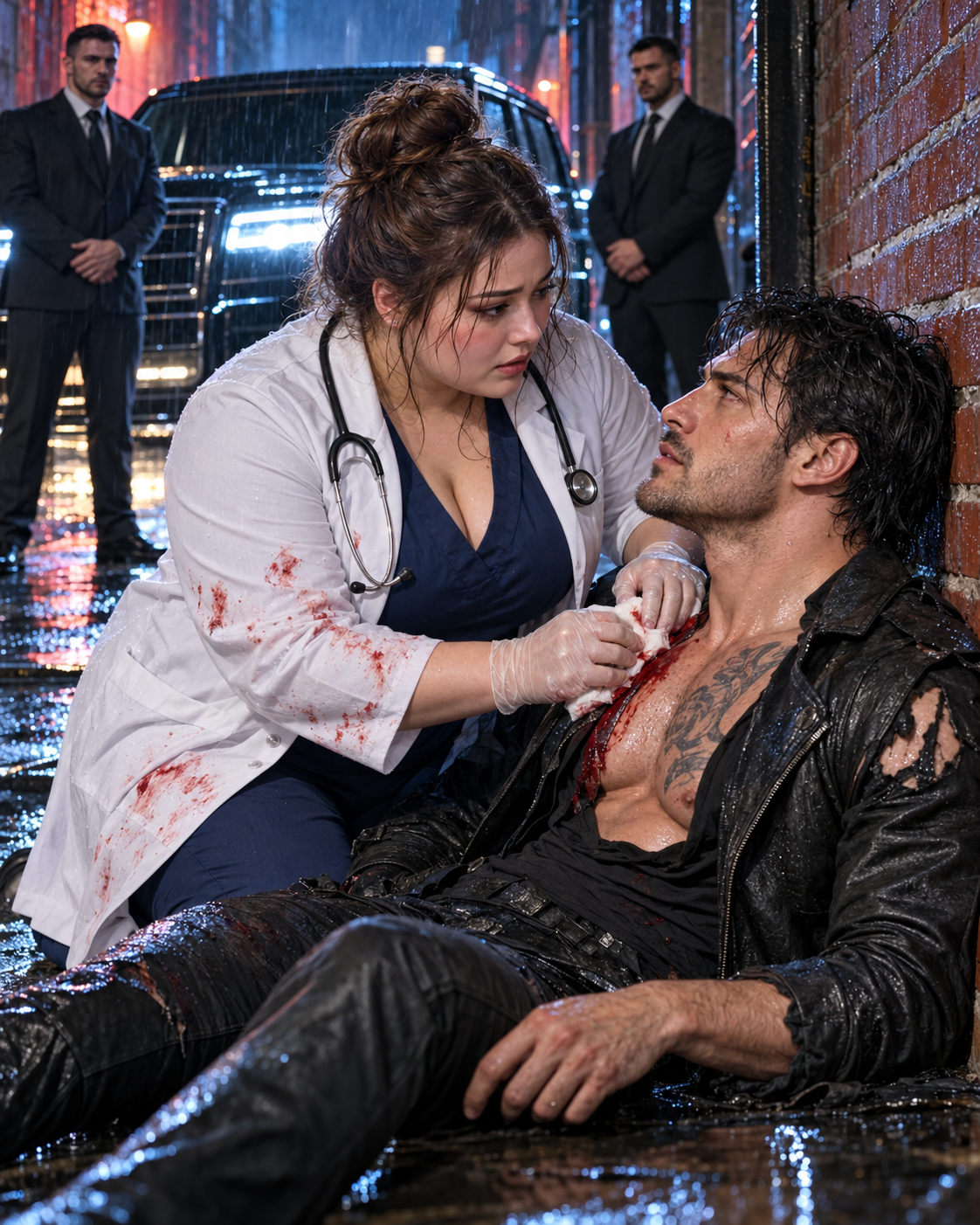
The night Nora Miller lost her job, her fiancé, and everything she had worked for at a prestigious Seattle hospital, she thought she had reached the lowest point of her life.
ELENA VOLKOV.
Nora read the name twice, certain exhaustion had made her misunderstand what she was seeing.
Roman’s hand went completely still.
For several seconds, the only sound in the study was the rain striking the windows and the soft mechanical hum of the medical equipment beside his chair.
Then Roman reached across the table and replayed the recording.
Bradley’s frightened voice filled the room.
“I did exactly what you asked. Miller was fired, the authorization was processed, and the research samples were transferred. You told me Volkov would never survive the exposure.”
A woman’s voice answered from beyond the camera.
“You were paid to follow instructions, Doctor. Not to ask whether the patient survived.”
Nora felt something cold settle beneath her ribs.
The voice was calm, precise, and unmistakably accustomed to obedience.
Then Bradley spoke again, his words spilling out in desperation.
“Elena, please. If Roman finds out what happened, he’ll kill me.”
Roman’s security director, Viktor Sokolov, slowly lowered his tablet.
Nora looked from one man to the other.
“Who is Elena?”
Roman didn’t answer immediately.
His expression had changed in a way Nora hadn’t seen before. The controlled confidence that seemed to surround him like armor had vanished, replaced by something far more personal.
Finally, he spoke.
“My sister.”
Nora stared at him.
“Your sister arranged the attack?”
Roman closed the recording and stared at the dark screen.
“Three years ago, Elena told me she wanted nothing more to do with my business. She said the family name had poisoned everything it touched.”
He gave a humorless laugh.
“I believed her.”
Viktor approached the table.
“Sir, the message was routed through an anonymous delivery service. Whoever sent it wanted us to see the name.”
“Or wanted us to believe Elena was responsible,” Nora said.
Roman raised his eyes.
For the first time since she’d entered his estate, he looked genuinely surprised by something she had said.
“You think she’s innocent?”
“I think somebody went to considerable trouble to make sure you heard Bradley accuse her. That doesn’t mean he’s lying. But it doesn’t mean he’s telling the truth, either.”
Roman studied her for a long moment.
Then he turned toward Viktor.
“Find my sister. Quietly. And get me everything connected to Kensington Biomedical.”
Viktor nodded and disappeared through the study doors.
Nora glanced at the clock.
It was nearly four in the morning.
Less than twelve hours earlier, she had been an employed trauma nurse planning a wedding. Now she was sitting inside a guarded mansion, discussing a conspiracy involving an experimental medication and a man whose family controlled an empire built partly on fear.
The absurdity almost made her laugh.
Instead, she noticed blood beginning to stain the fresh dressing beneath Roman’s shirt.
“You’re bleeding again.”
“It’s nothing.”
“That’s what every stubborn man says right before I have to change his bandages.”
Roman looked at her.
“Do you speak to all your patients like that?”
“Only the ones who refuse to listen.”
Despite the tension, a faint smile touched his mouth.
Nora stood, retrieved the medical supplies, and carefully checked his wound.
Roman watched her hands move with practiced certainty.
“You could have left me in that alley,” he said.
“Yes.”
“You knew someone was looking for me.”
“Yes.”
“And you stayed anyway.”
Nora secured the clean dressing.
“I didn’t know whether you were a good man. I knew you were a dying one.”
Roman said nothing.
Something in her answer seemed to disturb him more deeply than any threat.
By dawn, Viktor had uncovered the first substantial piece of the conspiracy.
Kensington Biomedical Holdings was not simply a research investment company. Over the previous eighteen months, it had quietly acquired intellectual property rights from struggling medical startups, purchased distressed laboratories, and financed a private pharmaceutical development program.
Its principal investor was Sloan’s father, Charles Kensington.
But another company appeared repeatedly throughout the financial records.
A consulting firm called Meridian Strategic Partners.
Its principal owner was Elena Volkov.
Nora studied the documents on Viktor’s tablet.
“That connects her financially. It still doesn’t prove she ordered the attack.”
“No,” Roman agreed. “But it proves she lied to me.”
Viktor hesitated.
“There’s something else.”
He opened a photograph taken outside a waterfront restaurant six weeks earlier.
Elena stood beside Charles Kensington, smiling politely.
Between them was Bradley Vance.
Nora felt her stomach tighten.
Bradley had told her he was attending a medical conference in Portland that weekend.
She remembered because she had driven him to the airport.
He had kissed her forehead, complained that she was wearing her old winter coat, and promised to bring her something special.
He returned with a silver bracelet.
Nora had worn it every day since.
Without thinking, she touched her wrist.
The bracelet was still there.
Roman noticed.
“Was he always like that?”
“Like what?”
“Someone who made you question your own value.”
Nora looked away.
She remembered the little comments. How Bradley preferred her hair straightened. How he suggested she lose weight before their engagement photographs. How he introduced her at hospital fundraisers as his nurse girlfriend, never mentioning the software she’d developed or the senior physicians who trusted her judgment.
She had mistaken his criticism for concern because it was easier than admitting the person she loved was slowly teaching her to feel inadequate.
“I thought he was ambitious,” she whispered.
“Ambition doesn’t require cruelty.”
Nora removed the bracelet and placed it beside the forged authorization.
For some reason, that small movement felt more final than the moment Bradley had ended their engagement.
At nine that morning, a new problem arrived.
Roman’s private physician, Dr. Adrian Mercer, entered the study carrying updated blood results.
His face was grim.
“The bleeding has stabilized, but your clotting measurements are changing unpredictably. Whatever compound entered your system, we’re still seeing an active effect.”
Nora immediately examined the laboratory report.
Her attention settled on a particular pattern she remembered from a research safety presentation.
“The experimental anticoagulant wasn’t approved for human administration,” she said.
Mercer nodded.
“According to the records we have, the research protocol was suspended.”
“Because the early studies identified unpredictable delayed complications.”
Roman looked between them.
“Can you treat it?”
“We can provide supportive care and manage the complications,” Mercer answered. “But we need to know exactly what you were exposed to.”
Nora thought about the missing courier, the research facility, and the stolen samples.
Then she remembered something Bradley had said during a hospital meeting two months earlier.
He had complained that Nora’s triage system was too cautious because it automatically flagged certain unusual laboratory results for mandatory human review.
At the time, she thought they were arguing about efficiency.
Now she understood why that particular safeguard had irritated him.
“My software,” she said suddenly.
Roman lifted his head.
“What about it?”
“The program doesn’t just prioritize patients. It identifies abnormal patterns across emergency admissions. If somebody was testing an unauthorized medication and patients started arriving with unexplained complications, my system could connect the cases.”
Viktor’s expression hardened.
“Which would expose the research.”
“Exactly.”
Nora swallowed.
“Bradley didn’t just want the software because it was valuable. He wanted to control what it reported.”
Before anyone could answer, Viktor’s phone vibrated.
He listened briefly, then turned to Roman.
“Elena is in Seattle. She’s asking to meet you.”
Roman rose too quickly and grimaced as pain crossed his face.
“Where?”
“She says she’ll come here.”
“No,” Nora interrupted.
Both men looked at her.
“If Elena is involved, bringing her inside gives her access to you while you’re recovering. And if somebody is framing her, they may be watching where she goes.”
Roman considered this.
“Then where would you suggest?”
Nora thought for a moment.
“Somewhere public, with enough people that nobody can easily hide what’s happening.”
Roman almost smiled.
“You’ve never negotiated with my family.”
“No. But I’ve spent eight years dealing with angry surgeons. I doubt your sister is much worse.”
Two hours later, Nora stood inside a private dining room overlooking Seattle’s harbor.
Roman had insisted she remain at the island estate.
Nora had refused.
If Elena knew anything about the experimental medication, Nora wanted to hear it herself.
Besides, she was beginning to understand that waiting helplessly for powerful people to decide her future was precisely how she had lost control of it.
Elena Volkov arrived wearing a charcoal wool coat and no visible jewelry.
She was beautiful in a severe, understated way, with dark hair pulled into a low knot and eyes almost identical to her brother’s.
But unlike Roman, she entered the room looking frightened.
She stopped when she saw his shoulder.
“Roman.”
He remained seated.
“Did you arrange for someone to poison me?”
Elena went white.
“What?”
Roman slid the photograph across the table.
Her eyes moved over it, and her expression tightened.
“You’ve been meeting with Kensington.”
“Yes.”
“You’re financially connected to his company.”
“Yes.”
“And Bradley Vance?”
Elena hesitated.
“I met him twice.”
Roman leaned forward.
“Then explain why he was recorded saying you ordered my death.”
Elena stared at him.
For a terrible moment, Nora thought she might collapse.
Instead, she reached into her handbag.
Viktor immediately stepped closer.
Elena withdrew a small flash drive and placed it on the table.
“Because I was trying to stop them.”
Roman didn’t move.
Elena explained that eighteen months earlier, Kensington had approached her with an investment opportunity involving emergency medicine and automated hospital systems.
She had believed the venture could help her establish a legitimate career independent of her brother.
But as the partnership developed, she discovered that Kensington’s pharmaceutical division was conducting unauthorized research through intermediaries.
When she questioned the contracts, Kensington threatened to expose financial transactions from her earlier years working within Roman’s business.
“He told me the authorities wouldn’t care that I’d left,” she said. “He said they would only care what I’d helped you do.”
Roman’s jaw tightened.
“Why didn’t you tell me?”
“Because every time something threatens this family, you solve it by frightening someone.”
The words struck harder than Nora expected.
Roman looked away.
Elena continued.
“Three weeks ago, I learned that Kensington had arranged to move experimental compounds outside authorized research channels. I started collecting documents.”
“Then why did Bradley mention your name?”
“Because Kensington knows I have evidence. He’s making me look responsible.”
Nora studied her carefully.
“Did you contact Bradley last night?”
“No.”
“Do you know where he was?”
Elena paused.
“He called me shortly after midnight. He was terrified. He said Kensington had ordered him to change a medical report, and that he couldn’t go through with it.”
Nora leaned forward.
“What report?”
Elena’s eyes filled with dread.
“A child’s.”
The room fell silent.
Elena opened her laptop and displayed a hospital record.
The patient was a nine-year-old boy named Daniel Reyes.
He had arrived at the emergency department four days earlier with unexplained bleeding, severe fatigue, and rapidly worsening laboratory results.
Nora recognized his name.
She had personally supervised his initial triage before transferring him to the pediatric team.
His mother, a hotel housekeeper named Lucia, had sat beside the bed clutching a worn stuffed dinosaur.
Nora remembered promising her that they would do everything they could.
“What happened to Daniel?” she asked.
Elena lowered her eyes.
“He’s still hospitalized. But his records were altered to make his symptoms appear consistent with a preexisting condition.”
Nora felt sick.
“Why would anyone do that?”
“Because Daniel’s father works at a contracted research laboratory. Kensington’s company supplied materials there. We believe Daniel encountered a contaminated item brought home from that facility.”
Nora covered her mouth.
If true, the experimental compound had not remained confined to its intended research setting.
And the people responsible were hiding evidence while a child fought for his life.
Roman looked at his sister.
“Where is the original report?”
“Bradley has it.”
Nora shook her head.
“He won’t give it to us.”
Elena’s expression changed.
“He might give it to you.”
A message arrived on Nora’s phone before she could answer.
It came from Bradley.
Nora, I know you didn’t steal anything. I need to talk. Please come alone.
A second message appeared.
If you want to know what really happened to Daniel Reyes, meet me at the old research building at six.
Nora showed Roman.
His face darkened.
“Absolutely not.”
“I wasn’t planning to go alone.”
“You’re not going at all.”
Nora stood.
“Roman, a child is lying in a hospital bed while someone is covering up what happened to him. I need that report.”
“I can send people.”
“And if Bradley destroys it the moment he sees your security?”
Roman fell silent.
Nora lowered her voice.
“You survived last night because I didn’t walk away from someone who needed help. I’m not walking away from Daniel, either.”
For a long moment, Roman simply watched her.
Then he nodded once.
“But we do this carefully.”
At five forty-five, Nora approached the research building beneath a gray Seattle sky.
The structure had once housed a private biomedical laboratory. Now several floors were empty, and the lobby smelled faintly of dust and disinfectant.
Roman’s security team remained nearby, monitoring the exits without revealing their positions.
Nora entered carrying only her phone and handbag.
Bradley waited beside a row of abandoned reception desks.
He looked as though he hadn’t slept.
His expensive shirt was wrinkled, his jaw unshaven, and his eyes darted toward every shadow.
When he saw Nora, relief flooded his face.
“Thank God.”
She stopped several feet away.
“Where’s Daniel’s report?”
Bradley flinched.
“Can we talk first?”
“About what? The drugs you accused me of stealing? The software you tried to take? Or the woman you were sleeping with while we were planning a wedding?”
His face reddened.
“Nora, it’s complicated.”
“No. You made complicated choices. That doesn’t make the truth complicated.”
He looked down.
For the first time, she saw something resembling shame.
“Kensington promised me the research director position. He said your software could identify patterns nobody else could see. He wanted control of it before the next phase of testing.”
“And you agreed to frame me?”
Bradley swallowed.
“Sloan said the board would never approve transferring the project while you were still employed.”
Nora stared at him.
“You let them accuse me of stealing medication.”
“I thought they’d just dismiss you. I didn’t know Kensington planned to use your authorization to move the compounds.”
“Then why didn’t you come forward?”
“Because by then I was involved.”
He pulled a folder from inside his coat.
“The original reports are here. Daniel’s case. The research transfers. Everything.”
Nora reached for it.
Before her fingers touched the folder, a voice sounded behind them.
“Bradley, you really are a disappointment.”
Sloan Kensington stood near the entrance, accompanied by two men in dark coats.
Bradley stumbled backward.
“Sloan?”
She ignored him and looked directly at Nora.
“I wondered how long it would take you to realize you were the obstacle.”
Nora slowly lowered her hand.
“You knew about Daniel.”
Sloan’s smile faded.
“Of course I knew about the patient.”
“He’s nine years old.”
“And my father’s company employs hundreds of people. Do you understand what happens if one poorly documented incident destroys an entire research program?”
Nora felt anger rise through her exhaustion.
“A child’s life isn’t a documentation problem.”
Sloan’s eyes hardened.
“You always were sentimental. That’s why Bradley could never get anywhere with you.”
Bradley stepped toward her.
“Sloan, you promised nobody would be hurt.”
She turned on him.
“Nobody was supposed to notice.”
One of the men moved toward Nora.
She stepped back, keeping her phone inside her open handbag.
At that precise moment, a sharp electronic alarm sounded from the hallway.
The man stopped.
Then Roman’s voice emerged from the doorway.
“Step away from her.”
He stood between two security officers, pale beneath his dark coat but unmistakably in control.
Sloan’s confidence flickered.
“Mr. Volkov.”
Roman looked at the folder in Bradley’s hands.
“Give that to Ms. Miller.”
One of Sloan’s companions reached inside his coat.
Roman’s security officers immediately ordered him to show his hands.
For a heartbeat, nobody moved.
Then Bradley made the worst decision of his life.
He lunged toward Sloan, trying to push past her.
The sudden movement startled the second man, who seized Bradley by the collar.
The folder burst open.
Documents scattered across the floor.
Nora dropped to her knees, grabbing the pages before they could be trampled.
Sloan shouted for someone to stop her.
But another voice cut through the chaos.
“Federal agents! Everyone stay where you are!”
The building’s side entrance opened, and several investigators entered with visible identification.
Roman stepped aside.
Sloan stared in disbelief.
Nora looked up.
Standing beside the agents was Elena Volkov.
She held a thick binder against her chest.
“I gave them everything,” Elena said quietly.
The agents secured the scene, separated the witnesses, and began documenting the evidence.
Sloan protested furiously, demanding attorneys and accusing everyone of manufacturing a conspiracy.
Bradley sank into a chair and covered his face.
Nora remained kneeling beside the scattered papers.
An investigator helped her collect them.
Among the documents was a laboratory report showing a clear warning that Daniel’s condition might be linked to exposure to the experimental compound.
Another page contained an internal message instructing hospital personnel to classify the finding as inconclusive without further review.
And at the bottom was Charles Kensington’s electronic approval.
Nora closed her eyes.
For four days, a mother had been sitting beside her child, trusting the hospital to tell her the truth.
That trust had been betrayed.
As the investigators began interviewing witnesses, Roman approached Nora.
“You all right?”
She nodded, though her hands were shaking.
“You knew Elena contacted the authorities?”
“She told me she was ready to cooperate. I made certain they knew where we would be.”
Nora looked toward Elena.
“She was brave.”
Roman followed her gaze.
“Braver than I gave her credit for.”
His voice carried something unfamiliar.
Regret.
The investigation moved quickly after the records were recovered.
Federal authorities sought additional evidence from Kensington Biomedical, the hospital’s research division, and the consulting companies involved in the transfers.
A court authorized the preservation of relevant electronic records while investigators worked to establish who had known about the unauthorized research.
Hospital executives who had previously ignored Nora’s concerns suddenly began issuing statements about transparency and patient safety.
Charles Kensington resigned as board chairman while denying wrongdoing.
Sloan retained an attorney.
Bradley agreed to cooperate with investigators, although his cooperation did not erase his role in falsifying records and framing Nora.
The hospital opened an independent review of Daniel’s treatment.
Nora’s software became a crucial part of that review.
Its audit history revealed that several abnormal laboratory patterns had been flagged before administrators disabled portions of the monitoring system.
Those warnings had not been enough to establish the cause of every patient’s symptoms, but they demonstrated that serious concerns had been raised and suppressed.
Within days, investigators had identified other cases requiring examination.
For Nora, the hardest part was not facing Bradley again.
It was walking into Daniel’s hospital room.
Lucia Reyes sat beside her son’s bed, her hands wrapped around a paper cup of coffee that had long since gone cold.
Daniel looked painfully small beneath the blankets.
When he saw Nora, he recognized her immediately.
“You’re the nurse who gave me the dinosaur sticker.”
Nora smiled, struggling to keep her voice steady.
“I am.”
“Mom said you don’t work here anymore.”
“Not right now.”
Daniel considered this.
“That’s dumb. You’re nice.”
Lucia laughed softly before tears filled her eyes.
Nora sat beside them.
She explained, carefully and truthfully, that investigators had discovered concerns about Daniel’s possible exposure and that an independent medical team was reviewing his care.
She did not promise an easy recovery.
She did not pretend to know everything.
Instead, she helped Lucia write down questions for the physicians and arranged for a patient advocate to assist her.
Before Nora left, Lucia caught her hand.
“People keep telling me they are sorry,” she whispered. “But you’re the first person who came back and explained what was happening.”
Nora squeezed her fingers.
“You deserved answers from the beginning.”
Over the following weeks, Daniel’s condition gradually improved under the care of an independent specialist team.
His recovery was slow, with difficult days and uncertain test results, but eventually he was strong enough to walk the pediatric hallway holding his mother’s hand.
Nora visited when the family welcomed her.
Each time, Daniel asked whether she had gotten her job back.
Each time, she changed the subject.
Because an unexpected offer was waiting for her.
Roman had asked her to meet him at the island estate one final time.
When Nora arrived, the house seemed different.
The armed guards were less conspicuous, the atmosphere less oppressive, and afternoon sunlight filled the windows that had once reflected nothing but darkness.
Roman stood near the fireplace without a bandage beneath his shirt.
He was recovering well, although he still moved carefully.
On the table lay a contract.
Nora immediately narrowed her eyes.
“If this is a proposal to make me your personal nurse, the answer is no.”
Roman laughed.
It was the first unguarded laugh she had heard from him.
“No. I learned weeks ago that you’re impossible to employ against your will.”
He pushed the document toward her.
It outlined the creation of an independent nonprofit organization dedicated to developing transparent emergency triage technology for hospitals serving communities with limited resources.
Nora recognized her original software architecture, along with proposed funding sufficient to expand the program nationally.
She looked up.
“Where did this come from?”
“Your work remains yours, subject to the legal review of the ownership dispute. The organization would help you develop and distribute it once those issues are resolved.”
Nora studied the financial commitment.
It was enormous.
“Roman, I can’t accept this.”
“Why?”
“Because I don’t want to trade one powerful man’s control for another’s.”
He nodded.
“Neither do I.”
He turned to the final section.
It specified that the organization would be governed by an independent board, with patient representatives, clinicians, and public-interest technology specialists holding decision-making authority.
Roman would provide initial funding but would have no role in clinical decisions or software governance.
Nora read the language twice.
“Why would you agree to that?”
Roman was silent for a moment.
“Because you saved me when you had nothing to gain. And because I’ve spent most of my life believing every relationship was a transaction.”
He looked out across the water.
“My sister was right about me. I built a world where people obeyed because they were afraid. Eventually, even the people I loved stopped trusting me.”
Nora waited.
“I can’t change what I’ve done by writing a check,” he continued. “And I don’t expect you to pretend that my past doesn’t matter.”
He turned back toward her.
“But I can begin making different choices.”
Nora looked down at the proposal.
For the first time in months, she could see a future that belonged entirely to her.
She didn’t sign that afternoon.
Instead, she hired an independent attorney, consulted several emergency physicians, and insisted that patients and community hospitals help shape the program.
Roman accepted every condition.
Meanwhile, his own life began changing in ways that surprised even the people closest to him.
He met with attorneys concerning his businesses, agreed to cooperate with lawful investigations where appropriate, and began separating himself from the illicit operations that had made his name feared.
The process was neither simple nor without consequences.
Several longtime associates abandoned him.
Others challenged his decisions.
Roman accepted that walking away from a harmful legacy required more than announcing good intentions.
It required accountability.
One evening, three months after the attack, Nora received a letter forwarded through her attorney.
It was from Bradley.
He apologized for the false accusation, the stolen credentials, the betrayal, and every cruel comment he had made during their relationship.
He admitted that he had resented Nora’s talent because her success exposed how much of his own ambition depended on influential people opening doors for him.
He wrote that he hoped she could forgive him someday.
Nora read the letter once.
Then she folded it and placed it in a drawer.
She didn’t respond.
She understood that forgiveness, if it ever came, did not require reopening a door that had nearly destroyed her.
Six months later, the Miller Emergency Innovation Foundation opened its first clinical pilot program at a community hospital south of Seattle.
The launch was modest.
There were no extravagant decorations, no celebrity guests, and no speeches about wealthy benefactors saving the world.
Instead, there were emergency nurses, physicians, social workers, and families who had experienced the consequences of a healthcare system that sometimes overlooked the people who needed it most.
Nora stood at the front of the room wearing a simple navy dress.
She had chosen it herself.
For once, nobody had offered advice about whether the style flattered her figure.
She felt comfortable.
She felt capable.
And she felt beautiful without needing anyone else’s permission.
Lucia and Daniel sat in the second row.
Daniel was healthy enough to return to school, though his doctors continued to monitor him.
When Nora stepped toward the microphone, he waved enthusiastically.
She smiled.
“Several months ago, I lost my job under circumstances that made me question almost everything I believed about the people around me.”
The room grew quiet.
“I thought losing that position meant losing my purpose. I was wrong.”
She glanced toward Daniel.
“A hospital is a building. A title is something someone can take away. But the responsibility to care for another human being doesn’t disappear when somebody takes your badge.”
Her voice trembled slightly.
“I created this technology because I saw what happened when emergency departments were overwhelmed and vulnerable patients waited too long for someone to notice their condition. But technology alone cannot replace compassion, professional judgment, or accountability.”
She paused.
“The real goal isn’t to make hospitals more powerful. It’s to make patients safer.”
The applause that followed was warm and sustained.
At the back of the room, Roman stood beside Elena.
He had declined Nora’s invitation to sit in the front row, saying this was her achievement and the staff’s work deserved the attention.
Nora found him afterward standing near a window overlooking the parking lot.
“You’re hiding,” she said.
“I’m observing.”
“That’s a very expensive word for hiding.”
He smiled.
“You were magnificent.”
Nora laughed softly.
“I nearly forgot half my speech.”
“Nobody noticed.”
They stood together in comfortable silence.
Then Roman reached into his coat pocket.
Nora raised an eyebrow.
“If that’s another contract, I’m leaving.”
He withdrew a small velvet box.
Her heart stumbled.
Roman noticed her expression and smiled.
“Before you panic, it’s not what you think.”
Inside was a delicate silver necklace bearing a small compass pendant.
Nora lifted it carefully.
“It’s beautiful.”
“My mother gave it to Elena when we were children. She told us that when life became difficult, we should remember the direction we wanted to travel, not merely the place we’d come from.”
He closed the box gently.
“Elena wanted you to have it. She says you helped both of us find our way.”
Nora’s eyes filled with tears.
“Tell her thank you.”
“You can tell her yourself. She’s inside arguing with a surgeon about the catering.”
Nora laughed.
Then she looked at Roman.
“What about you?”
“What about me?”
“Have you found your direction?”
His expression softened.
“I’m learning.”
Outside, the Seattle sky was clearing after a morning of rain.
Roman hesitated before speaking again.
“Nora, I know my life is complicated. I know there are things about my past that may always make you uncomfortable. I won’t ask you to overlook them.”
She waited.
“But I’d like to take you to dinner. Somewhere ordinary. No security team at the next table. No business discussions. Just dinner.”
Nora studied him.
Months earlier, she might have confused gratitude with love or mistaken a grand gesture for a promise.
She was no longer that woman.
“One dinner,” she said. “And you choose a place where people don’t need a reservation six months in advance.”
Roman smiled.
“I know a little Italian restaurant.”
“Does it belong to one of your companies?”
“No.”
“Have you ever threatened the owner?”
He laughed.
“Never.”
“Then it’s a date.”
A year later, Nora stood outside that same community hospital as the first snow of December drifted over Seattle.
The foundation had expanded to several emergency departments, with independent evaluations underway and patient safety reviews guiding each new deployment.
There were still technical problems, funding challenges, and difficult decisions.
But the program was growing carefully, with the safeguards Nora had once refused to compromise.
Bradley’s case was proceeding through the courts. Charles Kensington and several associates faced serious charges connected to the research operation, though the legal process remained ongoing.
Sloan’s influence had not protected her from scrutiny.
Elena had established her own legitimate consulting practice and was slowly rebuilding her relationship with Roman.
And Roman, once accustomed to controlling every room he entered, was discovering that the hardest kind of courage was allowing other people to hold him accountable.
That evening, Nora walked into the hospital lobby and found Daniel Reyes waiting beside a small Christmas tree.
He held a handmade card.
“For you,” he said proudly.
Inside was a drawing of Nora wearing blue scrubs, standing beside a hospital bed beneath a giant golden star.
Across the top, in crooked letters, he had written:
THANK YOU FOR NOT WALKING AWAY.
Nora pressed the card against her chest.
Lucia hugged her.
And for a moment, the memory of that terrible night returned with startling clarity.
The rain.
The cardboard box.
Bradley’s cold expression.
The alley where a stranger had whispered for her to leave him behind.
Nora had believed that everything she had worked for was disappearing.
What she hadn’t understood was that losing the life she had planned would force her to discover the life she truly deserved.
Outside, Roman waited beside an ordinary dark sedan, holding two paper cups of hot chocolate.
He opened the passenger door when he saw her.
“Long day?”
Nora smiled.
“The best kind.”
She climbed into the car, setting Daniel’s card carefully on her lap.
As they drove through the snowy streets, Roman reached across the console and took her hand.
She let him.
Not because he was powerful.
Not because he was wealthy.
And certainly not because he had rescued her from the ruins of her old life.
She had rescued herself by refusing to surrender the values that made her who she was.
Roman had simply become someone willing to walk beside her.
And that was worth more than any empire.
For Nora Miller, the greatest lesson had never been about revenge, wealth, or proving the people who betrayed her wrong.
It was about discovering that dignity cannot be granted by a prestigious employer, that love should never require someone to become smaller, and that kindness is not weakness simply because cruel people fail to understand it.
The night she’d lost everything, she had stopped in a dark alley to save a stranger.
She never imagined that one act of compassion would expose a dangerous conspiracy, protect an innocent child, and lead her toward a future she had once been afraid to dream about.
But sometimes the moment that appears to be the end of your story is simply the moment you finally become its author.
And sometimes, when the world gives you every reason to turn away, choosing to care is the most powerful thing you can do.
THE END.