The bank was about to sell Colt Vance’s Wyoming ranch for just two silver dollars.
Thorne’s face went pale. For several seconds, the only sound in the dining room was the ticking of the old clock above the fireplace.
“I have no idea what you’re talking about,” he finally said.
Abby untied her apron and folded it carefully over the back of a chair.
“The North Spring,” she replied.
Thorne’s fingers tightened around his napkin.
Caldwell glanced at Marsh. “What spring?”
“The one that flows through the northern section of this ranch,” Abby explained. “The one that hasn’t gone dry, even after three years without decent rain. Sixty gallons of fresh water every minute.”
Marsh immediately put down his fork.
“Sixty gallons?”
“That’s right.”
Greer let out an uncomfortable laugh. “You’re taking the word of a woman who spends her days baking bread?”
Colt stepped beside Abby.
“I would trust her word before I’d trust yours.”
Thorne stood and reached for his coat.
“This conversation is ridiculous. We came here to discuss the auction, not listen to some baker’s foolish stories.”
“Then why are you leaving?” Caldwell asked.
The banker stopped.
Abby walked to the kitchen and returned carrying a small envelope. Its edges were worn, and a dark stain covered one corner.
She removed a folded piece of paper and handed it to Caldwell.
“My younger brother worked with the survey crew that inspected this property last spring. He kept a copy of their findings because he was proud of his work.”
Caldwell unfolded the document.
His expression grew serious as he read.
The report described a natural spring protected by a deep underground water source. According to the survey, it could provide enough water to support a substantial cattle operation, even during extended periods of drought.
At the bottom of the page was a signature confirming that the bank had received the findings.
Silas Thorne.
Marsh leaned over Caldwell’s shoulder.
“You received this report eight months ago?”
Thorne cleared his throat. “Preliminary findings. Nothing more.”
“That’s interesting,” Abby replied. “Because the report you gave these gentlemen says there are no dependable water sources anywhere on the property.”
Caldwell slowly lowered the paper.
“Is that true, Thorne?”
The banker looked toward Greer, but the land speculator suddenly seemed fascinated by the floor.
Colt felt something tighten inside his chest.
He had spent months begging Thorne for more time. He had sold cattle, equipment, and nearly everything his father had left him. He had even considered selling his mother’s stove before deciding he couldn’t bear to part with it.
All that time, the bank had possessed information that could have changed everything.
“Why didn’t you tell me?” Colt asked.
Thorne avoided his eyes.
“You were already behind on your payments. Discovering water wouldn’t have changed your financial obligations.”
“It would have changed my chances of getting another loan.”
Nobody answered.
“It would have changed what my land was worth,” Colt continued. “And it would have changed the price you were willing to sell it for.”
Caldwell pushed his chair away from the table.
“I want to see this spring.”
Greer quickly shook his head.
“The northern trails are dangerous after dark. There’s no reason to waste our time.”
“Then we’ll go before sunrise,” Marsh said.
Thorne grabbed his coat.
“The auction will proceed tomorrow at ten. Nothing discussed here changes that.”
Abby looked directly at him.
“Perhaps not. But I imagine the people attending would be interested in hearing what we’ve learned tonight.”
For the first time since arriving, Thorne had nothing to say.
He walked out without finishing his pie. Greer followed him, slamming the front door so hard that the windows shook.
Caldwell and Marsh remained seated.
Colt stared at Abby.
“Why didn’t you tell me about that report sooner?”
“Because I only found it yesterday,” she admitted. “My brother sent some belongings home before leaving for Montana. When you told me what Thorne was doing, I remembered him mentioning a survey on your ranch.”
She paused.
“I wasn’t certain until I read the papers.”
Colt sat heavily in his chair.
He remembered the North Spring from childhood. His father had taken him there once, but a rockslide had later blocked the old trail. Colt had assumed the spring was buried or had dried up like everything else.
Apparently, someone had discovered otherwise.
Caldwell folded the report.
“Mr. Vance, I suggest you get some rest. Tomorrow may be a very different day from the one you were expecting.”
But Colt didn’t sleep.
Long after the investors retired to their rooms, he sat beside the kitchen stove while Abby washed the dishes.
“I nearly ruined everything tonight,” he said.
Abby looked over her shoulder.
“When I grabbed Greer. If you’d let me hit him, Thorne would’ve had me arrested before the auction.”
“You were angry.”
“That doesn’t excuse it.”
“No,” she agreed. “But knowing when to stop matters, too.”
Colt watched her dry a plate.
“Does it happen often?”
“What?”
“People speaking to you the way Greer did.”
Abby smiled faintly, though there was little happiness in it.
“Often enough.”
“How do you stand it?”
She placed the plate on the shelf.
“When I was younger, I thought if I worked hard enough and pleased enough people, they’d eventually stop finding reasons to dislike me. Then I realized some people don’t need a reason.”
She sat across from him.
“I stopped letting their opinions decide what I was worth.”
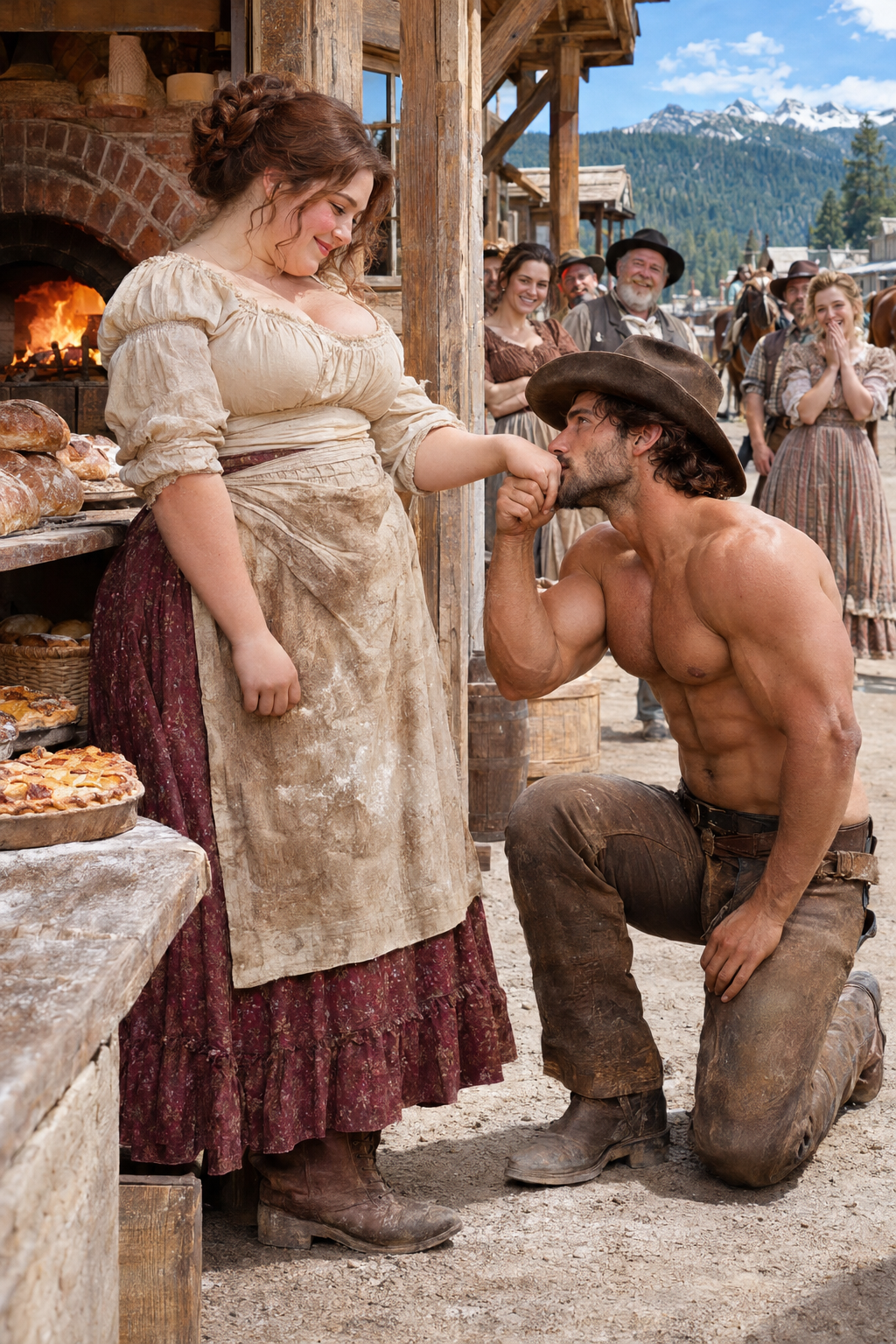
Colt looked down at his rough hands.
“I wish I knew how to do that.”
“You should start by remembering that losing a ranch doesn’t make you a failure.”
He swallowed hard.
“This place was everything to my parents.”
“And you were everything to them,” Abby answered. “There’s a difference.”
Colt turned toward the stove. He could almost picture his mother standing there, humming while she prepared breakfast.
For months, he had believed that losing the ranch meant betraying her memory.
Abby’s words made him wonder whether he had misunderstood what his parents had wanted for him all along.
Before sunrise, Colt saddled three horses.
Caldwell and Marsh joined him outside while Abby packed bread, cheese, and leftover pie for the journey.
The morning air was bitterly cold. Dry grass cracked beneath the horses’ hooves as they climbed toward the northern hills.
After nearly an hour, Colt noticed something strange.
A narrow section of ground near the rocky hillside was covered in green grass.
He dismounted.
“It’s never this green up here.”
They followed the damp earth around a bend.
Then they heard it.
Running water.
Behind a wall of stone and thick brush, clear water poured from a natural opening in the hillside and collected in a deep pool before flowing into a narrow creek.
Colt stood motionless.
Marsh knelt beside the water, dipped his hands into it, and drank.
“Cold as mountain snow.”
Caldwell examined the surrounding land.
“With proper channels and storage, this could supply your cattle and restore a good portion of your pasture.”
Colt walked toward the pool.
He crouched and touched the water.
His eyes filled with tears.
For three years, he had watched his cattle grow thinner. He had dug wells that produced nothing but mud. He had stood beneath empty skies, praying for rain that never came.
And all this time, water had been flowing across his own land.
“There’s something else,” Marsh called.
Near the creek stood several wooden survey markers.
One bore the initials S.G.
Samuel Greer.
Caldwell’s expression hardened.
“He knew.”
They found more markers farther downstream, along with signs that someone had been planning a water diversion.
The spring wasn’t merely something Greer hoped to acquire by accident. It appeared to be the very reason he wanted the ranch.
“We need to get back,” Caldwell said.
When they reached the ranch house, Abby was waiting on the porch.
One look at Colt’s face told her everything.
“You found it.”
He nodded.
She smiled, but before either could speak, a wagon appeared on the road.
It carried the county auctioneer, two bank employees, and several men from town.
Behind them rode Thorne and Greer.
The auction was about to begin.
Word had spread quickly that the Vance ranch might be sold for almost nothing. Neighbors gathered near the barn, some curious and others deeply troubled.
Many had known Colt’s parents.
A few had borrowed his equipment during difficult winters. Others remembered how his father had shared hay when their cattle were starving.
Yet none of them had enough money to save the property.
Thorne stepped onto the porch and opened his leather case.
“Mr. Vance, you have until the auction begins to settle your outstanding debt.”
“How much?” Caldwell asked.
Thorne named the amount.
It was far beyond anything Colt could raise himself.
Caldwell considered it.
“I may be prepared to cover that debt in exchange for a reasonable business arrangement.”
Colt looked at him in surprise.
But Thorne shook his head.
“Payment must be made in full before the sale. Promises and future agreements are insufficient.”
“I can arrange a bank draft.”
“Not in time.”
Marsh frowned.
“You seem unusually determined to prevent this man from paying you.”
Thorne ignored him.
The auctioneer opened his ledger and called the gathering to order.
Abby stepped forward.
“Before you begin, these people deserve to know what they’re bidding on.”
Thorne’s voice sharpened.
“You have no standing in this matter.”
“Perhaps not,” she said. “But Mr. Caldwell does. Mr. Marsh does. And so does the owner of this ranch.”
Caldwell addressed the crowd.
“Gentlemen, this property contains a substantial natural spring. We inspected it ourselves this morning.”
A wave of whispers moved through the gathering.
An elderly rancher near the fence removed his hat.
“Water? On the north side?”
“Enough to make this property considerably more valuable than the bank’s assessment suggests,” Caldwell confirmed.
Greer marched toward him.
“You’re interfering with a lawful sale.”
“I’m informing potential buyers.”
The auctioneer looked uncertain.
Thorne ordered him to continue.
“Opening bid,” the auctioneer announced reluctantly. “Two silver dollars.”
Greer raised his hand immediately.
“Two dollars.”
Colt closed his eyes.
The amount was exactly what he had paid Abby to prepare the meal that might save his home.
“Five hundred,” Caldwell called.
The crowd gasped.
Greer turned sharply.
“One thousand.”
“Two thousand,” Marsh replied.
The bids rose quickly.
Greer’s confidence began to disappear. Sweat gathered along his forehead despite the cold morning.
At five thousand dollars, he demanded a private conversation with Thorne.
Caldwell refused to let the auction pause.
“Either we’re conducting a fair sale or we’re not.”
Thorne pulled the auctioneer aside and whispered something.
The man frowned.
Then he closed his ledger.
“The auction is temporarily suspended.”
“On what grounds?” Marsh demanded.
“Questions concerning the property’s valuation.”
Abby almost laughed.
Those questions had apparently never mattered when the opening bid was two dollars.
Greer grabbed Thorne by the elbow.
“You told me nobody knew about that spring!”
His voice carried farther than he intended.
The entire gathering went silent.
Thorne stared at him in horror.
Greer realized his mistake too late.
An elderly man stepped out of the crowd. His name was Henry Dawson, and he served on the bank’s board.
“What exactly did you promise Mr. Greer, Silas?”
Thorne began gathering his papers.
“This is neither the time nor the place.”
“I believe it’s precisely the time.”
Dawson took the survey report from Caldwell and examined the signature.
Then he turned toward the bank employees.
“Was this document included in the foreclosure file?”
Neither answered.
Finally, the younger employee spoke.
“No, sir.”
Thorne glared at him.
The young man swallowed.
“Mr. Thorne instructed me to remove it.”
Dawson’s face darkened.
“Did he give you a reason?”
“He said it would complicate a private arrangement with Mr. Greer.”
Greer backed away.
“You can’t prove anything.”
The employee reached into his coat.
“I kept the written instruction.”
He handed Dawson a folded note.
Thorne looked as though the ground had disappeared beneath his feet.
Dawson read it twice before placing it inside his pocket.
“This sale is canceled pending a full investigation.”
Colt stared at him.
“Canceled?”
“Yes, Mr. Vance. Your debt remains, but your property will not be sold today.”
For a moment, Colt couldn’t move.
Then he looked at Abby.
She was standing beside the porch, smiling through tears.
The neighbors began cheering.
Someone slapped Colt on the back. Another man shook his hand. The elderly rancher near the fence offered to help clear the northern trail.
Thorne and Greer left without another word.
But Colt knew the ranch wasn’t completely safe yet.
He still owed the bank more money than he possessed.
That afternoon, Caldwell and Marsh sat with him at the kitchen table.
Caldwell offered to purchase half the ranch and finance its recovery.
It was a generous offer compared with what Colt had faced that morning.
Still, something troubled him.
“My father spent his whole life putting this land together,” Colt explained. “I don’t want to spend mine watching pieces of it disappear.”
Caldwell nodded.
“Then tell me what you want.”
Colt thought carefully.
“A loan. A fair interest rate. Enough money to build a water system and purchase cattle. I’ll repay every dollar.”
Marsh looked at Caldwell.
“We would be taking a considerable risk.”
“I know.”
Abby entered with fresh coffee.
“Perhaps there’s another way to reduce that risk.”
The men turned toward her.
She suggested that Colt negotiate long-term contracts to supply beef to businesses in Denver. Guaranteed customers would provide more dependable income, while the spring would lower the cost of maintaining his cattle.
Caldwell smiled.
“You’ve given this some thought.”
“I run a bakery, Mr. Caldwell. Flour costs money whether customers come through the door or not. Knowing who will buy tomorrow’s bread makes it easier to pay for today’s ingredients.”
Marsh chuckled.
“Perhaps we should have brought you to Denver instead of Thorne.”
By sunset, they had agreed on the basic terms of a new loan and a purchasing contract.
The investors would earn a fair return without taking ownership of the ranch.
Colt would have another chance.
Several weeks later, the bank’s investigation uncovered additional evidence of dishonest dealings between Thorne and Greer. Thorne was removed from his position, and the findings were turned over to county authorities.
Greer lost several business arrangements when other landowners learned what he had attempted.
Neither man received the fortune he had expected.
Meanwhile, Colt worked harder than ever.
Neighbors helped clear the old trail. Workers built storage tanks and water channels. Slowly, the dry northern pasture began turning green.
Colt repaid his first loan installment ahead of schedule.
Then, one Saturday morning, he walked into Abby’s bakery carrying a small leather pouch.
She was preparing bread when he placed two silver dollars on the counter.
“Your remaining payment.”
Abby laughed.
“I was wondering when you’d remember.”
Colt placed another envelope beside the coins.
She opened it and found a check for a much larger amount.
Her smile faded.
“Colt, what’s this?”
“Enough to expand your bakery.”
“I can’t accept that.”
“Then consider it a business proposal.”
He explained that the ranch needed someone to provide bread and meals for its growing number of workers. He wanted Abby to have the first opportunity to supply them.
She read the agreement carefully.
“You’re paying too much.”
“I’m paying what good work is worth.”
Abby looked at him for a long moment.
Then she extended her flour-covered hand.
“You’ve got yourself a deal.”
Over the following year, Abby’s bakery became one of the busiest businesses in town. She hired two women who had struggled to find employment and taught them everything she knew.
Colt visited more often than his bread orders required.
Sometimes he arrived with fresh fruit. Sometimes he brought flowers from the northern pasture. Occasionally, he came without any excuse at all.
One evening, he invited Abby to dinner at the ranch.
When she entered the kitchen, she found a crooked loaf of bread sitting beside a slightly burned apple pie.
She burst out laughing.
“You made these?”
“Your instructions were more complicated than I expected.”
“Did you remember to put sugar in the pie?”
Colt’s silence answered her question.
They laughed until their eyes watered.
After dinner, he took her outside. The sun was setting over the hills, and cattle grazed across land that had once looked beyond saving.
“I used to think this ranch was the most important thing in my life,” he said.
Abby leaned against the fence.
“And now?”
“Now I know a home isn’t worth much if you have nobody to share it with.”
He reached into his pocket and removed a small ring that had belonged to his mother.
Abby’s eyes widened.
“I’m not asking because you saved my ranch,” Colt said. “I’m asking because when I’m with you, I remember the kind of man I want to be.”
His voice trembled.
“Abby Cooper, would you marry me?”
She looked at the enormous rancher standing nervously before her and smiled.
“Only if you promise to leave the baking to me.”
Colt laughed, slipping the ring onto her finger.
“That’s a promise I can keep.”
They married the following spring beneath a cottonwood tree near the ranch house. Their wedding feast included sourdough bread, beef stew, and more fruit pies than anyone could count.
Years later, when another drought struck Wyoming, Colt and Abby opened their water supply to struggling neighbors. Ranchers brought their cattle, families filled barrels, and nobody was turned away because they couldn’t afford to pay.
Above the kitchen stove, Abby kept two silver dollars inside a small wooden frame.
Visitors often asked why those ordinary coins deserved such a special place.
Colt always smiled when he heard the question.
“Those two dollars taught me that price and value aren’t the same thing.”
The bank had once looked at his ranch and seen almost nothing. Greer had looked at Abby and seen someone he believed he could humiliate.
Both had failed to recognize what stood before them.
Abby had seen a home worth protecting, a man worth believing in, and a truth worth defending.
She hadn’t needed wealth or power to change their lives. She had needed courage, kindness, and the determination to speak when remaining silent would have been easier.
And every morning, as fresh bread filled their kitchen with warmth and clear water flowed through the green pastures, Colt remembered the greatest lesson of his life.
Never measure someone’s worth by their appearance, their occupation, or the money in their pocket.
Sometimes, the person the world underestimates is the very person who sees the possibilities everyone else has missed.
And sometimes, saving everything begins with treating one person with the dignity they have always deserved.
Many years later, when Colt’s hair had turned gray and Abby’s hands had grown stiff from decades of kneading dough, a young man arrived at their ranch carrying a familiar kind of desperation.
His name was Thomas Miller. His father had recently died, leaving him with a small farm, unpaid debts, and two younger sisters to support.
“The bank says I have thirty days,” Thomas explained. “After that, we’ll lose everything.”
Colt invited him inside.
Abby placed a bowl of hot beef stew before him and cut a generous slice of fresh bread.
Thomas hesitated.
“I don’t have any money to pay for this.”
“Good,” Abby replied. “Because I haven’t asked for any.”
As the young man ate, Colt listened to his troubles. He recognized the shame in Thomas’s voice and the fear behind his tired eyes.
It reminded him of the afternoon he had walked into Abby’s bakery with only two silver dollars to spare.
By the end of the evening, Colt had offered Thomas a fair loan, temporary work at the ranch, and access to enough water to keep his remaining cattle alive.
Thomas stared at him in disbelief.
“Why would you do all this for someone you barely know?”
Colt glanced toward Abby.
“Because someone once did something for me when everyone else had given up.”
Thomas accepted the offer. Within three years, he had repaid every dollar and restored his family’s farm.
But the kindness didn’t end there.
Thomas began helping other struggling farmers, just as Colt and Abby had helped him. What started as a simple meal in an old ranch kitchen became a tradition that spread throughout the community.
Nobody kept track of how many families benefited. Nobody needed to.
One autumn evening, Colt and Abby sat together on their porch, watching their grandchildren chase each other across the yard.
The northern pasture was green. The cattle were healthy. From the open kitchen window came the familiar smell of freshly baked bread.
Colt reached for Abby’s hand.
“Do you ever wonder what would’ve happened if I hadn’t walked into your bakery that day?”
Abby smiled.
“You probably would’ve eaten a terrible dinner.”
He laughed, then grew quiet.
“I would’ve lost more than the ranch.”
She rested her head against his shoulder.
“And I would’ve missed out on a pretty wonderful life.”
Inside the house, the two silver dollars still hung above the old stove.
They were never spent.
After Colt and Abby passed away, their children preserved the ranch and continued welcoming families who needed help. They also placed a small wooden sign beside the road leading to the North Spring.
It read:
“Water for the thirsty. Food for the hungry. A welcome for everyone.”
There was no mention of the banker who had tried to steal the ranch or the man who had mocked Abby at the dinner table.
Their cruelty was not the legacy worth remembering.
Instead, generations remembered a baker who refused to remain silent, a rancher who learned that strength meant more than physical power, and two people who turned their second chance into opportunities for others.
The ranch that had nearly been sold for two silver dollars became one of the most treasured places in the community.
Not because of the land.
Not because of the cattle or the water beneath the hills.
But because the people who lived there understood something that money could never buy.
True wealth is measured by the lives we improve, the kindness we give, and the hope we leave behind.
And that was the greatest inheritance Colt and Abby could ever have given their family.
THE END.