The morning Eleanor Witmore disappeared, her husband was still expecting her to come home and apologize.
“Your mother knew what Julian was capable of long before you married him,” the stranger said. “And she spent the last years of her life trying to make certain you would never discover it the way she did.”
Eleanor looked again at the photograph.
The woman beside Julian had dark hair, a narrow face, and a familiar pearl necklace. For years, Eleanor had imagined those pearls resting against another woman’s skin while Julian invented business meetings and delayed trains.
Now she noticed something she had overlooked.
The woman was not smiling.
“Who is she?” Eleanor asked.
“Her name is Catherine Vale. And if you want to understand why your husband has spent fifteen years lying to you, you must first understand what happened to your father.”
Eleanor felt an unpleasant tightening beneath her ribs.
“My father died in a car accident.”
“That is what your mother was told.”
The stranger glanced toward his vehicle.
“May I come inside? There are things I cannot explain on a doorstep.”
Eleanor studied him.
“Your name.”
“Thomas Bell. I was your mother’s solicitor.”
“Her solicitor was Mr. Hargreaves.”
“Mr. Hargreaves handled her estate. I handled the matters she preferred to keep hidden.”
Something about his answer disturbed her, yet the wax seal in her hand was unmistakable.
Her mother had used it for private correspondence, pressing the little silver branch into crimson wax with a ring Eleanor had inherited.
She unfastened the chain.
“Five minutes.”
Thomas entered, wiped his shoes carefully, and followed her into the kitchen.
He did not remove his coat.
Instead, he placed his briefcase on the table and opened the yellowed document Eleanor had found inside the envelope.
Across the top were the words WHITMORE DEVELOPMENT HOLDINGS.
Below them appeared several signatures.
One belonged to Julian.
Another belonged to Eleanor’s father.
And the third was Catherine Vale’s.
“My father was a schoolteacher,” Eleanor said.
“He was also a silent investor in a company that purchased industrial properties throughout northern England.”
“That’s impossible.”
“He kept it from you because your mother insisted. The business began legitimately, but Julian’s father discovered a more profitable use for the properties.”
Thomas pushed the document toward her.
“Illegal waste disposal. Contaminated land sold through false environmental reports. Millions in profits, and hundreds of families exposed to chemicals they never knew were beneath their homes.”
Eleanor stared at the signatures.
“Why would my father be involved?”
“At first, he wasn’t aware of the fraud. When he discovered it, he threatened to expose everything.”
She remembered her father’s final winter.
The arguments behind closed doors. The way her mother had stopped answering the telephone. A stranger’s car parked across from their house on three separate evenings.
She had been seventeen.
Her father had died on a wet road outside Durham, supposedly after losing control of his vehicle.
“You’re suggesting someone killed him.”
“I’m telling you he was preparing to testify against the Whitmores when his car went off that road.”
The kettle clicked as it cooled.
Eleanor barely heard it.
“Then why did my mother allow me to marry Julian?”
Thomas looked away.
“Because she believed marrying him was the only way to keep you alive.”
For several seconds, Eleanor could not speak.
Outside, the car engine stopped.
Thomas immediately turned toward the window.
“That wasn’t my driver,” he whispered.
Headlights swept across the garden wall.
A second vehicle had pulled into the lane.
Thomas snapped his briefcase shut.
“We need to leave.”
Eleanor stepped away from him.
“I’m not going anywhere until you tell me the truth.”
A car door opened outside.
Then another.
Thomas lowered his voice.
“Your mother collected evidence against Julian’s father. She hid it before she died. Julian has been searching for it ever since.”
“And what does that have to do with me?”
“Because he believes she gave it to you.”
Eleanor almost laughed.
“My mother left me jewelry, some furniture, and a collection of letters. Nothing else.”
Thomas’s expression sharpened.
“What letters?”
“Birthday letters. She wrote one for every year until I turned forty.”
“Where are they?”
“In London.”
He closed his eyes.
“Dear God.”
A hard knock struck the front door.
“Eleanor?” a man’s voice called.
It was Julian.
For the first time since leaving London, she heard genuine fear in her husband’s voice.
Not fear for her.
Fear of what she might know.
Thomas seized her wrist.
“Back door. Now.”
Eleanor pulled free.
“Don’t touch me.”
The front door rattled.
“Eleanor, open this door. You’re in danger.”
Thomas’s face had gone pale.
“He knows I’m here.”
“How?”
Another knock shook the narrow hallway.
“Thomas Bell is not who he says he is,” Julian shouted. “For God’s sake, Eleanor, don’t believe him!”
Eleanor looked between the front door and the man standing beside her kitchen table.
Thomas reached inside his coat.
She recoiled.
But he withdrew only a small brass key.
“Your mother gave me this eleven years ago. She told me that if Julian ever found you after you tried to leave him, I was to give it back.”
He placed it beside her cup.
A number had been engraved into the metal.
317.
“What’s it for?”
“Locker 317 at the old railway station in Alnwick.”
“What’s inside?”
“I never asked.”
The front door crashed inward.
Thomas turned, and Eleanor saw something in his expression that terrified her more than Julian’s arrival.
Recognition.
Not surprise.
Not alarm.
Recognition.
“Thomas,” Julian said from the hallway, breathing heavily. “You weren’t supposed to bring her into this.”
Eleanor backed toward the kitchen counter.
Thomas did not move.
The two men stared at each other.
Then Thomas spoke quietly.
“You weren’t supposed to marry her.”
Julian’s face hardened.
“That was fifteen years ago.”
“And you’ve spent every day since making certain she never learned why.”
Eleanor picked up the brass key.
“Both of you get out.”
Neither man obeyed.
Julian stepped into the kitchen, his expensive shoes leaving dark footprints across the tiles.
He looked thinner than she remembered. His usually immaculate hair was disordered, and there was a bruise beneath his left eye.
For a moment, she almost felt sorry for him.
Then she remembered the damp toothbrush beside their sink.
“Come home,” he said.
“No.”
“Eleanor, you don’t understand what’s happening.”
“Then explain it.”
Julian glanced at Thomas.
“Not in front of him.”
Thomas gave a short, humorless laugh.
“You’ve never liked witnesses.”
Julian turned sharply.
“Shut up.”
Eleanor raised her voice.
“Enough.”
The word silenced them.
For fifteen years, she had spoken softly in her own home. She had learned to choose the right moment to raise uncomfortable subjects, to soften her questions, to apologize when Julian grew impatient.
Now two men stood in her kitchen arguing over secrets that had shaped her entire life.
And neither seemed to believe she deserved an explanation.
“Thomas,” she said, “go outside.”
He hesitated.
“Please.”
Something in her expression convinced him.
He picked up his briefcase and walked toward the back door.
Before leaving, he paused.
“Don’t give him the key.”
Then he disappeared into the rain.
Julian watched him go.
When the door closed, he pulled out a chair and sat down heavily.
“He’s dangerous.”
“So are you, apparently.”
Julian rubbed his forehead.
“Eleanor, I made mistakes.”
She studied him.
“Which ones? The affair? The lies? Or whatever happened to my father?”
His hands stopped moving.
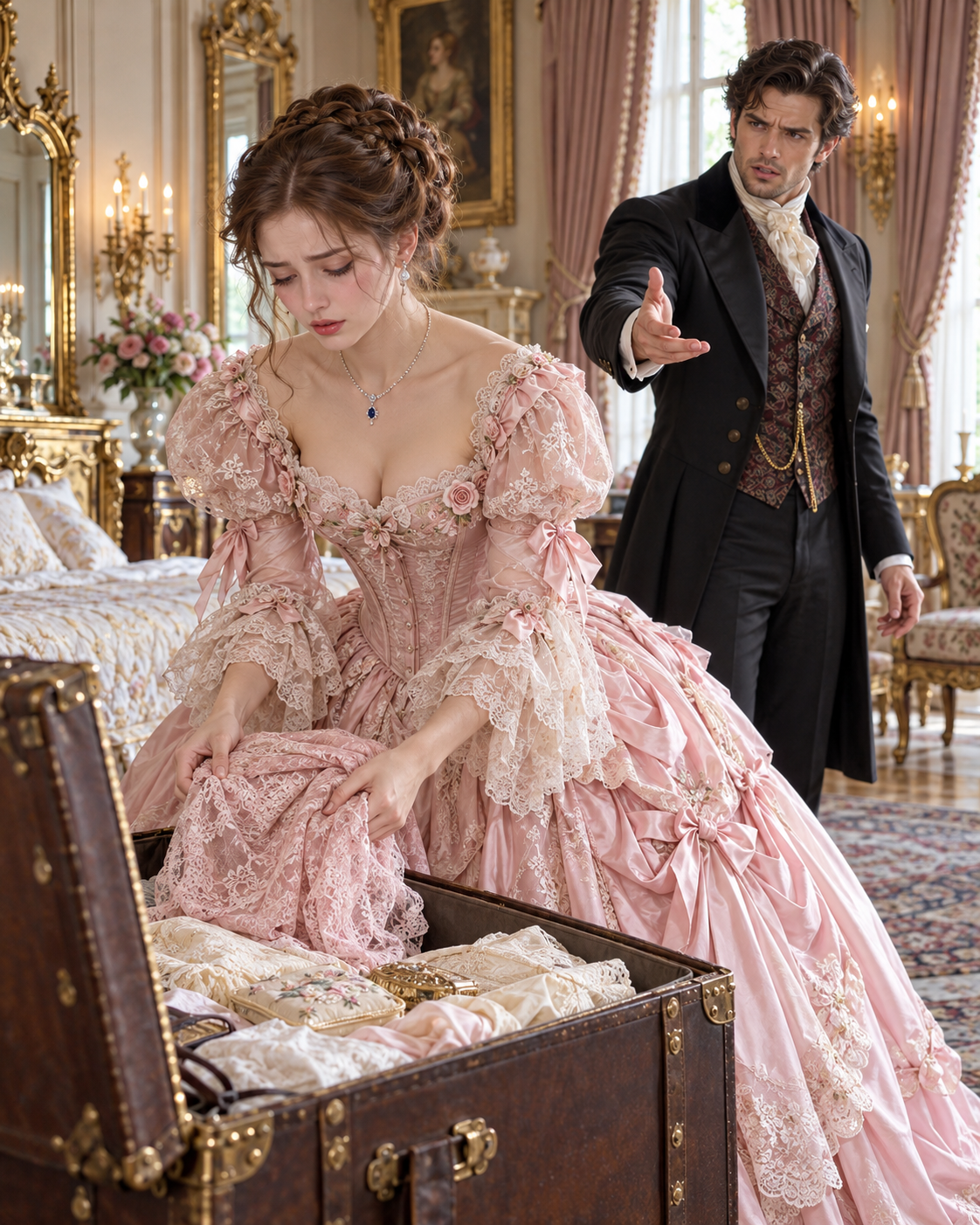
That silence was the first honest answer he had given her in years.
“You knew,” she whispered.
Julian looked at the table.
“You were never supposed to find out.”
Eleanor felt something inside her turn cold.
“Did you kill him?”
“No.”
“Did your father?”
Julian said nothing.
She closed her eyes.
Suddenly, memories rearranged themselves.
Julian appearing at a charity event when she was twenty-three. His interest in her family. His eagerness to meet her mother. The strange tension during their engagement.
Her mother had begged her to delay the wedding.
Eleanor had called her controlling.
Later, when her mother became ill, Julian had insisted on arranging the best private care.
He had also discouraged visitors.
“Why did you marry me?”
Julian looked wounded.
“I loved you.”
“That wasn’t my question.”
He stared at her for a long time.
“At first, I was supposed to find out what your mother knew.”
Eleanor gripped the edge of the counter.
“At first?”
“After your father’s death, my father was convinced she’d taken certain documents. He believed she’d eventually tell you where they were.”
“So you courted me.”
Julian swallowed.
“Yes.”
“And married me.”
“Yes.”
She had imagined that discovering his infidelity would be the worst humiliation of her marriage.
She had been wrong.
“Did you ever love me?”
Julian’s eyes filled.
“More than you know.”
Eleanor shook her head.
“Love doesn’t require someone to remain ignorant so they can be controlled.”
He reached for her hand.
She moved it away.
“Your father,” she said. “Tell me what happened.”
Julian looked toward the rain-streaked window.
“He was going to meet a journalist in Newcastle. My father found out. He sent someone to stop him.”
“Stop him how?”
“The brakes were tampered with.”
Eleanor felt the room tilt.
Julian continued quickly.
“I didn’t know until afterward. I was twenty-six. My father told me it was an accident. Years later, I found the maintenance records.”
“Did you go to the police?”
“No.”
“Why?”
“Because by then I was running the company. Everything was tied together. If the investigation reopened, hundreds of employees would lose their jobs.”
Eleanor stared at him.
“You let my father’s murder remain a secret to protect your business.”
“And to protect you.”
“No. Don’t you dare call that protection.”
Julian rose.
“My father threatened your mother. He said if she exposed him, he’d make certain you suffered the same fate as your father.”
“And you kept working for him.”
“He was my father.”
“So was mine.”
The words fell between them.
Julian looked down.
For the first time, he seemed unable to invent an excuse.
Then Eleanor asked the question that had been burning beneath everything else.
“Who is Catherine Vale?”
Julian’s expression changed.
“Where did you hear that name?”
“Thomas showed me a photograph.”
“Of us?”
“Yes.”
Julian turned away.
“Catherine isn’t my mistress.”
Eleanor felt a bitter smile form.
“Then you’ve been very convincing.”
“She’s my half-sister.”
The kitchen seemed to grow impossibly quiet.
Julian continued, his voice barely audible.
“My father had another family before he married my mother. Catherine was his daughter. He never acknowledged her publicly.”
“Why keep meeting her?”
“Because she’s been helping me gather evidence.”
“Evidence against whom?”
Julian hesitated.
“Against the people who carried on my father’s business after he died.”
Eleanor remembered the bruise beneath his eye.
“Someone hurt you.”
“Someone warned me.”
“Who?”
“Thomas Bell.”
She looked toward the back door.
Julian leaned forward.
“Thomas was my father’s legal adviser. He organized the property transfers, arranged the false reports, and paid the man who damaged your father’s car.”
Eleanor’s stomach tightened.
“Then why would he come here with evidence?”
“Because he thinks you’re the last person who can lead him to the original files.”
A dull metallic sound came from outside.
Julian froze.
The back door was still unlocked.
A moment later, a small object rolled across the kitchen floor.
Eleanor recognized it before Julian did.
Thomas’s silver fountain pen.
Wrapped around it was a scrap of paper.
On it, written in hurried blue ink, were five words.
He knows about the letters.
Julian bent to retrieve it.
Eleanor moved first.
She snatched up the note and stepped away.
“What’s this?”
Julian stared at the handwriting.
Then the kitchen window shattered.
Glass sprayed across the table.
Julian lunged toward Eleanor, dragging her beneath the counter as a second sharp crack split the air.
A bullet struck the cupboard behind them.
For several seconds, neither moved.
Then Julian whispered, “He’s trying to kill us.”
Eleanor could hear footsteps outside.
She had spent fourteen months planning an escape from her marriage.
She had never considered that the escape might become a fight for her life.
Julian pointed toward the pantry.
“There’s a door to the garden?”
“Through the utility room.”
“Go.”
“What about you?”
“I’ll distract him.”
She looked at the man crouching beside her.
The man who had married her under false pretenses.
The man who had allowed her father’s murder to remain buried.
And yet, at that moment, he seemed genuinely prepared to die so she could escape.
She wanted to believe it meant something.
But belief had cost her too much already.
“You don’t get to decide my life anymore,” she whispered.
Before he could answer, she crawled toward the utility room.
The rear door opened onto a narrow path lined with wet hedges.
Eleanor ran.
Branches scratched her face as she squeezed through a gap in the garden fence. Her stockings tore, and cold mud soaked through her shoes.
Behind her came a shout.
Then another gunshot.
She did not stop.
At the end of the lane stood a small stone church.
Its door was open.
Eleanor stumbled inside, breathing so loudly that the sound echoed beneath the vaulted ceiling.
An elderly woman arranging flowers near the altar turned.
“Good heavens, dear. Are you all right?”
Eleanor struggled to form words.
“Please. I need a telephone.”
The woman took one look at her and reached for her mobile.
“Of course.”
“Call the police.”
Within minutes, Eleanor had given her name, her cottage address, and a breathless account of the gunfire.
The woman introduced herself as Margaret Price, the churchwarden.
She brought Eleanor a blanket and sat beside her until the police arrived.
When an officer asked whether Eleanor knew who had attacked her, she gave them both names.
Julian Witmore.
Thomas Bell.
She had no idea which one was telling the truth.
And she was no longer willing to trust either.
By the time officers reached the cottage, both men had disappeared.
There was blood on the kitchen floor.
A broken chair lay beside the back door.
And Eleanor’s suitcase had been opened, its contents scattered across the bedroom.
The brass key was missing.
That evening, Eleanor sat in a police interview room in Newcastle.
Detective Inspector Sarah Lawson placed a cup of tea before her.
“We’ve checked the railway station,” she said. “There hasn’t been a public luggage locker there for nearly twenty years.”
Eleanor stared at her.
“Then what was the key for?”
“We’re trying to establish that.”
Sarah opened a notebook.
“Tell me about your mother’s letters.”
Eleanor described the annual envelopes, each addressed in her mother’s graceful handwriting.
Her mother had written them during the final months of her illness, arranging for Eleanor to receive one every birthday.
The last had arrived when Eleanor turned forty.
“Did any mention your father?”
“Sometimes. Mostly they were about ordinary things. Her garden. Books she loved. Advice she thought I’d need.”
“Anything unusual?”
Eleanor hesitated.
The detective noticed.
“What is it?”
“My mother always ended the letters the same way.”
“How?”
“Remember where the branches meet.”
Sarah made a note.
“Do you know what it means?”
“I thought it referred to the oak tree in our old garden.”
“Where is that house?”
“Outside Alnwick. My mother sold it years ago.”
Sarah looked up.
“Does it still exist?”
“I believe so.”
The detective closed her notebook.
“Mrs. Witmore, I think we should take a drive.”
The old house stood beyond a narrow country road, partly concealed by hedges and towering trees.
Eleanor had not visited in twenty years.
Its windows were dark. The garden was overgrown, and the wooden gate hung crookedly from one hinge.
Yet the enormous oak still stood beside the garden wall.
Its branches spread across the moonlit sky like black veins.
Sarah approached the tree with a torch.
“Where did they meet?”
Eleanor looked up.
High above them, three enormous limbs joined around a hollow in the trunk.
A memory surfaced.
Her mother standing beneath the oak, holding Eleanor’s hand.
If you ever feel lost, darling, remember where the branches meet.
Eleanor walked around the tree.
Near its base, hidden beneath ivy, was a small iron plate.
Three numbers had been scratched into it.
317.
Her breath caught.
“Here.”
Sarah knelt beside her.
The plate covered a narrow opening in the trunk.
Inside was a weatherproof metal container.
It was locked.
The detective called for an evidence officer.
As they waited, Eleanor stared at the container.
Her mother had spent eleven years speaking to her through birthday letters, guiding her toward something she had never been ready to understand.
And Eleanor had mistaken the message for a sentimental memory.
The container was opened under police supervision.
Inside lay a sealed packet, a small recording device, and an envelope addressed to Eleanor.
The envelope carried her mother’s silver-branch seal.
Eleanor’s hands shook as she opened it.
My darling girl,
If you are reading this, the truth has finally reached you.
I am sorry I could not tell you while I was alive.
I was afraid, and fear made me choose silence when I should have chosen courage.
Your father discovered that the Witmores were poisoning land and falsifying records. He collected evidence because he could not bear the thought of children playing on ground that might one day make them ill.
After he died, I kept those records hidden.
Julian’s father threatened you. He promised to destroy your life if I spoke.
When Julian began courting you, I knew why he had come.
I tried to stop the marriage, but you loved him, and I feared that telling you the truth would place you in greater danger.
For that, I ask your forgiveness.
There is something else you must know.
Not everyone who keeps a secret does so to protect the guilty.
Sometimes we keep secrets because we are ashamed of our own cowardice.
But silence does not make us innocent.
Your father believed the truth mattered even when telling it was dangerous.
I hope one day you will have the courage I lacked.
And I hope you will understand that the life you were born into, or the life you married into, does not determine the life you must continue living.
All my love,
Mother.
Eleanor lowered the letter.
Tears blurred the ink.
She had spent years resenting her mother for being distant during her engagement, for offering warnings without explanations.
Now she understood the terrible calculation behind those silences.
But understanding did not erase the harm.
Her mother had loved her.
Her mother had also failed her.
Both truths could exist together.
Sarah gently touched her shoulder.
“We should listen to the recording.”
The device contained several audio files.
The oldest featured Eleanor’s father speaking to a man whose voice she did not recognize.
They discussed contaminated properties, falsified laboratory results, and payments made through offshore accounts.
Another recording captured Julian’s father threatening Eleanor’s mother.
But the final file was different.
It had been recorded only six months before her mother’s death.
A younger Julian spoke first.
“Margaret, you have to give me the documents.”
Eleanor flinched at hearing him address her mother by her first name.
Her mother’s voice answered.
“Why? So your father can burn them?”
“I can protect Eleanor.”
“You’ve already stolen enough from her.”
“I love your daughter.”
“Then tell her the truth.”
A long silence followed.
Then Julian said, “If I tell her, she’ll leave me.”
Her mother replied softly.
“Then let her.”
Eleanor pressed a hand over her mouth.
Julian’s voice returned.
“I can’t.”
“That’s not love, Julian. That’s possession.”
The recording ended.
For a long time, Eleanor did not move.
Then she asked Sarah to play it again.
Not because she doubted what she had heard.
Because she wanted to remember that someone had once said the words Julian had spent fifteen years making her afraid to believe.
By morning, police had issued warrants connected to the historic property fraud investigation.
The documents from the oak tree identified several former executives, local officials, and environmental consultants.
They also revealed something unexpected.
Thomas Bell had been quietly paying witnesses to disappear for decades.
And Catherine Vale had spent seven years tracing the payments.
Julian, however, remained missing.
Two days later, Eleanor received a telephone call from an unknown number.
She almost ignored it.
Then she answered.
“Eleanor.”
Julian.
His voice sounded exhausted.
“Where are you?”
“Somewhere safe.”
“Are you hurt?”
“No.”
A long pause.
“Thomas has Catherine.”
Eleanor closed her eyes.
“Have you told the police?”
“He says he’ll kill her if I do.”
“Where is he?”
“At the old Whitmore textile mill. He wants the files your mother hid.”
“The police have them.”
“I know.”
She heard him breathe unevenly.
“He’s given me until midnight.”
Eleanor looked toward the detective sitting across the room.
Sarah had been listening through the speakerphone.
She held up a sheet of paper.
Keep him talking.
“Julian,” Eleanor said carefully, “why are you calling me?”
“Because I need you to tell the police something.”
“What?”
“Everything.”
His voice broke.
“Everything I did. Everything I allowed to happen. All the names. All the money.”
Eleanor stared at the phone.
“Why now?”
“Because Catherine told me something before Thomas took her.”
“What?”
“She said I’d spent my entire life confusing being forgiven with being free of consequences.”
Silence stretched between them.
Then Julian said, “I think she’s right.”
The call ended.
At eleven thirty that night, police surrounded the abandoned textile mill outside Durham.
Eleanor was not supposed to be there.
Sarah had made that clear.
But when officers found the location of Julian’s telephone, Eleanor insisted on coming as far as the command vehicle.
She could not rescue Catherine.
She could not undo her father’s death.
But she refused to remain somewhere else while men made decisions about the truth.
Through a monitor, she watched the mill’s broken windows flicker with movement.
Inside, Thomas stood beside Catherine, holding a pistol.
Julian faced them across a rusted machinery floor.
The two men were arguing.
The audio from an officer’s concealed microphone crackled.
“You should have left her in London,” Thomas said.
Julian answered, “You should have left my wife’s family alone.”
Thomas laughed.
“Your father built an empire on their suffering. You inherited it gladly.”
“I know.”
“And now you want to pretend you’re a decent man?”
“No.”
Julian’s answer was barely audible.
“I want to stop being the man I’ve been.”
Thomas raised the pistol.
Catherine moved suddenly, striking his wrist with the edge of a metal pipe.
The gun discharged.
On the monitor, Julian collapsed.
Police stormed the building.
For several terrible seconds, the picture dissolved into confusion.
Shouting.
Flashlights.
Bodies moving through dust.
Then Sarah’s radio crackled.
“Suspect secured. Female hostage alive. One male casualty. Ambulance required immediately.”
Eleanor gripped the side of the vehicle.
“Julian?”
Sarah listened.
“He’s alive.”
Relief came before Eleanor could stop it.
She hated herself for feeling it.
Then she realized she did not need to.
Caring whether someone lived did not mean she had to return to them.
Julian survived the gunshot wound.
Thomas Bell was arrested.
Catherine gave a full statement, supported by years of financial records and correspondence she had concealed from her father’s associates.
The investigation spread across several counties.
Properties were tested.
Families were notified.
Compensation claims began.
More than thirty years after Eleanor’s father died, the truth about his death was formally brought before the courts.
Julian cooperated with investigators.
He admitted his role in concealing evidence and facilitating fraudulent transactions after taking control of the company.
His cooperation did not erase his responsibility.
He eventually received a prison sentence.
Eleanor attended the sentencing.
She sat near the back of the courtroom, wearing a navy coat and carrying nothing except her mother’s final letter.
Julian looked toward her once.
She did not turn away.
Afterward, through his solicitor, he asked whether she would visit.
She considered the request for several days.
Then she wrote him a letter.
It contained no anger.
No accusations.
Only the truth she had finally learned to speak.
I spent fifteen years believing that being a good wife meant understanding your mistakes, forgiving your absences, and asking for less whenever you gave me less.
I thought patience would eventually become love.
Instead, it became a habit of disappearing inside my own life.
I believe you regret what you’ve done.
I also believe that regret is only the beginning of responsibility, not the end of it.
I hope you become a better man.
But I will not spend another year waiting for that transformation.
Eleanor.
She sent the letter and began divorce proceedings.
The following spring, Eleanor returned to the cottage in Northumberland.
The broken kitchen window had been replaced.
The garden fence had been repaired.
And Margaret Price, the churchwarden who had sheltered her, had planted lavender beside the path.
“It’s a stubborn little plant,” Margaret explained. “Survives things you wouldn’t expect.”
Eleanor smiled.
“I think I like it.”
She began volunteering with a local organization helping families affected by environmental contamination.
Later, she established a small charitable fund in her father’s name to support independent testing of neglected industrial sites.
She did not use the Witmore name.
She used her own.
Some days were difficult.
She still woke occasionally expecting to hear Julian’s footsteps in the hallway.
Sometimes she reached for her phone before remembering there was no one whose permission she needed.
Freedom, she discovered, was not a single dramatic moment.
It was a thousand small decisions.
Choosing what to eat.
Leaving a room when someone spoke disrespectfully.
Saying no without constructing an elaborate apology.
Allowing herself to be angry.
Allowing herself to be happy.
One afternoon, nearly a year after she had left London, a package arrived at her cottage.
Inside was the wedding photograph that had once stood beside her bed.
Julian’s solicitor had included a note.
Mr. Witmore asked that you receive this. He said you should decide what becomes of it.
Eleanor studied the photograph.
The young woman in the ivory dress looked hopeful, almost unbearably so.
She remembered that wedding morning.
The trembling excitement.
Her mother’s strained smile.
The certainty that she was beginning the happiest chapter of her life.
For years, Eleanor had considered that younger woman foolish.
Now she saw someone who had loved sincerely, trusted too easily, and done the best she could with the truth available to her.
She carried the photograph into the garden.
For a moment, she considered burning it.
Instead, she placed it in a wooden box with her mother’s letters and the photograph of her father standing beneath the old oak tree.
Her past did not need to be destroyed to stop controlling her future.
That evening, Eleanor invited Margaret and Catherine to dinner.
Catherine had become an unexpected friend.
Their connection was complicated, shaped by a family history neither had chosen.
But both understood what it meant to inherit damage and decide not to pass it on.
They ate roast chicken and potatoes at the small kitchen table while rain tapped against the windows.
At one point, Margaret looked around.
“You’ve made this place lovely.”
Eleanor glanced at the mismatched plates, the curtains she had sewn herself, and the lavender visible beyond the glass.
“It’s not much.”
Catherine shook her head.
“It’s yours.”
Eleanor smiled.
And this time, she did not correct her.
Later, after her guests had gone, she stood beside the kitchen window with a cup of tea.
The garden was dark except for a small lamp glowing above the path.
Her phone lay on the table.
No messages demanded an explanation.
No husband waited for an apology.
No carefully chosen silence concealed another betrayal.
Only the gentle sound of rain and the ordinary comfort of a life she had chosen.
She thought of the morning she had left London with a single suitcase.
Back then, she had believed she was running away from a marriage.
She understood now that she had been moving toward something much more important.
The right to belong to herself.
And somewhere between the courtroom, the old oak tree, and the little cottage in Northumberland, Eleanor had learned the lesson her father had died defending and her mother had struggled to embrace.
The truth does not always rescue us from pain.
Sometimes it destroys the life we thought we had.
But a life held together by silence is not peace, and love that demands the surrender of our dignity is not love.
Eleanor switched off the kitchen light.
Tomorrow, she would plant roses beside the lavender.
Her favorite roses.
The deep red ones Julian had never remembered.
And for the first time in her life, she did not need anyone else to bring them to her.
THE END.