The first time Paola Bruno walked into Enzo Farina’s office, he threw her résumé into the trash without reading the second page.
Paola watched Sofia pour far too much maple syrup over her pancakes, her little tongue caught between her teeth in concentration. The morning sunlight spilled across their kitchen table, illuminating the expensive contract beside Paola’s phone.
Three years ago, she would have signed anything that promised her daughter a better life.
Now she understood that some promises came with chains no amount of money could break.
Her phone vibrated again.
Enzo Farina.
She answered.
“I’ll oversee the expansion,” she said before he could speak. “But we’re going to do it differently.”
There was a pause.
“Different how?”
“Monday through Friday. Eight until four. No emergency meetings unless someone’s life is actually in danger. And I want independent oversight of every company involved.”
Enzo exhaled slowly.
“You’re negotiating a multimillion-dollar expansion while eating breakfast?”
“Actually, Sofia is eating breakfast. I’m trying to remember what having one feels like.”
“Paola—”
“And one more thing. I want a clear separation between your legitimate businesses and everything else.”
The silence that followed was longer.
“You know what you’re asking.”
“Yes.”
“You’re asking me to change how I’ve operated for twenty years.”
“No, Enzo. I’m asking whether you want to build something that can survive without frightening everyone who touches it.”
Across the table, Sofia looked up.
“Mommy, your pancakes are getting cold.”
Paola smiled.
“Give me a minute, sweetheart.”
Enzo heard her.
For some reason, that small interruption seemed to affect him more than anything she’d said.
“Come to my office Monday,” he finally replied. “We’ll discuss it.”
“At nine.”
“Seven.”
“Nine.”
He made an irritated sound.
“Fine. Nine.”
Paola ended the call and pushed the contract away.
Sofia studied her suspiciously.
“Did you just tell your boss no?”
“Several times.”
“Did he get mad?”
“A little.”
Sofia considered this, then pushed half her pancakes onto her mother’s plate.
“Good. You should practice.”
Paola laughed, but something tightened painfully in her chest.
Her eight-year-old daughter had understood something that had taken her thirty-two years to learn.
Being needed wasn’t the same as being free.
And somewhere across New Orleans, Enzo Farina was about to discover that distinction too.
On Monday morning, Paola arrived at Farina Holdings carrying three folders instead of one.
The first contained the waterfront expansion proposal.
The second contained a restructuring plan.
The third contained her resignation letter.
Enzo noticed the folders immediately.
“Which one should worry me?”
“The third.”
He stared at her.
“You’re resigning?”
“Not necessarily.”
“That’s an interesting way to begin a business meeting.”
Paola sat opposite him.
“The expansion can work. The waterfront properties have enormous potential. Restaurants, commercial offices, renovated warehouses, affordable housing. But I won’t build a respectable company on top of an organization that still operates through intimidation.”
Enzo’s expression hardened.
“You knew who I was when you took this job.”
“I did. And I needed the money badly enough to convince myself I could ignore certain things.”
“Certain things?”
“Two men died because they grabbed my arm.”
His jaw tightened.
“They threatened you.”
“They did. And you ordered their deaths. I can’t pretend that was justice simply because I was the person you were protecting.”
Enzo turned his wheelchair toward the window.
Below them, the Mississippi River moved steadily beneath the morning haze.
For a long time, he said nothing.
Then he spoke quietly.
“People don’t survive my world by asking politely.”
“Maybe not. But you keep telling me you want to leave that world behind.”
“I never said that.”
“No,” Paola replied. “You just keep building businesses that could exist without it.”
He turned back.
“What exactly do you want?”
“Independent accounting. Outside directors. Proper background checks. No criminal money entering the expansion. And no employees being pressured to participate in anything illegal.”
Enzo gave a humorless laugh.
“You’ve prepared a list of demands.”
“I’ve prepared a choice.”
She placed the resignation letter on his desk.
“If you refuse, I leave. I won’t interfere with your legitimate companies, but I won’t lend my name to them either.”
Enzo looked at the envelope.
For the first time since she’d met him, Paola saw something unfamiliar in his face.
Not anger.
Fear.
“You’re the only person in this building who tells me the truth,” he said.
“Then listen to it.”
Before he could answer, his office door opened.
His security chief, Marco DeLuca, entered without knocking.
Marco had worked for Enzo for fifteen years. Broad-shouldered, gray-haired, and perpetually suspicious, he had never approved of Paola’s growing influence.
“We have a problem,” Marco announced.
Enzo frowned.
“What problem?”
Marco glanced at Paola.
“A serious one.”
“Then speak.”
Marco placed a tablet on the desk.
A local news website displayed a photograph of Enzo beside a headline announcing a federal investigation into Farina Holdings.
Paola leaned forward.
The article described suspicious financial transfers, questionable warehouse contracts, and allegations that several companies had concealed income from criminal operations.
But one detail made her blood run cold.
The article identified Paola Bruno as a senior executive involved in coordinating the transactions.
Her photograph appeared beneath Enzo’s.
She recognized the picture.
It had been taken outside Sofia’s school.
“Where did they get that?” she whispered.
Marco folded his arms.
“Someone’s been talking.”
Enzo read the article without changing expression.
Then he looked at Marco.
“Find out who.”
Paola raised her hand.
“No.”
Both men turned toward her.
“No threats. No disappearing witnesses. No sending people to someone’s house.”
“Paola,” Marco snapped, “this is bigger than your personal principles.”
She stood.
“My name is in that article. My daughter could see it. I have every right to decide how we respond.”
Enzo watched her for a moment.
Then he turned to Marco.
“Bring in the attorneys.”
Marco’s face darkened.
“And the person who leaked this?”
“Leave that to the attorneys too.”
Marco left without another word.
Paola looked back at the screen.
The article had been published forty minutes earlier.
Someone had chosen the photograph deliberately.
And whoever it was knew exactly where Sofia went to school.
By noon, three federal investigators had arrived with subpoenas requesting financial records.
Paola cooperated.
She gave the company’s outside counsel access to the records she controlled and instructed her team not to delete, alter, or conceal anything.
Enzo’s criminal attorney, Daniel Mercer, arrived shortly afterward.
He was a careful man in his fifties who had spent years telling Enzo what he could legally defend rather than what he wanted to hear.
After reviewing the subpoenas, Daniel requested a private meeting.
“Some of these transactions predate Paola’s employment,” he said.
“Most of them do,” Paola replied.
“That’s useful. But there are several accounts connected to the recent expansion that concern me.”
Enzo frowned.
“Which accounts?”
Daniel turned his laptop around.
Three transfers had moved through a newly established subsidiary called Crescent Harbor Development.
Each was just under two million dollars.
Paola stared at the screen.
“I never authorized those.”
“Your electronic approval appears on all three.”
“That’s impossible.”
Daniel enlarged the documents.
There it was.
Her name.
Her executive authorization.
Even the digital signature she used for legitimate vendor contracts.
Enzo looked at her.
“Paola?”
She met his eyes.
“I didn’t approve them.”
He didn’t hesitate.
“I believe you.”
Daniel studied the transactions.
“The question is whether we can prove it.”
Paola examined the timestamps.
All three approvals had occurred at 11:43 p.m. on a Saturday.
She remembered that night.
Sofia had been sick with a fever. Paola had spent six hours at Children’s Hospital after her daughter developed breathing difficulties.
She still had the discharge paperwork.
“Someone used my credentials,” she said.
Daniel nodded slowly.
“Then we need the access logs.”
Paola reached for her phone.
But another detail caught her attention.
The transfers had been approved through an internal administrative terminal.
One assigned to Marco DeLuca’s security division.
She felt a chill.
“Daniel,” she said carefully, “don’t request those logs through Marco.”
Enzo’s eyes narrowed.
“Why?”
“Because I think we may have a much bigger problem.”
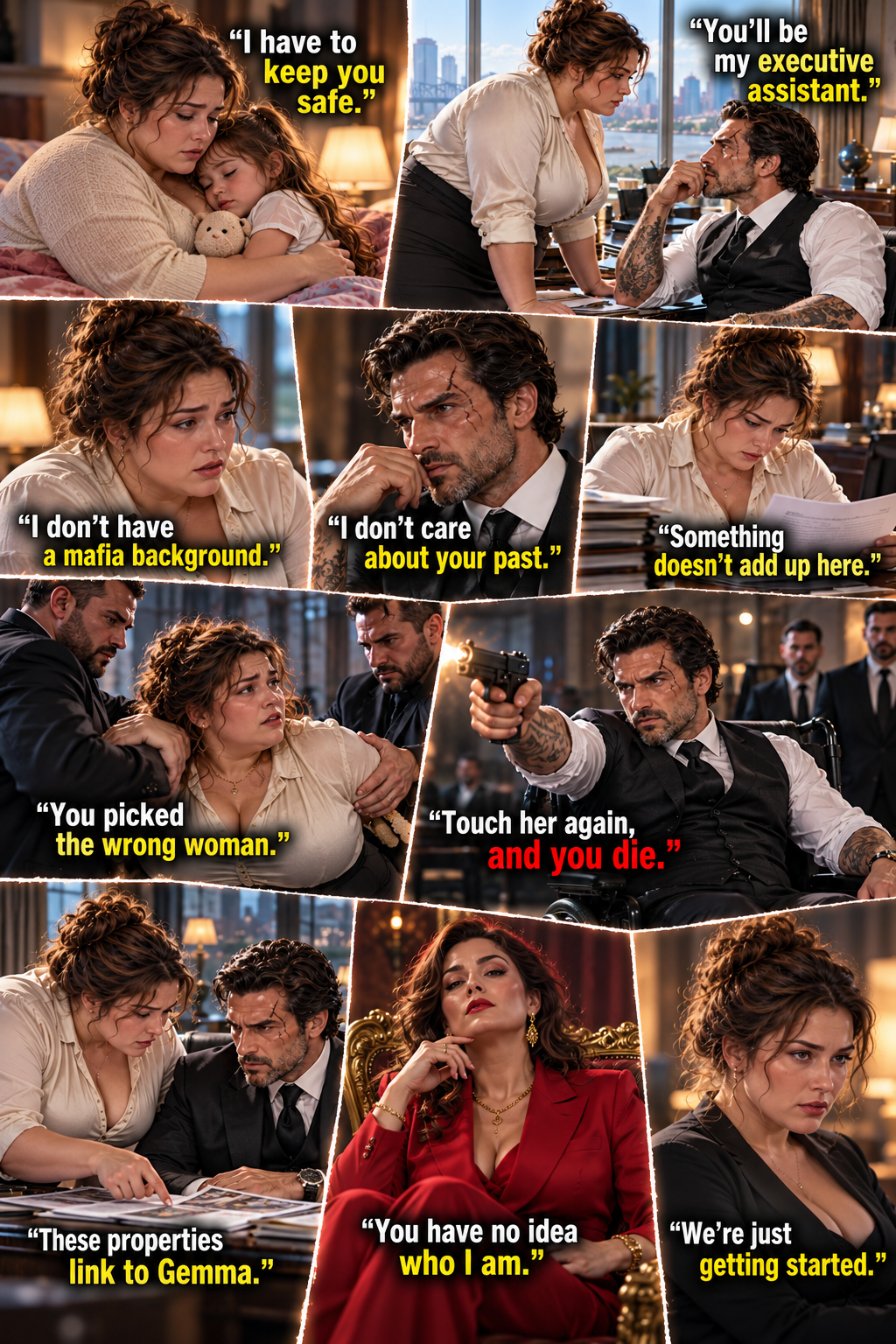
That evening, Paola drove home with two private security vehicles following at a distance.
She had agreed to temporary protection after receiving a threatening message from an unknown number.
It contained only five words.
Your daughter deserves a mother.
Paola forwarded it to Daniel and the police.
Then she turned off her phone.
At home, Sofia was building a miniature city from cardboard boxes.
There were tiny houses, a hospital, a bakery, and a bridge made from popsicle sticks.
“Look, Mommy!” she exclaimed. “This is where everybody lives.”
Paola knelt beside her.
“Who’s the mayor?”
Sofia pointed to a small plastic dinosaur.
“Him.”
“Excellent choice.”
“He doesn’t let anyone be mean.”
Paola smiled faintly.
“What happens if somebody is mean?”
Sofia thought about it.
“They have to fix what they broke.”
The answer settled over Paola like a quiet accusation.
She had spent months helping Enzo become wealthier and more powerful.
She had convinced herself that turning his attention toward lawful business was enough.
But Sofia’s cardboard city had something Enzo’s empire lacked.
Rules that applied to everyone.
Including the person in charge.
The next morning, Daniel called with troubling news.
The access logs had been copied before anyone in Marco’s department could interfere.
They showed that Paola’s credentials had been used from an administrative workstation while she was at the hospital.
The terminal belonged to Marco’s deputy.
But that wasn’t the worst part.
The three transfers had gone to companies associated with a familiar name.
Gemma Moretti.
Paola sat down slowly.
“That’s impossible. Her organization lost those properties.”
“Her organization lost control of several assets,” Daniel corrected. “She still has associates, money, and people willing to work with her.”
“Are you saying Marco is working with Gemma?”
“I’m saying the records justify investigating that possibility.”
Paola looked through her kitchen window.
A dark sedan was parked across the street.
One of Enzo’s guards stood beside it.
She wondered how many people assigned to protect her were actually loyal to Marco.
“Daniel, I need you to arrange something.”
“What?”
“A meeting with the investigators. Without Enzo’s security team knowing.”
Daniel hesitated.
“Paola, anything you say could affect your own legal position.”
“Then I want my own attorney there.”
“Good.”
“And I want every document preserved.”
“I’ll arrange it.”
Before hanging up, Daniel added something.
“There’s one more thing you should know.”
Paola waited.
“The federal investigators have been examining Marco for months.”
Her stomach dropped.
“Does Enzo know?”
“Not yet.”
For the next forty-eight hours, Paola lived between two worlds.
At the office, she continued reviewing construction bids and meeting with architects.
At home, she prepared Sofia’s lunches, checked her homework, and pretended not to notice the unfamiliar cars moving through their neighborhood.
But privately, she and her attorney began assembling evidence.
They documented the fraudulent approvals, preserved the threatening messages, and gave investigators information they could verify independently.
Paola refused to speculate about anyone’s guilt.
She had learned how dangerous assumptions could become when powerful men treated suspicion as permission to punish.
Then, on Thursday afternoon, Enzo summoned her.
Marco stood beside his desk.
His expression was unreadable.
“Close the door,” Enzo said.
Paola obeyed.
Enzo placed a printed photograph in front of her.
It showed Paola entering a federal building with Daniel Mercer and her attorney.
“Would you like to explain this?”
Marco watched her closely.
Paola’s heart pounded.
But she didn’t look away.
“Yes. I’m cooperating with an investigation involving fraudulent transactions made under my name.”
Enzo’s face remained still.
“Without telling me.”
“I needed independent legal advice.”
“You could have come to me.”
“Someone inside your organization used my identity. I couldn’t assume your security arrangements were safe.”
Marco stepped forward.
“She’s been feeding information to the government.”
Paola turned toward him.
“I’ve been providing records to investigators.”
“She’s betraying you, Enzo.”
Enzo raised one hand.
Marco stopped.
Then Enzo asked a question that changed everything.
“Paola, do you believe I ordered those transfers?”
“No.”
“Do you believe I knew about them?”
“I don’t know.”
The answer seemed to hurt him.
He looked at Marco.
“Leave us.”
Marco stiffened.
“Enzo—”
“Now.”
The door closed behind him.
For several seconds, Enzo stared at his hands.
Then he spoke.
“Three years ago, when I was shot, Marco was the one who got me out of that warehouse.”
Paola remained silent.
“He carried me to the car. Stayed at the hospital. Took control when half my people thought I was dying.”
“That doesn’t mean he’s incapable of betraying you.”
“I know.”
Enzo looked up.
“That’s what frightens me.”
Paola sat opposite him.
“You built a system where loyalty matters more than accountability. If Marco is stealing from you, people may be too afraid to report it.”
Enzo swallowed.
“And if he’s working with Gemma?”
“Then we let the evidence establish it.”
His expression hardened.
“You know what I would have done five years ago.”
“Yes.”
“What would you have me do now?”
Paola leaned forward.
“Nothing that makes Sofia grow up believing murder is how adults solve problems.”
Enzo looked away.
Then, very slowly, he nodded.
The following Monday, federal agents arrested Marco DeLuca outside a private marina.
The investigation had uncovered financial records connecting him to several shell companies controlled by Gemma’s associates.
According to the evidence later presented in court, Marco had diverted company funds, sold confidential information, and used Paola’s credentials to conceal transactions.
The photograph outside Sofia’s school had been supplied to an intermediary involved in the scheme.
Marco had expected the resulting pressure to make Paola resign.
Without her overseeing the legitimate companies, he believed he could regain control over Enzo’s finances.
But the scheme had another purpose.
Investigators uncovered communications indicating that Marco had been negotiating with Gemma to take over parts of Enzo’s remaining criminal network.
Enzo had been betrayed by the man who once saved his life.
And Paola had nearly become the person blamed for it.
The arrests made national headlines.
Gemma Moretti was taken into custody several weeks later on charges connected to the financial conspiracy.
Her lawyers denied the allegations, and the criminal proceedings would continue for months.
Paola understood that an arrest wasn’t the same as a conviction.
But the immediate danger to her family had finally begun to recede.
She expected Enzo to be furious.
Instead, she found him alone in his office one rainy evening, staring at an old photograph.
It showed a younger Enzo standing beside Marco outside a warehouse.
Both men were smiling.
“I trusted him with everything,” Enzo said.
Paola stood near the doorway.
“That must hurt.”
“He knew where I kept my money. Which businesses mattered. Which people I trusted.”
Enzo’s voice grew quieter.
“He knew how frightened I was after the shooting.”
Paola approached.
“Being betrayed doesn’t make trusting someone a mistake.”
He looked up.
“Then what does it make me?”
“Human.”
Enzo laughed bitterly.
“That’s not a word people use for me.”
“Maybe you haven’t given them many reasons.”
He looked at the photograph again.
For a moment, Paola thought he might become angry.
Instead, he placed it facedown.
“I used to think fear made people loyal,” he said.
“It makes them careful,” Paola replied. “That’s different.”
Enzo closed his eyes.
“And what makes them stay?”
“Having a choice.”
The answer seemed to settle somewhere deep inside him.
Two days later, Enzo asked Paola to meet him at the waterfront.
The old Bellini warehouse stood beside the river, its brick walls weathered and its windows covered in dust.
Inside, sunlight streamed through broken panes onto the concrete floor.
Enzo waited near the entrance.
“I’ve made a decision,” he said.
Paola crossed her arms.
“Should I be worried?”
“Probably.”
He handed her a folder.
Inside were plans for a complete restructuring of his legitimate holdings.
Independent directors.
Audited financial statements.
Clear ownership records.
A formal compliance program.
And a process for ending the companies’ financial connections to his criminal operations.
Paola read the documents twice.
“You’re serious?”
“Daniel says the process will be complicated. There may be investigations, penalties, and things I can’t simply walk away from.”
“There will be.”
“I know.”
He glanced toward the river.
“For years, I told myself that everything I did was necessary because people wanted to take what belonged to me.”
“And now?”
“Now I’m beginning to wonder whether I ever knew what actually belonged to me.”
Paola looked at the empty warehouse.
“What about this place?”
Enzo smiled faintly.
“That’s why we’re here.”
He unfolded a large architectural drawing.
The building would become a community development center.
The ground floor would contain affordable commercial spaces for small businesses.
Upstairs would be classrooms, offices, and a childcare center for working parents.
Paola stared at the plans.
“Whose idea was this?”
“Yours.”
“I never suggested a childcare center.”
“No. But you’ve spent a year reminding me that people have lives outside my office.”
Her throat tightened.
Enzo continued.
“I want you to lead the project. Not as my employee.”
He handed her a second folder.
It contained documents establishing an independent development organization with its own board.
Paola would be offered a leadership role.
Her compensation would be negotiated separately.
She would report to the board, not Enzo.
And she would be free to leave.
“You wouldn’t control it?” she asked.
“No.”
“Not indirectly?”
“No.”
“Not through some mysterious arrangement Daniel forgot to mention?”
Enzo gave a reluctant smile.
“You’re exhausting.”
“That isn’t an answer.”
He met her eyes.
“I won’t control it, Paola.”
She looked back at the drawings.
For the first time, the opportunity didn’t feel like another golden cage.
It felt like a door.
But she didn’t accept immediately.
She took the proposal home.
She reviewed it with her attorney.
She spoke with experienced nonprofit directors and financial advisers.
And, most importantly, she spent an entire Saturday with Sofia.
They went to the aquarium, ate ice cream beside the river, and watched boats move beneath the afternoon sun.
At one point, Sofia slipped her small hand into Paola’s.
“Mommy?”
“Yes, sweetheart?”
“Are you happy?”
Paola considered the question.
“I think I’m learning how.”
Sofia nodded solemnly.
“That’s good. Because you always tell me learning takes practice.”
Paola kissed the top of her head.
“You’re getting very wise.”
“I know.”
They laughed together.
And Paola realized she hadn’t checked her work phone in six hours.
Nothing terrible had happened.
The world had continued turning.
For the first time in years, she felt completely present in her own life.
Six months later, the Bellini Waterfront Center opened its doors.
The project had faced obstacles.
Construction costs rose.
Several investors withdrew when Enzo’s past attracted renewed scrutiny.
A contractor attempted to overcharge the organization.
Paola dismissed the contractor through proper procedures and replaced the firm after a competitive review.
She no longer needed anyone to threaten people on her behalf.
She had contracts, oversight, and a board that expected answers.
More importantly, she had employees who weren’t afraid to tell her when something was wrong.
On opening morning, hundreds of people gathered outside the renovated warehouse.
There were small-business owners, teachers, parents, community leaders, and members of the Bellini family.
One of the first tenants was a woman named Teresa Alvarez, who had spent years cleaning hotel rooms while saving money to open a bakery.
Another was a former warehouse worker named James Porter, who had lost his job when one of Gemma’s companies collapsed.
The center’s training program had helped him qualify for a new position.
Paola watched Teresa arrange pastries behind the counter.
“Are you nervous?” she asked.
“Terrified,” Teresa admitted.
“Good.”
Teresa blinked.
“Good?”
“It means you’re doing something that matters to you.”
Teresa smiled.
“Then I must be doing something very important.”
Near the entrance, Sofia stood proudly beside a display of children’s drawings.
She had helped design a mural for the childcare center.
It showed colorful houses, trees, families, and a bright yellow sun.
In the corner stood a small purple dinosaur.
Paola recognized him immediately.
“The mayor?”
Sofia grinned.
“Of course.”
Then the crowd began to applaud.
Enzo Farina had arrived.
He moved through the entrance in his wheelchair, accompanied by Daniel and two members of the new board.
He looked different.
Not physically.
His expression was still stern, and his presence still commanded attention.
But the men around him no longer scanned the room as though expecting a fight.
There were no whispered threats.
No frightened employees stepping aside.
Enzo approached Paola.
“You did it.”
“We did it,” she replied.
He shook his head.
“No. I financed part of it. You built it.”
Paola smiled.
“That’s the nicest thing you’ve ever said to me.”
“Don’t get used to it.”
Then Sofia appeared beside them.
“Mr. Farina?”
Enzo looked down.
“Yes?”
“Do you want to see my dinosaur?”
He hesitated.
Paola almost laughed.
The man who had once terrified half the city’s waterfront was visibly uncertain how to respond to an eight-year-old girl.
“I suppose I do.”
Sofia took hold of his wheelchair’s armrest.
“Come on. He’s the mayor.”
Enzo followed her toward the mural.
Paola watched them go.
For a moment, she remembered the first day she’d walked into his office.
The discarded résumé.
The cold expression.
The man who believed respect could be demanded.
Now he was listening seriously while a little girl explained why a purple dinosaur had been elected mayor of a cardboard city.
Life had a strange sense of humor.
But the past hadn’t disappeared.
Enzo still faced legal consequences for his earlier activities.
He had retained counsel, begun cooperating with lawful investigations where advised, and relinquished control of several operations.
Some people would never forgive him.
Paola didn’t expect them to.
She had learned that change wasn’t a magical transformation that erased harm.
It was a decision that had to be made repeatedly, especially when doing the right thing became inconvenient.
Three months after the center opened, Paola received a letter from the family of one of the men Enzo had ordered killed.
The man’s name was Anthony Reed.
He had been one of the attackers in the parking garage.
The letter came from his younger sister, Natalie.
Natalie didn’t excuse what her brother had done.
She wrote that Anthony had made terrible choices and hurt people.
But he had also been a son, a brother, and the father of a little boy who still asked when his daddy was coming home.
Paola sat with the letter for a long time.
Then she requested a meeting with Enzo.
She placed it on his desk.
He read it silently.
When he finished, his face looked older.
“What do you want me to do?” he asked.
“Read it again.”
He did.
Paola waited.
Finally, Enzo lowered the paper.
“I can’t bring him back.”
“No.”
“I can’t undo what happened.”
“No.”
He looked at her.
“Then what is there?”
“Accountability.”
For once, Enzo didn’t argue.
In the weeks that followed, he discussed the matter with his attorney and took steps toward addressing his responsibility through the legal process.
Paola didn’t promise Natalie that justice would be simple or that an apology could heal her family’s loss.
She understood that remorse wasn’t a substitute for consequences.
And she understood something else.
A person could help someone change without becoming responsible for saving them.
That distinction finally freed her from a burden she hadn’t realized she was carrying.
One year after the morning Enzo had offered her the waterfront expansion, Paola sat at her kitchen table reviewing the center’s annual report.
The numbers were encouraging.
Forty-three small businesses had received support.
More than a hundred adults had completed job-training programs.
Dozens of children had attended the childcare center while their parents worked.
The organization wasn’t perfect.
There were budget problems, disagreements, and difficult decisions.
But every success belonged to people who had been given an opportunity rather than a command.
Sofia entered the kitchen carrying a school assignment.
“Mommy, I have to write about someone I admire.”
Paola smiled.
“Who are you choosing?”
“You.”
Paola laughed softly.
“That’s very sweet.”
Sofia climbed onto the chair beside her.
“But I don’t know what to write.”
“Well, what do you admire about me?”
Sofia thought carefully.
“You’re brave.”
Paola’s eyes softened.
“Thank you.”
“And you’re smart.”
“Sometimes.”
“And you don’t let people be mean to you.”
Paola smiled.
“I’m still working on that.”
Sofia looked down at her paper.
Then she said something Paola would remember for the rest of her life.
“I think you’re brave because you can leave when something isn’t good for you.”
Paola went still.
Her daughter continued drawing, unaware of the impact of her words.
Outside, the city moved through another ordinary evening.
Cars passed.
Neighbors talked on their porches.
The river continued its endless journey toward the Gulf.
Paola looked around their kitchen.
There were dishes in the sink, schoolbooks on the counter, and a half-finished grocery list attached to the refrigerator.
Nothing about the room was extraordinary.
And that was precisely why she loved it.
There were no guards outside.
No urgent calls demanding her presence.
No powerful man deciding what safety should look like for her family.
She had a career she believed in, enough money to provide for Sofia, and the freedom to choose what happened next.
Her phone rang.
Enzo.
She answered with a smile.
“Good evening.”
“Paola, I need your opinion on something.”
“Is it urgent?”
He hesitated.
“No.”
“Then tomorrow.”
A familiar silence followed.
Then Enzo chuckled.
“Nine?”
“Nine.”
She hung up.
Sofia looked at her.
“Was that Mr. Farina?”
“Yes.”
“Did you tell him no again?”
Paola laughed.
“I did.”
Sofia nodded approvingly.
“You’re getting really good at it.”
Paola pulled her daughter into her arms.
For years, she’d measured success by what she could earn, what she could endure, and how useful she could become to people more powerful than herself.
But the greatest thing she’d accomplished wasn’t dismantling Gemma Moretti’s financial empire.
It wasn’t earning Enzo Farina’s respect.
It wasn’t even helping transform an abandoned warehouse into a place where families could build better futures.
It was teaching her daughter, through the choices she made, that love did not require surrendering freedom, that gratitude did not create lifelong obligation, and that no amount of wealth could replace the peace of belonging to yourself.
And Enzo, the man who had once thrown her résumé into the trash, had learned a lesson of his own.
Power could force people to obey.
Fear could make them stay.
Money could purchase their time.
But only respect could make someone choose to stand beside you.
Paola had never needed Enzo to rescue her.
She had needed an opportunity.
And when that opportunity threatened to become another prison, she had found the courage to open the door herself.
That evening, after Sofia fell asleep, Paola found the original résumé she’d printed more than two years earlier.
It had a small coffee stain in the corner and a handwritten note across the top.
Don’t give up. Sofia is counting on you.
Paola studied the words.
Then she took out a pen and wrote something underneath.
She was never counting on me to become powerful. She was counting on me to come home.
She placed the paper in a drawer beside Sofia’s childhood drawings.
And for the first time in a very long time, Paola Bruno went to bed without worrying about what tomorrow might demand from her.
Because tomorrow no longer belonged to Enzo Farina, his enemies, or the empire she’d helped rebuild.
It belonged to her.
And that was worth more than every fortune she’d ever been offered.
THE END.