The entire Montana church went silent when Daniel Carter called me his thirty-first mistake, but the cruel rancher had no idea I knew his family’s darkest secret.
The photograph slipped from the sheriff’s fingers and landed on the kitchen table.
For several seconds, nobody moved.
The woman in the picture stood beside a little boy wearing a blue coat, her dark hair shorter than I remembered, her face thinner, but unmistakably hers.
Margaret.
My sister was alive.
A sound escaped my throat that I barely recognized as my own.
“No,” I whispered. “No, that’s impossible.”
The sheriff removed his hat.
“My name is Sheriff William Hayes. I thought you deserved to see this before anyone else did.”
Daniel stared at the photograph as if the dead had returned to accuse him.
“Where did you find her?”
“In a cabin near Black Pine Creek. The place was locked from the outside, but there were fresh footprints in the snow. Someone had been there recently.”
“And the boy?” I asked.
“Gone before my deputies arrived.”
I gripped the edge of the table.
“How old is he?”
“About six.”
Six.
Lily was six. Samuel was nine. Thomas was twelve.
Three children, three different ages, and a photograph that had just introduced a fourth child into a family already drowning in secrets.
Then I noticed the date printed on the back of the photograph.
October 14.
Only twelve days earlier.
My sister had been alive twelve days ago, while I had spent eight months mourning her, believing that the fire had swallowed the last person in the world who knew me before life became difficult.
I reached for the photograph, but Daniel caught my hand.
“Rebecca, look at the background.”
Behind Margaret stood a weathered wooden door with a crooked iron hinge. A white mark shaped like a crescent had been painted beside it.
I knew that mark.
As children, Margaret and I had scratched a crescent moon into the door of our father’s old workshop, a place we used to hide whenever our stepfather came home drunk.
It was our secret refuge.
My sister had carried that symbol across hundreds of miles and years of pain.
“She wants me to find her,” I whispered.
The sheriff shook his head.
“Perhaps. Or perhaps someone wants you to think she does.”
Daniel released my hand.
“Why would anyone fake this?”
The sheriff looked directly at him.
“That’s what I’d like to know, Mr. Carter. Especially considering what we found inside that cabin.”
He opened his leather notebook.
“A second photograph. A burned ledger. And a revolver registered to your late brother.”
Daniel went completely still.
“My brother’s revolver was found in the farmhouse.”
“That’s what the original report says.”
“Then why are you telling me this?”
“Because the revolver recovered from the cabin had the same serial number as the one listed in that report. And the original weapon was supposedly destroyed in the fire.”
I watched Daniel’s face lose its color.
For the first time since I had met him, the enormous rancher looked less like a man capable of fighting the world and more like someone who had just discovered that the world had been lying to him.
“Someone switched the evidence,” I said.
The sheriff nodded.
“Or someone made sure we never found the original.”
He turned another page.
“There is one more thing. The county has reopened the investigation into the farmhouse fire. Until we know what happened, nobody should visit that cabin alone.”
Daniel reached for his coat.
“Then we go together.”
“No,” I said.
Both men turned toward me.
“My sister spent her whole life being told what she could and couldn’t do. If she’s alive, I’m not going to let fear make my decisions for me again.”
Daniel’s jaw tightened.
“You don’t know who’s out there.”
“Neither do you.”
“I know enough to recognize danger.”
“And I know enough to recognize when a man mistakes protecting people for controlling them.”
The words struck harder than I intended.
His eyes darkened, but he stepped aside.
“All right,” he said. “We go together.”
That afternoon, the sheriff returned to town to obtain a warrant and arrange additional deputies. Daniel saddled two horses, while I packed a lantern, blankets, and the photograph into my satchel.
Before we left, Thomas appeared at the barn door.
“I heard everything.”
I knelt in front of him.
“I’m sorry, sweetheart.”
“Is my mother alive?”
I could not bring myself to lie.
“I don’t know.”
He swallowed hard.
“If she is, why hasn’t she come back?”
There was no answer that would not wound him.
I placed my hands on his shoulders.
“Sometimes adults make terrible choices because they’re frightened. That doesn’t mean the children they leave behind are unworthy of being loved.”
Thomas looked past me toward Daniel.
“Uncle Daniel says people who leave never come back.”
I turned.
Daniel stood beside his horse, his face unreadable.
“Your uncle has been hurt,” I told Thomas gently. “But being hurt doesn’t make every fear true.”
Thomas lowered his head.
Then he did something that broke my heart.
He hugged me.
“I don’t want you to leave, too.”
I held him until he loosened his arms.
“I won’t disappear without telling you.”
It was a promise I hoped I could keep.
We rode north beneath a sky the color of iron.
The cabin stood in a narrow valley where the pine trees grew so close together that the afternoon light barely reached the ground. Snow covered the roof, and smoke rose from the chimney.
Someone was inside.
Daniel dismounted first, motioning for me to remain behind him.
I ignored the gesture and walked beside him.
The front door was unlocked.
Inside, the cabin smelled of woodsmoke, wet wool, and something sweetly familiar.
Cinnamon.
Margaret used to bake cinnamon bread whenever she wanted to comfort me.
On the table sat a half-empty cup of tea. A child’s drawing lay beside it, showing a woman holding hands with two little boys and a girl.
Beneath the drawing, someone had written four names.
Margaret.
Thomas.
Samuel.
Lily.
And a fifth name, written in careful handwriting.
Ethan.
I stared at it.
“Who is Ethan?”
Daniel searched the room.
“I’ve never heard that name.”
I touched the paper. The ink was still fresh.
Then I saw a folded letter beneath the cup.
My name was written across the envelope.
With trembling fingers, I opened it.
Rebecca, if you’re reading this, it means someone finally found the cabin.
I know you hate me for leaving you with questions. You have every right to hate me.
But I didn’t die in that fire.
Neither did Ethan.
I tried to come back. I tried more times than you will ever know.
Every time I got close, someone reminded me what would happen to the children if I spoke.
Trust Daniel only if he tells you what happened the night his brother died.
And whatever you do, don’t let Thomas open the black ledger.
The letter ended there.
I read it twice.
Then a third time.
Daniel stood motionless behind me.
“What happened the night your brother died?” I asked.
He stared at the floor.
“Daniel.”
He closed his eyes.
“My brother, Andrew, died in a riding accident. At least, that’s what I was told.”
The room seemed to tilt.
“What do you mean, that’s what you were told?”
“I found him near the north ridge eight months before the farmhouse burned. His horse had returned without him. By the time I reached him, he was dead.”
“Was there an investigation?”
“The sheriff at the time said it was an accident.”
“And you believed him?”
Daniel’s expression twisted.
“I wanted to.”
He sank onto a chair.
“Andrew and I had argued that morning. He’d been drinking, and he accused me of stealing money from the ranch accounts. I told him he was a liar. He rode away furious.”
His voice broke.
“I never saw him alive again.”
I thought of the revolver, the ledger, and Margaret’s desperate warning.
“What if he wasn’t killed in an accident?”
Daniel looked up.
“Then I’ve spent eight months hating myself for something I might not have done.”
Before I could answer, a floorboard creaked behind us.
We spun around.
A little boy stood in the doorway, wearing a blue coat.
The boy from the photograph.
He had Margaret’s dark eyes and Daniel’s stubborn chin.
He stared at us, clutching a small wooden horse.
“Are you Uncle Daniel?”
Daniel took one step forward.
“Yes.”
The boy backed away.
“Mom said you might come.”
My heart pounded.
“Where is she, sweetheart?”
He looked at me.
“She’s waiting for you.”
“Where?”
He pointed toward a narrow path behind the cabin.
“By the old mill.”
Then his gaze dropped to the letter in my hand.
“Mom said you would bring that.”
He reached into his coat and pulled out a small brass key.
“And she said to give you this before the bad man comes.”
A gunshot cracked through the valley.
The boy screamed.
Daniel lunged forward, pulling him to the floor as a second shot shattered the cabin window.
I dropped behind the table, my ears ringing.
Outside, a horse galloped away through the trees.
Daniel crawled toward the window, keeping his head low.
“Stay down!”
The boy clung to my arm.
“Mom said he would come!”
“Who, sweetheart?”
He shook so violently that he could barely speak.
“The man who took Daddy.”
My blood turned cold.
Daniel looked at me.
For the first time, neither of us needed to say what we were thinking.
Andrew’s death had never been an accident.
And someone had just tried to kill the child who could prove it.
We waited until the gunfire stopped before moving. Daniel carried Ethan to the back of the cabin, where a narrow cellar door opened beneath a pile of firewood.
He checked the boy for injuries, then wrapped him in a blanket.
“Can you tell us who shot at us?”
Ethan shook his head.
“He wears a sheriff’s star.”
Daniel and I exchanged a look.
Sheriff Hayes.
The man who had brought us the photograph.
The man who had reopened the investigation.
The man who knew exactly where we were going.
A terrible suspicion settled over me.
“Maybe not Sheriff Hayes,” I whispered. “Maybe someone who knows what we’re doing.”
Daniel studied the brass key in my hand.
“There’s an old mill two miles east of here. My father built it before I was born. It’s been abandoned for decades.”
“Why would Margaret go there?”
“Because the mill has a basement.”
I remembered the warning in the letter.
Don’t let Thomas open the black ledger.
Perhaps the ledger had been hidden there.
Daniel mounted his horse with Ethan in front of him. I followed, keeping the boy between us as we rode toward the mill.
The building emerged from the trees like the skeleton of a forgotten giant. Its broken windows rattled in the wind, and the waterwheel stood motionless beside the frozen creek.
A lantern glowed inside.
“Margaret!” I shouted.
A figure appeared in the doorway.
For a heartbeat, I could not breathe.
Then she stepped into the light.
My sister was thinner, older, and marked by a pale scar that ran from her temple to her jaw. But her eyes were the same eyes that had watched over me when we were girls.
“Rebecca.”
I ran to her.
We collided in an embrace so fierce that neither of us could speak. I felt her trembling against me, and I held her as though I could somehow make up for every night she had spent believing she would never see me again.
I struck her shoulder with my fist.
“You let me bury you!”
Tears streamed down her face.
“I know.”
“I mourned you!”
“I know.”
“I thought I was the only one left!”
She folded against me.
“I wanted to come home.”
“Then why didn’t you?”
She pulled away, her expression changing as she looked at Daniel and Ethan.
“Because Andrew was murdered, and the man who killed him was determined to keep the truth buried.”
Daniel stepped forward.
“Who killed my brother?”
Margaret looked at him for a long moment.
“Your brother was stealing from the ranch, Daniel. Not just money. Land deeds, forged contracts, and records proving that a powerful man in town had been buying properties through threats and blackmail.”
“Who?”
“Silas Whitmore.”
The name struck Daniel like a blow.
Whitmore owned half the businesses in the county, sat on the town council, and had financed the sheriff’s election campaign.
He was also the man who had offered to buy Carter Ranch for a fraction of its value shortly after Andrew died.
“I thought Andrew was working with him,” Daniel whispered.
“He was,” Margaret said. “Until he discovered Whitmore was planning to seize the ranch and force families off their land. Andrew tried to take the evidence to the authorities.”
She lowered her eyes.
“He never made it.”
“And the fire?”
Margaret took a shaky breath.
“Whitmore discovered that I had copies of the records. He sent men to the farmhouse to retrieve them. I escaped through the cellar with Ethan, but Andrew’s wife and children were already inside.”
She stopped, unable to continue.
Daniel’s face crumpled.
“You’re saying my brother’s children—”
“Thomas, Samuel, and Lily survived because I got them out before the roof collapsed. Their mother did not.”
Daniel staggered backward, one hand covering his mouth.
For eight months, he had believed he had failed to save his family because he was too distant, too cold, too afraid to love them.
Now he was learning that their suffering had been part of a deliberate crime.
But Margaret had not finished.
“Whitmore wanted everyone to believe the children had died in the fire. Their inheritance included the northern pasture, where a valuable mineral deposit had been discovered. As their guardian, you could legally challenge his claim.”
Daniel’s eyes narrowed.
“So he tried to make the children disappear.”
“Yes.”
“And you let me believe you were dead?”
“I was trying to keep Ethan alive. Whitmore had threatened to kill him if I ever came forward.”
She turned toward the basement stairs.
“The black ledger contains the original contracts, payment records, and a letter Andrew wrote before he died. It proves everything.”
I took out the brass key.
“Then let’s get it.”
Margaret caught my arm.
“There’s something else you need to know.”
Her eyes filled with tears.
“The birth certificate is real. Samuel is your brother’s son, Daniel. But Andrew knew Whitmore would use that fact to destroy the family, so he asked me to protect the children by changing the records. I wrote your name because I believed you would keep Samuel safe if everyone thought you were his father.”
Daniel stared at her.
“You let me raise a child believing he was my nephew.”
“I let you love him without fear.”
“That isn’t the same as telling me the truth.”
“No,” she whispered. “It isn’t.”
For a moment, I thought Daniel might turn away from her forever.
Instead, he looked toward the basement.
“Show me the ledger.”
We descended into the darkness.
Behind a loose stone in the cellar wall, Margaret uncovered a metal box. The brass key turned with a sharp click, and inside lay a thick black ledger wrapped in oilcloth.
Beneath it was a letter addressed to Daniel.
He opened it with shaking hands.
Andrew’s handwriting filled the page.
Daniel, if you are reading this, I have failed to protect our family.
I spent years believing I could outsmart Whitmore by playing along with his schemes. I was wrong.
The ranch belongs to our family, but the children matter more than the land. If you must choose between saving the property and saving them, burn every deed and take the children somewhere safe.
Do not let my mistakes become yours.
Daniel pressed the letter against his chest.
Then he began to cry.
Not quietly, as he had cried in the barn, but with the raw, helpless grief of a man who had finally stopped trying to hold the entire world together with his bare hands.
I reached for him.
This time, I did not remember our agreement.
I simply held him.
A crash echoed overhead.
Margaret extinguished the lantern.
Footsteps crossed the mill floor.
A man’s voice drifted down the stairs.
“Come out, Daniel. This has gone on long enough.”
Silas Whitmore.
Daniel straightened, wiping his face.
“Stay behind me.”
I almost laughed at the absurdity of it.
“Daniel, if you tell me to stay behind you one more time, I might throw this ledger at your head.”
Even in the darkness, I saw the faintest smile cross his face.
“Fair enough.”
We climbed the stairs together.
Whitmore stood in the doorway wearing a spotless black coat, accompanied by two armed men. Behind him stood Sheriff Hayes, his face pale and his hands trembling.
Whitmore looked at the ledger.
“Give that to me, and everyone can go home.”
Margaret stepped forward.
“You killed Andrew.”
Whitmore shrugged.
“Andrew made an unfortunate decision.”
“You burned the farmhouse.”
“I arranged for a fire. I did not expect the children to survive.”
The words hung in the air.
Sheriff Hayes stared at him in horror.
“You told me the family had been taken out of state.”
Whitmore turned sharply.
“Be quiet.”
The sheriff’s hand moved toward his badge.
“I have served this county for twenty-two years.”
“And you will continue to do so if you remember who pays your salary.”
For a moment, Hayes looked ready to obey.
Then he removed his badge and placed it on the table.
“I swore an oath to protect people, not property.”
Whitmore’s expression turned murderous.
His right-hand man raised his gun.
Everything happened at once.
Daniel shoved me aside as the first shot rang out. Margaret pulled Ethan behind a heavy workbench. The sheriff tackled one gunman, and the second stumbled against the old machinery.
The ledger flew from my hands.
Whitmore seized it and ran toward the creek.
I followed.
The snow was deep, and my boots slipped as I chased him along the frozen bank. He reached the old waterwheel and turned, raising his pistol.
“You should have stayed in that church,” he snarled.
I stopped several feet away.
“You should have left my family alone.”
He laughed.
“Your family? You have no idea what family costs.”
“No,” I said. “But I know what it means to stop letting fear make your choices.”
He aimed at me.
A horse thundered across the creek.
Daniel struck Whitmore from the side, sending the pistol skidding across the ice. The two men crashed into the snow, grappling beneath the frozen branches.
Whitmore was older, but desperation gave him strength. He drove his elbow into Daniel’s face and reached for the fallen weapon.
I grabbed a heavy wooden lever lying beside the waterwheel and slammed it against the ground between them.
The noise startled Whitmore long enough for Daniel to pin his arms behind his back.
Sheriff Hayes arrived moments later, bleeding from a cut above his eye.
He handcuffed Whitmore.
“Silas Whitmore, you’re under arrest for murder, arson, conspiracy, and attempted murder.”
Whitmore struggled, shouting that he would have every one of us ruined.
Nobody answered.
For the first time in years, the most powerful man in the county had no one willing to obey him.
Three weeks later, the truth came out.
The black ledger contained enough evidence to expose Whitmore’s land scheme, implicate corrupt officials, and reopen Andrew’s murder investigation. The sheriff cooperated with state investigators, and several men who had helped Whitmore were arrested.
The farmhouse fire was officially ruled arson.
Andrew’s death was no longer recorded as an accident.
Margaret returned to Carter Ranch with Ethan, though forgiveness did not arrive as quickly as reunion.
Thomas refused to speak to her for days.
Samuel asked a hundred questions.
Lily simply climbed into her mother’s lap and held on.
Margaret accepted their anger without defending herself.
“I cannot give you back the months I lost,” she told them one evening. “But I can tell you the truth from now on, even when it hurts.”
Thomas finally looked at her.
“Will you leave again?”
Margaret’s eyes filled with tears.
“I cannot promise that life will never take me away from you. But I promise I will never disappear without doing everything I can to come back.”
It was the first answer he believed.
Daniel faced his own reckoning.
He apologized to the children for every time his silence had made them feel unwanted. He told them stories about their father, including the foolish ones, the embarrassing ones, and the moments when Andrew had been kind.
He learned that remembering the dead did not betray the living.
And when Samuel asked whether he was still his uncle, Daniel knelt beside him.
“Always.”
Samuel studied him.
“But the paper says you’re my father.”
Daniel glanced toward Margaret.
“Yes. That part is complicated.”
“Are you going to stop being my uncle?”
Daniel’s eyes shone.
“Not if I have anything to say about it.”
Samuel considered this carefully, then wrapped his arms around Daniel’s neck.
“Good. Because you’re terrible at being scary now.”
For the first time since Andrew’s death, Daniel laughed without looking guilty afterward.
As for me, I remained at Carter Ranch.
Not because I had nowhere else to go, and not because Daniel needed someone to repair his house or raise his children.
I stayed because I had finally discovered that love was not a bargain struck between two lonely people.
It was a choice made freely, day after day, even when the truth was inconvenient and the future uncertain.
Spring arrived slowly in Montana.
The snow melted from the pastures, wildflowers returned beside the creek, and the children began filling the house with the kind of noise that would once have driven Daniel outside.
One evening, I found him repairing the porch railing where the winter storms had loosened the boards.
He looked up when I approached.
“I have a question.”
“That sounds dangerous.”
He smiled.
“I have been thinking about the advertisement.”
I folded my arms.
“The one that made thirty women run away?”
“Thirty-one.”
“Don’t remind me.”
He set down his hammer.
“I thought I needed a wife because I was tired of being alone. I thought if I found someone willing to live here, the house would stop feeling empty.”
“And now?”
“Now I understand that I was asking someone to step into a life I had refused to live myself.”
I said nothing.
He took a breath.
“I cannot promise you an easy life, Rebecca. There will be hard days. There will be arguments. There will be mornings when I say the wrong thing and evenings when I retreat into silence.”
“Your honesty is overwhelming.”
“I haven’t finished.”
He reached into his pocket and produced a small wooden box.
Inside was a simple silver ring, without a diamond or elaborate decoration.
“I am not asking you to save me. I am not asking you to become the children’s mother or to forget your own life. I am asking whether you would like to build something with me, as an equal, if you love me enough to try.”
I looked at the ring, then at the man standing before me.
The same man who had humiliated me in a church.
The same man who had believed that strength meant never showing grief.
The same man who had learned, slowly and painfully, that love could not be forced, purchased, or demanded.
“You know,” I said, “you could have started with a simple apology for calling me your thirty-first mistake.”
He bowed his head.
“You’re right. I’m sorry.”
“And you should know I have no intention of becoming your housekeeper.”
“I wouldn’t dare.”
“I will argue with you when you’re wrong.”
“I expect you to.”
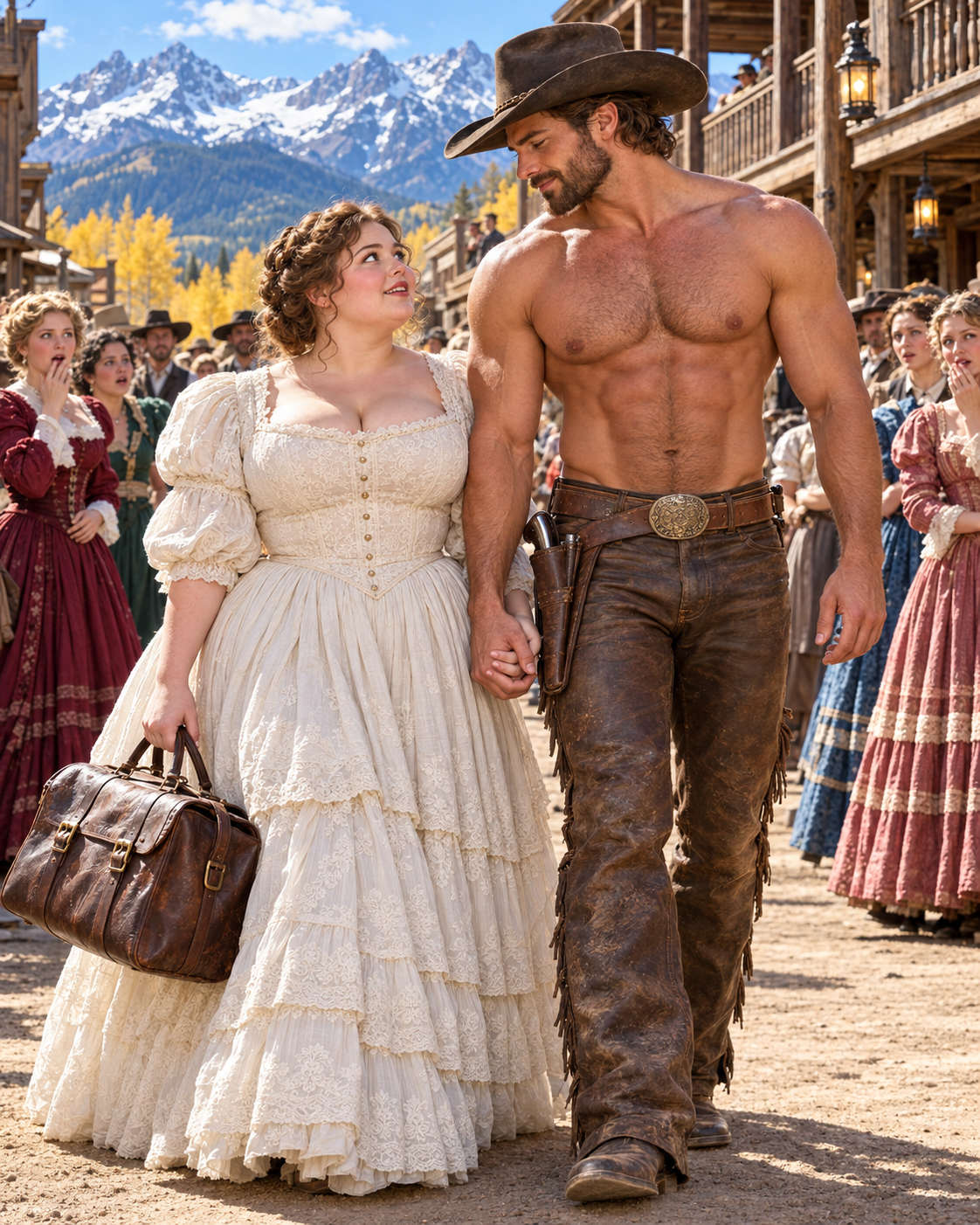
“And if you ever decide that silence is easier than telling me the truth, I will pack my suitcase so loudly that the entire county will hear it.”
Daniel laughed, his eyes bright with tears.
“Then I will do my best to deserve the sound of you unpacking it again.”
I took the ring.
“Yes, Daniel. I’ll marry you.”
He kissed me beneath the open Montana sky, and for once, neither of us was trying to escape the past.
Our wedding took place in the same church where he had humiliated me months earlier.
This time, the pews were filled with people who had witnessed the transformation of a family once held together by fear.
Thomas stood beside Daniel, holding the rings. Samuel wore a crooked tie and grinned at everyone who looked his way. Lily carried a basket of wildflowers, scattering petals long before she reached the altar.
Margaret sat in the front pew with Ethan beside her, her hand resting over his.
When Daniel took my hands, he did not promise that he would never hurt me, never make a mistake, or never be afraid.
He promised to speak when silence would be easier.
He promised to listen when pride demanded that he defend himself.
He promised that our home would never again be a place where a child feared making a mistake.
And I promised to remind him whenever he forgot.
After the ceremony, the children raced outside while the adults gathered beneath the cottonwood trees. Sheriff Hayes, now working with the state investigators, stood near the church steps and watched them with a quiet smile.
Daniel followed my gaze.
“Do you think people can really change?”
I considered the question.
“Not because someone loves them enough to demand it,” I said. “They change when they finally decide that the pain they carry is no longer an excuse to pass that pain on to someone else.”
He nodded slowly.
Across the yard, Lily tripped over her own feet, scattering flowers everywhere.
Daniel immediately started toward her, but she sprang up laughing before he reached her.
He stopped.
Then he laughed, too.
It was such a small moment, but I understood what it meant.
He no longer mistook every fall for a disaster.
He no longer believed that keeping someone safe meant preventing them from ever being hurt.
He had learned that children needed room to stumble, adults needed courage to admit their mistakes, and love needed truth if it was going to survive.
Years later, when people in Montana told the story of Daniel Carter and his thirty-first mistake, they usually spoke about the mysterious letter, the secret ledger, and the corrupt rancher who nearly escaped justice.
They remembered the gunshots at the old mill and the shocking discovery that Margaret had survived the fire.
But I remembered something else.
I remembered a little girl sleeping in her boots because she was afraid the flames would return.
I remembered a boy who hid broken horseshoes beneath his bed because he believed that anything damaged was destined to be thrown away.
And I remembered a man who had been so afraid of losing the people he loved that he had nearly forgotten how to love them at all.
The children grew older. The ranch prospered. Margaret slowly rebuilt her relationship with the family, and Daniel learned to tell stories about his brother without allowing grief to swallow the room.
Our home was never perfect.
Sometimes we argued. Sometimes old fears returned. Sometimes the past knocked on the door in unexpected ways.
But we answered it together.
And every year, on the anniversary of the farmhouse fire, we gathered beside the cottonwood tree and planted wildflowers for those we had lost.
Daniel always brought more flowers than we needed.
When I asked him why, he would smile and say that some things deserved to grow beyond what grief had left behind.
I eventually understood the lesson hidden inside our strange, painful beginning.
People are not mistakes simply because they arrive at the wrong time, challenge our pride, or reveal the truths we have spent years avoiding.
Sometimes the person we reject is the person who helps us see what needs to change.
Sometimes the truth we fear is the only thing capable of setting us free.
And sometimes a family is not saved by finding someone who promises never to leave, but by learning how to make a home where nobody has to live in fear of being abandoned.
Daniel once believed that love was a weakness because it gave the world something precious to take away.
Now he knew better.
Love did not guarantee that we would never suffer.
It gave us a reason to face suffering without becoming cruel.
And as for me, I had arrived at Carter Ranch with a worn suitcase, no promise of a future, and every reason to turn around.
I stayed because three frightened children needed someone who would listen.
I stayed because a wounded man deserved the chance to become more than his worst mistakes.
And I stayed because, somewhere between a shattered glass of milk and a secret buried beneath a burned farmhouse, I discovered that the strongest families are not the ones untouched by tragedy.
They are the ones brave enough to tell the truth, gentle enough to forgive, and wise enough to understand that forgiveness does not erase the past.
It simply refuses to let the past decide what happens next.
THE END.