The Duke’s new wife had been inside his home for less than ten minutes when his mother struck her across the face.
The Dowager Duchess did not answer.
For the first time since Claraara had entered West Miland House, Eleanor Pendleton looked less like a woman defending her position and more like someone who had just heard the lock turn on a door she had spent years pretending did not exist.
Rain pressed harder against the tall windows.
Claraara lowered the letter only enough to see the woman clearly.
“My father wrote that you sent a solicitor named Silas Wren to Harrington House eleven months ago. He says Wren carried copies of documents concerning my mother’s family.”
Eleanor’s lips tightened.
Arthur turned toward his mother.
“What documents?”
She looked at him sharply.
“You know perfectly well what this family has survived.”
“That was not my question.”
Claraara unfolded the second half of her father’s letter.
The handwriting deteriorated as it continued, each sentence slanting farther down the page.
“My father says the record proved that land now belonging to the West Miland estate was transferred illegally after my grandfather died.”
A murmur rippled through the guests.
Arthur’s face went utterly still.
The Dowager Duchess recovered enough to raise her chin.
“Your father was confused.”
“He names witnesses.”
“Dead men.”
“Two are still alive.”
That disturbed Eleanor more than anything else had.
Claraara saw it.
So did Arthur.
Lady Genevieve’s father quietly stepped away from the orchestra.
The other guests seemed to sense that the evening had ceased to be entertainment.
Arthur turned to the steward.
“Close the doors.”
Eleanor’s head snapped toward him.
“Arthur.”
“No one leaves until I understand why a letter concerning my estate arrived during my wedding reception.”
The great ballroom doors were shut.
Arthur faced Claraara again.
“May I see the letter?”
She hesitated.
Three days ago, she would have handed it to him because he was the Duke of West Miland and she had been taught that men of his rank expected obedience.
Ten minutes ago, she might have handed it to him because he was her husband.
Now neither reason felt sufficient.
“You knew my father was being threatened.”
“I knew someone was pressuring him.”
“And yet you bought his debt.”
“Yes.”
“Why?”
Arthur looked toward the watching guests.
Then back at her.
“Because I believed whoever was threatening him intended to force a sale of Harrington House. Buying the debt prevented that.”
“You could have told us.”
“I should have.”
Claraara almost laughed.
It was not a sound of amusement.
“You purchased every note against my family in secret, allowed my father to believe strangers could take his home, then presented me with a marriage contract when he had nowhere left to turn.”
Arthur’s jaw hardened.
“I never ordered the creditors to demand payment.”
“But you allowed them to.”
“I delayed collection twice.”
“How generous.”
The words struck harder than the slap had.
Arthur accepted them without flinching.
Eleanor did not.
“You see?” she said suddenly. “This is precisely why such women should never be brought into families like ours. Give them a little knowledge and immediately they imagine themselves wronged.”
Arthur turned slowly.
“Be very careful, Mother.”
But Claraara no longer needed him to defend her.
She looked directly at Eleanor.
“My father says you offered him a choice. He could sign over Harrington land bordering West Miland’s northern farms, or you would make public a document claiming my mother was illegitimate.”
Eleanor’s face became cold.
Claraara continued.
“He refused.”
“Your father has always possessed an unfortunate talent for pride.”
“So you found another method.”
The Dowager Duchess said nothing.
Arthur stepped closer.
“What did you do?”
Eleanor looked at her son almost impatiently.
“What was necessary.”
The ballroom seemed to shrink around those four words.
Arthur’s voice dropped.
“Explain.”
“I protected your inheritance.”
“From what?”
“From scandal. From litigation. From people who would have torn apart everything your grandfather built.”
Claraara stared at her.
“By destroying my father?”
“Your father was offered reasonable terms.”
“You forged his debts.”
“I did nothing so vulgar.”
A faint smile appeared on Eleanor’s lips.
“I merely introduced him to men willing to lend against expectations he could never meet.”
Claraara’s breath caught.
Arthur’s expression changed.
Not dramatically.
That made it worse.
The Duke of West Miland was a man who had learned early that anger displayed was power surrendered.
But Claraara saw the violence of his fury in the way every trace of softness vanished from his eyes.
“You arranged the loans.”
“I arranged an opportunity.”
“You knew he could not repay them.”
“I knew he would eventually understand what was required.”
Claraara folded the letter slowly.
She could hear her father’s voice from months earlier.
I have made mistakes, Clara.
I believed I could repair them.
He had blamed himself.
Every morning, every sleepless night, every trembling hand over unopened correspondence—he had believed the ruin was his own weakness.
Eleanor had needed him to believe it.
Claraara suddenly felt sick.
Arthur moved toward his mother.
“How much of this did you do in my name?”
Eleanor’s eyes flickered.
That was answer enough.
Arthur’s voice sharpened.
“How much?”
“Certain solicitors understood that I acted for the family.”
“You used the West Miland seal.”
“I am the Dowager Duchess.”
“You are not the Duke.”
“No. I am the woman who kept this estate intact while you spent half your youth trying to escape it.”
Arthur stopped.
For an instant something old passed between them, something far deeper than tonight’s quarrel.
Eleanor saw it and pressed harder.
“Do you think these walls maintained themselves after your father died? Do you think respect survives on good intentions? I negotiated with bankers while you were still mourning. I silenced rumors. I paid people who required paying and frightened those who required frightening.”
“And ruined those who were inconvenient.”
“I protected you.”
Arthur’s voice was nearly a whisper.
“You protected control.”
Silence.
Eleanor looked at him as though he had struck her.
Claraara watched the expression and suddenly understood that the greatest insult Arthur could offer his mother was not banishment.
It was seeing her clearly.
Lady Genevieve moved from beside her father.
“Your Grace.”
Everyone turned.
Her face was pale, but steady.
“I believe I may know the solicitor.”
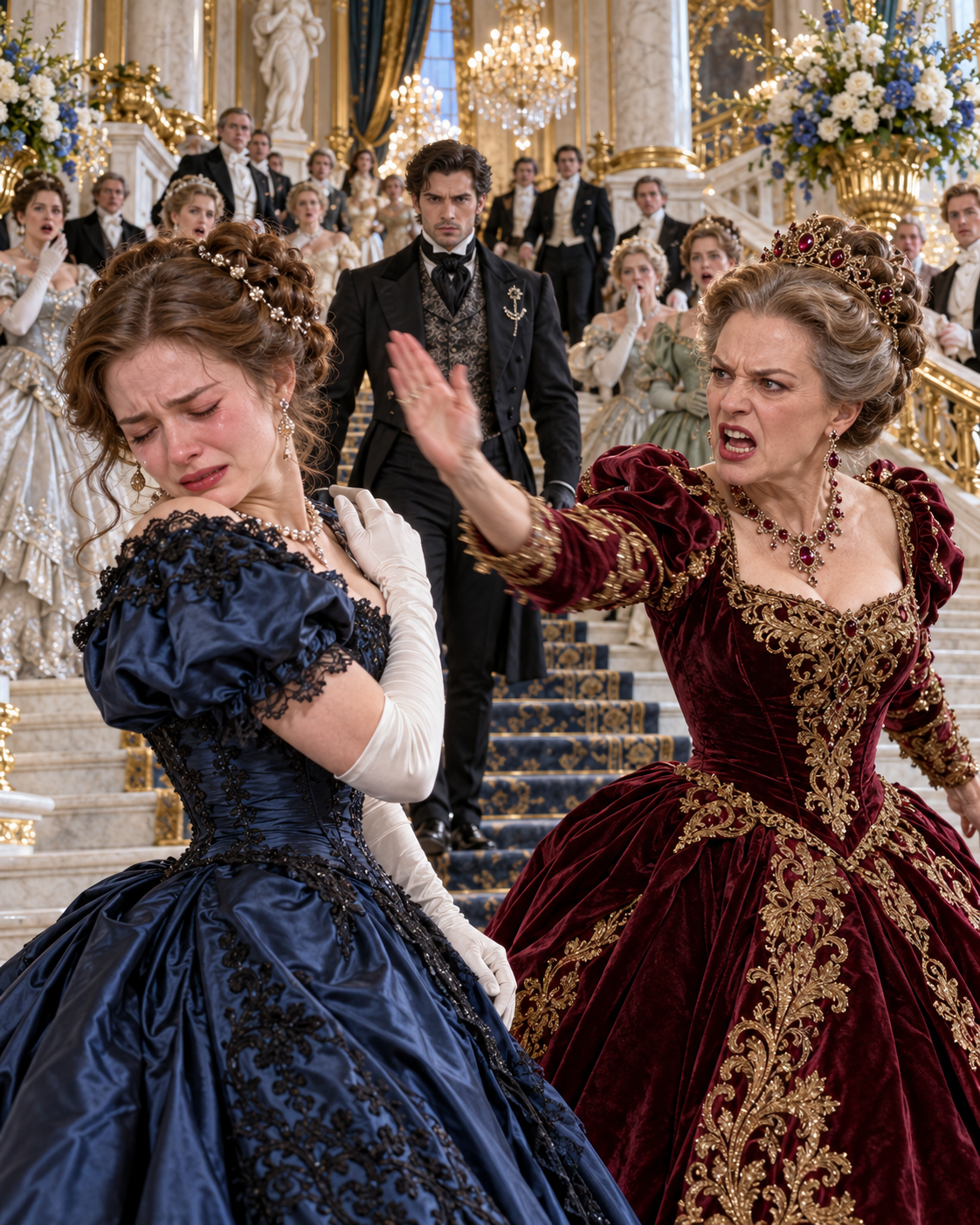
Eleanor’s composure cracked.
“Genevieve, this does not concern you.”
“Silas Wren visited my father last winter.”
Lord Bellamy looked at his daughter in alarm.
Genevieve continued before he could stop her.
“He said the Pendleton family required discretion concerning a marriage arrangement.”
Arthur frowned.
“What marriage arrangement?”
Genevieve glanced at Eleanor.
“Ours.”
The words fell quietly.
Claraara saw Arthur’s eyes narrow.
Genevieve gave a bitter smile.
“There was never going to be an engagement dinner because there was never an engagement, was there, Your Grace?”
“No.”
“I know.”
Her father whispered her name.
She ignored him.
“My father and the Dowager Duchess had already drafted settlements. They planned to announce the match after Parliament returned. Your refusal was considered temporary.”
Arthur looked toward Eleanor.
“You negotiated marriage settlements without my consent?”
“You were being unreasonable.”
“I said no.”
“You were thirty-two years old, unmarried, and determined to turn stubbornness into a philosophy.”
Several guests suddenly found the floor interesting.
Genevieve let out a breath.
“When you married Claraara, I thought you had humiliated me.”
Claraara met her gaze.
There was no friendship between them.
Not yet.
But there was something more honest than there had been an hour ago.
Genevieve continued.
“Now I believe we were both being arranged like furniture.”
Eleanor’s eyes flashed.
“I will not be insulted by a girl whose family begged for this alliance.”
“My father may have begged,” Genevieve replied. “I did not.”
Lord Bellamy looked wounded.
His daughter did not look at him.
Arthur turned to the steward.
“Send someone to my study. In the locked cabinet behind the west bookcase there are files relating to Harrington. Bring every document.”
Claraara stared at him.
“You kept them here?”
“Yes.”
“Why?”
“Because I had been investigating how your father’s debts appeared so quickly.”
“And you never thought to tell me?”
“I had known you three weeks when I proposed.”
“You knew enough to marry me.”
Arthur’s gaze held hers.
“That is not the same thing.”
“No. Marriage requires less honesty, apparently.”
A few guests lowered their eyes.
Arthur took the blow.
“I deserve that.”
The simple admission stopped Claraara more effectively than an argument might have.
Eleanor scoffed.
“How touching.”
Arthur ignored her.
The servant returned several minutes later carrying a leather portfolio.
Arthur placed it on a table near the center of the ballroom.
Documents were removed one by one.
Loan certificates.
Transfer agreements.
Letters.
Receipts.
A memorandum bearing the seal of a firm called Wren, Finch & Co.
Arthur examined it.
His expression hardened.
“This signature is mine.”
Claraara leaned closer.
“Did you sign it?”
“No.”
Eleanor turned toward the doors.
Arthur noticed.
“Mother.”
She stopped.
He lifted the page.
“You forged my signature.”
“I authorized Wren to act as needed.”
“That is not an answer.”
“You were refusing to participate in matters essential to your own estate.”
“So you forged it.”
Eleanor’s voice rose for the first time.
“Yes.”
The word shocked even her.
She closed her eyes briefly, but there was no retrieving it.
“Yes,” she repeated. “Because you would have done nothing. You would have spent another year asking questions while Harrington’s lawyers uncovered claims that could cost you thousands of acres.”
Arthur looked down at the paper.
“What claim?”
Claraara’s father’s letter answered.
She opened it again.
“My grandfather, Edmund Vale, owned a tract called Rosemere Wood. After his death, guardianship passed temporarily to West Miland because my mother was still a child.”
Arthur’s eyes lifted.
Claraara continued.
“The land was supposed to return to her when she married.”
“And it did not.”
“No.”
The Dowager Duchess spoke coldly.
“Because Edmund Vale owed money to the estate.”
Claraara shook her head.
“My father says the debt was invented.”
“Your father says many things.”
Arthur pulled another document from the portfolio.
Then another.
His eyes moved quickly.
“Mother.”
Something in his voice silenced everyone.
He laid two papers side by side.
“The original ledger lists no Vale debt.”
Eleanor stared.
Arthur placed his finger against the second page.
“This later copy does.”
Claraara looked at the dates.
The amended ledger had been created two years after her grandfather’s death.
Arthur turned toward Eleanor.
“Who altered it?”
She said nothing.
“Who altered it?”
“My father.”
The admission was barely audible.
Arthur’s eyes darkened.
Claraara felt a strange shift inside her.
The villain she had imagined was changing shape.
Eleanor had not begun the theft.
She had inherited it.
And instead of correcting it, she had committed worse acts to keep it hidden.
“My father discovered the discrepancy,” Claraara said.
Eleanor nodded once.
“Years ago.”
“And you threatened him.”
“I warned him what reopening the matter would do.”
“To whom?”
“To everyone.”
Her composure returned, but now it carried exhaustion rather than arrogance.
“The Pendleton estates were already mortgaged when Arthur’s father died. If the northern lands had been challenged, lenders could have demanded reassessment. Tenants could have lost farms. Staff could have lost wages. Villages depended on West Miland.”
Claraara stared at her.
“So you told yourself ruining one family would save hundreds.”
“I did save hundreds.”
“And my father?”
Eleanor’s mouth tightened.
“Your father chose resistance.”
Claraara stepped toward her.
“No. You chose him as the price.”
The Dowager Duchess looked away.
For the first time that night, she had no answer.
Arthur stood at the table surrounded by proof of what his family had done.
When he finally spoke, his voice sounded different.
Not like a duke issuing commands.
Like a man making a decision he knew would cost him.
“Rosemere Wood will be returned to the Harrington estate.”
Eleanor’s head snapped up.
“You cannot.”
“I can.”
“You would surrender land worth half a million pounds because of a ledger written before you were born?”
“Because it was stolen.”
“The estate—”
“Will survive.”
“You do not know that.”
“Then I will sell something else.”
The Dowager Duchess stared at him in horror.
“The London properties?”
“If necessary.”
“Your father would rise from his grave.”
Arthur looked at her.
“My father is precisely why we are standing here.”
The ballroom remained silent.
Arthur gathered the forged agreements.
“Tomorrow morning these documents go to my solicitor. Every Harrington debt purchased through fraudulent pressure will be cancelled. Any money my agents collected will be returned.”
Claraara’s throat tightened.
She had wanted justice.
Hearing it promised should have brought relief.
Instead, another truth pressed against her.
“And our marriage?”
Arthur went still.
No one breathed.
Claraara looked down at the sapphire ring.
“You offered marriage as payment for debts that should never have existed.”
“Yes.”
“Then our agreement was built on a lie.”
Arthur’s face betrayed nothing for several seconds.
Then he nodded.
“Yes.”
Eleanor almost smiled.
Claraara removed the sapphire ring.
Arthur’s gaze dropped to it.
The entire room seemed to wait.
She placed it on the table beside the forged documents.
“I will not remain your wife because my father owed you money.”
Arthur stared at the ring.
“I understand.”
“You will release me from the agreement.”
“Yes.”
That answer hurt more than Claraara expected.
She hated herself for noticing.
Arthur continued.
“My lawyers will draw whatever documents are required. You will keep the settlement already made to your father. Rosemere will be restored regardless of what you decide.”
“Arthur,” Eleanor whispered.
He did not look at her.
Claraara expected triumph.
Freedom had been the one thing she thought she had lost the moment she signed his marriage contract.
Yet when it was returned, she felt only a strange emptiness.
Arthur stepped back.
“You should leave West Miland tonight if you wish. My carriage will take you anywhere.”
Claraara looked at the man she had married.
His proposal had been cold.
His bargain had been cruel in its consequences.
He had kept secrets he had no right to keep.
But he had not argued when the truth destroyed his advantage.
That mattered.
Not enough to forgive him.
But enough to complicate hatred.
Behind them, the Dowager Duchess spoke.
“So this is how the Pendleton name ends. With a girl who will walk away the moment she has taken everything.”
Claraara turned.
Arthur did too.
But Claraara raised one hand.
“Please.”
He stopped.
She faced Eleanor alone.
“You believe I wanted this house?”
“You wanted security.”
“Yes.”
Claraara’s voice remained calm.
“My father was losing everything. I was terrified. When your son offered a solution, I accepted because I believed sacrifice was the same thing as duty.”
Eleanor watched her.
“I was wrong.”
Claraara glanced around the ballroom.
“A house purchased with fear is not security. A title defended with cruelty is not honor. And a family preserved by destroying another family has preserved nothing worth inheriting.”
No one moved.
Claraara looked at the older woman’s face.
“You slapped me because you believed I did not belong here.”
She touched her cheek.
“But belonging is not decided by the ring on a woman’s finger.”
Her eyes shifted to the forged documents.
“It is decided by what she is willing to become in order to remain.”
Eleanor’s expression faltered.
Claraara turned toward Arthur.
“I want to see my father.”
The Duke nodded.
“I will take you.”
“I can travel alone.”
“I know.”
Something passed between them.
Not possession.
Not command.
An offer.
Claraara hesitated.
Then nodded once.
They left West Miland House before midnight.
The storm had worsened.
Inside the carriage, Arthur sat opposite Claraara rather than beside her.
For the first half hour neither spoke.
The sapphire ring remained behind.
Claraara watched rain crawl down the window.
Finally Arthur said, “I did not create your father’s debts.”
“I know.”
“But I used them.”
“Yes.”
“I convinced myself the distinction mattered.”
She looked at him.
“Did you marry me because of Rosemere?”
“No.”
“Why, then?”
Arthur stared toward the darkness beyond the glass.
“When I began investigating the Harrington accounts, I visited your father twice.”
“I know.”
“The second time, you were in the garden arguing with a creditor.”
Claraara frowned.
“I never saw you.”
“I was in the library.”
She remembered that day.
A man had threatened to inventory the furniture.
Claraara had told him that if he touched her mother’s piano she would personally carry it into the pond before allowing him to take it.
Despite herself, she almost smiled.
Arthur noticed.
“You frightened him.”
“He was unpleasant.”
“He was six feet tall.”
“He remained unpleasant.”
Arthur’s mouth moved slightly.
Then the expression disappeared.
“I had spent years surrounded by people who agreed with me before I finished speaking. You did not even know I was listening, and yet you defended a piano as though Parliament had granted you jurisdiction over it.”
Claraara looked away.
“That is hardly a reason to marry someone.”
“No.”
“Then why?”
He took a long breath.
“Because after that I began noticing you.”
The confession was so unlike him that Claraara turned back.
Arthur continued.
“You managed your father’s household after most of the servants were dismissed. You sold your jewelry before asking anyone for help. You refused three offers from men who would have paid his debts in exchange for things they had no right to request.”
Claraara stiffened.
“You knew?”
“I investigated everyone who approached your family.”
“Without telling me.”
“Yes.”
“You have a remarkable talent for turning concern into surveillance.”
“I am beginning to understand that.”
She should not have laughed.
But she did.
Once.
Quietly.
Arthur looked startled.
The sound vanished almost immediately.
He lowered his eyes.
“I offered marriage because I wanted you near me. I used the debts because I did not believe you would choose me without them.”
Claraara’s anger softened into something sadder.
“You never gave me the chance.”
“No.”
“That was cowardly.”
“Yes.”
“And arrogant.”
“Certainly.”
“And manipulative.”
His mouth twitched.
“I had hoped we might stop at three.”
She almost smiled again.
Then the carriage slowed.
Harrington House appeared through the rain.
Claraara’s father was waiting inside.
When he saw her bruised cheek, he rose too quickly from his chair.
“What happened?”
Claraara crossed the room and embraced him.
Only then did she realize how angry she had been with him too.
He had hidden everything.
His fear.
The threats.
The truth about Rosemere.
“I am sorry,” he whispered.
She pulled back.
“You should have told me.”
“I thought silence protected you.”
Arthur stood near the doorway.
Claraara looked from her father to her husband.
“You both thought that.”
Neither man answered.
“Perhaps men should stop deciding what women are better off not knowing.”
Her father gave Arthur an uncomfortable glance.
Arthur said, “I have recently received similar advice.”
By morning, solicitors had arrived.
By afternoon, so had Silas Wren.
He denied everything for twenty minutes.
Then Arthur placed the forged signature before him.
Wren changed his story.
The Dowager Duchess, he claimed, had instructed every step.
When Arthur threatened prosecution, Wren produced copies of letters Eleanor believed destroyed.
They proved the Harrington loans had been engineered deliberately.
But they also proved something else.
Eleanor had paid from her private accounts to prevent three tenant farms from being seized during the financial crisis after her husband’s death.
She had protected families.
She had done good.
Then she had allowed that good to become an excuse for cruelty.
Claraara understood the danger immediately.
People rarely became monsters because they believed themselves evil.
They became monsters because they believed their reasons made them exceptions to ordinary morality.
Arthur returned Rosemere.
He cancelled the debts.
He dismissed Wren’s firm and publicly acknowledged the forged estate records.
The scandal was enormous.
London society fed upon it for months.
Some called Arthur foolish.
Others called Claraara calculating.
The newspapers called Eleanor formidable, disgraced, tragic, ruthless, or misunderstood depending on which edition one purchased.
None of it mattered much inside Harrington House.
Claraara remained there.
Arthur returned to West Miland.
Their marriage existed legally but nowhere else.
Weeks passed.
He never pressured her to return.
He sent no flowers.
He sent documents.
The corrected Rosemere deeds.
A list of cancelled obligations.
A written statement giving Claraara full control of her marriage settlement whether she stayed with him or not.
At the bottom of the last page was a handwritten sentence.
I will not ask you to trust me until I have become someone worth trusting.
She read it three times.
Then placed it in her desk.
Winter came.
The Dowager Duchess remained in Yorkshire.
Arthur visited her once.
Claraara heard about it through Genevieve, who had unexpectedly begun calling at Harrington House.
Genevieve had rejected two marriage proposals since the ballroom scandal.
“Mother says I have become difficult,” she announced one afternoon.
Claraara poured tea.
“Congratulations.”
Genevieve smiled.
“Thank you.”
It was Genevieve who eventually told her that Arthur had sold the Pendleton town house in Mayfair rather than mortgage tenant farms.
“He lost an absurd amount of prestige.”
“Did he?”
“Claraara, half of London believes prestige is measured by the number of drawing rooms one owns.”
“Then half of London is ridiculous.”
“Precisely why I thought you should know.”
Spring arrived.
One morning Claraara rode to Rosemere Wood for the first time since the land had been restored.
Bluebells covered the ground beneath old oaks.
Near the northern boundary she saw a man helping two laborers repair a broken stone wall.
Arthur.
He wore no coat.
His shirtsleeves were rolled above his wrists.
Claraara reined in her horse.
Arthur looked up.
For several seconds neither spoke.
Then he approached.
“Good morning.”
“You are repairing my wall.”
“It used to be my wall.”
“That does not explain why you are touching it.”
“One of the tenant boys said I stack stones badly.”
“Does he?”
“He is correct.”
Claraara dismounted.
Arthur did not reach for her.
That, more than anything, told her he had changed.
They walked beneath the trees.
He told her about the estate finances.
She told him about her father’s improving health.
Eventually they reached a stream.
Arthur stopped.
“I received the papers from your solicitor.”
Claraara knew which papers.
The documents that could begin the legal process of ending their marriage.
“I have not signed them.”
Arthur looked at her.
She continued before courage abandoned her.
“I married you for the wrong reason.”
“Yes.”
“And you married me badly.”
“Yes.”
“You lied.”
“By omission.”
“That is still lying.”
“Yes.”
She looked at the water.
“But somewhere between discovering how intolerable you are and watching you dismantle half your inheritance to repair damage you did not begin, I developed an inconvenient problem.”
Arthur waited.
Claraara glanced at him.
“I began to believe you.”
His expression changed.
Only slightly.
As it had the night his mother struck her.
But now she understood how much feeling could exist inside those small changes.
“I do not want another bargain,” she said.
“Neither do I.”
“No contracts.”
“No contracts.”
“No deciding what I should know.”
“Agreed.”
“No purchasing my relatives’ debts.”
Arthur almost smiled.
“I believe we can safely prohibit that.”
“And if your mother ever strikes me again—”
“She will find herself living considerably farther north than Yorkshire.”
Claraara laughed.
This time she did not stop herself.
Arthur looked at her as though the sound were more valuable than Rosemere.
She took a breath.
“I am not promising forever today.”
“I would not trust a promise made that quickly.”
“But perhaps we could begin again.”
Arthur’s voice softened.
“How?”
Claraara extended her hand.
“Mr. Pendleton, I am Claraara Harrington.”
He looked at her hand.
Then took it.
“Arthur Pendleton.”
“I understand you own fewer houses than you did last year.”
“A humiliating decline.”
“And your reputation?”
“Damaged beyond repair.”
“Excellent.”
For the first time since their wedding, Arthur laughed.
Months later, Claraara returned to West Miland House.
There was no ballroom reception.
No announcement.
No crowd waiting to inspect her.
Arthur met her on the front steps.
In his hand was a small velvet box.
Claraara raised an eyebrow.
“I said no bargains.”
“It is not a bargain.”
He opened the box.
Inside lay the sapphire ring.
Claraara stared at it.
“I thought your grandmother required something of the woman who wore it.”
“She did.”
“What?”
Arthur removed a folded note from beneath the ring.
The handwriting was old.
My sapphire shall belong only to the woman of this family who can look upon wealth, tradition, and power and remember that none are worth possessing without kindness.
Claraara read the sentence twice.
Then she looked at Arthur.
“Your mother knew this?”
“Yes.”
“That was why she was afraid when she saw the ring.”
“Yes.”
“She thought I might discover what the family had done.”
Arthur nodded.
“My grandmother discovered the altered Vale ledger shortly before she died. She left clues among her papers, but my mother concealed them.”
Claraara looked at the sapphire.
“What happened to your mother?”
“She remains in Yorkshire.”
“Forever?”
“No.”
Claraara looked surprised.
Arthur continued.
“She has agreed to testify regarding Wren and to surrender control of several trusts. Whether we have a relationship afterward depends on what she chooses to become.”
Claraara understood.
Punishment was simple.
Change was not.
She held out her hand.
Arthur hesitated.
“This time,” he said, “you choose.”
Claraara looked at the house behind him.
Once, she had entered those doors as payment for a debt.
Now the debts were gone.
The stolen land had been returned.
The secrets were exposed.
And the man standing before her possessed no paper capable of making her stay.
That was why she could.
She slipped the sapphire onto her finger herself.
Arthur exhaled.
Claraara smiled.
“Do not look so relieved. You still stack stones badly.”
“I feared you might mention that.”
They entered West Miland House side by side.
Years later, society would remember the scandal differently depending on who told it.
Some said Claraara Harrington had trapped a duke.
Others insisted Arthur Pendleton had nearly destroyed one of England’s oldest houses over a woman.
Neither story was true.
What happened was simpler and more difficult.
A family discovered that inheritance was not only land, titles, silver, and names carved into stone.
People inherited silences too.
They inherited excuses.
They inherited old wrongs dressed as traditions.
And eventually someone had to decide whether loyalty meant protecting what previous generations had done—or having the courage to end it.
Arthur restored what his family had stolen.
Claraara forgave without pretending the harm had never happened.
Eleanor learned, slowly and painfully, that protecting a family by sacrificing another was not protection at all.
And the sapphire ring remained at West Miland.
Not as proof that Claraara belonged to the house.
But as a reminder that houses, titles, and histories belonged only temporarily to the people trusted with them.
Because true inheritance was never about what one managed to keep.
It was about what one refused to pass on.
THE END.