The day my brother called me a useless burden in front of our entire family, I walked away smiling, unaware someone in Pine Hollow knew the secret he desperately wanted buried.
The envelope trembled in my hands as I stood in the doorway of my cabin, staring at the warning my brother had written. Outside, the wind swept across the frozen clearing, bending the pines until their branches scraped against one another like bones.
“Your brother wasn’t the only person who was there.”
I read the sentence again, hoping the words would rearrange themselves into something less terrible, but they remained exactly as they were.
For years, I had believed my father’s death was a tragedy that had simply happened to our family, something cruel and unavoidable that no amount of questioning could change. Daniel had told me Dad died peacefully after becoming ill, and because I had been young, frightened, and desperate for someone to tell me what to believe, I had accepted his explanation.
Now, standing inside the cabin I had nearly destroyed myself building, I wondered whether my entire childhood had been shaped by a lie.
I tore open the envelope.
Inside lay a second letter, several newspaper clippings, and a small brass key wrapped in a piece of faded blue cloth. The handwriting on the letter was not my father’s, but I recognized the careful slant from the documents Grant had shown me.
It belonged to my mother.
My mother had died when I was twelve, long before my father, and I had spent most of my life believing there was nothing left to discover about her. Daniel rarely spoke of her, and whenever I asked questions, he insisted that remembering the past only made it harder to move forward.
The letter began with a sentence that made my knees weaken.
Mabel, if you are reading this, then your father failed to protect you from the truth, and I am sorry.
I sat on the unfinished floor, my back against the wall, and forced myself to continue.
My mother had discovered that Daniel was secretly borrowing money against family property, using documents my father had trusted him to manage. When she confronted him, he promised to repay everything, but the debts continued to grow, and soon the land my father had intended to leave me was at risk.
She had begged my father to take the matter to the authorities, yet he hesitated because Daniel was his son and because he believed he could still save him from his own mistakes.
The newspaper clippings documented a fire at an abandoned storage building near Pine Hollow, the same week my mother had died.
According to the official report, the fire had been accidental.
According to my mother’s letter, it had not.
I pressed a trembling hand over my mouth as I reached the next paragraph, where she described meeting someone who had evidence that Daniel had forged signatures and concealed financial records.
That person was Grant Holloway.
Before I could read further, headlights swept across the cabin windows.
A vehicle stopped outside.
I hurried to the door, expecting Grant, but when I opened it, I found Daniel standing on my porch with snow on his shoulders and anger burning in his eyes.
For one absurd second, I remembered the brother who used to carry me on his back through the summer fields, the boy who had once promised that nobody would ever hurt me as long as he was alive.
Then I remembered the envelope.
“What have you been doing?” he demanded.
I tightened my grip on the letter. “Trying to understand why you lied to me.”
His gaze dropped to the papers in my hands, and something inside his expression collapsed before he could hide it.
“Give me those.”
“No.”
He stepped closer, his boots crushing the snow beneath them.
“Mabel, you have no idea what you’re getting involved in.”
“Then explain it to me.”
For a moment, I thought he might finally tell me the truth, but he only shook his head with the same impatient disgust I remembered from our childhood.
“You always did make everything more difficult than it needed to be.”
The words hurt because they were familiar, because I had spent years trying to become a person he could respect, never realizing that his approval had always come with a price.
I stepped back into the cabin and closed the door between us.
Daniel struck the wood with his palm.
“You think that land makes you independent?” he shouted. “You think building a little shack means you can stand against me?”
I did not answer.
He remained outside for another minute before his footsteps retreated into the storm.
Only after his truck disappeared did I realize my hands were shaking so badly that the letter had slipped onto the floor.
I gathered the papers, placed the brass key in my pocket, and drove to Grant’s farmhouse before dawn.
He opened the door before I could knock a second time, as though he had been waiting for me.
When he saw my face, he stepped aside without asking questions.
I laid the letter on his kitchen table.
He read it in silence, his broad shoulders becoming rigid as he reached the passage about my mother’s final meeting with him.
“I never knew she left you this,” he said.
“You knew my mother?”
His eyes lowered.
“Yes.”
Grant explained that my mother had come to him because she believed he was one of the few people in Pine Hollow who would not be frightened into silence by my brother. She had brought him copies of the property records and asked him to help her expose the fraud before Daniel could sell the remaining land.
Grant had agreed, but before they could meet again, my mother died in the fire.
The authorities found no evidence connecting Daniel to it, and Grant had no proof that the fire was anything but an accident. My father, devastated by the loss, had begged Grant not to pursue accusations he could not substantiate, fearing that another scandal would destroy what remained of the family.
“Why did you never tell me?” I asked.
“Because I promised your father I would wait until you came here, and because I was afraid of what might happen if I accused your brother without evidence.”
I looked at the huge man sitting across from me, and I understood that his silence had been born partly from loyalty and partly from fear.
Neither had protected me from the truth.
“What does the key open?”
Grant studied it, then went very still.
“Your father’s old workshop.”
The workshop stood behind the farmhouse, half buried beneath snow and hidden among the pines. I had never noticed it during my visits to the property, and Grant explained that my father had used it for repairs long before the farmhouse belonged to him.
We drove there as the morning light spread weakly across the valley.
The door was swollen from years of cold, but the brass key turned after Grant lifted the latch and pushed his shoulder against the frame.
Inside, the air smelled of dust, old wood, and rust.
A workbench stood beneath a small window, and shelves lined the walls with jars of nails, broken tools, and carefully labeled boxes. On the far side of the room sat a metal filing cabinet, its lower drawer secured with a lock that matched the key.
My hands went cold as I opened it.
Inside were account books, property deeds, letters, and a small cassette recorder wrapped in a cloth.
The first folder contained copies of financial transactions showing that money had been withdrawn from my father’s accounts without his permission. Several payments had gone to companies associated with Daniel, and the dates matched the period when my mother had begun asking questions.
The next folder contained my father’s signed statement, describing his discovery of the forged documents and his decision to seek legal advice.
But the final item was a sealed envelope addressed to the county sheriff, dated only three days before my father’s death.
I stared at it, unable to move.
My father had not simply left behind a collection of memories.
He had been preparing to expose someone.
Grant found a battery-powered player in a cupboard, and after several attempts, we managed to get the old cassette recorder working.
At first, there was only static.
Then my father’s voice filled the workshop, thin and tired but unmistakably his.
“If anything happens to me, the documents in this cabinet will explain what I discovered. Daniel has been lying about the land, but I still believe he can tell the truth before he destroys himself.”
I closed my eyes, tears slipping down my cheeks.
My father had known.
He had known his son was capable of betrayal, yet he had still hoped love might turn him around.
The recording continued, revealing that my father had planned to meet a lawyer the morning after he died. He mentioned the forged signatures, the hidden debts, and an argument that had taken place the previous night.
Then came a long silence.
When my father’s voice returned, it was quieter.
“I don’t believe Daniel intended for things to go this far, but someone else has been helping him, and that person knows where the original papers are kept.”
The recording ended with a click.
Grant and I stared at each other.
“Someone else,” I whispered.
Before he could answer, a vehicle pulled up outside the workshop.
We turned toward the window.
Daniel stood beside his truck, holding a folder beneath his arm.
He looked directly at the building, and I realized he had followed us.
Grant moved in front of me, but I stepped beside him.
I had spent too many years allowing my brother’s anger to decide how much space I was permitted to occupy.
“Stay here,” Grant said quietly.
“No,” I replied. “Not this time.”
We walked outside together.
Daniel’s eyes moved from Grant to the workshop door, then settled on the open folder in my hands.
“So you found it,” he said.
His voice carried no surprise, only the exhausted bitterness of a man who had finally run out of places to hide.
“You knew about the documents,” I said.
He rubbed his face with both hands.
“I knew Dad kept records.”
“Did you forge the signatures?”
Daniel looked toward the trees.
For a long moment, the only sound was the wind moving through the pines.
“Yes.”
The admission landed between us with more force than any denial could have.
He explained that he had borrowed money to keep a failing business alive, convinced himself that he would repay every dollar, and gradually crossed lines he once believed he would never approach. When my mother discovered the truth, she threatened to expose him, and he panicked.
But when I asked whether he had started the fire that killed her, he looked at me with horror.
“No, Mabel. I swear to you, I didn’t.”
I wanted to believe him, but I had learned that a person’s fear could resemble honesty, and a familiar face could hide years of deception.
“What happened that night?”
Daniel swallowed.
He admitted that he had argued with our mother at the storage building, demanding that she give him the documents before she ruined his life. He left before the fire began, telling himself that she would calm down and that he could fix everything the next day.
When he returned, the building was burning.
He had seen someone driving away from the property, but he had been too frightened of being blamed for the fire to tell the authorities what he knew.
“Who was it?” I asked.
“I couldn’t see the driver’s face.”
“Then why did you never tell anyone?”
His eyes filled with tears, and for the first time in my life, I saw my brother without the armor of contempt he had always worn.
“Because if I told them about the argument, they’d discover the fraud, and I thought losing everything would be worse than living with what I’d done.”
His confession did not erase the years of cruelty, the stolen money, or the way he had watched me struggle while knowing the land might rightfully belong to me.
But it explained the frightened boy still hiding inside the man who had learned to protect himself by hurting everyone around him.
Grant insisted that we take the evidence to the authorities, and Daniel did not argue.
We spent the afternoon making copies of the documents, preserving the recording, and contacting the county sheriff and an attorney who specialized in property disputes. The sheriff listened to the tape and reviewed the financial records, promising to reopen the investigation into the fire while the attorney began the process of establishing the land’s rightful ownership.
Daniel agreed to provide a formal statement about the forged signatures and his argument with our mother.
For the first time, he would have to face the consequences of his own decisions without asking me to carry them for him.
As we left the sheriff’s office, he stopped beside my car.
“Mabel, I know saying I’m sorry won’t fix anything.”
I kept my hand on the door handle.
“No, it won’t.”
He nodded, accepting the answer without demanding forgiveness.
“I was jealous of you,” he admitted. “Dad always believed you could become anything you wanted, and I was terrified that one day everyone would realize I wasn’t the person they thought I was.”
I looked at him, remembering the years I had spent shrinking myself so he could feel larger.
“You didn’t have to destroy me to prove you mattered.”
His face crumpled, but I could not make myself comfort him.
Not because I wanted him to suffer, but because I had finally understood that his pain was not mine to repair.
The following weeks were difficult.
The property investigation moved slowly, and the authorities could not promise that the evidence would ever reveal who had started the fire. Daniel’s confession established the fraud, but it did not answer every question about our parents’ deaths.
There were days when uncertainty felt heavier than the winter snow, and nights when I woke remembering my father’s voice on the recording.
Grant never told me to be strong.
He brought firewood, repaired the damaged roof, and sat beside me when the memories became too much to bear.
One evening, as we worked on the cabin’s front door, I asked why he had kept watching me build from the ridge.
He stopped sanding the frame and considered his answer.
“At first, I wanted to see whether you would give up.”
I raised an eyebrow.
“That sounds rather unkind.”
“It was,” he admitted. “I had spent years convincing myself that people always lost the things they loved, and I wanted to know whether someone could still build something beautiful after losing so much.”
He set down the sandpaper.
“Then I realized I wasn’t watching to see you fail. I was watching because every day you kept going, I remembered what it felt like to hope.”
For a moment, neither of us spoke.
I reached for his hand, and he held mine with a gentleness that made my heart ache.
We finished the cabin just before the first major snowfall of December.
The roof held firm, the windows sealed against the wind, and the little woodstove filled the room with warmth that seemed almost miraculous after everything we had endured. I placed my father’s toolbox beside the fireplace and hung my mother’s letter in a small wooden frame near the kitchen.
For the first time, the cabin felt less like a refuge from the world and more like a place where I could finally belong to myself.
On the day I moved in, Grant arrived with a bundle of firewood and a small pine tree he had dug up from the edge of his property.
“Every cabin needs something living outside it,” he said.
We planted it near the front window, packing the frozen soil around its roots and promising to protect it until spring.
I thought of my father, my mother, and the years stolen by secrets that had nearly torn our family apart.
I could not change what had happened, and I could not bring my parents back, but I could decide what their memories would mean in the life I built from the pieces they had left behind.
Daniel eventually began cooperating with the investigation, and the legal process moved toward restoring my ownership of the forty acres. I did not promise to forgive him, but I agreed to let him earn whatever place he might someday have in my life through honesty rather than entitlement.
Some wounds do not disappear simply because the truth has finally been spoken.
Still, truth gives a person somewhere solid to stand, and that winter I learned that forgiveness, when it comes, must never require abandoning yourself.
As spring approached, Grant began visiting the cabin more often, sometimes bringing supplies, sometimes bringing nothing at all except his quiet company. We talked about our lost loved ones, the mistakes we could not undo, and the small, ordinary things that made life worth continuing.
One evening, beneath a sky streaked with gold, he told me he had spent three years believing his life had ended with his wife.
I told him I had spent almost as long believing mine could only begin after everyone else approved of it.
He smiled, and when he kissed me, it felt less like the beginning of a fairy tale than the beginning of something honest, imperfect, and real.
Months later, the sheriff delivered news that changed the shape of our grief.
A witness had come forward with information about the fire, identifying a former business associate of Daniel’s who had been seen near the storage building that night. Investigators reopened the case with renewed purpose, although they warned us that proving exactly what happened would take time.
The discovery brought no instant peace, only another door opening onto a painful past.
But this time, I did not face it alone, and I did not confuse uncertainty with helplessness.
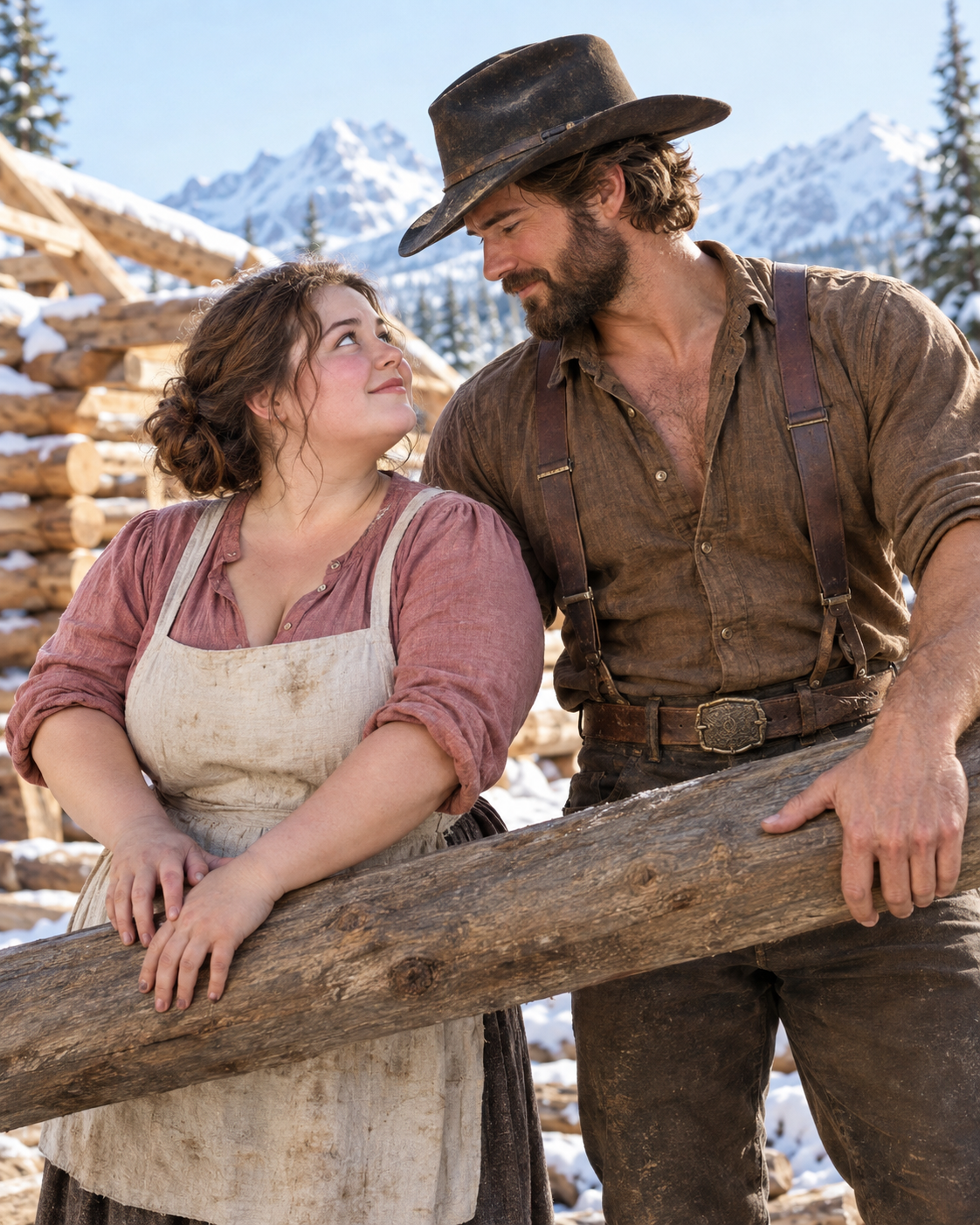
On the first warm morning of spring, I stood outside my cabin and watched the tiny pine tree push fresh green growth from its branches. Grant came up behind me, wrapping his coat around my shoulders as the breeze carried the scent of damp earth through the clearing.
I thought about the woman who had arrived in Pine Hollow with two suitcases, an old toolbox, and a heart bruised by years of being told she was not enough.
She had believed that building a cabin would prove her worth.
Now I understood that I had never needed to earn the right to live my own life.
The cabin was proof of something else: that even when the people we love fail us, we can choose what we build from the ruins.
Grant kissed my forehead, then glanced toward the ridge where he had first watched me struggle beneath the winter sky.
“Do you ever wish you had chosen an easier life?” he asked.
I looked at the cabin, the trees, and the man standing beside me, then shook my head.
“Sometimes I wish the road had hurt less,” I answered. “But I don’t wish I had stopped walking.”
That evening, I lit the fireplace and opened my father’s final letter again, reading the words I had overlooked during those first painful hours.
He had written that the land was never meant to be a reward for being brave, successful, or obedient; it was meant to be a place where I could learn that my life belonged to me.
I folded the letter carefully and placed it beside my mother’s, no longer seeing either one as a warning from the past.
They were reminders that love could be imperfect, that fear could make good people remain silent, and that the truth might arrive late without becoming any less necessary.
Outside, the pine tree stood against the evening sky, its young branches moving gently in the wind.
For the first time in years, I did not feel as though I were waiting for someone to decide whether I deserved a home.
I had built one with my own hands, and when the next storm came, I knew I would not measure my strength by whether I could endure it alone.
I would measure it by whether I had the courage to ask for help, the wisdom to recognize love that did not demand obedience, and the self-respect to walk away from anything that asked me to disappear.
And as Grant reached for my hand beside the warm fire, I finally understood that sometimes the life we build after everything falls apart is not the life we originally imagined, but it can still become the one we were meant to live.
THE END.