Orson Pritchard pulled the last empty chair away just as Winifred Bellamy reached for it, then laughed loud enough for every man in her Montana boarding house to hear.
The winter contract might save the boarding house, but a failed delivery could expose her to further liability. And if she committed the family’s remaining money to the first shipment, there would be almost nothing left to pay Pritchard by the deadline.
That evening, Edwin approached her while she was checking the pantry.
“I’ve spoken to Orson,” he whispered.
Winnie set down her pencil.
“What did he say?”
“He’ll extend the loan until spring.”
Her heart gave a cautious leap.
“Under what conditions?”
Edwin couldn’t meet her eyes.
“He wants Mother to sign over the adjoining acreage now. He says he’ll return it once we’re caught up.”
Winnie stared at her brother.
The adjoining land included the stable yard and the only practical access for heavy wagons.
Without it, their freight plan would collapse.
And there was no reason to believe Orson would ever return it.
“Did you promise him anything?” she asked.
“No. But Winnie, if the freight contract fails, we could lose everything anyway.”
For the first time, she heard genuine fear beneath his excuses.
He hadn’t intended to destroy their family. He’d simply trusted a man who knew exactly how to exploit his desperation.
Later, Margaret called both children to her bedroom.
She listened as Winnie explained the freight contract and Edwin described Orson’s offer.
Then their mother looked at the old photograph of her late husband on the dresser.
“Your father bought this place because he wanted us to have something no one could take from us,” she said.
Her voice trembled.
“But I won’t ask either of you to gamble your whole future because he loved these walls.”
Winnie sat beside her mother and took her hand.
For seventeen years, she’d believed saving the boarding house was the same as saving her family.
Now she wasn’t so certain.
Thaddeus had offered to help without asking for control, and the freight contract was a genuine opportunity. But his wagons and men would be exposed to the same winter storms that threatened the deliveries. Winnie couldn’t ignore that responsibility simply because she needed the money.
The following morning, a messenger arrived with a letter from the mining company.
Winnie’s proposal had passed its preliminary review.
The purchasing agent wanted her signature on the final agreement within forty-eight hours, along with a personal guarantee covering specified losses if the first deliveries failed.
At almost the same moment, another envelope arrived from Pritchard.
His spring extension remained available, but only if Margaret transferred the adjoining land immediately.
Winnie placed both documents on the kitchen table.
One offered a chance to preserve the business, with serious risks she would have to accept herself.
The other offered temporary relief at the cost of surrendering the very land that made the business possible.
Thaddeus stood across from her.
“I’ll stand by the hauling terms we discussed,” he said. “But the decision about your home has to be yours.”
Winnie looked toward the dining room, where the morning guests were eating breakfast at tables she’d scrubbed clean before sunrise.
She could hear Edwin tending the fire and her mother slowly descending the stairs.
For the first time in seventeen years, the choice truly belonged to her.
And that frightened her almost as much as losing everything.
Winnie reached for her pen, then stopped.
Before she signed either document, there was one question she needed to ask her family.
“If this house is gone by Christmas,” she said softly, “will we still know how to be a family without it?”
Neither her mother nor her brother answered immediately.
And with the deadline approaching, Winnie knew she couldn’t make their decision for them.
For a long moment, nobody in the Bellamy kitchen spoke. The two documents lay on the table between us, one promising a dangerous opportunity and the other offering temporary safety at a price we might never recover from.
My mother was the first to break the silence.
“Yes, Winnie,” she said quietly. “We would still be a family.”
Edwin stared at his hands. “But we wouldn’t have anywhere to live.”
Mother looked toward the window, where the first snowflakes were settling against the glass.
“Then we’d find somewhere. What I won’t do is let a building become more important than the people inside it.”
I had spent seventeen years believing that keeping the boarding house alive was my responsibility. Every broken window, every unpaid bill, every guest who complained about cold coffee had somehow become another measure of my worth.
Now my mother was telling me that losing the house wouldn’t mean I had failed.
The thought was almost too strange to accept.
Thaddeus stood beside the stove, giving us the privacy of his silence.
Finally, Edwin raised his head.
“I should’ve told you about the loan.”
“Yes,” I answered.
“I thought I could fix it before anyone found out.”
“You borrowed against something that belonged to all of us.”
He swallowed.
“I know.”
“No, Edwin. I don’t think you do.”
My voice surprised even me. It wasn’t angry or loud. It was simply tired.
“For years, I’ve been cleaning up after decisions nobody thought to discuss with me. I won’t do that anymore.”
He looked as though I had struck him.
Mother reached across the table and placed her hand over mine.
“What do you want to do, Winnie?”
I looked at the freight contract.
“I want to fight for this place. But I won’t gamble everything on promises I haven’t examined.”
Thaddeus nodded.
“Then we examine every promise.”
That afternoon, we traveled into Helena to meet the purchasing agent, Mr. Samuel Hargrove, at a modest office behind the mining company’s supply warehouse.
Hargrove was a narrow-faced man with ink-stained cuffs and the restless manner of someone who disliked wasting daylight.
He reviewed our proposal while Thaddeus explained his wagon capacity and experience hauling freight through mountain weather.
When Hargrove reached the section listing storage and provisions, he looked at me.
“You calculated these expenses yourself, Miss Bellamy?”
“Yes, sir.”
“Your figures are considerably lower than those submitted by the other bidder.”
“I already have a working kitchen, a cellar, and a stable. I don’t need to rent facilities I own.”
He studied me a moment longer.
“And you’ve managed them for how long?”
“Seventeen years.”
Hargrove set down his pen.
“Then you’ve been running a freight-support operation without calling it one.”
For the first time that week, I almost smiled.
But the contract still contained its dangerous guarantee.
If a shipment failed through our negligence, we could be liable for losses far beyond the profit on that delivery.
I slid the document back across the desk.
“I won’t sign that provision.”
Hargrove raised an eyebrow.
“It’s standard.”
“Then your standard terms need changing.”
Thaddeus glanced toward me but said nothing.
I continued.
“We’ll accept responsibility for supplies damaged through improper storage or careless handling. We won’t guarantee against mountain closures, extraordinary storms, or circumstances beyond our control.”
Hargrove leaned back.
“You’re asking us to take the weather risk.”
“I’m asking each party to carry the risks it can reasonably control.”
He drummed his fingers against the desk.
“And what happens when a wagon breaks down?”
“Mr. Whitcomb has arranged a spare team and replacement wagon. Those expenses are included in our price.”
Hargrove looked at Thaddeus.
“She’s thought this through.”
“She has,” he replied.
The purchasing agent examined the papers again.
“I’ll need approval for changes to the guarantee. But I can recommend the contract, provided you secure your first shipment of flour and lamp oil.”
My stomach tightened.
Our flour merchant had already withdrawn.
“How long do we have?”
“Until tomorrow evening.”
Outside, the wind carried fine snow across Helena’s muddy streets.
I stood beside our wagon, trying to hide my disappointment.
“We’ve come so far,” I said.
Thaddeus adjusted his gloves.
“We haven’t lost yet.”
“Every merchant in town knows Pritchard.”
“Not every merchant.”
He turned toward the northern end of the street.
“There’s a man I want you to meet.”
His name was Elias Rosenfeld, and he operated a small wholesale business supplying ranches and mining camps throughout the territory.
His store was crowded with sacks of grain, iron tools, barrels of dried apples, and shelves of goods stacked almost to the ceiling.
Elias listened while I explained our requirements.
When I mentioned Pritchard, his expression changed.
“So that’s why Miller refused your order.”
“You know about it?”
“He came here yesterday asking whether I’d extend credit to a woman running a boarding house.”
My face burned.
“What did you tell him?”
“That I don’t discuss my customers’ business with cattle buyers.”
Thaddeus gave a quiet chuckle.
Elias opened a ledger.
“I can supply the flour. Lamp oil will cost more because I have to bring part of it from another warehouse.”
“We can pay a deposit once the mining company releases its advance.”
“And before that?”
I hesitated.
There was money in the boarding house account, but much of it was needed for wages, food, and heating.
Then I remembered something.
For years, I had maintained a small tin box beneath a loose floorboard in my bedroom.
Inside were the savings I’d put aside from mending clothes, baking special orders, and selling preserves.
Money nobody else knew about.
I had always imagined using it for something personal someday.
Perhaps a journey. A new dress. A little house where I wouldn’t wake before dawn to the sound of strangers calling for breakfast.
I looked at Elias.
“I can provide a deposit from my own savings.”
Thaddeus turned toward me.
“Winnie, you don’t have to—”
“I know.”
That was precisely why the choice mattered.
Elias calculated the amount.
It would take nearly half my savings, but not all of them.
“I’ll accept that,” he said. “With one condition.”
I stiffened.
“What condition?”
“You put the purchase terms in writing, and I receive the remainder when the company’s advance arrives. No secret changes, no gentlemen’s understandings.”
I held out my hand.
“That suits me perfectly.”
By the following evening, we had secured the supplies, negotiated the amended freight agreement, and received the mining company’s formal approval.
The first shipment would leave December fourth.
If we completed two scheduled deliveries before the loan deadline, the company would release enough money to repay Pritchard’s documented claim, provided there were no unexpected costs.
It was a narrow path.
But it was a path.
When we returned to the boarding house, I found Orson Pritchard waiting in the dining room.
He was sitting in my mother’s favorite chair.
“Well,” he said, “I hear you’ve been busy.”
I removed my gloves.
“Good evening, Mr. Pritchard.”
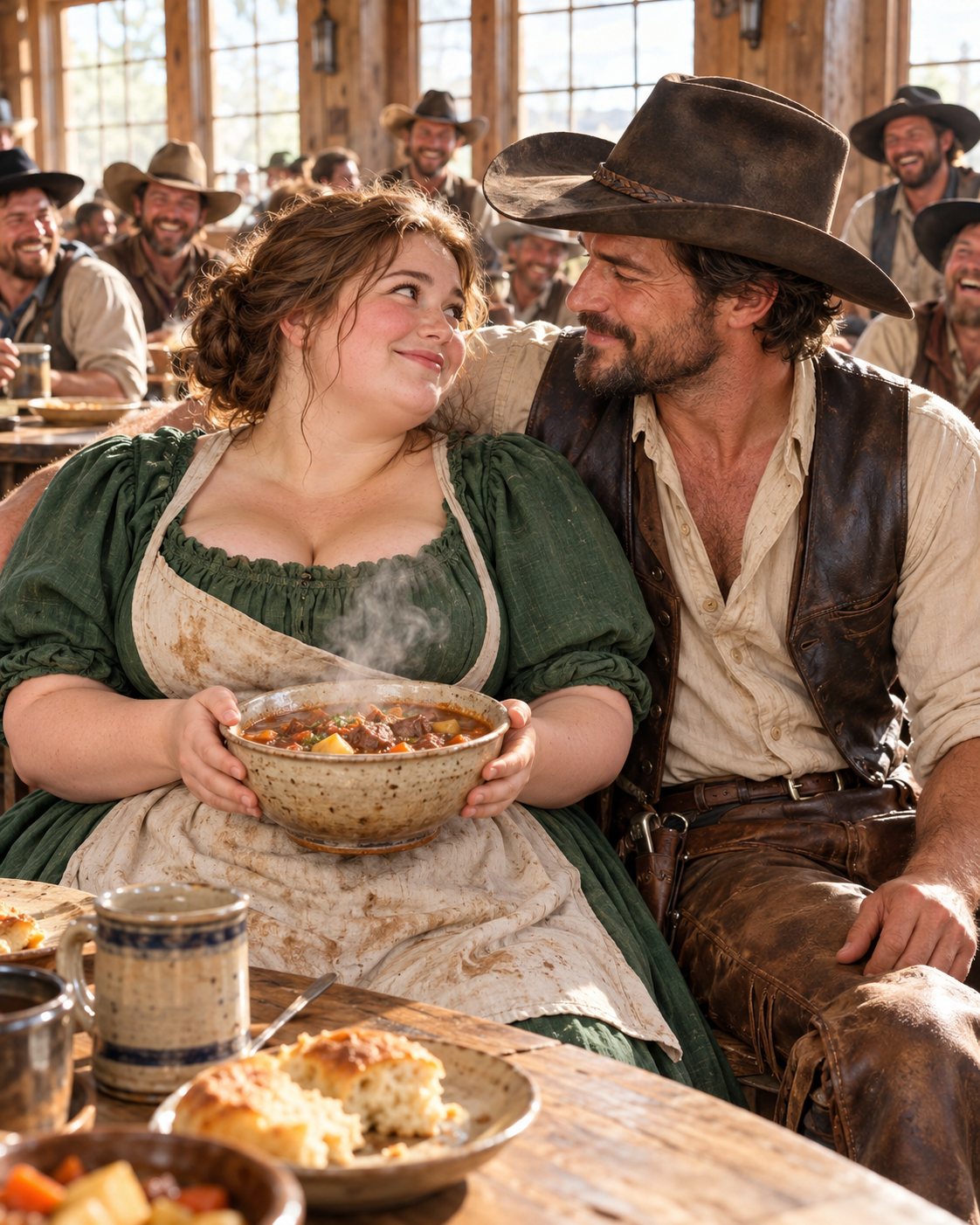
He smiled without warmth.
“You’ve been talking to people who ought to know better than to interfere in another man’s business.”
“Our business is our own.”
He leaned forward.
“You think a few wagonloads of flour will save you?”
“I think you’ve had enough opportunities to frighten my family.”
His expression hardened.
“I could demand payment without waiting until the fifteenth if you’ve violated the agreement.”
“Then you’ll need to identify the provision we’ve violated.”
Behind him, Edwin appeared in the doorway.
Orson noticed him and smiled.
“Perhaps your brother can explain what happens when people fail to honor their obligations.”
Edwin went pale.
I stepped between them.
“Any further discussions concerning the loan will be conducted in writing.”
Orson stood.
For a moment, I thought he might shout.
Instead, he lowered his voice.
“You’re making a serious mistake, Winnie.”
“Then it will be mine to make.”
He left without another word.
The following morning, Thaddeus found the harness straps on two freight horses deliberately cut.
The damage was hidden beneath the leather folds, where a sudden pull might have caused a dangerous failure on the road.
He brought the straps into the kitchen.
“These weren’t worn through,” he said.
I examined the clean marks.
“Can you prove who did it?”
“No.”
“Then we don’t accuse anyone.”
He looked at me with quiet approval.
“We replace the straps and inspect every piece of equipment.”
But the incident frightened me more than I admitted.
That evening, I walked into the stable and found Edwin brushing one of the horses.
He looked up when I entered.
“Are you angry with me?”
“About the loan?”
“About everything.”
I leaned against the stall door.
“I’m angry that you were careless with our home. I’m angry you hid the truth. And I’m angry you let Mother and me carry the consequences.”
His eyes filled.
“I thought if I made enough money buying cattle, I could finally be useful.”
“You were already useful, Edwin.”
He shook his head.
“You do everything. Mother trusts you with everything. I wanted to be the one who saved us for once.”
I understood then how differently we had experienced the same household.
I’d felt invisible because my work was expected.
Edwin had felt insignificant because mine was indispensable.
Neither feeling excused what he’d done.
But understanding it made forgiveness seem possible.
“You don’t have to save us alone,” I said. “You just have to stop hiding things when they go wrong.”
He nodded.
Then he reached into his coat and withdrew a folded letter.
“I should’ve shown you this sooner.”
My heart sank.
It was a note from Pritchard, dated before the loan was signed.
In it, Orson offered Edwin a generous commission if he persuaded our mother to sell the adjoining property to a cattle holding company.
Edwin had refused the commission, but Orson had subsequently offered the loan.
Suddenly, the arrangement looked far less accidental.
I read the letter twice.
“Why did you keep this?”
“Because I was ashamed. I knew he wanted the land, but I believed the loan was separate.”
“May I take it?”
He handed it over.
The next morning, Thaddeus and I visited a Helena attorney named Nathaniel Brooks.
He examined the loan agreement, Pritchard’s letter, and the original property deed.
After nearly an hour, Brooks removed his spectacles.
“There’s something important here.”
My breath caught.
“The deed gives Mrs. Bellamy ownership of the house and adjoining land. Your brother could pledge only whatever interest he lawfully possessed. Whether this agreement creates an enforceable claim against the entire property depends on the authority actually granted to him and the circumstances of the transaction.”
“Does that mean Pritchard can’t take it?”
“Not necessarily. He may still bring an action, and litigation could be costly. But his threats are broader than what these papers clearly establish.”
I gripped the edge of my chair.
“And the letter?”
“It suggests he had a particular interest in acquiring the land before the loan was made. That may be relevant if there’s a dispute about his conduct.”
For the first time, the man who had frightened us for months seemed less like an unstoppable force and more like someone whose actions could be questioned.
Brooks agreed to write to Pritchard on Mother’s behalf, requesting a proper accounting and challenging any claim against property Edwin had lacked authority to pledge.
He also advised us to keep our money available until the exact debt was established.
“Don’t mistake a favorable argument for a guaranteed victory,” he warned. “The safest outcome may still be a negotiated repayment.”
I thanked him.
Outside, Thaddeus offered me his arm as we descended the icy steps.
“You handled yourself well.”
“I was terrified.”
“Courage doesn’t require you to enjoy it.”
I laughed, surprising myself.
Then I stopped walking.
“Thaddeus, why are you helping me?”
He was quiet for a moment.
“Because you’re capable of far more than the people around you have allowed themselves to see.”
“That doesn’t explain why you’ve taken so much trouble.”
He looked down the street.
“My wife died five years ago. Afterward, people were kind to me in ways that made me feel helpless. They decided what I needed, how long I should grieve, even when I ought to begin living again.”
I had never heard him mention his marriage.
“I’m sorry.”
“Thank you.”
He turned back to me.
“I learned that kindness is only kindness when it leaves a person room to choose.”
I thought of every decision he’d placed in my hands instead of taking it for himself.
And something inside me softened.
The first freight wagon departed before sunrise on December fourth.
I stood in the stable yard with a lantern while Thaddeus checked the load.
Snow had fallen steadily through the night, leaving the road white and uncertain.
Three drivers accompanied the wagons, each carrying provisions for several days.
I had packed extra bread, dried meat, blankets, and strong coffee.
Thaddeus climbed onto the lead wagon.
“You’ll receive word when we reach the first station.”
“Be careful.”
He smiled.
“I intend to.”
Then he hesitated.
“Winnie, if we encounter trouble, I won’t sacrifice the men or horses to protect a deadline.”
“I wouldn’t ask you to.”
“Good.”
He touched the brim of his hat.
And the wagons disappeared into the pale morning.
For two days, I worked as though ordinary chores could keep fear away.
I scrubbed floors, prepared meals, reviewed accounts, and checked the road whenever I passed a window.
On the third afternoon, a rider arrived.
The first shipment had reached its destination safely.
The mining company had accepted the delivery.
I read the message aloud to Mother and Edwin, and for a few precious minutes we laughed like people who had forgotten how to be afraid.
Then the weather changed.
A fierce snowstorm swept across the mountains just as the second shipment was preparing to depart.
The roads became treacherous.
By morning, the stable yard was buried beneath nearly a foot of snow, and a driver reported that one of the mountain approaches had become impassable.
Thaddeus returned before noon, his coat stiff with ice.
“We can’t take the usual route,” he said.
“When can you leave?”
“Not until we know there’s a safe passage.”
“But the deadline—”
“I know.”
I looked at the contract.
The mining company had agreed to reasonable delays caused by severe weather, but the loan deadline remained unchanged.
If the second shipment couldn’t be completed in time, our repayment plan would fail.
That evening, Pritchard sent another message.
He knew about the storm.
He offered to extend the debt for another ninety days if Mother transferred the adjoining land into his name.
Edwin read the offer and pushed it away.
“He’s counting on us being desperate.”
“Yes,” I answered.
“What do we do?”
I looked at Mother.
She sat by the stove, wrapped in her wool shawl.
“We make the decision together,” she said.
And we did.
We refused the land transfer.
Instead, I asked our attorney to propose a documented repayment arrangement, using the money already received from the first delivery and a fixed schedule for the balance.
Pritchard rejected it.
He wanted the land.
The following morning, Thaddeus brought better news.
A teamster returning from a nearby settlement had confirmed that a longer southern route remained passable.
The journey would take additional time, but the wagons could travel safely if the weather held.
“We’ll lose some profit paying for extra feed and drivers,” Thaddeus explained.
“Will we still earn enough?”
“Enough to make a substantial payment. Possibly enough to settle the debt if Brooks can get the disputed charges removed.”
I studied the route.
“Then let’s do it.”
He looked at me.
“Are you certain?”
“Only if the men agree and you believe the road is safe.”
“They’ve agreed.”
“Then we have our answer.”
The second shipment departed the next morning.
This time, I didn’t stand helplessly watching.
I returned to the kitchen and began making preparations for whatever came next.
I arranged delayed payments with two suppliers, collected overdue lodging accounts, and sold several pieces of unused furniture.
Mother contributed money she’d quietly saved from a small inheritance.
Edwin took responsibility for reorganizing the stables and finding local work that could bring in additional income.
For the first time, the Bellamy family was working together rather than depending on one exhausted woman to hold everything upright.
On December thirteenth, a letter arrived from Nathaniel Brooks.
Pritchard had finally supplied a statement of the loan.
Several charges appeared inconsistent with the written agreement, and Brooks had challenged them.
The remaining principal and properly documented charges were still substantial, but the amount was lower than Pritchard had demanded.
More importantly, Brooks had prepared the necessary papers for repayment and release of the lender’s claim.
We needed the money.
And Thaddeus hadn’t returned.
That night, I barely slept.
I sat beside the kitchen stove, listening to the wind and wondering whether I’d made another terrible mistake.
Near midnight, Mother came downstairs.
She found me staring at the embers.
“You’re doing it again,” she said.
“Doing what?”
“Believing everything is yours to carry.”
I tried to smile.
“Old habits.”
She sat beside me.
“When you were a little girl, you used to insist on carrying the biggest basket from the garden. Even when the apples spilled, you wouldn’t ask for help.”
“I remember.”
“Your father thought it was determination. I thought it was stubbornness.”
“And what do you think now?”
She took my hand.
“I think we praised you for being strong so often that we forgot to let you be tired.”
Tears came before I could stop them.
Mother held me while I cried.
Not because I had failed.
Because, at last, I didn’t have to pretend I was incapable of it.
December fifteenth arrived gray and bitterly cold.
Pritchard appeared shortly after breakfast, accompanied by a clerk carrying a leather document case.
He entered the dining room with the confidence of a man expecting surrender.
“Well, Winnie,” he said, removing his gloves. “Have you reconsidered my offer?”
“No.”
He glanced around the room.
“Then I suppose we’ll proceed.”
“Mr. Brooks has already responded to your claims.”
Orson waved a dismissive hand.
“Lawyers can write whatever they please. Your family owes me money.”
“And we’re prepared to pay the amount properly owed.”
“Prepared?” he repeated with a laugh. “That isn’t the same as paying.”
He was right.
I had gathered every dollar available, but we were still short.
The clerk opened his case.
Orson placed a document on the table.
“Your mother can sign the land transfer now, and we can avoid further unpleasantness.”
I looked at the paper.
Then I pushed it back.
“No.”
His face reddened.
“You foolish woman. You’re going to lose everything because you’re too proud to accept a reasonable offer.”
I stood.
“You’re not offering to help us. You’re trying to buy our desperation.”
He stepped closer.
“Be careful what you say.”
“Then be careful what you ask me to sign.”
The dining room had grown silent.
Several guests were watching from their tables.
Orson lowered his voice.
“I’ll have this place sold out from under you.”
Before I could respond, the front door opened.
A rush of freezing air swept into the room.
Thaddeus stood in the doorway, his beard dusted with snow.
Behind him was a young messenger carrying a sealed envelope.
My knees nearly gave way.
Thaddeus removed his hat.
“The second delivery is complete.”
For one heartbeat, nobody moved.
Then the messenger stepped forward.
“Payment authorization from the mining company, ma’am. Mr. Hargrove requested that it be delivered directly.”
I took the envelope with trembling fingers.
Inside was confirmation that the shipment had been accepted and the balance payable to our operation had been authorized.
Thaddeus explained that the wagons had reached their destination after a difficult journey along the southern route. The company had recognized the weather delay under our amended agreement.
The horses were exhausted, but everyone was safe.
I wanted to embrace him.
Instead, I looked at the document again, making certain I understood the figures.
The money was enough.
Not enough to make us wealthy.
Not enough to erase every hardship ahead.
But enough, combined with what we’d gathered, to satisfy the amount Brooks had identified as properly due.
I turned to Orson.
“Mr. Pritchard, you’ll receive payment through our attorney, conditional upon a full written release of the loan and any security claim. The money is available.”
His expression changed.
For the first time since I’d known him, he seemed unsure what to say.
Then he scoffed.
“You think this settles everything?”
“It settles what we owe, once the release is executed.”
“You’ll regret crossing me.”
I looked at the man who had frightened me for years.
He was still wealthy. Still influential. Still capable of causing trouble.
But he no longer controlled my understanding of myself.
“Perhaps,” I said. “But I won’t regret refusing to give you what isn’t yours.”
Orson gathered his papers and left.
No one applauded.
There was no grand declaration.
The ordinary sounds of the boarding house slowly returned: silverware touching plates, logs cracking in the fireplace, someone asking for another cup of coffee.
And somehow, that felt more meaningful than a celebration.
Three days later, Brooks confirmed that Pritchard had accepted the payment and executed the agreed release.
The immediate threat to our property was over.
But the winter was far from finished.
We still had expenses, aging buildings, and a business that depended on uncertain travelers and difficult weather.
And I had something else to face.
For seventeen years, I’d built my life around surviving.
I didn’t know what to do with the possibility of living differently.
One evening, Thaddeus found me in the kitchen, preparing tomorrow’s bread.
“You’re working late.”
“Some things never change.”
“Perhaps some things should.”
I smiled.
“That sounds suspiciously like advice.”
“It might be.”
He pulled out a chair and sat beside the worktable.
“The mining company wants to renew our arrangement for the rest of the winter.”
My hands stopped.
“They do?”
“They were impressed with the deliveries. They’re willing to offer regular shipments under the terms we negotiated.”
I looked at him.
“That could change everything.”
“It could.”
Then he hesitated.
“There’s another matter.”
My heart gave an unexpected flutter.
“I’ve been offered a longer hauling assignment in Wyoming when spring arrives.”
I tried to keep my expression steady.
“That’s good news.”
“It is.”
“You should take it.”
He studied me.
“I haven’t decided.”
“Why not?”
“Because there’s someone here I’d rather not leave.”
For a moment, the kitchen seemed unusually quiet.
I looked down at the flour on my hands.
“Thaddeus, I don’t know how to be the sort of woman who spends her afternoons entertaining callers.”
He laughed softly.
“I’m not looking for that sort of woman.”
“I’ve got responsibilities. A mother who needs me. A brother who’s still learning to stand on his own feet. A business that might finally become something more than a struggle.”
“I know.”
“And I don’t intend to give all that up for a man.”
His expression became serious.
“I would never ask you to.”
I lifted my eyes.
“Then what are you asking?”
“Whether I might court you, Winnie. Properly. Without interfering in the work you’ve fought so hard to make your own.”
I felt my cheeks grow warm.
For seventeen years, men had called me useful, dependable, sturdy, and hardworking.
Very few had called me beautiful.
Thaddeus hadn’t either.
But the way he looked at me made me feel seen in a way that had little to do with appearance.
“I’d like that,” I whispered.
He reached across the table and gently took my flour-covered hand.
We didn’t kiss.
Not that evening.
We simply sat together while the bread dough rose and the winter wind moved around the house.
In January, the Bellamy boarding house began operating under a new arrangement.
Mother retained ownership, while I formally managed the business and its accounts.
Edwin handled the stables and transportation records, with regular reviews of every expense.
For the first time, I hired another woman to assist in the kitchen.
Her name was Clara Bennett, a young widow who needed steady wages and a place to live with her little boy.
On her first day, I found her eating a hurried piece of bread while standing beside the stove.
“Clara, why don’t you sit down?”
She looked startled.
“I haven’t finished washing the dishes.”
“The dishes can wait ten minutes.”
She hesitated.
“Are you sure?”
I pulled out a chair.
“Quite sure.”
As she sat, I remembered that November evening when Orson had pulled a chair away from me.
I remembered the laughter.
The shame.
And the quiet stranger who had stood up when everyone else remained seated.
I’d once believed the greatest victory would be watching Orson Pritchard lose his influence over our lives.
But as I looked at Clara resting her tired feet, I understood something better.
The real victory wasn’t becoming powerful enough to humiliate someone who had humiliated me.
It was building a place where nobody needed to suffer that humiliation again.
By spring, the boarding house was earning more than it had in years.
We repaired the stable roof, replaced the kitchen stove, and established a small reserve fund that nobody could borrow against without the family’s knowledge and consent.
Edwin became more careful with money, though he still made mistakes.
Mother’s health remained fragile, but she found pleasure in sitting near the dining room window, talking with guests and watching the activity she’d once worried would overwhelm us.
And Thaddeus?
He accepted the Wyoming assignment, but arranged his schedule so he could return when business allowed.
I missed him.
More than I expected.
Yet his absence taught me something important.
I could love a man without making him the center of my survival.
And I could be loved without surrendering the life I’d worked so hard to build.
When he returned in late May, the apple trees behind the boarding house were beginning to blossom.
He found me on the porch, sitting in a chair with a cup of tea.
For a moment, he simply stood there smiling.
“Well, now,” he said. “That’s a sight I never expected.”
“What?”
“Winifred Bellamy, sitting down while there’s still daylight.”
I laughed.
“Don’t look so pleased with yourself. I worked all morning.”
He climbed the steps.
“And now?”
“Now I’m resting.”
He sat beside me.
We watched the evening light move across the mountains.
After a while, he took my hand.
“Winnie, do you ever think about what comes next?”
“Every day.”
“And?”
I looked toward the boarding house, where Clara’s little boy was laughing in the yard and Edwin was helping unload a wagon.
“I used to think happiness meant finally reaching a day when nothing could go wrong.”
Thaddeus waited.
“But something always can. A storm, a bad season, a foolish decision. I can’t build my whole life around preventing every hardship.”
He squeezed my hand.
“So what does happiness mean now?”
I considered the question.
“Having people who tell me the truth. Work that matters without swallowing me whole. And someone who offers me a chair without expecting me to spend the rest of my life thanking him.”
Thaddeus smiled.
“That sounds reasonable.”
“It took me seventeen years to figure it out.”
“Some lessons take longer than others.”
He leaned closer.
“Would you mind if I kissed you?”
I smiled back.
“Not at all.”
And when he kissed me beneath those budding apple trees, it wasn’t the beginning of a rescue.
It was the beginning of a partnership.
We didn’t know whether we’d marry.
We didn’t know what the next winter would bring, whether the freight business would continue to grow, or whether the boarding house would still belong to the Bellamys twenty years from then.
But for once, uncertainty didn’t frighten me into silence.
I’d spent most of my adult life believing I had to earn kindness through exhaustion, loyalty through sacrifice, and respect through endless patience.
Orson Pritchard had taught me how cruel people could become when they mistook another person’s gentleness for weakness.
My brother had taught me that good intentions meant little without honesty and responsibility.
My mother had taught me that love sometimes required admitting we’d placed too heavy a burden on someone we cherished.
And Thaddeus had taught me that the right person wouldn’t demand I become smaller so he could feel important.
But the most valuable lesson was one I had finally learned for myself.
Being needed isn’t the same as being valued.
And giving everything you have doesn’t guarantee that someone will recognize what it costs you.
Sometimes, the bravest thing a person can do is stop asking permission to deserve dignity.
That evening, I remained on the porch until the last sunlight disappeared behind the mountains.
For seventeen years, I’d been the woman who kept the lamps burning for everyone else.
Now, at last, I understood that I deserved a little of that light myself.
And when the dinner bell rang, I didn’t rush inside.
I finished my tea.
Thaddeus remained beside me.
Inside, the boarding house carried on without me for a few precious minutes.
The world hadn’t fallen apart.
Neither had my family.
And for the first time in my life, I knew that resting wasn’t something I had to earn.
It was something I was allowed to do.
THE END.