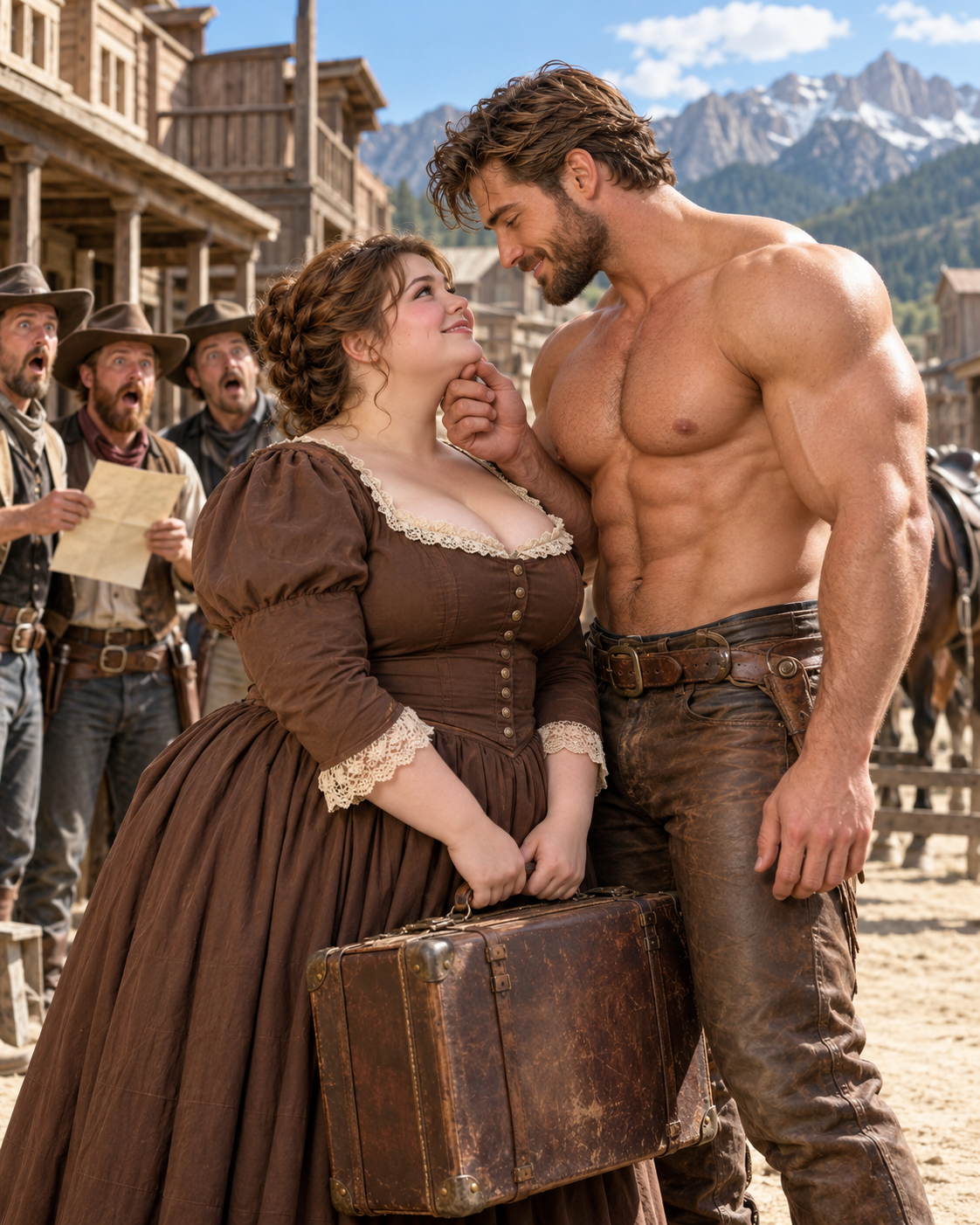
My sister laughed as the train conductor announced my arrival in Colorado, but the sealed letter in my suitcase concealed a betrayal far crueler than rejection.
I stared at Andrew across the desk, waiting for him to laugh, to explain that I had misunderstood something, or to tell me this was another cruel joke arranged by my family.
But he did none of those things.
He simply sat there, his large hands resting on the old wooden desk, looking like a man who had carried a terrible secret for too long.
“My father isn’t dead,” I whispered.
Andrew glanced at the photograph.
“The man who came here told me he was dying.”
I shook my head.
“That’s impossible. I saw my father six weeks ago. He was sitting in his study, reading the newspaper.”
“Did he look well?”
The question struck me harder than it should have.
I remembered Father’s trembling hands, the unusual grayness of his face, and the way Caroline had hurried me out whenever I tried to speak with him alone.
“He was tired,” I admitted.
Andrew leaned forward.
“Rachel, I need you to tell me something. Has your father been ill?”
“I don’t know.”
My own answer sounded pitiful.
I had lived in that house for twenty-six years, yet somehow I knew almost nothing about what had happened inside it during my final months there.
Andrew pushed the photograph toward me.
“Look carefully at the man beside your father.”
I picked it up.
The second man was shorter, with a narrow face, dark mustache, and expensive-looking coat.
Something about him felt familiar.
Then I remembered a photograph in Father’s study.
“That’s Mr. Whitmore,” I said.
Andrew nodded.
“Samuel Whitmore. Your father’s attorney.”
A cold sensation moved down my spine.
“Why would they come to Colorado?”
Andrew opened a locked drawer and removed another envelope.
“Because your father wanted to protect something.”
He handed me a folded document.
Across the top, in elegant handwriting, were the words HIGH LEDGE LAND AGREEMENT.
Beneath them was my father’s signature.
And underneath his name was mine.
I nearly dropped the paper.
“I never signed this.”
“I know,” Andrew said.
“Then why is my name here?”
His expression darkened.
“Because someone forged it.”
For a moment, the office seemed to tilt.
Outside, rain hammered the roof while the fireplace snapped behind us.
I read the document again.
It described a financial interest in High Ledge Ranch, purchased years earlier through a private partnership between my father and Andrew’s late uncle.
The amount was astonishing.
Twenty thousand dollars.
My father had invested that money when the ranch was struggling, and the agreement stated that his share would eventually pass to me.
Not Caroline.
Not Philip.
Me.
I stared at the page.
“Why would Father do this?”
Andrew’s voice softened.
“Perhaps he wanted you to have something nobody could take away.”
I almost laughed.
My father had rarely defended me when Caroline mocked my plain dresses or when Mother called me a disappointment.
The idea that he had secretly protected my future seemed almost impossible.
Yet there was his signature.
There was my name.
And there was a forged document transferring my interest to Crane Agricultural Holdings.
I looked up.
“Philip.”
Andrew nodded.
“He approached me last spring. He claimed your father had authorized the transfer and demanded repayment of the investment.”
“And you paid him?”
“Part of it. Three thousand dollars, as an initial settlement.”
“Why?”
Andrew’s jaw tightened.
“Because he threatened to place a lien against the ranch using documents that appeared genuine. I paid him while I investigated their validity.”
I felt sick.
Philip had not merely taken advantage of my family.
He had been reaching into my future before I even knew I possessed one.
“Does my father know?”
“I believe he found out.”
Andrew looked toward the window.
“That’s why he came here with Whitmore. He said he was afraid the people closest to him were trying to ruin his daughter.”
My throat tightened.
“Why didn’t he tell me?”
“Whitmore said your father feared the news would put you in danger.”
I stared at the rain.
For years, I had believed Father’s silence meant he didn’t care.
Now I wondered whether silence had been the only weapon he thought he had left.
“Where is Mr. Whitmore now?”
Andrew hesitated.
“He disappeared two weeks after that visit.”
The room went completely still.
“Disappeared?”
“His law office closed without warning. Nobody could tell me where he’d gone.”
I pressed my fingers against my lips.
A terrible thought began forming.
“Andrew, who sent the letters arranging my journey?”
“Your sister.”
“And who told you I was desperate to marry?”
“Your sister.”
“Who told my family you wanted me?”
He looked at me.
“Nobody. I never asked for a wife.”
I closed my eyes.
Caroline had invented the entire arrangement.
But why send me to the very ranch where my inheritance was hidden?
Then I remembered something from my last evening in Missouri.
Philip had been furious when Caroline told him I had already purchased my train ticket.
He had dragged her into the hallway, speaking in a harsh whisper.
I had caught only a few words.
“Not there, Caroline. Anywhere but there.”
At the time, I thought he simply despised me.
Now those words meant something entirely different.
“She didn’t tell Philip where she was sending me,” I whispered.
Andrew’s gaze sharpened.
“What?”
“Caroline wanted to humiliate me. She probably chose a stranger she’d corresponded with, believing I’d arrive unwanted and come crawling home.”
I looked at the forged signature.
“But Philip knew what this ranch meant.”
Andrew slowly nodded.
“And now you’re standing in the middle of everything he tried to steal.”
That night, I didn’t sleep.
I sat beside my bedroom window, watching the distant mountains disappear beneath falling snow.
For the first time, the cruelty I had endured seemed almost small beside the possibility that my father was in danger.
By morning, I had made a decision.
“I need to go back to Missouri.”
Andrew was pouring coffee when I told him.
His hand stopped halfway to the cup.
“Rachel, Philip Crane isn’t a harmless man.”
“I know.”
“He may already know you’ve discovered the accounts.”
“Then I can’t leave my father alone with him.”
Andrew set down the coffee pot.
For a long moment, he said nothing.
Then he reached for his coat.
“I’ll ask Otis to prepare the wagon.”
I blinked.
“You’re taking me to the station?”
“No.”
He met my eyes.
“I’m coming with you.”
Something warm and painful opened inside my chest.
“You don’t have to.”
“I know.”
“Andrew, this could cost you your ranch.”
His expression remained steady.
“Some things are worth more than land.”
I looked away before he could see how deeply those words affected me.
We left two days later.
Otis insisted on accompanying us as far as Denver, where he had an old friend who worked for the railroad.
Before parting, he pressed a small revolver into Andrew’s hand.
“Don’t go trusting anybody wearing a clean coat and a friendly smile,” he muttered.
Then he looked at me.
“And Miss Rachel?”
“Yes?”
“Come back home.”
I swallowed hard.
Nobody had ever called a place home for me before.
The train journey east felt longer than the journey that had brought me to Colorado.
Andrew spoke little, but he remained beside me through every mile.
When the carriage grew cold, he draped his coat around my shoulders.
When nightmares woke me, he pretended not to notice my tears.
And when we arrived in Missouri, he stepped onto the platform first, as though he could shield me from the entire world.
We reached my family’s house shortly after sunset.
The windows glowed warmly, and music drifted through the curtains.
There were carriages outside.
A party.
Of course Caroline would be celebrating something.
I stood at the front gate, staring at the home where I had spent my childhood.
Andrew touched my arm.
“You don’t have to do this tonight.”
“Yes,” I whispered.
“I do.”
We climbed the steps together.
A servant opened the door and nearly dropped the silver tray she was carrying.
“Miss Rachel?”
Before I could answer, Caroline appeared in the hallway.
She wore an emerald-green silk dress, her golden hair arranged beneath glittering combs.
For one glorious second, her smile vanished.
Then she recovered.
“Rachel!”
She rushed toward me with open arms.
I stepped aside.
Her hands fell awkwardly.
“What a surprise,” she said.
“I imagine it is.”
Her gaze flickered toward Andrew.
“Mr. Bishop. How lovely.”
Andrew gave a slight nod.
“Miss Ellis.”
Caroline’s eyes narrowed at his formal tone.
Then Philip appeared behind her.
His handsome face lost every trace of color.
He looked first at Andrew.
Then at me.
And finally at the leather satchel Andrew carried.
“What are you doing here?” he demanded.
Caroline laughed nervously.
“Philip, don’t be rude.”
But Philip wasn’t looking at her.
He was staring at the satchel as though it contained a loaded gun.
I stepped closer.
“I came to see my father.”
Nobody answered.
The music continued from the drawing room, absurdly cheerful.
“Where is he?”
Caroline’s expression changed.
“Rachel, perhaps we should speak privately.”
“Where is Father?”
Philip moved toward the door.
“He’s resting.”
“Then I’ll see him.”
“That won’t be possible,” Philip said.
Andrew stepped beside me.
“Why not?”
Philip’s mouth tightened.
“Family business.”
I looked directly at him.
“Then it concerns me.”
Before he could stop me, I walked past them and climbed the stairs.
I knew every creaking board in that house.
I knew the smell of the polished banister and the fading blue wallpaper.
Yet that evening, the familiar hallways felt like corridors in a stranger’s home.
Father’s bedroom door was locked.
I knocked.
“Father?”
Nothing.
I knocked again.
A weak voice answered.
“Who is it?”
My knees nearly buckled.
“It’s Rachel.”
Silence.
Then I heard movement.
“Rachel?”
His voice broke.
“My girl?”
I turned toward Philip, who had followed us upstairs.
“Open this door.”
He hesitated.
Andrew moved forward.
“Now.”
Philip produced a key.
The door swung open.
My father lay beneath heavy blankets, his face hollow, his cheeks sunken.
He looked twenty years older than when I had last seen him.
But his eyes filled with tears when he saw me.
“Rachel.”
I rushed to his bedside.
His thin fingers closed around mine.
“They told me you were gone.”
“I was in Colorado.”
He began shaking.
“They said you’d married some stranger and wanted nothing more to do with us.”
I turned toward Caroline.
She stood in the doorway, looking suddenly very young.
“How could you?”
Her lips trembled.
“Rachel, I only wanted—”
“Enough,” Father whispered.
The room fell silent.
He looked at Philip.
“You told me she had signed the papers.”
Philip straightened.
“Sir, you’re confused.”
Father gripped my hand.
“Did you sign anything, Rachel?”
“No.”
His face crumpled.
“I knew it.”
Philip stepped backward.
Andrew blocked the doorway.
“There’s something else you should know, Mr. Ellis.”
He opened the satchel and removed the forged land agreement.
Philip lunged toward it.
Andrew caught his wrist.
“Don’t.”
The quiet command was more frightening than a shout.
Father examined the document with trembling hands.
Then he looked at Philip.
“You stole from my daughter.”
Philip’s face hardened.
“That land was never hers to begin with.”
My father struggled to sit upright.
“I bought that interest with money her grandfather left her. I managed it in trust until she came of age.”
My breath caught.
Grandfather had died when I was sixteen.
I remembered his enormous hands, his peppermint candies, and the way he called me his clever little accountant.
Father looked at me.
“He believed you’d make something of yourself if anyone gave you the chance.”
Tears blurred the room.
Philip laughed bitterly.
“An unmarried woman managing a ranch partnership? You’d all have been ruined.”
“That wasn’t your decision,” Andrew said.
Philip glared at him.
“You don’t understand.”
“Then explain.”
For a moment, nobody moved.
Then Philip said something that made Caroline cover her mouth.
“I had debts.”
Father closed his eyes.
“How much?”
Philip didn’t answer.
“How much?” I repeated.
“Nearly thirty thousand.”
Caroline began crying.
“He told me the creditors would destroy us.”
I turned to her.
“So you helped him steal from me?”
“I didn’t know about the money at first.”
“But you knew about the letters.”
She nodded miserably.
“I thought if you left, Father would stop asking questions about the accounts.”
My voice shook.
“You knew he’d been asking me to check the household books.”
Caroline lowered her eyes.
“Philip said you were becoming suspicious.”
I stared at the sister whose approval I had chased my entire life.
She had laughed when I cried.
She had mocked my clothes, my quietness, my hopes.
And when those humiliations weren’t enough, she had tried to send me away.
“Did you ever love me?” I asked.
She looked up sharply.
“Of course.”
“Then why did making me miserable make you happy?”
Her face twisted.
“Because you were always the one Father trusted.”
I stared at her.
“Trusted?”
“You could sit with him for hours discussing numbers and business. He listened to you. He never listened to me.”
I could barely speak.
“Caroline, I spent my whole life wishing I could be you.”
She looked at me through her tears.
“And I spent mine believing he wished I were you.”
Father made a broken sound.
But before anyone could respond, a crash came from downstairs.
Philip had shoved Andrew aside.
He raced into the hallway.
Andrew followed.
I hurried after them, my skirt catching on the banister.
We reached the landing just as Philip overturned a lamp beside the staircase.
Flames raced across the spilled oil and caught the curtains.
Someone screamed.
Smoke began climbing toward the ceiling.
“Get everyone outside!” Andrew shouted.
Servants rushed from the drawing room.
Guests stumbled toward the front doors, coughing and shouting.
I turned back toward Father’s room.
He couldn’t walk.
Caroline stood frozen on the stairs.
“Help me!” I cried.
Together, we ran back.
Father was trying to drag himself from the bed.
I grabbed one arm while Caroline took the other.
The smoke thickened.
Heat crept beneath the door.
“Rachel,” Father gasped, “leave me.”
“No.”
“Please.”
I tightened my grip.
“You don’t get to send me away again.”
Caroline sobbed as we dragged him into the hallway.
Halfway down the staircase, a burning section of curtain collapsed across the lower steps.
We were trapped.
Then Andrew appeared through the smoke.
His coat was scorched, and blood ran from a cut above his eyebrow.
“Give him to me!”
He lifted Father across his shoulders.
“Rachel, take your sister.”
We stumbled through the servants’ passage toward the kitchen.
Behind us, glass shattered.
The heat became unbearable.
I could hear Andrew struggling for breath.
Then cold night air struck my face.
We burst through the rear door into the garden.
Father collapsed onto the grass.
Caroline fell beside him.
I turned, searching desperately.
“Andrew?”
He hadn’t followed us.
I ran toward the door.
A ranch-hardened hand caught my wrist.
Otis.
He stood there with two men from the sheriff’s office.
“He’s getting out, miss.”
“How are you here?”
“Mr. Bishop wired me from Denver.”
A terrible cracking sound came from inside the house.
Part of the roof collapsed.
My scream tore through the night.
Then a figure emerged from the darkness beside the stable.
Andrew.
He was dragging Philip by the collar.
Philip’s face was blackened with smoke, and his hands were bound with a length of rope.
Andrew dropped him at the sheriff’s feet.
“Found him trying to escape through the carriage shed.”
The sheriff hauled Philip upright.
“You’re coming with me.”
Philip shouted that everyone had misunderstood him.
He claimed the fire was an accident.
But the guests had seen him overturn the lamp, and the sheriff had been investigating his debts for weeks.
As the deputies led him away, Philip twisted toward me.
“You think you’ve won?”
I said nothing.
“You’ll lose everything when this goes to court!”
Andrew stepped forward.
“She’s already survived worse than you.”
Philip’s expression twisted.
Then he disappeared into the waiting carriage.
I turned back toward the burning house.
The place where I had spent years feeling invisible was collapsing beneath a sky filled with sparks.
And somehow, I couldn’t bring myself to mourn it.
The fire was finally contained before dawn.
Father survived, although the doctor warned that his recovery would be slow.
Andrew suffered burns along one arm but refused to complain.
When I tried to clean his wounds, he watched me with an expression I couldn’t understand.
“You’re shaking,” he said.
“I thought you were dead.”
His face softened.
“Rachel.”
I pressed the damp cloth against his arm.
“Don’t ever frighten me like that again.”
He covered my hand with his.
“I’ll try.”
His touch was gentle.
I looked up.
For a heartbeat, the entire world seemed to become quiet.
Then he whispered, “There was a moment in that house when I thought I might never see you again.”
My throat tightened.
“And?”
“And I realized I’d been foolish not to tell you how much you mean to me.”
I couldn’t look away.
Andrew moved closer.
But before either of us spoke again, Otis entered the room.
“Sorry to interrupt, but we’ve got another problem.”
He held a telegram.
“Samuel Whitmore’s alive.”
I stood so quickly that the chair scraped across the floor.
“Where?”
“St. Louis.”
Otis handed me the message.
Whitmore had been hiding after Philip threatened him.
He had contacted the authorities when he learned about the fire.
More importantly, he possessed the original agreement proving my inheritance.
The next several weeks passed in a blur of legal meetings, sworn statements, and painful conversations.
Whitmore appeared before the court and explained everything.
My father had discovered discrepancies in his business accounts months earlier.
Philip had been using forged documents to borrow against property he didn’t own.
When Father confronted him, Philip threatened to accuse him of fraud.
Already weakened by heart trouble, Father had panicked.
He traveled to Colorado with Whitmore, hoping to protect my inheritance before Philip could seize it.
But Philip learned of the journey.
He arranged fraudulent transfers and pressured Whitmore into hiding.
Then he convinced Caroline that I was the only person capable of uncovering the remaining evidence.
Caroline’s cruel marriage scheme had been her own invention, but Philip had encouraged her to send me far away.
He simply hadn’t expected her to choose High Ledge Ranch.
That mistake exposed everything.
Philip was charged with forgery, fraud, and arson.
The court restored my ownership interest in the ranch, although recovering the stolen money would take time.
When the judge announced the decision, I expected to feel triumphant.
Instead, I felt exhausted.
Money could be recovered.
Land could be restored.
But the years I had spent believing myself unworthy were gone forever.
One afternoon, Father asked me to sit beside his bed.
He had been moved to a small rented house while repairs were considered.
His face had regained a little color.
“Rachel, I owe you an apology.”
I folded my hands.
“You don’t have to—”
“Yes, I do.”
He looked down.
“I thought providing for you was the same as loving you.”
My eyes burned.
“I never needed a fortune, Father.”
“I know.”
“I needed you to tell Caroline to stop laughing at me.”
He closed his eyes.
“I know.”
“I needed you to notice when Mother called me useless.”
A tear slipped down his cheek.
“I failed you.”
For the first time, he didn’t offer excuses.
And somehow, that mattered.
I reached for his hand.
“I don’t know how to forgive everything yet.”
He nodded.
“I don’t expect you to.”
“But I’d like us to try.”
He held my fingers against his cheek.
“That would be more than I deserve.”
Caroline visited three days later.
She wore a plain blue dress and carried no jewelry.
Without Philip’s money or the family house, she looked strangely ordinary.
“I’ve taken a position at Mrs. Patterson’s dress shop,” she said.
I nodded.
“That’s good.”
She twisted her gloves.
“I wanted to tell you something.”
I waited.
“When I was little, I used to sneak into your room and read the stories you wrote.”
I blinked.
“I didn’t know.”
“They were beautiful.”
“Then why did you tell everyone they were foolish?”
Her eyes filled.
“Because you had something I couldn’t imitate.”
I looked away.
Outside, children were laughing in the street.
Caroline stepped closer.
“I don’t expect you to forgive me.”
“Good,” I whispered.
She flinched.
I took a breath.
“Because forgiveness isn’t the same as pretending nothing happened.”
“I understand.”
“You hurt me, Caroline.”
“I know.”
“And I can’t spend the rest of my life making excuses for you.”
She nodded, tears slipping down her cheeks.
For once, I didn’t rush to comfort her.
I let her feel the weight of what she had done.
Before leaving, she placed a small package on the table.
Inside was my childhood writing notebook.
I recognized the faded flowers on its cover.
“I found it in the things the servants rescued,” she said.
“I thought you should have it.”
After she left, I opened the notebook.
On the first page, in my childish handwriting, I had written a single sentence.
“One day, I will go somewhere people are glad I came.”
I stared at those words until I could no longer see them clearly.
Then I began to cry.
Not for the girl who had written them.
But for the woman who had finally found that place.
Andrew remained in Missouri until the legal proceedings were complete.
He never pressured me to return to Colorado.
He never mentioned marriage.
He simply stood beside me when I needed him and gave me room when I didn’t.
One morning, as we walked beside the river, he stopped beneath a maple tree.
“There’s something we need to discuss.”
My heart fluttered.
“The ranch?”
He nodded.
“Your interest has been restored. Whitmore says you can sell it, keep it, or appoint someone to manage it.”
I looked across the water.
“What would you prefer?”
Andrew smiled faintly.
“That isn’t my decision.”
“Andrew.”
“Rachel, you’ve spent your entire life having other people decide what you should be.”
He took off his hat.
“I won’t become another one of them.”
I studied his face.
“And if I choose to stay in Missouri?”
His smile faded, but his voice remained steady.
“Then I’ll make certain you receive every dollar you’re owed.”
“And if I choose Colorado?”
His gray eyes met mine.
“Then there will always be a place for you at High Ledge.”
I stepped closer.
“As a bookkeeper?”
“If that’s what you want.”
“As your business partner?”
“Absolutely.”
I hesitated.
“And what if I wanted something more?”
Andrew became very still.
“Rachel, are you asking me something?”
My cheeks warmed.
“For a man who manages hundreds of cattle, you can be remarkably slow.”
He laughed.
A real laugh.
Deep and warm.
Then he reached for my hands.
“I love you,” he said quietly.
“I’ve loved you since the day you arrived at that station and apologized for taking up space in the world.”
Tears filled my eyes.
“I was so afraid you would send me away.”
“I know.”
“You could have.”
“I never wanted to.”
I stepped into his arms.
For the first time in my life, love didn’t feel like something I had to earn.
It felt like somewhere I could rest.
When Andrew kissed me beneath that maple tree, I finally understood the difference between being wanted and being needed.
One meant someone valued what I could do.
The other meant someone cherished who I was.
I returned to Colorado in the spring.
The snow was melting when the wagon climbed the familiar road toward High Ledge Ranch.
Otis stood waiting beside the barn.
He squinted at us.
“Well, look what the wind dragged back.”
I climbed down.
“Did you miss me?”
He scratched his beard.
“Books have been a disaster.”
I laughed.
Then he surprised me by pulling me into a rough embrace.
“Welcome home, Miss Rachel.”
I held on a moment longer than necessary.
That summer, I became Andrew’s official business partner.
We expanded the cattle operation, repaired the northern fences, and established a small scholarship fund for girls in Silver Creek who wanted to learn bookkeeping and business.
I insisted that every girl who entered our office be taught something I had learned painfully.
Her future belonged to her.
Not to her father.
Not to her husband.
Not to anyone who believed kindness was a weakness.
Andrew and I married in September beneath the cottonwood trees beside the ranch house.
There were no elaborate decorations.
Only wildflowers, homemade bread, a small gathering of friends, and the mountains glowing gold beneath the evening sun.
Otis cried during the ceremony.
He denied it afterward.
Father attended, walking slowly with the help of a cane.
Caroline came too.
She stood quietly at the edge of the gathering, wearing the blue dress she had sewn herself.
Our relationship was still fragile.
There were wounds that apologies could not erase.
But she had written me every month, never asking for money or favors.
She had begun building a life of her own.
When she approached me after the ceremony, she looked almost frightened.
“You look beautiful,” she said.
I smiled.
“Thank you.”
She glanced toward Andrew.
“He really loves you.”
“Yes.”
Her eyes filled.
“I’m glad.”
For once, I believed her.
We embraced briefly.
It wasn’t the embrace of sisters who had forgotten the past.
It was the beginning of something more honest.
Later that evening, after the guests had departed, Andrew and I stood together on the porch.
The stars stretched endlessly above the mountains.
Inside, the house glowed with candlelight.
I rested my head against his shoulder.
“Do you ever think about how strange it all was?”
“What?”
“That Caroline sent me here hoping you’d reject me.”
Andrew slipped his arm around my waist.
“She certainly misjudged me.”
I smiled.
“She misjudged both of us.”
He kissed my forehead.
For a while, we listened to the crickets.
Then I told him about the notebook Caroline had returned.
I showed him the sentence I had written as a lonely child.
He read it carefully.
When he finished, he said nothing.
He simply folded the notebook closed and held me.
I understood his silence.
Some feelings were too precious to bury beneath words.
Years later, people would sometimes ask how I had come to own part of a Colorado ranch.
I could have told them about the forged signatures, the stolen inheritance, the fire, and the man who had nearly destroyed my family.
I could have told them about my sister’s jealousy or my father’s regret.
But those were only pieces of the story.
The truth was simpler.
I had arrived in Colorado believing that being unwanted by my family meant I was unworthy of love.
I had been wrong.
My worth had never depended on Caroline’s approval, Father’s attention, or any man’s willingness to marry me.
It had existed long before I recognized it.
And the life I built afterward was not a reward for enduring cruelty.
It was the life I had always deserved the freedom to choose.
One autumn morning, several years after our wedding, I found our little daughter sitting at my desk with an enormous ledger open in front of her.
Her dark hair fell across her cheeks as she carefully copied numbers onto a scrap of paper.
“What are you doing, sweetheart?” I asked.
She looked up proudly.
“Helping Papa.”
I laughed.
“That’s a very big job.”
She nodded seriously.
Then she asked a question that made my heart ache.
“Mama, can girls own ranches?”
I knelt beside her.
“Of course they can.”
“Even little girls?”
“Little girls grow into women who can do extraordinary things.”
She considered this.
“Can I own this one someday?”
I brushed the hair from her forehead.
“If that’s what you choose.”
She smiled and returned to her numbers.
From the doorway, Andrew watched us with tears shining in his gray eyes.
I took his hand.
Outside, the mountains stood exactly as they had on the day I first arrived.
The same wind crossed the valley.
The same road led down toward Silver Creek Station.
But I was no longer the frightened young woman clutching a suitcase and expecting rejection.
I had a home.
I had work that mattered.
I had people who loved me without asking me to become someone else.
And most importantly, I had learned that the cruelest thing another person can do is convince you that their opinion determines your value.
It doesn’t.
Sometimes the people who should love us fail to see our worth.
Sometimes betrayal comes from the hands we trusted most.
But their blindness doesn’t make us less deserving of happiness.
And when life finally opens a door, we must have the courage to walk through it, even if we’ve spent years believing every door will be slammed in our faces.
I looked at our daughter, bent over her little sheet of numbers, and remembered the girl who once wrote that she wanted to find somewhere people were glad she came.
I wished I could reach backward through time and tell that frightened girl something.
One day, she would stop begging to be chosen.
One day, she would choose herself.
And when that day came, she would discover that the greatest love story of her life had begun long before Andrew Bishop ever took her hand.
It began the moment she finally believed she was worth saving.
THE END.